

Synopsis
Covers the whole plot, including the ending.
- Difficulty
- Medium
- Pacing
- Moderate
- Mood
- Cynical, Witty, Darkly Humorous, Tense, Reflective
Amsterdam Plot Summary
Covers the whole plot, including the ending.
Molly's Funeral
The novel begins at Molly Lane's funeral. She was a lively woman who died from a brain aneurysm. Among those mourning are two of her past boyfriends: Clive Linley, a famous composer, and Vernon Halliday, editor of 'The Judge' newspaper. They think about Molly's life and their relationships with her, as well as their current careers. Julian Garmony, the controversial Foreign Secretary and another ex-boyfriend of Molly's, is also there. He is a top candidate for Prime Minister. The mood is serious but also filled with unspoken past events and rivalries among the guests, setting up the story.
The Pact
After the funeral, Clive and Vernon meet to talk about their career pressures. Clive struggles to finish a major millennium symphony and has writer's block. Vernon is under great pressure to boost 'The Judge's' circulation to avoid a media takeover. They make a serious, if vague, agreement: if one cannot make rational decisions, the other will step in and, if needed, help end their life. This pact, meant as mutual support, later becomes much darker and more literal.
Garmony's Photos
Vernon Halliday helps Molly's widower, George, sort through her belongings. He finds highly damaging photographs Molly took. These photos show Julian Garmony in various compromising cross-dressing scenes. Vernon immediately sees the political power of these images, especially given Garmony's conservative public image and his ambition for Prime Minister. He faces a moral choice: publish them for a huge journalistic scoop that could save his newspaper, or protect Garmony's privacy.
Clive's Dilemma
While on a walking trip in the Lake District, looking for symphony inspiration, Clive sees a violent mugging. A woman is attacked and robbed, but Clive does not intervene, fearing for his safety and his creative process. This act of cowardice deeply troubles him, causing a moral crisis and guilt. The incident adds to his already strained mental state as he struggles with his music, increasing his self-doubt and his wish for an easy end to his inner conflict.
The Publication
Despite his early doubts and the possible ethical problems, Vernon gives in to the pressure to increase his newspaper's sales and decides to publish Julian Garmony's photos. The photos' publication causes an immediate, massive political scandal, endangering Garmony's career and shaking the government. Vernon says he published them because Garmony's private life shows hypocrisy relevant to his public office. However, many, including Clive, see it as a ruthless attack and a betrayal of Molly's memory.
The Confrontation
Clive is angry about Vernon publishing the Garmony photos. He sees it as a major invasion of Molly's privacy and an opportunistic act that uses her memory. He confronts Vernon, accusing him of lacking morals and using their friendship for his own career. The argument grows, showing deep cracks in their long friendship. Clive feels Vernon broke their pact's spirit by not consulting him, and their mutual respect disappears, leading to a bitter, permanent split.
Garmony's Response
Julian Garmony, facing intense public and political pressure, holds a press conference to address the scandal. He denies any wrongdoing and calls the photos' publication a politically motivated smear campaign meant to ruin his career. He does not explicitly deny the photos' truth but portrays himself as a victim of a media witch hunt, gaining some public sympathy and temporarily deflecting the worst criticism. His defiant stance further complicates how the public views the scandal.
Clive's Revenge
Angry with Vernon and misinterpreting their pact, Clive decides to act. He subtly leads Vernon to believe Garmony is unstable and a threat, suggesting Garmony needs to be 'taken care of' as per their agreement. Clive then contacts a discreet doctor, Dr. Perowne, and arranges for Garmony to receive a fatal injection. He frames this as a compassionate act under their pact, but secretly intends it as revenge against Vernon for his perceived betrayal.
Vernon's Revenge
Unknown to Clive, Vernon is equally enraged. Misunderstanding Clive's intentions about Garmony, Vernon sees Clive's actions as a dangerous escalation. Believing Clive has lost his mind and poses a threat, Vernon also decides to invoke their pact, but against Clive. He contacts Dr. Perowne, the same doctor Clive used, and arranges for Clive to receive a fatal injection. Vernon believes he is acting in Clive's best interest and fulfilling their agreement, while also seeking a twisted form of revenge.
Amsterdam
Both Clive and Vernon, each convinced they are acting according to their pact to mercifully end the other's suffering, arrange to meet in Amsterdam. Each has independently contacted Dr. Perowne for a lethal injection for the other, believing they are fulfilling their agreement for a dignified exit. In a dark, ironic turn, they both arrive at the location, unaware they have each been poisoned by the same doctor. They die simultaneously, victims of their own misunderstandings, pride, and escalating revenge, ending their lives and feud in a final, shared misunderstanding.
Principal Figures
Clive Linley
Protagonist
A celebrated British composer facing a creative block and moral crisis.
Clive Linley is a highly acclaimed, somewhat arrogant, and self-absorbed modern composer. He is currently struggling to complete his millennium symphony, a task that consumes him and makes him increasingly irritable. He prides himself on his intellectual and moral superiority, yet he is prone to acts of cowardice, as demonstrated by his inaction during the mugging. His friendship with Vernon is a long-standing one, but his sense of betrayal over the Garmony photos drives him to a dark and vengeful path. He views himself as a man of principle, but his actions reveal a deep vein of self-interest and a capacity for cruelty.
Relationships: Vernon Halliday (Best friend, rival, eventual enemy); Molly Lane (Former lover); Julian Garmony (Acquaintance, target of revenge)
Vernon Halliday
Protagonist
The ambitious editor of 'The Judge' newspaper, driven by professional survival.
Vernon Halliday is the editor of a national newspaper, 'The Judge', facing immense pressure to increase circulation and save his publication from a hostile takeover. He is ambitious, cunning, and often morally compromised in his pursuit of professional success. While he initially grapples with the ethical implications of publishing the Garmony photos, his desire for a scoop and to save his job ultimately overrides his journalistic integrity and personal loyalty. He is quick to anger and prone to misjudgment, especially under pressure, leading him to a similar path of revenge as Clive.
Relationships: Clive Linley (Best friend, rival, eventual enemy); Molly Lane (Former lover); Julian Garmony (Political target)
Molly Lane
Supporting
The deceased, whose private life posthumously ignites the central conflict.
Molly Lane is the deceased character whose funeral opens the novel. Though she is never seen alive, her vibrant personality, intelligence, and complex romantic life are vividly recalled by her former lovers. She was a photographer and journalist, described as beautiful, feisty, and independent. Her private collection of incriminating photographs of Julian Garmony, discovered posthumously, becomes the catalyst for the entire plot, exposing the moral failings of Clive and Vernon and driving their tragic conflict. Her memory is used and abused by those who claimed to love her.
Relationships: Clive Linley (Former lover); Vernon Halliday (Former lover); Julian Garmony (Former lover); George Lane (Widower)
Julian Garmony
Antagonist
The controversial Foreign Secretary whose private life is exposed.
Julian Garmony is the Foreign Secretary and a leading candidate for Prime Minister, known for his conservative and often controversial political views. He is a former lover of Molly Lane, and his private, cross-dressing proclivities are exposed through Molly's photographs. This scandal threatens to derail his political career. Garmony is depicted as a powerful and ruthless figure, capable of both public charm and private deviance. He becomes a pawn in the escalating conflict between Clive and Vernon, though he is unaware of the deadly intent directed at him.
Relationships: Molly Lane (Former lover); Clive Linley (Acquaintance, secret enemy); Vernon Halliday (Political enemy)
George Lane
Supporting
Molly's widower, who inadvertently provides the incriminating photos.
George Lane is Molly's husband, a somewhat peripheral but crucial character. He is grieving Molly's death and is the one who discovers her hidden collection of photographs of Julian Garmony. He entrusts Vernon with these materials, inadvertently setting in motion the entire scandal. George is portrayed as a decent, ordinary man, largely unaware of the complex web of relationships and rivalries that characterized Molly's past and that now define the actions of Clive and Vernon. His role is primarily to serve as the innocent conduit for the plot's inciting incident.
Relationships: Molly Lane (Husband); Vernon Halliday (Acquaintance, recipient of photos)
Dr. Perowne
Supporting
A discreet physician used by both Clive and Vernon for their deadly pact.
Dr. Perowne is a minor but pivotal character, a physician known for his discreet and efficient services. He is contacted independently by both Clive and Vernon to administer lethal injections, under the guise of fulfilling their mutual assistance pacts. He operates with a detached professionalism, seemingly without questioning the ethics of his actions, and becomes an unwitting instrument in the tragic double murder-suicide. His presence highlights the moral ambiguity and ease with which the characters pursue their vengeful plans.
Relationships: Clive Linley (Client); Vernon Halliday (Client)
Rose
Supporting
Clive Linley's wife, who offers a perspective on his self-absorption.
Rose is Clive Linley's wife, who appears briefly in the novel. She provides a grounding presence and a different perspective on Clive's self-absorbed artistic temperament. While she loves Clive, she is also aware of his flaws and the intense focus he places on his work, sometimes to the exclusion of others. Her role is primarily to highlight Clive's emotional distance and his increasing detachment from normal life as he becomes consumed by his symphony and later, his vengeful plans.
Relationships: Clive Linley (Wife)
Themes & Insights
Moral Relativism and Hypocrisy
The novel explores moral relativism through Clive and Vernon. Both characters, seemingly principled, justify their unethical choices. Vernon publishing Garmony's photos is a journalistic duty; Clive's inaction during the mugging is protecting his artistic integrity. Their 'pact' for a dignified end becomes a tool for revenge, showing the hypocrisy in their self-serving reasons. The story questions if moral standards are absolute or just convenient ideas.
“It was a question of taste, not of morality. Or rather, of a morality so refined it barely registered as such.”
Friendship and Betrayal
'Amsterdam' is a tragic story of a long friendship that turns into bitter hatred and mutual destruction. The bond between Clive and Vernon, built over years, breaks under career pressures, personal ambition, and different moral views. Vernon's perceived betrayal in publishing the photos ignites Clive's desire for revenge, which Vernon then returns. The pact, initially a sign of their trust, becomes the means of their ultimate betrayal, showing how easily loyalty can turn to hostility when self-interest takes over.
“Friendship, like any other intimacy, had its limits, its breaking points.”
Media Ethics and Public vs. Private Life
The novel critiques modern journalism and media intrusion. Vernon Halliday's decision to publish Julian Garmony's private, compromising photos raises questions about the public's right to know versus privacy. The story examines the press's sensationalism, driven by sales and the need for a scoop, and the devastating impact such revelations have on a person's life and career. It makes the reader consider the line between public interest and gossip.
“There was no privacy left, only degrees of exposure.”
The Nature of Artistic Creation
Clive Linley's struggle to finish his millennium symphony is a subplot about the pressures, inspirations, and self-focus of artistic creation. His writer's block, his search for inspiration in nature, and his failure to finish a meaningful work are central to his character. The novel suggests that ego, moral failings, and a detachment from real-world events can compromise artistic integrity, leading to empty work. Clive's art reflects his moral decline.
“Art, like life, was a matter of choices, of what to include and what to leave out.”
Plot Devices & Literary Techniques
The Pact
A mutual assistance agreement that becomes an instrument of death.
The pact between Clive and Vernon is a central ironic plot device. Initially conceived as a solemn agreement for mutual euthanasia in the event of incapacitating decline, it is progressively misinterpreted and weaponized by both friends. Each uses the pact as a justification for plotting the other's demise, convinced they are acting mercifully or justly. The device highlights the dangers of ambiguous agreements and how personal grievances can twist noble intentions into murderous acts, leading directly to their tragic double death.
Incriminating Photographs
Molly's hidden photos of Garmony, the catalyst for the main conflict.
Molly Lane's posthumously discovered photographs of Julian Garmony in compromising positions serve as the primary inciting incident of the plot. These photos are a classic MacGuffin, driving Vernon's ethical dilemma and subsequent decision to publish, which in turn fuels Clive's outrage and desire for revenge. The existence and publication of these images expose the hypocrisy of a public figure and ignite the media scandal that sets the friends on their collision course, making them a crucial element in the narrative's progression.
Dramatic Irony
The audience's awareness of intentions unknown to the characters.
Dramatic irony is heavily employed, particularly in the climax. The reader becomes aware that both Clive and Vernon have independently contacted the same physician to administer a lethal injection to the other, each believing they are acting under the terms of their pact and without the other's knowledge. This creates a profound sense of tragic inevitability as the two friends head towards their simultaneous, self-inflicted demise, making their final meeting in Amsterdam fraught with an unbearable tension for the knowing reader.
Foreshadowing
Early hints and implications of future tragic events.
The novel uses foreshadowing to build suspense and a sense of impending doom. The casual, almost flippant discussion of the pact early on hints at its later, darker application. Clive's moral failing during the mugging foreshadows his later, more severe ethical compromises. The initial tension and unspoken rivalries at Molly's funeral subtly suggest the unraveling of relationships to come. These early hints create an atmosphere of unease and prepare the reader for the tragic trajectory of the plot.
Quiz
10 questions on the plot and the characters. Each answer comes with a short explanation.
Question 1
What is the primary setting for the initial part of the novel?
- A concert hall in London
- A crematorium in London
- The Houses of Parliament
- A newspaper office
Show answer
B. A crematorium in London The story begins with Clive and Vernon meeting outside a crematorium for Molly Lane's funeral.
Question 2
Who is Molly Lane?
- A famous actress
- A politician's wife
- A woman who was romantically involved with both Clive and Vernon
- The editor of The Judge newspaper
Show answer
C. A woman who was romantically involved with both Clive and Vernon Molly Lane is described as having been the lover of both Clive Linley and Vernon Halliday.
Question 3
What is Clive Linley's profession?
- Journalist
- Politician
- Composer
- Novelist
Show answer
C. Composer Clive Linley is identified as Britain's most successful modern composer.
Question 4
What is Vernon Halliday's profession?
- Composer
- Foreign Secretary
- Prime Minister
- Newspaper editor
Show answer
D. Newspaper editor Vernon Halliday is the editor of the newspaper The Judge.
Question 5
Which character is described as a notorious right-winger tipped to be the next prime minister?
- Clive Linley
- Vernon Halliday
- Julian Garmony
- Molly Lane
Show answer
C. Julian Garmony Julian Garmony, another of Molly's lovers, is identified as the Foreign Secretary and a potential future prime minister.
Question 6
What significant event occurs in the days following Molly's funeral?
- Clive and Vernon reconcile their differences
- Julian Garmony resigns from his position
- Clive and Vernon make a pact with unforeseen consequences
- The Judge newspaper is shut down
Show answer
C. Clive and Vernon make a pact with unforeseen consequences The passage explicitly states that Clive and Vernon will make a pact with consequences neither could have foreseen in the days after the funeral.
Question 7
The novel is described as a 'sharp contemporary morality tale, cleverly disguised as a comic novel.' What does this suggest about its tone and themes?
- It is a light-hearted story with no serious underlying messages.
- It uses humor to explore serious ethical questions and human failings.
- It is a straightforward historical account with no fictional elements.
- It is a tragedy with no elements of humor.
Show answer
B. It uses humor to explore serious ethical questions and human failings. The description indicates a blend of serious moral themes with a humorous presentation, suggesting that the comedy serves to highlight or even mask the deeper ethical issues.
Question 8
What is implied about the relationship between Clive and Vernon after Molly's funeral?
- Their friendship is strengthened by their shared grief.
- They decide to collaborate on a new musical composition.
- Their friendship will be severely tested.
- They become rivals for political power.
Show answer
C. Their friendship will be severely tested. The text explicitly states that their friendship will be tested 'to its limits'.
Question 9
What is the potential consequence of the pact made by Clive and Vernon?
- Julian Garmony's political career will be boosted.
- Molly Lane will be remembered fondly by all.
- Julian Garmony will be fighting for his political life.
- Clive and Vernon will achieve greater professional success.
Show answer
C. Julian Garmony will be fighting for his political life. The pact made by Clive and Vernon is directly linked to Julian Garmony fighting for his political life.
Question 10
The novel's title, 'Amsterdam,' is not explicitly mentioned in this excerpt. What might the title suggest about the novel's themes or plot, considering the context provided?
- It is a travelogue about a trip to Amsterdam.
- It refers to a specific event or decision made in Amsterdam that has significant repercussions.
- It is a metaphor for a place of moral compromise or a 'red-light district' of the mind.
- It is simply a random title with no thematic relevance.
Show answer
B. It refers to a specific event or decision made in Amsterdam that has significant repercussions. While not stated, the title 'Amsterdam' often carries connotations of freedom, liberalism, but also sometimes of moral ambiguity or illicit activities. Given the themes of pacts, moral decisions, and political intrigue, the title could symbolize a place where these elements converge, or a state of mind where ethical boundaries are blurred.
Amsterdam FAQ
What is the plot of Ian McEwan's Amsterdam?
Amsterdam follows two old friends, Clive Linley (a composer) and Vernon Halliday (a newspaper editor), who meet at the funeral of their former lover, Molly Lane. In the days following her death, they make a pact that leads to disastrous moral decisions, testing their friendship and impacting the political career of another of Molly's former lovers, Julian Garmony.
Who are the main characters in Amsterdam?
The main characters are Clive Linley, a successful modern composer, and Vernon Halliday, the editor of The Judge newspaper. They are drawn into a complex situation involving Molly Lane, their former lover, and Julian Garmony, a prominent politician.
What is the central theme of Amsterdam?
The central theme revolves around morality, friendship, and the consequences of choices. It explores how personal relationships and past decisions can intersect with public life and political ambition.
Is Amsterdam a historical novel?
While it deals with contemporary issues and has a specific setting, Amsterdam is often categorized as literary fiction with elements of a morality tale. It's set in a specific time but focuses more on character and thematic exploration than strict historical recreation.
What is the tone of Amsterdam?
The novel is described as a sharp contemporary morality tale cleverly disguised as a comic novel. It balances serious themes with wit and irony, making it an enjoyable read.
What is the significance of the title 'Amsterdam'?
The title 'Amsterdam' refers to a significant event or decision that occurs in the city, which becomes central to the pact made by Clive and Vernon and has far-reaching consequences for their lives and reputations.
What kind of relationship did Clive and Vernon have with Molly Lane?
Clive and Vernon were both lovers of Molly Lane in the past. Molly was a charismatic and desirable woman who had multiple lovers, including the politician Julian Garmony.
How does Amsterdam explore the intersection of personal and political lives?
The novel intricately weaves the personal lives and moral choices of its characters, particularly Clive and Vernon, with the public and political ambitions of Julian Garmony. A pact made between the friends has unexpected repercussions on Garmony's career.
Is Amsterdam a long book?
Amsterdam is a relatively short novel, often praised for its conciseness and impact. It's known for its tightly plotted narrative and sharp prose.
What are the main moral decisions made by the characters?
The core moral decisions involve Clive and Vernon making a pact with unforeseen consequences. These choices challenge their integrity and friendship, leading to significant personal and professional fallout.
About the author

Ian Russell McEwan is an English novelist and screenwriter. In 2008, The Times featured him on its list of "The 50 greatest British writers since 1945" and The Daily Telegraph ranked him number 19 in its list of the "100 most powerful people in British culture".
Similar books
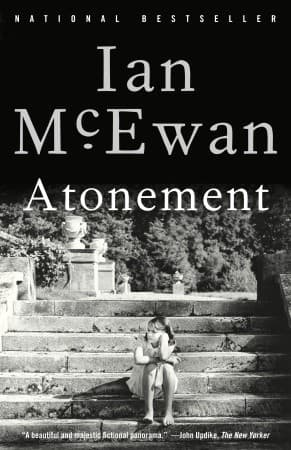
- Atonement
Ian McEwan
4.4 (70) average on GoodreadsWhile both 'Amsterdam' and 'Atonement' explore themes of guilt, responsibility, and the consequences of human actions, 'Amsterdam' is a more contained, almost chamber piece, focusing on a tight circle of characters and a shorter timeline. 'Atonement' has a broader scope, spanning decades and delving into the complexities of war and the power of narrative. 'Amsterdam' is arguably more cynical and direct in its critique of human nature, whereas 'Atonement' wrestles with the possibility of redemption through art and confession.
- Saturday
Ian McEwan
3.6 (63k) average on GoodreadsLiterary Fiction'Saturday' shares 'Amsterdam's' precise prose and focus on a single day's events, but it offers a more optimistic, albeit still tense, portrayal of a protagonist's internal and external world. Henry Perowne in 'Saturday' is a more conventionally 'good' character, a neurosurgeon grappling with domestic and societal threats. In contrast, the protagonists of 'Amsterdam' are morally compromised from the outset, leading to a much darker and more satirical outcome. 'Saturday' examines the anxieties of post-9/11 London, while 'Amsterdam' is more concerned with the timeless follies of ambition and friendship.
- The Old Man and the Sea
Ernest Hemingway
3.8 (831k) average on GoodreadsLiterary FictionA Cuban fisherman's long struggle with a giant marlin becomes a story of endurance and dignity, now retold for young adults with illustrations, phonetic guides, and writing prompts in Traditional Chinese.
- One Hundred Years of Solitude
Gabriel García Márquez
4.1 (753k) average on GoodreadsLiterary FictionThrough the multi-generational story of the Buendía family, a mythical town deals with the repeating patterns of time, love, and solitude, as the extraordinary mixes with the ordinary.
- The Goldfinch
Donna Tartt
3.9 (720k) average on GoodreadsLiterary FictionHaunted by a tragic explosion and clutching a stolen Dutch masterpiece, a young orphan navigates the opulent drawing rooms of New York and the gritty underbelly of the art world, desperately seeking connection and redemption amidst a life spiraling into crime and obsession.
- Little Fires Everywhere
Celeste Ng
4.1 (713k) average on GoodreadsLiterary FictionIn Shaker Heights, an artist and her daughter move in, and their free-spirited lives clash with a rule-bound matriarch, revealing hidden conflicts beneath a perfect surface.




Enjoyed the summary?
A summary gives you the shape of the book. The book itself has the detail, the examples and the voice.
Find Amsterdam on AmazonAs an Amazon Associate, BookBrief earns from qualifying purchases. How we're funded