
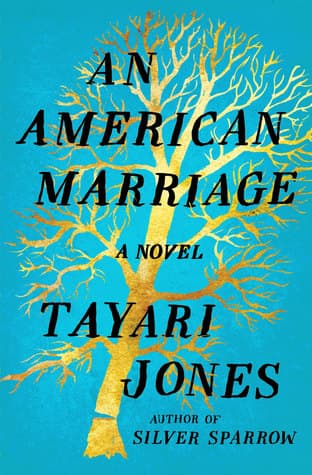
Synopsis
Covers the whole plot, including the ending.
- Difficulty
- Medium
- Pacing
- Moderate
- Mood
- Thought-provoking, Melancholy, Introspective, Emotional
- Read it if
- You want a powerful, character-driven story about love, race, and injustice that explores the ripple effects of wrongful conviction on a marriage.
- Skip it if
- You prefer fast-paced plots or avoid stories with themes of marital infidelity and the prison system.
An American Marriage Plot Summary
Covers the whole plot, including the ending.
The Ill-Fated Anniversary Trip
Roy and Celestial, a young Black couple, celebrate their first wedding anniversary at a Louisiana hotel. After a night out, Celestial falls asleep. Roy leaves to get ice. Upon his return, he finds police in their room, and the hotel manager comforts Celestial. Roy is immediately arrested and accused of rape, despite Celestial's protests that she was asleep and saw nothing. The victim, a white woman, identifies Roy, leading to his swift indictment. Celestial is in shock, dealing with the sudden reality of her husband's incarceration for a crime she believes he did not commit. Their dream of a shared future collapses.
The Trial and Conviction
Roy's trial proceeds, marked by racial bias and a lack of direct evidence linking him to the crime. Celestial testifies, affirming her belief in Roy's innocence and describing their relationship. However, the prosecution's story, combined with the victim's identification and societal prejudices, sways the jury. Roy is convicted and sentenced to twelve years in a state penitentiary. This verdict devastates both Roy and Celestial, beginning their long and painful separation and forcing Celestial to confront a future she never imagined.
Life Apart: Celestial's Struggle and Andre's Comfort
With Roy in prison, Celestial tries to maintain her independence and identity. She focuses on her art, creating dolls that reflect her inner turmoil and serve as a way to express herself. Her childhood best friend, Andre, Roy's best man, becomes her main source of emotional support. Andre, an aspiring musician, provides practical help and companionship, filling the void left by Roy's absence. Their bond deepens, blurring the lines of friendship as Celestial relies on him to cope with her grief and loneliness, while Roy experiences the harsh realities of incarceration.
Roy's Prison Ordeal
Inside prison, Roy endures the conditions of incarceration. He struggles with the loss of his freedom, his career, and his identity as a husband. He forms alliances and navigates the social dynamics of the prison system. His main connection to the outside world is through letters and occasional visits from Celestial and his parents. These communications are important, but also show the growing distance between him and Celestial, as their separate realities diverge. Roy holds onto the hope of release, fueled by his belief in his innocence and the desire to reclaim his life.
The Fading Connection
Over the years, the initial intensity of Celestial and Roy's connection lessens. Their letters become less frequent and more formal. Celestial's visits become sporadic, and the emotional toll of maintaining a relationship with an incarcerated husband becomes heavy. She moves forward with her life, developing her art career and her relationship with Andre, while Roy remains static, trapped in a different reality. This growing gap shows the difficulty of sustaining a marriage under such duress, as their individual paths diverge, making a future reunion seem less likely.
Celestial's Decision
Five years into Roy's sentence, Celestial decides to ask for a divorce. She writes a letter to Roy, explaining her need to move on and build a new life for herself, acknowledging the impossibility of waiting indefinitely. This decision is heartbreaking for both of them, but especially for Roy, who had hoped for their reunion. Celestial's choice reflects her growing independence and her evolving relationship with Andre, but also the deep emotional scars left by the unjust separation. This act formally ends the marital ties, though not necessarily the emotional ones.
Roy's Release and Return
Unexpectedly, after five years, Roy's conviction is overturned due to new evidence and legal appeals. He is released from prison, a free man, but changed by his experience. He returns to Atlanta, filled with relief, trauma, and a desire to resume his life with Celestial. He expects a straightforward reunion, believing their love will overcome the years of separation. His parents welcome him home, but the world he left behind has moved on, and the reality of his return clashes with his expectations, particularly regarding Celestial.
The Awkward Reunion
Roy and Celestial's first meeting after his release is emotional and uncomfortable. Roy expects to pick up where they left off, but Celestial lives with Andre and has built a new life. The years of separation created a gap between them; Roy's trauma and Celestial's independence reshaped them individually. Their attempts at connection are awkward, marked by unspoken resentments and the weight of lost time. This reunion makes it clear that the 'us' they once were no longer exists, and the path forward is more complex than Roy had imagined.
Living with Andre
Celestial lives with Andre, and their relationship is a deep, comfortable partnership. Andre, always supportive, understands Celestial's complicated feelings towards Roy. He is patient but also feels the pressure of Roy's return, knowing his place in Celestial's life is now challenged. Their domestic life, which once felt secure, is now uncertain as Celestial deals with her loyalty and love for both men. Andre represents the present and future Celestial built, a contrast to the past that Roy embodies, forcing them all to confront difficult truths.
Roy's Adjustment and Despair
Roy finds it difficult to adjust to life outside prison. The world changed, and he feels like an outsider. He struggles to find work, to reconnect with friends, and to process the trauma of his incarceration. His greatest pain, however, comes from Celestial's emotional distance and her relationship with Andre. He tries to win her back, believing their marriage is still salvageable. This period is marked by despair and a sense of being lost, as he battles the external world and his internal demons and the weight of his stolen years.
The Trip to the Cabin
To confront their past and determine their future, Celestial and Roy take a trip to a secluded cabin owned by Celestial's family. This trip is a last effort to understand what remains of their connection. They talk openly, revisiting old memories, grievances, and the pain of their separation. While there are moments of tenderness and nostalgia, the changes they both underwent are undeniable. The cabin becomes a place for their unresolved emotions, forcing them to acknowledge the damage done to their marriage and their individual selves.
A Choice Made
After the cabin trip, Celestial makes her choice. She acknowledges the deep love she once had for Roy and the injustice he suffered, but she also recognizes that the person she is now, and the life she built with Andre, is her reality. She tells Roy that she cannot return to him, officially ending their marriage. Roy, though heartbroken, begins to accept the truth and starts to envision a future for himself, separate from Celestial. The novel concludes with the characters facing their futures, marked by their shared past and the 'American marriage' that was both beautiful and broken.
An American Marriage Characters
Celestial Davenport
Protagonist
A talented doll artist whose life is upended by her husband's wrongful conviction, forcing her to redefine independence and love.
Celestial is a strong-willed and independent woman with a burgeoning career as a doll artist. Initially deeply in love with Roy, her life is shattered when he is imprisoned. She grapples with immense grief, loneliness, and the societal pressures placed upon her as a wife of an incarcerated man. She finds solace in her art and the unwavering support of her childhood friend, Andre, gradually building a new life and identity independent of Roy. She is introspective and articulate, often expressing her complex emotions through her letters.
Relationships: Roy O'Bryant (Husband, then estranged husband; deep love strained by separation and injustice.); Andre (Childhood best friend, confidante, and eventually her partner.); Big Roy (Father-in-law, initially supportive, later critical of her choices.); Olive (Mother-in-law, initially supportive, later critical of her choices.)
Roy O'Bryant
Protagonist
A young executive wrongfully imprisoned, whose spirit is tested by injustice and the loss of his marriage.
Roy is an ambitious and devoted husband, full of optimism for his future with Celestial. His wrongful conviction and subsequent imprisonment for five years brutally strip him of his freedom, career, and identity. He endures the harsh realities of prison life, clinging to the hope of returning to Celestial and reclaiming his life. Upon release, he struggles to adjust to a changed world and the painful reality that his marriage has irrevocably broken, forcing him to confront the profound impact of his stolen years.
Relationships: Celestial Davenport (Wife, then estranged wife; deep love and longing, later heartbreak and acceptance.); Andre (Best friend and best man, later rival for Celestial's affection.); Big Roy (Father; strong, guiding presence, offering unwavering support.); Olive (Mother; loving and supportive, deeply affected by his incarceration.)
Andre
Supporting
Celestial's childhood best friend and confidant, who becomes her emotional anchor during Roy's imprisonment.
Andre is Celestial's loyal and sensitive childhood best friend, and Roy's best man. He is an aspiring musician with a gentle demeanor. When Roy is imprisoned, Andre steps into a crucial role as Celestial's primary emotional support, providing comfort, practical help, and unwavering companionship. His love for Celestial deepens over time, eventually leading to a romantic relationship. He is patient and understanding, navigating the complexities of his feelings for Celestial while respecting her enduring connection to Roy.
Relationships: Celestial Davenport (Childhood best friend, confidante, and later her romantic partner.); Roy O'Bryant (Best friend, best man; later a rival, though with lingering respect.)
Big Roy O'Bryant (Roy Sr.)
Supporting
Roy's father, a steadfast and pragmatic man who provides unwavering support to his son.
Big Roy is Roy's father, a strong and grounded man who works as a college professor. He provides unwavering support to his son throughout his incarceration, tirelessly working on appeals and offering emotional strength. He is pragmatic and often critical, particularly of Celestial's choices as time goes on, believing she should wait for Roy. His love for his son is fierce, and he embodies the patriarchal expectations of family loyalty and perseverance.
Relationships: Roy O'Bryant (Father; deeply supportive, guiding, and protective.); Olive O'Bryant (Wife; partner in supporting Roy.); Celestial Davenport (Daughter-in-law; initially supportive, later critical of her actions.)
Olive O'Bryant
Supporting
Roy's mother, a loving and compassionate woman who struggles with her son's unjust imprisonment.
Olive is Roy's mother, a loving and compassionate woman who is deeply affected by her son's wrongful conviction. She maintains a strong sense of faith and provides emotional comfort to Roy and her husband. She is initially supportive of Celestial but, like Big Roy, grows critical as Celestial moves on with her life, seeing it as a betrayal of her son. She represents the emotional toll of the injustice on the family unit and the hope for reunion.
Relationships: Roy O'Bryant (Mother; loving, supportive, and emotionally invested.); Big Roy O'Bryant (Husband; partner in supporting Roy.); Celestial Davenport (Daughter-in-law; initially supportive, later disappointed by her decisions.)
Davenport Parents (Evelyn and Franklin)
Supporting
Celestial's parents, who offer her support while grappling with the societal implications of Roy's conviction.
Celestial's parents are supportive of her, though they also carry the weight of societal expectations and the racial undertones of Roy's situation. They encourage Celestial's independence and her art. Her mother, Evelyn, is particularly concerned with appearances and what 'people will say,' reflecting the pressures Black families face. Her father, Franklin, is more quietly supportive. They represent the broader community's reaction and the complexities of navigating personal tragedy within a racialized context.
Relationships: Celestial Davenport (Parents; supportive, but also influenced by societal pressures.); Roy O'Bryant (Son-in-law; initially welcoming, later distanced by the circumstances.)
An American Marriage Themes
The Injustice of the American Carceral System
The novel dissects the impact of wrongful incarceration, especially on Black families. Roy's story shows how racial bias in the justice system can strip individuals of their freedom, identity, and future, even with insufficient evidence. His prison experience, and the difficulty of reintegrating into society, shows systemic failures and lasting trauma. The injustice affects not just Roy; it affects Celestial's life, his parents', and their community, showing how a single wrongful conviction can dismantle lives and marriages.
“An American marriage is a thing of beauty, but it is also a thing of great difficulty.”
The Nature of Love and Marriage Under Duress
Jones explores how love and marriage are tested and changed by extreme circumstances. Celestial and Roy's initial passionate love is subjected to the strain of separation, loneliness, and differing realities. The novel questions whether love can endure when partners live entirely separate lives for years. Celestial's independence and her evolving relationship with Andre, contrasted with Roy's hope for their reunion, show that love, while powerful, is not always enough to sustain a marriage in the face of such external forces. It highlights the difference between love as a feeling and marriage as a partnership.
“Every marriage is a story, but some stories are longer than others, and some are more difficult to tell.”
Identity and Self-Reinvention
Both Celestial and Roy undergo identity shifts. Roy, once an ambitious executive, is reduced to a prisoner, forcing him to confront who he is without his freedom or his wife. Upon his release, he struggles to reclaim his former self and find a new place in a changed world. Celestial, initially defined by her relationship with Roy, is forced to forge an independent identity as an artist and an autonomous woman. Her journey involves asserting her own needs and desires, ultimately choosing the life she built for herself over a nostalgic ideal. The novel suggests that profound experiences, whether traumatic or empowering, reshape who we are.
“You can't go back and be the same person you were before. You just can't.”
Race and Class in America
The novel subtly addresses issues of race and class. Roy's wrongful conviction is steeped in racial prejudice, as a Black man accused by a white woman in the South. This racial dynamic is understood by the characters and the reader, showing the systemic vulnerability of Black men within the justice system. The class differences between Roy's upwardly mobile family and Celestial's aspirations, as well as the economic impact of incarceration, further show the broader societal context. The 'American Marriage' of the title extends beyond the personal to encompass the nation's history with race and justice, suggesting that some marriages are more 'American' than others in their exposure to systemic issues.
“America is a country where you can lose your life for a small crime, and lose your family for no crime at all.”
Plot Devices & Literary Techniques
Epistolary Format (Letters)
Utilizes letters between characters to reveal inner thoughts, emotional states, and plot progression.
The novel frequently employs letters, primarily between Roy and Celestial, but also involving Andre and Roy's parents. These letters serve as a crucial window into the characters' evolving emotional landscapes and their separate realities. They allow the reader to understand the growing distance and differing perspectives between Roy, trapped in prison, and Celestial, building a new life. The letters also provide direct access to their innermost thoughts and feelings, often revealing more than their spoken interactions, and highlight the communication challenges inherent in their separation.
Alternating Points of View
Shifts between Celestial's, Roy's, and occasionally Andre's perspectives to offer a multifaceted narrative.
The story is primarily told through the alternating first-person perspectives of Celestial and Roy, with occasional sections from Andre. This device allows Jones to present a comprehensive and nuanced understanding of the impact of Roy's imprisonment on each individual. It highlights their differing experiences, emotional responses, and evolving perceptions of their relationship and future. By showing events from multiple angles, the reader gains a deeper empathy for each character's struggles and choices, emphasizing the subjective nature of truth and the complexities of human relationships under duress.
Symbolism of Celestial's Dolls
Celestial's artistic creations symbolize her emotional state, identity, and the themes of brokenness and repair.
Celestial's handmade dolls are a recurring motif and powerful symbol. Initially, they represent her creativity and burgeoning career. After Roy's incarceration, her dolls become a tangible expression of her grief, loneliness, and the fragmented pieces of her life. The intricate details, the mending of broken parts, and the unique identities of each doll mirror Celestial's own process of coping, healing, and reinventing herself. They symbolize her resilience, her ability to create beauty from pain, and her journey toward self-discovery and independence.
An American Marriage Quotes
“Roy was my everything, and I was his. We were the American dream, or at least our version of it.”
“There are some things that, once broken, can't be put back together.”
“You can't just un-love someone.”
“Every marriage has a secret, even from the people in it.”
“We were two people who loved each other, but we had to decide if love was enough.”
“The past is never really past. It's always with you, in some form or another.”
“It's a strange thing, to realize that the person you thought you knew best is now a stranger.”
“Sometimes the only way to move forward is to let go of what you thought you wanted.”
“There's a difference between being alone and being lonely.”
“The thing about forgiveness is that it's not for the other person. It's for you.”
“How do you explain to someone who hasn't been there what it feels like to lose your life, and then get it back, but it's not the same life?”
“Love is not a state of being, but a series of actions.”
“We were like two trees that grew too close together, their roots intertwined. When one falls, the other is sure to follow.”
“It's hard to remember what you were fighting for when you're just fighting to survive.”
Quiz
10 questions on the plot and the characters. Each answer comes with a short explanation.
Question 1
What is Roy's profession before his arrest?
- A lawyer
- A young executive
- An artist
- A college professor
Show answer
B. A young executive The book description explicitly states Roy is a 'young executive' before his life is disrupted by his arrest.
Question 2
For what crime is Roy initially sentenced, which Celestial knows he didn't commit?
- Armed robbery
- Assault
- Rape
- Drug trafficking
Show answer
C. Rape Roy is wrongfully convicted of rape, a crime that devastates his and Celestial's lives.
Question 3
What is Celestial's profession and passion?
- A writer
- A musician
- An artist
- A teacher
Show answer
C. An artist Celestial is described as an 'artist on the brink of an exciting career,' highlighting her creative profession.
Question 4
Who is Andre in relation to Celestial and Roy?
- Roy's brother
- Celestial's childhood friend and Roy's best man
- Celestial's art dealer
- The lawyer who represents Roy
Show answer
B. Celestial's childhood friend and Roy's best man Andre is a significant character who is Celestial's childhood friend and served as the best man at their wedding, later becoming a source of comfort for Celestial.
Question 5
How many years pass before Roy's conviction is overturned?
- Two years
- Five years
- Ten years
- Twelve years
Show answer
B. Five years The summary states, 'After five years, Roy’s conviction is suddenly overturned,' indicating the duration of his wrongful imprisonment before his release.
Question 6
What city do Roy and Celestial settle in and return to after Roy's release?
- New York City
- New Orleans
- Atlanta
- Charlotte
Show answer
C. Atlanta The book description mentions that Roy 'returns to Atlanta ready to resume their life together,' confirming their home city.
Question 7
What central theme does the novel explore regarding marriage and imprisonment?
- The unbreakable nature of true love despite any challenge.
- The psychological impact of wrongful conviction on the individual only.
- How external forces, like wrongful incarceration, can reshape and fracture intimate relationships.
- The ease with which people can move on from past traumas.
Show answer
C. How external forces, like wrongful incarceration, can reshape and fracture intimate relationships. The summary highlights that the story is 'a deeply insightful look into the hearts and minds of three people who are at once bound and separated by forces beyond their control,' emphasizing the impact of external forces on their relationship.
Question 8
What is Celestial's emotional state described as after Roy's arrest, despite her fierce independence?
- Resilient and determined to fight for justice.
- Bereft and unmoored, seeking comfort in Andre.
- Angry and vengeful towards the justice system.
- Emotionally detached and focused on her career.
Show answer
B. Bereft and unmoored, seeking comfort in Andre. The description states, 'Though fiercely independent, Celestial finds herself bereft and unmoored, taking comfort in Andre,' detailing her emotional response.
Question 9
What does the phrase 'the embodiment of both the American Dream and the New South' suggest about Roy and Celestial at the beginning of the novel?
- They are wealthy landowners in the South.
- They represent upward mobility and progress for African Americans in the contemporary South.
- They symbolize traditional Southern values and conservatism.
- Their success is based on exploiting others.
Show answer
B. They represent upward mobility and progress for African Americans in the contemporary South. This phrase implies their success and promising future as a young Black couple, embodying modern aspirations and regional identity, which is then tragically disrupted.
Question 10
Upon Roy's return, what is the primary challenge he and Celestial face?
- Finding new careers in a different city.
- Reckoning with their past and the changed nature of their relationship.
- Dealing with continued harassment from the legal system.
- Adjusting to a lavish lifestyle they can no longer afford.
Show answer
B. Reckoning with their past and the changed nature of their relationship. The summary concludes by stating the characters 'must reckon with the past while moving forward- with hope and pain- into the future,' directly addressing the challenge of their altered relationship.
An American Marriage FAQ
What is the central conflict that drives the plot of 'An American Marriage'?
The central conflict arises when Roy, a young Black executive, is falsely accused of rape and sentenced to twelve years in prison, tearing him and his artist wife, Celestial, apart just as they were beginning their lives together. This unjust separation forces them to navigate the complexities of love, loyalty, and identity while physically and emotionally distanced.
Who are the main characters and what are their initial roles in the story?
The main characters are Roy, a hardworking and ambitious executive, and Celestial, a talented doll artist. They are newlyweds, representing the American Dream in the New South, deeply in love until Roy's wrongful incarceration disrupts their promising future, leaving Celestial to cope with his absence.
How does Celestial cope with Roy's imprisonment, and who provides her comfort?
Celestial initially struggles with profound grief and isolation after Roy's imprisonment. She finds solace and support in Andre, her childhood best friend and Roy's best man, whose presence gradually evolves from platonic comfort into a deeper emotional and eventually romantic connection.
What significant event occurs five years into Roy's prison sentence?
Five years into his sentence, Roy's conviction is suddenly overturned, leading to his unexpected release from prison. This event sets the stage for his return to Atlanta, anticipating a reunion with Celestial and the resumption of their married life, unaware of the profound shifts that have occurred in her absence.
What is the primary dilemma Celestial faces upon Roy's return?
Upon Roy's return, Celestial is caught in an agonizing dilemma: she must choose between her husband, Roy, who expects their marriage to resume, and Andre, with whom she has built a new life and found emotional solace during Roy's unjust absence. This choice forces her to confront her evolving feelings and loyalties.
What is the significance of Celestial's doll-making throughout the novel?
Celestial's doll-making serves as a powerful metaphor for her emotional state and identity. Her art allows her to express her grief, resilience, and evolving sense of self, often reflecting her internal struggles and her attempts to piece together a fragmented life, especially after Roy's imprisonment.
How does the author use letters between Roy and Celestial to reveal character and plot progression?
The letters exchanged between Roy and Celestial are crucial in revealing their individual psychological states and the deteriorating state of their marriage. They highlight Roy's hope and denial, Celestial's gradual detachment and the unspoken truths that accumulate, ultimately charting the emotional distance growing between them.
What role do Roy's parents, Big Roy and Olive, play in the narrative?
Big Roy and Olive provide a stable, loving, and deeply supportive anchor for Roy, both before and during his imprisonment. They are a constant source of comfort and practical help, embodying unwavering familial loyalty and the enduring pain of injustice, while also trying to support Celestial in Roy's absence.
How does the novel explore the concept of the 'American Dream' for Black couples?
The novel critiques the 'American Dream' by showing how easily it can be shattered for Black couples like Roy and Celestial due to systemic racism and injustice. Their initial success is violently disrupted by a false accusation, highlighting the precariousness of their achievements and the constant threat of racial bias.
Discuss Roy's psychological journey during his time in prison.
Roy's psychological journey in prison is marked by an initial struggle with despair and a fierce determination to maintain his innocence and hold onto his marriage. He grapples with the injustice, the loss of his career, and the slow erosion of hope, often clinging to an idealized version of his life with Celestial.
Analyze Celestial's emotional evolution from a devoted wife to a woman seeking independence.
Celestial evolves from a devoted but dependent wife into a more independent and self-aware woman. Her emotional journey is characterized by initial grief, followed by a gradual process of self-discovery and the painful realization that she must prioritize her own well-being, even if it means letting go of her past with Roy.
How does Andre's character provide a psychological contrast to Roy?
Andre provides a psychological contrast to Roy by offering Celestial a different kind of love—one based on long-standing friendship, immediate presence, and emotional understanding, rather than the intense, passionate, but now distant love she shared with Roy. Andre represents a path forward, while Roy represents the past and the trauma of injustice.
What psychological impact does the wrongful conviction have on Roy's identity and masculinity?
The wrongful conviction deeply wounds Roy's identity and masculinity. He loses his freedom, his career, and his sense of purpose as a provider, leading to a profound sense of emasculation and a struggle to reclaim his self-worth and place in the world upon his release.
Is 'An American Marriage' primarily a love story or a social commentary?
'An American Marriage' functions effectively as both a poignant love story and a sharp social commentary. While the intimate struggles of Celestial, Roy, and Andre are central, their personal narratives are inextricably linked to larger issues of racial injustice, mass incarceration, and the systemic challenges faced by Black families in America.
Does the novel suggest that love can truly overcome all obstacles, or are some forces too powerful?
The novel suggests that while love is powerful, some external forces, particularly systemic injustice, can be too overwhelming for it to fully conquer. Roy and Celestial's love, though initially strong, ultimately buckles under the weight of false imprisonment, demonstrating the limits of individual resolve against societal failures.
Who, if anyone, is truly 'at fault' for the dissolution of Roy and Celestial's marriage?
The novel carefully avoids placing singular blame on any character for the dissolution of the marriage. Instead, it frames the systemic injustice of Roy's wrongful conviction as the primary catalyst, with the characters' subsequent choices and emotional evolutions being understandable, albeit painful, responses to forces beyond their control.
What is the significance of the novel's ending, particularly Celestial's final decision?
Celestial's final decision to marry Andre, while painful for Roy, signifies her choice to prioritize her present happiness and emotional stability over a past that was irrevocably altered by trauma. It's an affirmation of her agency and a recognition that some losses, however unjust, cannot be fully recovered.
How does Tayari Jones use the narrative structure, particularly the shifting perspectives, to enhance the story?
Tayari Jones uses shifting first-person perspectives, primarily between Roy and Celestial (and occasionally Andre), to offer intimate insights into each character's thoughts, feelings, and experiences. This structure allows readers to deeply empathize with each individual's struggle and understand the complex emotional landscape of their fractured relationships.
About the author

Tayari Jones is an American author known for her fiction that explores themes of love, race, and identity. Her notable work, "An American Marriage," examines the complexities of marriage and the impact of wrongful incarceration. Jones has received several awards for her writing, including the Hurston/Wright Legacy Award.
Similar books
- The Vanishing Half
Brit Bennett
4.3 (132k) average on GoodreadsLiterary FictionExplores themes of identity, family, and the lasting impact of choices on Black lives.
- Homegoing
Yaa Gyasi
4.4 (175k) average on GoodreadsLiterary FictionIntergenerational storytelling about the legacy of history and systemic injustice.
- The Old Man and the Sea
Ernest Hemingway
3.8 (831k) average on GoodreadsLiterary FictionA Cuban fisherman's long struggle with a giant marlin becomes a story of endurance and dignity, now retold for young adults with illustrations, phonetic guides, and writing prompts in Traditional Chinese.
- One Hundred Years of Solitude
Gabriel García Márquez
4.1 (753k) average on GoodreadsLiterary FictionThrough the multi-generational story of the Buendía family, a mythical town deals with the repeating patterns of time, love, and solitude, as the extraordinary mixes with the ordinary.
- The Goldfinch
Donna Tartt
3.9 (720k) average on GoodreadsLiterary FictionHaunted by a tragic explosion and clutching a stolen Dutch masterpiece, a young orphan navigates the opulent drawing rooms of New York and the gritty underbelly of the art world, desperately seeking connection and redemption amidst a life spiraling into crime and obsession.
- Little Fires Everywhere
Celeste Ng
4.1 (713k) average on GoodreadsLiterary FictionIn Shaker Heights, an artist and her daughter move in, and their free-spirited lives clash with a rule-bound matriarch, revealing hidden conflicts beneath a perfect surface.




Enjoyed the summary?
A summary gives you the shape of the book. The book itself has the detail, the examples and the voice.
Find An American Marriage on AmazonAs an Amazon Associate, BookBrief earns from qualifying purchases. How we're funded