
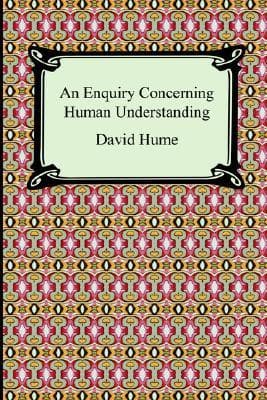
Core Idea
- Difficulty
- Hard
- Read it if
- You are interested in the foundational arguments of empiricism, the problem of induction, skepticism, or the philosophical underpinnings of how we form beliefs and understand causality.
- Skip it if
- You prefer practical self-help or contemporary philosophy, or you are looking for a book that offers definitive answers rather than probing the limits of knowledge.
Key Takeaways from An Enquiry Concerning Human Understanding
The Limits of Experience
All knowledge originates from sensory experience, not innate ideas.
Hume challenges the idea of innate ideas. He argues that all our complex thoughts come from simpler 'impressions' – strong, immediate sensory experiences (external) or feelings (internal). The mind's job is not to find existing truths but to combine, separate, and arrange these impressions. Even abstract ideas like God are just combinations and exaggerations of qualities we have experienced. This empiricist view directly opposes rationalist philosophy, claiming that reason works with data from the senses, rather than creating knowledge on its own. This strong skepticism about where ideas come from sets up his criticisms of cause and effect and induction.
“All the materials of thinking are derived either from our outward or inward sentiment: the mixture and composition of these belongs alone to the mind and will. Or, to express myself in philosophical language, all our ideas or more feeble perceptions are copies of our impressions or more lively ones.”
In the book: Hume's distinction between 'impressions' (lively perceptions, sensations, emotions) and 'ideas' (fainter copies of impressions, thoughts, memories). He uses the example of a blind man not being able to form an idea of color, or a mild man unable to conceive of maliciousness, because they lack the corresponding impression.
Try this: To critically examine the source of our beliefs and assumptions. Are they grounded in direct experience, or are they abstract constructions built upon vague or imagined impressions? Cultivating a habit of tracing complex ideas back to their experiential roots can expose unfounded assumptions.
Related ideas: empiricism, impressions, ideas, tabula-rasa, rationalism
Causality: A Habit, Not a Necessity
We cannot logically prove cause and effect; it's a mental habit formed by observed constant conjunction.
Hume strongly criticizes the idea of a necessary connection in cause and effect. We see one event (A) always followed by another (B) – for example, a cue ball hitting an eight ball, then the eight ball moves. From this 'constant conjunction,' our minds form a habit of expecting B when A happens. However, Hume argues we never actually see the 'power' or 'force' that links A to B; we only see the sequence. The idea of a necessary connection is our own psychological expectation projected onto the world, not an objective part of reality. This means that all our knowledge about cause and effect, which supports much of science and daily life, is based on custom and belief rather than logical proof. It is a major challenge to scientific certainty.
“The mind is carried by habit, upon the appearance of one event, to expect its usual attendant, and to believe that it will exist.”
In the book: The billiard ball example: one ball striking another. We observe the motion of the first ball, then the motion of the second. We do not perceive any 'secret power' or 'necessary connection' between them, only their temporal and spatial contiguity and constant conjunction.
Try this: Approach scientific claims and everyday predictions with a healthy skepticism, recognizing that 'cause' is often a strong correlation we've grown accustomed to. Be open to alternative explanations or the possibility that observed patterns may not always hold, as they are not logically necessary.
Related ideas: causality, constant-conjunction, skepticism, induction, necessary-connection
The Problem of Induction
Past experience cannot logically guarantee future outcomes; our reliance on it is custom, not reason.
Hume's problem of induction comes directly from his criticism of cause and effect. We assume that because the sun has risen every day, it will rise tomorrow. We assume that because gravity has always worked, it will continue to work. This inference from past regularities to future ones is called induction. Hume argues there is no logical proof for this principle. Any attempt to justify induction relies on induction itself (e.g., 'induction has worked in the past, so it will work in the future'), which is circular reasoning. Our belief in the uniformity of nature is a deeply ingrained psychological habit, a 'custom,' rather than a conclusion of reason. This shakes the foundations of empirical science, suggesting its predictions are based on faith in past patterns, not logical necessity.
“That the sun will not rise tomorrow is no less intelligible a proposition, and implies no more contradiction, than the affirmation, that it will rise.”
In the book: The example of the sun rising: we have countless past observations, but no logical proof that it must continue. Hume states, 'all inferences from experience suppose, as their foundation, that the future will resemble the past.' This very principle cannot be proven by demonstrative reasoning (which deals with relations of ideas) nor by probable reasoning (which relies on experience, thus circular).
Try this: Cultivate intellectual humility about scientific 'laws' and predictions. While incredibly useful and reliable, recognize that they are based on observed patterns and probabilities, not absolute logical guarantees. Be prepared for anomalies or shifts in fundamental assumptions, even if statistically improbable.
Related ideas: induction, uniformity-of-nature, skepticism, circular-reasoning, habit-of-mind
Belief as a Vivid Impression
Belief is not a distinct idea, but a stronger, more vivid manner of conceiving an idea.
Hume states that belief is not adding a new idea (like 'I believe that X') to our idea of X. Instead, it is a particular 'manner' or 'sentiment' of conceiving an idea. When we believe something, the idea linked to that belief feels stronger, more vivid, and more forceful than a mere imagined idea. This vividness often comes from a connection to current impressions or memories, especially through cause and effect (e.g., seeing smoke makes us believe there is fire). This shows the psychological, rather than purely rational, nature of our agreement with statements. Our beliefs are deeply tied to our emotional and sensory experiences, making them powerful motivators and shaping how we see reality.
“Belief is nothing but a more vivid, lively, forcible, firm, steady conception of an object, than what the imagination alone is ever able to attain.”
In the book: Hume contrasts the idea of a winged horse (a product of imagination) with the idea of a horse we believe exists. The content of the idea might be the same, but the 'feeling' or 'manner of conception' is different. Belief gives a 'superior force' to ideas.
Try this: Recognize that the strength of a belief is often tied to its emotional impact or its connection to our immediate experiences, not necessarily its logical validity. To change a belief, one might need to address the underlying sentiments or provide new, vivid impressions rather than just logical arguments.
Related ideas: belief, vividness, sentiment, imagination, impressions
Miracles: A Violation of Experience
Belief in miracles is irrational because it requires rejecting the strongest possible evidence: uniform human experience.
Hume's argument against miracles applies his empiricist ideas. A miracle is a violation of natural laws, which are established by 'firm and unalterable experience.' To believe in a miracle, one must accept witness testimony over the testimony of all past human experience. Hume argues that the chance of witnesses being mistaken, deceived, or lying is always greater than the chance of a natural law being truly suspended. Therefore, a wise person, who bases belief on evidence, will always find the testimony for a miracle insufficient to outweigh the consistent testimony of experience against it. This does not deny God's power, but states that rational belief cannot accept such claims given our empirical understanding of the world.
“A wise man, therefore, proportions his belief to the evidence.”
In the book: Hume defines a miracle as 'a transgression of a law of nature by a particular volition of the Deity, or by the interposition of some invisible agent.' He then argues that the evidence for a law of nature (uniform experience) is always stronger than the evidence for a miracle (testimony of a few individuals). He cites historical examples of supposed miracles, noting their prevalence among 'ignorant and barbarous nations' and their tendency to be reported by those with a vested interest.
Try this: Apply critical thinking to extraordinary claims, especially those that defy well-established scientific principles. Prioritize the weight of consistent, repeatable evidence over anecdotal accounts or historical narratives, particularly when assessing phenomena that challenge our fundamental understanding of how the world works.
Related ideas: miracles, evidence, laws-of-nature, testimony, skepticism
Free Will: A Misunderstanding of Necessity
Human liberty is compatible with necessity, as necessity is merely observed constant conjunction, not deterministic force.
Hume addresses the debate of free will versus determinism by redefining 'necessity.' He argues that necessity, for human actions, is no different from the necessity we see in the physical world: events consistently happening together, leading to a customary inference in our minds. When we say human actions are 'necessary,' we mean they show predictable patterns based on motives, character, and circumstances. 'Liberty,' on the other hand, is simply the freedom to act according to one's will, without external obstacles. These two ideas do not contradict each other. If our actions were truly random and uncaused, they would not be 'free' in any meaningful way, as they would not reflect our character or desires. Hume's compatibilism suggests that moral responsibility is possible because our actions come from our choices, even if those choices are part of a predictable chain of events.
“By liberty, then, we can only mean a power of acting or not acting, according to the determinations of the will; that is, if we choose to remain at rest, we may; if we choose to move, we also may. Now this hypothetical liberty is universally allowed to belong to every one who is not a prisoner and in chains.”
In the book: Hume observes that human behavior exhibits remarkable regularity and predictability, similar to physical laws. He points to how we infer character from actions, and how laws and punishments are based on the assumption that motives influence behavior. He distinguishes between 'liberty of spontaneity' (freedom from external coercion) and 'liberty of indifference' (freedom from necessity), arguing only the former is meaningful.
Try this: Reframe the discussion around free will. Instead of agonizing over absolute, uncaused choice, focus on understanding the influences and motivations that shape our decisions. Acknowledge that while we act on our will, our will itself is part of a complex, often predictable, system. This perspective can foster empathy and a more nuanced understanding of personal responsibility.
Related ideas: free-will, determinism, compatibilism, necessity, liberty
The Fictional Self
We have no direct impression of a unified, persistent 'self'; it's a bundle of fleeting perceptions.
Hume extends his empiricist skepticism to the idea of the 'self.' If all knowledge comes from impressions, then where is the impression of a persistent, unchanging 'self' or 'soul'? He argues that when we look inward, we only find a series of distinct perceptions (thoughts, feelings, sensations) – a 'bundle or collection of different perceptions.' There is no underlying, unified 'I' that stays constant over time. The idea of a stable self comes from our imagination, which, by confusing similarity with identity, creates a fiction of continuity. This view challenges deeply held ideas of personal identity and consciousness, suggesting that our sense of self is more like a continuous movie than a static entity.
“When I enter most intimately into what I call myself, I always stumble on some particular perception or other, of heat or cold, light or shade, love or hatred, pain or pleasure. I never can catch myself at any time without a perception, and never can observe any thing but the perception.”
In the book: Hume's introspective experiment: he looks for a 'self' and only finds particular perceptions. He compares the mind to a 'theatre, where several perceptions successively make their appearance.' He notes that we mistakenly attribute identity to things that are merely similar and continuously connected, like a ship that is gradually rebuilt plank by plank.
Try this: Challenge the ego's grasp on a fixed identity. Embrace the fluidity of self and recognize that who you are is a dynamic collection of experiences, memories, and aspirations, constantly changing. This can foster a sense of detachment from past mistakes and openness to future growth, rather than clinging to a rigid, often self-limiting, narrative of self.
Related ideas: self, personal-identity, bundle-theory, consciousness, introspection
Reason's Limited Domain
Reason is the 'slave of the passions,' serving to find means to ends, not to determine ultimate values or actions.
While this famous quote is from his Treatise, its essence is throughout the Enquiry. Hume limits the scope of reason to two areas: relations of ideas (like mathematics and logic, which are true but tell us nothing about the world) and matters of fact (which are based on experience and probability, and ultimately on custom). Reason cannot, by itself, tell us what is good or bad, or what we should do. Our desires, emotions, and sentiments ('passions') are the ultimate drivers of our actions and moral judgments. Reason's role is instrumental: it helps us figure out the best ways to achieve what our passions already want. This challenges centuries of philosophy that placed reason at the top of human abilities, reducing it to a tool rather than a guide for moral life.
“Reason is, and ought only to be the slave of the passions, and can never pretend to any other office than to serve and obey them.”
In the book: Hume argues that 'reason is perfectly inert, and can never prevent or produce any action or affection.' He shows that moral distinctions are not derived from reason (as they aren't matters of fact or relations of ideas) but from a 'moral sense' or 'sentiment.' If reason alone could motivate, then logic could prevent crime, which is clearly not the case.
Try this: Recognize the powerful, often subconscious, role that emotions and desires play in decision-making, even when we believe we are being purely rational. Instead of trying to suppress emotions, understand how they shape your goals and use reason to find the most effective and ethical paths to achieve those goals. Embrace the idea that values are felt, not reasoned.
Related ideas: reason, passions, moral-sentiment, instrumental-reason, is-ought-problem
Skepticism as a Moderate Stance
Extreme skepticism is impractical; a mitigated skepticism promotes humility and careful inquiry.
Hume distinguishes between excessive or 'Pyrrhonian' skepticism, which would lead to intellectual paralysis and destroy all belief, and a more 'mitigated' or 'academic' skepticism. While his arguments often lead to strong conclusions, Hume admits that human nature prevents us from living as pure skeptics. Our instincts and habits force us to believe in cause and effect, external objects, and personal identity. However, this natural tendency can be moderated by a philosophical skepticism that encourages humility, intellectual caution, and a willingness to question assumptions. This mitigated skepticism, far from being destructive, refines our understanding, limits our inquiries to things humanly understandable, and promotes clear thinking. It calls for being critical, but also practical, recognizing the limits of both reason and absolute doubt.
“A true sceptic will be diffident of his philosophical doubts, as well as of his philosophical conviction; and will never refuse any innocent satisfaction, which life affords, but will entertain a propensity to diminish his enjoyments.”
In the book: Hume notes that 'nature is always too strong for principle.' He observes that even the most extreme skeptic will, upon leaving their study, be compelled to act and believe like everyone else. He praises mitigated skepticism for confining inquiries to subjects 'best adapted to the narrow capacity of human understanding,' leading to greater exactness and modesty.
Try this: Embrace a stance of intellectual humility. Be open to revising deeply held beliefs, but don't fall into the trap of nihilistic doubt. Use skepticism as a tool for clearer thinking and careful evaluation of evidence, rather than an excuse to reject all knowledge. Focus your intellectual energies on questions that are genuinely amenable to human inquiry and experience.
Related ideas: skepticism, mitigated-skepticism, pyrrhoanian-skepticism, humility, epistemology
The Role of Custom and Habit
Custom, not reason, is the 'great guide of human life,' shaping our beliefs and expectations.
Throughout the Enquiry, Hume repeatedly stresses the important role of 'custom' or 'habit' in shaping human understanding. Custom leads us to infer cause from effect, to believe in the uniformity of nature, and to expect the future based on past experience. When reason fails to provide a logical basis for these beliefs, custom steps in as a strong, non-rational principle of human nature. This is not a flaw in human thinking, but a necessary mechanism that allows us to navigate the world, make predictions, and survive. Without custom, experience would be useless, and we would always be uncertain. This insight highlights Hume's psychological approach to philosophy, grounding our most basic cognitive processes in deeply ingrained patterns of thought rather than pure logic.
“Custom, then, is the great guide of human life. It is that principle alone which renders our experience useful to us, and makes us expect, for the future, a similar train of events with those which have appeared in the past.”
In the book: Hume's entire critique of induction and causality culminates in the assertion that custom is the basis for our belief in these principles. He argues that if reason were the sole guide, 'no two beings could have any agreement in their understandings.' Custom is what links the past to the future in our minds, and it is a 'species of natural instinct.'
Try this: Recognize the immense power of habit and routine in your own life and in society. Understand that many of your fundamental beliefs and reactions are conditioned by repeated experiences, not necessarily by conscious reasoning. Leverage this understanding to build positive habits and to critically assess the origins of ingrained biases or assumptions, knowing they are deeply rooted in custom.
Related ideas: custom, habit, human-nature, instinct, psychology-of-belief
An Enquiry Concerning Human Understanding Quotes
“The great advantage of the mathematical sciences is, that all their ideas are clear and determinate.”
“Custom, then, is the great guide of human life.”
“All ideas, especially abstract ones, are naturally faint and obscure: The mind has but a slender hold of them: They are apt to be confounded with other similar ideas.”
“If we take in our hand any volume; of divinity or school metaphysics, for instance; let us ask, Does it contain any abstract reasoning concerning quantity or number? No. Does it contain any experimental reasoning concerning matter of fact and existence? No. Commit it then to the flames: For it can contain nothing but sophistry and illusion.”
“The most perfect philosophy of the natural kind only staves off our ignorance a little longer.”
“The difference betwixt a man in a passion and a cool reasoner is, that the former perceives the relations of objects in a manner extremely different from the latter.”
“All our reasonings concerning matter of fact are founded on the relation of cause and effect.”
“The existence, therefore, of any being can only be proved by arguments from its cause or its effect; and these arguments are founded entirely on experience.”
“A wise man, therefore, proportions his belief to the evidence.”
“No testimony for any kind of miracle has ever amounted to a probability, much less a proof.”
“Where men are the most sure and arrogant, they are commonly the most mistaken.”
“The most sublime speculations of metaphysics, fall into obscurity and error, when we have no other guide than the understanding.”
“Beauty is no quality in things themselves: It exists merely in the mind which contemplates them.”
“As nature has taught us the use of our limbs, without giving us the knowledge of the muscles and nerves, by which they are actuated; so has she implanted in us an instinct, which carries forward the thought in a correspondent course to that which she has established among external objects.”
Quiz
10 questions on the main ideas. Each answer comes with a short explanation.
Question 1
According to Hume, what is the ultimate source of all our ideas?
- Innate principles
- Impressions
- Divine revelation
- Rational deduction
Show answer
B. Impressions Hume argues that all our ideas are ultimately derived from impressions, which are our lively and vivid perceptions, such as sensations and emotions.
Question 2
Hume divides all perceptions of the mind into which two categories?
- A priori and a posteriori
- Simple and complex
- Impressions and Ideas
- Rational and Empirical
Show answer
C. Impressions and Ideas Hume's fundamental distinction is between impressions (lively perceptions) and ideas (fainter copies of impressions).
Question 3
What is Hume's primary argument against the concept of necessary connection in cause and effect?
- It is a logical contradiction.
- We can never observe the necessary connection itself, only constant conjunction.
- It is an innate idea that cannot be proven.
- Scientific experiments have disproven it.
Show answer
B. We can never observe the necessary connection itself, only constant conjunction. Hume argues that we never perceive a 'necessary connection' between cause and effect, only a 'constant conjunction' or regular succession of events. Our belief in necessity comes from custom or habit.
Question 4
Hume argues that all objects of human reason or enquiry can be divided into what two kinds?
- Metaphysics and Ethics
- Matters of Fact and Relations of Ideas
- Analytic and Synthetic
- Experience and Reason
Show answer
B. Matters of Fact and Relations of Ideas This is Hume's famous Fork. Relations of Ideas are discoverable by thought alone (e.g., mathematics), while Matters of Fact are based on experience and can be conceived otherwise.
Question 5
What does Hume conclude about the existence of an external world and personal identity, given his empiricist principles?
- They are logically demonstrable truths.
- They are firmly established by scientific observation.
- They are ultimately based on belief, custom, and imagination, rather than strict rational proof.
- They are innate ideas that require no empirical justification.
Show answer
C. They are ultimately based on belief, custom, and imagination, rather than strict rational proof. Hume's skepticism extends to these concepts, arguing that while we naturally believe in them, we lack empirical impressions of a continuous self or a mind-independent external world that can provide rational proof.
Question 6
Hume argues that our belief in miracles is irrational because:
- Miracles are inherently impossible.
- The evidence for a miracle would always be outweighed by the constant and uniform experience against it.
- Religious texts are unreliable sources of information.
- Miracles contradict the laws of logic.
Show answer
B. The evidence for a miracle would always be outweighed by the constant and uniform experience against it. Hume's famous argument against miracles states that we should always proportion our belief to the evidence. The uniform experience against a miracle (a violation of natural law) is always stronger than any human testimony for it.
Question 7
What is the role of 'custom or habit' in Hume's philosophy?
- It is the source of all moral principles.
- It is the great guide of human life, leading us to infer future events from past experiences.
- It prevents us from discovering true knowledge.
- It is the foundation of mathematical truths.
Show answer
B. It is the great guide of human life, leading us to infer future events from past experiences. Hume asserts that custom or habit is what makes us expect similar effects from similar causes, even though we have no rational proof of a necessary connection.
Question 8
Hume's 'problem of induction' questions the justification for:
- Deductive reasoning from general principles to specific cases.
- Inferring unobserved matters of fact from past experience, assuming the uniformity of nature.
- The existence of God based on design arguments.
- The validity of sensory perceptions.
Show answer
B. Inferring unobserved matters of fact from past experience, assuming the uniformity of nature. The problem of induction highlights that there is no rational, non-circular way to justify the assumption that the future will resemble the past, which is fundamental to all empirical reasoning.
Question 9
What is the practical implication of Hume's skepticism regarding cause and effect for scientific inquiry?
- It renders all scientific experimentation meaningless.
- It encourages scientists to search for ultimate, metaphysical causes.
- It suggests that science can only describe observed regularities and predict future events based on past experience, rather than discovering underlying necessary connections.
- It proves that all scientific laws are merely subjective opinions.
Show answer
C. It suggests that science can only describe observed regularities and predict future events based on past experience, rather than discovering underlying necessary connections. Hume doesn't dismiss science, but redefines its scope. It moves from discovering 'necessary connections' to establishing 'constant conjunctions' and making predictions based on observed regularities and the force of custom.
Question 10
Hume's 'mitigated skepticism' differs from extreme skepticism by:
- Denying the possibility of any knowledge whatsoever.
- Accepting the limitations of human understanding but advocating for a cautious approach to inquiry, emphasizing experience and common life.
- Asserting the existence of innate ideas as a foundation for knowledge.
- Promoting belief in unobservable metaphysical entities.
Show answer
B. Accepting the limitations of human understanding but advocating for a cautious approach to inquiry, emphasizing experience and common life. Hume's mitigated skepticism acknowledges the limits of reason but allows for practical belief based on custom and experience, encouraging us to restrict our inquiries to subjects suited to our understanding and common life.
An Enquiry Concerning Human Understanding FAQ
What is the main argument of David Hume's 'An Enquiry Concerning Human Understanding'?
Hume's main argument is that all human knowledge originates from experience, challenging rationalist views that emphasize innate ideas or pure reason. He divides perceptions into impressions (vivid sensations) and ideas (faint copies of impressions), arguing that all complex ideas are ultimately derived from simple impressions.
Does skepticism play a significant role in Hume's 'Enquiry'?
Yes, skepticism is a central theme. Hume employs a mitigated skepticism, questioning the certainty of causal inference, inductive reasoning, and the existence of a continuous self, ultimately suggesting that much of our understanding relies on custom and habit rather than pure reason.
What is Hume's distinction between 'relations of ideas' and 'matters of fact'?
Relations of ideas are truths discoverable by pure thought, like mathematics, which are necessarily true. Matters of fact are truths about the world, discoverable only through experience, and their contraries are always possible, such as 'the sun will rise tomorrow'.
How does Hume's view on causality differ from previous philosophical accounts?
Hume famously argues that we never directly observe a necessary connection between cause and effect, only constant conjunction. Our belief in causality, he posits, arises from custom and habit formed through repeated observations, not from a rational insight into an inherent power.
How is Hume's 'Enquiry' different from Descartes' Meditations concerning the source of knowledge?
Hume fundamentally differs from Descartes by asserting that all knowledge originates from sensory experience, rejecting Descartes' emphasis on innate ideas and the certainty of 'I think, therefore I am' as a foundational truth. Descartes prioritizes reason; Hume prioritizes empirical observation.
Does Hume's philosophy lead to total skepticism or a practical way of understanding the world?
While Hume's arguments highlight the limitations of pure reason, he advocates for a 'mitigated skepticism' that acknowledges our practical need to rely on custom and habit for daily life. He doesn't dismiss all knowledge but grounds it in human nature and experience.
What is the 'problem of induction' as presented by Hume?
The problem of induction states that there is no rational justification for inferring that future events will resemble past ones, even if they have consistently done so. Our belief that the future will be like the past is based on habit, not logical necessity.
How does Hume's 'Enquiry' influence later scientific and philosophical thought?
Hume's 'Enquiry' profoundly influenced later philosophy, particularly empiricism and logical positivism, by rigorously examining the foundations of knowledge. It famously awoke Immanuel Kant from his 'dogmatic slumber' and spurred new inquiries into epistemology and the limits of human reason.
About the author
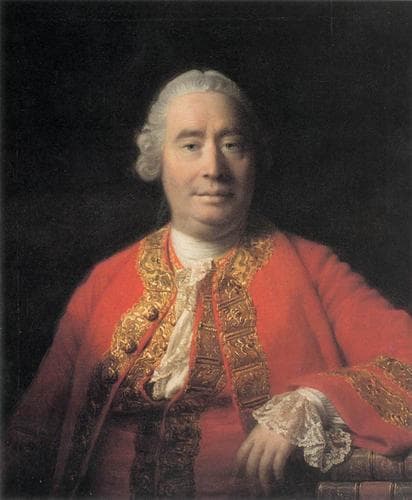
David Hume was a Scottish Enlightenment philosopher, historian, economist, and essayist, best known for his highly influential A Treatise of Human Nature and An Enquiry Concerning Human Understanding. His work profoundly impacted the development of skepticism and empiricism. Hume's critical examination of religious belief is also evident in his posthumously published Dialogues Concerning Natural Religion.
Similar books
- A Treatise of Human Nature
David Hume
3.9 (11k) average on GoodreadsPoliticsHume's more extensive and complex precursor to the Enquiry, covering similar themes in greater depth.
- Second Treatise of Government
John Locke
3.8 (19k) average on GoodreadsPoliticsA foundational text of British empiricism, though focused on political philosophy, it shares an empirical approach to knowledge.
- Critique of Pure Reason
Immanuel Kant
4.0 (28k) average on GoodreadsReferenceA direct philosophical response to Hume's skepticism, attempting to reconcile empiricism with rationalism.
- Two Treatises of Government
John Locke
3.8 (17k) average on GoodreadsPoliticsWhile Locke's Two Treatises is primarily a work of political philosophy, his earlier Essay Concerning Human Understanding (1689) is a direct predecessor to Hume's empiricism. Locke established the idea of the mind as a tabula rasa and all ideas originating from experience. Hume built upon Locke's empiricist foundations but pushed them to their skeptical conclusions. Hume's analysis of ideas and impressions, and his critique of innate ideas, are deeply indebted to Locke's framework, but Hume's skepticism about causality and objective knowledge goes significantly beyond Locke's more moderate empiricism.
- The Perks of Being a Wallflower
Stephen Chbosky
4.2 (1.3M) average on GoodreadsPsychologyThrough letters, a shy high school freshman learns to navigate first love, trauma, and self-discovery, stepping off the sidelines and into life.
- Eleanor Oliphant Is Completely Fine
Gail Honeyman
4.3 (708k) average on GoodreadsLiterary FictionA lonely woman's structured life changes when an IT guy and an elderly man help her learn to open her heart.


Enjoyed the summary?
A summary gives you the shape of the book. The book itself has the detail, the examples and the voice.
Find An Enquiry Concerning Human Understanding on AmazonAs an Amazon Associate, BookBrief earns from qualifying purchases. How we're funded