
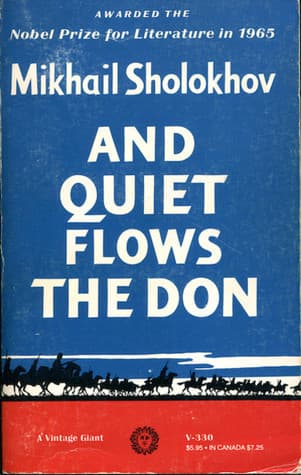
Synopsis
Covers the whole plot, including the ending.
- Difficulty
- Hard
- Pacing
- Slow
- Mood
- Epic, Tragic, Bleak, Immersive, Reflective
- Read it if
- You are fascinated by epic historical sagas, the human cost of war and revolution, and complex characters grappling with love, loyalty, and identity amidst profound societal upheaval. Perfect for those who enjoy deeply immersive historical fiction with a strong sense of place and culture.
- Skip it if
- You prefer fast-paced plots, lighthearted themes, or stories with clear-cut heroes and villains. The novel's length, detailed historical context, and often bleak portrayal of war and human suffering might be challenging for some readers.
And Quiet Flows the Don Plot Summary
Covers the whole plot, including the ending.
The Melekhov Family and Early Loves
The novel starts in the Cossack village of Tatarsk on the Don River. It introduces the Melekhov family: Pantaleimon Prokofyevich, his wife Vasilisa Ilyinichna, their sons Pyotr and Grigory, and daughter Darya. Grigory, a young and passionate Cossack, starts an affair with Aksinya Astakhova, the wife of his neighbor Stepan Astakhov. This relationship shames the Melekhov family and angers Stepan, who beats Aksinya. Pantaleimon, wanting to end the affair and restore family honor, quickly arranges Grigory's marriage to Natalya Korshunova, a beautiful and gentle girl from a respected family. Despite the marriage, Grigory still loves Aksinya, leading to an unhappy home for Natalya and more conflict in the village.
Grigory Leaves Tatarsk with Aksinya
Grigory's love for Aksinya is too strong, even after his marriage to Natalya. He is very unhappy with Natalya, who loves him but cannot win his heart. The tension at home, caused by his mother's disapproval and Natalya's quiet suffering, becomes too much. Grigory decides to leave his wife, family, and village to run away with Aksinya. They work as farm laborers on the Listnitsky family's estate, trying to start a new life away from Tatarsk's judgments and traditions. Natalya, heartbroken, returns to her family. Grigory's actions continue to affect the Melekhov household.
World War I Erupts
Life on the Listnitsky estate gives them a short break, but World War I begins and ends the peace. Grigory, like all fit Cossack men, is called to serve in the military. He experiences the Eastern Front's horrors, seeing senseless violence, death, and friendship in the trenches. His bravery in battle earns him St. George's crosses, and he begins to change. Back in Tatarsk, Natalya, who tried to kill herself after Grigory left, slowly recovers and raises their children, Mishatka and Polyushka. Aksinya stays at the Listnitsky estate, where she has an affair with Yevgeny Listnitsky, a young officer, while Grigory is at war.
Grigory's Return and Reconciliation with Natalya
Grigory is wounded in battle and sent home to Tatarsk to recover. His return brings mixed feelings. He finds out about Aksinya's affair with Yevgeny Listnitsky, which deeply hurts him. Disgusted and feeling the weight of his past actions, Grigory ends his relationship with Aksinya and tries to make up with Natalya. Natalya, despite her past suffering, still loves Grigory and takes him back, hoping for a stable family life. They live together again, and for a time, it seems Grigory might find peace and happiness at home. However, Russia's political unrest, with the approaching revolution, soon threatens their lives again, making lasting peace impossible.
The Russian Revolution and Civil War Begin
The February Revolution and then the October Revolution cause chaos in Russia. The Don Cossacks, who were loyal to the Tsar but also independent, are caught between the Red (Bolshevik) and White (anti-Bolshevik) forces. Political groups appear in Tatarsk: some Cossacks, like Mikhail Koshevoy, support the Bolsheviks, while others, including Pyotr Melekhov and initially Grigory, lean towards the Whites or Cossack independence. Grigory, disappointed by the war and the old system, struggles with his loyalties. He first fights with the Whites, but constantly questions the motives and cruelty of both sides. This wavering loyalty defines his struggle throughout the civil war.
Grigory's Shifting Loyalties
As the Civil War worsens, Grigory's loyalties become complicated and sad. He fights for the Whites, then briefly for the Reds under Podtyolkov, then back with the Whites as part of the anti-Bolshevik uprising of the Upper Don Cossacks. His choices are often practical, driven by the immediate safety of his family and village, or by a deep tiredness with the endless killing and dishonesty he sees on both sides. He sees cruelty and injustice from both Red and White commanders, stopping him from fully supporting either idea. This constant changing makes him an enemy to both groups at different times, isolating him and making his personal tragedy worse.
Tragedy Strikes the Melekhov Family
The Civil War destroys the Melekhov family. Pyotr Melekhov, Grigory's brother, is killed by Mikhail Koshevoy, a former friend who became a strong Bolshevik. Natalya, unable to have more children because of a bad abortion (done to avoid bringing a child into the war-torn world and because Grigory had left her for Aksinya again), dies from complications. This leaves Grigory with their two young children, Mishatka and Polyushka. Koshevoy burns down the family home and later marries Darya, Pyotr's widow, further mixing personal tragedy with political conflict. Grigory feels great loss and realizes that the war has taken everyone and everything he cares about, making his despair and isolation deeper.
Grigory and Aksinya's Final Escape Attempt
As the Red Army takes control of the Don region, Grigory is on the losing side, hunted by the Bolsheviks. He joins a group of Cossack rebels, but their cause is hopeless. Desperate for peace and a future, Grigory decides to run away with Aksinya, hoping to escape the constant pursuit and start fresh. They leave Tatarsk, heading south. However, their escape is short. Aksinya is killed by a stray bullet from a Red Army patrol while they are hiding in the steppes. Her death is the final blow for Grigory, taking away his last hope for love and happiness, leaving him completely broken and alone.
Grigory's Return Home and Uncertain Future
After Aksinya's death, Grigory wanders aimlessly, joining a small group of deserters for a time, but his spirit is crushed. Eventually, seeing that further escape and resistance are pointless, and driven by the memory of his children, he decides to return to Tatarsk. He throws away his rifle, showing he gives up, and walks back to his ruined home. The novel ends with Grigory arriving in his village, holding his young son, Mishatka, who is an orphan because of the war and the deaths of his mother and sister. He stands over Aksinya and Natalya's grave, a figure of great sadness and exhaustion, his future uncertain under the new Soviet government, having lost everything but his son.
And Quiet Flows the Don Characters
Grigory Melekhov
Protagonist
A passionate and conflicted Don Cossack whose life is shaped by love, war, and shifting loyalties.
Grigory is the central figure, a young, headstrong, and often impulsive Cossack. His striking looks and independent spirit make him stand out. He is driven by intense passions, particularly his enduring love for Aksinya, which defies societal norms and family expectations. Initially a traditional Cossack, his experiences in World War I and the subsequent Civil War profoundly alter him, eroding his illusions and forcing him to constantly question his allegiances. He is a skilled fighter but deeply disillusioned by the brutality and hypocrisy he witnesses on both Red and White sides. He yearns for a simple, peaceful life but is repeatedly drawn into the maelstrom of history, ultimately losing almost everyone he loves.
Relationships: Aksinya Astakhova (Lifelong, passionate, and illicit love); Natalya Korshunova (Wife, devoted but unloved by Grigory for much of their marriage); Pantaleimon Melekhov (Father, often in conflict due to Grigory's defiance); Pyotr Melekhov (Older brother, initially close but diverge politically); Mikhail Koshevoy (Childhood friend, later bitter political enemy)
Aksinya Astakhova
Supporting
Grigory's fierce and passionate lover, trapped by societal constraints and personal tragedy.
Aksinya is a beautiful, strong-willed, and defiant woman. Married to the cruel Stepan Astakhov, she finds solace and passion in her illicit affair with Grigory Melekhov. She is fiercely independent and willing to defy social conventions for love, even enduring beatings and ostracization. Her love for Grigory is a central force in her life, but she is also capable of other relationships, notably with Yevgeny Listnitsky, demonstrating her complex nature and survival instincts. Her life is marked by suffering, loss, and the constant struggle for happiness, often at great personal cost. She represents a powerful, almost elemental, female force in the novel.
Relationships: Grigory Melekhov (Lifelong, passionate, and illicit love); Stepan Astakhov (Abusive husband); Yevgeny Listnitsky (Lover during Grigory's absence at war)
Natalya Korshunova
Supporting
Grigory's loyal and long-suffering wife, a symbol of traditional Cossack womanhood.
Natalya is Grigory's gentle, beautiful, and devoted wife, chosen for him by his family. She embodies the traditional virtues of a Cossack woman: loyalty, patience, and a deep desire for family. Despite Grigory's initial rejection and ongoing infidelity, she loves him deeply and tries tirelessly to make their marriage work. Her suffering is immense, marked by Grigory's abandonment, a suicide attempt, and the tragic loss of her children. She represents the innocent victim of Grigory's passions and the broader chaos of the war, her quiet strength eventually giving way to despair. Her death is a profound moment of loss for Grigory.
Relationships: Grigory Melekhov (Husband, whom she loves unconditionally); Mishatka Melekhov (Son); Polyushka Melekhov (Daughter)
Pantaleimon Prokofyevich Melekhov
Supporting
Grigory's stern, traditional Cossack father, struggling to maintain family honor and order.
Pantaleimon is the patriarch of the Melekhov family, a proud, hot-tempered, and traditional Cossack. He is deeply concerned with family honor, reputation, and the strict adherence to Cossack customs. His attempts to control Grigory's rebellious nature and scandalous affair with Aksinya lead to frequent clashes. While he can be harsh and domineering, he also deeply loves his family and struggles to protect them during the tumultuous years of war and revolution. He represents the fading old order and the patriarchal structure of Cossack society, which is gradually dismantled by the changing times.
Relationships: Grigory Melekhov (Son, often in conflict); Pyotr Melekhov (Son); Vasilisa Ilyinichna Melekhova (Wife)
Pyotr Melekhov
Supporting
Grigory's older brother, a more conventional Cossack whose loyalty shifts with the political tide.
Pyotr is Grigory's older brother, less passionate and more pragmatic than Grigory. He is a capable Cossack, initially more settled and traditional. He serves in the army alongside Grigory during WWI but lacks Grigory's philosophical depth or intense moral conflict. During the Civil War, Pyotr initially aligns with the Whites and the Cossack autonomous movement, driven by a desire to protect his family and village from external forces. He is a loyal brother, despite their differences, but his more conventional approach leads him to a tragic end at the hands of a former friend, Mikhail Koshevoy.
Relationships: Grigory Melekhov (Brother, often looking out for Grigory); Darya Melekhova (Wife); Mikhail Koshevoy (Former friend, later his killer)
Mikhail Koshevoy
Antagonist/Supporting
A fervent Bolshevik and former friend who becomes Grigory's bitter enemy.
Mikhail Koshevoy is a young Cossack from Tatarsk, initially a friend of the Melekhov brothers. However, he becomes a staunch and ruthless Bolshevik, driven by an unwavering ideological conviction. He represents the radical new force of the revolution, willing to commit extreme acts for his cause, including killing former friends and burning down homes. His transformation from a village lad to a hardened Red commander highlights the brutalizing effect of the Civil War. His personal vendetta against the Melekhovs, particularly Pyotr and Grigory, makes him a significant antagonist, embodying the deep divisions and personal betrayals wrought by the conflict.
Relationships: Grigory Melekhov (Childhood friend, later bitter enemy); Pyotr Melekhov (Friend, later his killer); Darya Melekhova (Wife after Pyotr's death)
Stepan Astakhov
Supporting
A cruel and vengeful Cossack, Aksinya's husband and Grigory's rival.
Stepan Astakhov is Aksinya's husband, known for his violent temper and cruelty, particularly towards his wife. He is a proud Cossack who is deeply shamed and enraged by Aksinya's affair with Grigory. His initial response is brutal physical violence against Aksinya and a simmering hatred for Grigory. Over time, his animosity towards Grigory evolves, sometimes softening, sometimes flaring up, mirroring the shifting allegiances and moral ambiguities of the war. He represents the harsh realities of Cossack village life and the patriarchal control over women, though he himself suffers greatly from the war.
Relationships: Aksinya Astakhova (Wife, whom he abuses); Grigory Melekhov (Rival, later a complicated relationship during the war)
Darya Melekhova
Supporting
Pyotr's wife, a flirtatious and morally flexible woman who adapts to the changing times.
Darya is Pyotr Melekhov's wife, known for her beauty, flirtatious nature, and somewhat loose morals. Unlike Natalya, Darya is not bound by strict adherence to traditional Cossack virtue. She is pragmatic and resourceful, willing to adapt to the chaotic circumstances of the Civil War to survive. After Pyotr's death, she marries Mikhail Koshevoy, a move that further complicates the family's already fractured loyalties. Her character highlights a different response to the war's upheaval – one of survival and a certain moral ambiguity, rather than tragic suffering or ideological conviction.
Relationships: Pyotr Melekhov (Husband); Mikhail Koshevoy (Husband after Pyotr's death); Grigory Melekhov (Brother-in-law)
Yevgeny Listnitsky
Supporting
A young, aristocratic White Guard officer whose life intersects with Grigory and Aksinya.
Yevgeny Listnitsky is a young, educated, and aristocratic Cossack officer from a noble family, representing the old landowning class. He initially serves with Grigory in World War I, developing a complex relationship with him, often marked by class differences and a degree of mutual respect. He has an affair with Aksinya while Grigory is at the front, a betrayal that deeply impacts Grigory. Yevgeny is a staunch supporter of the White cause, driven by loyalty to the Tsar and his class, but he also experiences disillusionment and the brutal realities of war. His character provides a contrasting perspective to Grigory's, highlighting the ideological divide.
Relationships: Aksinya Astakhova (Lover during Grigory's absence); Grigory Melekhov (Fellow soldier, later rival and ideological opponent)
Ilyinichna (Vasilisa Ilyinichna Melekhova)
Supporting
Grigory's mother, a resilient and traditional Cossack woman who endures immense suffering.
Vasilisa Ilyinichna is the matriarch of the Melekhov family, Pantaleimon's wife and the mother of Pyotr, Grigory, and Darya. She is a strong, resilient woman who tries to hold her family together amidst internal strife and external chaos. She deeply disapproves of Grigory's affair with Aksinya and strongly supports his marriage to Natalya. Her life is one of constant worry and sorrow as she witnesses her children go to war, her family torn apart by political divisions, and her home destroyed. She embodies the enduring strength and suffering of Cossack women during this tumultuous period, carrying the burden of grief and loss.
Relationships: Pantaleimon Melekhov (Husband); Grigory Melekhov (Son, whose choices cause her much grief); Pyotr Melekhov (Son)
And Quiet Flows the Don Themes
The Destructive Power of War and Revolution
The novel shows the destructive effects of World War I and the Russian Civil War on people, families, and a whole way of life. It shows how war removes humanity, forcing men like Grigory to make difficult choices and commit brutal acts. The conflict breaks traditional Cossack society, destroys homes, and leads to great personal loss and suffering, as seen in the deaths of Pyotr, Natalya, Aksinya, and the constant threat to the Melekhov family. Sholokhov highlights the senselessness of the violence, regardless of political loyalty.
“And the Don, the great river, rolled on, quiet and majestic, carrying its waters to the sea, reflecting the sky and the clouds, and the sun, and the stars. And the villages slept, and only the wind sighed over the steppe, and the occasional shot rang out, a distant echo of the war that had devoured so many lives.”
Love, Passion, and Betrayal
A main part of the novel is the difficult love triangle between Grigory, Aksinya, and Natalya. Grigory's passionate love for Aksinya drives much of the early story, going against social rules and causing great suffering for Natalya. This theme looks at raw human desire versus duty and tradition. Betrayal, both personal (Aksinya's affair with Listnitsky) and political, appears often, showing how fragile human relationships are during times of upheaval. This theme makes the characters more human during large historical events, showing that personal passions last even in war.
“He knew that his life would be a torment without Aksinya, that she was his fate, his joy, and his suffering.”
Identity and Belonging (Cossack Identity)
The novel deeply explores the Don Cossacks' identity—their traditions, independence, military culture, and loyalty to the Don River. Grigory's struggle is partly a struggle with his Cossack identity in a world that is quickly changing. The Civil War forces Cossacks to choose between loyalty to the Tsar, an independent Cossack republic, or the new Bolshevik government. This breaks their traditional way of life and sense of shared identity. The destruction of their villages and their forced participation in the war takes away the very meaning of being a Don Cossack, leaving many, like Grigory, lost.
“He was a Cossack. He was born on the Don, he loved the Don, and he would die on the Don.”
Moral Ambiguity and Shifting Allegiances
Sholokhov clearly shows the moral difficulties of the Civil War, where clear good and bad characters are rare. Grigory often changes between Red and White forces, driven by disappointment with both sides' cruelty and a practical desire for survival or to protect his family. The novel questions simple political stories, showing that people are often caught in situations they cannot control, forced to make impossible choices. Characters like Mikhail Koshevoy, who becomes a ruthless Bolshevik, show how ideas can change people, blurring the lines between justice and cruelty.
“He was tired of fighting for a cause he no longer believed in, tired of the endless slaughter, tired of the blood that stained his hands, whether it was Red or White.”
The Cycle of Violence and Revenge
From the first fight between Grigory and Stepan over Aksinya to the Civil War's widespread violence, the novel shows how violence often leads to more violence and revenge. Personal feuds, such as Mikhail Koshevoy killing Pyotr Melekhov, mix with the larger political conflict, creating a cycle of payback. This theme shows how hard it is to escape violence once it has started, suggesting that historical conflicts often have deep roots in personal complaints and continue to cause great harm to generations.
“Blood calls for blood, and there's no end to it.”
Plot Devices & Literary Techniques
Epic Scope and Panoramic View
Narrative structure encompassing a vast historical period and numerous characters.
Sholokhov employs an epic scope, not only in the sheer length of the novel but also in its ambition to portray an entire historical epoch (WWI, Russian Revolution, Civil War) through the lens of a single community, the Don Cossacks. The narrative shifts between the intimate personal lives of the Melekhov family and panoramic scenes of battle, political upheaval, and societal transformation. This allows for a comprehensive and multi-faceted depiction of the era, showing how grand historical forces directly impact individual fates and the fabric of everyday life, making the historical context a character in itself.
Symbolism of the Don River
The Don River as a constant, enduring force amidst human turmoil.
The Don River is more than just a setting; it is a powerful symbol throughout the novel. It represents the enduring spirit of the Cossack people, their connection to the land, and the unchanging flow of nature in contrast to the tumultuous and destructive human conflicts. The 'quiet flow' of the Don in the title juxtaposes with the violent torrent of human events, suggesting a timelessness and resilience that transcends the ephemeral struggles of mankind. It acts as a silent witness to all the joys and sorrows, births and deaths, loves and betrayals that occur along its banks, serving as a constant backdrop for the changing human drama.
Foil Characters (Grigory and Pyotr; Grigory and Koshevoy)
Contrasting characters highlighting different responses to conflict and change.
Sholokhov frequently uses foil characters to illuminate different aspects of the human experience during the war. Pyotr Melekhov, Grigory's more conventional and less conflicted brother, serves as a foil, highlighting Grigory's unique moral struggle and passionate nature. Similarly, Mikhail Koshevoy, the fervent and ideologically driven Bolshevik, acts as a foil to Grigory's wavering and disillusioned stance. These contrasts allow Sholokhov to explore the spectrum of choices and transformations that individuals undergo during revolutionary times, emphasizing the complexity and diversity of responses to the same historical events.
Naturalistic Detail and Dialect
Realistic portrayal of Cossack life, landscape, and language.
The novel is rich in naturalistic detail, meticulously describing the Cossack way of life, their customs, the Don steppe landscape, and the brutal realities of war. Sholokhov's use of authentic Cossack dialect and regionalisms lends a strong sense of verisimilitude and immerses the reader in the specific cultural context. This attention to detail creates a vivid and believable world, grounding the epic narrative in concrete, sensory experiences. The descriptions of nature often reflect or foreshadow the human drama, enhancing the novel's realism and atmospheric depth.
Tragic Hero Archetype
Grigory Melekhov as a flawed protagonist destined for suffering.
Grigory Melekhov embodies the archetype of the tragic hero. He is a man of great passion, courage, and strength, but his flaws—his impulsiveness, his inability to fully commit to either love or ideology, and his profound disillusionment—lead him to a path of immense suffering and loss. Despite his heroic acts in battle, he is ultimately overwhelmed by forces beyond his control, losing his family, his loves, and his sense of belonging. His journey is a descent into despair, culminating in a profound sense of isolation and the tragic realization that he has lost everything he once held dear, leaving him a broken figure at the end.
And Quiet Flows the Don Quotes
“Life is a great thing, and there are many roads in it.”
“The earth is like a mother, and everyone should love their mother.”
“There are times when a man must choose between his heart and his duty.”
“War is a terrible thing. It turns men into beasts.”
“Happiness is like a fleeting bird; you catch it, and it flies away.”
“A man without a homeland is like a tree without roots.”
“The Don flows, and life goes on, no matter what happens.”
“Love is a cruel master, it makes you do things you never thought you would.”
“It's easy to start a war, but it's hard to stop it.”
“A man must stand by his own kind, no matter what.”
“The truth is often bitter, but it must be faced.”
“There is no justice in war, only winners and losers.”
“The past is like a shadow; it follows you wherever you go.”
“Even in the darkest times, there is always a flicker of hope.”
Quiz
10 questions on the plot and the characters. Each answer comes with a short explanation.
Question 1
Which major historical events form the backdrop for the lives and struggles of the Don Cossacks in 'And Quiet Flows the Don'?
- The Crimean War and the Decembrist Revolt
- World War I, the Russian Revolution, and the Russian Civil War
- The Napoleonic Wars and the Emancipation of the Serfs
- The Russo-Japanese War and the October Revolution of 1917
Show answer
B. World War I, the Russian Revolution, and the Russian Civil War The novel explicitly states it depicts the lives and struggles of Don Cossacks during World War I, the Russian Revolution, and the Russian Civil War, making these the central historical events.
Question 2
What is the original Russian title of the novel 'And Quiet Flows the Don'?
- Война и мир (War and Peace)
- Отцы и дети (Fathers and Sons)
- Тихий Дон (The Quiet Don)
- Доктор Живаго (Doctor Zhivago)
Show answer
C. Тихий Дон (The Quiet Don) The provided text states the original Russian title is Тихий Дон, which translates to 'The Quiet Don' or 'Quietly Flows the Don'.
Question 3
Who was awarded the Nobel Prize for Literature for 'And Quiet Flows the Don'?
- Leo Tolstoy
- Boris Pasternak
- Mikhail Aleksandrovich Sholokhov
- Fyodor Dostoevsky
Show answer
C. Mikhail Aleksandrovich Sholokhov Mikhail Sholokhov was awarded the Nobel Prize for Literature in 1965 specifically for this novel, as mentioned in the book description.
Question 4
How many volumes comprise the epic novel 'And Quiet Flows the Don'?
- Two volumes
- Three volumes
- Four volumes
- Five volumes
Show answer
C. Four volumes The novel is described as a '4-volume epic novel'. The first three were published earlier, and the fourth was finished in 1940.
Question 5
When was the final (fourth) volume of 'And Quiet Flows the Don' completed?
- 1932
- 1934
- 1940
- 1965
Show answer
C. 1940 While the first three volumes were written from 1925 to '32, the fourth volume was specifically mentioned as being finished in 1940.
Question 6
What is a significant aspect of the novel's reception and history, mentioned in the provided text?
- It was initially banned in the Soviet Union for its anti-communist themes.
- Its authorship has been contested by some literary critics and historians.
- It was a collaborative work by multiple Soviet writers, not just Sholokhov.
- It was first published posthumously after Sholokhov's death.
Show answer
B. Its authorship has been contested by some literary critics and historians. The text explicitly states: 'The authorship of the novel is contested by some literary critics & historians, who believe it wasn't entirely written by Sholokhov.'
Question 7
What literary genre is 'And Quiet Flows the Don' classified as?
- Science Fiction
- Fantasy
- Historical Fiction
- Romantic Comedy
Show answer
C. Historical Fiction The book description explicitly labels the genre as 'Historical Fiction'.
Question 8
Which Soviet magazine initially published the first three volumes of 'And Quiet Flows the Don'?
- Novy Mir
- Znamya
- October
- Molodaya Gvardiya
Show answer
C. October The first three volumes were published in the Soviet magazine 'October' between 1928–32, as noted in the provided text.
Question 9
Why might 'And Quiet Flows the Don' be considered a significant work of Russian literature in the 20th century?
- It introduced a completely new literary style never before seen in Russian literature.
- It uniquely combined elements of magical realism with historical events.
- It provides an epic depiction of Don Cossack life during a tumultuous period of Russian history, offering deep insight into the era.
- It was the first Russian novel translated into English, opening up Russian literature to the West.
Show answer
C. It provides an epic depiction of Don Cossack life during a tumultuous period of Russian history, offering deep insight into the era. The text states the novel is 'considered one of the most significant works of Russian literature in the 20th century' because 'It depicts the lives & struggles of Don Cossacks during WWI, the Russian Revolution & Russian Civil War.' This epic scope and historical insight are key to its significance.
Question 10
When did the English translation of the first three volumes of 'And Quiet Flows the Don' first appear?
- 1928
- 1932
- 1934
- 1940
Show answer
C. 1934 The text specifies that 'The English translation of the 1st three volumes appeared under this title in 1934.'
And Quiet Flows the Don FAQ
What is 'And Quiet Flows the Don' about?
'And Quiet Flows the Don' is an epic saga chronicling the lives of the Don Cossacks, particularly the Melekhov family, through the tumultuous periods of World War I, the Russian Revolution, and the subsequent Russian Civil War. It centers on Grigory Melekhov, a young Cossack whose personal loves and loyalties are constantly tested and reshaped by the monumental historical events unfolding around him, forcing him to switch allegiances multiple times.
Why should I read 'And Quiet Flows the Don'?
You should read 'And Quiet Flows the Don' for its sweeping historical scope, its deeply human portrayal of characters caught in the maelstrom of war and revolution, and its vivid depiction of Cossack culture and the Don landscape. It offers a powerful, often brutal, look at how ideological conflicts tear apart families and communities, making personal choices agonizingly difficult.
What is the background/setting of 'And Quiet Flows the Don'?
The novel is set primarily in the Don region of Russia, focusing on the Cossack village of Tatarsk during the early 20th century. It vividly portrays the unique culture, traditions, and martial spirit of the Don Cossacks, who were semi-autonomous and served as cavalry for the Tsarist regime, before being thrust into the ideological battles of the Russian Revolution and Civil War.
What are the most memorable quotes?
One memorable quote reflects the harsh reality: 'Man is born to trouble, as the sparks fly upward.' Another captures the Cossack spirit: 'We are Cossacks, and we must fight.' The novel is rich with folk sayings and descriptions that evoke the beauty and brutality of the Don steppes and the human condition.
What writing style does Mikhail Sholokhov use?
Sholokhov employs a rich, descriptive, and often starkly realistic prose style. He blends detailed historical accounts with intimate character studies, using vivid imagery to depict both the natural world of the Don and the horrors of war. His narrative often shifts between epic battles and personal tragedies, reflecting folk traditions and a deep understanding of Cossack life.
What minor details add significant meaning?
The recurring descriptions of the Don River itself, sometimes flowing 'quietly' and other times turbulent, serve as a powerful metaphor for the lives of the Cossacks and the historical events unfolding. The detailed accounts of daily Cossack life, from farming to feasting, highlight what is lost and disrupted by the wars, making the human cost more palpable.
What are some subtle foreshadowing moments?
Early descriptions of Grigory's passionate and rebellious nature, particularly his affair with Aksinya Astakhova, foreshadow his later inability to commit to a single political allegiance and his constant internal struggle. The initial tensions between Cossacks and 'outsiders' also subtly hint at the deeper divisions that will erupt during the Civil War.
What unexpected character connections exist?
Beyond the immediate family and village ties, the novel reveals how the vast conflict intertwines the fates of seemingly disparate individuals. For instance, former friends and neighbors often find themselves on opposing sides of the Civil War, forced to confront or even kill those they once knew, creating tragic and unexpected encounters throughout the narrative.
What are unspoken character motivations?
Grigory Melekhov's constant shifting of allegiances is often driven less by firm ideology and more by a desperate search for justice, a desire to protect his family, and a deeply ingrained Cossack sense of independence and resistance to external control. His actions are frequently motivated by a primal urge for survival and a longing for peace, even when he cannot articulate it.
What psychological complexities do characters exhibit?
Grigory grapples with profound psychological trauma from the war, leading to a deep moral ambiguity and a sense of disillusionment that haunts him. Aksinya exhibits a complex mix of fierce independence, passionate love, and quiet resilience, constantly battling societal judgment and personal heartbreak while striving for her own happiness.
What are the major emotional turning points?
Key emotional turning points include Grigory's initial affair with Aksinya, which shatters his family life; his first experiences of combat in WWI, which strip him of his innocence; and the repeated betrayals and losses he endures during the Civil War, culminating in the tragic deaths of loved ones like Aksinya and his brother Pyotr, which leave him utterly broken.
How do relationship dynamics evolve?
Relationship dynamics are constantly strained and reshaped by the wars. Grigory's relationship with Aksinya is a passionate, tumultuous bond that persists despite societal disapproval and his marriage to Natalya. Family ties within the Melekhov household are tested by ideological divides, with brothers Pyotr and Grigory often finding themselves on opposite sides, leading to tragic confrontations.
Which parts remain ambiguous or open-ended?
The novel deliberately leaves the ultimate political 'rightness' of any side ambiguous, reflecting the chaotic reality of the time. Grigory's personal future, though he returns home, is left open-ended, suggesting that while the fighting may cease, the internal scars and the search for meaning in a shattered world will continue indefinitely.
What are controversial scenes or decisions?
Grigory's repeated switching of allegiances between the Reds and the Whites, often driven by immediate circumstances and disillusionment rather than firm ideological conviction, is a central controversial aspect. His treatment of Natalya, his lawful wife, in favor of Aksinya, also sparks strong debate among readers regarding his moral character.
'And Quiet Flows the Don' ending explained: how it ends & what it means
The novel concludes with Grigory Melekhov, having lost almost everyone he loved – Aksinya, his brother Pyotr, his wife Natalya, and his father Pantelei – returning to his native village of Tatarsk. He finds his young son, Mishatka, and buries his rifle, symbolizing his complete surrender to a desire for peace and an end to his wandering. The ending signifies the profound personal cost of war and revolution, leaving Grigory stripped of everything but his immediate family, broken but finally home, seeking a quiet life amidst the ruins.
About the author

Mikhail Sholokhov was a Russian author known for his contributions to literature during the 20th century. He is best known for his novels "And Quiet Flows the Don," which explores the lives of Cossacks during World War I and the Russian Civil War, and "Virgin Soil Upturned," which addresses the themes of collectivization in Soviet Russia. Sholokhov received the Nobel Prize in Literature in 1965.
Similar books
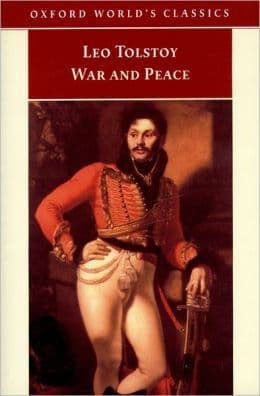
- War and Peace
Leo Tolstoy
4.1 (265k) average on GoodreadsHistorical FictionBoth are epic Russian novels depicting the impact of war (Napoleonic vs. WWI/Civil War) on families and individuals, with a blend of historical narrative and philosophical reflection.
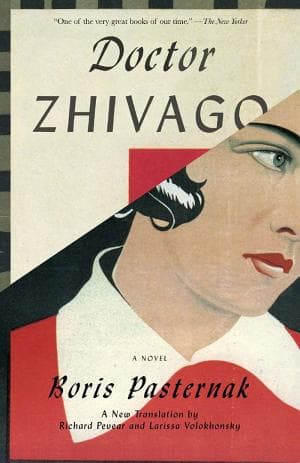
- Doctor Zhivago
Boris Pasternak
4.0 (82k) average on GoodreadsHistorical FictionExplores the lives of individuals caught in the Russian Revolution and Civil War, focusing on personal struggles, love, and survival amidst political turmoil.
- The Grapes of Wrath
John Steinbeck
4.0 (750k) average on GoodreadsHistorical FictionWhile set in a different time and place, it shares a focus on a struggling family's resilience and suffering amidst societal and economic upheaval, with a strong sense of regional identity.
- To Kill a Mockingbird
Harper Lee
4.3 (4.5M) average on GoodreadsHistorical FictionIn the 1930s Jim Crow South, Harper Lee writes about racial injustice, moral growth, and the quiet courage of a lawyer father, Atticus Finch, as seen through his young daughter's eyes.
- The Great Gatsby
F. Scott Fitzgerald
3.9 (3.8M) average on GoodreadsHistorical FictionIn the opulent Roaring Twenties, a mysterious millionaire's lavish parties hide his desperate, tragic pursuit of a lost love, exposing the emptiness within the American Dream.
- Pride and Prejudice
Jane Austen
4.3 (3M) average on GoodreadsHistorical FictionIn a society focused on status and money, Elizabeth Bennet navigates love and pride, challenging Mr. Darcy and social expectations to find true affection.




Enjoyed the summary?
A summary gives you the shape of the book. The book itself has the detail, the examples and the voice.
Find And Quiet Flows the Don on AmazonAs an Amazon Associate, BookBrief earns from qualifying purchases. How we're funded