
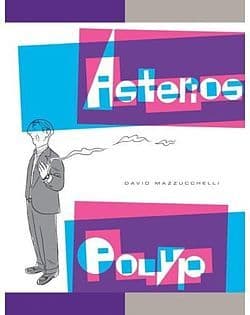
Synopsis
Covers the whole plot, including the ending.
- Difficulty
- Medium
- Read it if
- You are a designer, architect, philosopher, or anyone interested in a deeply introspective graphic novel that masterfully blends visual storytelling with profound philosophical inquiry into identity, relationships, and the nature of reality.
- Skip it if
- You prefer straightforward narratives without symbolic abstraction, are not interested in visual metaphors as a primary storytelling device, or dislike graphic novels that delve into complex philosophical themes.
Asterios Polyp Quotes
“Inspiration is for amateurs. The rest of us just show up and get to work.”
“The problem with being an architect is that everyone thinks they're an architect.”
“The building is not just a building. It is a story. It is a life.”
“We are all, in a way, architects of our own lives. We build them, brick by brick, choice by choice.”
“You can't really see something until you understand how it's made.”
“The greatest tragedy is not death, but life without meaning.”
“Every line is a choice. Every choice is a commitment.”
“Sometimes you have to tear down everything to build something new.”
“Silence is not empty. It is full of unsaid things.”
“There are two kinds of people in the world: those who divide the world into two kinds of people, and those who don't.”
“The past is not a burden; it is a foundation.”
“We don't see things as they are, we see them as we are.”
“Love is not about finding the perfect person, but about seeing an imperfect person perfectly.”
“The world is full of answers, if only you know how to ask the right questions.”
Quiz
10 questions on the plot and the characters. Each answer comes with a short explanation.
Question 1
What event immediately precipitates Asterios Polyp's departure from New York City?
- He loses his teaching job at the university.
- His apartment building is condemned.
- His New York City apartment goes up in flames.
- He receives an inheritance requiring him to move.
Show answer
C. His New York City apartment goes up in flames. The story explicitly states that Asterios's life is 'wholly upended when his New York City apartment goes up in flames,' leading to his relocation.
Question 2
What is Asterios Polyp's primary profession mentioned in the description?
- Philosopher
- Architect and teacher
- Painter and sculptor
- Writer and editor
Show answer
B. Architect and teacher The description introduces Asterios Polyp as a 'middle-aged, meagerly successful architect and teacher.'
Question 3
Which of the following best describes Hana, Asterios's former partner?
- A cynical fashion designer
- A sweet, smart, first-generation Japanese American artist
- A reclusive classical musician
- An ambitious corporate lawyer
Show answer
B. A sweet, smart, first-generation Japanese American artist Hana is described as 'a sweet, smart, first-generation Japanese American artist with whom he had made a blissful life.'
Question 4
The graphic novel explores themes related to 'design theory' and 'the nature of human perception.' How does this connect to Asterios's character?
- He is an avid collector of modern art.
- As an architect, his profession inherently deals with design and form, and his personal philosophy often reflects these concepts.
- He is a philosopher who writes extensively on aesthetics.
- He invents new optical illusions as a hobby.
Show answer
B. As an architect, his profession inherently deals with design and form, and his personal philosophy often reflects these concepts. Asterios is an architect, a profession deeply rooted in design theory and the perception of space and form. The book's asides on these topics are directly relevant to his character and philosophical leanings.
Question 5
The narrative structure of 'Asterios Polyp' is described as moving between which two temporal settings?
- Childhood and old age
- Present and past
- Dream sequences and reality
- Parallel universes
Show answer
B. Present and past The description states, 'As the story unfolds, moving between the present and the past, we begin to understand this confounding yet fascinating character.'
Question 6
What is one of the key questions the story aims to answer regarding Hana?
- Will she return to New York City?
- Did Asterios do something to drive her away? What has happened to her? Is she even alive?
- Will she ever forgive Asterios for his infidelity?
- Where did she learn her artistic skills?
Show answer
B. Did Asterios do something to drive her away? What has happened to her? Is she even alive? The text poses several direct questions about Hana's fate: 'Did Asterios do something to drive her away? What has happened to her? Is she even alive?'
Question 7
Asterios Polyp is described as an 'aesthete and womanizer.' How do these characteristics contribute to the central conflict or his personal journey?
- His aesthetic sensibilities drive his architectural genius, while his womanizing is a minor subplot.
- His pursuit of ideal forms and beauty (aesthete) clashes with his often flawed and self-destructive personal relationships (womanizer), contributing to his search for meaning and sanity after his life is upended.
- These traits are merely background details and do not significantly impact the main narrative.
- They are ironic descriptors, as he is neither truly an aesthete nor a womanizer.
Show answer
B. His pursuit of ideal forms and beauty (aesthete) clashes with his often flawed and self-destructive personal relationships (womanizer), contributing to his search for meaning and sanity after his life is upended. These two characteristics are central to his character's complexities. His refined taste often contrasts with his interpersonal failings, driving much of the introspection and conflict as he processes his past and searches for meaning.
Question 8
The description highlights Mazzucchelli's 'extraordinarily imagined world of brilliantly conceived eccentrics, sharply observed social mores, and deftly depicted asides on everything from design theory to the nature of human perception.' What does this suggest about the book's narrative style and scope?
- It is a straightforward, character-driven drama focused solely on Asterios's personal relationships.
- It is a richly detailed, intellectually expansive work that uses Asterios's story as a vehicle to explore broader philosophical and artistic concepts.
- It is primarily a satirical commentary on modern architecture and academic life.
- It is a highly experimental work with minimal plot and heavy reliance on abstract visuals.
Show answer
B. It is a richly detailed, intellectually expansive work that uses Asterios's story as a vehicle to explore broader philosophical and artistic concepts. The emphasis on 'extraordinarily imagined world,' 'brilliantly conceived eccentrics,' and 'deftly depicted asides on everything from design theory to the nature of human perception' indicates a broad, intellectually rich narrative that uses the plot to delve into larger ideas.
Question 9
The title character, Asterios Polyp, is described as searching for 'love, meaning, sanity, and perfect architectural proportions.' How does the inclusion of 'perfect architectural proportions' among these profound human desires characterize him?
- It suggests a superficiality, implying his concerns are trivial compared to universal human needs.
- It highlights his unique blend of the personal and the professional, where his architectural philosophy is deeply intertwined with his search for order and understanding in life.
- It indicates that the book is primarily a technical manual on architecture disguised as a graphic novel.
- It is a metaphorical statement, implying 'perfect proportions' are a stand-in for financial success.
Show answer
B. It highlights his unique blend of the personal and the professional, where his architectural philosophy is deeply intertwined with his search for order and understanding in life. This specific detail shows how Asterios's professional identity and aesthetic ideals are deeply integrated into his personal quest for meaning and order, making his architectural pursuits an extension of his philosophical and emotional journey.
Question 10
The book is described as 'an epic story long awaited, and well worth the wait' and 'David Mazzucchelli’s masterpiece: a great American graphic novel.' What does this critical reception imply about its significance in the realm of comics?
- It is a niche work appreciated only by a small group of comic enthusiasts.
- It signifies a highly anticipated and critically acclaimed work that is considered a major artistic achievement in the medium.
- It is a commercially successful but critically panned graphic novel.
- It is an influential work primarily for its innovative use of color, not its narrative depth.
Show answer
B. It signifies a highly anticipated and critically acclaimed work that is considered a major artistic achievement in the medium. Phrases like 'triumphant return,' 'epic story long awaited, and well worth the wait,' and 'David Mazzucchelli’s masterpiece: a great American graphic novel' all point to its high critical regard and significant status within the graphic novel medium.
Asterios Polyp FAQ
What is 'Asterios Polyp' about?
'Asterios Polyp' tells the story of Asterios, a middle-aged architect whose life is turned upside down after his apartment burns down. He relocates to a small town, prompting a journey of self-discovery as the narrative flashes between his present and past, exploring his relationships, particularly with his missing wife, Hana.
Does 'Asterios Polyp' offer insights into creativity and design?
Yes, the book deeply explores themes of creativity, design theory, and the nature of human perception through Asterios's profession as an architect and his internal monologues. It delves into the artistic process, the pursuit of perfection, and the limitations of different creative approaches.
What philosophical concepts are explored in 'Asterios Polyp'?
The graphic novel delves into existential philosophy, the search for meaning, the nature of identity, and the complexities of human relationships. It scrutinizes Asterios's rationalist worldview against the more intuitive and emotional perspectives of those around him, particularly Hana.
How does 'Asterios Polyp' use visual storytelling to convey its themes?
David Mazzucchelli employs innovative visual techniques, using distinct color palettes, line styles, and panel layouts to represent different characters' perspectives, time periods, and even abstract concepts. This visual language is integral to understanding the characters' inner lives and the book's philosophical depth.
Is 'Asterios Polyp' a good book for someone new to graphic novels?
While it is a sophisticated work, 'Asterios Polyp' is highly regarded for its compelling narrative and accessible yet profound themes. Its engaging story and brilliant artwork make it a rewarding experience even for those new to the graphic novel format, offering a rich entry point into the medium's potential.
Does 'Asterios Polyp' have a happy ending?
The ending of 'Asterios Polyp' is complex and open to interpretation, reflecting the nuanced themes of the book. It provides resolution to some mysteries while leaving others to the reader's contemplation, focusing more on understanding and acceptance than a traditionally 'happy' conclusion.
How is 'Asterios Polyp' different from typical superhero comics?
'Asterios Polyp' stands apart from typical superhero comics by focusing on literary fiction, character study, and philosophical introspection rather than action or fantasy. It uses the graphic novel medium to tell a deeply personal and intellectually stimulating story about human experience.
Who is David Mazzucchelli and why is 'Asterios Polyp' considered his masterpiece?
David Mazzucchelli is a renowned comic artist known for his work on 'Batman: Year One' and 'Daredevil: Born Again.' 'Asterios Polyp' is considered his masterpiece due to its ambitious scope, intricate storytelling, innovative artistic techniques, and profound exploration of complex human themes, marking his triumphant return to long-form comics.
Are the architectural proportions mentioned in the book significant?
Yes, perfect architectural proportions are a recurring motif throughout the book, symbolizing Asterios's rigid adherence to order and logic. They serve as a lens through which he views the world, and the disruption of these 'perfect' structures reflects the chaos and imperfection he experiences in his own life.
About the author

David Mazzucchelli is an acclaimed graphic novelist celebrated for his innovative storytelling and distinctive art style. His seminal work, 'Asterios Polyp,' is a critically lauded exploration of architecture, philosophy, and the complexities of human relationships, earning him widespread recognition for its formal experimentation and profound narrative depth.
Similar books
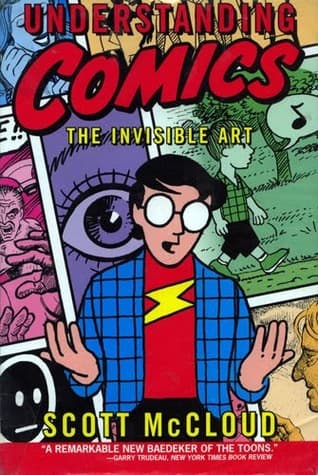
- Understanding Comics: The Invisible Art
Scott McCloud
4.0 (106k) average on GoodreadsReferenceExplores the theory and art of comics, much like 'Asterios Polyp' uses the medium to its full potential for complex ideas.
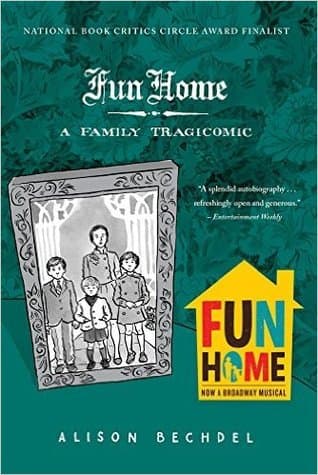
- Fun Home: A Family Tragicomic
Alison Bechdel
4.1 (130k) average on GoodreadsBiographyBoth Asterios Polyp and Fun Home are acclaimed graphic novels that delve into deep self-reflection and complex personal narratives using the unique capabilities of the comic medium. However, Fun Home is primarily a memoir, deeply rooted in Bechdel's personal experiences, family dynamics, and explorations of gender and sexuality. Asterios Polyp, while personal to its protagonist, operates on a more allegorical and philosophical level, examining universal themes of identity, design, and perception through a fictional lens. While both are formally innovative, Mazzucchelli's work leans more into metafiction and abstract design theory to convey its ideas, whereas Bechdel's innovation serves to illuminate specific biographical details and emotional truths.
- The Goldfinch
Donna Tartt
3.9 (720k) average on GoodreadsLiterary FictionHaunted by a tragic explosion and clutching a stolen Dutch masterpiece, a young orphan navigates the opulent drawing rooms of New York and the gritty underbelly of the art world, desperately seeking connection and redemption amidst a life spiraling into crime and obsession.
- Girl with a Pearl Earring
Tracy Chevalier
3.9 (627k) average on GoodreadsHistorical FictionA young servant in 17th-century Delft finds her quiet world intertwined with the painter Johannes Vermeer as she becomes his muse, blurring the lines of class, art, and forbidden desire.
- The Story of Art
E.H. Gombrich
3.9 (311k) average on GoodreadsReferenceExplore thousands of years of human creativity, from ancient cave art to modern masterpieces, with Gombrich's classic account, updated with new insights into art's changing story.
- The New Drawing on the Right Side of the Brain
Betty Edwards
3.9 (297k) average on GoodreadsPsychologyLearn to draw by using the often-ignored visual side of your brain, changing how you see the world.



Enjoyed the summary?
A summary gives you the shape of the book. The book itself has the detail, the examples and the voice.
Find Asterios Polyp on AmazonAs an Amazon Associate, BookBrief earns from qualifying purchases. How we're funded