

Core Idea
- Difficulty
- Medium
- Read it if
- You are interested in a raw, intellectual, and deeply moving exploration of identity, disfigurement, and the complex relationship between inner self and outward appearance. This book is for those who appreciate literary memoirs that delve into profound psychological and philosophical questions.
- Skip it if
- You prefer light, uplifting narratives or are sensitive to detailed descriptions of medical procedures, physical pain, and the emotional toll of chronic illness and disfigurement. This is not a story of triumphant recovery in a conventional sense.
Key Takeaways from Autobiography of a Face
The Scars Within Outlast the Scars Without
The psychological trauma of disfigurement often eclipses the physical pain of its cause.
Grealy shows that the pain of living with a disfigured face was worse than the cancer itself. The disease was a limited time of physical distress, but the social effects of her altered appearance became a lifelong psychological burden. This difference highlights a critical, often overlooked part of chronic illness and disfigurement: the internal struggle with self-perception and societal judgment can be more damaging and lasting than the original medical problem. It makes readers confront the superficiality of human interaction and how much appearance affects identity and well-being, especially during childhood.
“I spent five years of my life being treated for cancer, but since then I've spent fifteen years being treated for nothing other than looking different from everyone else. It was the pain from that, from feeling ugly, that I always viewed as the great tragedy of my life. The fact that I had cancer seemed minor in comparison.”
In the book: Grealy's direct comparison of her five years of cancer treatment versus fifteen years of 'being treated for nothing other than looking different,' explicitly stating the latter as 'the great tragedy of my life.'
Try this: Cultivate empathy and self-awareness regarding the subtle, yet profound, ways appearance influences perception and self-worth. Challenge societal beauty standards and actively work to see beyond physical form in others and in oneself, recognizing the deeper, often hidden, struggles people carry.
Related ideas: psychological-trauma, body-image, social-stigma, identity-formation
The Tyranny of the Gaze
Living with a disfigured face means constantly navigating the judgment and curiosity of others.
Grealy's experience clearly shows how pervasive and objectifying the 'gaze' is when someone looks different from societal beauty norms. Her life became a constant performance under scrutiny, where every interaction was seen through the lens of her disfigurement. This constant awareness of being watched and judged deeply shaped her self-perception, leading to an identity linked to how others reacted to her face. It emphasizes how much of our social reality is built through visual interaction and how unsettling it is to be always seen as 'other.'
“I was always watching myself being watched.”
In the book: Grealy's description of her constant self-monitoring and the feeling of being perpetually 'on display,' where she internalizes the reactions of others as a primary source of information about herself.
Try this: Practice mindful observation of your own reactions to others' appearances. Challenge assumptions based on visual cues and consciously seek to understand individuals beyond their physical presentation. For those feeling scrutinized, practice grounding techniques to reclaim internal focus.
Related ideas: social-gaze, othering, self-consciousness, public-identity
The Paradox of Wanting to Be Special
The desire for uniqueness clashes with the yearning for acceptance and normalcy.
Grealy deals with the inner conflict of wanting to be special and unique, a natural human desire, while also desperately wishing for the anonymity and acceptance that comes with normalcy. Her disfigurement, while making her stand out, was not the 'special' she wanted; it was a source of pain and isolation. This contradiction highlights the universal struggle between individuality and belonging. We want to be distinct, yet often fear the isolation that true difference can bring, especially when society views that difference negatively. Grealy's story explores this basic human tension.
“More than anything else we want to be loved for who we are, while wishing desperately and secretly to be perfect.”
In the book: The memoir's overarching theme of Grealy's internal struggle to reconcile her 'special' condition (cancer survivor, disfigured) with her longing for an ordinary, accepted existence, and her 'guilty pleasures of wanting to be special' juxtaposed with the pain of being different.
Try this: Reflect on your own motivations for standing out or fitting in. Embrace your authentic uniqueness while also seeking genuine connection and belonging. Recognize that 'special' can be a double-edged sword, and true value lies in self-acceptance, not external validation.
Related ideas: individuality, belonging, self-acceptance, social-conformity
Childhood Cruelty as a Mirror
The unvarnished reactions of children reveal society's ingrained biases about appearance.
Grealy's experience with childhood bullying after her surgery is particularly difficult because children often express societal prejudices without reservation. Their taunts ('monster,' 'ugly') were not just personal attacks but direct reflections of how society views disfigurement – as something frightening, unnatural, or deserving of exclusion. This early exposure to cruelty confirmed her understanding of how her appearance would define her to others, teaching her that her face was a barrier to acceptance. It is a stark reminder that biases are learned early and reinforced through social interactions.
“When she returned to school with a third of her jaw removed, she faced the cruel taunts of classmates.”
In the book: The summary's mention of 'cruel taunts of classmates' after her jaw removal, and Grealy's detailed accounts within the book of specific incidents of bullying and social exclusion by her peers.
Try this: Educate children and adults about empathy, diversity, and challenging appearance-based judgments. Intervene against bullying and foster environments where differences are celebrated, not condemned. Recognize that children's reactions, while sometimes innocent in intent, can have profound, lasting impacts.
Related ideas: childhood-bullying, social-prejudice, empathy-development, appearance-discrimination
The Weight of Medical Intervention
Constant surgeries and medical treatments can strip away agency and normalize suffering.
Grealy's life involved a continuous cycle of medical procedures, hospital stays, and the constant, often unfulfilled, hope of 'fixing' her face. This long exposure to the medical world, though necessary, had a deep psychological impact. It normalized pain and invasive procedures, blurring the lines between healing and a perpetual state of being 'under construction.' It also meant a childhood often spent in sterile environments, away from typical social development, which contributed to her feeling like an outsider. The constant pursuit of a 'normal' face became an exhausting, often pointless, quest that defined much of her early life and identity.
“The hospital was a kind of home, a place where the unusual became usual.”
In the book: Grealy's extensive descriptions of numerous surgeries, recoveries, and the unique, often disorienting, culture of hospitals, which became a significant part of her childhood landscape.
Try this: When facing ongoing medical challenges, seek psychological support alongside physical treatment. Advocate for patient agency and understanding throughout the medical process. Recognize the potential for 'medical trauma' and its long-term effects on self-perception and mental health.
Related ideas: medical-trauma, patient-agency, chronic-illness, hospitalization-impact
Identity Forged in the Crucible of Difference
Extreme physical difference profoundly shapes one's sense of self, often in unexpected ways.
Grealy's memoir shows how an extreme physical difference can become the main organizing principle of one's identity. Her face was not just a part of her; it was, in many ways, her defining characteristic, both to herself and to the world. This experience forced her to deal with basic questions of self-worth, beauty, and what it means to be human from an early age. While very painful, this struggle also formed a unique perspective and a deep understanding of human nature and superficiality, making her a keen observer of the world. Her identity was not just affected by her face, but shaped around it.
“My face was my fate.”
In the book: The entire narrative arc, which centers on her life unfolding in relation to her disfigurement, from childhood taunts to adult relationships, and her constant internal monologue about her appearance.
Try this: Reflect on how your own perceived differences, whether physical or otherwise, have shaped your identity. Cultivate self-compassion and recognize the strength and unique perspectives that can arise from navigating perceived 'flaws' or challenges. Embrace the complexity of identity beyond superficial traits.
Related ideas: self-identity, personal-narrative, resilience, difference-as-strength
The Allure and Deception of Beauty
Grealy's story critiques society's obsession with conventional beauty and its false promises.
Through her lifelong struggle, Grealy critiques society's emphasis on conventional beauty. She experienced firsthand how deviating from these norms could lead to deep suffering and exclusion. Her relentless pursuit of corrective surgeries, often with disappointing results, highlights the futility of chasing an external ideal. The memoir suggests that while beauty promises acceptance and happiness, it often provides only superficial validation, and its absence can lead to deep internal wounds. Her narrative exposes the cruel illusion that external perfection equals internal peace or worth.
“I was always trying to find a way to make myself beautiful, but I knew it was a lie.”
In the book: Grealy's numerous, often painful, and ultimately unsatisfying cosmetic surgeries, and her internal monologues about longing for beauty while recognizing its superficiality and the impossibility of achieving it to society's standards.
Try this: Challenge personal and societal beauty standards. Focus on developing inner qualities (kindness, intelligence, resilience) rather than solely external appearance. Support media and platforms that promote diverse representations of beauty and body positivity.
Related ideas: beauty-standards, body-positivity, self-worth, societal-pressure
The Power of Narrative and Voice
Telling one's story, even a painful one, is an act of reclaiming agency and understanding.
Grealy's memoir itself shows the healing and empowering nature of writing. By recounting her experiences, observations, and inner battles, she reclaims her story from the silent suffering and external judgments that had defined her. This act of writing is not just a retelling of events but a way of making sense of trauma, asserting her own perspective, and turning personal pain into a universal human experience. It highlights how giving voice to one's struggles can be a step towards healing and self-acceptance, allowing the individual to define their own narrative rather than being defined by their circumstances.
“To tell my story was to make it real, to make it mine.”
In the book: The very existence and candor of 'Autobiography of a Face' serves as proof. Grealy's detailed and unflinching self-reflection throughout the book, and her ability to articulate complex emotions and experiences.
Try this: Encourage journaling, storytelling, or sharing personal experiences (in safe spaces) as a tool for processing trauma and fostering self-understanding. Recognize the value of memoirs and personal narratives in building empathy and challenging preconceived notions.
Related ideas: narrative-therapy, trauma-healing, autobiography, self-expression
The Elusive Nature of 'Normal'
The pursuit of normalcy can be a trap, obscuring the richness of a unique life.
Grealy's entire childhood and young adulthood were spent seeking 'normalcy' – a face that wouldn't draw stares, a life free from constant medical intervention, and the acceptance that seemed to come so easily to others. Yet, 'normal' remained an elusive goal. This pursuit not only led to physical pain and psychological exhaustion but also prevented her from fully embracing her unique experiences and the unconventional path her life had taken. The memoir suggests that the relentless pursuit of an idealized 'normal' can be more harmful than accepting and integrating one's differences, highlighting how this societal ideal is often constructed and unattainable.
“All I wanted was to be normal, but I didn't even know what that meant anymore.”
In the book: Grealy's repeated attempts at reconstructive surgeries to achieve a 'normal' appearance, her observations of 'normal' children and teenagers, and her eventual realization that this concept was vague and perhaps unattainable for her.
Try this: Question the concept of 'normal' in your own life and society. Embrace and celebrate your unique qualities and experiences rather than striving for an idealized, often unrealistic, standard. Focus on self-acceptance and authenticity over conformity.
Related ideas: normalcy-bias, authenticity, self-acceptance, social-conformity
Empathy Beyond Appearance
Grealy's story compels readers to look past the surface and acknowledge shared human vulnerabilities.
Ultimately, 'Autobiography of a Face' is a call for deep empathy. Grealy's honesty about her pain, her desire for connection, and her struggle with self-worth goes beyond her specific circumstances of disfigurement. It connects to universal human experiences of feeling like an outsider, wanting love and acceptance, and the inner battles we all have with our imperfections. By sharing her most vulnerable self, she invites readers to recognize the shared humanity that lies beneath superficial differences, challenging us to extend compassion and understanding to all, regardless of outward appearance. Her story reminds us that everyone carries unseen burdens and wants to be seen and valued for who they are.
“I wanted to be loved for who I was, not for what I looked like.”
In the book: The memoir's ability to evoke strong emotional responses in readers, drawing them into Grealy's internal world and fostering a deep understanding of her struggle, despite the specificity of her condition.
Try this: Actively practice empathy by listening without judgment and seeking to understand others' perspectives and experiences, especially those who appear different or have invisible struggles. Challenge your own biases and assumptions based on appearance. Foster inclusive communities.
Related ideas: radical-empathy, human-connection, vulnerability, unconditional-acceptance
Autobiography of a Face Quotes
“Before I was a person, I was a face. I was the face that was missing.”
“What does it mean to be a monster? A monster is the personification of something that is feared. So, if I am a monster, it is because I am a reflection of your fears, not because I am inherently monstrous.”
“Beauty, for me, was not a static thing, not a gift one possessed or lacked, but a constantly shifting negotiation between the self and the world.”
“I was learning that the greatest illusion of all was the illusion of normalcy.”
“The greatest gift my illness gave me was the realization that I had to define myself, not be defined by others.”
“There is a kind of sadness that can only be understood by those who have lived with a face that is not their own.”
“I was always trying to escape my body, but my body was the only place I had to live.”
“To be seen, truly seen, was a profound and terrifying thing.”
“My face was a map of my past, a story etched in bone and skin.”
“It was not the pain of the surgeries that was the hardest, but the pain of expectation.”
“The world was full of mirrors, and I was always looking for a reflection that would tell me I was whole.”
“I learned that courage was not the absence of fear, but the triumph over it.”
“Sometimes the greatest kindness you can offer someone is simply to not stare.”
“My life was a constant negotiation between what was real and what was perceived.”
Quiz
10 questions on the main ideas. Each answer comes with a short explanation.
Question 1
What was the primary emotional struggle Lucy Grealy described as the 'great tragedy of her life'?
- The physical pain of her cancer treatments.
- The fear of death associated with her diagnosis.
- The feeling of being ugly and looking different from others.
- The academic challenges she faced after missing school.
Show answer
C. The feeling of being ugly and looking different from others. Grealy explicitly states that the pain from feeling ugly and looking different was what she always viewed as the great tragedy of her life, even more so than the cancer itself.
Question 2
At what age was Lucy Grealy diagnosed with cancer?
- Five years old
- Seven years old
- Nine years old
- Eleven years old
Show answer
C. Nine years old The summary clearly states, 'At age nine, Lucy Grealy was diagnosed with a potentially terminal cancer.'
Question 3
What significant physical change did Lucy Grealy experience after her initial cancer treatment?
- She lost her hair due to chemotherapy.
- She had a third of her jaw removed.
- She lost an eye due to the tumor.
- She suffered significant scarring on her torso.
Show answer
B. She had a third of her jaw removed. The text mentions, 'When she returned to school with a third of her jaw removed, she faced the cruel taunts of classmates.'
Question 4
The memoir highlights a central conflict within Lucy Grealy regarding her self-perception. What are the two 'warring impulses' she experiences?
- Wanting to be a normal child versus embracing her uniqueness.
- Desiring peer acceptance versus seeking solitude.
- Wanting to be loved for who she is versus wishing desperately and secretly to be perfect.
- Feeling guilty about being special versus resenting her difference.
Show answer
C. Wanting to be loved for who she is versus wishing desperately and secretly to be perfect. The summary explicitly states she is 'torn between two warring impulses: to feel that more than anything else we want to be loved for who we are, while wishing desperately and secretly to be perfect.'
Question 5
How long did Lucy Grealy state she spent being treated for cancer versus being treated for looking different?
- Five years for cancer, five years for looking different.
- Fifteen years for cancer, five years for looking different.
- Five years for cancer, fifteen years for looking different.
- Ten years for cancer, ten years for looking different.
Show answer
C. Five years for cancer, fifteen years for looking different. Grealy states, 'I spent five years of my life being treated for cancer, but since then I've spent fifteen years being treated for nothing other than looking different from everyone else.'
Question 6
What was Lucy Grealy's attitude towards her suffering and strength in her memoir?
- She presented it with excessive sentimentality and self-pity.
- She described it with stark candor, without sentimentality and with wit.
- She largely downplayed her suffering to focus on her recovery.
- She used a highly academic and detached tone.
Show answer
B. She described it with stark candor, without sentimentality and with wit. The description notes, 'In this strikingly candid memoir, Grealy tells her story of great suffering and remarkable strength without sentimentality and with considerable wit.'
Question 7
The memoir is described as portraying the 'guilty pleasures of wanting to be special.' How does this relate to her experience of looking different?
- She enjoyed the attention she received for her unique appearance.
- She felt a sense of superiority over her peers due to her life experiences.
- It reflects the internal conflict of wanting to be loved for who she is, while also secretly desiring an idealized, perfect self, which being 'special' might imply.
- It suggests she deliberately exaggerated her condition for sympathy.
Show answer
C. It reflects the internal conflict of wanting to be loved for who she is, while also secretly desiring an idealized, perfect self, which being 'special' might imply. This phrase, combined with the 'two warring impulses,' suggests that while her difference caused immense pain, there was also a complex, perhaps subconscious, draw to being 'special,' even if it conflicted with her desire for acceptance and an idealized self.
Question 8
The book is categorized as Psychology, Biography, and Memoir. Which of these categories best reflects the emphasis on 'the pain from that, from feeling ugly, that I always viewed as the great tragedy of my life'?
- Biography, as it details the events of her life.
- Memoir, as it focuses on her personal emotional experience and perspective.
- Psychology, as it analyzes the universal aspects of human suffering.
- All three equally, as they are interconnected.
Show answer
B. Memoir, as it focuses on her personal emotional experience and perspective. While all categories apply, the emphasis on her personal feeling ('I always viewed') and subjective experience of pain makes 'Memoir' the most fitting category for this particular statement, which prioritizes her internal world and reflections.
Question 9
How does Lucy Grealy's portrayal of 'peer rejection' contribute to the memoir's overall message about identity?
- It shows that childhood bullying is a minor, fleeting aspect of identity formation.
- It illustrates how external judgments and societal beauty standards profoundly shape an individual's self-perception and suffering.
- It suggests that her identity was solely defined by her medical condition, not social interactions.
- It highlights the resilience of children to overcome all forms of social adversity without lasting impact.
Show answer
B. It illustrates how external judgments and societal beauty standards profoundly shape an individual's self-perception and suffering. The text emphasizes 'the pain of peer rejection' and her feeling 'ugly' as the 'great tragedy,' indicating that external reactions and societal pressures significantly impacted her developing identity and sense of self-worth.
Question 10
The memoir offers 'unique insight into what it is like as a child and young adult to be torn between two warring impulses.' Given the context, what practical implication might this insight have for understanding individuals with visible differences?
- It suggests that individuals with visible differences are inherently more resilient than others.
- It highlights the importance of focusing solely on medical treatments and ignoring social challenges.
- It underscores the complex psychological burden they carry, often wrestling with desires for acceptance versus an idealized self, even after physical recovery.
- It implies that their experiences are so unique they offer no transferable lessons for others.
Show answer
C. It underscores the complex psychological burden they carry, often wrestling with desires for acceptance versus an idealized self, even after physical recovery. The core message about the 'warring impulses' and the 'great tragedy' of feeling ugly, even after cancer treatment, points to the enduring psychological challenges faced by individuals with visible differences, extending beyond mere physical health.
Autobiography of a Face FAQ
What is 'Autobiography of a Face' about?
'Autobiography of a Face' is a memoir by Lucy Grealy detailing her experiences with cancer at age nine, the subsequent removal of a third of her jaw, and the profound emotional and psychological impact of living with a facial disfigurement. It explores themes of identity, self-perception, and the pain of societal rejection.
Does 'Autobiography of a Face' focus more on cancer treatment or its aftermath?
While the book acknowledges Grealy's cancer treatment, it primarily focuses on the fifteen years following, detailing the emotional trauma and challenges of living with a facial disfigurement and the societal reactions she faced, which she describes as more impactful than the cancer itself.
What is 'facial disfigurement' as explored in the book?
In the context of the book, facial disfigurement refers to the physical alteration of Lucy Grealy's face due to cancer surgery, specifically the removal of a third of her jaw. It delves into the social and psychological consequences of this visible difference, including feelings of ugliness, otherness, and the desire for acceptance.
How does Lucy Grealy's memoir differ from other cancer survivor stories?
Grealy's memoir distinguishes itself by shifting the narrative focus from the fight against cancer to the enduring psychological battle of living with its visible aftermath. Unlike many survivor stories that emphasize triumph over illness, Grealy candidly explores the ongoing pain of societal judgment and the struggle for self-acceptance after physical recovery.
Does 'Autobiography of a Face' offer insights into childhood trauma?
Yes, the book provides profound insights into childhood trauma, particularly the impact of peer rejection and bullying on a child with a visible difference. It explores how these early experiences shape identity, self-worth, and the complex desire to be loved for oneself while simultaneously wishing for physical perfection.
Is 'Autobiography of a Face' a sad or hopeful book?
The book is undeniably poignant and deals with significant suffering, but it is also characterized by Grealy's remarkable candor, wit, and strength. While it explores deep pain, it offers a raw and insightful perspective on resilience rather than a purely despairing one.
What can readers learn about self-acceptance from Lucy Grealy's story?
Readers can learn about the arduous and often conflicting journey toward self-acceptance, especially when facing societal pressures to conform to beauty standards. Grealy's narrative highlights the internal struggle between wanting to be loved for who you are and wishing to be 'perfect,' offering a realistic look at this complex psychological process.
How does the book address the concept of beauty standards?
The book critically examines societal beauty standards through Grealy's personal experience of not fitting them. It exposes the profound impact these standards have on an individual's self-perception and mental well-being, particularly when one's appearance deviates from the norm.
About the author

Lucy Grealy was an American author known for her memoir, "Autobiography of a Face," which explores her experiences with cancer and the impact of her facial disfigurement on her identity. Her work is recognized for its candid reflection on beauty, suffering, and the human experience. Grealy's writing often delves into themes of illness and self-perception.
Similar books
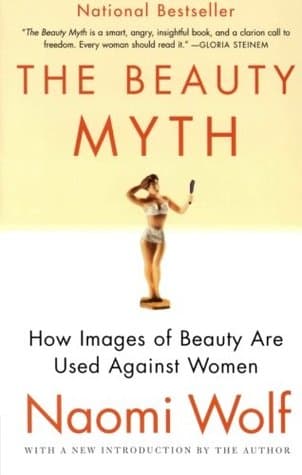
- The Beauty Myth
Naomi Wolf
3.9 (22k) average on GoodreadsPoliticsExplores societal pressures and expectations around female beauty, resonating with Grealy's struggle against external judgments.
- The Diving Bell and the Butterfly
Jean-Dominique Bauby
4.0 (60k) average on GoodreadsBiographyWhile both memoirs deal with profound physical challenges, Bauby's The Diving Bell and the Butterfly focuses on extreme physical paralysis (locked-in syndrome) and the triumph of the mind and spirit over an utterly unresponsive body. Grealy, in contrast, grapples with the visible disfigurement and the social consequences of difference, where her mind is fully functional but her appearance dictates her interactions. Bauby's narrative is a testament to internal freedom despite external confinement, while Grealy's highlights the internal confinement created by external perception. Grealy's struggle is more about the societal gaze and the construction of identity through appearance, whereas Bauby's is about communicating from within an utterly broken physical shell.
- The Perks of Being a Wallflower
Stephen Chbosky
4.2 (1.3M) average on GoodreadsPsychologyThrough letters, a shy high school freshman learns to navigate first love, trauma, and self-discovery, stepping off the sidelines and into life.
- Eleanor Oliphant Is Completely Fine
Gail Honeyman
4.3 (708k) average on GoodreadsLiterary FictionA lonely woman's structured life changes when an IT guy and an elderly man help her learn to open her heart.
- One Flew Over the Cuckoo's Nest
Ken Kesey
4.2 (631k) average on GoodreadsPsychologyIn a mind-bending asylum, the boisterous Randle McMurphy wages a defiant war against the tyrannical Nurse Ratched, inspiring his fellow inmates, including the seemingly catatonic Chief Bromden, to reclaim their lost humanity.
- The Bell Jar
Sylvia Plath
4.0 (591k) average on GoodreadsPsychologyIn the suffocating grip of 1950s expectations, a brilliant young woman's descent into mental illness is painted with such vivid, internal clarity that her 'insanity' feels terrifyingly rational and inevitable.





Enjoyed the summary?
A summary gives you the shape of the book. The book itself has the detail, the examples and the voice.
Find Autobiography of a Face on AmazonAs an Amazon Associate, BookBrief earns from qualifying purchases. How we're funded