

Synopsis
Covers the whole plot, including the ending.
- Difficulty
- Medium
- Pacing
- Moderate
- Mood
- Epic, Heartbreaking, Resilient, Reflective, Adventurous
- Read it if
- You enjoy sweeping historical sagas centered on a determined female protagonist, with themes of migration, motherhood, and survival.
- Skip it if
- You prefer fast-paced thrillers or stories with a lighthearted tone, as this book deals with significant hardship and loss.
Away Plot Summary
Covers the whole plot, including the ending.
The Pogrom and Escape to America
In 1920s Russia, Lillian Leyb's life breaks apart when her village is attacked in a brutal pogrom. Her parents and husband are killed, and her three-year-old daughter, Sophie, is taken. Traumatized and alone, Lillian is smuggled out of Russia with help from a stranger. She travels through Europe and arrives in New York City as an immigrant. Lillian is haunted by the loss of her family, especially Sophie, and carries her past while trying to live in her new, unfamiliar surroundings on the Lower East Side.
New York City and the Yiddish Theater
In New York, Lillian struggles to find her place. She eventually gets a job at a Yiddish theater owned by Kalman, a charming but somewhat harsh man. Lillian, despite her inexperience, becomes a natural performer and quickly gains popularity as an actress, known for her emotion and singing. Her relationship with Kalman grows into a passionate and complex affair. He gives her a sense of belonging and protection, but Lillian remains emotionally distant, still longing for Sophie and the life she lost.
A Glimmer of Hope
Lillian's life in New York changes unexpectedly when she receives a letter from a distant relative in Russia. The letter contains shocking news: Sophie was not killed in the pogrom but was taken and might still be alive in an orphanage in Siberia. This news brings back a desperate hope in Lillian, turning her grief into fierce determination. The chance of finding Sophie becomes her only goal, overshadowing her theater life and her relationship with Kalman.
The Journey Begins: Across America
Driven by the small chance of reuniting with Sophie, Lillian decides to leave New York and begin a dangerous journey. She says goodbye to Kalman, who, despite his protests, cannot stop her. Her path takes her across America, first by train. Along the way, she meets various people, some helpful, some dangerous, all adding to her understanding of the world beyond the Lower East Side. She faces financial hardship and the constant threat of exploitation, but her resolve to find Sophie keeps her moving.
Seattle's Jazz District
Lillian reaches Seattle, a busy port city with a lively jazz scene. Here, she finds work as a singer in a speakeasy, using the stage name 'Lily Bell' to distance herself from her past. She forms a relationship with Arthur, a kind musician who offers her companionship. This time in Seattle is peaceful and even joyful for Lillian, allowing her to experience a different kind of life, less defined by her trauma. However, Sophie still calls to her, and she knows Seattle is only a stop on her quest.
The Alaskan Wilderness
Leaving Arthur and Seattle, Lillian continues north, towards the remote Alaskan landscape. Her goal is the Telegraph Trail, a route that could lead her closer to Siberia. The Alaskan wilderness is a challenge, with its wild beauty and harsh conditions. She meets various people: prospectors, trappers, and indigenous people, all living at the edge of civilization. Lillian's resourcefulness and inner strength are tested daily as she battles the elements and the doubts of others.
The Telegraph Trail and the Search for Information
Lillian begins her difficult trek along the historic Telegraph Trail, a path full of danger and isolation. Her determination is strong, fueled by Sophie's image. She learns to ride a dog sled, navigate tough terrain, and survive on her wits. Along the trail, she meets other travelers and settlers, always asking about a young girl, always searching for any information that might lead her to Sophie. Each encounter, each piece of advice, brings her a step closer or sometimes further from her goal, showing the huge scale of her task.
Betrayal and Resilience
As Lillian goes deeper into Alaska, she experiences a betrayal that threatens to stop her mission. A seemingly helpful person she trusted exploits her, stealing her few resources and leaving her in a dangerous situation. This incident shatters her already fragile trust in others and forces her to face the harsh realities of her isolated journey. Despite despair, Lillian's resilience shows. She refuses to give up, finding the inner strength to continue, even when hope seems dim and her path forward is unclear.
Crossing the Bering Strait
With her focus on Sophie, Lillian eventually reaches the western coast of Alaska, where she must find a way to cross the Bering Strait into Siberia. This part of her journey is perhaps the most dangerous, with treacherous ice, unpredictable weather, and the threat of starvation. She relies on help from indigenous communities and experienced guides, learning to adapt to extreme conditions. The crossing shows her extraordinary will and how far a mother will go to find her child, pushing her physical and mental limits.
Siberia and the Orphanage
After an unimaginable journey, Lillian arrives at the remote Siberian orphanage where Sophie was reportedly living. Her heart pounds with hope and dread as she confronts the officials. The reunion she has dreamed of is not to be. She learns that while Sophie was there for a time, she has since been adopted and moved elsewhere, her new location unknown. The news is devastating, a cruel twist of fate after all her sacrifices, leaving Lillian shattered and her quest seemingly over.
The Aftermath and a New Path
The discovery that Sophie is gone, likely forever out of her reach, causes Lillian deep grief. She has traveled halfway around the world, endured hardships, only to find an empty promise. However, in her despair, a quiet strength appears. Lillian realizes that while she may not have found Sophie, she has found herself. She has changed from a traumatized girl into a resilient, independent woman capable of surviving anything. The journey, though not ending as she wished, has made her a new person.
Return and Reflection
With her search for Sophie concluded, though tragically, Lillian begins the long journey back from Siberia. The path back is different; she is no longer driven by a single, desperate hope, but by quiet acceptance and a deep understanding of her own abilities. She thinks about the people she met, the places she saw, and the woman she has become. While the pain of losing Sophie will always remain, Lillian carries the strength and wisdom gained from her journey, ready to face whatever new life awaits her, a true survivor.
Away Characters
Lillian Leyb
Protagonist
A resilient young woman who embarks on a transnational quest to find her lost daughter.
Lillian is a young Jewish woman from a small Russian village whose life is irrevocably altered by a pogrom. Initially traumatized and passive, she transforms into an incredibly resourceful and determined individual. Driven by an almost primal maternal love, she endures immense physical and emotional hardship. Lillian is fiercely independent, capable of great tenderness and passion, but also carries a deep well of grief and a guarded heart. She is a survivor, adapting to new cultures and challenges with remarkable tenacity.
Relationships: Sophie Leyb (Daughter, the driving force of her quest); Kalman (Lover and protector in New York's Yiddish theater); Arthur (Lover and kind companion in Seattle)
Sophie Leyb
Mentioned/Driving Force
Lillian's three-year-old daughter, lost during the pogrom, whose potential survival fuels Lillian's journey.
Sophie is Lillian's young daughter, a symbol of innocence lost and the future stolen. Though she appears only in Lillian's memories and as the object of her quest, Sophie's potential existence is the powerful engine that propels Lillian across continents. She represents Lillian's deepest hopes and fears, embodying the profound bond between a mother and child. Sophie is the 'away' that Lillian constantly strives towards, a beacon in her darkest moments.
Relationships: Lillian Leyb (Mother, whose love drives an epic search)
Kalman
Supporting
The charismatic and possessive owner of a Yiddish theater in New York, who becomes Lillian's lover.
Kalman is a complex character: a shrewd businessman, a passionate lover, and a protective if sometimes controlling figure in Lillian's early American life. He recognizes Lillian's talent and provides her with a stage and a sense of belonging in the vibrant Yiddish theater scene. He genuinely cares for Lillian, but his love is tinged with a desire to keep her by his side, making him initially resistant to her quest. He represents the comfort and stability Lillian finds, but ultimately must leave behind.
Relationships: Lillian Leyb (Lover and employer)
Arthur
Supporting
A kind and gentle Black jazz musician in Seattle who offers Lillian solace and companionship.
Arthur is a warm, understanding musician who provides Lillian with a temporary haven and a different kind of love during her stop in Seattle. He is patient and compassionate, offering Lillian emotional intimacy without the possessiveness she experienced with Kalman. His presence allows Lillian to experience moments of joy and normalcy amidst her arduous journey. Arthur represents a brief, tender respite and a glimpse into a life Lillian might have had, had her circumstances been different.
Relationships: Lillian Leyb (Lover and confidant)
The Old Woman (Smuggler)
Supporting
An elderly woman who helps Lillian escape Russia after the pogrom.
This unnamed old woman is a figure of quiet courage and compassion. She takes enormous risks to help Lillian, a complete stranger, escape the horrors of the pogrom and begin her journey to America. She represents the unexpected kindness found in the darkest of times and the network of solidarity that existed among those fleeing persecution. Her actions are pivotal, as without her aid, Lillian's entire story would never have begun.
Relationships: Lillian Leyb (Savior/Benefactor)
The Man on the Ship (Harry)
Supporting
A fellow immigrant Lillian encounters during her passage to America.
Harry is a minor character who provides Lillian with a brief, fleeting moment of human connection and a sense of shared experience during her harrowing sea voyage to America. He offers her a small act of kindness and a glimpse of hope amidst her despair. His interaction highlights the vulnerability and mutual support often found among immigrants facing an uncertain future, emphasizing the shared human experience of displacement and the search for a new beginning.
Relationships: Lillian Leyb (Fellow traveler, brief confidant)
Aunt Fanya
Supporting
Lillian's distant relative in Russia who sends the letter about Sophie.
Aunt Fanya is the catalyst for Lillian's entire odyssey. Her letter, containing the astonishing news that Sophie might be alive in Siberia, transforms Lillian's life from one of quiet grief into a desperate quest. Though she never appears directly in the narrative beyond the letter, her act of communication is profoundly significant. She represents the enduring, though sometimes tenuous, ties of family and the faint whispers of hope that can pierce through years of silence.
Relationships: Lillian Leyb (Distant relative, bearer of life-altering news)
The Russian Officials/Orphanage Staff
Antagonistic/Obstacle
Bureaucratic figures in Siberia who deliver the final, heartbreaking news about Sophie.
These characters represent the impersonal and often unyielding forces of bureaucracy and fate. They are the gatekeepers to Lillian's ultimate truth, dispassionately delivering the news that Sophie has been adopted and moved, effectively ending Lillian's quest. They are not malicious, but their official detachment highlights the immense powerlessness Lillian faces after such an extraordinary personal struggle. They embody the final, insurmountable obstacle in her path.
Relationships: Lillian Leyb (Impersonal authorities who deliver devastating news)
Away Themes
The Enduring Power of Maternal Love
The novel's main theme is a mother's fierce and unwavering love for her child. Lillian's entire journey, from the Lower East Side to the Siberian wilderness, is driven by her love for Sophie. This love gives her the strength to endure hardships, overcome betrayal, and face the elements. The hope of finding Sophie is her guide, her reason for living, showing how maternal love can cross borders, cultures, and seemingly impossible obstacles, even when the outcome is not what is hoped for, as seen when she continues after hearing Sophie is gone.
“She would find her daughter, or she would die trying. There was no other choice.”
Resilience and Survival
Lillian Leyb embodies resilience. After surviving a horrific pogrom, she is thrust into a new country alone, learns a new language, finds work, and then begins an even more dangerous quest. She faces poverty, exploitation, betrayal, and the brutal forces of nature in Alaska and Siberia. Each setback, instead of breaking her, seems to harden her resolve and teach her new survival skills, whether performing on stage, riding a dog sled, or enduring extreme cold. Her journey shows the human spirit's ability to adapt and persist against overwhelming odds.
“She had survived. She would survive again. It was all she knew how to do.”
Identity and Transformation
Lillian's journey is not just physical but also a deep internal change. She sheds different identities—the traumatized Russian villager, the Yiddish theater star, 'Lily Bell' in Seattle—as she moves through different worlds. Each experience, relationship, and challenge shapes her, forcing her to confront who she is and who she can become. By the end, even though her initial quest ends sadly, she has forged a new, stronger identity, defined by her experiences and self-reliance, rather than solely by her past or her role as Sophie's mother.
“She was not the girl who had left the village, nor the woman who sang on the stage. She was something else now, something forged in ice and fire.”
The Immigrant Experience and the American Dream
The novel addresses the harsh realities and brief promises of the immigrant experience in early 20th-century America. Lillian arrives in New York with nothing, navigating a new language and culture while facing prejudice and exploitation. Her initial success in the Yiddish theater offers a glimpse of the 'American Dream,' but she ultimately leaves it behind. The story shows the diverse nature of immigrant life, from the lively cultural areas of the Lower East Side to the rugged individualism of the American West and Alaska, highlighting the constant struggle for belonging and survival.
“America was a land of a thousand doors, and most of them were closed.”
Loss and Grief
At its heart, 'Away' is a story about loss and the lasting nature of grief. Lillian's journey begins with the traumatic loss of her entire family in the pogrom, a wound that never fully heals. Even the hope of finding Sophie is tied to the pain of her absence. The novel explores how grief can be a powerful motivator, driving an impossible quest, but also how it can shape a person's entire life. The ultimate, heartbreaking truth about Sophie forces Lillian to confront her grief in a new way, moving towards acceptance rather than endless searching.
“Grief was a country she knew well, and she had traveled its borders many times.”
Plot Devices & Literary Techniques
The MacGuffin (Sophie's Survival)
The letter suggesting Sophie's survival acts as the primary driver for Lillian's journey.
Sophie's potential survival, hinted at by Aunt Fanya's letter, functions as the central MacGuffin of the novel. It is the object or goal that Lillian relentlessly pursues, propelling her across continents. While the emotional core is Lillian's maternal love, the information itself is the narrative device that initiates and sustains the plot. The actual fate of Sophie, though ultimately heartbreaking, is less important than its function in motivating Lillian's incredible odyssey and facilitating her transformation.
The Hero's Journey (Ordeal and Transformation)
Lillian's epic quest mirrors the classic monomyth, featuring departure, initiation, and return.
Lillian's story closely follows the structure of the Hero's Journey. Her 'call to adventure' is the letter about Sophie. She 'crosses the threshold' by leaving New York, facing numerous 'trials and tribulations' (betrayal, harsh weather, dangerous travel). Her 'ordeal' is the entire journey to Siberia and the confrontation with the truth. Though she doesn't achieve her initial goal (finding Sophie), she returns as a 'transformed hero,' having gained profound wisdom, resilience, and a new sense of self, embodying the spiritual rather than literal reward of the journey.
Geographical Progression as Character Development
Each new location Lillian visits reflects and contributes to her evolving character.
The novel uses Lillian's geographical progression as a key device for her character development. Each distinct location—the ravaged Russian village, the bustling Lower East Side, the vibrant Seattle jazz district, the harsh Alaskan wilderness, and the desolate Siberian plains—presents new challenges and opportunities for growth. These settings are not merely backdrops; they actively shape Lillian's experiences, forcing her to adapt, learn new skills, and shed old identities, thus mirroring her internal transformation and increasing resilience as she moves further 'away' from her past.
The Doppelgänger (Lillian's Stage Personas)
Lillian adopts different identities and stage names, reflecting her changing self.
Throughout her journey, Lillian takes on different personas, most notably 'Lily Bell' in Seattle. These alternate identities function as a form of doppelgänger, allowing her to explore different facets of herself and escape the pain of her past. Her stage performances in the Yiddish theater and Seattle also represent a way for her to channel her emotions and find a voice, even as she remains guarded in her personal life. These personas highlight her adaptability and the fragmented nature of her identity after such profound loss.
Away Quotes
“There is a kind of love that is not the love of a mother for her child, or a husband for his wife, but a love for the world itself, for the sheer fact of being alive.”
“Grief was a country she had not known she was a citizen of, and now she could not leave.”
“You can always make a new life. It might not be the one you wanted, but it will be a life.”
“The past was a stone in her pocket, heavy and smooth, and she carried it everywhere.”
“America was a place where you could invent yourself, if you were brave enough.”
“Sometimes you have to break everything to put it back together in a new way.”
“Loneliness was a kind of hunger, and she was starving.”
“The world was full of small kindnesses, if you knew how to look for them.”
“There was no going back, only forward, into whatever came next.”
“Hope was a dangerous thing, a small bird that could be crushed so easily.”
“She learned that courage was not the absence of fear, but the ability to move forward in spite of it.”
“Love was not a gentle thing, but a fierce, sharp blade that cut you open.”
“The greatest stories were not always of triumph, but of survival.”
“She carried her secrets like treasures, buried deep where no one could find them.”
Quiz
10 questions on the plot and the characters. Each answer comes with a short explanation.
Question 1
What event forces Lillian Leyb to flee Russia and come to America?
- A famine that devastated her village.
- A Russian pogrom that destroyed her family.
- The outbreak of World War I.
- A personal dispute with local authorities.
Show answer
B. A Russian pogrom that destroyed her family. Lillian's journey to America is initiated by a brutal Russian pogrom that leads to the destruction of her family, making her an orphan and refugee.
Question 2
What is the name of Lillian's daughter, whom she believes might still be alive?
- Esther
- Rachel
- Sophie
- Sarah
Show answer
C. Sophie Lillian's main motivation for her odyssey across America and into Alaska is the hope that her daughter, Sophie, is still alive.
Question 3
In which New York City neighborhood does Lillian initially find work and community?
- Harlem
- Greenwich Village
- The Lower East Side
- Brooklyn Heights
Show answer
C. The Lower East Side Upon arriving in America, Lillian becomes involved with the Yiddish theater on New York's Lower East Side, which provides her with a new identity and means of survival.
Question 4
What is the primary mode of transportation Lillian uses for a significant portion of her journey towards Siberia?
- A steamship across the Bering Strait.
- The Trans-Siberian Railway.
- The fabled Telegraph Trail.
- A series of dog sleds and small boats.
Show answer
C. The fabled Telegraph Trail. Lillian's arduous journey through Alaska and towards Siberia is largely undertaken along the historic Telegraph Trail, a crucial detail of her adventure.
Question 5
What kind of work does Lillian engage in while living in New York's Lower East Side?
- Seamstress in a garment factory.
- Actress in the Yiddish theater.
- Waitress in a local deli.
- Teacher in an immigrant school.
Show answer
B. Actress in the Yiddish theater. Lillian finds a new life and profession as an actress in the vibrant Yiddish theater scene on the Lower East Side, showcasing her adaptability and resilience.
Question 6
Which American city does Lillian travel to after leaving New York, known for its Jazz District?
- Chicago
- New Orleans
- San Francisco
- Seattle
Show answer
D. Seattle Lillian's journey takes her from New York to Seattle, where she experiences the city's lively Jazz District, further expanding the panoramic scope of her travels.
Question 7
What is a central theme explored through Lillian's journey from Russia to America and beyond?
- The futility of searching for lost loved ones.
- The isolation of the immigrant experience.
- Resilience, reinvention, and the enduring power of hope.
- The corruption inherent in new frontiers.
Show answer
C. Resilience, reinvention, and the enduring power of hope. Lillian's entire story is an embodiment of resilience in the face of tragedy, her constant reinvention of self, and the unwavering hope that drives her across continents to find her daughter.
Question 8
How does Lillian initially learn of the possibility that her daughter, Sophie, might still be alive?
- A letter from a distant relative.
- A rumor heard within the Yiddish theater community.
- A newspaper article about child survivors.
- A visit from a government official.
Show answer
B. A rumor heard within the Yiddish theater community. The crucial spark for Lillian's epic quest is word, likely a rumor or secondhand account, that reaches her within the close-knit Yiddish theater world, suggesting Sophie's survival.
Question 9
Beyond the physical journey, what internal transformation does Lillian undergo throughout the novel?
- She becomes increasingly cynical and distrustful of others.
- She transitions from a dangerous innocent to a hardened survivor with a clear purpose.
- She abandons her cultural heritage in favor of complete assimilation.
- She develops a strong desire for wealth and material possessions.
Show answer
B. She transitions from a dangerous innocent to a hardened survivor with a clear purpose. Lillian begins as a 'dangerous innocent' but through her trials and travels, she evolves into a formidable and purposeful survivor, demonstrating profound personal growth and resilience.
Question 10
What broader historical context does the novel 'Away' use as a backdrop for Lillian's early life?
- The Russian Revolution.
- The American Civil War.
- The early 20th-century Jewish immigration from Eastern Europe to America.
- The California Gold Rush.
Show answer
C. The early 20th-century Jewish immigration from Eastern Europe to America. The novel is set against the historical backdrop of widespread Jewish immigration from Eastern Europe to America in the early 20th century, driven by persecution and the search for a better life, which directly impacts Lillian's initial journey.
Away FAQ
What is the central premise of 'Away' and Lillian Leyb's primary motivation?
The central premise of 'Away' revolves around Lillian Leyb, a young Jewish woman who immigrates to America after her family is killed in a Russian pogrom. Her primary motivation is the desperate hope of reuniting with her daughter, Sophie, who she believes might still be alive, leading her on an extensive journey across North America.
How does Lillian Leyb initially establish herself in New York City?
Lillian initially establishes herself in New York City by finding work in the Yiddish theater on the Lower East Side. She becomes involved with various characters in this vibrant community, eventually becoming a performer and using her wit and resilience to navigate her new surroundings and earn a living.
What prompts Lillian to leave New York and begin her journey westward?
Lillian is prompted to leave New York after receiving a whispered rumor that her daughter, Sophie, might be alive and possibly located somewhere in the West or even Alaska. This slim hope reignites her maternal drive, compelling her to abandon her established life and embark on a perilous quest.
Describe the significant geographical locations Lillian travels through on her quest.
Lillian's odyssey takes her from the bustling Lower East Side of New York to the vibrant Jazz District of Seattle. From there, her journey extends northwards into the harsh and untamed wilderness of Alaska, ultimately leading her along the fabled Telegraph Trail towards the Siberian border in her search for Sophie.
Who are some of the key figures Lillian encounters and forms relationships with during her travels?
Lillian encounters a diverse cast of characters, including the enigmatic gangster Staten Island Mike, who becomes a protector and lover, and the kind-hearted saloon owner Charlie, who offers her refuge in Seattle. She also forms bonds with fellow travelers and indigenous people during her arduous journey through Alaska, each shaping her path.
What is the significance of the 'Telegraph Trail' in Lillian's journey?
The Telegraph Trail is significant as it represents the extreme frontier and the final, most dangerous leg of Lillian's journey towards Siberia. It symbolizes her unwavering determination to cross vast, inhospitable lands, pushing the boundaries of civilization and her own endurance in the desperate hope of finding Sophie.
How does Lillian's relationship with Staten Island Mike evolve, and what does he represent for her?
Lillian's relationship with Staten Island Mike evolves from a pragmatic alliance to a complex, passionate, and protective bond. He represents a blend of danger and security, offering her a degree of power and stability in a volatile world, while also challenging her moral compass and emotional boundaries.
Are there any subtle allusions to historical events or social conditions beyond the pogroms?
Yes, the novel subtly alludes to the harsh realities of immigrant life in early 20th-century America, including the difficulties of assimilation, the prevalence of organized crime, and the precariousness of life in frontier towns. It also touches upon the social dynamics and cultural melting pot of places like the Yiddish theater and Seattle's Jazz District.
What role does the theme of motherhood play in Lillian's psychological makeup?
Motherhood is the bedrock of Lillian's psychological makeup, driving her every decision and enduring through immense hardship. Her love for Sophie, even when her daughter's survival is uncertain, fuels her resilience, shapes her identity, and gives profound meaning to her otherwise chaotic existence.
How does Lillian's traumatic past in Russia influence her decision-making and worldview?
Lillian's traumatic past, particularly the pogrom and the loss of her family, instills in her a profound sense of urgency, resilience, and a detached pragmatism. It makes her fearless in the face of danger and willing to take extreme risks, viewing survival as a constant battle and human connection as both precious and fleeting.
Discuss the psychological impact of Lillian's repeated losses and separations.
Lillian's repeated losses, from her family in Russia to various relationships along her journey, harden her emotionally but also deepen her capacity for empathy and love. These separations foster a profound independence and a complex understanding of attachment, where every bond is cherished but also tinged with the possibility of further loss.
How does Lillian maintain her sense of self and identity amidst constant change and adaptation?
Lillian maintains her sense of self through an unwavering internal resolve, her fierce maternal love for Sophie, and her adaptable nature. She embraces new roles and environments, but her core identity as a survivor and a mother seeking her child remains constant, grounding her amidst the external flux.
Is 'Away' primarily a story of redemption or survival?
'Away' is primarily a story of survival, both physical and emotional, rather than redemption in a traditional sense. Lillian's journey is a relentless pursuit of her daughter against overwhelming odds, showcasing her incredible resilience and will to live, often making morally ambiguous choices to endure.
How does the novel challenge traditional notions of 'heroism' through Lillian's character?
The novel challenges traditional notions of heroism by portraying Lillian as an 'accidental heroine' whose actions are often driven by desperation and a fierce, sometimes ruthless, pragmatism rather than grand ideals. Her heroism lies in her sheer endurance, her capacity for love, and her ability to navigate a dangerous world on her own terms, making difficult choices without moralizing.
What is the significance of the novel's title, 'Away'?
The title 'Away' carries multiple layers of significance: it refers to Lillian being away from her homeland and family, her continuous movement away from settled life, and the emotional distance she often maintains. It also evokes the elusive nature of her goal – Sophie is always 'away' from her grasp, driving the narrative forward.
Does the ending offer a definitive resolution, or is it open to interpretation?
The ending of 'Away' offers a resolution to Lillian's immediate quest but leaves certain aspects open to interpretation. While her journey for Sophie culminates, the long-term implications for her life and the full emotional weight of her odyssey are presented with a degree of ambiguity, reflecting the complexities of life itself.
How does the author use humor and wit in a story with such dark themes?
Amy Bloom masterfully interweaves humor and wit into 'Away' as a coping mechanism for Lillian and to provide moments of levity amidst the dark themes of loss and hardship. This blend highlights Lillian's resilience and sharp intelligence, preventing the narrative from becoming solely tragic and adding depth to her character.
What role does the concept of 'home' play for Lillian throughout the novel?
For Lillian, 'home' is a constantly shifting concept, initially lost in Russia, then temporarily found in the Yiddish theater community, and ultimately becoming synonymous with the presence of her daughter, Sophie. Her entire journey is a search not for a physical dwelling, but for the emotional security and belonging that Sophie represents.
About the author

Amy Bloom is an American author and psychotherapist. Her notable works include the novels "Away" and "Lucky Us," as well as the short story collection "Come to Me," which was a finalist for the National Book Award. Bloom's writing often explores themes of family, identity, and the complexities of human relationships with sharp wit and emotional depth.
Similar books
- The Grapes of Wrath
John Steinbeck
4.0 (750k) average on GoodreadsHistorical FictionFeatures an epic journey across America driven by desperation and the search for a better life.
- A Tree Grows in Brooklyn
Betty Smith
4.3 (388k) average on GoodreadsHistorical FictionExplores the struggles and resilience of an immigrant family, particularly a young woman, in early 20th-century America.
- Pachinko
Min Jin Lee
4.3 (208k) average on GoodreadsLiterary FictionA multi-generational saga about Korean immigrants, focusing on hardship, perseverance, and familial bonds.
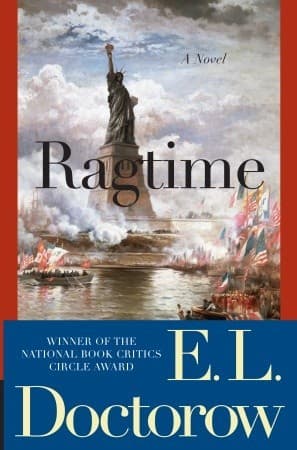
- Ragtime
E.L. Doctorow
3.9 (38k) average on GoodreadsLiterary FictionWhile both novels explore early 20th-century American history and societal changes, Ragtime uses a mosaic of interconnected lives, often historically famous figures, to paint a broader social commentary. Away maintains a singular focus on Lillian Leyb's intensely personal and physical journey across continents, emphasizing her interiority and individual struggle rather than a sprawling social tapestry.
- The Chosen
Chaim Potok
3.9 (253) average on GoodreadsFantasyPotok's work, like The Chosen, offers deeply detailed and often introspective explorations of Jewish immigrant life, particularly in the religious and intellectual spheres within New York City. Bloom's Away shares the immigrant theme but expands its geographical scope dramatically beyond New York, venturing into the Alaskan frontier and Siberia, and focusing more on physical survival and a non-religious quest for family, offering a broader, more adventurous narrative arc.
- The Old Man and the Sea
Ernest Hemingway
3.8 (831k) average on GoodreadsLiterary FictionA Cuban fisherman's long struggle with a giant marlin becomes a story of endurance and dignity, now retold for young adults with illustrations, phonetic guides, and writing prompts in Traditional Chinese.





Enjoyed the summary?
A summary gives you the shape of the book. The book itself has the detail, the examples and the voice.
Find Away on AmazonAs an Amazon Associate, BookBrief earns from qualifying purchases. How we're funded