
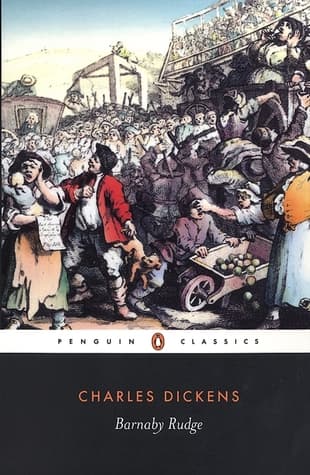
Synopsis
Covers the whole plot, including the ending.
- Difficulty
- Medium
- Pacing
- Variable
- Mood
- Historical, Dramatic, Suspenseful, Dark, Social Commentary
- Read it if
- You enjoy intricate historical narratives with a large cast, vivid portrayals of social unrest, and Dickens's characteristic blend of humor, pathos, and social commentary.
- Skip it if
- You prefer fast-paced plots, dislike extensive character development, or are sensitive to detailed descriptions of mob violence.
Barnaby Rudge Plot Summary
Covers the whole plot, including the ending.
The Maypole Inn and a Mysterious Murder
The story begins at the Maypole Inn, owned by John Willet, whose son Joe wants independence. Gabriel Varden, a locksmith, and his apprentice, Sim Tappertit, are regulars. The scene is soon overshadowed by a murder twenty-two years earlier, involving the local estate's steward, Reuben Haredale. His brother, Geoffrey Haredale, now stern and bitter, still seeks the killer. On the murder's anniversary, a stranger named Barnaby Rudge, a simple young man, and his mother, Mary Rudge, visit the inn with Barnaby's raven, Grip. Later, a mysterious individual named Solomon Daisy says he saw someone like the murdered steward on the crime night, renewing interest.
The Varden Household and Sim's Ambitions
The story moves to the Varden household in Clerkenwell. Gabriel Varden is a kind, honest locksmith, but his wife, Martha, is domineering, and his daughter, Dolly, is beautiful but somewhat vain. Sim Tappertit, Gabriel's apprentice, is a hot-headed, ambitious young man who sees himself as a leader of a secret group called the 'Prentice Knights. He is infatuated with Dolly Varden, who often teases him despite his feelings. Sim's rebellious spirit and dissatisfaction with his social standing are clear, hinting at his role in the political unrest that will soon engulf London, driven by his wish for recognition.
Joe Willet's Departure and Emma Haredale's Arrival
Frustrated by his father's constant belittling and his unrequited love for Dolly Varden, Joe Willet leaves the Maypole Inn to enlist in the army. This departure marks his shift from a subservient son to an independent man. Meanwhile, Emma Haredale, Geoffrey Haredale's niece and the murdered Reuben Haredale's daughter, returns to her uncle's care at The Warren. She is compassionate and refined, loyal to her uncle. Her arrival sets up complex relationships and conflicts, especially with Edward Chester, whose father, Sir John Chester, is a long-time enemy of Geoffrey Haredale.
The Chester Family and Forbidden Love
Sir John Chester, a charming but cold and manipulative aristocrat, tries to control his son, Edward Chester, for his own social and financial gain. Edward, however, truly loves Emma Haredale, a love forbidden due to the deep animosity between their families. Sir John actively plots to separate them, seeing Emma as unsuitable and preferring Edward to marry a wealthy heiress. Edward's defiance of his father and his steady affection for Emma become a central romantic conflict, showing themes of class, family duty, and personal desire against a background of growing social unrest.
Hugh and the Secret of The Warren
Hugh, a wild, unkempt, and seemingly savage man, works as a servant at The Warren, Geoffrey Haredale's estate. His origins are mysterious, and he deeply resents society. He is often with a sinister, enigmatic character known only as 'Gashford,' who is Lord George Gordon's secretary. Hugh's presence at The Warren is unsettling, and he is later revealed to be connected to a dark secret about the estate and the Haredale family. His untamed nature makes him a dangerous figure, easily swayed by the chaos and violence promised by the growing Protestant Association.
Lord George Gordon and the Protestant Association
Lord George Gordon, an eccentric and fanatical nobleman, leads the Protestant Association. He is driven by an obsessive anti-Catholic zeal, believing the Catholic Relief Act of 1778, which granted some concessions to Catholics, weakens the Protestant establishment. Gordon incites public fervor through inflammatory speeches and pamphlets, manipulating people's fears and prejudices. His secretary, Gashford, a cunning and manipulative individual, helps organize the movement, using Gordon's fanaticism for his own ends. The Gordon Riots begin, fueled by religious intolerance and political opportunism.
The Gathering Storm: London on Edge
As Lord George Gordon's influence grows, London becomes ready for unrest. The 'Prentice Knights, led by Sim Tappertit, become a ready force for disorder, eager to assert themselves. Barnaby Rudge, with his simple mind, is easily drawn into the excitement, seeing the demonstrations as a grand adventure, unaware of their destructive potential. Mary Rudge, his mother, tries to protect him, sensing the danger. Geoffrey Haredale, a staunch Catholic, becomes a target of the rising anti-Catholic feeling, further increasing tension between him and Sir John Chester, who subtly encourages the unrest for his own cynical amusement.
The Gordon Riots Erupt
The Gordon Riots erupt in London with terrifying force. Thousands of enraged Protestants, incited by Lord George Gordon and his lieutenants, including Hugh and Sim Tappertit, march on Parliament and then unleash destruction across the city. Catholic chapels, homes, and businesses are targeted, looted, and burned. Newgate Prison is stormed, and its prisoners, including Barnaby Rudge, unjustly imprisoned, are freed. The mob, characterized by mindless brutality, becomes a force of nature, sweeping away all order and reason. Authorities are overwhelmed, and London descends into anarchy, with fire and violence everywhere.
Personal Tragedies Amidst the Chaos
The riots bring immense suffering to the main characters. The Maypole Inn is attacked and looted, forcing John Willet and his family to flee. The Warren, Geoffrey Haredale's estate, is burned, and Emma Haredale and Dolly Varden are abducted by rioters, including Hugh and Sim Tappertit. Gabriel Varden, the locksmith, bravely tries to rescue them, showing his quiet courage amid the terror. Joe Willet, now a soldier, returns to find his home destroyed and his loved ones in danger, showing the personal cost of the widespread civil unrest. Mary Rudge is heartbroken and terrified for Barnaby, who is caught in the mob's destructive fervor.
The Maypole's Secret Revealed
Amid the chaos of the riots, the long-standing mystery of Reuben Haredale's murder is finally solved. It is revealed that Barnaby Rudge's father, also named Barnaby Rudge, was the murderer. He had killed Reuben Haredale for money and then, believing he had also killed Solomon Daisy, fled, leaving his wife and son to think him dead. He returns to London during the riots, living under a false identity. Hugh is also revealed as the illegitimate son of Barnaby Rudge Sr. and a local woman, making him Barnaby Rudge Jr.'s half-brother. This revelation links the past crime directly to the present devastation, emphasizing the novel's themes of inherited guilt and past consequences.
Rescue and Reckoning
Joe Willet, now a seasoned soldier, helps rescue Emma Haredale and Dolly Varden from the rioters. He confronts Sim Tappertit and Hugh, showing his new maturity and bravery. The military eventually restores order to London, and the law fully punishes the rioters. Many are arrested, tried, and condemned. Lord George Gordon is imprisoned, and his followers, including Sim Tappertit and Hugh, face the death penalty for their crimes. The story shifts from mob anarchy to the swift, often brutal, process of justice.
Justice and Reconciliation
Barnaby Rudge Sr. is captured and condemned for his past crimes, finally bringing justice for Reuben Haredale's murder. Sim Tappertit and Hugh are executed for their roles in the riots, paying the ultimate price. Sir John Chester, despite his manipulative nature, avoids direct punishment for subtly instigating the riots, but his plans ultimately fail. Geoffrey Haredale, having lost everything, seeks revenge on Sir John, leading to a fatal duel where both men die. Edward Chester and Emma Haredale are finally free to marry, and Joe Willet and Dolly Varden also find happiness together after much hardship. Barnaby Rudge, spared execution due to his simple-mindedness, lives a quiet life with his mother, forever marked by the events.
Barnaby Rudge Characters
Barnaby Rudge
Protagonist
A kind-hearted, simple-minded young man with a pet raven.
Barnaby is a young man with a childlike innocence and a mental disability, often described as 'simple-minded.' He is deeply attached to his mother, Mary Rudge, and his pet raven, Grip. Despite his limitations, he possesses a pure heart and a strong sense of loyalty. He is easily swayed by external influences due to his inability to fully grasp complex social and political realities, making him an unwitting participant in the Gordon Riots. His innocence and vulnerability make him a tragic figure, swept up in forces beyond his comprehension.
Relationships: Mary Rudge (Devoted son to his protective mother); Grip (Inseparable companion and pet); Hugh (Unknowing half-brother); Barnaby Rudge Sr. (Son of the murderer, unaware of his father's identity for much of the story)
Geoffrey Haredale
Supporting
An embittered and stern Catholic gentleman seeking justice.
Geoffrey Haredale is a proud and rigid Catholic gentleman, deeply scarred by the murder of his brother, Reuben, twenty-two years prior. He is a man of strong principles and unwavering loyalty, but also prone to deep-seated resentment and a lack of forgiveness, particularly towards Sir John Chester and anyone he perceives as an enemy. His stern demeanor masks a profound grief and a relentless pursuit of justice for his brother. His Catholicism makes him a target during the Gordon Riots, further isolating him and fueling his animosity.
Relationships: Emma Haredale (Protective uncle to his niece); Sir John Chester (Bitter, long-standing enemy); Edward Chester (Opposes his relationship with Emma)
Sir John Chester
Antagonist
A charming but manipulative and cynical aristocrat.
Sir John Chester is a man of polished manners and superficial charm, beneath which lies a cold, calculating, and cynical heart. He is a master manipulator, always acting in his own self-interest, whether it's arranging a profitable marriage for his son, Edward, or subtly exacerbating the tensions leading to the riots for his own amusement. He embodies the corrupt and self-serving aristocratic class, viewing others as pawns in his elaborate schemes. His sophisticated cruelty makes him a formidable, albeit detestable, antagonist.
Relationships: Edward Chester (Controlling and manipulative father); Geoffrey Haredale (Long-standing enemy, whom he subtly torments)
Edward Chester
Protagonist
Sir John's honorable son, in love with Emma Haredale.
Edward Chester is the honorable and principled son of Sir John Chester. Unlike his father, Edward possesses a strong moral compass and a genuine capacity for love and loyalty. He is deeply devoted to Emma Haredale, even defying his father's wishes to pursue their relationship. He is initially portrayed as somewhat naive to his father's true nature but grows in resolve and independence throughout the story. His struggles against his father's manipulation and his commitment to Emma make him a sympathetic romantic hero.
Relationships: Emma Haredale (Deeply in love, ultimately marries her); Sir John Chester (Defiant son to his manipulative father)
Emma Haredale
Protagonist
Geoffrey Haredale's courageous niece and Edward Chester's love interest.
Emma Haredale is the refined and compassionate niece of Geoffrey Haredale. She is a woman of quiet strength and unwavering loyalty to her uncle, despite his stern nature. Her love for Edward Chester is a central driving force in her character, and she bravely endures separation and abduction during the riots. She represents innocence and vulnerability caught in the crossfire of historical events and familial feuds, yet she maintains her dignity and integrity throughout her ordeals.
Relationships: Edward Chester (Deeply in love, ultimately marries him); Geoffrey Haredale (Devoted niece to her uncle); Dolly Varden (Close friend)
Gabriel Varden
Supporting
A kind and honest locksmith.
Gabriel Varden is a good-natured, honest, and somewhat henpecked locksmith. He is a man of simple virtues, dedicated to his craft and his family, despite his wife Martha's domineering personality and his daughter Dolly's flightiness. He possesses a quiet bravery, demonstrated when he attempts to rescue Emma and Dolly during the riots. He represents the hardworking, moral backbone of London's common people, a voice of reason and decency amidst the chaos and extremism.
Relationships: Martha Varden (Husband to his domineering wife); Dolly Varden (Loving father to his daughter); Sim Tappertit (Master to his rebellious apprentice)
Dolly Varden
Supporting
Gabriel Varden's beautiful but initially vain daughter.
Dolly Varden is the beautiful and spirited daughter of Gabriel and Martha Varden. Initially portrayed as somewhat vain and flirtatious, she matures significantly throughout the novel. She is the object of affection for both Sim Tappertit and Joe Willet. Her experiences during the riots, particularly her abduction, force her to confront the harsh realities of the world and appreciate the true character of those around her. She embodies youthful charm and resilience, developing from a flighty girl into a more thoughtful young woman.
Relationships: Joe Willet (Love interest, eventually marries him); Sim Tappertit (Object of his unrequited affection); Emma Haredale (Close friend); Gabriel Varden (Daughter to her loving father)
Joe Willet
Supporting
The long-suffering son of John Willet, who becomes a soldier.
Joe Willet is the long-suffering son of John Willet, the landlord of the Maypole Inn. Frustrated by his father's constant belittling and his unrequited love for Dolly Varden, he runs away to join the army. This decision marks a significant turning point, allowing him to mature and gain independence. He returns to London as a brave and capable soldier, playing a crucial role in rescuing Emma and Dolly during the riots. Joe represents the potential for growth and transformation when individuals are given the opportunity to escape oppressive environments.
Relationships: Dolly Varden (Love interest, eventually marries her); John Willet (Subservient son, later independent); Barnaby Rudge (Acquaintance from the Maypole)
Sim Tappertit
Antagonist
Gabriel Varden's rebellious apprentice and leader of the 'Prentice Knights.
Sim Tappertit is Gabriel Varden's ambitious, vain, and hot-headed apprentice. He fancies himself a great leader and is the head of a secret society called the 'Prentice Knights, which he uses as an outlet for his frustrations and desire for power. He is infatuated with Dolly Varden, but his self-importance and superficiality prevent him from truly understanding her. His rebellious nature and thirst for recognition make him a prime candidate for involvement in the Gordon Riots, where he embraces the chaos and violence with zeal.
Relationships: Dolly Varden (Unrequited love interest); Gabriel Varden (Rebellious apprentice); Hugh (Fellow rioter and accomplice)
Hugh
Antagonist
A wild and savage man, connected to the Haredale murder.
Hugh is a wild, unkempt, and physically imposing man of mysterious origins, often described as savage and brutish. He works at The Warren but harbors deep resentment and a thirst for violence. He is easily manipulated by figures like Gashford and Lord George Gordon, who exploit his base instincts and desire for revenge against society. His true identity as Barnaby Rudge Sr.'s illegitimate son is a key plot revelation, linking him directly to the novel's central mystery and the themes of inherited darkness. He represents the raw, destructive power of the uneducated and disenfranchised mob.
Relationships: Barnaby Rudge Sr. (Unknowing son); Barnaby Rudge (Unknowing half-brother); Sim Tappertit (Fellow rioter and accomplice); Gashford (Manipulated by him)
Lord George Gordon
Antagonist
The fanatical leader of the Protestant Association.
Lord George Gordon is an eccentric, fanatical nobleman whose obsessive anti-Catholic zeal drives the formation of the Protestant Association and ultimately incites the Gordon Riots. He is portrayed as a figure of misplaced conviction, genuinely believing in his cause but utterly blind to the destructive consequences of his actions. He is a charismatic but ultimately dangerous demagogue, capable of stirring up immense public fervor through inflammatory rhetoric. His fanaticism, though perhaps sincere, serves as a catalyst for widespread violence and anarchy.
Relationships: Gashford (His cunning secretary and manipulator); His followers (Hugh, Sim) (Their leader and inspirer)
Barnaby Rudge Themes
The Dangers of Mob Mentality and Fanaticism
This is the central theme, clearly shown through the Gordon Riots. Dickens demonstrates how collective emotion, fueled by fanaticism (Lord George Gordon's anti-Catholicism) and unchecked passion (Sim Tappertit's desire for power, Hugh's savage resentment), can lead to irrationality, brutality, and widespread destruction. The mob loses individual conscience, becoming a monstrous entity that burns, loots, and murders without remorse, as seen in the burning of Newgate Prison and The Warren. The novel warns against the dangers of letting go of individual reason for the overwhelming, often destructive, force of the crowd.
“From every corner of the vast metropolis, rose the cry of 'No Popery,' and the crowd swelled and grew, and were a-moving, like a great sea.”
Justice and Retribution
The novel explores various forms of justice: the delayed justice for Reuben Haredale's murder, the swift and often harsh punishment against the rioters, and Geoffrey Haredale's personal vengeance. The resolution of the Haredale murder mystery, with Barnaby Rudge Sr. finally facing justice, shows that crimes, no matter how old, will eventually come to light. Conversely, the executions of Sim Tappertit and Hugh are a stark reminder of the consequences of lawlessness. The fatal duel between Haredale and Sir John Chester highlights the destructive nature of personal revenge, suggesting that while justice may be served, it often comes at a terrible cost.
“There are some things that are never forgotten, and some crimes that are never forgiven.”
The Corrupting Influence of Power and Ambition
The desire for power and social standing drives many characters to corruption and cruelty. Sir John Chester manipulates everyone, including his own son, for social advancement and financial gain. Sim Tappertit's ambition to be a leader, however misguided, draws him into the destructive 'Prentice Knights and the riots. Lord George Gordon's power over the masses, fueled by his fanaticism, leads to widespread death and destruction. Dickens shows how even seemingly noble causes, when pursued with unchecked ambition and disregard for human life, can become deeply corrupting.
“He played with men as with toys, and found his greatest pleasure in their most serious troubles.”
Innocence and Vulnerability in a Cruel World
Barnaby Rudge, with his simple mind and childlike innocence, embodies this theme. He is vulnerable to manipulation and easily swept into the riots, seeing them as a grand adventure rather than a destructive force. His mother, Mary Rudge, constantly tries to protect his innocence from the harsh realities of the world and his father's dark past. Emma Haredale and Dolly Varden also represent innocence, as they are abducted and endangered by the mob, becoming victims of the era's cruelty. The theme shows how the most vulnerable are often the first casualties of social and political upheaval.
“Poor Barnaby! He was a child in sense, though a man in years.”
Familial Duty vs. Personal Desire
This theme is clear in the relationships between fathers and sons, particularly Sir John and Edward Chester, and John and Joe Willet. Edward struggles to balance his love for Emma with his father's manipulative demands for a financially beneficial marriage. Joe Willet wants independence and respect, which his domineering father, John, denies him, leading Joe to leave home. The novel explores the tension between parents' expectations for their children and the children's own desires for love, freedom, and self-determination, often concluding that true happiness requires breaking free from oppressive family ties.
“Every man has his own way to make, and his own bread to earn.”
Plot Devices & Literary Techniques
The Mysterious Murder of Reuben Haredale
A long-unsolved crime that drives the plot and connects key characters.
This twenty-two-year-old murder is introduced early in the novel and serves as a central mystery. It fuels Geoffrey Haredale's bitterness and sets up the conflict with Sir John Chester. The eventual revelation of Barnaby Rudge Sr. as the killer, and Hugh's connection as his son, intricately links the past to the present, revealing the deep-seated origins of some characters' fates and motivations. It provides a strong narrative backbone, weaving together individual destinies with broader historical events, and ultimately bringing a sense of closure to the complex web of relationships.
Grip the Raven
Barnaby Rudge's pet raven, a symbol of innocence and an uncanny observer.
Grip is more than just a pet; he acts as a symbolic character, often echoing the unfolding events with his intelligent mimicry and ominous pronouncements. His presence emphasizes Barnaby's childlike innocence and his detachment from the harsh realities of the world. Grip's ability to imitate human speech and his seemingly knowing glances add an element of the uncanny and prophetic, sometimes foreshadowing events or highlighting the absurdity of human behavior. He serves as a loyal, if unusual, companion to Barnaby, representing a pure, wild spirit amidst the chaos.
The 'Prentice Knights
A secret society of apprentices, manipulated into becoming a force for disorder.
Led by Sim Tappertit, this secret society initially serves as an outlet for the apprentices' frustrations and romanticized notions of rebellion. It provides a ready-made structure and a pool of willing participants for the Gordon Riots. The Knights embody the restless, easily swayed youth of London, whose misguided idealism and desire for power make them susceptible to demagoguery. Their transformation from a relatively harmless club into a violent mob highlights how easily social unrest can be ignited and exploited by those with nefarious intentions, providing a microcosm of the larger mob mentality.
Letters and Secret Communications
Used to convey hidden information and advance the plot's mysteries.
Various letters and secret communications play a crucial role in advancing the plot, particularly in the unraveling of the Haredale murder mystery and in Sir John Chester's manipulations. These include the mysterious letter left at the Maypole Inn on the anniversary of the murder, and the coded messages exchanged between the conspirators of the Gordon Riots. They serve to reveal hidden truths, expose deceptions, and drive the narrative forward, often creating suspense and intrigue by selectively disclosing information to the characters and the reader.
Barnaby Rudge Quotes
“No man ever threw away life so recklessly but that he was sorry at the last, for having been so prodigal.”
“The world is a comedy to those who think, a tragedy to those who feel.”
“A man may be a miser in his ideas as well as in his money.”
“There are some men who can be happy in any place; some who can be happy in no place.”
“It is a pleasant thing to reflect upon, and to be grateful for, at the close of an idle day, that we have been able to make some one happy by means of a very slight exertion.”
“The people who had been most riotous in the attack were the loudest in their lamentations when the danger was over.”
“Such is the way of the world. The innocent suffer with the guilty.”
“He who has no wish to be any other than he is, is always content.”
“There are chords in the human heart—strange, varying strings—which are only to be found by a master's hand.”
“Violence and wrong are in their nature short-lived.”
“It is a most difficult thing to break a habit.”
“The very air was thick with smoke and dust, and the very ground was hot beneath their feet.”
“Suspicion, like a leprosy, contaminates whatever it touches.”
“How many a man has thrown away his life for a woman, and how many a woman has given her life for a man!”
Quiz
10 questions on the plot and the characters. Each answer comes with a short explanation.
Question 1
Which historical event forms the central backdrop for the novel 'Barnaby Rudge'?
- The Great Fire of London
- The Gordon Riots of 1780
- The Jacobite Rising of 1745
- The Plague of London
Show answer
B. The Gordon Riots of 1780 The novel is explicitly set during the anti-Catholic Gordon Riots of 1780, making them the central historical event.
Question 2
What is the name of Barnaby Rudge's beloved pet?
- Fagin
- Bill Sikes
- Grip
- Pip
Show answer
C. Grip Barnaby Rudge's loyal and intelligent pet raven is named Grip, a key character detail.
Question 3
The forbidden love story in 'Barnaby Rudge' is between which two characters, representing different religious backgrounds?
- Barnaby and Dolly
- Hugh and Miss Haredale
- Edward and Emma
- Gabriel Varden and Martha
Show answer
C. Edward and Emma The synopsis highlights the forbidden love between Emma (Catholic) and Edward (Protestant) as a core element of the story.
Question 4
What is Barnaby Rudge's primary role during the Gordon Riots?
- A peace negotiator
- A journalist reporting on the events
- One of the riot leaders
- A victim hiding from the mob
Show answer
C. One of the riot leaders The description states that Barnaby is 'one of the riot leaders,' despite his simplemindedness.
Question 5
Which key theme does Dickens most vividly portray through the depiction of the Gordon Riots in 'Barnaby Rudge'?
- The beauty of nature
- The terror and mindlessness of a rampaging mob
- The triumph of individual heroism over adversity
- The industrial revolution's impact on society
Show answer
B. The terror and mindlessness of a rampaging mob The text explicitly states the novel is 'an unparalleled portrayal of the terror of a rampaging mob' and depicts the 'dangers, the mindlessness, and the possibilities... of the mob.'
Question 6
How is Barnaby Rudge's fate connected to a specific plot element beyond the riots?
- He is involved in a complex inheritance dispute.
- His fate is tied to a mysterious murder.
- He is a long-lost heir to an aristocratic fortune.
- He is a secret agent for the government.
Show answer
B. His fate is tied to a mysterious murder. The synopsis mentions that Barnaby's 'fate is tied to a mysterious murder,' adding a layer of intrigue beyond the riots.
Question 7
What is unique about 'Barnaby Rudge' in the context of Charles Dickens's literary career?
- It is his longest novel.
- It is his only novel set outside of London.
- It is Charles Dickens’s first historical novel.
- It features his only supernatural character.
Show answer
C. It is Charles Dickens’s first historical novel. The introduction states that 'Barnaby Rudge' is 'Charles Dickens’s first historical novel,' making it a significant milestone in his oeuvre.
Question 8
Beyond the riots, what two distinct social worlds does Dickens's narrative encompass?
- The rural countryside and the bustling port towns.
- The academic institutions and the theatrical stages.
- The rarified aristocratic world and the volatile streets and nightmarish underbelly of London.
- The military garrisons and the merchant guilds.
Show answer
C. The rarified aristocratic world and the volatile streets and nightmarish underbelly of London. The summary notes that 'The story encompasses both the rarified aristocratic world and the volatile streets and nightmarish underbelly of London.'
Question 9
How does the character of Barnaby Rudge's pet raven, Grip, contribute to the novel's thematic depth?
- It serves as a symbol of the aristocracy's detachment.
- It embodies the mystical power of innocence.
- It represents the scientific progress of the era.
- It acts as a literal narrator for parts of the story.
Show answer
B. It embodies the mystical power of innocence. The text explicitly states that Grip 'embodies the mystical power of innocence,' giving the pet a significant thematic role.
Question 10
Despite being one of Dickens's lesser-known works, what qualities are attributed to 'Barnaby Rudge' in the provided text?
- It is considered his most humorous and lighthearted novel.
- It is among the most brilliant—and most terrifying—in Dickens’s oeuvre.
- It is praised for its groundbreaking portrayal of utopian societies.
- It is criticized for its lack of historical accuracy.
Show answer
B. It is among the most brilliant—and most terrifying—in Dickens’s oeuvre. The final sentence of the description states: 'Barnaby Rudge is nonetheless among the most brilliant—and most terrifying—in Dickens’s oeuvre.'
Barnaby Rudge FAQ
What is the central historical event depicted in 'Barnaby Rudge'?
The novel is primarily set against the backdrop of the Gordon Riots of 1780, a series of violent anti-Catholic protests that swept through London. Dickens vividly portrays the chaos, destruction, and terror unleashed by the rampaging mob during this significant historical period.
Who are Emma Haredale and Edward Chester, and what is their significance to the plot?
Emma Haredale is a Catholic woman, and Edward Chester is a Protestant man, whose forbidden love forms a central romantic thread in the novel. Their relationship is complicated by religious prejudice and the deep-seated animosity between their families, particularly the rivalry between Geoffrey Haredale and Sir John Chester.
Describe Barnaby Rudge's character and his role in the riots.
Barnaby Rudge is a simpleminded young man, characterized by his innocence and his beloved pet raven, Grip. Despite his gentle nature, he is easily manipulated and becomes one of the unwitting leaders of the anti-Catholic mob, swept up in the fervor and violence without fully comprehending its implications.
What is the 'mysterious murder' mentioned in the synopsis, and how does it connect to Barnaby?
The mysterious murder refers to the long-unsolved killing of Reuben Haredale, Geoffrey Haredale's brother and Emma's father. Barnaby's father, also named Barnaby Rudge, was the steward at The Warren and disappeared after the murder, becoming a key suspect. This past crime casts a long shadow over the characters and is eventually unraveled.
How does Grip, Barnaby's raven, contribute to the novel's atmosphere and themes?
Grip, Barnaby's pet raven, serves as a distinctive and somewhat mystical companion, often echoing human speech and providing ironic commentary. It embodies a form of innocent, almost supernatural observation, contrasting with the human folly and violence, and adding a touch of the gothic and the symbolic to the narrative.
What is the nature of the rivalry between Geoffrey Haredale and Sir John Chester?
The rivalry between Geoffrey Haredale and Sir John Chester is deeply rooted in class, politics, and a long-standing personal feud, exacerbated by the murder of Reuben Haredale. Haredale is a staunch Catholic and Tory gentleman, while Chester is a cynical, manipulative Protestant and Whig, with their animosity influencing their children's lives.
How does the character of Hugh, the ostler at The Maypole, connect to the wider plot?
Hugh is a wild, uneducated, and brutal character who becomes a prominent figure among the rioters. His true parentage is a significant reveal: he is the illegitimate son of Sir John Chester, a detail that highlights the hypocrisy and hidden depravity of the upper classes and connects him directly to the central families.
What is the significance of the Maypole Inn and its landlord, John Willet?
The Maypole Inn serves as a crucial gathering place and a symbol of traditional, somewhat stagnant English life before the riots. John Willet, its stubborn and narrow-minded landlord, represents an older generation resistant to change, whose world is violently disrupted by the unfolding historical events.
How does the identity of Barnaby Rudge's father impact the story?
Barnaby Rudge's father, the original Barnaby, is revealed to be the true murderer of Reuben Haredale, having faked his own death. His return from hiding during the riots, and his eventual capture alongside his son, highlights themes of inherited fate, hidden guilt, and the disruptive power of the past.
How does Dickens portray the psychology of the mob in 'Barnaby Rudge'?
Dickens portrays the mob as a terrifying, almost sentient entity driven by irrational passion, fear, and a thirst for destruction, rather than coherent ideology. He emphasizes how individuals lose their personal identity and moral compass when subsumed into the collective, highlighting its mindlessness and brutal potential.
What psychological factors contribute to Barnaby Rudge's susceptibility to manipulation?
Barnaby's simplemindedness, his childlike innocence, and his deep desire for belonging make him highly susceptible to manipulation. He lacks the critical judgment to discern the true intentions of the riot leaders, instead following those who show him attention, mistaking their malicious motives for camaraderie.
How do characters like Lord George Gordon exemplify the psychological dangers of fanaticism?
Lord George Gordon, the nominal leader of the anti-Catholic movement, exemplifies the dangers of fanaticism through his unshakeable conviction and charismatic but deluded rhetoric. His inability to control the forces he unleashes, coupled with his self-righteousness, illustrates how zealotry can lead to catastrophic and unintended consequences.
Discuss the psychological impact of the riots on characters like Emma Haredale and Dolly Varden.
The riots have a profound psychological impact, exposing characters like Emma and Dolly Varden to extreme terror and violence, forcing them to confront the fragility of their world. Emma endures abduction and the threat of harm, while Dolly experiences the breakdown of social order, leading to a loss of innocence and a deeper understanding of human depravity.
Is 'Barnaby Rudge' primarily a historical novel or a social commentary?
While deeply rooted in the historical events of the Gordon Riots, 'Barnaby Rudge' transcends mere historical recounting to offer profound social commentary. Dickens uses the historical setting to explore timeless themes of mob mentality, religious intolerance, social class divisions, and the nature of justice and order, making it both.
How does the novel critique or uphold different forms of authority – state, religious, and patriarchal?
'Barnaby Rudge' critiques the failures of state authority to maintain order and protect its citizens, as seen in the delayed and ineffective response to the riots. It also subtly questions religious authority that fuels intolerance and exposes the limitations and abuses of patriarchal power, particularly through figures like Sir John Chester and John Willet.
What is Dickens's ultimate message about the nature of innocence and madness through Barnaby Rudge?
Dickens suggests that while Barnaby's innocence is pure, it makes him vulnerable to manipulation, blurring the lines between innocence and a form of madness when caught in the riot's fervor. His fate highlights how a society's madness can consume and endanger its most guileless members, questioning whether innocence can truly survive in a brutal world.
How does the novel's ending resolve the various plotlines and themes?
The novel's ending sees the suppression of the riots, the execution of many leaders including Hugh, and the eventual reprieve of Barnaby due to his diminished mental capacity. The familial feuds are resolved, often tragically, and order is gradually restored, albeit with a lingering sense of the destructive power witnessed. Emma and Edward marry, signaling a hope for reconciliation.
In what ways does 'Barnaby Rudge' foreshadow or reflect themes in Dickens's later works?
'Barnaby Rudge' foreshadows Dickens's later explorations of social injustice, the psychological effects of crime, and the corrupting influence of power, seen in novels like 'Bleak House' and 'A Tale of Two Cities'. The vivid portrayal of London's underbelly and the theme of inherited secrets also recur in his subsequent works.
About the author
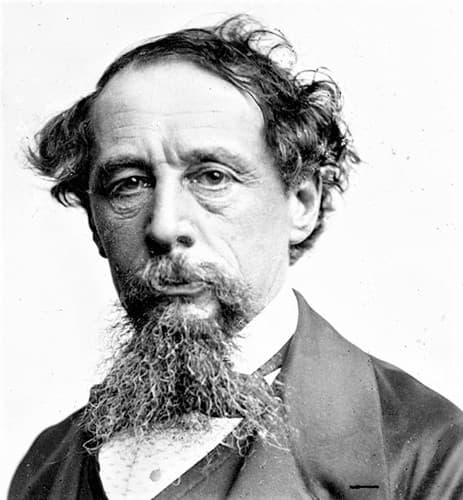
Charles John Huffam Dickens was an English writer and social critic who created some of the world's best-known fictional characters and is regarded by many as the greatest novelist of the Victorian era. His works enjoyed unprecedented popularity during his lifetime and, by the 20th century, critics and scholars had recognised him as a literary genius. His novels and short stories are widely read today.
Similar books
- A Tale of Two Cities
Charles Dickens
3.9 (810k) average on GoodreadsHistorical FictionAnother Dickensian historical novel focusing on revolution and its impact on individuals.
- Les Misérables
Victor Hugo
4.2 (683k) average on GoodreadsHistorical FictionSweeping historical narrative with a focus on social injustice, revolution, and personal redemption.
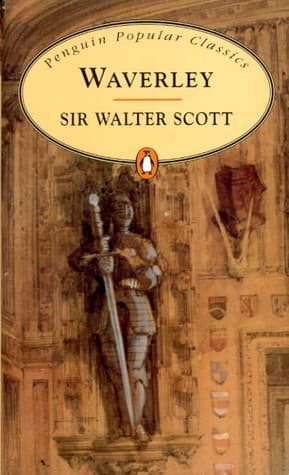
- Waverley
Walter Scott
3.4 (5k) average on GoodreadsHistorical FictionSir Walter Scott's Waverley (1814) is often considered a foundational text of historical fiction, setting many conventions for the genre. Like Barnaby Rudge, it blends fictional characters with historical events (the Jacobite rising of 1745). However, Scott's approach often involves a more detached, observational style, focusing on the broader sweep of history and the moral dilemmas of his protagonists. Dickens, in Barnaby Rudge, brings a more intense focus on character psychology and social critique, delving into the visceral experience of the riots with a greater sense of immediacy and emotional intensity. Scott's historical detail is often more extensive and academic, while Dickens uses history more as a stage for his social commentary and character studies.
- To Kill a Mockingbird
Harper Lee
4.3 (4.5M) average on GoodreadsHistorical FictionIn the 1930s Jim Crow South, Harper Lee writes about racial injustice, moral growth, and the quiet courage of a lawyer father, Atticus Finch, as seen through his young daughter's eyes.
- The Great Gatsby
F. Scott Fitzgerald
3.9 (3.8M) average on GoodreadsHistorical FictionIn the opulent Roaring Twenties, a mysterious millionaire's lavish parties hide his desperate, tragic pursuit of a lost love, exposing the emptiness within the American Dream.
- Pride and Prejudice
Jane Austen
4.3 (3M) average on GoodreadsHistorical FictionIn a society focused on status and money, Elizabeth Bennet navigates love and pride, challenging Mr. Darcy and social expectations to find true affection.




Enjoyed the summary?
A summary gives you the shape of the book. The book itself has the detail, the examples and the voice.
Find Barnaby Rudge on AmazonAs an Amazon Associate, BookBrief earns from qualifying purchases. How we're funded