

Synopsis
Covers the whole plot, including the ending.
- Difficulty
- Medium
- Pacing
- Slow
- Mood
- Thought-provoking, Somber, Allegorical, Philosophical
- Read it if
- You appreciate allegorical literary fiction that explores profound historical trauma through unique narrative structures and philosophical inquiry.
- Skip it if
- You prefer straightforward narratives, are sensitive to animal cruelty (even allegorical), or dislike open-ended interpretations of difficult subjects.
Beatrice and Virgil Plot Summary
Covers the whole plot, including the ending.
The Writer's Block
Henry, a well-known author, faces a deep creative block. He spent five years writing his latest manuscript, an allegorical work about the Holocaust. His publishers reject it, calling it too abstract, disturbing, and unsellable. This rejection, along with his wife Sarah's quiet disapproval, sends Henry into despair. He feels like a failure and cannot express the suffering he tried to convey. He stops writing and takes a mundane job.
The Mysterious Package
One day, a strange package arrives for Henry. Inside, he finds a partially finished, handwritten play featuring two animal characters, Beatrice (a donkey) and Virgil (a monkey), along with a taxidermied howler monkey. The sender is an elderly taxidermist who claims to be a fan of Henry's work and asks for help refining the play. Intrigued by the unusual gift and the play's unsettling content, which mirrors themes he struggled with, Henry leaves his creative slump. He feels a connection to the offering, sensing a deeper meaning.
Meeting the Taxidermist
Henry goes to the address and finds a rundown taxidermy shop, its windows filled with lifelike animal displays. He meets the taxidermist, a seemingly gentle but increasingly unsettling old man. The taxidermist, who remains unnamed, explains the play is his life's work and he needs Henry's literary help to publish it. He shares more about Beatrice and Virgil, saying they are characters in a play about animal suffering. However, the allegorical weight of their story hints at something far more sinister than animal cruelty. Henry feels growing discomfort but feels compelled to continue.
The Play's Unveiling
As Henry reads more of the play, he understands its true, horrifying nature. Beatrice, the donkey, and Virgil, the monkey, are not just animals but represent victims and perpetrators of an unimaginable atrocity. The play, set in a desolate place, shows their endless journey, their talks about the 'Horror,' and their meetings with other animals symbolizing different roles in a genocidal event. The taxidermist's explanations clarify that the play is a thinly veiled allegory for the Holocaust. It uses animals to create distance while also making the suffering universal and raw. Henry is both horrified and deeply moved by its power.
The Taxidermist's History
Through fragmented talks and subtle clues, Henry starts to piece together the taxidermist's past. The old man speaks of a 'Horror' he witnessed and took part in, a time when 'things were done to animals' on a large scale. He tells stories that, while seemingly about animals, clearly parallel the experiences of victims and perpetrators during the Holocaust. Henry realizes the taxidermist is not just an artist dealing with historical trauma but a survivor, and possibly a former perpetrator or someone deeply involved in the events. The taxidermist's detached yet obsessive recounting chills Henry.
The Shop's Secrets
As Henry spends more time in the taxidermy shop, he notices increasingly disturbing details. He finds a small, tarnished ring with a foreign inscription, old photographs, and other misplaced artifacts. The shop itself, with its carefully preserved animal forms, begins to feel like a museum of suffering. These objects, combined with the taxidermist's vague answers and the play's escalating horror, confirm Henry's growing suspicion: the taxidermist is not just a witness but has a direct, personal connection to the historical atrocities the play describes. The shop becomes a chilling collection of memory and guilt.
The Unfinished Ending
The taxidermist is particularly focused on the play's incomplete ending. He struggles with how to conclude Beatrice and Virgil's story, how to find meaning or resolution in such immense suffering. This struggle mirrors his own inability to come to terms with his past. He offers various tragic and ambiguous endings, each revealing his deep guilt and his philosophical struggle with evil and redemption. Henry understands that the taxidermist uses the play not just to tell a story, but to process his unconfessed history, seeking some form of absolution or understanding through art.
The Truth Revealed
Driven by horror and a desperate need for understanding, Henry finally confronts the taxidermist. He connects the clues — the ring, the stories, the play itself — and challenges the old man about his involvement in the Holocaust. The taxidermist, though never explicitly admitting to specific crimes, acknowledges his presence and participation in the 'Horror.' His responses are indirect, full of euphemisms and allegories, but his guilt is clear. Henry realizes the taxidermist was not just a witness but part of the destruction, using the play as a confession and a way to process his complicity.
The Final Scene
Despite the horrifying revelations, Henry feels a strange duty to help the taxidermist finish his life's work. He helps craft an ending for the play, one that acknowledges immense suffering but perhaps offers a hint of resilience or the lasting power of memory. The collaboration becomes a shared act of bearing witness, a way to confront the unspeakable through art. The ending they create is not one of easy redemption but a recognition of history's indelible scars and the ongoing need to remember and articulate trauma, however difficult.
The Taxidermist's Disappearance
Soon after the play is finished, Henry returns to the taxidermy shop to find it empty. The taxidermist has vanished without a trace, leaving only the completed manuscript of 'Beatrice and Virgil.' Henry is left with the weight of the story, the knowledge of the taxidermist's past, and the profound impact the experience has had on him. He realizes his own initial struggle to write about the Holocaust stemmed from a similar desire to convey the incomprehensible, and that the taxidermist, in his own way, found a path through art, however dark.
Henry's Transformation
The encounter with the taxidermist and the play 'Beatrice and Virgil' changes Henry deeply. He is no longer blocked; his understanding of suffering, memory, and storytelling has grown immensely. He feels a renewed purpose in his writing, knowing that art can hold even the most unbearable truths. While the experience leaves him scarred, it also gives him a new perspective on his own creative struggles and the artist's duty to bear witness. He is left to consider good and evil, and humanity's lasting capacity for both.
Beatrice and Virgil Characters
Henry
Protagonist
A successful but creatively blocked author grappling with a rejected manuscript and a moral dilemma.
Henry is a renowned author who achieved fame with his previous novel. He is intelligent, introspective, and highly sensitive, particularly to the weight of history and suffering. He is initially portrayed as creatively paralyzed after his ambitious Holocaust-themed manuscript is rejected. His journey is one of rediscovery, forced to confront the very themes he struggled with through the lens of another's horrifying allegory. He is empathetic but also cautious, slowly drawn into the taxidermist's world despite his growing unease. He represents the artist's struggle to convey unspeakable truths.
Relationships: The Taxidermist (Collaborator, confessor, and ultimately, a source of moral and artistic challenge.); Sarah (His supportive but worried wife, who initially struggles to understand his artistic obsession.)
The Taxidermist
Antagonist/Catalyst
An enigmatic old man, a former participant in the Holocaust, who uses art to process his guilt.
The taxidermist is an elderly, unnamed man who is both a skilled craftsman and a deeply disturbed individual. He is a survivor and likely a perpetrator or complicit participant in the Holocaust, using the allegorical play 'Beatrice and Virgil' as his life's confession. He is meticulous, obsessive, and initially appears gentle, but his true nature is revealed through his chillingly detached descriptions of violence and suffering. He is a master of euphemism and allegory, deflecting direct questions while simultaneously revealing his profound guilt and trauma. He represents the lingering shadow of historical evil.
Relationships: Henry (His chosen collaborator and unwitting confessor, whom he manipulates to help him complete his artistic and moral project.)
Beatrice
Symbolic Victim (within the play)
A donkey in the taxidermist's play, symbolizing the innocent victims of the Holocaust.
Beatrice is one of the two main animal characters in the taxidermist's allegorical play. She is a donkey, chosen for her perceived innocence, docility, and capacity for suffering. In the play, she represents the countless victims of the Holocaust, enduring unspeakable horrors, displacement, and the slow, agonizing realization of their fate. Her journey is one of relentless suffering and confusion, constantly questioning the 'Horror' without fully comprehending its scope. She embodies the profound, unjust suffering inflicted upon the innocent.
Relationships: Virgil (Her companion on a harrowing journey, representing a more pragmatic or perhaps complicit perspective.)
Virgil
Symbolic Perpetrator/Bystander (within the play)
A monkey in the taxidermist's play, symbolizing those complicit or actively involved in the Holocaust.
Virgil is the other main animal character in the taxidermist's allegorical play, a monkey. He is presented as more cunning, articulate, and perhaps cynical than Beatrice. He often offers practical advice or attempts to rationalize the 'Horror,' sometimes appearing to be a perpetrator, a bystander, or someone who has adapted to the terrible new reality. He represents the complex roles played by individuals during the Holocaust – those who facilitated, benefited from, or simply survived by navigating the horrific system. His character adds a layer of moral ambiguity and complicity to the allegory.
Relationships: Beatrice (Her companion on the journey, often the one explaining or rationalizing their plight, blurring the lines of victim and perpetrator.)
Sarah
Supporting
Henry's wife, who offers a grounded perspective and quiet concern for his well-being.
Sarah is Henry's wife, a loving and supportive partner who initially struggles to understand his obsessive dedication to his rejected manuscript. She represents a connection to the 'normal' world outside Henry's artistic and intellectual struggles. While she cares deeply for him, she also expresses concern for his mental and emotional health as he delves deeper into the dark themes of the Holocaust. She provides a contrast to Henry's often abstract intellectualism, grounding him in the realities of daily life and human connection.
Relationships: Henry (His wife and emotional support.)
The Publishers
Mentioned
The gatekeepers who reject Henry's initial manuscript, initiating his creative crisis.
The publishers are a collective force representing the commercial and perhaps moral gatekeepers of the literary world. They reject Henry's ambitious Holocaust manuscript, deeming it unpublishable due to its abstract nature and disturbing content. Their rejection is the catalyst for Henry's creative block and his subsequent journey. They represent the difficulty of confronting and commercializing uncomfortable truths, and the tension between artistic integrity and market viability.
Relationships: Henry (Professional relationship as his former and potential future publishers.)
Beatrice and Virgil Themes
The Holocaust and its Representation
The novel directly addresses the challenge of representing the Holocaust in art, especially through allegory. Henry's first manuscript is rejected for being too abstract, yet he later finds deep truth in the taxidermist's animal allegory. The animal characters Beatrice and Virgil both universalize suffering and create a necessary distance, allowing the reader to engage with the unspeakable. The taxidermist's struggle to finish his play mirrors humanity's ongoing struggle to understand and remember the atrocity, showing the limits of language and the power of symbolic representation. The book questions if such a historical event can ever be 'understood' or simply witnessed.
“It is difficult to represent the Holocaust. It is difficult to get the tone right, to be respectful, to be truthful, to make it art.”
Art as a Means of Confession and Reckoning
The taxidermist uses his play, 'Beatrice and Virgil,' as a profound and indirect confession of his own involvement in the Holocaust. By creating an allegory with animals, he creates a psychological distance that allows him to express his trauma and guilt without directly admitting to specific human actions. Henry, in turn, becomes an unwitting helper, aiding the taxidermist in finding a form of closure through artistic collaboration. The novel suggests that art can be a powerful, if sometimes unsettling, way to process unspeakable truths, bear witness, and even seek absolution or understanding for past horrors.
“The taxidermist had found a way to tell his story, his horror, through animals. It was a language both universal and deeply personal.”
The Burden of Memory and Guilt
Both Henry and the taxidermist deal with the heavy burden of memory and guilt, though from different viewpoints. Henry feels humanity's collective guilt for allowing such atrocities and his personal guilt for failing to represent it in his art. The taxidermist, however, carries the direct, personal guilt of a participant or involved witness. His life is defined by the 'Horror,' and his shop, filled with taxidermied animals, becomes a physical representation of his internal museum of suffering. The novel explores how individuals live with and try to process unimaginable past events, and how memory, personal or collective, shapes identity and purpose.
“Memory is a fearsome thing. It is a beast that devours all.”
The Nature of Good and Evil
The novel explores the complexities of good and evil, especially in extreme human behavior. The allegorical animals, Beatrice and Virgil, represent the range of victimhood and complicity, blurring the lines between innocence and responsibility. The taxidermist himself shows how an individual can take part in monstrous acts yet appear outwardly ordinary, even gentle. The book avoids simple portrayals, instead exploring the psychological ways evil can appear and continue, and the difficulty of making clear moral judgments when facing overwhelming historical trauma. It questions what remains of morality when humanity descends into barbarism.
“Are we not all, in some way, animals? Capable of both great kindness and unimaginable cruelty?”
Plot Devices & Literary Techniques
Allegory
The use of animal characters to represent human experiences and historical events.
The central plot device is the allegorical play 'Beatrice and Virgil,' which uses a donkey and a monkey to represent victims and perpetrators/bystanders of the Holocaust. This allows the author, and by extension Henry and the taxidermist, to approach an unspeakable historical event from a necessary distance, making its horrors more digestible and universal. The animals' suffering mirrors human suffering, while the taxidermist's detached, almost clinical descriptions of their plight reflect the dehumanization inherent in genocide. The allegory also highlights the difficulty of direct representation and the power of symbolic language to convey profound truths.
The Unnamed Taxidermist
The protagonist's mysterious and enigmatic collaborator, whose lack of a name enhances his symbolic weight.
The taxidermist remains unnamed throughout the novel, which serves several key functions. It universalizes his character, making him a stand-in for anyone who witnessed or participated in the Holocaust, rather than a specific individual. It also adds to his enigmatic and unsettling nature, preventing Henry (and the reader) from fully categorizing or understanding him, mirroring the incomprehensibility of the events he represents. His namelessness also strips him of personal identity, making him a vessel for the collective guilt and memory of the atrocity, and a symbol of the 'everyman' who might become complicit in evil.
The Taxidermy Shop
A physical setting that functions as a metaphor for preserved memory and past horrors.
The taxidermy shop is more than just a location; it is a powerful metaphor. Filled with meticulously preserved, lifeless animals, it symbolizes the way memory preserves past horrors, rendering them static but still potent. The grotesque beauty of the taxidermied creatures reflects the disturbing nature of the Holocaust itself – an event that defies comprehension yet remains chillingly real. The shop becomes a museum of suffering, a physical manifestation of the taxidermist's burdened psyche, and a place where the past is literally 'stuffed' and displayed, demanding to be acknowledged and remembered, even if it is dead and unmoving.
Metafiction
A novel about writing a novel, reflecting on the creative process and the ethics of storytelling.
The novel employs metafiction by making Henry, a writer, the protagonist grappling with his own manuscript. This allows the story to explore the challenges of artistic creation, particularly when dealing with sensitive and traumatic subject matter like the Holocaust. Henry's initial struggle and the rejection of his work highlight the ethical and aesthetic dilemmas inherent in representing such events. The process of Henry collaborating with the taxidermist on 'Beatrice and Virgil' becomes a commentary on storytelling itself, questioning who has the right to tell certain stories, how they should be told, and what responsibility the artist bears to history and truth.
Beatrice and Virgil Quotes
“When you're a writer, you spend your life in a state of ethical suspension.”
“The stories we tell ourselves, they're the only things that make any sense of the world.”
“Imagination is a muscle. The more you use it, the stronger it gets.”
“Words are not enough. You have to feel the words, live them.”
“Suffering is not a contest. It just is.”
“We are all just trying to make sense of the senseless.”
“Every story is a ghost story, in a way. The past haunting the present.”
“Sometimes the greatest truths are found in the greatest fictions.”
“The weight of what is unspoken can be heavier than any spoken word.”
“To truly see, you must first close your eyes to what you expect to see.”
“Art is a way of holding on to what we can't keep.”
“The world is full of stories waiting to be told, and stories waiting to be heard.”
“Hope is a tricky thing. It can keep you going, or it can break you.”
“We invent stories to make life bearable, to give it shape.”
“Sometimes, the only way to understand is to create.”
Quiz
10 questions on the plot and the characters. Each answer comes with a short explanation.
Question 1
What is the profession of the main human character, Henry, before he receives the mysterious parcel?
- A novelist
- A painter
- A historian
- A zookeeper
Show answer
A. A novelist Henry is a successful novelist whose previous book, 'A Time for Everything,' was a bestseller before he encounters the taxidermist's manuscript.
Question 2
What animals are the central figures in the play/story that Henry receives from the taxidermist?
- A lion and a lamb
- A donkey and a monkey
- A tiger and a dog
- An elephant and a mouse
Show answer
B. A donkey and a monkey The play features a donkey named Beatrice and a monkey named Virgil, who are the titular characters of the novel.
Question 3
What is the primary artistic medium the taxidermist uses for his 'work' that he shows Henry?
- Oil painting
- Sculpture
- Taxidermy
- Photography
Show answer
C. Taxidermy The mysterious man Henry meets is a taxidermist, and his 'art' involves staging taxidermied animals in scenes, often with disturbing implications.
Question 4
What historical event is subtly, then increasingly overtly, alluded to throughout the novel through the allegorical play and the taxidermist's work?
- The Rwandan Genocide
- The Holocaust
- The Armenian Genocide
- The Cambodian Genocide
Show answer
B. The Holocaust The novel uses allegory and direct references to explore the themes and horrors of the Holocaust, particularly through the suffering of Beatrice and Virgil.
Question 5
Why does Henry become so obsessed with the taxidermist's manuscript and the 'play' it contains?
- He believes it will make him rich.
- He sees it as a profound and disturbing allegory that needs to be understood and brought to light.
- He is trying to help the taxidermist get published.
- He finds the animal characters genuinely amusing.
Show answer
B. He sees it as a profound and disturbing allegory that needs to be understood and brought to light. Henry, a writer himself, recognizes the allegorical power and the unsettling nature of the manuscript, feeling compelled to decipher its hidden meanings and the tragic history it represents.
Question 6
What is the specific item Henry finds in the mysterious parcel that initially sparks his interest?
- A stuffed animal
- A handwritten letter
- A partial manuscript for a play/story
- A map to a hidden treasure
Show answer
C. A partial manuscript for a play/story The parcel contains a partial manuscript of a story, 'A New Golden Age,' which features the characters Beatrice and Virgil, and is accompanied by a letter from the taxidermist.
Question 7
What is the primary motivation for Henry's initial move to a new city, leaving behind his previous life and career?
- To escape a bad relationship.
- To find inspiration for a new book.
- His publishers rejected his new novel, causing him to doubt his writing and seek a fresh start.
- He inherited a house in the new city.
Show answer
C. His publishers rejected his new novel, causing him to doubt his writing and seek a fresh start. Henry's new novel, which attempts to address the Holocaust directly, is rejected by his publishers, leading to a personal crisis and his move to a new city.
Question 8
How does the taxidermist, named Henry L'Hôte, relate to the main human character, Henry?
- He is Henry's long-lost brother.
- He is a stranger who sends Henry his work, leading to their eventual meeting.
- He is a former professor of Henry's.
- He is a character Henry invented for his own novel.
Show answer
B. He is a stranger who sends Henry his work, leading to their eventual meeting. Henry L'Hôte is a complete stranger to the novelist Henry when he sends him the mysterious parcel. Their encounter is the catalyst for the novel's main events.
Question 9
What specific object, initially mundane, becomes a powerful and disturbing symbol in the taxidermist's work, representing the immense scale of suffering?
- A golden pocket watch
- A pile of discarded shoes
- A child's teddy bear
- A broken violin
Show answer
B. A pile of discarded shoes The taxidermist creates a vast pile of tiny, taxidermied shoes, representing the discarded belongings and the sheer number of victims of the Holocaust, a direct reference to concentration camp exhibits.
Question 10
What is the ultimate fate of Beatrice and Virgil within the context of the taxidermist's allegorical 'play'?
- They escape to a new life of freedom.
- They are rescued by Henry.
- They are killed and then taxidermied by the taxidermist.
- They confront and defeat their oppressors.
Show answer
C. They are killed and then taxidermied by the taxidermist. In a horrifying culmination of the allegory, Henry discovers the actual taxidermied bodies of Beatrice and Virgil among the taxidermist's collection, confirming their ultimate, tragic end, mirroring the fate of countless victims.
Beatrice and Virgil FAQ
What is the central premise of 'Beatrice and Virgil'?
The novel follows Henry, a struggling writer who receives a mysterious parcel containing a taxidermied howler monkey and a donkey, along with a partial manuscript. This encounter leads him to an enigmatic taxidermist and a profound journey that delves into the nature of storytelling, suffering, and the Holocaust.
Who are Beatrice and Virgil in the literal sense presented in the story?
Beatrice is a taxidermied donkey, and Virgil is a taxidermied howler monkey. They are the subjects of Henry's 'allegorical' play, which he attempts to reconstruct from the fragmented manuscript he receives, and they also physically exist as the taxidermied animals Henry encounters.
What is the significance of the taxidermist character, and how does he relate to Henry?
The taxidermist is an elderly, mysterious man who claims to be the author of the partial manuscript Henry receives. He is the one who sends Henry the parcel and eventually reveals the deeper, allegorical meaning behind Beatrice and Virgil, guiding Henry towards understanding the historical trauma the animals represent.
What kind of project is Henry working on at the beginning of the book, and why is it rejected?
Henry, a successful author, has written a sprawling, ambitious novel that attempts to tackle the Holocaust directly. His editor rejects it, stating that the topic has been 'done to death' and that his approach is not original or impactful enough, pushing him into a creative crisis.
How does the play 'A Fable for a Play' connect to the main narrative?
'A Fable for a Play' is the fragmented manuscript Henry receives, featuring Beatrice and Virgil. It's an allegorical play depicting the animals' suffering and journey, which Henry tries to piece together and understand, eventually realizing it is a thinly veiled metaphor for the Holocaust.
What is the 'Other Place' that Beatrice and Virgil are trying to reach in their play?
In their allegorical play, the 'Other Place' represents a promised land, a place of safety and peace where the animals hope to escape their torment. It functions as a metaphor for an escape from the concentration camps, a hope that is ultimately denied to many victims.
What specific historical event is allegorized through Beatrice and Virgil's journey?
The entire narrative, particularly the play within the book, is a profound allegory for the Holocaust. The suffering of Beatrice and Virgil, their search for the 'Other Place,' and the descriptions of their dwindling numbers directly mirror the experiences and atrocities committed during the Shoah.
How does the 'game' played by Beatrice and Virgil, involving the 'gold' and 'silver' coins, relate to historical atrocities?
The 'game' of gold and silver coins is a grim allegory for the plundering of Jewish possessions and the dehumanization of victims during the Holocaust. The animals are forced to give up their 'worth,' symbolizing the systematic theft of wealth and identity, often under the guise of 'rules' or 'games' by their oppressors.
What is the significance of the taxidermist's own past and his connection to the Holocaust?
The taxidermist is revealed to be a survivor of the Holocaust, and the animals he taxidermies, especially Beatrice and Virgil, are his way of processing and preserving the memory of the atrocity. His art becomes a form of testimony, creating a tangible, albeit macabre, representation of the suffering he witnessed.
How does Henry's initial artistic struggle reflect the broader challenge of representing historical trauma?
Henry's editor rejects his straightforward Holocaust novel, highlighting the difficulty of creating new, impactful art about such a well-documented tragedy. This reflects the novel's own exploration of how to approach immense suffering without desensitization or trivialization, suggesting allegory as a potential path.
What psychological impact does the revelation of the allegory have on Henry?
The revelation profoundly shakes Henry, forcing him to confront the limits of his own imagination and understanding of suffering. It pushes him beyond his intellectual approach to the Holocaust, allowing him to connect with the emotional and visceral horror through the allegorical animals, leading to a breakdown and subsequent transformation.
How does the act of taxidermy function as a psychological coping mechanism for the taxidermist?
For the taxidermist, taxidermy is a powerful coping mechanism. It allows him to literally preserve the memory of the victims in a tangible form, giving them a physical presence and a voice through his allegorical art. It's a way to refuse oblivion and to bear witness to unspeakable horrors.
Discuss the psychological concept of 'bearing witness' as it applies to the characters and the novel.
Bearing witness is central to the novel. The taxidermist literally bears witness as a survivor and then through his art. Henry, initially detached, is forced to bear witness to the taxidermist's story and the animals' allegory, ultimately becoming a conduit for this testimony to the reader, ensuring the memory of the Holocaust endures.
Is the ending of 'Beatrice and Virgil' hopeful or despairing, and why?
The ending is ambiguous, leaning towards a somber hope. While the immediate horror of the taxidermist's past and the animals' fate is despairing, Henry's transformation and his commitment to understanding and sharing the story suggest a flicker of hope that memory and empathy can persist, even if full healing is impossible.
Why does Martel choose animals (a donkey and a monkey) to represent victims of the Holocaust, rather than human characters?
Martel likely uses animals to create a universal allegory, bypassing the specific historical and political complexities that can sometimes distance readers from human narratives of the Holocaust. The animals' innocence and their inability to comprehend their suffering make the injustice more stark and universally poignant, focusing on pure victimhood.
What is the novel's stance on the role of art and storytelling in confronting historical trauma?
The novel argues that art and storytelling are crucial for confronting historical trauma, but not all approaches are equally effective. It suggests that direct, 'done to death' narratives can fail, while innovative, allegorical forms (like the taxidermist's art or the play) can offer new pathways to empathy and understanding, keeping memory alive in fresh ways.
How does the concept of 'the unspeakable' manifest in the novel?
'The unspeakable' is central to the novel, referring to the inherent difficulty of articulating the full horror of the Holocaust. Henry's initial failure, the taxidermist's reliance on allegory, and the animals' wordless suffering all underscore that some experiences defy direct verbal expression, necessitating alternative forms of communication and remembrance.
Could 'Beatrice and Virgil' be interpreted as a meta-commentary on Yann Martel's own writing process after 'Life of Pi'?
Yes, the novel can be seen as a meta-commentary. Henry's struggle with a difficult second novel after a successful debut mirrors Martel's own situation post-'Life of Pi'. The novel explores the pressures of originality and the search for new ways to tell profound stories, reflecting Martel's artistic challenges and choices in tackling a sensitive subject.
About the author

Yann Martel, is a Canadian author who wrote the Man Booker Prize–winning novel Life of Pi, an international bestseller published in more than 50 territories. It has sold more than 12 million copies worldwide and spent more than a year on the bestseller lists of the New York Times and The Globe and Mail, among many other best-selling lists. Life of Pi was adapted for a movie directed by Ang Lee, garnering four Oscars including Best Director and winning the Golden Globe Award for Best Original Score.
Similar books
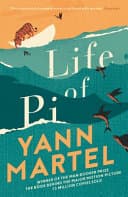
- Life of Pi
Yann Martel
3.9 (1.3M) average on GoodreadsFantasyShares Martel's allegorical style and exploration of profound themes through animal characters.
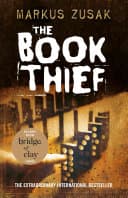
- The Book Thief
Markus Zusak
4.4 (1.8M) average on GoodreadsHistorical FictionDeals with the Holocaust and the power of storytelling in a unique, poignant way.
- Night
Elie Wiesel
4.3 (970k) average on GoodreadsBiographyWhile 'Beatrice and Virgil' examines the act of writing about the Holocaust, 'Night' offers a raw, first-person, and unvarnished account of Wiesel's direct experiences in Nazi concentration camps. Wiesel's memoir prioritizes realism and the direct impact of suffering, aiming for a profound emotional and historical witness. Martel's novel, by contrast, operates on a more detached, intellectual plane, grappling with the ethical and artistic dilemmas of representation rather than direct historical recounting.
- The Old Man and the Sea
Ernest Hemingway
3.8 (831k) average on GoodreadsLiterary FictionA Cuban fisherman's long struggle with a giant marlin becomes a story of endurance and dignity, now retold for young adults with illustrations, phonetic guides, and writing prompts in Traditional Chinese.
- One Hundred Years of Solitude
Gabriel García Márquez
4.1 (753k) average on GoodreadsLiterary FictionThrough the multi-generational story of the Buendía family, a mythical town deals with the repeating patterns of time, love, and solitude, as the extraordinary mixes with the ordinary.
- The Goldfinch
Donna Tartt
3.9 (720k) average on GoodreadsLiterary FictionHaunted by a tragic explosion and clutching a stolen Dutch masterpiece, a young orphan navigates the opulent drawing rooms of New York and the gritty underbelly of the art world, desperately seeking connection and redemption amidst a life spiraling into crime and obsession.




Enjoyed the summary?
A summary gives you the shape of the book. The book itself has the detail, the examples and the voice.
Find Beatrice and Virgil on AmazonAs an Amazon Associate, BookBrief earns from qualifying purchases. How we're funded