
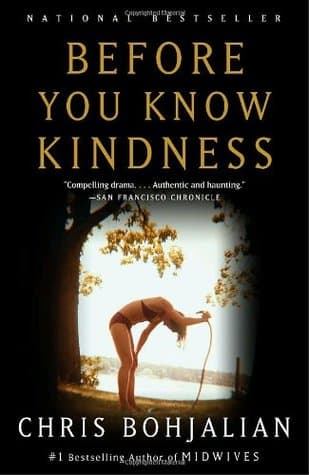
Synopsis
Covers the whole plot, including the ending.
- Difficulty
- Medium
- Pacing
- Moderate
- Mood
- Thought-provoking, somber, intense, reflective, morally ambiguous
Before You Know Kindness Plot Summary
Covers the whole plot, including the ending.
The Accident in the Garden
On a warm July evening, the McCullough family, Spencer, his wife Caroline, and their daughter Charlotte, gather at their New Hampshire home. Charlotte, an animal rights activist, is showing her younger cousin how to disarm a hunting rifle. The rifle, a gift from Spencer's father, is thought to be unloaded. But a round is in the chamber, and as Charlotte swings the rifle, it accidentally fires, hitting Spencer in the abdomen. The scene turns to chaos as Spencer collapses, badly wounded. Paramedics are called, and Spencer is rushed to the hospital, his life uncertain, while Charlotte is left in shock and deep guilt.
Legal Ramifications and Public Scrutiny
After the shooting, Charlotte is charged with felony reckless conduct with a deadly weapon. The incident quickly draws local and national media attention, mostly because Spencer is a successful lawyer and it's unusual for a daughter to shoot her father. The family is thrown into a public spectacle, with reporters outside their home and every detail examined. Caroline tries to protect Charlotte from the media and legal process, while Spencer's recovery remains unclear, adding pressure to an already strained family. The community's reaction is mixed, with some showing sympathy and others judgment.
Spencer's Recovery and Shifting Dynamics
Spencer has multiple surgeries and a long, painful recovery. He is left with lasting physical problems and chronic pain. The experience changes his view on life, his career, and his family. His relationship with Charlotte becomes tense, marked by unspoken guilt and resentment, though he publicly says her actions were an accident. Caroline, managing Spencer's care and Charlotte's legal defense, feels more and more isolated and tired. The family's life is forever changed as they deal with the aftermath of that one shot.
Charlotte's Activism and Animal Rights
Before the accident, Charlotte was already involved in animal rights activism, a passion she got from her grandmother. After the shooting and her legal troubles, her commitment grows stronger. She gets more involved with radical animal rights groups, finding comfort and purpose among activists who share her beliefs. This involvement, however, creates conflict with her parents, especially Spencer, who sees some of the groups' tactics as extreme and dangerous. Charlotte's activism helps her escape her guilt but also pushes her further from her family, leading her to participate in riskier demonstrations.
The Trial and Its Verdict
Charlotte McCullough's trial becomes a publicized event, with the prosecution calling her reckless and the defense arguing it was an unfortunate accident. Spencer testifies for her, saying he believes she didn't mean to harm him. The trial looks at responsibility, intent, and the nature of accidents. Despite the emotional testimony and the family's plea for understanding, the jury finds Charlotte guilty of reckless conduct. The outcome devastates the family and further complicates their already fragile relationships, leaving them to deal with the legal system's consequences.
Imprisonment and Isolation
After her conviction, Charlotte is sentenced to a juvenile detention facility. Her time there is marked by isolation, both physical and emotional. She struggles to adapt to the harsh realities of incarceration, missing her family and the outside world, yet also finding a strange strength. Her parents visit regularly, but the facility's barriers and the emotional distance from the accident remain. This confinement forces Charlotte to confront her actions, her beliefs, and her identity, strengthening her convictions, even as it hardens her against the society that judged her.
Caroline's Struggle and Advocacy
During Charlotte's incarceration, Caroline works for her daughter's early release, appealing to legal channels and public opinion. The experience changes Caroline, once a relatively passive figure, into a fierce advocate for juvenile justice reform. She researches legal cases, connects with other parents of incarcerated youth, and speaks out against what she sees as injustices in the system. This new purpose gives Caroline strength but also strains her marriage with Spencer, who struggles with her focus on Charlotte's situation and her growing disappointment with the legal system he once supported. Her advocacy becomes a way to manage her grief and anger.
Spencer's Career Shift and Moral Crisis
Spencer's near-death experience and Charlotte's conviction force him to rethink his life and career as a corporate lawyer. He finds himself increasingly disappointed with the legal system he once believed in, seeing its flaws through his daughter's case. He begins to question his work's ethics and his values. This moral crisis leads him to consider a career change, seeking a path that aligns more with his altered sense of purpose and justice, perhaps using his legal skills for social good instead of corporate profit.
Charlotte's Release and New Path
After serving her sentence, Charlotte is released from juvenile detention. The world she returns to is both familiar and changed. While the physical scars of the accident have healed, the emotional ones remain for her and her family. She emerges with a renewed, though more measured, desire to continue her animal rights activism. Her time in detention has given her a broader understanding of injustice and a deeper sense of empathy, shaping her approach to advocacy. She seeks a way to make a difference that connects her past actions with her future goals, aiming for change through more strategic and less confrontational means.
Reconciliation and Lingering Wounds
The McCullough family seeks reconciliation after Charlotte's release and Spencer's recovery. Conversations are difficult, marked by unspoken regrets and lingering resentments. While there's a desire to move forward, the accident and its consequences have left lasting marks. Spencer and Charlotte slowly work towards rebuilding their relationship, acknowledging the trauma they've both endured. Caroline tries to bridge the gaps, but the family dynamic has fundamentally shifted. They learn to live with the 'before and after' of that night, understanding that some wounds may never fully heal, but a path towards acceptance and a different kind of love is possible.
Before You Know Kindness Characters
Charlotte McCullough
Protagonist
The teenage daughter who accidentally shoots her father.
Charlotte is a passionate, idealistic, and often headstrong teenager with a deep commitment to animal rights. Before the accident, she is a typical adolescent navigating family dynamics and burgeoning activism. The shooting and subsequent legal process force her to mature rapidly, confronting guilt, public scrutiny, and the harsh realities of the justice system. Her time in juvenile detention hardens her resolve but also provides a period of intense self-reflection, leading her to a more nuanced understanding of her activism and her place in the world. She is fiercely independent but deeply affected by her family's pain.
Relationships: Spencer McCullough (Father-daughter, strained by accident and legal fallout); Caroline McCullough (Mother-daughter, close but tested by shared trauma); Grandmother (Shared passion for animal rights, mentor)
Spencer McCullough
Protagonist
The successful lawyer gravely injured by his daughter.
Spencer is a highly successful and respected corporate lawyer, initially portrayed as somewhat detached and focused on his career. The shooting leaves him physically crippled and emotionally scarred, forcing him to confront his mortality, his relationship with his family, and his life's purpose. His recovery is a long and arduous journey, during which he grapples with pain, resentment, and a profound re-evaluation of his values. He publicly supports Charlotte but privately struggles with the emotional aftermath, eventually seeking a more meaningful path beyond his legal profession.
Relationships: Charlotte McCullough (Father-daughter, strained by accident and legal fallout); Caroline McCullough (Husband-wife, relationship tested by trauma and differing coping mechanisms)
Caroline McCullough
Supporting
Charlotte's mother and Spencer's wife, the family's emotional anchor.
Caroline is initially presented as the supportive wife and mother, often mediating between Spencer and Charlotte. In the wake of the accident, she becomes the primary caregiver for Spencer and the fierce protector of Charlotte. She endures immense emotional strain, balancing her husband's recovery with her daughter's legal defense and imprisonment. Her quiet strength evolves into a powerful advocacy for juvenile justice, transforming her into a woman determined to fight for what she believes is right, even if it means challenging the systems and people she once trusted. She is the emotional core attempting to hold the family together.
Relationships: Charlotte McCullough (Mother-daughter, close but tested by shared trauma); Spencer McCullough (Wife-husband, relationship tested by trauma and differing coping mechanisms)
Grandmother (Spencer's Mother)
Supporting
The matriarch and animal rights advocate who influenced Charlotte.
Spencer's mother, Charlotte's grandmother, is a strong-willed woman with a lifelong commitment to animal rights. She is a significant influence on Charlotte's early activism, providing a moral compass and a connection to a deeper cause. While not directly involved in the accident's immediate aftermath, her values and past actions, particularly her own brushes with legal trouble due to activism, serve as a backdrop and a point of reference for Charlotte's journey. She represents a lineage of conviction and a different perspective on justice and morality within the family.
Relationships: Charlotte McCullough (Grandmother-granddaughter, shared passion, mentor); Spencer McCullough (Mother-son, respectful but ideologically different)
Prosecutor
Antagonist
The legal adversary seeking Charlotte's conviction.
The prosecutor represents the legal system and its pursuit of justice, often in contrast to the family's desire for understanding and leniency. He is a formidable opponent in court, meticulously building a case against Charlotte based on the letter of the law, portraying her actions as reckless and dangerous. His role is to uphold the law and ensure accountability, regardless of the emotional circumstances. He embodies the rigid, impersonal nature of the legal system that the McCulloughs find themselves up against, contributing significantly to their ordeal.
Relationships: Charlotte McCullough (Legal adversary); Spencer McCullough (Legal adversary (during trial))
Dr. Ben Carter
Supporting
Spencer's surgeon and friend.
Dr. Ben Carter is Spencer's surgeon and a family friend. He plays a critical role in Spencer's initial survival and ongoing medical care. Beyond his medical expertise, he offers emotional support to Caroline and provides a compassionate, objective perspective on Spencer's physical condition. His presence underscores the severity of Spencer's injuries and the long road to recovery, while also representing the hope for healing. He is a steadfast figure amidst the family's turmoil, offering both professional care and personal reassurance.
Relationships: Spencer McCullough (Doctor-patient, friend); Caroline McCullough (Friend, source of medical information)
Mr. Henderson
Supporting
Charlotte's defense attorney.
Mr. Henderson is Charlotte's defense attorney, tasked with navigating the complexities of her legal case. He is a pragmatic and experienced lawyer who works diligently to protect Charlotte's interests, despite the challenging circumstances and public scrutiny. He represents the legal system's potential for defense and advocacy, attempting to secure the best possible outcome for Charlotte. His interactions highlight the intricate nature of legal proceedings and the difficult choices families face when confronting the justice system.
Relationships: Charlotte McCullough (Attorney-client); Caroline McCullough (Attorney-client)
Before You Know Kindness Themes
Justice vs. Mercy
The novel explores the tension between legal rules and the human need for understanding and compassion. Charlotte's accidental shooting of her father, and her trial, makes the McCullough family and the reader question if strict legal justice truly serves everyone's best interests. The legal system, through the prosecutor, aims for a clear judgment, while the family wants mercy and recognition of the complex situation. This theme shows up in Caroline's fight for Charlotte's release and Spencer's disappointment with his own legal career, highlighting how cold justice can be without empathy.
“Before you know kindness as the deepest thing inside, you must know sorrow as the other deepest thing. You must wake up with sorrow for the bad things that you didn’t do, but that you were part of. Then it is only kindness that makes sense anymore, only kindness that ties your shoes and sends you out into the day to gaze at bread, only kindness that raises its head from the crowd of the world to say It is I you have been looking for, and then goes with you everywhere like a shadow or a friend.”
The Nature of Accidents and Guilt
A main theme is the lasting impact of a single, unintentional act and the guilt it causes. Charlotte's accidental shooting of her father starts the whole story, forcing her to deal with great guilt, even though she didn't mean to harm him. The novel looks at how an accident can destroy lives, not just physically, but emotionally and mentally. Spencer also feels a type of guilt, questioning his role in providing the rifle and the events that led to the incident. The story examines how people cope with an irreversible mistake and the long journey toward forgiveness, both from others and oneself.
“It was an accident. Everyone knew it was an accident. But an accident, it turned out, could be just as devastating as intent.”
Family Bonds Under Duress
The novel shows the strength and weakness of family relationships when faced with extreme trauma. The McCullough family is torn apart by the accident and its legal fallout, with each member reacting differently to the crisis. Spencer's physical recovery, Charlotte's imprisonment, and Caroline's relentless advocacy create great strain, testing their love, loyalty, and understanding. The story explores how communication breaks down, how resentment can grow, and how families must find new ways to connect and heal, even if things can never be fully as they were before. It shows the strong, though often painful, power of family love.
“The house, once a sanctuary, now felt like a cage, each room echoing with unspoken words and the ghost of the life they'd once known.”
Activism and Its Consequences
Charlotte's strong animal rights activism forms a key theme, exploring the passion, conviction, and possible problems of radical advocacy. The novel examines how a person's deep beliefs can lead them to actions that society and the law see differently. Charlotte's commitment to her cause, from her grandmother, is firm, but the accident and her legal troubles force her to face the real-world results of her choices and methods. It asks questions about the line between passionate protest and reckless behavior, and how personal beliefs can clash with societal norms and legal systems.
“She had wanted to save the world, or at least a corner of it, and instead, she had nearly destroyed her own.”
Identity and Transformation
Each main character changes greatly because of the accident. Charlotte's identity shifts from a rebellious teenager to a convicted person, forcing her to re-evaluate herself and her purpose. Spencer, once defined by his career, must face his vulnerability and redefine his values after his near-death experience. Caroline, initially a quieter person, finds a fierce strength and becomes a powerful advocate. The novel suggests that traumatic events, while devastating, can also cause deep personal growth, leading people to shed old ways and form new, more authentic identities.
“The person she had been before that night was gone, replaced by someone harder, more wary, but also, perhaps, more truly herself.”
Plot Devices & Literary Techniques
Framing Device: The Epigraph
A poem sets the tone for themes of kindness and sorrow.
The novel opens with an epigraph, a powerful poem by Naomi Shihab Nye titled 'Kindness.' This poem serves as a profound framing device, immediately introducing the central themes of the book: the relationship between sorrow and kindness, the necessity of understanding suffering to truly appreciate empathy. By placing this philosophical reflection at the outset, Bohjalian primes the reader to look beyond the literal plot for deeper emotional and moral truths, suggesting that the narrative, despite its tragic events, is ultimately a journey towards a more profound understanding of human connection and compassion. It subtly foreshadows the characters' arduous path to finding kindness after immense sorrow.
First-Person Perspective (Shifting)
Narrated through the alternating viewpoints of multiple family members.
The novel employs a shifting first-person narrative, primarily alternating between Charlotte, Spencer, and Caroline. This device allows the reader intimate access to the unique psychological and emotional experiences of each character as they grapple with the accident and its aftermath. It highlights the subjective nature of truth and memory, showing how the same event can be processed and understood so differently by those involved. This multi-perspective approach deepens empathy for each character, reveals hidden resentments and unspoken thoughts, and provides a comprehensive, yet fragmented, view of the family's struggle, emphasizing their individual isolation even within shared trauma.
Foreshadowing: The Unloaded Gun
The seemingly unloaded rifle is a subtle hint of impending danger.
The 'unloaded' hunting rifle, a gift from Spencer's father, serves as a significant instance of foreshadowing. The characters' casual handling of the weapon, believing it to be safe, subtly builds tension and hints at the impending disaster. This seemingly innocuous detail, the assumption of safety, becomes the very instrument of tragedy. It highlights themes of complacency, the unexpected consequences of seemingly minor oversights, and the way that objects, even those with sentimental value, can harbor unforeseen dangers. This device effectively ratchets up the suspense before the pivotal moment of the shooting.
Quiz
10 questions on the plot and the characters. Each answer comes with a short explanation.
Question 1
What is the title of the book?
- Midwives
- Before You Know Kindness
- A Shot in the Garden
- The Wounded Man
Show answer
B. Before You Know Kindness The book title is explicitly stated as 'Before You Know Kindness'.
Question 2
Who is the author of the book?
- Someone else
- Chris Bohjalian
- Spencer McCullough
- Charlotte
Show answer
B. Chris Bohjalian The author's name, Chris Bohjalian, is mentioned multiple times in the description.
Question 3
What genre is the book described as?
- Mystery
- Thriller
- Literary Fiction
- Historical Fiction
Show answer
C. Literary Fiction The description explicitly states the genre as 'Literary Fiction'.
Question 4
On what kind of night does the central event of the book occur?
- A cold winter night
- A stormy autumn night
- A balmy July night
- A crisp spring night
Show answer
C. A balmy July night The description specifies 'On a balmy July night in New Hampshire'.
Question 5
Who is the character who is wounded?
- Charlotte
- Spencer McCullough
- The author
- The narrator
Show answer
B. Spencer McCullough The text states, 'The wounded man is Spencer McCullough'.
Question 6
Who fired the shot that wounded Spencer McCullough?
- An unknown assailant
- Spencer McCullough himself
- His adolescent daughter Charlotte
- A neighbor
Show answer
C. His adolescent daughter Charlotte The description says, 'the shot that hit him was fired–accidentally?–by his adolescent daughter Charlotte.'
Question 7
The description mentions that the author is a 'bestselling author of Midwives'. What does this imply about his previous work?
- He is new to writing.
- His previous book 'Midwives' was very popular.
- He primarily writes non-fiction.
- He is known for writing short stories.
Show answer
B. His previous book 'Midwives' was very popular. Being a 'bestselling author' of a previous work indicates significant popularity and success.
Question 8
What is the primary setting for the incident described?
- A city park
- A garden in New Hampshire
- A suburban backyard
- A rural farm
Show answer
B. A garden in New Hampshire The text states, 'On a balmy July night in New Hampshire a shot rings out in a garden'.
Question 9
The description uses the phrase 'accidentally?'. What does this question mark suggest about the circumstances of the shooting?
- It was definitely an accident.
- It was definitely intentional.
- There is uncertainty or ambiguity about whether the shooting was accidental.
- The author is unsure of the details.
Show answer
C. There is uncertainty or ambiguity about whether the shooting was accidental. The question mark after 'accidentally' introduces doubt and suggests that the event might not have been accidental, adding suspense.
Question 10
Which of the following qualities is NOT attributed to the novel in the description?
- Suspenseful
- Wryly funny
- Humane
- Predictable
Show answer
D. Predictable The description lists 'suspenseful, wryly funny, and humane' as qualities of the novel. 'Predictable' is the opposite of suspenseful and is not mentioned.
Before You Know Kindness FAQ
What is the main plot of Before You Know Kindness?
The novel centers on Charlotte, a young girl who accidentally shoots her father, Spencer, on a summer night. This traumatic event unravels complex family dynamics and explores the aftermath of violence.
What are the main themes explored in Before You Know Kindness?
The book delves into themes of accidental violence, family secrets, grief, and the often-misunderstood nature of kindness. It also touches on divisive societal issues relevant to contemporary America.
Who is the author of Before You Know Kindness?
Before You Know Kindness is written by Chris Bohjalian, a bestselling author known for his previous works such as 'Midwives'.
Is Before You Know Kindness a suspenseful novel?
Yes, the novel is described as a suspenseful page-turner, driven by the mystery surrounding the shooting and its consequences.
What is the setting of Before You Know Kindness?
The story is set on a warm July night in New Hampshire, with a pivotal event occurring in a garden.
How does Before You Know Kindness handle difficult topics?
Chris Bohjalian tackles wildly divisive issues with his characteristic emotional depth and storytelling skill, aiming for a humane and nuanced exploration.
What kind of tone does Before You Know Kindness have?
Despite the serious subject matter, the novel is noted for being wryly funny and humane, balancing the gravity of the events with Bohjalian's signature style.
Is Before You Know Kindness a standalone novel?
Yes, Before You Know Kindness is a standalone literary fiction novel and does not require knowledge of other books by Chris Bohjalian to be enjoyed.
About the author

Chris Bohjalian is a prolific author known for his gripping novels that often explore complex moral and ethical dilemmas. His works, including the bestselling 'Midwives,' 'The Double Bind,' and 'The Guest Room,' have garnered critical acclaim and a dedicated readership. Bohjalian's writing is often characterized by its suspenseful plots, well-developed characters, and insightful social commentary.
Similar books
- The Story of Edgar Sawtelle
David Wroblewski
3.6 (91k) average on GoodreadsLiterary FictionBoth "Before You Know Kindness" and "The Story of Edgar Sawtelle" feature animals as central figures and catalysts for human drama. However, Bohjalian's novel is more directly concerned with the ethical and legal ramifications of human-animal interaction and activism, whereas Wroblewski's work uses dogs to explore themes of loyalty, communication, and tragedy in a more mythological and Shakespearean vein. Bohjalian's focus is on contemporary moral quandaries, while Wroblewski delves into timeless, almost archetypal narratives.
- The Corrections
Jonathan Franzen
3.8 (156k) average on GoodreadsLiterary FictionWhile stylistically different, both "Before You Know Kindness" and "The Corrections" meticulously dissect the intricacies and dysfunctions of American families. Franzen's novel offers a broader, satirical scope of a Midwestern family grappling with modernity, while Bohjalian narrows his focus to a single family unit under immense pressure due to a daughter's controversial actions. Both authors excel at revealing the emotional fault lines within families and the often-unspoken resentments and loyalties that bind them, though Bohjalian's tone is generally more earnest and less overtly comedic than Franzen's.
- The Old Man and the Sea
Ernest Hemingway
3.8 (831k) average on GoodreadsLiterary FictionA Cuban fisherman's long struggle with a giant marlin becomes a story of endurance and dignity, now retold for young adults with illustrations, phonetic guides, and writing prompts in Traditional Chinese.
- One Hundred Years of Solitude
Gabriel García Márquez
4.1 (753k) average on GoodreadsLiterary FictionThrough the multi-generational story of the Buendía family, a mythical town deals with the repeating patterns of time, love, and solitude, as the extraordinary mixes with the ordinary.
- The Goldfinch
Donna Tartt
3.9 (720k) average on GoodreadsLiterary FictionHaunted by a tragic explosion and clutching a stolen Dutch masterpiece, a young orphan navigates the opulent drawing rooms of New York and the gritty underbelly of the art world, desperately seeking connection and redemption amidst a life spiraling into crime and obsession.
- Little Fires Everywhere
Celeste Ng
4.1 (713k) average on GoodreadsLiterary FictionIn Shaker Heights, an artist and her daughter move in, and their free-spirited lives clash with a rule-bound matriarch, revealing hidden conflicts beneath a perfect surface.





Enjoyed the summary?
A summary gives you the shape of the book. The book itself has the detail, the examples and the voice.
Find Before You Know Kindness on AmazonAs an Amazon Associate, BookBrief earns from qualifying purchases. How we're funded