
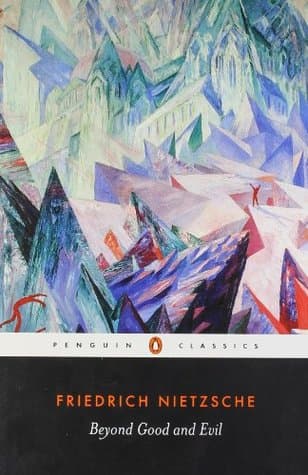
Core Idea
- Difficulty
- Hard
- Read it if
- You are prepared to critically examine the foundations of your moral beliefs, are interested in radical philosophical critiques of Western thought, and enjoy challenging, aphoristic prose.
- Skip it if
- You prefer easily digestible self-help, are easily offended by controversial ideas about morality and religion, or are looking for a gentle introduction to philosophy.
Key Takeaways from Beyond Good and Evil
The Falseness of Foundational Truths
Truths are human-made interpretations, not objective realities.
Nietzsche questions the idea of objective truth, arguing that what we call 'truth' often reflects our psychological needs, biases, and historical background. He suggests that philosophers, rather than seeking pure truth, often express their own 'will to power' through their ideas. This does not mean truth is entirely subjective, but that universal, fundamental truths are questionable. He states that even scientific 'facts' are interpretations, filtered through human ways of thinking and driven by underlying impulses, rather than direct access to an unfiltered reality. This view breaks down the foundation of traditional metaphysics and epistemology.
“Every great philosophy has hitherto been a kind of involuntary and unconscious autobiography of its author.”
In the book: Nietzsche's critique of the 'will to truth' as a disguised 'will to power' and his deconstruction of philosophical systems as personal expressions, rather than objective inquiries.
Try this: Question deeply held beliefs and 'truths' – not just those of others, but especially your own. Understand that your perspectives are shaped by your drives and history, and seek to uncover these underlying motivations. Cultivate intellectual honesty by acknowledging the subjective elements in your reasoning.
Related ideas: perspectivism, epistemology, will-to-power
Master vs. Slave Morality
Two opposing ethical systems born from different psychological states.
Nietzsche identifies two basic types of morality: 'master morality' and 'slave morality.' Master morality comes from the noble, strong individual who defines 'good' as what they are – powerful, proud, and creative. 'Bad' is then defined as what is weak or contemptible. Slave morality, in contrast, comes from the oppressed and resentful, who, unable to use their will directly, reverse the masters' values. They see the powerful as 'evil' and elevate qualities like humility, pity, and patience as 'good.' Nietzsche argues that Western, Christian morality is mostly a slave morality, born from resentment and a desire to control the strong by shaming their natural impulses.
“There are master and slave moralities... In the former, the good is what is noble, strong, and powerful; in the latter, the good is what is useful, sympathetic, and humble.”
In the book: His detailed analysis of the historical development of 'good' and 'evil' concepts, particularly the Jewish and Christian inversion of aristocratic values.
Try this: Analyze the origins of your own moral judgments. Are they born from strength and affirmation, or from resentment, fear, or a desire for conformity? Strive to create values from a position of strength and self-affirmation, rather than reaction against others.
Related ideas: genealogy-of-morality, ressentiment, value-creation
The Will to Power as Core Drive
Life's fundamental drive is not survival, but the assertion and enhancement of power.
Nietzsche says the 'will to power' is the fundamental drive in all living things, including humans. This is not just physical control, but a drive for growth, overcoming challenges, mastery, and self-improvement. It is the impulse to expand, to create, to impose one's values and perspective on the world. He rejects the idea that self-preservation or pleasure are primary drives, seeing them instead as results or side effects of the deeper will to power. This concept supports his entire philosophy, explaining everything from philosophical inquiry to moral systems as expressions of this fundamental drive.
“Life itself is essentially appropriation, injury, conquest of the alien and the weaker, suppression, severity, obtrusion of one's own forms, incorporation and at the least, putting it mildest, exploitation.”
In the book: Nietzsche's argument that even asceticism or self-denial can be understood as an expression of the will to power, a mastery over oneself.
Try this: Identify where and how you are expressing your 'will to power' – in your work, relationships, hobbies, or personal growth. Focus on self-mastery, creativity, and overcoming challenges, rather than passively seeking comfort or merely surviving. Embrace the struggle as a path to growth.
Related ideas: self-overcoming, eternal-recurrence, affirmation-of-life
Beyond Good and Evil
Transcending conventional morality to create new values.
The book's title itself captures a main theme: the need to move 'beyond' the traditional, dualistic framework of 'good' and 'evil' that Nietzsche argues comes from slave morality. He does not support amorality or nihilism, but a re-evaluation of all values. This means critically examining inherited moral codes and, if found lacking, creating new ones that affirm life, strength, and individual flourishing. This is the task of the 'free spirit' – to free oneself from the group's rules and forge one's own path, guided by an authentic will to power.
“There are no moral phenomena whatsoever, but only a moral interpretation of phenomena.”
In the book: His call for 'philosophers of the future' to be 'commanders and law-givers' rather than mere discoverers, implying an active role in value creation.
Try this: Identify the moral rules you follow without question. Ask yourself: 'Who made this rule? For what purpose? Does it serve life and growth, or does it diminish them?' Be prepared to challenge and redefine your own ethical compass, not for transgression's sake, but for authenticity and vitality.
Related ideas: revaluation-of-values, free-spirit, autonomy
The Danger of Pity and Altruism
Pity can weaken both the giver and receiver, hindering growth.
Nietzsche is highly critical of pity and excessive altruism, especially as promoted by Christian morality. He sees pity not as a noble virtue, but often as a sign of weakness, a projection of one's own fear of suffering, or a subtle way to assert power over the weak. For Nietzsche, true strength lies in facing suffering and overcoming it, not in easing it without thought. He argues that pity can make the suffering person dependent, stopping them from developing their own strength, and can also drain the strength of the one who pities, distracting them from their own self-overcoming.
“Pity is the most agreeable feeling for those who have little pride and no prospect of great conquests: for them, the easy prey – and that means every suffering creature – is enchanting.”
In the book: His argument that 'sympathy' and 'compassion' are often veiled forms of self-interest or a desire to avoid the sight of suffering, rather than genuine benevolence.
Try this: Examine your motivations for helping others. Are you genuinely empowering them, or are you acting out of a need to feel good, avoid discomfort, or subtly control? Focus on fostering strength and independence in others, rather than simply alleviating immediate pain. Learn to distinguish between genuine care and debilitating pity.
Related ideas: decadence, asceticism, strength
The Philosopher as a Free Spirit
True philosophers transcend herd mentality and create new perspectives.
Nietzsche sees the true philosopher not as a passive seeker of objective truth, but as a 'free spirit' – an independent, often solitary thinker who dares to question all established values and create new ones. This person stands apart from the 'herd' and its conventional moralities, embracing solitude and intellectual risk. The free spirit has intellectual courage, a willingness to challenge even their own deepest beliefs, and a strong drive for self-overcoming. This path is dangerous and often lonely, but it is the only way to truly advance thought and human potential.
“The free spirit is a rare phenomenon, and in any age it has almost always been accompanied by a certain amount of danger.”
In the book: Nietzsche's own life and work serve as an example, as he deliberately isolated himself from conventional academic circles to pursue his radical ideas.
Try this: Cultivate intellectual independence. Don't simply adopt popular opinions or ideologies. Embrace critical thinking, even when it leads to uncomfortable conclusions or social isolation. Seek out diverse perspectives and be willing to revise your own, fostering continuous intellectual growth.
Related ideas: uber-mensch, solitude, individualism
The Problem with Modernity and Democracy
Nietzsche critiques modern trends for fostering mediocrity and conformity.
Nietzsche doubts modern democratic ideals and their focus on equality. He argues that democracy, like Christianity, is an extension of slave morality, promoting the 'herd instinct' and valuing the average over the exceptional. He fears that it leads to a lowering of humanity, stopping the rise of great individuals and creating a culture of mediocrity, conformity, and resentment towards anything outstanding. For Nietzsche, the pursuit of equality ultimately reduces human potential by discouraging the natural hierarchy of strength and talent.
“The democratic movement is the inheritance of the Christian movement.”
In the book: His observations on the rise of nationalism, socialism, and universal suffrage as forces that homogenize society and suppress individual excellence.
Try this: While not advocating for abandoning democracy, cultivate an awareness of its potential pitfalls: the pressure to conform, the celebration of mediocrity, and the resentment towards excellence. Strive for personal distinction and intellectual independence, rather than blindly following popular opinion or seeking only consensus.
Related ideas: herd-mentality, decadence, egalitarianism
The Artist and the Philosopher
Art and philosophy are expressions of the will to power and essential for life.
Nietzsche values art and philosophy greatly, seeing them not just as reflections of reality, but as active forces that shape and interpret it. Both express the will to power, creating meaning and imposing form on chaos. Art, in particular, is seen as life-affirming, helping us to endure and even celebrate the tragic parts of existence. The philosopher, like an artist, builds worlds of meaning, re-evaluates values, and offers new perspectives. They are important for human flourishing, providing necessary ideas and frameworks that allow life to be lived powerfully and beautifully.
“Art makes the eye healthy and strong for seeing, and the hand strong for grasping.”
In the book: Nietzsche's frequent use of artistic metaphors and his emphasis on 'creating' values, rather than merely 'discovering' them.
Try this: Engage deeply with art and philosophy not just for passive enjoyment or knowledge, but as active participants in shaping your worldview. Seek out art that challenges, affirms, and enriches your life. Cultivate a philosophical mindset that actively questions and creates meaning, rather than passively consuming it.
Related ideas: aesthetic-justification, creation, meaning-making
Psychology as the Queen of the Sciences
Understanding human drives is key to understanding everything else.
Nietzsche argues that psychology, if understood correctly and freed from moral biases, is the fundamental science. He believes that all philosophical systems, moral codes, and even scientific theories are ultimately expressions of underlying human drives, desires, and psychological states. To understand a philosopher's system, one must first understand their psychology. He criticizes existing psychology for being superficial and limited by moral prejudices, failing to explore the true, often uncomfortable, depths of human motivation, especially the 'will to power.'
“All psychology hitherto has got stuck in moral prejudices and fears; it has not dared to descend into the depths.”
In the book: His repeated attempts to psychoanalyze previous philosophers, revealing their biases and motivations as the source of their 'truths'.
Try this: When evaluating any idea, theory, or moral stance (your own included), look beyond the surface arguments to the psychological motivations and drives that might underpin them. Practice self-reflection to understand your own prejudices and desires, recognizing how they shape your perception of the world.
Related ideas: depth-psychology, motivation, self-knowledge
The Necessity of Suffering and Hardship
Suffering is not to be avoided, but embraced as a path to growth and strength.
Unlike moralities that try to eliminate suffering, Nietzsche sees it as an essential part of human growth and the development of strength. He argues that great achievements and deep self-overcoming often come from enduring and transforming hardship. Trying to get rid of all suffering leads to a soft, weak humanity unable to achieve true greatness. The 'free spirit' and the 'overman' do not avoid pain, but embrace it as a necessary trigger for self-mastery and the creation of new values. This view encourages a strong, life-affirming engagement with all parts of existence, including its most difficult ones.
“What does not kill me makes me stronger.”
In the book: His consistent critique of pity and the 'will to comfort' as debilitating forces, and his celebration of tragic heroes who confront and overcome immense challenges.
Try this: Instead of avoiding discomfort or hardship, view challenges as opportunities for growth. Cultivate resilience and a mindset that seeks to learn from and transcend difficult experiences. Embrace the struggle as a forge for strength and character, rather than seeing it as purely negative.
Related ideas: amor-fati, overcoming, resilience
Beyond Good and Evil Quotes
“He who fights with monsters should look to it that he himself does not become a monster. And if you gaze long into an abyss, the abyss also gazes back into you.”
“What is good? All that heightens the feeling of power, the will to power, power itself in man. What is bad? All that proceeds from weakness. What is happiness? The feeling that power increases - that a resistance is overcome.”
“There are no moral phenomena whatsoever, but only a moral interpretation of phenomena.”
“The snake that cannot cast its skin has to die. As well the minds that are prevented from changing their opinions; they cease to be mind.”
“The demand of one culture for another that it should conform to it is an act of tyranny.”
“Madness is something rare in individuals — but in groups, parties, peoples, ages, it is the rule.”
“That which is done out of love is always beyond good and evil.”
“To live is to suffer, to survive is to find some meaning in the suffering.”
“Every deep thinker is more afraid of being understood than of being misunderstood.”
“Convictions are more dangerous foes of truth than lies.”
“The surest way to corrupt a youth is to instruct him to hold in higher esteem those who think alike than those who think differently.”
“One should not go to church in order to be an angel. One should go to church in order to learn to be a devil.”
“All psychology hitherto has remained stuck in moral prejudices and fears: it has not dared to descend into the depths.”
“Is man one of God's blunders? Or is God one of man's blunders?”
Quiz
10 questions on the main ideas. Each answer comes with a short explanation.
Question 1
Nietzsche argues that traditional Western philosophy, particularly its notions of truth and God, good and evil, is deeply flawed. What specific term does he use to describe the morality he associates with the Christian world?
- Master morality
- Noble morality
- Slave morality
- Ascetic morality
Show answer
C. Slave morality Nietzsche famously critiques the Christian world as being 'steeped in a false piety and infected with a 'slave morality'', distinguishing it from what he would consider a 'master morality'.
Question 2
What concept does Nietzsche propose as a driving force for individuals to assert themselves and create their own values, moving beyond traditional morality?
- The categorical imperative
- The will to power
- The pursuit of happiness
- The social contract
Show answer
B. The will to power The text states that Nietzsche 'demands that the individual imposes their own 'will to power' upon the world', which is central to his philosophy of self-overcoming and value creation.
Question 3
According to the introduction by Michael Tanner, what is one of the key purposes of his introduction to 'Beyond Good and Evil'?
- To provide a detailed biography of Nietzsche's entire life.
- To offer a comparative analysis with other contemporary philosophers.
- To explain some of the more abstract passages in the book.
- To argue against Nietzsche's central tenets.
Show answer
C. To explain some of the more abstract passages in the book. The description explicitly states that Michael Tanner's introduction 'explains some of the more abstract passages in Beyond Good and Evil', assisting readers with complex ideas.
Question 4
Nietzsche critiques Western thought's traditional notions of 'truth'. Which of the following best encapsulates his general stance on objective, universal truth as understood by traditional philosophy?
- He seeks to establish a new, more robust objective truth.
- He believes objective truth is discoverable through pure reason.
- He rejects the very possibility of universally valid, transcendent truth.
- He argues that truth is primarily a matter of divine revelation.
Show answer
C. He rejects the very possibility of universally valid, transcendent truth. The summary states Nietzsche's work 'dramatically rejects the tradition of Western thought with its notions of truth and God, good and evil,' implying a profound skepticism towards traditional, objective truth.
Question 5
What is the relationship Nietzsche establishes between 'good and evil' and the 'slave morality' he critiques?
- Slave morality invents 'good and evil' as a means to empower the strong.
- The concepts of 'good and evil' are inherent and universally recognized by slave morality.
- Slave morality redefines 'good' as what benefits the weak and 'evil' as what benefits the strong, inverting original aristocratic values.
- Nietzsche argues that 'slave morality' transcends the dichotomy of good and evil entirely.
Show answer
C. Slave morality redefines 'good' as what benefits the weak and 'evil' as what benefits the strong, inverting original aristocratic values. While not explicitly detailed in the provided text, a core aspect of 'slave morality' in Nietzsche's work is its transvaluation of values, where the characteristics of the powerful (master morality) are deemed 'evil' and the characteristics of the oppressed are deemed 'good'.
Question 6
Nietzsche's 'will to power' is not merely about physical dominance. How does he primarily advocate for its application by the individual?
- Through strict adherence to traditional moral codes to achieve social standing.
- Through passive contemplation and detachment from worldly affairs.
- Through the active creation of one's own values and meaning, celebrating the present.
- Through political revolution and the overthrow of existing power structures.
Show answer
C. Through the active creation of one's own values and meaning, celebrating the present. The summary states that Nietzsche 'turns from this critique to a philosophy that celebrates the present and demands that the individual imposes their own 'will to power' upon the world,' indicating a focus on self-creation and affirmation.
Question 7
The description mentions Nietzsche's influence on subsequent writers like George Bernard Shaw, D.H. Lawrence, Thomas Mann, and Jean-Paul Sartre. What common thread in their works might reflect Nietzsche's impact, particularly concerning his critique of traditional values?
- A shared commitment to strict Christian morality and traditional societal norms.
- A focus on the individual's struggle with conventional morality and the search for authentic meaning beyond established systems.
- Their advocacy for a return to Enlightenment ideals of reason and universal ethics.
- Their development of new theological frameworks for modern society.
Show answer
B. A focus on the individual's struggle with conventional morality and the search for authentic meaning beyond established systems. Given Nietzsche's rejection of Western thought's traditional notions of truth, God, good, and evil, his influence on these writers likely manifests in their exploration of individualistic struggles against societal norms and the quest for new values, aligning with his 'will to power'.
Question 8
Nietzsche's critique of 'false piety' in the Christian world implies a deeper philosophical objection than mere hypocrisy. What fundamental aspect of Christian thought, from Nietzsche's perspective, makes it 'false'?
- Its emphasis on personal salvation over communal well-being.
- Its grounding in otherworldly ideals and a denial of life in favor of an afterlife, which he views as a weakness.
- Its failure to establish a hierarchical social order based on merit.
- Its insufficient emphasis on intellectual and scientific progress.
Show answer
B. Its grounding in otherworldly ideals and a denial of life in favor of an afterlife, which he views as a weakness. Nietzsche's critique of 'false piety' and 'slave morality' in the Christian world is deeply intertwined with his rejection of ascetic ideals and an otherworldly focus, which he sees as life-denying and stemming from weakness, rather than a celebration of earthly existence and strength.
Question 9
The book description notes Nietzsche's retirement due to bad health and his eventual 'final collapse' into insanity. How might this biographical detail, in the context of 'Beyond Good and Evil,' be interpreted by some scholars regarding his philosophical project?
- It suggests that his philosophy is inherently flawed due to his mental instability.
- It underscores the immense intellectual and psychological strain involved in radically re-evaluating fundamental human values and confronting profound truths.
- It implies that his critique of Western thought was purely a symptom of his illness.
- It demonstrates the ultimate failure of his 'will to power' in his own life.
Show answer
B. It underscores the immense intellectual and psychological strain involved in radically re-evaluating fundamental human values and confronting profound truths. While his illness is a fact, many interpretations see his 'collapse' not as a refutation of his philosophy, but as a testament to the profound and often destabilizing nature of the radical thought he pursued, pushing the boundaries of human understanding and sanity.
Question 10
Nietzsche's philosophy in 'Beyond Good and Evil' is described as celebrating the present. What is the practical implication of this 'celebration of the present' in contrast to the 'slave morality' he criticizes?
- It advocates for hedonism and immediate gratification without concern for future consequences.
- It encourages individuals to defer their happiness to an imagined future or afterlife, as slave morality does.
- It calls for an active embrace of life's challenges and joys in the here and now, asserting one's will without reliance on transcendent hopes or external validation.
- It promotes a stoic resignation to fate, accepting whatever the present brings without struggle.
Show answer
C. It calls for an active embrace of life's challenges and joys in the here and now, asserting one's will without reliance on transcendent hopes or external validation. Nietzsche's celebration of the present is directly contrasted with the life-denying aspects of 'slave morality' that often defer fulfillment to an afterlife or external authority. It implies an active, engaged, and self-affirming stance towards one's current existence and experiences, consistent with the 'will to power'.
Beyond Good and Evil FAQ
What is the main argument of Nietzsche's Beyond Good and Evil?
Nietzsche fundamentally challenges traditional Western philosophical and moral concepts, particularly those rooted in Christianity. He argues that conventional notions of truth, good, and evil are not universal but are instead products of a 'slave morality' that stifles human potential.
What is 'slave morality' as described in Beyond Good and Evil?
Slave morality, according to Nietzsche, is a value system that originates from the weak and oppressed, defining 'good' as that which alleviates suffering and 'evil' as that which is powerful or aristocratic. It prioritizes humility, pity, and equality, often out of resentment towards strength.
Does 'will to power' advocate for ruthless domination in Beyond Good and Evil?
Nietzsche's 'will to power' is often misunderstood as mere aggression; however, it represents a fundamental drive for self-overcoming, growth, and the creation of one's own values. It's about asserting one's individual potential and imposing meaning upon existence, rather than simply dominating others.
How does Beyond Good and Evil differ from traditional Western philosophy?
Beyond Good and Evil dramatically breaks from the Western philosophical tradition by questioning its foundational assumptions, such as objective truth, universal morality, and the existence of God. Nietzsche critiques the very framework that philosophers like Plato and Kant built upon, proposing a revaluation of all values.
What role does Christianity play in Nietzsche's critique?
Nietzsche views Christianity as the primary historical force behind 'slave morality,' promoting values like humility, self-sacrifice, and egalitarianism which he believes suppress human flourishing and the 'will to power.' He sees it as a system that inverts natural aristocratic values.
Is Beyond Good and Evil a guide for individual spirituality?
While not a traditional spiritual guide, the book encourages individuals to forge their own values and meaning, transcending conventional morality. It challenges readers to engage in self-creation and embrace their unique 'will to power,' which can be seen as a form of individual spiritual or existential quest.
How does Nietzsche's view of 'truth' differ from common understanding?
Nietzsche suggests that 'truth' is not an objective, universal entity but rather a perspective or interpretation, often serving specific psychological or societal needs. He challenges the idea of absolute truth, viewing it as a human construct that can limit thought and action.
What is the significance of the title 'Beyond Good and Evil'?
The title signifies Nietzsche's intention to move beyond conventional moral dualities and established value systems. He aims to expose the origins and limitations of 'good' and 'evil' as traditionally understood, paving the way for a re-evaluation of all values and the creation of new ones.
How can a modern reader apply the ideas from Beyond Good and Evil?
Modern readers can apply Nietzsche's ideas by critically examining their own moral assumptions, questioning societal norms, and striving for self-overcoming and personal growth. It encourages intellectual independence and the active creation of one's own life philosophy rather than passively accepting inherited values.
About the author
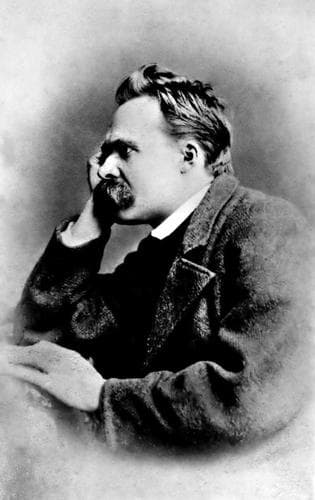
Friedrich Nietzsche was a German philosopher active in the late 19th century, known for his critiques of traditional moral values and religion. His notable works include "Thus Spoke Zarathustra," "Beyond Good and Evil," and "On the Genealogy of Morals," which explore themes of individualism, power, and the nature of existence. Nietzsche's writings have had a profound influence on modern philosophy and literature.
Similar books
- Thus Spoke Zarathustra
Friedrich Nietzsche
4.0 (111k) average on GoodreadsPsychologyExplores similar themes of the Übermensch, will to power, and revaluation of values through a poetic narrative.
- The Myth of Sisyphus
Albert Camus
4.2 (25k) average on GoodreadsPhilosophyExamines the human condition and the search for meaning in a world devoid of inherent purpose, echoing Nietzsche's embrace of life's challenges.
- A History of Western Philosophy
Bertrand Russell
4.1 (32k) average on GoodreadsPoliticsBertrand Russell's "A History of Western Philosophy" offers a stark contrast in both method and aim. Russell's work is a comprehensive, analytical survey of philosophical thought from the pre-Socratics to the early 20th century, presented with a clear, rationalist perspective. He aims for objectivity and historical accuracy, often critiquing philosophers from an empiricist and logical positivist standpoint. Nietzsche, in "Beyond Good and Evil," explicitly rejects the possibility of such 'objective' history, arguing that all philosophy is inherently perspectival and driven by the will of the philosopher. Russell would likely view Nietzsche's work as highly subjective and perhaps even dangerous for its anti-rationalist tendencies, while Nietzsche would dismiss Russell's 'history' as another manifestation of a particular philosophical prejudice masquerading as neutral truth. The two books represent fundamentally opposed approaches to philosophy itself: one seeking to systematize and understand, the other to deconstruct and transcend.
- The Perks of Being a Wallflower
Stephen Chbosky
4.2 (1.3M) average on GoodreadsPsychologyThrough letters, a shy high school freshman learns to navigate first love, trauma, and self-discovery, stepping off the sidelines and into life.
- Eleanor Oliphant Is Completely Fine
Gail Honeyman
4.3 (708k) average on GoodreadsLiterary FictionA lonely woman's structured life changes when an IT guy and an elderly man help her learn to open her heart.
- One Flew Over the Cuckoo's Nest
Ken Kesey
4.2 (631k) average on GoodreadsPsychologyIn a mind-bending asylum, the boisterous Randle McMurphy wages a defiant war against the tyrannical Nurse Ratched, inspiring his fellow inmates, including the seemingly catatonic Chief Bromden, to reclaim their lost humanity.




Enjoyed the summary?
A summary gives you the shape of the book. The book itself has the detail, the examples and the voice.
Find Beyond Good and Evil on AmazonAs an Amazon Associate, BookBrief earns from qualifying purchases. How we're funded