
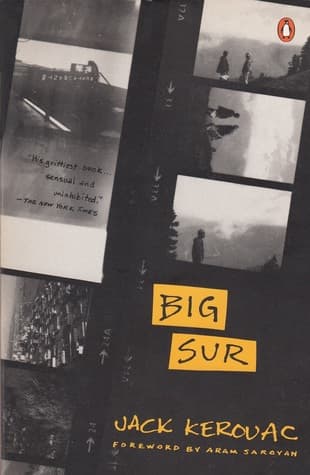
Synopsis
Covers the whole plot, including the ending.
- Difficulty
- Medium
- Pacing
- Moderate
- Mood
- Introspective, melancholic, intense, raw, experimental
Big Sur Plot Summary
Covers the whole plot, including the ending.
The Weight of Fame and the Call of the Road
Jack Duluoz, a writer much like Jack Kerouac, is successful but struggles with fame, criticism, and increasing alcohol use. He feels overwhelmed by demands on his time, the shallow nature of literary circles, and a deep desire for real experiences and inner calm. Feeling trapped by his life in New York, he decides to go to the West Coast, hoping a change of place and the open road will help him face his problems and find some peace. This first trip is driven by disappointment and a desperate search for meaning beyond the brief joys of being famous.
Arrival in San Francisco and Old Friends
In San Francisco, Jack meets his Beat Generation friends, including Lorenzo Monsanto (Lawrence Ferlinghetti), Robert Berger (Gary Snyder), and Dave Wain (Michael McClure). He finds a temporary sense of belonging among their bohemian lives and discussions. The atmosphere is initially one of shared understanding and artistic goals, offering a short break from his inner turmoil. They share meals, drinks, and talks about poetry, philosophy, and their past, renewing old friendships and providing a sense of stability Jack needs after his intense New York life. The city itself is a lively setting for these reunions.
The Lure of the Wilderness
Despite the comfort of his friends, Jack still wants complete solitude. A friend offers him a remote cabin in Big Sur, which he sees as a perfect chance to truly escape and face himself. He plans a time of simple living, writing, and spiritual thought, believing Big Sur's wild nature will bring the clarity and peace he seeks. Moving there is a deliberate attempt to shed city distractions and others' expectations, to be in nature, and to find a path to sobriety and mental well-being, away from the temptations and pressures that fuel his worries.
Initial Days of Solitude and Hope
In his first days at the Big Sur cabin, Jack has brief moments of peace and clarity. He writes, watches nature, and tries to live simply, without alcohol. The beauty of the Pacific Ocean and the wilderness brings him a sense of wonder and connection. He feels a temporary lift in his depression and a renewed sense of purpose. However, these moments are mixed with constant worries and a growing unease. The solitude, though welcome at first, also makes his inner struggles worse, making it hard to escape his past and the nagging feeling that his problems are deeper than just external things.
The Return of the Bottle
The planned spiritual retreat slowly falls apart as Jack's alcohol dependence returns. The intense solitude, instead of healing him, starts to worsen his mental state. Big Sur's quiet becomes oppressive, increasing his paranoia and worries. He eventually breaks his promise of sobriety, finding temporary, destructive comfort in alcohol. This relapse is a turning point; his initial hope for redemption in nature gives way to the familiar cycle of addiction, pulling him deeper into self-destruction and despair, undoing the purpose of his retreat and hinting at darker events to come.
Delirium and Hallucinations
As Jack drinks more, he falls into a terrible state of delirium tremens. He has vivid, scary hallucinations, seeing monsters in shadows, hearing voices, and feeling an overwhelming sense of being hunted. His paranoia becomes extreme, making him believe he is being pursued or that bad forces are at play. Big Sur's beautiful, calm wilderness turns into a nightmare reflection of his inner chaos. This time is marked by intense physical and mental suffering, as his body and mind rebel against the constant abuse, pushing him to the edge of collapse and blurring the line between reality and his alcohol-induced psychosis.
A Plea for Help
Unable to bear the torment of his delirium, Jack makes a desperate call to his San Francisco friends. He tells them about his terrifying experiences, his voice full of fear. His friends, especially Billie (Lenore Kandel) and her boyfriend, are worried and realize how serious his condition is. This act of reaching out shows a moment of clarity amid the madness, a basic instinct for survival overriding his desire for solitude. He admits, though not directly, that he cannot overcome this alone and needs help to escape the terrifying grip of his addiction and mental breakdown in the isolated cabin.
Rescue and Return to San Francisco
Billie and her boyfriend, with other friends, travel to Big Sur to rescue Jack. They find him in a very bad state, physically and mentally ruined by his experience. The drive back to San Francisco is tense and sad, with Jack still dealing with the lingering effects of his delirium and the deep shame of his breakdown. Returning to the city, though a physical escape from the cabin, does not immediately ease his suffering. He is brought back to the familiar, yet complicated, care of his friends, who now see the depth of his struggles and the fragile state of his mind.
The Attempt at Recovery
Back in San Francisco, Jack tries to recover with the help of his friends. He tries to stop drinking and regain some stability. However, the psychological scars of Big Sur and his addiction make recovery very hard. He experiences periods of intense craving, depression, and self-hatred. His friends try to support him, but they are often helpless against his deep-seated problems. This phase shows how hard it is to break free from addiction, even with outside help, and the lasting impact of his recent terrible experience on his mental state.
A Brief Respite and Lingering Shadows
Mixed with his struggles, Jack has brief moments of clarity and even creative inspiration. He finds comfort in writing, in the company of a few understanding friends, and in the simple beauty of daily life. However, these moments are always overshadowed by the constant threat of relapse and the deep worries that still bother him. The memory of Big Sur and his terrifying breakdown remains a strong reminder of how vulnerable he is. The story ends with cautious hope, but with the clear understanding that Jack's fight with his problems is ongoing, with no final solution, only the continuous rise and fall of his inner struggle.
Big Sur Characters
Jack Duluoz
Protagonist
A celebrated writer grappling with fame, alcoholism, and a desperate search for meaning.
Jack Duluoz is a thinly veiled autobiographical portrayal of Jack Kerouac himself. He is a sensitive, introspective, and highly intelligent writer, simultaneously burdened by the pressures of his literary success and a profound sense of existential dread. He is deeply spiritual, yet constantly battling a severe alcohol addiction that exacerbates his anxieties and paranoia. Duluoz yearns for authenticity, solitude, and spiritual enlightenment, but repeatedly finds himself trapped in cycles of self-destruction. He is prone to intense emotional swings, from moments of profound poetic insight to terrifying bouts of delirium and despair. His journey is a raw exploration of a mind on the brink.
Relationships: Billie (romantic interest/caretaker); Lorenzo Monsanto (friend/fellow poet); Robert Berger (friend/fellow poet); Dave Wain (friend/fellow poet)
Billie
Supporting
Jack's compassionate girlfriend, a stable presence amidst his chaos.
Billie is a young woman who becomes Jack's girlfriend in San Francisco. She is portrayed as kind, understanding, and deeply compassionate, offering Jack a sense of stability and emotional support. Despite Jack's erratic behavior and struggles with addiction, Billie remains devoted to him, attempting to help him through his darkest moments. She represents a grounding force in his turbulent life, offering a glimpse of domesticity and gentle affection. Her concern for Jack's well-being is genuine, and she plays a crucial role in his rescue from Big Sur, demonstrating her unwavering loyalty and love.
Relationships: Jack Duluoz (romantic interest)
Lorenzo Monsanto
Supporting
A fellow Beat poet and friend, offering intellectual camaraderie.
Lorenzo Monsanto is a fictionalized version of Lawrence Ferlinghetti, a prominent Beat Generation poet and bookstore owner in San Francisco. He is depicted as an intellectual, a fellow artist, and a supportive friend to Jack. Lorenzo provides a sense of community and intellectual stimulation for Jack in San Francisco, engaging in discussions about literature, philosophy, and their shared artistic endeavors. He represents the more stable, established side of the Beat movement, contrasting with Jack's more chaotic and self-destructive tendencies. His presence offers Jack temporary comfort and a connection to his literary world.
Relationships: Jack Duluoz (friend/fellow poet)
Robert Berger
Supporting
A nature-loving poet and friend, embodying a more ascetic lifestyle.
Robert Berger is based on Gary Snyder, a poet known for his deep connection to nature, Zen Buddhism, and environmentalism. He represents a different path within the Beat movement, one focused on spiritual discipline, ecological awareness, and a more ascetic lifestyle. Berger's presence highlights Jack's own yearning for spiritual peace and a simpler existence, though Jack struggles to emulate Berger's discipline. He is a calm, wise, and grounding influence, offering Jack a perspective rooted in nature and contemplation, often contrasting with Jack's urban anxieties and self-destructive habits.
Relationships: Jack Duluoz (friend/fellow poet)
Dave Wain
Supporting
A young, enthusiastic poet and friend, representing the next generation of Beats.
Dave Wain is a character inspired by Michael McClure, a younger Beat poet. He is depicted as energetic, passionate, and deeply engaged in the San Francisco poetry scene. Dave represents the continuing vitality and evolving spirit of the Beat Generation. His youthful enthusiasm and artistic dedication provide a fresh perspective for Jack, and he often participates in the group's literary discussions and social gatherings. He is a supportive friend, part of the circle that attempts to provide comfort and understanding to Jack during his periods of distress, particularly after his return from Big Sur.
Relationships: Jack Duluoz (friend/fellow poet)
Dean Moriarty
Supporting
The legendary, frenetic friend from 'On the Road,' appearing briefly as a faded memory.
Dean Moriarty, the iconic, wild, and energetic character from 'On the Road,' appears briefly in 'Big Sur,' but as a more subdued and somewhat faded figure. He is no longer the reckless, endlessly optimistic force of nature, reflecting the passage of time and perhaps the toll of their unconventional lives. His presence serves as a poignant reminder of Jack's past, contrasting with the current state of disillusionment and exhaustion. Dean's brief appearance underscores the theme of aging and the changing dynamics of their friendships, suggesting that even the most vibrant spirits can be worn down by life.
Relationships: Jack Duluoz (old friend/fellow traveler)
Romana
Supporting
Billie's daughter, a symbol of innocence and simple joy.
Romana is Billie's young daughter, a minor character whose presence provides moments of innocent joy and normalcy amidst Jack's turbulent emotional landscape. She represents the simple, uncorrupted beauty of childhood and offers Jack a temporary escape from his adult anxieties. Her innocent observations and playful nature contrast sharply with the dark introspection and self-destructive tendencies of the adults around her. Romana serves as a reminder of the potential for simple happiness and a connection to a world untainted by the complexities and suffering that plague Jack.
Relationships: Jack Duluoz (acquaintance (daughter of romantic interest)); Billie (mother)
Big Sur Themes
The Burden of Fame and Disillusionment
The novel shows the difficult side of literary success. Jack Duluoz, famous, feels trapped by its demands, public expectations, and constant scrutiny that prevents him from living genuinely. He feels used and misunderstood, which leads to deep disappointment with the success he once wanted. This theme shows how outside approval can become an inner prison, making him want to escape and find real experiences that fame seems to deny him.
“I was a man of the street, and now I was a man of the library, and it was getting to me.”
Alcoholism and Mental Breakdown
A main theme is how chronic alcoholism hurts Jack's mind and body. The book gives a raw look at delirium tremens, paranoia, and hallucinations, showing the deep psychological and physical damage of addiction. It explores how people seek comfort in alcohol, only for it to worsen worries and lead to a complete mental breakdown. This theme is a clear warning about addiction's destructive power and the mind's fragility under its influence.
“The only relief was to drink, and the only result of drinking was worse and worse terror.”
The Search for Spiritual Solace in Nature
Jack's trip to Big Sur is driven by a strong desire for spiritual renewal and a belief that nature holds the key to inner peace. He seeks a simple life, hoping to find clarity, sobriety, and a connection to something greater than himself in the wilderness. However, the novel questions if outside environments alone can heal inner wounds. While nature offers beauty and wonder, it also makes his worries worse, suggesting that real comfort must come from within, or at least be met with a stable inner foundation.
“I went to Big Sur to get away from everything, to find God, to find peace, but all I found was myself, and myself was a mess.”
Loneliness and the Need for Connection
Despite wanting solitude at first, Jack's mental decline in Big Sur is strongly marked by extreme loneliness. The isolation, instead of being helpful, causes his paranoia and hallucinations. His desperate call for help from friends highlights the basic human need for connection and community, even for those who want independence. The novel suggests that while being alone can be good, long and extreme isolation, especially during a crisis, can be very damaging, showing how important human relationships are for staying sane and well.
“The silence became a roar, the emptiness a presence, and I was utterly alone with my madness.”
The Passage of Time and Lost Youth
The novel quietly explores aging and the loss of youthful dreams. Jack Duluoz, a decade after the energy of 'On the Road,' is now a tired, middle-aged man dealing with the results of his wild past. The brief, almost sad appearance of Dean Moriarty, once a symbol of endless energy, further emphasizes this theme. It shows a shift from the carefree joy of their youth to a more serious reality of responsibilities, regrets, and the physical and mental toll of their bohemian lives, hinting at a sense of loss for a past era.
“The road seemed longer now, and the joy of it, a memory.”
Plot Devices & Literary Techniques
First-Person Stream-of-Consciousness Narration
An unfiltered window into Jack's deteriorating mind.
The novel is told entirely through Jack Duluoz's first-person perspective, utilizing Kerouac's signature stream-of-consciousness style. This allows for an intimate, raw, and unfiltered portrayal of Jack's internal landscape, particularly as his mental state deteriorates. Readers experience his anxieties, paranoia, and hallucinations directly, blurring the lines between objective reality and subjective experience. The narrative voice shifts from lucid introspection to fragmented, frantic prose during his delirium, effectively immersing the reader in his psychological breakdown and amplifying the sense of immediacy and desperation.
Symbolism of Big Sur
A dual symbol of untamed nature and terrifying isolation.
The geographical location of Big Sur functions as a powerful symbol throughout the novel. Initially, it represents an idealized retreat, a place of pristine nature, spiritual purity, and potential healing—a haven from the corrupting influences of urban life and fame. However, as Jack's mental state unravels, Big Sur transforms into a terrifying, oppressive, and isolated wilderness. The roaring ocean, the dark woods, and the remote cabin become symbols of his internal chaos, amplifying his paranoia and embodying the destructive power of solitude when coupled with addiction. It mirrors his initial hope and subsequent descent into despair.
The Doppelgänger Motif
Jack's internal struggle manifests as an external, persecuting 'other.'
During his delirium tremens, Jack experiences vivid hallucinations of a persecuting 'other' or a 'Thing' in the shadows, which can be interpreted as a doppelgänger motif. This externalization of his inner demons—his guilt, self-loathing, and fear of madness—manifests as a malevolent entity haunting him. The 'Thing' is not just a symptom of his illness but a symbolic representation of the parts of himself he is running from and the destructive forces within his own psyche. This device effectively externalizes his internal conflict, making his psychological torment tangible and terrifying.
Recurring Imagery of the Sea
The ocean as a metaphor for chaos, eternity, and the subconscious.
The Pacific Ocean is a pervasive and recurring image, carrying multiple symbolic meanings. Initially, it offers a sense of grandeur, peace, and eternal power, reflecting Jack's yearning for spiritual transcendence. Its vastness and rhythmic sound can be both comforting and overwhelming. However, as his mental state deteriorates, the sea's roar becomes a source of anxiety, a chaotic, indifferent force that mirrors his internal turmoil and the relentless nature of his addiction. It represents the subconscious, the untamed, and the cyclical nature of life and suffering, ultimately becoming a powerful, ambiguous presence reflecting his shifting perceptions.
Quiz
10 questions on the plot and the characters. Each answer comes with a short explanation.
Question 1
What is the primary setting of the book 'Big Sur'?
- New York City
- San Francisco
- Big Sur, California
- Paris, France
Show answer
C. Big Sur, California The title of the book, 'Big Sur,' directly indicates the primary geographical setting for the narrative.
Question 2
According to Allen Ginsberg's blurb, what affliction does Kerouac struggle with in 'Big Sur'?
- Writer's block
- Alcohol delirium tremens
- Financial difficulties
- Creative burnout
Show answer
B. Alcohol delirium tremens Ginsberg explicitly mentions Kerouac's 'extraordinary ravages of alcohol delirium tremens' as a central theme.
Question 3
Who is described as a 'hero' in 'Big Sur' ten years after 'On the Road'?
- Jack Kerouac
- Allen Ginsberg
- William S. Burroughs
- Dean Moriarty
Show answer
D. Dean Moriarty The blurb states, 'Here we meet San Francisco's poets & recognize hero Dean Moriarty ten years after On the Road.'
Question 4
Ginsberg compares Kerouac's writing style to a synthesis of various artists. Which of the following is NOT mentioned as an influence or comparison?
- Marcel Proust
- Ernest Hemingway
- Bob Dylan
- Thelonious Monk
Show answer
C. Bob Dylan The blurb lists Proust, Céline, Thomas Wolfe, Hemingway, Genet, Thelonious Monk, Basho, Charlie Parker, and Kerouac's own insight. Bob Dylan is not mentioned.
Question 5
What literary quality does Ginsberg attribute to Kerouac's prose in 'Big Sur'?
- Strict adherence to traditional narrative structure
- Objective and detached observation
- Syntactic elaboration and revelation of consciousness
- Minimalist and sparse language
Show answer
C. Syntactic elaboration and revelation of consciousness Ginsberg describes Kerouac's prose as having 'syntactic elaboration, detailing the luminous emptiness of his own paranoiac confusion' and revealing 'consciousness itself.'
Question 6
The blurb suggests that Kerouac's ability to complete his narrative despite his affliction is remarkable. What does this imply about the nature of his struggle?
- His affliction was easily managed.
- His affliction was severe and debilitating.
- He wrote about his affliction after recovery.
- His affliction did not impact his writing process.
Show answer
B. His affliction was severe and debilitating. Ginsberg contrasts Kerouac's ability to 'complete his poetic narrative' with the fact that 'few scribes so afflicted have accomplished—others crack up,' highlighting the severity of his condition.
Question 7
What is the genre classification provided for 'Big Sur'?
- Science Fiction, Romance
- Literary Fiction, Thriller, Lifestyle
- Historical Fiction, Mystery
- Poetry, Autobiography
Show answer
B. Literary Fiction, Thriller, Lifestyle The provided text explicitly lists the genres as 'Literary Fiction, Thriller, Lifestyle.'
Question 8
The appended poem 'Sea' is described as being on what subject?
- The internal struggles of the narrator
- The urban landscape of San Francisco
- The hallucinatory sounds of the Pacific Ocean at Big Sur
- The history of the Beat Generation
Show answer
C. The hallucinatory sounds of the Pacific Ocean at Big Sur Ginsberg notes that the poem 'Sea' is 'on the hallucinatory Sounds of the Pacific Ocean at Big Sur.'
Question 9
Ginsberg's description of Kerouac's writing as a 'telepathic diamond' and his prose revealing 'consciousness itself' suggests a focus on:
- External plot-driven events
- The raw, unfiltered experience of the mind
- Social commentary and political critique
- Detailed historical accuracy
Show answer
B. The raw, unfiltered experience of the mind Phrases like 'telepathic diamond,' 'prose set in the middle of his mind,' and 'reveals consciousness itself' point towards an exploration of internal mental states and subjective experience rather than external events or social issues.
Question 10
Considering the context of Ginsberg's blurb, what does he seem to admire most about Kerouac's writing in 'Big Sur'?
- Its commercial appeal and widespread popularity
- Its ability to transcend personal suffering through art
- Its adherence to literary conventions and traditional forms
- Its objective portrayal of the natural world
Show answer
B. Its ability to transcend personal suffering through art Ginsberg emphasizes Kerouac's 'strength to complete his poetic narrative' through his misery, suggesting admiration for his artistic resilience and ability to transform personal suffering into art.
Big Sur FAQ
What is Jack Kerouac's book 'Big Sur' about?
'Big Sur' is a semi-autobiographical novel by Jack Kerouac that chronicles his struggle with alcoholism and mental breakdown during a stay in Big Sur, California. It delves into his personal turmoil, his relationships, and his search for peace amidst his inner chaos.
Is 'Big Sur' a thriller?
While 'Big Sur' explores intense psychological states and a sense of impending crisis, it is primarily classified as literary fiction. The 'thriller' aspect comes from the internal tension and the raw portrayal of Kerouac's deteriorating mental state.
What is the literary style of 'Big Sur'?
Kerouac employs his signature spontaneous prose style in 'Big Sur,' characterized by long, flowing sentences, stream-of-consciousness narration, and a deeply personal, confessional tone. The writing is rich, poetic, and reflects the uninhibited outpouring of his thoughts and emotions.
Who are the main characters in 'Big Sur'?
The central character is Jack Duluoz, Kerouac's alter ego, who grapples with his demons. Key figures from Kerouac's life also appear, including his friends from the Beat Generation, such as Dean Moriarty (Neal Cassady) and his love interest, Billie. Characters from 'On the Road' make reappearances.
How does 'Big Sur' relate to Kerouac's other works like 'On the Road'?
'Big Sur' can be seen as a darker, more introspective follow-up to 'On the Road.' While 'On the Road' celebrated freedom and adventure, 'Big Sur' explores the consequences of that lifestyle and the internal struggles that arose from Kerouac's fame and personal demons.
What themes are explored in 'Big Sur'?
Major themes include the destructive nature of alcoholism, the search for spiritual solace, the isolation of fame, the complexities of friendship and love, and the raw experience of mental breakdown. It's a profound look at the human condition under duress.
Is 'Big Sur' a good starting point for reading Jack Kerouac?
While 'Big Sur' is a powerful and significant work, it is quite intense and deals with difficult subject matter. Readers new to Kerouac might find 'On the Road' or 'The Dharma Bums' more accessible introductions to his style and themes.
What is the significance of the setting in 'Big Sur'?
The rugged, isolated coastline of Big Sur serves as a powerful backdrop to Jack Duluoz's internal landscape. The natural beauty contrasts starkly with his mental turmoil, amplifying his feelings of alienation and his quest for peace.
What does Allen Ginsberg say about 'Big Sur'?
Allen Ginsberg praised 'Big Sur' as a 'humane, precise account' of Kerouac's struggle with delirium tremens, highlighting Kerouac's strength as a novelist to complete his poetic narrative despite his suffering. He recognized it as a work of genius that transcended misery.
What is the 'Sea' poem mentioned in relation to 'Big Sur'?
The 'Sea' poem is a brilliant piece appended to 'Big Sur,' penned by Kerouac himself. It captures the hallucinatory sounds of the Pacific Ocean at Big Sur, reflecting the intense sensory experiences and the profound impact of the setting on his consciousness.
About the author
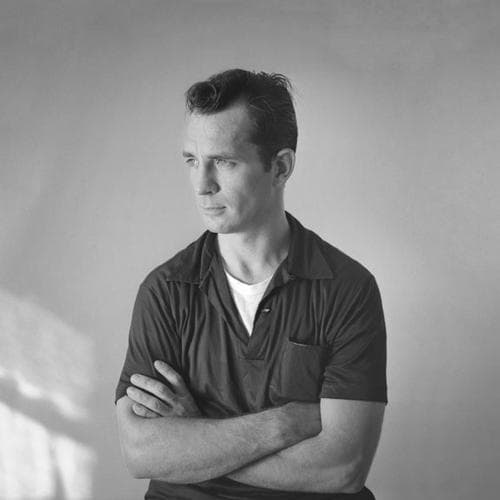
Jean-Louis Lebris de Kérouac, known as Jack Kerouac, was an American novelist and poet who, alongside William S. Burroughs and Allen Ginsberg, was a pioneer of the Beat Generation.
Similar books
- Under the Volcano
Malcolm Lowry
3.8 (22k) average on GoodreadsLiterary FictionBoth "Big Sur" and "Under the Volcano" are seminal works that delve into the destructive power of alcoholism and the internal struggles of their protagonists. Lowry's novel, however, is far more complex in its literary structure and symbolism, drawing heavily on mythology and classical allusions. While Kerouac's prose is immediate and visceral, Lowry's is meticulously crafted and dense, offering a more intellectual and allegorical exploration of self-destruction and political turmoil. "Big Sur" feels like a direct, raw scream, whereas "Under the Volcano" is a meticulously composed symphony of despair.
- Fear and Loathing in Las Vegas
Hunter S. Thompson
4.1 (299k) average on GoodreadsLifestyleWhile both novels explore drug-induced altered states and feature protagonists on a quest (or escape), their tones and ultimate messages diverge significantly. Thompson's work is gonzo journalism, characterized by its satirical bite, dark humor, and a broader critique of American society and the failure of the 1960s counterculture. Kerouac's "Big Sur," in contrast, is deeply personal and melancholic, lacking Thompson's overt political commentary or comedic edge. Both feature unreliable narrators experiencing hallucinations, but Duluoz's are born of torment and illness, while Raoul Duke's are often a calculated (or accidental) means to an end for journalistic inquiry, however chaotic. "Big Sur" is a tragedy of self, while "Fear and Loathing" is a darkly comedic social commentary.
- The Old Man and the Sea
Ernest Hemingway
3.8 (831k) average on GoodreadsLiterary FictionA Cuban fisherman's long struggle with a giant marlin becomes a story of endurance and dignity, now retold for young adults with illustrations, phonetic guides, and writing prompts in Traditional Chinese.
- One Hundred Years of Solitude
Gabriel García Márquez
4.1 (753k) average on GoodreadsLiterary FictionThrough the multi-generational story of the Buendía family, a mythical town deals with the repeating patterns of time, love, and solitude, as the extraordinary mixes with the ordinary.
- The Goldfinch
Donna Tartt
3.9 (720k) average on GoodreadsLiterary FictionHaunted by a tragic explosion and clutching a stolen Dutch masterpiece, a young orphan navigates the opulent drawing rooms of New York and the gritty underbelly of the art world, desperately seeking connection and redemption amidst a life spiraling into crime and obsession.
- Little Fires Everywhere
Celeste Ng
4.1 (713k) average on GoodreadsLiterary FictionIn Shaker Heights, an artist and her daughter move in, and their free-spirited lives clash with a rule-bound matriarch, revealing hidden conflicts beneath a perfect surface.





Enjoyed the summary?
A summary gives you the shape of the book. The book itself has the detail, the examples and the voice.
Find Big Sur on AmazonAs an Amazon Associate, BookBrief earns from qualifying purchases. How we're funded