

Synopsis
Covers the whole plot, including the ending.
- Difficulty
- Medium
- Pacing
- Moderate
- Mood
- Nostalgic, Reflective, Witty, Melancholy, Observational
- Read it if
- You enjoy character-driven literary fiction about adolescence, appreciate exquisite prose, and are interested in a nuanced look at 1980s England.
- Skip it if
- You prefer fast-paced plots with clear, linear narratives and are not a fan of episodic storytelling.
Black Swan Green Plot Summary
Covers the whole plot, including the ending.
Hangman
Thirteen-year-old Jason Taylor appears in the first chapter, 'Hangman,' set in January 1982. During a game of Hangman, Jason struggles to say 'gnome' because of his bad stammer, which he calls his 'Hooky.' This public problem makes him feel ashamed, especially in front of his classmates, including the scary Ross Wilcox and pretty Dawn Madden. The event shows Jason's deep worry and self-consciousness about his stammer, a constant issue that affects his social life and thoughts. He often feels alone, thinking to himself and watching the world in the quiet village of Black Swan Green.
Breaking the Rules
In February, Jason and his friends, Dean Moran and Ant, play on a dangerously thin frozen lake. Their game, which involves daring each other to go further onto the ice, gets worse when Ant falls through. Jason, despite being scared, helps pull Ant from the icy water. This scary experience makes Jason think about dying and what happens when friends pressure you. The event also quietly introduces the idea of childhood innocence meeting the harsh dangers of the world, like the larger political situation of the Falklands War.
The First Kiss
March brings a first step into being a teenager for Jason when he shares his first kiss with Dawn Madden. The kiss, however, is not perfect but a somewhat forced and awkward moment started by Dawn, who is known for being tricky and for her on-again, off-again relationship with Ross Wilcox. Despite not having true feelings, the kiss leaves a big mark on Jason, causing confusion and a new awareness of attraction and social rules. He deals with mixed feelings of excitement and the thought that Dawn's reasons might not match his own growing romantic ideas.
The Falklands
April brings the start of the Falklands War, which becomes a constant background to Jason's life. The conflict is always talked about on TV and by adults, creating a mood of national pride and quiet worry. Jason's father, a former soldier, becomes very interested in the news, and the war shows the differences between generations and views within the Taylor family. The war's distant violence fills the seemingly peaceful Black Swan Green, making Jason aware of bigger world events and their possible effects, even as he tries to understand what war means.
The Gypsy Camp
In May, a group of Romani (Gypsy) travelers sets up camp near Black Swan Green, causing fear and bias among some villagers. Jason sees the hostility and unfair attitudes firsthand, especially from characters like Ross Wilcox and some adults. He notices how easily fear can turn into hate, and the event makes him question if his community is as kind as it seems. This chapter looks at themes of fear of outsiders and social unfairness, as Jason deals with the different stories told by adults and his own observations of the travelers.
Madame Eva
June introduces Jason to Madame Eva van Outryve de Crommelynck, an old, mysterious Belgian woman living in a big, run-down house. He first meets her while 'nightcreeping' (a game where he and his friends sneak through people's gardens). Madame Eva, a former journalist, sees Jason's sensitivity and intelligence, and despite being strict at first, she becomes a mentor. She challenges his ideas, encourages his writing, and helps him see past the simple life of his village, offering a look into a more educated and worldly existence. Their talks often involve language, books, and how people see things.
The Watch
During the summer, Jason accidentally breaks his dead grandfather's valuable watch, a family item. Very scared of his parents' reaction, especially his father's, he starts a secret search to find a replacement. This leads him to various shops and meetings, showing his desperation and growing guilt. The broken watch stands for his fear of letting his family down and the weight of keeping secrets, as well as how fragile memory and the past are. His struggle to replace it shows his wish to seem in control and avoid trouble.
The Poem
Inspired by his talks with Madame Eva and his own observations, Jason starts writing poetry under the name 'Eliot Bolivar.' In July, he secretly enters a poem into a local contest, surprisingly winning a prize. This secret win is a big moment for Jason, as it lets him show his true self and his inner world without his stammer getting in the way. Writing becomes a strong way for him to be creative and gain confidence, even if he cannot openly claim his win. It shows the difference between his outer problems and his rich inner life.
The Divorce
Throughout the year, especially in autumn, the strained relationship between Jason's parents becomes clearer. Quiet arguments, silences, and a general feeling of unhappiness fill the house. Jason, who notices things, picks up on these clues, though he doesn't fully understand what they mean at first. The slow breakdown of his parents' marriage is a main underlying issue, like the larger changes and uncertainties of the 1980s. This family trouble adds to Jason's inner worries and feeling of instability, as his seemingly stable family starts to break apart.
The Bully
In a final confrontation, Jason finally stands up to Ross Wilcox, the school bully who has bothered him and others all year. The meeting is driven by anger, frustration, and a new sense of self-worth, partly from his secret poetry success and Madame Eva's encouragement. While the fight doesn't result in a clear 'win,' Jason's act of defiance marks a turning point for him. It shows his growing bravery and his refusal to be a quiet victim, taking control even when intimidated.
The Truth About Hooky
Towards the end of the year, Jason's inner struggle with his stammer, 'Hooky,' changes. Through his experiences, his talks with Madame Eva, and his growing self-awareness, he begins to see Hooky not as an enemy to beat, but as a part of himself. This subtle but deep change in view is a big step towards accepting himself. He realizes that while Hooky causes problems, it doesn't define him, and he can still find ways to express himself and connect with the world, especially through his writing. This acceptance is a key part of his growth.
Christmas Eve
Christmas Eve arrives, and the Taylor family gathers, but the tension from his parents' marriage problems is clear. Jason watches the traditions and interactions with a more grown-up view, thinking about the past year's big events: his first kiss, the Falklands War, the Gypsy camp, his friendship with Madame Eva, his poetry win, and his confrontations. He sees how much he has changed and grown, even if the things around him, like his parents' relationship, are not fixed. This chapter is a moment to reflect, bringing his experiences together and hinting at future difficulties.
The New Year
As the year turns to 1983, Jason looks ahead with quiet hope. His parents' divorce is now an open secret, but he has found comfort and strength in his writing and in his friendship with Madame Eva. He has a stronger sense of self, understanding his stammer better and finding his voice through poetry. The last chapter shows Jason accepting his identity as 'Eliot Bolivar' and as himself, ready to face the uncertainties of being a teenager and the future. He has gone through a difficult year, coming out with more self-awareness and strength, ready for the next part of his life.
Principal Figures
Jason Taylor
Protagonist
A sensitive, stuttering thirteen-year-old navigating adolescence in rural England.
Jason is the introspective and observant narrator, grappling with a severe stutter he calls 'Hooky.' This impediment profoundly affects his self-confidence and social interactions, making him feel isolated and vulnerable. He possesses a rich inner life, a keen eye for detail, and a nascent talent for writing. He is driven by a desire for acceptance, a fear of humiliation, and a longing to understand the complex adult world around him. His internal monologues often reveal a sophisticated understanding of human nature, contrasting with his outward shyness.
Relationships: Madame Eva van Outryve de Crommelynck (Mentor and confidante); Ross Wilcox (Bully and rival); Dawn Madden (Object of first crush, manipulative acquaintance); Dean Moran (Close friend); Ant (Friend); His Mother (Loving but increasingly distant as her marriage deteriorates); His Father (Authoritative but struggling with his own issues, leading to strained relationship)
Madame Eva van Outryve de Crommelynck
Supporting
An eccentric, elderly Belgian émigré and Jason's intellectual mentor.
Madame Eva is a worldly, intelligent, and somewhat mysterious elderly woman living in Black Swan Green. A former journalist and bohemian, she possesses a sharp wit, a love for language, and an unconventional perspective on life. She sees beyond Jason's stutter and recognizes his hidden potential, fostering his creativity and intellectual curiosity. She is a voice of wisdom and a link to a broader, more cultured world outside the confines of the village, challenging Jason's assumptions and encouraging him to find his own voice. Her past experiences give her a unique insight into human nature.
Relationships: Jason Taylor (Mentor and friend)
Ross Wilcox
Antagonist
The aggressive, popular bully of Black Swan Green.
Ross Wilcox is the archetypal school bully, charismatic and intimidating. He exerts his power through physical dominance, verbal taunts, and social manipulation, especially over younger or weaker boys like Jason. He is often seen with a group of friends who reinforce his authority. Ross embodies the darker aspects of adolescent power dynamics and the casual cruelty that can exist within a small community. His character highlights the challenges Jason faces in asserting himself and the constant threat of humiliation.
Relationships: Jason Taylor (Bully/victim dynamic); Dawn Madden (On-again, off-again boyfriend)
Dawn Madden
Supporting
A pretty, manipulative girl who becomes Jason's first crush.
Dawn Madden is a popular and attractive girl in Jason's year who possesses a cunning and manipulative streak. She uses her looks and social standing to exert influence over boys, including Jason and Ross Wilcox. While Jason is initially smitten with her, he gradually recognizes her superficiality and self-serving nature. Dawn represents the complexities of early romantic attraction and the disillusionment that can accompany it, as Jason learns about the difference between infatuation and genuine connection.
Relationships: Jason Taylor (Object of first crush, brief romantic encounter); Ross Wilcox (On-again, off-again girlfriend)
Dean Moran
Supporting
Jason's loyal and supportive best friend.
Dean Moran is Jason's closest friend, a loyal and generally good-natured boy. He provides a grounding presence for Jason, often participating in his adventures and offering a sense of normalcy amidst Jason's internal struggles. While not as introspective as Jason, Dean is a reliable companion who helps Jason navigate the social landscape of school and the village. Their friendship offers a contrast to the more antagonistic relationships Jason experiences, highlighting the importance of genuine connection.
Relationships: Jason Taylor (Best friend)
Jason's Mother (Dorothy Taylor)
Supporting
A loving but increasingly unhappy wife, grappling with marital strife.
Jason's mother is initially presented as a caring and protective figure, but throughout the year, her increasing unhappiness due to her strained marriage becomes evident. She tries to maintain a facade of normalcy for her children but struggles with her own emotional turmoil. Her character represents the domestic challenges and the silent suffering within families, particularly during a time of social and economic change. Her deteriorating relationship with Jason's father adds to the unstable environment Jason experiences.
Relationships: Jason Taylor (Mother-son bond, but emotionally distant due to her own issues); Jason's Father (Strained marital relationship, leading to divorce)
Jason's Father (Michael Taylor)
Supporting
An authoritative and sometimes emotionally distant father, struggling with his past and present.
Jason's father is a more traditional and somewhat stern figure, a former soldier who often appears preoccupied with work and the news, particularly the Falklands War. He struggles to connect emotionally with Jason, especially regarding his stutter, and their relationship is often fraught with unspoken tensions. His character embodies the pressures on men in 1980s England and his own internal battles, which contribute to the breakdown of his marriage. He represents a generational gap and a more rigid worldview.
Relationships: Jason Taylor (Father-son bond, often strained and distant); Jason's Mother (Strained marital relationship, leading to divorce)
Hooky
Mentioned
Jason's personification of his stutter.
Hooky is not a physical character but rather Jason's internal name for his stutter. It acts as an antagonist within Jason's mind, a constant source of fear, shame, and social anxiety. Jason often battles with Hooky, trying to anticipate and avoid its manifestation. Over the course of the year, his relationship with Hooky evolves from one of fear and hatred to a gradual, if reluctant, acceptance, as he realizes it is an integral part of him but does not define his entire being. Hooky serves as a powerful symbol of internal struggle and self-acceptance.
Themes & Insights
The Search for Identity and Voice
Jason's main challenge is to define himself while dealing with being a teenager, especially his stammer. His thoughts, his pen name 'Eliot Bolivar,' and his secret poetry help him find a voice that his spoken words often deny him. Madame Eva supports this self-discovery by valuing his observations and intelligence. The theme shows as Jason learns to accept his 'Hooky' not as a weakness, but as part of his unique self, finally embracing who he is through creative writing. This is clear in his anonymous poem entry and his increased confidence by the end of the year.
“'If you can't say it, write it.”
Loss of Innocence and Disillusionment
The novel shows Jason moving from childhood innocence to a more complex understanding of the world. He sees his parents' marriage fall apart, experiences the fakeness and bias of adults (e.g., towards the Gypsies), and deals with the harsh realities of bullying and a distant war. His first kiss with Dawn Madden is more about manipulation than romance, and breaking his grandfather's watch by accident represents how fragile the past is. These experiences together remove his naive view of the world, replacing it with a more detailed, and sometimes painful, understanding of human nature and society's flaws.
“The world wasn't a fair place. That was the first rule of the world.”
The Power of Language and Storytelling
Language is both a problem and a solution for Jason: his stammer causes deep pain, but writing saves him. Madame Eva, a former journalist, stresses the importance of exact language and observation, helping Jason improve his natural talent. His creation of 'Eliot Bolivar' lets him express himself freely and strongly through poetry, winning a local contest. This theme highlights how language can both trap and free, and how telling stories, whether in one's head or on paper, is important for understanding and shaping one's reality.
“Words are like coins, Jason. Some are shiny and new, some are worn smooth, but all have a value.”
The Impact of External Events on Personal Life
Set in 1982, the novel carefully weaves the social and political situation of Cold War England and the Falklands War into Jason's personal story. The war, Thatcher's economic downturn, and local biases (like those against the Gypsy camp) create a background of uncertainty and change that reflects the instability in Jason's own life, especially his parents' coming divorce. These bigger events are not just background; they affect the adults' moods, the community's worries, and Jason's growing awareness of a world beyond Black Swan Green, making him place his personal struggles within a larger historical time.
“The war was like a fog, sometimes thick, sometimes thin, but always there.”
The Nature of Bullying and Social Hierarchy
The effects of bullying are a constant part of the story, mainly through Ross Wilcox. The novel looks at how social ranks are formed and kept among teenagers, often through threats, fear, and manipulation. Jason's inner struggle with his stammer makes him a frequent target, but his eventual confrontation with Ross marks a key step in his personal growth. The theme highlights the emotional cost of bullying and the bravery needed to stand up to it, showing how even small acts of defiance can lead to big personal development.
“Ross Wilcox was like a king, and Black Swan Green was his kingdom.”
Plot Devices & Literary Techniques
First-Person Narrative (Jason Taylor)
The entire story is told through the eyes and internal monologue of 13-year-old Jason Taylor.
This device immerses the reader directly into Jason's subjective experience, allowing for deep insight into his thoughts, fears, and observations, particularly his struggle with his stutter ('Hooky'). The narrative voice is authentic to a 13-year-old, blending youthful naivety with surprising moments of profound insight. It highlights the contrast between his articulate inner world and his difficult outward communication, making his journey of self-discovery highly personal and relatable. This perspective is crucial for understanding his emotional growth and the nuances of his interactions.
Episodic Structure (Thirteen Chapters, One for Each Month)
The novel is divided into thirteen distinct chapters, each representing a month in 1982, functioning almost as interconnected short stories.
This structure allows Mitchell to explore various facets of Jason's life and the community of Black Swan Green without a rigidly linear plot. Each 'episode' highlights a specific event, character interaction, or theme, building a cumulative portrait of Jason's year. It mirrors the fragmented, yet continuous, nature of memory and adolescent experience, where individual moments can feel like complete stories. This allows for a broad scope of events, from the personal to the political, all filtered through Jason's developing consciousness.
Internal Monologue and the 'Hooky' Personification
Jason's inner thoughts are extensively detailed, and his stutter is personified as 'Hooky,' an internal antagonist.
Jason's rich internal monologue provides direct access to his anxieties, observations, and burgeoning intellect, often contrasting sharply with his difficulty speaking aloud. The personification of his stutter as 'Hooky' externalizes his internal struggle, making it a tangible force he battles. This device effectively communicates the profound psychological impact of his speech impediment and allows the reader to understand the constant vigilance and fear he experiences. His evolving relationship with 'Hooky' charts his journey towards self-acceptance and finding his voice.
Symbolism of the Black Swan Green Village
The seemingly idyllic village of Black Swan Green symbolizes both innocence and underlying societal tensions.
The village itself functions as a microcosm of larger societal issues in 1980s England. Its name, 'Black Swan Green,' hints at hidden darkness within a seemingly peaceful setting, reflecting the underlying prejudices, social hierarchies, and domestic strife that Jason observes. The 'green' suggests nature and innocence, while 'black swan' implies rarity, unexpectedness, and perhaps a darker truth. The village serves as a contained world where personal and political changes are keenly felt by Jason, making it a symbolic stage for his coming-of-age.
Black Swan Green Quotes
“The thing about people who are good at talking is, they don't stop.”
“Words are also things, and things cast shadows. Words are also a form of action, and actions have consequences.”
“If you don't know what you want, you end up with a lot of what you don't.”
“Adulthood is a sham. There's no such thing. Everyone's just making it up as they go along.”
“Sometimes you choose your words, and sometimes your words choose you.”
“Life’s a war. You don’t get to choose your battles, but you do get to choose your weapons.”
“Being a grown-up just means you're good at hiding your childhood.”
“The past is a foreign country; they do things differently there.”
“The trick to being a poet is to keep your eyes open, and your mouth shut.”
“Small towns are like families: they know your secrets before you do.”
“Every secret has a shelf life.”
“The world is full of people who don't know they're poets.”
“Growing up is just a series of letting go, isn't it?”
“Some truths are like boomerangs. You throw them away, but they always come back.”
Quiz
10 questions on the plot and the characters. Each answer comes with a short explanation.
Question 1
What significant personal item does Jason Taylor accidentally break early in the novel, leading him to try and replace it?
- His father's prized fishing rod
- His mother's favorite porcelain doll
- His dead grandfather's irreplaceable watch
- His sister's new Duran Duran LP
Show answer
C. His dead grandfather's irreplaceable watch Jason breaks his dead grandfather's watch, a treasured family heirloom, and spends a significant portion of the book attempting to find a replacement before his parents discover the damage.
Question 2
Which historical event, widely covered by tabloids, takes place during the year Black Swan Green is set (1982) and impacts the characters?
- The fall of the Berlin Wall
- The Falklands War
- The Chernobyl disaster
- The Iranian Hostage Crisis
Show answer
B. The Falklands War The Falklands War is a prominent backdrop to the novel, influencing the mood, news, and even some of the boys' games, reflecting the 'dying Cold War England' setting.
Question 3
Who is Madame Eva van Outryve de Crommelynck to Jason, and what role does she play in his development?
- His strict school teacher who punishes him for misbehavior.
- An elderly bohemian emigré who encourages his writing and intellectual curiosity.
- A distant relative who lives abroad and sends him gifts.
- The owner of the local shop where he tries to buy a new watch.
Show answer
B. An elderly bohemian emigré who encourages his writing and intellectual curiosity. Madame Eva is a pivotal character, an elderly, enigmatic woman who recognizes Jason's emerging talent for writing and offers him a unique friendship and mentorship.
Question 4
What is the primary internal struggle Jason experiences throughout the novel, often manifesting in his speech?
- A crippling fear of heights.
- An intense rivalry with his older sister.
- A stutter that causes him anxiety and social awkwardness.
- A secret desire to run away from home.
Show answer
C. A stutter that causes him anxiety and social awkwardness. Jason's stutter is a central aspect of his character, deeply affecting his self-confidence and interactions, and it is a recurring theme throughout the book.
Question 5
The novel is structured into thirteen chapters. What literary device is used, making each chapter function independently while still contributing to the larger narrative?
- Each chapter is a letter written by Jason to a pen pal.
- Each chapter represents a different month of the year.
- Each chapter is a short story in its own right.
- Each chapter is a dream sequence Jason experiences.
Show answer
C. Each chapter is a short story in its own right. The book description explicitly states that the 'thirteen chapters, each a short story in its own right, create an exquisitely observed world.'
Question 6
What kind of 'realpolitik' is enacted in boys' games on a frozen lake, as mentioned in the description?
- Games based on medieval jousting tournaments.
- Complex strategic games mimicking Cold War diplomacy, described as 'Kissingeresque'.
- Simple games of tag and hide-and-seek.
- Organized ice hockey matches with strict rules.
Show answer
B. Complex strategic games mimicking Cold War diplomacy, described as 'Kissingeresque'. The description highlights 'Kissingeresque realpolitik enacted in boys’ games on a frozen lake,' implying complex, strategic, and often ruthless power dynamics among the children.
Question 7
The novel touches upon the theme of 'a slow-motion divorce in four seasons.' Whose divorce is this referring to?
- Madame Eva's past marital troubles.
- Jason's parents' deteriorating marriage.
- The parents of Dawn Madden's boyfriend, Ross Wilcox.
- A fictional couple Jason observes in the village.
Show answer
B. Jason's parents' deteriorating marriage. The description specifies 'even closer to home, of a slow-motion divorce in four seasons,' referring to the gradual unraveling of Jason's own parents' marriage throughout the year.
Question 8
What is the significance of the 'nightcreeping' activity mentioned in the novel?
- It's a metaphor for Jason's secret writing.
- It refers to Jason's nocturnal trips to the library.
- It describes a risky, clandestine activity where boys sneak through strangers' backyards at night.
- It's a term for a local folklore monster.
Show answer
C. It describes a risky, clandestine activity where boys sneak through strangers' backyards at night. The description clearly states 'of “nightcreeping” through the summer backyards of strangers,' indicating a specific, adventurous, and slightly illicit activity undertaken by the boys.
Question 9
How do the 'Gypsies camping in the woods' contribute to the atmosphere and themes of the novel?
- They introduce a subplot about ancient woodland spirits.
- They provide a source of exotic goods for the villagers.
- They highlight themes of prejudice, fear of the 'other,' and societal tension in the village.
- They teach Jason a new skill, like fortune-telling.
Show answer
C. They highlight themes of prejudice, fear of the 'other,' and societal tension in the village. The description mentions 'Gypsies camping in the woods and the hysteria they inspire,' indicating that their presence serves to explore themes of xenophobia, community reactions to outsiders, and social anxieties in Black Swan Green.
Question 10
Beyond the external events, what does the year in Black Swan Green fundamentally represent for Jason Taylor?
- A year of academic struggle and failing grades.
- A period of stagnation and boredom in his life.
- A pivotal year of coming-of-age, self-discovery, and transition from boyhood to the cusp of adulthood.
- A mission to solve a local mystery in the village.
Show answer
C. A pivotal year of coming-of-age, self-discovery, and transition from boyhood to the cusp of adulthood. The novel's overarching theme, as stated in the blurb, is 'boyhood on the cusp of adulthood and the old on the cusp of the new,' making it a crucial year of personal growth and transition for Jason.
Black Swan Green FAQ
What is the central premise of 'Black Swan Green'?
'Black Swan Green' follows thirteen-year-old Jason Taylor through a pivotal year, 1982, in the rural English village of Black Swan Green. The novel explores his coming-of-age experiences, including his developing stammer, family struggles, first loves, and encounters with the complexities of the adult world against the backdrop of Cold War England and the Falklands War.
Who is Jason Taylor, and what major personal challenge does he face?
Jason Taylor is the protagonist, a sensitive and observant thirteen-year-old boy with a vivid imagination. His major personal challenge is his stammer, which manifests as a separate inner voice named 'Porky' and significantly impacts his self-confidence and interactions with others, making public speaking and even simple conversations difficult.
What is the significance of the year 1982 in the novel?
The year 1982 is significant as it captures a specific moment in British history, marked by Margaret Thatcher's recession, the Falklands War, and the lingering anxieties of the Cold War. These external events deeply influence the characters' lives and Jason's understanding of the world, reflecting the broader social and political climate.
How does the structure of the novel, with its thirteen chapters, contribute to the narrative?
Each of the thirteen chapters functions as a self-contained short story, often focusing on a specific event or encounter in Jason's year. This episodic structure allows for a rich exploration of various themes and characters, while cumulatively building a comprehensive portrait of Jason's coming-of-age and the village life.
Who are Dawn Madden and Ross Wilcox, and what role do they play in Jason's life?
Dawn Madden is a popular and manipulative girl who captivates Jason, representing his first infatuation and the allure of social status. Ross Wilcox is her aggressive and power-hungry boyfriend, who frequently bullies Jason and embodies the cruel social dynamics Jason navigates among his peers.
What is the 'Hangman' game, and what does it symbolize?
The 'Hangman' game is a brutal social hierarchy among the boys, where the 'Hangman' exerts power and control over others, often through intimidation. It symbolizes the microcosm of adult power struggles and realpolitik, reflecting the larger themes of dominance, submission, and social pecking order that Jason observes in the world.
Who is Madame Eva van Outryve de Crommelynck, and what unexpected connection does she have?
Madame Eva van Outryve de Crommelynck is an elderly, eccentric Belgian émigré and a poet who befriends Jason. She reveals a past connection to the interwar literary scene and is later strongly implied to be the character Eva from David Mitchell's novel 'Cloud Atlas,' specifically the character who wrote 'The Ghastly Ordeal of Timothy Cavendish.'
How does the 'dead grandfather's irreplaceable smashed watch' subplot resolve, and what does it signify?
Jason's quest to replace his grandfather's smashed watch before his parents discover the 'crime' drives a significant early plotline. He ultimately fails to find an exact replacement, and the 'crime' is discovered, but his parents' reaction is less severe than feared, signifying the burden of guilt and the often disproportionate fears of childhood.
What is the significance of Jason's stammer personified as 'Porky'?
Personifying the stammer as 'Porky' externalizes Jason's internal struggle and anxiety. 'Porky' acts as a critical, taunting voice that undermines Jason's confidence, highlighting the psychological burden of his speech impediment and the internal battle he constantly wages for self-expression.
How do Jason's 'nightcreeping' adventures contribute to his psychological development?
Jason's 'nightcreeping' adventures, where he secretly explores strangers' backyards at night, represent his desire for autonomy, escape, and a deeper understanding of the hidden lives around him. These experiences foster his observational skills and sense of wonder, contributing to his development as a budding writer.
Discuss the psychological impact of the impending divorce on Jason.
The 'slow-motion divorce' of his parents creates a profound sense of instability and anxiety for Jason. He experiences guilt, confusion, and a desperate hope for reconciliation, which colors his perceptions and interactions, reflecting the deep emotional toll parental separation takes on a child.
How does Jason's burgeoning interest in poetry and writing reflect his inner world?
Jason's growing interest in poetry and writing, particularly his interactions with Madame Eva, provides him with an outlet for his emotions and observations. It allows him to process his experiences, transcend his stammer, and discover a powerful means of self-expression, hinting at his future as an author.
How does the novel explore the theme of innocence lost?
'Black Swan Green' intricately portrays the loss of innocence through Jason's encounters with adult realities like the Falklands War's human toll, his parents' divorce, the cruelty of his peers, and the death of an elderly neighbor. These experiences strip away his naive worldview, replacing it with a more complex understanding of life's harshness and beauty.
What is the novel's stance on the nature of 'truth' and perception, especially through Jason's eyes?
The novel suggests that truth is subjective and often filtered through personal perception, particularly a child's limited understanding. Jason's observations are vivid and detailed but sometimes misinterpret adult motives or events, highlighting how memory and imagination shape one's reality and narrative.
How does 'Black Swan Green' function as a commentary on class and social hierarchy in 1980s England?
The novel subtly explores class distinctions through the varying socioeconomic statuses of the villagers, the 'Gypsies' in the woods, and the aspirational anxieties of Jason's family. It highlights how social hierarchies manifest in schoolyard bullying, community prejudices, and the broader political landscape of Thatcher's Britain.
What is the broader significance of the title, 'Black Swan Green'?
The title 'Black Swan Green' refers to the specific, seemingly ordinary village where Jason lives, but it also evokes a sense of idyllic Englishness juxtaposed with underlying tensions. 'Black Swan' can metaphorically suggest the unexpected, rare, and impactful events that disrupt the tranquility of childhood and community life.
How does the novel use the Falklands War as more than just a historical backdrop?
The Falklands War serves as a significant catalyst for Jason's growing awareness of geopolitics, patriotism, and the brutal reality of conflict. It brings the distant world into his small village, influencing his play, his fears, and his understanding of life and death, reflecting the national mood and its impact on individuals.
What role do music and popular culture, like Duran Duran, play in Jason's coming-of-age?
Music, particularly bands like Duran Duran, acts as a soundtrack to Jason's adolescence and a marker of his developing identity. It represents a connection to the wider youth culture, a source of escapism, and a way for him to navigate his emotions and social aspirations, reflecting the cultural landscape of 1982.
About the author

Similar books
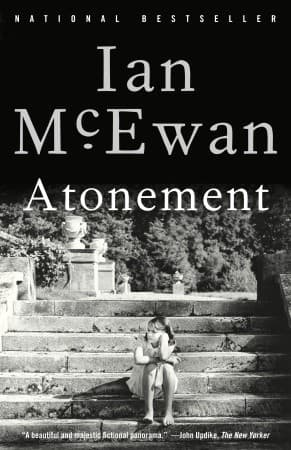
- Atonement
Ian McEwan
4.4 (70) average on GoodreadsExplores childhood and adolescence with a keen eye for detail and the impact of historical events.
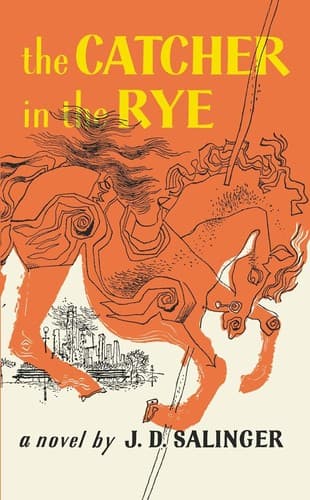
- The Catcher in the Rye
J.D. Salinger
3.8 (2.7M) average on GoodreadsYoung AdultWhile both explore adolescent angst and disillusionment, Black Swan Green has a warmer, more nostalgic tone and a greater emphasis on the redemptive power of language, in contrast to Salinger's more cynical and critical perspective on the adult world. Mitchell's structure is also more fragmented and experimental.
- The Perks of Being a Wallflower
Stephen Chbosky
4.2 (1.3M) average on GoodreadsPsychologyBoth are coming-of-age stories, but Black Swan Green focuses on the quieter, more internal battles of self-discovery and artistic awakening, rather than the more overt trauma, abuse, and mental health struggles depicted in Chbosky's novel. Mitchell's narrative is less driven by a central traumatic event and more by the accumulation of everyday experiences.
- The Old Man and the Sea
Ernest Hemingway
3.8 (831k) average on GoodreadsLiterary FictionA Cuban fisherman's long struggle with a giant marlin becomes a story of endurance and dignity, now retold for young adults with illustrations, phonetic guides, and writing prompts in Traditional Chinese.
- One Hundred Years of Solitude
Gabriel García Márquez
4.1 (753k) average on GoodreadsLiterary FictionThrough the multi-generational story of the Buendía family, a mythical town deals with the repeating patterns of time, love, and solitude, as the extraordinary mixes with the ordinary.
- The Goldfinch
Donna Tartt
3.9 (720k) average on GoodreadsLiterary FictionHaunted by a tragic explosion and clutching a stolen Dutch masterpiece, a young orphan navigates the opulent drawing rooms of New York and the gritty underbelly of the art world, desperately seeking connection and redemption amidst a life spiraling into crime and obsession.



Enjoyed the summary?
A summary gives you the shape of the book. The book itself has the detail, the examples and the voice.
Find Black Swan Green on AmazonAs an Amazon Associate, BookBrief earns from qualifying purchases. How we're funded