

Synopsis
Covers the whole plot, including the ending.
- Difficulty
- Hard
- Read it if
- You are fascinated by philosophical explorations of transgression, eroticism, nihilism, and the darker aspects of human psychology, particularly within a historical context of impending catastrophe.
- Skip it if
- You prefer conventional narratives, are sensitive to explicit and disturbing content, or seek optimistic or morally unambiguous philosophical perspectives.
Blue of Noon Quotes
“Human existence is a kind of disease, a sickness that makes us capable of seeing the world, but also of suffering from it.”
“The world is given to us to be devoured, not to be understood.”
“Laughter is the only human response to the absurdity of existence.”
“Love is the recognition of one's own nothingness in the nothingness of the other.”
“To live is to be torn between the desire for purity and the irresistible pull of defilement.”
“The sacred is nothing but the excess of the profane.”
“Death is the ultimate orgasmic release, the final transgression.”
“We are condemned to freedom, to the burden of choosing our own meaning in a meaningless world.”
“The only way to truly live is to live without hope.”
“Beauty is a wound that never heals.”
“The sun, which is the source of all life, also blinds us to the truth.”
“To know oneself is to know one's own limits, and then to transgress them.”
“The greatest joy lies in the destruction of all that is known and stable.”
“Silence is the language of the abyss, where all meaning dissolves.”
Quiz
10 questions on the plot and the characters. Each answer comes with a short explanation.
Question 1
Which historical period forms the backdrop for the narrator's experiences and internal collapse in 'Blue of Noon'?
- The Roaring Twenties
- Europe's slide into Fascism
- The Belle Époque
- The Cold War era
Show answer
B. Europe's slide into Fascism The book explicitly states the setting is 'Europe's slide into Fascism,' with the narrator's internal state mirroring the external political turmoil.
Question 2
What primary descriptor does the synopsis use for the narrator's journey through cities?
- A triumphant quest for meaning
- A leisurely tour of European capitals
- A surreal sexual and mental nightmare
- A diligent investigation into political unrest
Show answer
C. A surreal sexual and mental nightmare The synopsis describes the narrator's journey as 'a surreal sexual and mental nightmare of squalor, sadism and drunken encounters,' emphasizing its nightmarish quality.
Question 3
Which of the following best characterizes the novel's philosophical stance according to the synopsis?
- An affirmation of human resilience and hope
- A celebration of societal order and moral rectitude
- One of the twentieth century's great nihilist works
- A call for political activism and social reform
Show answer
C. One of the twentieth century's great nihilist works The synopsis explicitly labels 'Blue of Noon' as 'one of the twentieth century's great nihilist works,' highlighting its core philosophical perspective.
Question 4
The novel explores the tension between identifying with history's victims and being seduced by what?
- The promise of a utopian future
- The monstrous glamour of its terrible victors
- The stoic resilience of the common people
- The intellectual discourse of the period
Show answer
B. The monstrous glamour of its terrible victors The synopsis states the novel is 'torn between identifying with history's victims and being seduced by the monstrous glamour of its terrible victors,' indicating this central conflict.
Question 5
What kind of forces does the novel aim to explore 'beneath the surface of civilization'?
- The unifying principles of human connection
- The dark forces
- The rational constructs of societal governance
- The economic drivers of historical change
Show answer
B. The dark forces The synopsis explicitly mentions the novel 'exploring the dark forces beneath the surface of civilization,' pointing to its focus on primal, destructive elements.
Question 6
The narrator's 'internal collapse' is explicitly stated to mirror what external event?
- The economic boom of the interwar period
- The cultural renaissance in European cities
- The fighting and marching on the streets outside
- The rise of avant-garde artistic movements
Show answer
C. The fighting and marching on the streets outside The synopsis directly states that 'his internal collapse mirrors the fighting and marching on the streets outside,' linking his personal state to the political unrest.
Question 7
Which of the following elements are NOT explicitly mentioned as part of the narrator's 'nightmare' experiences?
- Squalor
- Sadism
- Philanthropic endeavors
- Drunken encounters
Show answer
C. Philanthropic endeavors The synopsis lists 'squalor, sadism and drunken encounters' as components of the narrator's nightmare, but makes no mention of philanthropic endeavors.
Question 8
Considering Bataille's philosophical leanings as a nihilist, what is a likely implication for the narrator's search for meaning within the novel?
- He successfully discovers universal truths and purpose.
- His search is inherently futile, leading to despair and collapse.
- He finds solace in religious dogma and spiritual awakening.
- His journey culminates in a definitive political stance.
Show answer
B. His search is inherently futile, leading to despair and collapse. Given the novel is described as a 'great nihilist work' and the narrator's experience as a 'despairing' internal collapse, his search for meaning is implied to be futile, leading to further despair.
Question 9
The phrase 'monstrous glamour of its terrible victors' suggests a complex relationship with power and violence. What deeper psychological phenomenon might Bataille be exploring here?
- The rational admiration for strategic military prowess.
- The aesthetic appeal and seductive power of destructive forces, despite their horror.
- The inherent human desire for peace and stability.
- The moral imperative to resist all forms of authority.
Show answer
B. The aesthetic appeal and seductive power of destructive forces, despite their horror. Bataille often explored the transgressive and the sacred, and the 'monstrous glamour' points to the perverse attraction or aesthetic fascination with power and violence, even when it is morally reprehensible.
Question 10
How does the 'blackly compelling account of depravity and violence' contribute to the novel being categorized as a nihilist work?
- It implies a moral judgment against depravity, upholding traditional values.
- It suggests that in a world devoid of inherent meaning, such depravity is a logical outcome or an expression of ultimate freedom.
- It highlights the importance of finding meaning through resistance to such forces.
- It serves as a cautionary tale advocating for strict social control.
Show answer
B. It suggests that in a world devoid of inherent meaning, such depravity is a logical outcome or an expression of ultimate freedom. Nihilism posits that life is without objective meaning, purpose, or intrinsic value. A 'blackly compelling account of depravity and violence' in this context suggests an exploration of existence where traditional moral frameworks collapse, and such acts are not inherently 'wrong' in a cosmic sense, but rather expressions within a meaningless reality.
Blue of Noon FAQ
What is the central theme of Georges Bataille's Blue of Noon?
Blue of Noon explores themes of depravity, violence, nihilism, and the collapse of individual and societal morality. It delves into the dark forces beneath civilization's surface, mirroring Europe's descent into Fascism through the narrator's internal turmoil.
Does Blue of Noon offer any hope or redemption?
No, Blue of Noon is widely considered a nihilist work. It presents a bleak and despairing worldview, with its narrator experiencing a surreal nightmare of squalor and sadism, offering little to no hope or redemptive arc.
What is the significance of the historical backdrop in Blue of Noon?
The backdrop of Europe's slide into Fascism is crucial, as the narrator's personal collapse and experiences of depravity are intended to mirror the societal breakdown and violence occurring on the streets. It links individual psychological turmoil with broader historical catastrophe.
How does Blue of Noon differ from other existentialist novels of its time?
While sharing some existentialist concerns with alienation and meaninglessness, Blue of Noon distinguishes itself through its explicit exploration of transgressive sexuality, sadism, and a more pronounced nihilistic embrace of violence and the monstrous, often lacking the moral grappling found in works by Camus or Sartre.
Is Blue of Noon a difficult book to read?
Yes, Blue of Noon is often considered challenging due to its graphic content, fragmented narrative, philosophical density, and unsettling themes. Readers should be prepared for a disturbing and psychologically intense experience.
What role does sexuality play in Blue of Noon?
Sexuality in Blue of Noon is depicted as transgressive, often entwined with violence, sadism, and squalor. It's not portrayed as a source of pleasure or connection, but rather as another avenue for depravity and the expression of dark, primal urges.
Who are the main characters in Blue of Noon?
The novel primarily follows its unnamed narrator, a protagonist experiencing a profound internal collapse. Other significant characters include Dirty, a woman with whom he shares a complex and often violent relationship, and Xénie, another figure in his chaotic existence.
What is the meaning of the title 'Blue of Noon'?
The title 'Blue of Noon' is open to interpretation, often linked to the intense, almost blinding light of midday that can reveal stark truths or evoke a sense of emptiness and desolation. It suggests a clarity that exposes the harsh realities of the human condition and the novel's dark themes.
About the author
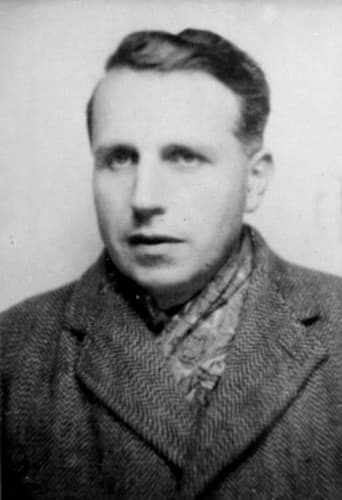
Georges Albert Maurice Victor Bataille was a French philosopher and intellectual working in philosophy, literature, sociology, anthropology, and history of art. His writing, which included essays, novels, and poetry, explored such subjects as eroticism, mysticism, surrealism, and transgression. His work would prove influential on subsequent schools of philosophy and social theory, including poststructuralism.
Similar books
- Story of the Eye
Georges Bataille
3.7 (16k) average on GoodreadsThrillerExplores similar themes of eroticism, transgression, and the sacred/profane divide with a comparable intensity and philosophical underpinning.
- Nausea
Jean-Paul Sartre
3.9 (86k) average on GoodreadsPhilosophyDelves into existential dread, the absurdity of existence, and a protagonist's alienation from the world, though with a different stylistic and thematic focus on eroticism.
- The Stranger
Albert Camus
4.1 (3k) average on GoodreadsFantasyExamines themes of alienation, the absurd, and a detached protagonist confronting death and societal norms, albeit with a more restrained and less overtly transgressive tone.
- Brave New World
Aldous Huxley
4.0 (1.4M) average on GoodreadsFantasyIn a future where happiness comes from chemicals and individuality is gone, one man's desire for real experience threatens the calm, controlled society.
- Life of Pi
Yann Martel
3.9 (1.3M) average on GoodreadsFantasyStranded in the vast Pacific, a young Indian boy forms an unlikely bond with a Bengal tiger, questioning belief and survival.
- The Picture of Dorian Gray
Oscar Wilde
4.1 (966k) average on GoodreadsFantasyA beautiful young man's soul decays within a cursed portrait, mirroring the grotesque cost of his hedonistic pursuit of eternal youth and illicit pleasure.






Enjoyed the summary?
A summary gives you the shape of the book. The book itself has the detail, the examples and the voice.
Find Blue of Noon on AmazonAs an Amazon Associate, BookBrief earns from qualifying purchases. How we're funded