
Core Idea
- Difficulty
- Medium
Key Takeaways from Brain on Fire
The Elusive Nature of Self
Neurological illness can fundamentally alter one's personality and perception, eroding the very essence of who we are.
Cahalan's illness shows how closely our identity connects with brain function. Her symptoms started with paranoia and mood swings, then grew into psychosis, seizures, and catatonia. The book conveys the fear of losing control over one's thoughts and actions, becoming a 'stranger' to oneself and loved ones. This highlights how fragile personal identity is, showing that our memories, personality, and consciousness are not fixed. Instead, they are products of complex brain processes that disease can disrupt. Her struggle to remember her 'lost month' from medical records and others' stories shows the deep amnesia that can come with severe brain events, leaving an empty space where a continuous self once was. This is a strong insight, making readers consider the biological basis of their own sense of self.
“I was not myself. I was a stranger to myself, and to everyone who knew me.”
In the book: Cahalan's detailed descriptions of her psychotic episodes, paranoia, and the subsequent amnesia she experienced regarding her illness, pieced together from hospital records and family accounts.
Try this: Cultivate empathy for individuals experiencing mental health crises or neurological disorders, recognizing that their altered behaviors may stem from biological dysfunctions rather than inherent character flaws. Support research into the neurological bases of identity and consciousness.
The Perilous Path to Diagnosis
Rare diseases often mimic common psychiatric conditions, leading to misdiagnosis and delayed treatment.
Cahalan's journey through many hospitals and specialists points out a problem in medicine: the tendency to fit symptoms into common categories. Her strange behaviors—paranoia, aggression, hallucinations—were first called stress, bipolar disorder, or schizophrenia. This misdirection almost cost her life, as time passed while her brain worsened. The book shows how diagnostic bias, where doctors favor common explanations, can hide rare but treatable conditions. Her eventual diagnosis of anti-NMDA receptor encephalitis, a new and often missed autoimmune disorder, shows why doctors must consider unusual symptoms, especially when patients do not respond to standard psychiatric treatments. While doctors often face pressure to diagnose quickly, this is a call for more varied approaches to complex cases.
“My doctors were looking for a psychiatric illness, not a neurological one. They were looking in the wrong place.”
In the book: Cahalan's initial psychiatric diagnoses, including bipolar disorder and schizoaffective disorder, and the failure of multiple doctors to identify the underlying neurological cause until Dr. Souhel Najjar's intervention.
Try this: Advocate for second opinions in complex medical cases, particularly when symptoms are severe, rapidly progressing, or unresponsive to initial treatments. Encourage medical professionals to maintain a broad differential diagnosis, especially when facing unusual symptom clusters.
The Power of Observational Medicine
Careful observation and critical thinking, rather than solely relying on tests, can be life-saving.
Dr. Souhel Najjar's part in Cahalan's recovery shows the value of careful clinical observation. While other doctors focused on psychiatric labels and unclear tests, Dr. Najjar noticed subtle brain signs during an exam. He saw Cahalan could not draw a clock face correctly (a test for spatial awareness and frontal lobe function). This small detail, plus his view of her quickly worsening condition, changed the diagnosis from psychiatric to neurological. This shows that while advanced technology helps, it does not replace a doctor's sharp eye and willingness to link different symptoms. Najjar's method shows the art of medicine, where recognizing patterns and understanding brain anatomy can solve mysteries that standard methods might miss. This is the book's strongest insight about medical practice, showing that sometimes simple tools, used by the right mind, bring the best results.
“He didn't just look at my charts; he looked at me. He saw what others had missed.”
In the book: Dr. Najjar's 'clock test' and his subsequent re-evaluation of all her symptoms through a neurological lens, leading to the correct diagnosis and treatment.
Try this: Encourage medical students and practitioners to hone their observational skills and critical thinking, emphasizing that patient interaction and physical examination remain indispensable tools alongside technological diagnostics. Empower patients and caregivers to voice concerns about overlooked symptoms.
The Unsung Heroes of Caregiving
The unwavering dedication of family and loved ones is often the primary force behind recovery from severe illness.
Cahalan's memoir honors her family's persistence as much as her own fight. Her parents, especially her mother, worked hard for her, navigating hospital systems, questioning doctors, and refusing to accept a bad outlook. Her boyfriend, Stephen, stayed loyal, visiting daily and offering support despite her terrifying change. Their refusal to give up, even when Susannah was violent, delusional, or catatonic, helped her survive and recover. This shows that while medicine provides the tools, human love and advocacy often provide the drive and attention needed for those tools to work. It highlights the large emotional and practical load on caregivers and their important role in making sure patients get the best care, especially when patients cannot act for themselves.
“My parents, my boyfriend, my friends – they never gave up on me, even when I was unrecognizable.”
In the book: The detailed accounts of her parents' relentless search for answers, their daily visits, and Stephen's constant presence and emotional support throughout her illness.
Try this: Recognize and support caregivers through resources, respite care, and emotional validation. Encourage patients to build strong support networks and for friends/family to step up when a loved one faces a severe health crisis.
The Stigma of Mental Illness
The rapid labeling of bizarre behavior as 'madness' often overshadows underlying physiological causes.
Before her diagnosis, Cahalan was quickly labeled 'psychotic,' 'bipolar,' or 'schizophrenic.' This quick jump to psychiatric labels, without fully checking brain alternatives, shows the deep stigma of mental illness. Once these labels were applied, they shaped how medical staff saw and treated her, often dismissing her symptoms as purely psychological rather than physical. The book shows how this stigma can block proper diagnosis and treatment. Once she was a 'psychiatric patient,' her physical symptoms were less likely to be investigated. This is a comment on the medical system's tendency to separate mind and body, often harming patients with complex neuro-psychiatric problems. It highlights the need to link psychiatry and neurology and to approach all 'mental' symptoms with a full physical check.
“Once you're labeled 'crazy,' it's hard to shake it. It colors everything.”
In the book: The initial reactions of doctors and nurses, her placement in psychiatric wards, and the difficulty her family faced in convincing medical professionals to look beyond a psychiatric diagnosis.
Try this: Challenge the stigma of mental illness by advocating for a more integrated understanding of brain health, recognizing that many 'mental' conditions can have physiological roots. Promote interdisciplinary collaboration between psychiatry and neurology.
The Fragility of Memory and Narrative
Personal narratives can be profoundly altered or erased by illness, requiring reconstruction from external sources.
Cahalan's memoir is special because much of her illness 'story' is not from her memory. Instead, it is carefully put together from medical records, journal entries, and talks with family and friends. This shows how much her illness affected memory, especially factual memory, and how hard it is to create a clear personal story after such a traumatic event. It makes the reader think about how subjective memory is and how illness can literally steal one's own history. Her struggle to connect the 'monster' she was described as with her pre-illness self, and the person she became after recovery, shows the psychological cost of such a disconnect. This reveals how helpful narrative reconstruction can be, even if not fully self-generated, in helping people regain a sense of self after a deep brain disruption.
“I had no memory of being sick. My story was told to me by others, through their eyes and their notes.”
In the book: Cahalan's extensive research into her own medical records, her interviews with family, friends, and doctors, and her reliance on these sources to piece together her 'lost month.'
Try this: Encourage journaling or documentation during periods of illness to aid in memory recall. Support individuals in reconstructing their narratives after traumatic or memory-erasing events, recognizing the importance of external accounts.
The Brain's Astonishing Capacity for Recovery
Even after severe neurological damage, the brain can demonstrate remarkable plasticity and healing.
Despite severe brain inflammation and damage, especially to her frontal and temporal lobes, Cahalan made a nearly full recovery. This amazing outcome shows the brain's ability to reorganize and adapt by forming new connections. Her recovery, while not instant or without lasting effects, shows that even with what seemed like permanent psychosis and catatonia, the brain can heal. This is especially true when the cause is found and treated. This offers hope for patients and families facing severe brain or psychiatric conditions, suggesting that recovery is often possible beyond initial bad predictions. While not all brain injuries heal as completely as Cahalan's, it strongly shows the potential for recovery with the right medical help.
“The brain is truly a miracle, capable of repairing itself in ways we still don't fully understand.”
In the book: Cahalan's return to her career, her ability to write a complex memoir, and her re-establishment of relationships, all after being profoundly incapacitated by her illness.
Try this: Promote research into neuroplasticity and brain recovery mechanisms. Offer hope and support to individuals undergoing neurological rehabilitation, emphasizing the brain's potential for healing.
The Hidden Epidemic of Autoimmune Encephalitis
Many cases of 'psychosis' may have an underlying autoimmune cause, often misdiagnosed as purely psychiatric.
Cahalan's experience with anti-NMDA receptor encephalitis brought this new and often missed autoimmune condition to public notice. Her story shows that many people diagnosed with severe psychiatric disorders—especially those with sudden onset, changing symptoms, and brain signs—might have an autoimmune cause for their 'madness.' The book suggests a shift in how some psychiatric conditions are viewed, urging medical professionals to consider immune factors. The fact that the antibodies attacking her brain were only found in 2007 (just years before her illness) shows how fast our understanding of brain diseases changes and how many 'mental illnesses' might be reclassified as neurological. This is a call for more awareness and screening for autoimmune encephalitides.
“I was one of the lucky ones. How many others are out there, locked away, misdiagnosed?”
In the book: The scientific discovery of anti-NMDA receptor antibodies and the growing recognition of various forms of autoimmune encephalitis, often presenting with psychiatric symptoms.
Try this: Educate medical professionals and the public about autoimmune encephalitides. Advocate for broader testing for autoimmune markers in patients presenting with acute-onset psychosis or rapidly progressing psychiatric symptoms, especially with neurological signs.
The Ethical Dilemmas of Medical Intervention
When a patient lacks capacity, balancing aggressive treatment with patient autonomy presents profound challenges.
During her worst phase, Cahalan was often restrained, medicated, and given procedures against her will, as she could not make informed choices. This raises ethical questions about patient independence, consent, and the duty of doctors and family when a patient's judgment is badly affected by illness. The book covers this complex area, showing that while these actions saved her life, they were very traumatic for Cahalan and her family. It highlights the fine line between needed help and possible violation, showing the importance of legal tools like medical power of attorney and open talks about end-of-life or incapacitation wishes. This is a nuanced point, acknowledging that sometimes independence must be temporarily set aside for survival, but also recognizing the psychological cost.
“I was being treated against my will, for a disease I didn't know I had.”
In the book: Cahalan's descriptions of being restrained, receiving involuntary medication, and her family making critical medical decisions on her behalf.
Try this: Encourage individuals to establish advanced directives and medical power of attorney. Promote ethical discussions in healthcare settings regarding patient capacity, informed consent, and the balance between autonomy and intervention in severe illness.
The Role of Journalism in Personal Healing
Investigating one's own medical mystery can be a powerful act of reclaiming agency and understanding.
As a journalist, Cahalan naturally used investigative reporting to understand her 'lost month.' This journalistic method, carefully putting together medical records, interviewing witnesses, and researching the science of her illness, became a key part of her healing. It let her create a clear story from broken memories and outside accounts, giving her control over a time when she had none. This suggests that for some, actively researching and writing about their own health journeys can be a therapeutic act, changing passive victimhood into an active search for understanding. It shows the human need to make sense of traumatic experiences and to fit them into one's life story, especially when those experiences involve a deep loss of self. Her memoir itself shows this process, turning personal tragedy into a widely meaningful story of strength and discovery.
“Writing this book was my way of owning my story, of understanding what happened to me.”
In the book: Cahalan's extensive use of her journalistic skills to research her own case, including reviewing thousands of pages of medical records and conducting numerous interviews.
Try this: Encourage individuals facing complex health challenges to engage actively in understanding their conditions, whether through research, support groups, or creative expression. Support patient advocacy and informed self-education.
Quiz
10 questions on the main ideas. Each answer comes with a short explanation.
Question 1
What is the central event that triggers the protagonist's medical crisis?
- A severe head injury from an accident.
- A sudden onset of unexplained symptoms, leading to hospitalization.
- A deliberate overdose of medication.
- A traumatic emotional event.
Show answer
B. A sudden onset of unexplained symptoms, leading to hospitalization. The book details Susannah Cahalan's sudden and unexplained symptoms that led to her hospitalization and diagnosis.
Question 2
What was Susannah Cahalan's profession before her illness?
- A doctor specializing in neurology.
- A lawyer working in human rights.
- A journalist for a major New York newspaper.
- A research scientist in a laboratory.
Show answer
C. A journalist for a major New York newspaper. Susannah Cahalan was a journalist at The New York Post before her illness.
Question 3
What was one of the initial labels given to Susannah by medical professionals?
- A victim of a rare genetic disorder.
- Suffering from a psychological breakdown or psychosis.
- Experiencing a temporary bout of amnesia.
- Undergoing a spiritual awakening.
Show answer
B. Suffering from a psychological breakdown or psychosis. Initially, Susannah was labeled as violent and psychotic, indicating a psychological diagnosis.
Question 4
What does the title 'Brain on Fire' metaphorically represent in the context of the book?
- The physical burning sensation in her brain.
- The rapid and destructive inflammation of her brain.
- The intense emotional turmoil she experienced.
- The brilliance and creativity of her mind before illness.
Show answer
B. The rapid and destructive inflammation of her brain. The title 'Brain on Fire' refers to the autoimmune encephalitis that caused inflammation in Susannah's brain.
Question 5
Which of the following was a significant challenge in diagnosing Susannah's condition?
- Her symptoms were too mild to be taken seriously.
- Her medical records were lost during the hospital transfer.
- Her symptoms mimicked those of psychiatric disorders, delaying neurological investigation.
- She refused to cooperate with any medical examinations.
Show answer
C. Her symptoms mimicked those of psychiatric disorders, delaying neurological investigation. The book highlights how Susannah's symptoms initially presented as psychiatric, leading doctors down the wrong diagnostic path for a significant period.
Question 6
What role did Susannah's family play in her recovery?
- They were largely absent, leaving her to deal with her illness alone.
- They pressured doctors to give up on her case when it became too difficult.
- They were instrumental in advocating for her, seeking second opinions, and maintaining hope.
- They believed she was faking her symptoms to gain attention.
Show answer
C. They were instrumental in advocating for her, seeking second opinions, and maintaining hope. Susannah's family showed remarkable faith and persistence, actively participating in her care and advocating for a correct diagnosis.
Question 7
What specific type of medical condition was ultimately diagnosed as the cause of Susannah's 'madness'?
- Schizophrenia.
- Bipolar disorder.
- Autoimmune encephalitis (anti-NMDA receptor encephalitis).
- A rare form of epilepsy.
Show answer
C. Autoimmune encephalitis (anti-NMDA receptor encephalitis). The diagnosis was anti-NMDA receptor encephalitis, an autoimmune disease affecting the brain.
Question 8
What is the significance of the doctor who eventually made the correct diagnosis?
- He was Susannah's childhood pediatrician.
- He was a visiting neurologist who recognized a pattern from previous cases.
- He was the first doctor Susannah saw, but initially missed the diagnosis.
- He was a psychologist who suggested a neurological cause.
Show answer
B. He was a visiting neurologist who recognized a pattern from previous cases. Dr. Souhel Najjar, a neurologist, eventually identified the autoimmune cause after Susannah had seen many other specialists.
Question 9
How did Susannah's memory loss impact her ability to understand her own experience?
- She had perfect recall of everything that happened during her illness.
- She relied entirely on her family's accounts and medical notes to piece together her illness.
- Her memory loss was selective, and she remembered most of the traumatic events.
- She hallucinated memories that were not real.
Show answer
B. She relied entirely on her family's accounts and medical notes to piece together her illness. A key aspect of her illness was severe memory loss, requiring her to reconstruct the events through external sources.
Question 10
What is a broader implication of Susannah Cahalan's story for the medical field?
- The importance of interdisciplinary collaboration and the potential for misdiagnosis when symptoms overlap between specialties.
- The superiority of traditional psychiatric treatments over modern neurological interventions.
- The need for patients to always self-diagnose using online resources.
- The irrelevance of patient testimonials in medical research.
Show answer
A. The importance of interdisciplinary collaboration and the potential for misdiagnosis when symptoms overlap between specialties. Her story highlights the critical need for doctors from different specialties to communicate and collaborate, and how easily a rare neurological condition can be mistaken for a psychiatric one.
Brain on Fire FAQ
What is "Brain on Fire" about?
"Brain on Fire" is a memoir by Susannah Cahalan detailing her descent into a mysterious mental illness. It chronicles her struggle with a rare autoimmune disease that caused her to experience psychosis, seizures, and memory loss, and her family's fight to find a diagnosis and her path to recovery.
What medical condition did Susannah Cahalan have?
Susannah Cahalan suffered from Anti-NMDA receptor encephalitis, a rare autoimmune disease where the body's own antibodies attack the NMDA receptors in the brain, leading to a wide range of neurological and psychiatric symptoms.
How did the doctors diagnose Susannah Cahalan?
The diagnosis was challenging and took a significant amount of time, involving numerous tests and misdiagnoses. Ultimately, a doctor named Dr. Souhel Najjar recognized the pattern of her symptoms and ordered specific blood and cerebrospinal fluid tests that identified the presence of anti-NMDA antibodies.
What was Susannah Cahalan's experience like in the hospital?
During her illness, Susannah experienced severe disorientation, paranoia, hallucinations, violent outbursts, and memory loss. She was often restrained and struggled to communicate, feeling trapped and terrified as her mind deteriorated.
How did her family react to her illness?
Her family was incredibly supportive and persistent. They refused to accept the initial diagnoses of mental illness and tirelessly advocated for further testing and research, playing a crucial role in Susannah's eventual diagnosis and recovery.
What is the significance of the title "Brain on Fire"?
The title "Brain on Fire" is a metaphor for the intense inflammation and autoimmune attack occurring within Susannah's brain. It vividly conveys the devastating and destructive nature of her illness.
Is "Brain on Fire" a true story?
Yes, "Brain on Fire" is a true and personal account of Susannah Cahalan's own experience with a rare neurological disorder. She wrote the memoir after recovering and piecing together the events of her illness.
What can readers learn from "Brain on Fire"?
Readers can learn about the complexities of the human brain, the challenges of diagnosing rare diseases, the importance of patient advocacy, and the resilience of the human spirit in the face of severe adversity. It also highlights the advancements in medical understanding and treatment.
What is the difference between Susannah Cahalan's experience and typical mental illness?
While Susannah's symptoms mimicked severe psychiatric disorders, her condition was rooted in a physical autoimmune attack on her brain, not a primary mental illness. This distinction is crucial as it led to a specific treatment (immunosuppression) that addressed the underlying cause.
What is the prognosis for Anti-NMDA receptor encephalitis?
With early diagnosis and treatment, the prognosis for Anti-NMDA receptor encephalitis is generally good, with many patients making a significant recovery. However, some may experience long-term cognitive or emotional challenges.
About the author

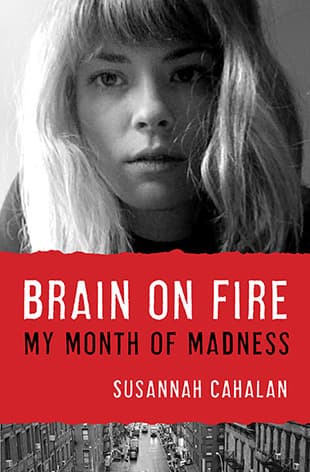
Susannah Cahalan is an American author and journalist known for her non-fiction work. Her notable book, "Brain on Fire: My Month of Madness," chronicles her experience with a rare autoimmune disease that caused severe neurological symptoms. Cahalan's writing often explores themes of mental health and medical mysteries.
Similar books
- The Perks of Being a Wallflower
Stephen Chbosky
4.2 (1.3M) average on GoodreadsPsychologyThrough letters, a shy high school freshman learns to navigate first love, trauma, and self-discovery, stepping off the sidelines and into life.
- Eleanor Oliphant Is Completely Fine
Gail Honeyman
4.3 (708k) average on GoodreadsLiterary FictionA lonely woman's structured life changes when an IT guy and an elderly man help her learn to open her heart.
- One Flew Over the Cuckoo's Nest
Ken Kesey
4.2 (631k) average on GoodreadsPsychologyIn a mind-bending asylum, the boisterous Randle McMurphy wages a defiant war against the tyrannical Nurse Ratched, inspiring his fellow inmates, including the seemingly catatonic Chief Bromden, to reclaim their lost humanity.
- The Bell Jar
Sylvia Plath
4.0 (591k) average on GoodreadsPsychologyIn the suffocating grip of 1950s expectations, a brilliant young woman's descent into mental illness is painted with such vivid, internal clarity that her 'insanity' feels terrifyingly rational and inevitable.
- The Subtle Art of Not Giving a F*ck: A Counterintuitive Approach to Living a Good Life
Mark Manson
3.9 (530k) average on GoodreadsBusinessEmbrace your flaws and stomach life's lemons, because true happiness isn't about relentless positivity, but about choosing what truly matters to give a f*ck about.
- Sapiens: A Brief History of Humankind
Yuval Noah Harari
4.4 (502k) average on GoodreadsPsychologySapiens tells the story of Homo sapiens, showing how our ability to create shared fictions helped us go from an ordinary ape to the planet's main species, changing Earth and our future.






Enjoyed the summary?
A summary gives you the shape of the book. The book itself has the detail, the examples and the voice.
Find Brain on Fire on AmazonAs an Amazon Associate, BookBrief earns from qualifying purchases. How we're funded