

Synopsis
Covers the whole plot, including the ending.
- Difficulty
- Easy
- Pacing
- Moderate
- Mood
- Melancholy, sophisticated, nostalgic, wistful, glamorous
Breakfast at Tiffany's and Three Stories Plot Summary
Covers the whole plot, including the ending.
The Narrator's Introduction to Holly
The story begins with the unnamed narrator, a writer in an East Seventies apartment building in New York City. He remembers his past acquaintance with the unusual Holly Golightly after hearing that a wood carving like Holly was found in Africa. He describes his first impressions of Holly: she is young, glamorous, and seems carefree, living in the apartment below his. She keeps late hours, often coming home early in the morning, usually with different men. The narrator is curious about her unconventional life and her many visitors, who include wealthy older men and artists.
Holly's Morning Rituals and Midnight Calls
The narrator starts to learn about Holly's habits. She often begins her day at Tiffany & Co., finding peace in its elegant atmosphere even when she cannot afford anything. Her apartment is mostly empty and messy, showing her temporary nature. She often gets calls from 'Sally Tomato,' a jailed mob boss, for whom she delivers coded messages. She does not seem to understand the full meaning of these messages, calling them a harmless favor from a 'friend' and herself a 'messenger girl.' This adds a subtle sense of danger and mystery to her life.
Meeting Doc Golightly
One day, an older man named Doc Golightly arrives at Holly's apartment, claiming to be her husband. The narrator sees them reunite and learns Holly's real name is Lulamae Barnes. She married Doc as a very young, uneducated girl in rural Texas. Doc is a kind, gentle veterinarian who truly loves Holly and wants her to return to their simple life. This meeting shows a clear difference between Holly's glamorous New York image and her humble, almost sad past, showing her wish to escape her origins and change who she is.
Holly's Escape from Doc
Despite Doc's sincere requests and affection, Holly refuses to go back with him. She feels trapped by the memory of her past life as Lulamae and wants to keep her independence and the sophisticated image she has built in New York. She sees Doc as a symbol of the life she wants to leave behind. Doc, heartbroken but understanding, eventually leaves, realizing Holly has moved on and cannot be held back. This moment shows Holly's strong independence and her constant search for a life free from limits, even if it means losing true connection.
The Narrator's Growing Affection
As the narrator spends more time with Holly, he grows fond of her, seeing her vulnerability beneath her carefree appearance. He notices her mood swings, her lonely moments, and her underlying sadness. He becomes her confidant, listening to her dreams of finding a stable, wealthy man to support her and her desire to travel. He sees past her glamour to the lost, searching person inside, acting as an observer and a sympathetic, though somewhat passive, part of her life.
Holly's Relationships and Social Circle
Holly's social group is varied and always changing. She has relationships with several wealthy men, including Rusty Trawler and the Brazilian diplomat José Ybarra-Jaegar. She also stays friends with people like O.J. Berman, her agent, and Joe Bell, a bartender who also likes her. Her relationships are often practical, driven by her need for money and a glamorous life. Still, she has genuine charm and can connect with people, making her both someone who uses others and someone who is loved.
The Arrest and Betrayal
Holly's seemingly harmless involvement with 'Sally Tomato' becomes serious when she is arrested for being part of a drug ring. The coded messages she delivered were not as innocent as she thought. This public shame breaks her carefully built image and shows her vulnerability. The incident causes her wealthy suitor, José Ybarra-Jaegar, to leave her, fearing the scandal will hurt his diplomatic career. This is a turning point, as Holly's idea of control and being untouchable starts to fall apart, showing how uncertain her life is.
The Aftermath and Departure
After her arrest and José's departure, Holly is disappointed and sad. She is released on bail, but her reputation is ruined, and she feels New York is bad for her. She decides to leave the city and travel, first to Brazil, then to other places, hoping for a new start. A sympathetic friend supports her financially, but her future is uncertain. This decision shows her constant search for a place where she can truly belong and be free from society's rules and judgments.
A Christmas Memory: Buddy and Sook
This story, set in the 1930s, is told by an elderly man remembering his childhood with his much older, childlike cousin, Sook, in rural Alabama. Their life together involves simple pleasures and the detailed process of preparing for Christmas. They are outsiders in their larger, strict family, finding comfort and joy in their unique bond. The story shows their close relationship, their innocence, and the small, important moments that define their lives, such as making fruitcakes and flying kites. It is a touching picture of unconditional love and the bittersweet nature of memory.
House of Flowers: Ottilie and Royal
This story is set in a 'house of flowers' – a brothel – in Haiti. Ottilie, a young woman there, falls deeply in love with Royal, a man from the mountains who visits the house. Their love is strong and immediate, but their worlds are very different. Royal is from a simpler, more traditional background, while Ottilie is used to the difficulties and dangers of her life in the brothel. The story looks at love, innocence, and the conflict between different ways of life, as Ottilie struggles with her wish to escape her current situation for a new life with Royal.
A Diamond Guitar: Mr. Schaeffer and T.J.
Set in a rural Southern prison farm, this story focuses on the friendship between Mr. Schaeffer, an older, experienced prisoner, and T.J., a young, naive boy. Mr. Schaeffer is a skilled guitarist, and T.J. is fascinated by his music. Their shared love for the diamond guitar – a symbol of freedom and beauty – creates a bond between them, offering a short break from the harsh prison life. The story explores themes of lost innocence, how art can overcome difficult situations, and the human need for connection even in the most lonely places.
Breakfast at Tiffany's and Three Stories Characters
Holly Golightly
Protagonist
The enigmatic, free-spirited socialite from Texas.
Holly Golightly, originally Lulamae Barnes, is a captivating and enigmatic young woman living in New York City. She is fiercely independent, charming, and a master of reinvention, constantly seeking freedom and a life of glamour. Despite her seemingly carefree exterior, she harbors deep vulnerabilities, loneliness, and a profound fear of being 'caged' or tied down. She uses her charm and beauty to navigate a world of wealthy men, but ultimately remains an elusive figure, always on the move.
Relationships: The Narrator (Friend, confidant); Doc Golightly (Estranged husband); José Ybarra-Jaegar (Lover, fiancé); Rusty Trawler (Wealthy suitor)
The Narrator (Fred)
Supporting
An aspiring writer captivated by Holly.
The unnamed narrator, whom Holly nicknames 'Fred' (after her brother), is a quiet, observant writer living in the same brownstone as Holly. He serves as the primary lens through which Holly's story is told, offering a sympathetic yet objective perspective. He develops a deep platonic affection for Holly, acting as her confidant and a passive observer of her chaotic life. His own aspirations are less defined than Holly's, making him a foil to her vibrant, restless energy.
Relationships: Holly Golightly (Friend, object of fascination)
Doc Golightly
Supporting
Holly's kind, elderly husband from Texas.
Doc Golightly is a gentle, elderly veterinarian from rural Texas who was Holly's husband when she was a very young girl (Lulamae). He represents Holly's past and the simple, innocent life she desperately tried to escape. He is genuinely devoted to her, seeing her true self beyond her New York persona. His appearance in the story highlights Holly's transformation and her rejection of her origins, yet he remains a symbol of unconditional love and a missed opportunity for a different kind of happiness.
Relationships: Holly Golightly (Estranged husband)
José Ybarra-Jaegar
Supporting
The wealthy Brazilian diplomat and Holly's fiancé.
José Ybarra-Jaegar is a sophisticated, wealthy Brazilian diplomat who becomes Holly's most serious romantic interest. He represents the stability and social status Holly craves, and for a time, she believes he is her ticket to a secure future. However, his concern for his reputation ultimately outweighs his feelings for Holly, leading him to abandon her when she faces scandal. He embodies the transactional nature of some of Holly's relationships and the limitations of her pursuit of superficial security.
Relationships: Holly Golightly (Lover, fiancé)
Sally Tomato
Supporting
The incarcerated mob boss Holly visits.
Sally Tomato is a notorious mob boss incarcerated at Sing Sing, whom Holly regularly visits. She acts as his seemingly innocent messenger, delivering coded weather reports that are actually part of a drug trafficking operation. Sally represents the hidden dangers and moral ambiguities that Holly naively navigates in her pursuit of an exciting life. He is a catalyst for her eventual downfall and the revelation of her precarious existence.
Relationships: Holly Golightly (Associate, client (she delivers messages))
Buddy
Protagonist (A Christmas Memory)
The young boy narrating his childhood with Sook.
Buddy is the young, sensitive boy who narrates 'A Christmas Memory'. He is based on Truman Capote himself and shares an extraordinary, almost symbiotic bond with his much older cousin, Sook. He is observant and deeply affectionate, finding joy and comfort in their shared rituals and their unique world. His experiences with Sook shape his understanding of love, loss, and the bittersweet nature of memory.
Relationships: Sook (Cousin, best friend, surrogate parent)
Sook
Supporting (A Christmas Memory)
Buddy's eccentric, childlike elderly cousin.
Sook is Buddy's elderly, childlike cousin in 'A Christmas Memory'. She is a gentle, innocent soul with a profound love for Buddy and a deep connection to nature. Despite her advanced age, she maintains a youthful spirit and a vivid imagination, often seen as an outcast by the more conventional family members. She represents unconditional love, the beauty of simple joys, and the preciousness of fleeting moments.
Relationships: Buddy (Cousin, best friend, surrogate parent)
Ottilie
Protagonist (House of Flowers)
A young Haitian woman in love.
Ottilie is a young woman living in a 'house of flowers' (a brothel) in Haiti. She is innocent and vulnerable despite her circumstances, and falls deeply in love with Royal. She longs for a different life, one of true love and escape from her current existence. Her character embodies the conflict between desire and reality, and the challenges of transcending one's social environment.
Relationships: Royal (Lover)
Mr. Schaeffer
Protagonist (A Diamond Guitar)
An older, musical prisoner.
Mr. Schaeffer is an older, experienced prisoner on a Southern prison farm. He is a skilled guitarist whose music provides a source of solace and connection for himself and others, particularly the young T.J. He represents the resilience of the human spirit and the power of art to create beauty and meaning even in the most desolate circumstances. He is a mentor figure to T.J., offering a glimpse of humanity amidst the harshness of prison life.
Relationships: T.J. (Friend, mentee)
T.J.
Supporting (A Diamond Guitar)
A young, naive prisoner.
T.J. is a young, impressionable boy incarcerated on the prison farm. He is drawn to Mr. Schaeffer's music and finds a sense of wonder and escape in it. His innocence contrasts with the harsh realities of the prison, and his admiration for Mr. Schaeffer highlights the human need for beauty and connection, especially in a dehumanizing environment. He represents the vulnerability of youth facing a bleak future.
Relationships: Mr. Schaeffer (Friend, mentor)
Breakfast at Tiffany's and Three Stories Themes
The Search for Freedom and Identity
Holly Golightly shows a constant search for freedom, both from her past as Lulamae Barnes and from society's rules. She constantly changes who she is, refusing to be 'caged' by relationships or a fixed identity. This theme also appears in 'House of Flowers' with Ottilie's wish to escape her situation, and in 'A Diamond Guitar' where music offers a kind of mental freedom to the prisoners. Capote explores the often-hard process of self-discovery and how far people go to define their own lives.
“I don't want to own anything until I find a place where I belong.”
Loneliness and Isolation
Despite her glamorous social life, Holly Golightly is very lonely and isolated. Her constant movement and refusal to form deep attachments come from a fear of being vulnerable and a deep feeling of not belonging. The narrator notices her moments of quiet sadness. This theme is also in 'A Christmas Memory' through Buddy and Sook's shared isolation within their family, and in 'A Diamond Guitar' where the prisoners find temporary comfort from their deep loneliness through music. Capote examines the human condition of seeking connection while often being unable to fully achieve it.
“It's a very lonesome business, being a girl. Unless you're a man, of course.”
The Illusion of Glamour vs. Harsh Reality
The novella sharply contrasts the glittering, carefree image Holly presents with the uncertain and often dangerous realities of her life. Her visits to Tiffany's symbolize her desire for a perfect, easy life, which is very different from her empty apartment and her connection to a mob boss. This theme also appears in 'House of Flowers,' where the brothel's beauty hides the difficult lives of the women inside. Capote shows how appearances can be misleading and how people create false fronts to deal with a challenging world.
“What I've found out is that you don't find happiness until you stop looking for it.”
Innocence Lost and Preserved
Holly's journey from Lulamae Barnes to Holly Golightly represents a loss of rural innocence for a more worldly, complex life. However, hints of her naive nature, especially in her dealings with Sally Tomato, remain. In 'A Christmas Memory,' Buddy and Sook's innocence is central, a valuable quality kept safe against a harsher world. 'A Diamond Guitar' shows T.J.'s innocence facing the grim realities of prison. Capote explores how innocence is both delicate and strong, often shaped by environment and experience.
“Oh, it's not a house, it's a home. A home for lost souls.”
Plot Devices & Literary Techniques
First-Person Narrator (Unreliable)
The story is told through the subjective lens of Holly's neighbor, 'Fred'.
The main novella is narrated by an unnamed writer, whom Holly nicknames 'Fred'. This first-person perspective allows for an intimate, yet ultimately limited, view of Holly Golightly. The narrator is deeply fascinated by Holly, and his affection and romanticized view of her color the narrative. He pieces together her story from his observations and what she chooses to reveal, leaving many aspects of her life ambiguous and open to interpretation. This device highlights Holly's elusive nature and the subjective experience of knowing someone like her.
Symbolism of Tiffany's
Tiffany & Co. represents a safe, perfect, and aspirational world for Holly.
Tiffany & Co. is a powerful symbol for Holly. For her, it's not about the expensive jewelry, but the sense of calm, order, and invulnerability the store embodies. It's a place where 'nothing bad can happen,' a sanctuary from her chaotic and often frightening reality. When she feels anxious or 'the reds,' she goes to Tiffany's to find solace. This symbolizes her longing for security, beauty, and a life free from worry, representing an unattainable ideal of perfect happiness and stability.
The Cat (No Name)
Holly's nameless cat symbolizes her inability to commit and her own rootlessness.
Holly's cat, whom she refuses to name, is a potent symbol of her aversion to attachment and her own transient nature. She views the cat as an independent creature, just like herself, and believes that by not naming it, she avoids the responsibility of ownership and the pain of loss. The cat is a companion, yet it remains unattached, mirroring Holly's own approach to relationships and her fear of being 'caged.' The cat's eventual return to her after she abandons it in the city signifies a glimmer of hope for connection, but also her continued struggle with commitment.
Quiz
10 questions on the plot and the characters. Each answer comes with a short explanation.
Question 1
What is the main character's name in 'Breakfast at Tiffany's'?
- Mary Jane
- Holly Golightly
- Scarlett O'Hara
- Daisy Buchanan
Show answer
B. Holly Golightly The main character's name is Holly Golightly.
Question 2
In which city is 'Breakfast at Tiffany's' primarily set?
- Los Angeles
- Chicago
- New York
- San Francisco
Show answer
C. New York The story is set in New York City.
Question 3
What decade is the setting for 'Breakfast at Tiffany's'?
- 1930s
- 1950s
- 1960s
- 1940s
Show answer
D. 1940s The story is set in the 1940s.
Question 4
Which of the following is NOT one of the three additional stories included in this edition?
- House of Flowers
- A Diamond Guitar
- A Christmas Memory
- The Great Gatsby
Show answer
D. The Great Gatsby The three additional stories are 'House of Flowers', 'A Diamond Guitar', and 'A Christmas Memory'. 'The Great Gatsby' is by F. Scott Fitzgerald.
Question 5
The description of Holly Golightly calls her 'top banana in the shock department'. What does this idiom suggest about her?
- She is very serious and reserved.
- She is prone to causing surprise or scandal.
- She is exceptionally talented in comedy.
- She is always calm and collected.
Show answer
B. She is prone to causing surprise or scandal. The idiom 'top banana' means the leading person, and 'shock department' implies causing surprise or astonishment. Together, it suggests she is a leading figure in causing unexpected reactions.
Question 6
According to the provided text, who is pursuing Holly Golightly?
- Police detectives and journalists
- Mafia gangsters and playboy millionaires
- Debtors and former lovers
- Art collectors and antique dealers
Show answer
B. Mafia gangsters and playboy millionaires The text explicitly states she is 'pursued by Mafia gangsters and playboy millionaires'.
Question 7
The phrase 'nice girls don't, except, of course, Holly Golightly' implies that Holly engages in behavior that is considered:
- Shy and retiring
- Conventional and proper
- Unconventional or risqué
- Intellectual and studious
Show answer
C. Unconventional or risqué The phrase suggests that 'nice girls' are expected to adhere to certain social norms, and Holly's actions deviate from these, implying they are unconventional or potentially scandalous.
Question 8
The description of Holly Golightly uses the phrase 'tawny hair'. What color is tawny?
- Black
- Blonde
- Brownish-yellow or light brown
- Red
Show answer
C. Brownish-yellow or light brown Tawny is a color that describes a brownish-yellow or light brown hue.
Question 9
The text describes Holly Golightly as 'a fragile eyeful of tawny hair and turned-up nose'. This description primarily appeals to which sense?
- Hearing
- Smell
- Taste
- Sight
Show answer
D. Sight The description focuses on visual elements like 'eyeful', 'tawny hair', and 'turned-up nose', appealing directly to the sense of sight.
Question 10
Considering the context of the 1940s New York setting and the mention of 'martinis flow from cocktail hour till breakfast', what kind of lifestyle is implied for the characters?
- A simple, agrarian lifestyle
- A frugal and austere existence
- A sophisticated and possibly hedonistic social life
- A strictly professional and work-oriented routine
Show answer
C. A sophisticated and possibly hedonistic social life The mention of frequenting cocktail hours and consuming martinis until breakfast, set in a sophisticated urban environment like 1940s New York, strongly suggests a lifestyle focused on social engagements, luxury, and potentially pleasure-seeking.
Breakfast at Tiffany's and Three Stories FAQ
What is the main theme of Breakfast at Tiffany's?
The main theme revolves around the elusive and unconventional nature of Holly Golightly, exploring her search for identity, belonging, and independence in a glittering yet superficial New York society. It delves into themes of freedom, loneliness, and the compromises one makes to survive.
Who is Holly Golightly?
Holly Golightly is the enigmatic and captivating protagonist of the novella. She's a young, stylish socialite living in New York in the 1940s, known for her eccentric lifestyle, her love for Tiffany's, and her complex personality that blends vulnerability with a fierce desire for self-preservation.
What is the setting of Breakfast at Tiffany's?
The story is primarily set in New York City during the 1940s, capturing the post-war era's allure and its undercurrents of social change. The iconic Tiffany & Co. jewelry store serves as a significant backdrop and symbol within the narrative.
What are the other stories included in the book?
Besides 'Breakfast at Tiffany's', this edition also includes three other short stories by Truman Capote: 'House of Flowers', 'A Diamond Guitar', and 'A Christmas Memory'.
What is 'A Christmas Memory' about?
'A Christmas Memory' is a poignant, semi-autobiographical story about the narrator's childhood and his close, unconventional relationship with his elderly cousin, Sook. It captures a specific time and place through vivid sensory details and a deep sense of nostalgia.
What is 'House of Flowers' about?
'House of Flowers' is a vibrant story set in a Caribbean brothel, focusing on the life of a dancer named Ottoline and her complicated relationships. It explores themes of love, desire, and escape.
What is 'A Diamond Guitar' about?
'A Diamond Guitar' tells the story of two inmates in a rural prison, one of whom is obsessed with obtaining a diamond guitar. It's a tale of longing, illusion, and the destructive nature of unattainable desires.
Is Breakfast at Tiffany's a romance novel?
While 'Breakfast at Tiffany's' has romantic elements and explores relationships, it's more accurately described as a novella that delves into character study, social commentary, and themes of freedom and loneliness. The romantic entanglements are part of Holly's complex life rather than the sole focus.
What is the tone of Breakfast at Tiffany's?
The tone of 'Breakfast at Tiffany's' is a unique blend of sophisticated wit, melancholy, and a touch of bittersweet nostalgia. Capote masterfully balances humor and pathos, creating a narrative that is both charming and deeply affecting.
What does Tiffany's symbolize in the story?
Tiffany's symbolizes a sense of order, elegance, and a place of calm and security for Holly Golightly amidst the chaos of her life. It represents her ideal world, where she feels a sense of belonging and peace, away from the complexities and dangers she faces.
About the author
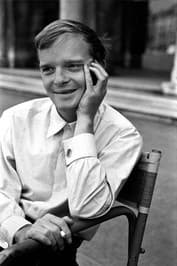
Truman Capote was an American author known for his distinctive narrative style and contributions to both fiction and non-fiction. His notable works include "In Cold Blood," a pioneering true crime novel, and "Breakfast at Tiffany's," a novella that explores themes of love and identity. Other significant writings include "A Christmas Memory," "Music for Chameleons," and "Summer Crossing."
Similar books
- The Great Gatsby
F. Scott Fitzgerald
3.9 (3.8M) average on GoodreadsHistorical FictionBoth "Breakfast at Tiffany's" and "The Great Gatsby" feature an enigmatic central figure (Holly Golightly and Jay Gatsby, respectively) viewed through the eyes of an observant, somewhat detached narrator. Both protagonists embody a certain American dream, albeit a flawed and ultimately unattainable one, and their stories are tinged with a profound sense of loss and the elusiveness of happiness. While Gatsby is driven by a singular, obsessive love, Holly's quest is for freedom and an undefined 'home,' making her pursuit more internal and less focused on a specific person. Fitzgerald's prose is more overtly lavish and symbolic, whereas Capote's is more restrained and precise, using subtle details to build character.
- The Hunger Games
Suzanne Collins
4.3 (6.4M) average on GoodreadsFantasyIn a future where children fight to the death on live television, Katniss Everdeen volunteers for the arena, turning a death sentence into a fight for survival and a spark of rebellion.
- The Fault in Our Stars
John Green
4.2 (3.6M) average on GoodreadsYoung AdultA girl with a terminal illness finds her story rewritten when a charming boy with a similar past enters her life at a cancer support group, leading to a star-crossed romance.
- Pride and Prejudice
Jane Austen
4.3 (3M) average on GoodreadsHistorical FictionIn a society focused on status and money, Elizabeth Bennet navigates love and pride, challenging Mr. Darcy and social expectations to find true affection.
- Divergent
Veronica Roth
4.2 (2.9M) average on GoodreadsFantasyIn a society divided by virtues, a sixteen-year-old's difference from the norm starts a rebellion that threatens her world.
- Catching Fire
Suzanne Collins
4.3 (2.5M) average on GoodreadsFantasyAfter defying the Capitol and starting a rebellion, Katniss and Peeta are forced on a dangerous Victory Tour, navigating political schemes, a fake romance, and the constant threat of a government eager to crush the uprising they began.






Enjoyed the summary?
A summary gives you the shape of the book. The book itself has the detail, the examples and the voice.
Find Breakfast at Tiffany's and Three Stories on AmazonAs an Amazon Associate, BookBrief earns from qualifying purchases. How we're funded