

Synopsis
Covers the whole plot, including the ending.
- Difficulty
- Medium
- Pacing
- Moderate
- Mood
- Atmospheric, Reflective, Intense, Melancholy
- Read it if
- You enjoy beautifully written coming-of-age stories set against the backdrop of harsh, natural landscapes, exploring themes of risk, mentorship, and self-discovery.
- Skip it if
- You prefer fast-paced plot-driven narratives or are uncomfortable with explicit depictions of sexual relationships involving a minor.
Breath Plot Summary
Covers the whole plot, including the ending.
The River Mouth and Pikelet's Early Life
Bruce 'Pikelet' Pike, an adult paramedic, tells about his teenage years in the timber town of Sawmill, Western Australia. He describes his somewhat protected childhood with loving, traditional parents. His life changes when he meets Ivan 'Loonie' Loon, a wilder, more adventurous boy from a poorer family. The two become close friends, their bond formed by a shared desire for excitement beyond their town. One day, Pikelet sees surfers at the river mouth, a sight that sparks his interest and a longing for a different life. This first look at surfing begins their journey into a world of physical challenge and risk that will define their growing up.
Learning to Surf with Loonie
Driven by their new interest, Pikelet and Loonie gather enough money to buy used surfboards, large foam boards that are nothing like those of experienced surfers. They start a self-taught, often clumsy, but determined effort to learn to surf. Their first tries are filled with falls and frustration, but their shared excitement and competitive spirit keep them going. They spend hours in the water, enduring the cold and physical strain, slowly learning about the ocean and how to ride waves. This period builds their deep friendship and their shared pursuit of thrills, setting the stage for meeting Sando.
Encountering Sando
One day, while surfing a difficult spot, Pikelet and Loonie meet Bill 'Sando' Sanderson, a legendary big-wave surfer, and his American wife, Eva. Sando, a mysterious and charming man, notices the boys' raw talent and bravery. Interested, he talks to them, offers advice, and eventually invites them to join him on surfing trips to more remote and dangerous places. This meeting is a turning point in the boys' lives. Sando becomes their mentor, a guide who introduces them to a more extreme, almost spiritual, way of surfing, pushing them beyond what they thought they could do and bringing them into a world far from their small town.
The Spartan Ethos and Big Waves
Under Sando's guidance, Pikelet and Loonie learn a strict, almost simple, surfing philosophy. Sando emphasizes physical toughness, mental strength, and a deep respect for the ocean's power. He takes them to remote, shark-filled reefs with huge waves, far bigger than anything they had imagined. The boys learn to read the ocean, control their fear, and push their bodies to their limits. They spend their days chasing swells, often camping in isolated spots. This intense training strengthens the bond between Pikelet and Loonie, but also creates a reliance on Sando's approval and a growing addiction to the thrill of big-wave surfing.
Eva's Influence and Sando's Absence
As Sando's solo surfing trips become more frequent and longer, Eva's role in the boys' lives changes. She is at first a mysterious, somewhat distant figure, but her presence becomes more important when Sando is away. Pikelet, especially, feels drawn to Eva, sensing a vulnerability and complexity beneath her calm exterior. She teaches them about art, music, and a world beyond surfing, offering a different kind of guidance. These times allow Pikelet to see the subtle tensions and unspoken history in Sando and Eva's relationship, hinting at deeper currents beneath their seemingly perfect, free-spirited life.
Pikelet's Affair with Eva
During one of Sando's long absences, Eva begins a sexual relationship with Pikelet. What starts as a hesitant, almost accidental encounter quickly becomes a secret affair. Pikelet, still a teenager, is overwhelmed by the experience, a mix of forbidden desire, emotional confusion, and a feeling of entering adulthood in a deep and unsettling way. The affair is marked by secrecy and a strange closeness, with Eva seemingly looking for comfort or escape, and Pikelet dealing with the intensity of his feelings and the moral issues. This relationship deeply affects Pikelet, ending his innocence and complicating his understanding of loyalty, love, and desire.
Loonie's Recklessness and Departure
Loonie, always the more reckless of the two, continues to push surfing limits, often taking unnecessary risks. His competitive drive and a growing frustration, possibly from his view of Pikelet's changing relationship with Sando and Eva, lead him to increasingly dangerous feats. A difficult incident during a big-wave session sees Loonie push himself to disaster, barely avoiding serious injury. This event, combined with a growing disappointment or a desire for a different path, eventually leads Loonie to leave the group and go his own way, leaving Pikelet alone with Sando and Eva.
The Reckoning and Disintegration
The group's fragile balance eventually breaks. Sando, perhaps sensing the truth or directly confronting Eva, discovers the affair between Pikelet and his wife. The revelation leads to a brutal, unspoken confrontation. Sando, deeply hurt, does not use physical violence but shows his rage and disappointment in a way that devastates Pikelet. The dream-like life they had built around surfing and their unconventional family falls apart. Pikelet, overwhelmed by guilt, shame, and the loss of his mentor and lover, is left to deal with his shattered adolescence.
Pikelet's Adrift Period
After the dramatic end of his relationship with Sando and Eva, Pikelet leaves the coastal area, trying to escape the painful memories and the feeling of failure. He wanders for a time, taking various low-paying jobs — factory work, fruit picking, anything to keep moving and avoid thinking. This period is marked by a deep sense of loss, regret, and emotional numbness. He tries to forget the intensity of his past, the excitement of surfing, and the complexities of his first love. However, the experiences with Sando and Eva have changed him, and the lessons, both good and bad, stay with him.
Return to the Ocean and Present Day
Years later, Pikelet, now a paramedic, finds himself drawn back to the ocean, though not as a surfer. His work often puts him in contact with the same forces of nature and human vulnerability that defined his youth. He thinks about the deep impact Sando, Eva, and Loonie had on his life. The novel ends with Pikelet, older and wiser, still carrying the marks and lessons of his intense adolescence. He understands the appeal and danger of pushing limits, the intoxicating power of thrill, and the complex nature of human relationships. He has found a way to live with his past, acknowledging its lasting mark on who he has become.
Principal Figures
Bruce 'Pikelet' Pike
Protagonist
A reflective and sensitive boy who seeks excitement and finds himself entangled in an extreme world.
Pikelet is the novel's narrator, a thoughtful and initially somewhat timid boy from a conventional family. He is drawn to the wildness of the ocean and the thrill of surfing, seeking something more profound than his small-town existence. He is impressionable and deeply affected by the people around him, particularly Sando and Eva. His sensitivity makes him observant but also vulnerable to manipulation and the intoxicating power of extreme experiences. He grapples with guilt, loyalty, and the complexities of desire.
Relationships: Ivan 'Loonie' Loon (Best friend and surfing partner, a bond of shared adventure and competition.); Bill 'Sando' Sanderson (Mentor and father figure, later betrayed by Pikelet's affair with Eva.); Eva (Lover and seducer, a complex and forbidden relationship that shatters his innocence.)
Ivan 'Loonie' Loon
Supporting
Pikelet's wild, fearless best friend and surfing companion.
Loonie is Pikelet's foil and best friend, a boy from a more deprived background who possesses an innate wildness and fearlessness. He is driven by a raw desire for adrenaline and a competitive spirit, often pushing himself to reckless extremes. Less introspective than Pikelet, Loonie embodies the pure, unadulterated thrill-seeking aspect of their youth. He is fiercely loyal but also independent, eventually choosing a different path when the group's dynamics become too complex.
Relationships: Bruce 'Pikelet' Pike (Best friend and surfing partner, a bond of shared adventure and competition.); Bill 'Sando' Sanderson (Mentor figure, though Loonie is less emotionally dependent on him than Pikelet.)
Bill 'Sando' Sanderson
Antagonist/Supporting
A legendary big-wave surfer and enigmatic mentor who initiates the boys into a dangerous world.
Sando is a charismatic and complex figure, a world-renowned big-wave surfer who becomes the boys' guru. He is a purist, dedicated to the ocean and the pursuit of extreme surfing, embodying a Spartan ethos of physical and mental discipline. Beneath his calm, almost spiritual exterior, lies a hidden past and a vulnerability that surfaces through his relationship with Eva. He is a powerful, almost god-like figure to the boys, but his mentorship comes with a heavy price, as he subtly pushes them into dangerous territory, both literally and emotionally.
Relationships: Bruce 'Pikelet' Pike (Mentor and surrogate father figure, later betrayed by Pikelet.); Ivan 'Loonie' Loon (Mentee and surfing companion.); Eva (Wife, with a complex and troubled relationship.)
Eva
Supporting
Sando's enigmatic American wife, who forms a complex and destructive relationship with Pikelet.
Eva is Sando's beautiful, mysterious American wife, a figure of sophisticated allure and hidden sadness. She is intelligent and cultured, offering the boys a glimpse into a world beyond their small town. However, she carries her own emotional burdens and a sense of dissatisfaction within her marriage. Her decision to initiate an affair with Pikelet is driven by a complex mix of loneliness, rebellion, and a desire for connection, ultimately leading to the group's downfall. She is both a victim and an agent of change, profoundly impacting Pikelet's coming-of-age.
Relationships: Bill 'Sando' Sanderson (Husband, with a strained and complex relationship.); Bruce 'Pikelet' Pike (Lover, a forbidden and emotionally charged affair.)
Pikelet's Mother (Beryl Pike)
Mentioned
Pikelet's well-meaning but conventional mother.
Pikelet's mother represents the traditional, safe world from which the boys are trying to escape. She is loving and concerned for her son's well-being, often worrying about his dangerous pursuits. While she doesn't fully understand his drive for extreme experiences, her presence provides a baseline of normalcy and warmth that contrasts sharply with the wildness of Sando's world. She embodies the domestic comfort and security that Pikelet ultimately leaves behind.
Relationships: Bruce 'Pikelet' Pike (Mother-son relationship, loving but sometimes strained by Pikelet's choices.)
Pikelet's Father (Frank Pike)
Mentioned
Pikelet's practical and hardworking father.
Pikelet's father is a pragmatic and hardworking man, much like his wife, rooted in the everyday realities of their timber town. He is less overtly emotional than his wife but still cares for Pikelet. He represents the masculine, working-class values of their community, which Pikelet finds restrictive. His practical nature stands in stark contrast to the almost spiritual, risk-taking philosophy of Sando.
Relationships: Bruce 'Pikelet' Pike (Father-son relationship, generally supportive but with a generational gap in understanding.)
Themes & Insights
The Allure and Danger of Risk-Taking
The novel explores the appeal of pushing physical and emotional limits, especially through big-wave surfing. Pikelet and Loonie are drawn to the ocean's power as an escape from ordinary life, finding purpose in confronting danger. However, the story shows the dangerous results of this pursuit, whether it's near-drowning, psychological stress, or the breakdown of personal boundaries. Sando's guidance, while inspiring at first, leads the boys into a morally questionable and destructive path, showing that extreme risks go beyond physical danger, affecting relationships and innocence. The novel suggests that while risk can be exciting, it often comes at a high personal cost.
“You're never more alive than when you're almost dead.”
Coming-of-Age and Loss of Innocence
Breath is a story about adolescence and the difficult process of growing up. Pikelet's journey from a protected boy to a man changed by experience is central. His innocence is lost not only through the physical dangers of surfing but, more importantly, by his affair with Eva. This experience forces him to face complex emotions like desire, guilt, betrayal, and the harsh realities of adult relationships. The loss of innocence is shown as an inevitable, though brutal, part of maturing, leaving Pikelet with a deeper, more complicated understanding of himself and the world. The contrast between his naive beginnings and his later disappointment highlights this theme.
“I was never quite a boy again.”
Mentorship and Its Perils
The dynamic between Sando and the boys forms the core of the mentorship theme. Sando acts as a guide, introducing Pikelet and Loonie to extreme surfing and a unique life philosophy. He teaches them discipline, courage, and a deep connection to nature. However, his mentorship is not entirely good; it has his own unresolved issues and a subtle manipulation that pushes the boys into dangerous territory, both on the waves and in their personal lives. The novel questions the ethics of such strong influence, especially when the mentor's own boundaries are unclear, ultimately leading to betrayal and the collapse of the relationship. It explores how a powerful mentor can both inspire and harm.
“He wanted us to feel the edge, to know what it was to be fully alive. But he also wanted us to be like him.”
The Power and Mystique of Nature
The ocean, particularly the wild coast of Western Australia, is a central character and a powerful force in the novel. It represents both great beauty and terrifying danger, a place of spiritual experience and brutal indifference. For Pikelet and Loonie, the waves are a way to discover themselves and a mirror reflecting their own fears and desires. The novel vividly shows the sensory experience of surfing — the cold, the salt, the thunderous power of the swell — emphasizing humanity's smallness against nature's grandeur. The ocean is a constant, lasting presence, shaping the characters and their fates, symbolizing forces beyond human control.
“The ocean was a living thing, breathing, roaring, always moving.”
Plot Devices & Literary Techniques
First-Person Retrospective Narration
The story is told by an older Pikelet looking back on his youth.
The entire novel is narrated by an adult Bruce 'Pikelet' Pike, looking back on his adolescence with the benefit of hindsight. This device allows for a reflective and often melancholic tone, as Pikelet processes the profound impact of his past experiences. It provides an immediate emotional connection to the protagonist's inner world and allows the narrator to foreshadow events, comment on the significance of moments, and offer mature insights into the complex motivations of the characters. The retrospective lens emphasizes the enduring weight of memory and the lasting effects of formative years.
Symbolism of the Ocean and Waves
The ocean represents freedom, danger, transcendence, and the uncontrollable forces of life.
The ocean and its waves are rich with symbolic meaning. They represent freedom from the mundane, the thrill of pushing limits, and a spiritual connection to something larger than oneself. However, they also symbolize danger, the unpredictable nature of life, and the potential for oblivion. Big waves, in particular, symbolize the extreme challenges and risks the characters embrace, both physically and emotionally. The ocean's vastness and power mirror the overwhelming experiences Pikelet undergoes, suggesting that some forces are beyond human control and understanding, shaping destinies in profound ways.
Foil Characters (Pikelet and Loonie)
Loonie's wildness and recklessness highlight Pikelet's more sensitive and introspective nature.
Pikelet and Loonie serve as effective foil characters, highlighting each other's distinct personalities and approaches to life. Loonie is the wild, instinctual, and purely thrill-seeking counterpart to Pikelet's more thoughtful, sensitive, and emotionally complex nature. Loonie's uninhibited recklessness pushes Pikelet to take greater risks, while Pikelet's introspection allows the reader to delve deeper into the psychological impact of their shared experiences. This dynamic intensifies their friendship and underscores the different ways individuals react to extreme situations and the allure of danger, ultimately leading them down separate paths.
Foreshadowing
Hints of future danger and emotional turmoil are woven throughout the narrative.
As a retrospective narrative, foreshadowing is naturally woven into the story. Pikelet, as the older narrator, often drops subtle hints or direct statements about the tragic or profound outcomes of certain choices and relationships. For instance, early descriptions of Sando's intensity or Eva's detachment hint at underlying complexities, while descriptions of particularly dangerous waves suggest the escalating risks they will face. This device builds suspense, creates a sense of impending doom, and emphasizes the inevitability of the characters' fates, enriching the emotional weight of the narrative as events unfold.
Breath Quotes
“The ocean was a big, beautiful, dangerous thing. It was a place where you could lose yourself, or find yourself.”
“It’s funny how a place can feel like home before you even know it, and then it’s just… home.”
“You don't choose the waves, mate. The waves choose you.”
“We were just kids, really, but we were already chasing something that felt bigger than us.”
“There’s a kind of freedom in letting go, in just giving yourself over to it.”
“The thing about fear is, it’s always there. You just learn to live with it, or you don’t.”
“Some moments are so perfect, you want to hold onto them forever, but they’re gone before you know it.”
“We were always looking for the next thrill, the next big thing, like it would fill some hole inside us.”
“It was a strange kind of love, the kind that binds you to someone even when you know they're bad for you.”
“You can be alive, truly alive, and still feel like you're drowning.”
“The world doesn’t care about your plans. It just keeps turning.”
“Sometimes you have to go a long way to find out where you belong.”
“Every breath was a gift, a reminder that you were still here, still in the game.”
“Growing up is just a series of letting go, isn't it? Of people, places, ideas.”
Quiz
10 questions on the plot and the characters. Each answer comes with a short explanation.
Question 1
What is the name of the protagonist who narrates the story?
- Bruce Pike
- Ivan Loon
- Sando
- Rick Pike
Show answer
A. Bruce Pike The story is narrated by Bruce Pike, who often goes by 'Pikelet'.
Question 2
What extreme sport initially binds Bruce Pike and Ivan Loon together?
- Rock climbing
- Motocross racing
- Big-wave surfing
- Scuba diving
Show answer
C. Big-wave surfing Pikelet and Loonie are drawn together by their shared passion for big-wave surfing, pushing their limits in the ocean.
Question 3
Who is the enigmatic veteran surfer who mentors Pikelet and Loonie?
- Bill
- Sando
- Jim
- Frank
Show answer
B. Sando Sando is the older, experienced surfer who takes the two boys under his wing and introduces them to a more extreme surfing lifestyle.
Question 4
What is the primary theme explored through the boys' pursuit of extreme sports and Sando's mentorship?
- The importance of academic achievement
- The search for identity and pushing personal limits
- The benefits of a quiet, contemplative life
- The challenges of urban living
Show answer
B. The search for identity and pushing personal limits The novel deeply explores the boys' coming-of-age as they test their physical and emotional boundaries, seeking to define themselves through risk and challenge.
Question 5
What is the nickname given to Bruce Pike by his friend Ivan Loon?
- Pikey
- Pikelet
- Brucey
- Little Pike
Show answer
B. Pikelet Ivan Loonie affectionately (and accurately) calls Bruce Pike 'Pikelet' throughout their adolescence.
Question 6
Where is the primary setting for the boys' surfing adventures?
- The Gold Coast, Queensland
- Bells Beach, Victoria
- The wild, lonely coast of Western Australia
- Byron Bay, New South Wales
Show answer
C. The wild, lonely coast of Western Australia The story explicitly states the setting is the 'wild, lonely coast of Western Australia', which is crucial to the isolation and natural challenge.
Question 7
What kind of 'ethos' does Sando initiate the boys into?
- An artistic and creative ethos
- A Spartan ethos, focused on risk and challenge
- A communal and cooperative ethos
- A spiritual and meditative ethos
Show answer
B. A Spartan ethos, focused on risk and challenge Sando introduces them to a 'Spartan ethos', emphasizing discipline, endurance, and facing extreme challenges.
Question 8
What is the significant role of Eva, Sando's American wife, in Pikelet's development?
- She teaches him to surf better than Sando.
- She represents a different kind of extreme and introduces him to complex emotional and sexual experiences.
- She becomes a mentor in his academic pursuits.
- She encourages him to leave surfing behind.
Show answer
B. She represents a different kind of extreme and introduces him to complex emotional and sexual experiences. Eva's 'peculiar behavior' and her relationship with Pikelet mark a significant, and often troubling, shift from physical risk to emotional and sexual exploration, leading him 'beyond all limits'.
Question 9
What is the ultimate consequence hinted at for venturing 'beyond all limits' in the novel?
- Achieving ultimate enlightenment
- Financial success and fame
- Oblivion
- A peaceful retirement
Show answer
C. Oblivion The book explicitly states that 'there is a point where oblivion is the only outcome' for those who push too far, highlighting the dangers of their extreme pursuits.
Question 10
What does the title 'Breath' primarily symbolize in the context of the story?
- The refreshing quality of the ocean air.
- The literal act of breathing during surfing, holding one's breath under water, and the finite nature of life and experience.
- A moment of rest and tranquility.
- The collective sigh of relief from the characters.
Show answer
B. The literal act of breathing during surfing, holding one's breath under water, and the finite nature of life and experience. The title 'Breath' is multifaceted, referring to the physical act of holding breath while surfing massive waves, the limited 'breath' or time one has for these experiences, and the fragility of life when pushing limits.
Breath FAQ
What is the central premise of 'Breath'?
'Breath' follows two working-class teenage boys, Pikelet and Loonie, in 1970s Western Australia who become obsessed with surfing big waves. Their lives are transformed when they fall under the mentorship of the enigmatic ex-pro surfer, Sando, who pushes them to extreme physical and emotional limits.
Who are the main characters and what are their primary motivations?
Pikelet (Bruce Pike) is the cautious narrator, driven by a desire for belonging and a need to understand the world. Loonie (Lochie Dean) is the fearless daredevil, motivated by a raw hunger for adrenaline and escape. Sando (Bill Sanderson) is the charismatic mentor, seeking to relive past glories and test the boundaries of others, while Eva is his melancholic American wife, grappling with her own unfulfilled life and past trauma.
Where is the story primarily set and how does the setting influence the narrative?
The story is set on the remote and rugged coast of Western Australia, specifically around the fictional town of Gnaraloo. This isolated, wild environment is crucial, providing the perfect backdrop for extreme surfing and fostering a sense of freedom and danger that shapes the boys' development and their relationship with nature.
What kind of relationship develops between Pikelet, Loonie, and Sando?
Initially, it's a mentorship where Sando teaches the boys about surfing and a stoic ethos. However, it evolves into a complex, almost cult-like dynamic where Sando exerts significant psychological control, pushing them into increasingly risky endeavors and blurring the lines of appropriate adult-child boundaries.
How does the novel explore the concept of risk and its consequences?
'Breath' deeply explores risk as both an exhilarating pursuit and a destructive force. The boys' constant testing of physical limits in surfing eventually spills over into reckless personal choices, demonstrating how the pursuit of extreme sensation can lead to profound emotional and physical harm, ultimately resulting in tragedy and regret.
What is the significance of the 'Blueback' surf break that Sando often mentions?
Blueback represents Sando's ultimate challenge and his personal Everest – a mythical, impossibly dangerous wave that he dreams of conquering. It symbolizes the relentless pursuit of the unattainable, the ultimate test of courage, and the dangerous allure of pushing beyond all known limits, influencing the boys' own aspirations.
What is the true nature of Eva's 'peculiar behavior' and her past?
Eva's peculiar behavior stems from her past as a freestyle skier whose career was cut short by a devastating injury, leaving her with chronic pain and emotional scars. Her melancholy, drug use, and eventual sexual relationship with Pikelet are desperate attempts to reclaim sensation, control, and a sense of vitality that her injury stole.
Are there any subtle clues about Sando's own unfulfilled ambitions or vulnerabilities?
Sando's relentless pushing of the boys, his fixation on Blueback, and his seemingly perfect 'Spartan' lifestyle subtly reveal his own unfulfilled ambitions and a deep-seated need to prove himself, perhaps compensating for his own past failures or a fear of mediocrity. His control over the boys is a way for him to vicariously experience the extreme life he craves.
How does Pikelet's perspective as the older narrator shape the story?
Pikelet narrates from a reflective, older perspective, which infuses the story with a sense of hindsight, regret, and a search for meaning. This allows him to analyze past events with a maturity he lacked as a teenager, providing commentary on the choices made and the long-term impacts of his youthful experiences, particularly his relationship with Eva.
What psychological needs does Sando fulfill for Pikelet and Loonie?
For both boys, Sando fulfills a need for a father figure, a mentor, and a guide into a world of excitement and purpose that their working-class families couldn't provide. He offers them a sense of belonging, an identity tied to an elite pursuit, and validation for their thrill-seeking desires, albeit with dangerous consequences.
Discuss the psychological impact of Eva's relationship with Pikelet.
Eva's sexual relationship with Pikelet is a complex and damaging experience for him. It's a desperate act for her to feel alive, but for Pikelet, it represents a confusing mix of forbidden desire, emotional manipulation, and a loss of innocence. It profoundly shapes his understanding of intimacy, pain, and the complexities of adult relationships, leaving lasting scars.
How does the novel explore the theme of masculinity and coming of age in a specific cultural context?
The novel explores a rugged, often silent form of Australian masculinity, where proving oneself through physical prowess and enduring hardship is paramount. The boys' coming-of-age is defined by their attempts to embody this ideal through surfing, facing fears, and navigating the unspoken codes of their male-dominated world, often with limited emotional outlets.
Is Sando a villain or simply a flawed mentor?
Sando is more complex than a simple villain; he is a deeply flawed mentor. While he provides valuable skills and a sense of purpose, his own unresolved issues and need for control lead him to cross ethical boundaries, manipulating the boys and exposing them to significant physical and emotional dangers for his own gratification. He is a catalyst for both growth and destruction.
What is the ultimate message about finding one's limits and identity?
The novel suggests that while testing limits can lead to profound self-discovery, there's a dangerous point where pushing too far results in oblivion and regret. True identity isn't solely found in extreme experiences but also in understanding consequences, accepting vulnerability, and learning to live with the aftermath of choices, rather than constantly chasing the next high.
How does the recurring motif of 'breath' function throughout the narrative?
The motif of 'breath' is central and multi-layered. It signifies the physical act of holding one's breath underwater, symbolizing courage and endurance in surfing. It also represents life itself, the precariousness of existence, and the moments of profound experience that take your breath away. Metaphorically, it refers to the deep, often unspoken desires and anxieties that drive the characters.
What is the significance of the novel's ending for Pikelet?
The ending finds Pikelet as an ambulance officer, a job that requires him to deal with emergencies and human vulnerability, a stark contrast to his youthful pursuit of extreme sports. This role suggests a quiet redemption or at least a practical application of his past experiences, using his knowledge of the body and risk to help others, rather than chasing personal thrills. He has found a way to breathe and live meaningfully after the chaos.
Does 'Breath' offer any hope or is it purely a cautionary tale?
While 'Breath' serves as a cautionary tale about the dangers of unchecked ambition and manipulation, it also offers a subtle sense of hope. Pikelet's survival, his ability to reflect on his past, and his current role as an ambulance officer suggest a capacity for resilience and growth. He may carry scars, but he has found a way to live a meaningful, if quieter, life, indicating that recovery from extreme experiences is possible.
How does Winton use sensory details and natural imagery to enhance the story?
Winton masterfully employs vivid sensory details, especially regarding the ocean – its power, smell, and sound – and the physical sensations of surfing. This rich natural imagery immerses the reader in the harsh beauty of the Western Australian coast, making the environment a living character and deeply connecting the boys' internal states to the external world, heightening the visceral impact of their experiences.
About the author

Tim Winton is an Australian author known for his fiction that often explores themes of nature and human connection. His notable works include "Cloudstreet," a multi-generational saga, "Breath," which delves into the world of surfing and personal growth, "Dirt Music," a story of love and loss in the Australian landscape, and "Blueback," a tale of a boy and his bond with the sea.
Similar books
- Lord of the Flies
William Golding
3.7 (2.3M) average on GoodreadsYoung AdultExplores the loss of innocence and the darker aspects of human nature in isolated settings.
- The Beach
Alex Garland
3.9 (74k) average on GoodreadsThrillerFeatures young people seeking an extreme, isolated paradise that ultimately unravels.
- Blueback
Tim Winton
3.9 (2k) average on GoodreadsChildren'sAnother Winton novel exploring a deep connection to the Australian ocean and nature.
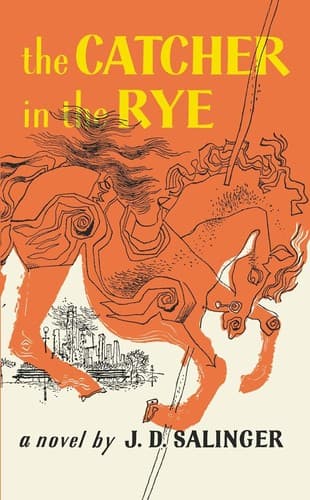
- The Catcher in the Rye
J.D. Salinger
3.8 (2.7M) average on GoodreadsYoung AdultThe Catcher in the Rye focuses on psychological introspection and adolescent alienation in an urban American setting, contrasting with Breath's emphasis on physical challenge, environmental interaction, and a rural Australian context. Both explore identity formation, but through vastly different lenses and experiences.
- The Old Man and the Sea
Ernest Hemingway
3.8 (831k) average on GoodreadsLiterary FictionA Cuban fisherman's long struggle with a giant marlin becomes a story of endurance and dignity, now retold for young adults with illustrations, phonetic guides, and writing prompts in Traditional Chinese.
- One Hundred Years of Solitude
Gabriel García Márquez
4.1 (753k) average on GoodreadsLiterary FictionThrough the multi-generational story of the Buendía family, a mythical town deals with the repeating patterns of time, love, and solitude, as the extraordinary mixes with the ordinary.





Enjoyed the summary?
A summary gives you the shape of the book. The book itself has the detail, the examples and the voice.
Find Breath on AmazonAs an Amazon Associate, BookBrief earns from qualifying purchases. How we're funded