
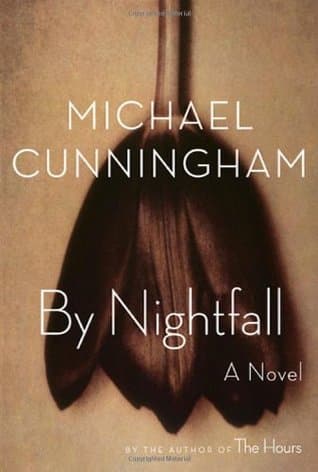
Synopsis
Covers the whole plot, including the ending.
- Difficulty
- Medium
- Pacing
- Slow
- Mood
- Introspective, Melancholy, Desirous, Reflective
- Read it if
- You enjoy introspective literary fiction exploring mid-life crises, the nature of art, and complex desires.
- Skip it if
- You prefer fast-paced plots or unambiguous character motivations.
By Nightfall Plot Summary
Covers the whole plot, including the ending.
The Arrival of Mizzy
Peter Harris, a successful art dealer in his mid-forties, lives a comfortable and seemingly content life in a SoHo loft with his wife, Rebecca, a respected literary editor. Their daughter, Bea, is away at college. Their routine and carefully arranged existence are suddenly upended when Rebecca's younger brother, Ethan, whom they call Mizzy, arrives for an extended visit. Mizzy, a beautiful but troubled twenty-three-year-old, has a history of drug problems and is currently adrift, having recently left art school. His presence immediately introduces tension and an unsettling energy into the Harris household, challenging Peter's perception of his own life and the beauty he values.
Peter's Growing Obsession
As Mizzy settles into their loft, Peter finds himself drawn to and repulsed by the young man. Mizzy's striking good looks, his raw, unpolished artistic talent (he doodles incessantly), and his general aimlessness begin to consume Peter's thoughts. Peter projects onto Mizzy an idealized version of lost youth and artistic purity, seeing him as a living embodiment of the kind of uncorrupted beauty he seeks in the art world but rarely finds. This fascination quickly borders on obsession, causing Peter to constantly observe Mizzy, interpret his every move, and question his own desires and the choices he's made in his life and career.
The Dinner Party and Unspoken Tensions
Peter and Rebecca host a dinner party for their circle of sophisticated, arts-oriented friends. The conversation revolves around art, literature, and the compromises of adulthood. Mizzy is present, mostly quiet but observant, his youthful energy a stark contrast to the comfortable cynicism of the older guests. Peter finds himself acutely aware of Mizzy's presence, constantly trying to gauge his reactions and shield him from potential judgment. The evening highlights the cracks in Peter and Rebecca's seemingly perfect marriage, as their interactions with each other and with Mizzy expose underlying resentments and unspoken desires, particularly Peter's growing preoccupation with his brother-in-law.
The Museum Visit and Artistic Ideals
Peter takes Mizzy to a museum, hoping to bond with him over art and perhaps steer him towards a more defined artistic path. Peter, the art dealer, points out masterpieces, explaining their significance and market value. Mizzy, however, seems more interested in the raw, immediate impact of certain pieces, drawing quickly in his sketchbook, capturing essence rather than analyzing technique or historical context. This interaction further highlights the generational and philosophical gap between them. Peter sees Mizzy's unrefined talent as both promising and frustrating, a stark reminder of the artistic purity he feels he has lost or compromised in his own commercial career, intensifying his internal conflict about the meaning of art and beauty.
Rebecca's Perspective and Concerns
Rebecca, while loving her brother, is more practical about Mizzy's situation. She is concerned about his lack of direction and his history of instability, fearing he might relapse into drug use or simply remain aimless. She also notices Peter's unusual intensity and preoccupation with Mizzy, finding it unsettling. While she initially dismisses it as a kind of mentorship or paternal concern, she begins to pick up on a deeper, more complicated undercurrent in Peter's gaze and behavior towards her brother. Her concern for Mizzy is genuine, but she also senses a shift in Peter's attention away from their shared life and towards this new, intoxicating presence.
The Confession and Its Aftermath
In a moment of vulnerability and confusion, Peter confesses his overwhelming attraction to Mizzy to his close friend, David. This confession is not explicitly sexual but rather an admission of profound captivation and longing for the youth, beauty, and unburdened potential he perceives in Mizzy. David listens with a mix of understanding and concern, recognizing the dangerous territory Peter is entering. This admission, even to a friend, makes Peter's feelings more real and tangible, further entangling him in his obsession. He grapples with the ethical implications of his attraction, particularly given Mizzy's vulnerability and his relationship as Rebecca's brother, intensifying his internal turmoil.
Mizzy's Disappearance and Peter's Panic
One evening, Mizzy leaves the loft without telling anyone and doesn't return for several hours. Peter is thrown into a state of intense panic and anxiety, far beyond what might be expected from a brother-in-law's temporary absence. He imagines the worst, convinced Mizzy has relapsed or is in danger. Rebecca, though worried, is more composed, having dealt with Mizzy's unpredictability before. Peter's disproportionate reaction makes it clear, even to himself, that his feelings for Mizzy are not merely paternal or artistic admiration, but something far more potent and personally destabilizing. When Mizzy eventually returns, unharmed and oblivious to the turmoil he caused, Peter feels a profound relief mixed with lingering unease about his own emotional state.
The Revelation of Mizzy's Art
Peter eventually sees a collection of Mizzy's drawings and paintings, beyond the casual doodles. He is stunned by their raw power, honesty, and emotional depth. Mizzy's art is not merely derivative but possesses a unique, compelling voice. This discovery both validates Peter's initial intuition about Mizzy's specialness and further complicates his feelings. He sees the potential for genuine genius, confirming Mizzy's status as a true artist, unburdened by commercial concerns — everything Peter feels he has lost. This revelation deepens Peter's sense of longing and regret, intensifying his identification with Mizzy as a symbol of uncorrupted artistic spirit.
The Climax of Desire and Restraint
One evening, Peter finds Mizzy alone in the loft. They share an intimate, charged conversation about art, life, and vulnerability. The air between them is thick with unspoken desire and emotional intensity. Peter is on the verge of expressing his feelings, or perhaps acting on them, recognizing the dangerous precipice he stands on. Mizzy, while perhaps aware of the undertones, remains innocent and open, his vulnerability only heightening Peter's internal struggle. In this moment, Peter consciously pulls back, choosing restraint over indulgence, realizing the potential for irreparable harm. This decision marks a significant internal shift, as he confronts the boundaries of his desires.
Mizzy's Departure and Peter's Reflection
Mizzy eventually decides to leave New York, having found a new direction or simply needing to move on. His departure is quiet and somewhat abrupt, leaving Peter with a profound sense of emptiness and loss. The loft feels different, the air less charged. Peter processes the intense emotional journey he has undergone. Mizzy's visit has irrevocably altered Peter's perception of himself, his marriage, his career, and the very nature of beauty and desire. He is forced to confront the compromises he has made, the parts of himself he has suppressed, and the true cost of his carefully constructed life. The novel concludes with Peter contemplating the lingering effects of Mizzy's presence, forever changed by the encounter.
By Nightfall Characters
Peter Harris
Protagonist
A mid-forties art dealer grappling with disillusionment and an unexpected obsession.
Peter Harris is a successful, sophisticated art dealer in New York, outwardly embodying the success and cultural refinement of the Manhattan art world. In his mid-forties, he is comfortable, articulate, and generally well-regarded. However, beneath this polished exterior, Peter is increasingly restless and disillusioned with the commercial aspects of his career and the compromises he feels he has made. He yearns for authentic beauty and artistic purity, often feeling that the art he sells lacks true soul. He is driven by a deep-seated desire for meaning and a lingering regret for lost youth and unfulfilled potential.
Relationships: Rebecca Harris (Wife; their marriage is comfortable but reveals underlying strains and a lack of deep intimacy.); Ethan (Mizzy) (Brother-in-law; Peter develops an intense, complicated obsession/attraction to Mizzy, seeing him as a symbol of lost youth and artistic purity.); Bea Harris (Daughter; away at college, representing Peter's past paternal role and the passage of time.); David (Close friend; confidante to whom Peter confesses his attraction to Mizzy.)
Rebecca Harris
Supporting
Peter's pragmatic and insightful wife, a literary editor who senses the shifts in their marriage.
Rebecca Harris is Peter's wife, an accomplished and respected literary editor. She is intelligent, observant, and grounded, often serving as a counterpoint to Peter's more romantic or obsessive tendencies. Rebecca genuinely cares for her younger brother, Mizzy, but views his situation with a pragmatic concern, aware of his past struggles and current aimlessness. She is attuned to the subtle dynamics within her marriage and begins to notice Peter's unsettling preoccupation with Mizzy, though she struggles to fully comprehend its depth or nature. She represents stability and the demands of adulthood, often feeling the weight of responsibility for Mizzy.
Relationships: Peter Harris (Husband; their marriage, while outwardly stable, lacks deep emotional intimacy, and she senses his growing distance.); Ethan (Mizzy) (Younger brother; she is protective and concerned for his well-being, though sometimes exasperated by his instability.)
Ethan (Mizzy)
Catalyst/Supporting
Rebecca's beautiful, aimless younger brother whose presence disrupts Peter's world.
Ethan, known as Mizzy, is Rebecca's twenty-three-year-old brother, a strikingly beautiful and somewhat ethereal figure. He is adrift, having recently left art school with a history of drug problems. Mizzy is quiet, observant, and possesses an innate, unrefined artistic talent. He embodies youth, vulnerability, and a kind of uncorrupted beauty that captivates Peter. He is not malicious but rather lost, seeking direction, and largely unaware of the profound impact his presence has on Peter. Mizzy acts as a mirror, reflecting Peter's own suppressed desires and regrets, and a catalyst, forcing Peter to confront the choices and compromises of his life.
Relationships: Peter Harris (Brother-in-law; he is the object of Peter's intense fascination and desire, though he remains largely innocent of its depth.); Rebecca Harris (Older sister; he relies on her for support and guidance, though he often frustrates her with his instability.)
Bea Harris
Mentioned
Peter and Rebecca's college-age daughter, a symbol of their past and the passage of time.
Bea Harris is Peter and Rebecca's daughter, who is away at college in Boston. She appears briefly in the narrative and is often mentioned, representing the next generation and the life Peter and Rebecca have built. Her absence from the loft during Mizzy's visit highlights the empty nest phase of their lives, and her youth contrasts with Peter's middle-aged anxieties. She is a reminder of Peter's paternal role and the responsibilities he has fulfilled, making his current fascination with Mizzy even more complex.
Relationships: Peter Harris (Father; she represents his parental role and the passage of time.); Rebecca Harris (Mother; she is a shared connection and responsibility.)
David
Supporting
Peter's close friend and confidante.
David is a close friend of Peter's, part of their established social circle. He is perceptive and serves as a sounding board for Peter's anxieties and burgeoning obsession with Mizzy. David listens to Peter's confessions with a blend of understanding and concern, offering a perspective that is both supportive and subtly cautionary. He represents the voice of reason and the external world's moral boundaries, even as he empathizes with Peter's internal struggles.
Relationships: Peter Harris (Close friend; confidante.)
By Nightfall Themes
The Nature of Beauty and Art
The novel explores the subjective and often unsettling nature of beauty, particularly in art and youth. Peter, an art dealer, constantly grapples with the commercialization of art versus its intrinsic value and authenticity. Mizzy, with his raw talent and striking appearance, becomes a living embodiment of 'pure' beauty, untainted by the market. Peter's obsession with Mizzy is as much about an idealized form of beauty and artistic potential as it is about physical attraction, forcing him to question the 'beauty' he curates in his gallery versus the disruptive beauty he finds in Mizzy. This theme is central to Peter's internal conflict, especially during the museum visit where he tries to explain art to Mizzy, only to realize Mizzy experiences it more viscerally.
“He wants art to be dangerous again, if only for him. He wants it to be a force that threatens the elegant, carefully constructed architecture of his life.”
Midlife Crisis and Disillusionment
Peter's story is an examination of midlife disillusionment. Approaching fifty, he questions the choices he's made, the compromises of his career, and the emptiness of his comfortable, affluent life. Mizzy's youthful energy, potential, and perceived freedom from responsibility act as a mirror, reflecting Peter's own regrets and unfulfilled desires. This theme appears in Peter's constant introspection, his internal monologues about the meaning of success, and his yearning for a lost sense of purpose or passion. His attraction to Mizzy is deeply intertwined with his longing to recapture a sense of youth and possibility he feels has slipped away.
“He thinks about the ways in which his life has become a beautiful, well-appointed cage.”
Desire, Obsession, and Ethical Boundaries
The novel explores the complexities of desire, particularly Peter's intense and ethically fraught attraction to Mizzy. This is not merely a physical attraction but a deep, overwhelming fascination that blurs the lines between admiration, envy, and forbidden longing. The narrative explores the internal struggle of a man confronting desires he considers inappropriate and dangerous, especially given Mizzy's vulnerability and his relationship to Rebecca. Peter's obsession forces him to confront his own moral compass, the boundaries of acceptable behavior, and the potential for self-destruction. The tension between his desire and his restraint forms the emotional core of the novel, particularly during moments of intense proximity with Mizzy.
“It is not sexual, not precisely. It is something deeper, more elemental: a desire to merge, to reclaim some lost part of himself.”
The Illusion of a Perfect Life
Peter and Rebecca's life initially appears ideal: successful careers, a beautiful loft, a college-age daughter, and a social circle. However, Mizzy's arrival exposes the underlying cracks and discontents within their seemingly perfect existence. The novel reveals how carefully constructed such lives can be, and how easily they can be destabilized by external forces or internal desires. Their marriage, while comfortable, lacks emotional depth, and Peter's internal monologue reveals a profound sense of dissatisfaction beneath the surface. This theme highlights the often-hidden realities behind outwardly successful lives and the compromises people make to maintain an illusion of happiness.
“They had built a beautiful house, and now the wind was beginning to blow through it.”
Plot Devices & Literary Techniques
The Catalyst Character (Mizzy)
Mizzy's arrival precipitates Peter's profound internal crisis.
Mizzy functions as a classic catalyst character. He is not the protagonist, nor does he undergo a significant personal arc in the traditional sense, but his mere presence and inherent qualities (youth, beauty, artistic potential, vulnerability) trigger the central conflict within Peter. He acts as a mirror, reflecting Peter's anxieties about aging, authenticity, and unfulfilled desires. Mizzy's lack of clear direction and his raw, unpolished nature stand in stark contrast to Peter's carefully curated life, forcing Peter to confront the compromises he has made and the true nature of his own desires.
Internal Monologue
Peter's stream of consciousness reveals his complex inner world.
The novel relies heavily on Peter's rich and detailed internal monologue. Much of the story unfolds within his mind, as he observes Mizzy, dissects his own feelings, analyzes art, and reflects on his life. This allows the reader deep access to Peter's complex thoughts, his intellectualizations, his desires, and his moral struggles. The internal monologue is crucial for conveying the nuances of his obsession, the depth of his disillusionment, and the ethical tightrope he walks, often contrasting with the seemingly calm exterior he presents to the world.
Symbolism of Art and Beauty
Art and beauty are used as symbolic representations of Peter's internal state and desires.
Throughout the novel, art and beauty are not merely subjects of discussion but powerful symbols. Mizzy himself becomes a living symbol of uncorrupted beauty and artistic purity, representing everything Peter feels he has lost or compromised. The art Peter deals in, often commercially successful but lacking soul, symbolizes his own professional disillusionment. Mizzy's raw drawings, in contrast, symbolize authentic, unbridled creativity. This pervasive symbolism allows the author to explore themes of authenticity, desire, and the search for meaning beyond the literal narrative, deepening the emotional and intellectual impact of Peter's journey.
Foil Characters (Rebecca and Mizzy)
Rebecca and Mizzy serve as foils, highlighting different aspects of Peter's character.
Rebecca and Mizzy function as foils to Peter, each highlighting different facets of his personality and internal conflict. Rebecca, with her pragmatism, stability, and adult responsibilities, represents the life Peter has chosen and the compromises he has made. Mizzy, on the other hand, embodies youth, raw potential, and an almost dangerous freedom from convention, representing Peter's lost youth and suppressed desires. The contrast between these two figures, and Peter's relationship to each, effectively emphasizes his midlife crisis, his longing for authenticity, and the ethical dilemmas he faces.
By Nightfall Quotes
“The problem is that I cannot be the person I was, and I cannot be the person I am. I am stuck in the middle, and it is a terrible place to be.”
“Art, Peter thinks, is really about the attempt to make sense of the world, to give it form and meaning, even if it has none.”
“He misses the days when he could simply look at a painting and feel something, without having to analyze its market value, its provenance, its place in the grand narrative of art history.”
“Maybe love is just the act of seeing another person, truly seeing them, and accepting what you see.”
“The city, at night, is a different animal. It breathes, it hums, it holds secrets.”
“He wonders if everyone feels this way, this slow erosion of the self, this gradual slipping away of the person they thought they were.”
“To be an artist, he thinks, is to live with a certain amount of delusion, a necessary and often beautiful delusion, that what you are doing matters.”
“It's a particular kind of torture, to love someone who is slipping away, to watch them become someone else, and to be powerless to stop it.”
“Beauty is not always comforting. Sometimes it's a reminder of what you've lost, or what you can never have.”
“He thought he knew who he was, but then the light shifted, and suddenly everything looked different.”
“The past is never really past. It's always there, humming just beneath the surface, waiting for a chance to reassert itself.”
“There are times when you just have to surrender to the chaos, let it wash over you, and hope you come out on the other side.”
“Maybe the secret to happiness isn't finding what you want, but wanting what you have.”
Quiz
10 questions on the plot and the characters. Each answer comes with a short explanation.
Question 1
What are Peter and Rebecca Harris's professions?
- Peter is a writer, Rebecca is a publisher.
- Peter is an art dealer, Rebecca is an editor.
- Peter is a musician, Rebecca is a critic.
- Peter is a gallerist, Rebecca is an artist.
Show answer
B. Peter is an art dealer, Rebecca is an editor. The text states that Peter is a dealer (implying art dealer given the context of 'arts') and Rebecca is an editor.
Question 2
What is the nickname for Rebecca's younger brother, Ethan?
- Buddy
- Mizzy
- Junior
- Kiddo
Show answer
B. Mizzy The text explicitly states that Ethan is 'known in the family as Mizzy, 'the mistake''.
Question 3
Where does Peter and Rebecca's college-age daughter live?
- Manhattan
- Los Angeles
- Boston
- London
Show answer
C. Boston The description mentions they have 'a college-age daughter in Boston'.
Question 4
What is Ethan's primary reason for visiting Peter and Rebecca?
- To showcase his own artwork.
- To settle down in New York City permanently.
- He is wayward, at loose ends, and looking for direction.
- To mend a broken relationship with Rebecca.
Show answer
C. He is wayward, at loose ends, and looking for direction. The text describes Mizzy as 'wayward, at loose ends, looking for direction', indicating his visit is driven by a search for purpose.
Question 5
How old is Ethan ('Mizzy') when he visits Peter and Rebecca?
- Eighteen
- Twenty-three
- Twenty-eight
- Thirty
Show answer
B. Twenty-three Ethan is described as a 'twenty-three-year-old'.
Question 6
What is Peter's primary internal conflict triggered by Ethan's presence?
- He fears Ethan will expose a secret about his past.
- He questions his artists, their work, his career, and his constructed world.
- He is worried about Ethan's impact on his daughter.
- He becomes jealous of Rebecca's attention to her brother.
Show answer
B. He questions his artists, their work, his career, and his constructed world. The text states, 'And in his presence, Peter finds himself questioning his artists, their work, his career—the entire world he has so carefully constructed.'
Question 7
What is one of Ethan's past issues mentioned in the description?
- Gambling debts
- Legal troubles
- Drug problems
- Academic failures
Show answer
C. Drug problems Ethan is described as having 'a history of drug problems'.
Question 8
Which previous novel by Michael Cunningham is mentioned as a point of comparison for 'By Nightfall'?
- A Home at the End of the World
- Flesh and Blood
- The Hours
- Specimen Days
Show answer
C. The Hours The description explicitly compares 'By Nightfall' to 'his legendary, Pulitzer Prize–winning novel, The Hours'.
Question 9
What significant thematic elements does 'By Nightfall' explore, according to the description?
- The challenges of raising teenagers and financial instability.
- The uses and meaning of beauty and the place of love in our lives.
- Political corruption and the pursuit of power.
- Intergenerational conflict and the decline of traditional values.
Show answer
B. The uses and meaning of beauty and the place of love in our lives. The text states it 'makes us think and feel deeply about the uses and meaning of beauty and the place of love in our lives.'
Question 10
What is the primary characteristic of Peter and Rebecca's living situation in Manhattan?
- A cramped apartment with many roommates.
- A spacious loft in SoHo.
- A brownstone in the Upper East Side.
- A suburban house outside the city.
Show answer
B. A spacious loft in SoHo. They are described as 'mid-forties denizens of Manhattan’s SoHo' with 'a spacious loft'.
By Nightfall FAQ
What is the central conflict in 'By Nightfall'?
The central conflict revolves around Peter Harris's midlife crisis, triggered by the arrival of his wife Rebecca's much younger brother, Ethan (Mizzy). Peter becomes increasingly infatuated with Mizzy, leading him to question his marriage, career as an art dealer, and his perception of beauty and art itself.
Who are Peter and Rebecca Harris, and what do they do?
Peter and Rebecca Harris are a successful, mid-forties Manhattan couple. Peter is a respected art dealer who runs his own gallery, while Rebecca is a prominent editor. They lead a seemingly enviable urban life with a spacious SoHo loft and a college-aged daughter.
Who is Ethan, also known as Mizzy, and what is his role in the story?
Ethan, or Mizzy, is Rebecca's beautiful, twenty-three-year-old younger brother, described as 'the mistake' by the family due to his troubled past, including drug problems. His arrival in New York, seeking direction, acts as a catalyst for Peter's internal turmoil and infatuation.
How does Mizzy's presence specifically affect Peter's perception of his art world?
Mizzy's youthful beauty and unjaded perspective cause Peter to critically re-evaluate his artists, their work, and the entire art market he operates within. He begins to see the art world as superficial and compromised, contrasting it with Mizzy's perceived authentic beauty.
What is the significance of the title 'By Nightfall'?
The title 'By Nightfall' suggests a descent into darkness or a metaphorical end of day, reflecting Peter's growing disillusionment and the unraveling of his carefully constructed life. It hints at the internal shadows he confronts as his desires and perceptions shift.
Are there any subtle allusions to 'The Hours' within 'By Nightfall'?
While not explicit, Cunningham's recurring exploration of time, the passage of life, and the internal lives of characters facing profound personal shifts echoes themes from 'The Hours'. Both novels delve into the subjective experience of reality and the search for meaning amidst existential crises.
What is the true nature of Peter's attraction to Mizzy?
Peter's attraction to Mizzy is complex, initially appearing as an aesthetic appreciation for beauty, but quickly evolving into a deep infatuation that blurs lines of desire, envy, and a longing for lost youth and authenticity. It's less about Mizzy as a person and more about what Mizzy represents to Peter.
How does Rebecca react to Peter's changing behavior and attention towards Mizzy?
Rebecca is largely unaware of the depth of Peter's infatuation with Mizzy, though she notices Peter's increasing preoccupation and distance. Her own focus on her career and her brother's well-being prevents her from fully grasping the emotional infidelity unfolding.
Is Mizzy aware of Peter's attraction to him, and how does he respond?
Mizzy seems to be subtly aware of Peter's intense gaze and attention, responding with a mixture of vulnerability and manipulation. His troubled past makes him receptive to affection and guidance, even if he doesn't fully reciprocate the romantic nature of Peter's feelings.
How does Peter's profession as an art dealer inform his psychological state?
Peter's profession as an art dealer makes him acutely attuned to beauty, authenticity, and value, which he projects onto Mizzy. His crisis is deeply intertwined with his professional identity, as he struggles to reconcile the 'beauty' of the art market with the 'beauty' he perceives in Mizzy.
What psychological concept does Peter's infatuation with Mizzy best represent?
Peter's infatuation with Mizzy can be interpreted as a projection of his own desires for lost youth, innocence, and an uncorrupted sense of beauty. It's a manifestation of a midlife crisis, where he seeks to escape the perceived compromises and staleness of his established life by idealizing a younger, more 'authentic' figure.
How does the novel explore themes of aging and mortality through Peter's perspective?
Through Peter, the novel explores the anxieties of aging, the fading of youth, and the confrontation with mortality. Mizzy's youthful vitality serves as a stark contrast to Peter's midlife, prompting him to reflect on his own finite time and the choices he has made.
What role does self-deception play in Peter's journey?
Self-deception is central to Peter's journey, as he initially rationalizes his intense interest in Mizzy as paternal concern or artistic appreciation. He struggles to admit the true nature of his desires, leading to internal conflict and a gradual erosion of his self-perception and integrity.
Is Peter's attraction to Mizzy truly romantic, or is it more about an idealized self?
While there are clear romantic and sexual undertones, Peter's attraction is arguably more about an idealized self. Mizzy embodies the beauty, potential, and freedom Peter feels he has lost or never fully achieved, making the infatuation a complex blend of desire for connection and a longing for personal reinvention.
Does the novel ultimately suggest that beauty is subjective or objective?
The novel leans towards beauty being subjective and often intertwined with desire and projection. Peter's perception of Mizzy's beauty is deeply personal and colored by his own psychological needs, suggesting that what one finds beautiful can be a reflection of internal states rather than an objective truth.
How does the ending of 'By Nightfall' resolve Peter's crisis, or does it?
The ending of 'By Nightfall' offers a nuanced resolution, not a definitive one. Peter's crisis isn't neatly tied up; instead, he reaches a point of greater self-awareness and acceptance of his desires, even if they remain unfulfilled. It's a moment of quiet reckoning rather than a grand transformation, leaving the reader to ponder the lasting impact of his journey.
What is the novel's stance on the meaning and uses of art?
The novel explores the complex and often contradictory nature of art, questioning its commercialization versus its intrinsic value. Through Peter's disillusionment, it suggests that art can be both a profound expression of beauty and a commodity, challenging the reader to consider where true artistic meaning lies.
Is Rebecca a sympathetic character, given Peter's internal struggles?
Rebecca is presented as a sympathetic character, albeit one whose perspective is less central. Her dedication to her career and her concern for her troubled brother make her relatable, and her unwittingness to Peter's emotional betrayal evokes empathy, highlighting the private nature of his crisis.
How does the novel use the setting of SoHo, Manhattan, to enhance its themes?
The SoHo setting, known for its art galleries, cultural vibrancy, and affluent urbanites, serves as a fitting backdrop for Peter and Rebecca's lives. It underscores their success and the 'perfect' world Peter has built, making his internal disintegration more poignant against a veneer of urban sophistication and artistic integrity.
About the author

Michael Cunningham is an American author known for his literary fiction. His notable works include "The Hours," which won the Pulitzer Prize for Fiction, as well as "A Home at the End of the World," "By Nightfall," "Specimen Days," and "Flesh and Blood." His writing often explores themes of identity, time, and the complexities of human relationships.
Similar books
- The Hours
Michael Cunningham
3.9 (125k) average on GoodreadsLiterary FictionExplores interconnected lives and internal struggles with a focus on literary prose and emotional depth.
- A Single Man
Christopher Isherwood
4.1 (24k) average on GoodreadsLiterary FictionFeatures an older protagonist grappling with loss, desire, and the meaning of life over a short period.
- The Blazing World
Siri Hustvedt
3.7 (7k) average on GoodreadsLiterary FictionHustvedt's novel offers a broader, more academic critique of gender, authenticity, and the art market through multiple perspectives and intellectual frameworks. While both explore art and identity, Cunningham's focus is more intensely psychological and subjective, whereas Hustvedt's is more expansive and intellectually rigorous.
- The Goldfinch
Donna Tartt
3.9 (720k) average on GoodreadsLiterary FictionTartt's novel uses art as a central motif for an expansive, plot-driven bildungsroman with a large cast and a longer timeline. By Nightfall is far more concentrated, focusing on an internal, psychological crisis over a shorter period. Tartt prioritizes narrative scope and external events, while Cunningham excels in the intimate rendering of internal turmoil.
- The Old Man and the Sea
Ernest Hemingway
3.8 (831k) average on GoodreadsLiterary FictionA Cuban fisherman's long struggle with a giant marlin becomes a story of endurance and dignity, now retold for young adults with illustrations, phonetic guides, and writing prompts in Traditional Chinese.
- One Hundred Years of Solitude
Gabriel García Márquez
4.1 (753k) average on GoodreadsLiterary FictionThrough the multi-generational story of the Buendía family, a mythical town deals with the repeating patterns of time, love, and solitude, as the extraordinary mixes with the ordinary.




Enjoyed the summary?
A summary gives you the shape of the book. The book itself has the detail, the examples and the voice.
Find By Nightfall on AmazonAs an Amazon Associate, BookBrief earns from qualifying purchases. How we're funded