

Synopsis
Covers the whole plot, including the ending.
- Difficulty
- Medium
- Pacing
- Slow
- Mood
- Melancholy, Reflective, Poignant, Literary
- Read it if
- You appreciate beautifully written literary fiction, character-driven narratives, and explorations of mental health, gender roles, and the impact of art.
- Skip it if
- You prefer fast-paced plots, clear-cut resolutions, or stories with a strong single protagonist.
The Hours Plot Summary
Covers the whole plot, including the ending.
Opening to 'Mrs. Dalloway' and Virginia Woolf's Struggle
The novel opens in Richmond, England, in 1923, with Virginia Woolf waking and preparing to write. She lives in the suburbs for her health, a decision by her husband, Leonard Woolf, which she resents. Virginia is immediately taken by the idea for her new novel, which she names 'Mrs. Dalloway.' She pictures Clarissa Dalloway buying flowers herself, a key detail for her story. Despite her creative energy, Virginia battles depression and intrusive thoughts, fearing a return to the asylum. Leonard, always watchful, tries to shield her from stress, but his protectiveness often stifles her spirit and creativity, leading to an ongoing internal fight for freedom.
Laura Brown's Discontent in 1940s Los Angeles
In 1949 Los Angeles, Laura Brown, a pregnant housewife, wakes on her husband Dan's birthday. She bakes a cake but feels a strong sense of dread and unhappiness, despite her seemingly perfect suburban life with her young son, Richie. Laura tries to bake a cake from scratch, but it fails, symbolizing her difficulty with conventional domestic roles. She dreams of escaping her life, finding comfort and understanding in Virginia Woolf's 'Mrs. Dalloway,' which she recently started reading. Laura's wish for a different life is clear; she sees herself as failing in traditional ways, wanting something more than her current reality.
Clarissa Vaughan's Day in 1990s New York
In 1999 New York City, Clarissa Vaughan, in her early fifties, wakes and buys flowers for a party she is hosting for her lifelong friend, Richard Brown. Richard, a celebrated poet, is dying from AIDS-related complications. Clarissa, often called 'Mrs. Dalloway' by Richard, feels a strong connection to the character and experiences a similar lively engagement with the city, along with a deep sadness. She thinks about her past, especially her youthful romance with Richard and her current life with her partner, Sally. Clarissa's day is full of preparations and thoughts about life, love, and death, all through her relationship with Richard.
Virginia's Escape and the Genesis of a Character
Ignoring Leonard's strict orders to stay in Richmond, Virginia Woolf takes a train to London. She needs the city's energy and inspiration for her novel. In London, she observes the busy life, which feeds her imagination. She considers the character of Septimus Warren Smith, a shell-shocked veteran who will parallel Clarissa Dalloway in her novel, representing life's darker, more despairing aspects. Virginia grapples with the idea of Septimus's suicide, seeing it as a choice of death over a corrupted life. This trip is important for her creative process, even as it worries Leonard, who fears for her mental stability.
Laura's Retreat and Richie's Observation
Laura Brown, overwhelmed by domestic duties and feelings of inadequacy, goes to her bedroom to read 'Mrs. Dalloway.' She leaves Richie, her young son, to play alone, and he sees her deep sadness and the ruined birthday cake. Richie, a perceptive child, feels neglected and senses his mother's unhappiness. The ruined cake symbolizes Laura's fractured home life and inner turmoil. Her escape into the book is a desperate act of self-preservation, but it also shows her struggle to connect with her family and responsibilities, leaving Richie confused and alone.
Clarissa's Preparations and Richard's Decline
Clarissa Vaughan continues preparing for Richard's party. She visits Richard in his apartment, where he is frail and disoriented but still sharp-witted, often calling her 'Mrs. Dalloway.' Their conversation shows the depth of their long friendship, the unfulfilled romantic potential of their youth, and their lasting impact on each other. Richard's physical decline and impending death cast a shadow over Clarissa's day. She grapples with her helplessness and the bittersweet nature of their bond, understanding that this party might be their last big gathering.
Laura's Moment of Despair and an Unexpected Kiss
Laura Brown, still deeply unhappy, takes Richie to a hotel, supposedly for a change of scenery. However, her true intention is to consider suicide, a thought that has been haunting her. She checks into a room and lies down, overcome by despair. Later, her neighbor, Kitty, who is ill with a tumor, visits her. Kitty shares her fears and loneliness, and in a moment of shared vulnerability, they share a tender, unexpected kiss. This brief intimate moment reveals Laura's suppressed desires and her longing for connection beyond her conventional life, pulling her back from the edge of her suicidal thoughts.
Virginia's Creative Breakthrough and Leonard's Concern
Virginia Woolf returns to Richmond, creatively energized by her London trip. She has decided the ending of 'Mrs. Dalloway,' that Septimus Warren Smith will commit suicide, an act that will echo Clarissa Dalloway's own choices. She discusses her breakthrough with Leonard, who is relieved by her productivity but remains deeply worried about her fragile mental state. He continues to monitor her closely, fearing another breakdown. Virginia, while appreciating his care, feels increasingly stifled by his protectiveness, longing for the freedom her creative spirit demands, even if it comes at a personal cost.
Richard's Tragic Act
As Clarissa Vaughan prepares for the party and talks to Richard, he suddenly says something profound about living for someone else. In a shocking and tragic turn, Richard, overwhelmed by illness and despair, climbs onto his apartment window ledge and jumps to his death. Clarissa witnesses this horrific act, a moment that shatters her world. His suicide is a deliberate choice, an act of reclaiming control in the face of his debilitating illness, and it leaves Clarissa devastated, forcing her to confront the ultimate meaning of life and death, and the impact of love and loss.
The Aftermath and Unveiling of Connections
After Richard's suicide, Clarissa Vaughan processes the tragedy. The party guests arrive, unaware of what happened, and Clarissa struggles to keep composure. Later, Richard's mother, Laura Brown, arrives at the party. It is revealed that Laura, the woman who considered suicide in 1949, is Richard's mother, and Richie, the boy who saw her despair, is the now-deceased poet. Laura, having lived a long life, explains her decision to leave her family, a choice that still haunts her. The three women's stories come together, highlighting themes of sacrifice, mental health, and the impact of individual choices across generations.
Laura's Explanation and Clarissa's Empathy
At the party, the elderly Laura Brown explains to Clarissa Vaughan why she abandoned her family decades ago: her deep unhappiness and inability to live a lie. She describes her suffocating life and desperate need for self-preservation, even if it meant leaving her children. Clarissa, though initially judgmental, comes to understand Laura's pain and complex reasons. This encounter deepens Clarissa's understanding of human suffering and difficult choices. She reflects on Richard's suicide and Laura's life, finding a renewed appreciation for the fragility and resilience of the human spirit.
Virginia Woolf's Final Thoughts
The novel ends with Virginia Woolf, years after 1923 (leading up to her actual suicide in 1941). She walks towards the river, thinking about her life, her work, and her ongoing struggle with mental illness. She acknowledges the persistent voices and overwhelming darkness. Virginia finds a strange peace in the decision to end her life, seeing it as a final act of agency. Her thoughts capture themes of artistic creation, the struggle for sanity, and the ultimate surrender to forces beyond her control. Her legacy, her novels, will continue to resonate, connecting with readers like Laura Brown and Clarissa Vaughan across time.
The Hours Characters
Virginia Woolf
Protagonist
The celebrated author grappling with mental illness and the creation of 'Mrs. Dalloway'.
Virginia Woolf is portrayed as a brilliant but deeply troubled writer, living in Richmond in 1923. She is intensely creative, driven by her artistic vision, but constantly battling severe depression, hallucinations, and suicidal ideation. She resents the suburban life imposed upon her by Leonard, yearning for the stimulation and freedom of London. Her internal world is rich with ideas, yet fragile, making her vulnerable to the encroaching darkness. She is both a genius and a victim of her own mind.
Relationships: Leonard Woolf (Husband and devoted caretaker, but also perceived as stifling); Vanessa Bell (Beloved sister, a source of comfort and artistic connection)
Laura Brown
Protagonist
A pregnant housewife in 1949 Los Angeles, deeply unhappy and contemplating escape.
Laura Brown is a young, pregnant housewife in 1949, living in a seemingly perfect suburban home with her husband, Dan, and son, Richie. Beneath the facade of domestic bliss, Laura is profoundly unhappy, feeling trapped and unfulfilled. She struggles with conventional roles, failing at simple tasks like baking a cake. Her escape lies in reading 'Mrs. Dalloway,' which mirrors her own feelings of suffocation and longing for an unlived life. She contemplates suicide, driven by a deep sense of inadequacy and a desire for an authentic existence.
Relationships: Dan Brown (Loving but oblivious husband); Richie Brown (Perceptive young son, later revealed as the poet Richard); Kitty (Neighbor and friend, with whom she shares a moment of intimacy)
Clarissa Vaughan
Protagonist
A vibrant New Yorker in 1999, hosting a party for her dying friend, Richard.
Clarissa Vaughan is a fifty-two-year-old woman living in Greenwich Village in 1999, preparing a party for her friend Richard. She is active, social, and deeply connected to her life and friends, yet she carries a profound sense of melancholy and nostalgia for the past. She is often called 'Mrs. Dalloway' by Richard, highlighting her similarities to Woolf's character – her love for life, her social grace, and her underlying contemplation of existence and unfulfilled possibilities. Her life revolves around her friendships, particularly her intense bond with Richard.
Relationships: Richard Brown (Lifelong best friend and former lover, a celebrated poet dying of AIDS); Sally (Her current partner); Julia (Her daughter)
Leonard Woolf
Supporting
Virginia Woolf's devoted, yet overprotective, husband.
Leonard Woolf is Virginia's husband and primary caretaker. He is deeply devoted to her, constantly monitoring her health and trying to protect her from the stresses that might trigger another mental breakdown. While his intentions are loving, his overprotective nature often feels stifling to Virginia, who resents being confined to Richmond and restricted from the stimulating life of London. He represents the practical, grounding force in Virginia's life, contrasting with her ethereal, artistic nature.
Relationships: Virginia Woolf (Husband, caretaker, and literary partner)
Richard Brown
Supporting
A brilliant, ailing poet and Clarissa's lifelong friend, son of Laura Brown.
Richard Brown is a celebrated poet, dying of AIDS-related complications in 1999 New York. He is Clarissa Vaughan's oldest and dearest friend, and a former lover. Despite his physical decline, he retains his sharp intellect and wit, often calling Clarissa 'Mrs. Dalloway.' Richard is deeply sensitive and aware of his impending death, and his struggle with illness has left him embittered but also profoundly insightful. He represents the artistic and intellectual spirit, now facing its ultimate demise, and his suicide is a powerful act of reclaiming agency.
Relationships: Clarissa Vaughan (Lifelong best friend, former lover, and confidant); Laura Brown (His mother, who abandoned him as a child); Louis Waters (Ex-lover)
Richie Brown
Supporting
Laura Brown's perceptive young son, later revealed to be Richard Brown.
Richie Brown is Laura's young son in 1949. He is portrayed as unusually perceptive and sensitive for his age, keenly aware of his mother's unhappiness and the tension in their home. He observes Laura's failed cake and her retreat into reading, feeling neglected and confused by her emotional state. His presence highlights Laura's struggle with motherhood and her inability to connect fully with her family. He later grows up to be Richard Brown, the poet.
Relationships: Laura Brown (His mother); Dan Brown (His father)
Dan Brown
Supporting
Laura Brown's loving but conventional husband.
Dan Brown is Laura's husband in 1949. He is a seemingly kind and loving man, a war veteran, who embodies the traditional American ideal of a husband and father. He is oblivious to the depth of Laura's unhappiness, believing their life to be perfect. His conventionality and simple contentment unknowingly contribute to Laura's sense of suffocation. He represents the societal expectations that Laura struggles against, and his inability to understand her inner turmoil highlights her isolation.
Relationships: Laura Brown (Husband); Richie Brown (Son)
Kitty
Supporting
Laura Brown's neighbor, facing illness.
Kitty is Laura Brown's neighbor and friend in 1949. She is a kind woman who is facing a serious illness (a tumor) and confides in Laura about her fears and loneliness. Her vulnerability prompts a moment of unexpected intimacy with Laura, a shared kiss that reveals Laura's suppressed desires and her yearning for connection. Kitty serves as a catalyst for Laura's emotional awakening, momentarily pulling her back from her suicidal thoughts.
Relationships: Laura Brown (Neighbor and friend)
Sally
Supporting
Clarissa Vaughan's partner.
Sally is Clarissa Vaughan's long-term partner in 1999. She is a reliable and supportive presence in Clarissa's life, providing stability and love. While not as central to the narrative as Richard, Sally represents Clarissa's chosen domesticity and her commitment to a loving, albeit sometimes less dramatic, relationship. She is a grounding force for Clarissa, offering comfort and understanding amidst the emotional turmoil of Richard's illness.
Relationships: Clarissa Vaughan (Partner)
The Hours Themes
The Burden of Mental Illness and Suicide
The novel deeply explores the devastating impact of mental illness, especially depression and suicidal thoughts, through Virginia Woolf and Richard Brown. Virginia's constant battle with 'the voices' and her eventual suicide show the relentless struggle for sanity and the deep despair that can lead one to choose death. Richard's decision to jump from his window, an act of reclaiming control in the face of illness, mirrors Septimus Warren Smith's suicide in 'Mrs. Dalloway.' Laura Brown's contemplation of suicide also highlights how despair can affect different lives and eras. The theme emphasizes the internal battles individuals face and the profound choices they make when confronted with unbearable suffering.
“'A great part of my life has been spent in total darkness, and the darkness is my husband, it is my son, it is myself.'”
The Search for Meaning and Fulfillment
Each protagonist grapples with finding meaning in their lives. Virginia seeks meaning through her art, believing her writing is her truest existence, even as it exhausts her. Laura Brown feels unfulfilled by her conventional domestic life, searching for an authentic self beyond her roles as wife and mother. Her escape into 'Mrs. Dalloway' is a quest for understanding and an alternative life. Clarissa Vaughan, despite her active social life, constantly questions her choices, especially regarding her past with Richard, and seeks meaning in her connections and her role as a caregiver. The novel suggests that fulfillment is often elusive and deeply personal, sometimes requiring significant changes from societal expectations.
“'What a thing to be a writer. To have a voice. To be heard.'”
Connections Across Time and Experience
The novel connects the lives of three women from different eras, showing how human experiences, emotions, and literary works can bridge time. 'Mrs. Dalloway' acts as a central link, connecting Laura Brown's yearning in 1949 to Virginia Woolf's creative process in 1923, and to Clarissa Vaughan's life in 1999. The revelation of Laura as Richard's mother explicitly links the narratives, showing how individual choices and struggles echo through generations. This theme highlights the universality of human emotions—love, loss, despair, joy—and how art can connect different lives, creating a shared human consciousness.
“'She will not say, 'I love you Richard,' because to say it will be to acknowledge that she has not said it before.'”
Love, Loss, and Unfulfilled Desires
Love in various forms—romantic, platonic, familial, and self-love—is a central theme, often mixed with loss and unfulfilled desires. Clarissa's deep, complex love for Richard, marked by a youthful passion that never became a conventional relationship, is a poignant example. Laura's inability to love her husband and her desire for a different connection, hinted at in her kiss with Kitty, speaks to unfulfilled romantic and personal desires. Virginia's love for her art and her struggle with a love for life that is constantly threatened by her illness also fit here. The novel explores the bittersweet nature of love, the pain of losing loved ones (both through death and emotional distance), and the lingering shadow of 'what ifs' in life.
“'She has had, she thinks, a perfectly wonderful life. She has had a good party. And this, she thinks, is all there is.'”
The Role of Art and Literature
Art, especially literature, serves as both a source of creation and comfort. Virginia Woolf's act of writing 'Mrs. Dalloway' drives her narrative, a way to bring order to chaos and express her insights into the human condition. For Laura Brown, reading 'Mrs. Dalloway' is an escape from her suffocating reality, a mirror that reflects her unspoken feelings, and a source of inspiration for a different life. For Clarissa Vaughan, Richard's poetry and the symbolic importance of 'Mrs. Dalloway' provide a framework for understanding her own life and the lives of those she loves. The novel emphasizes art's power to connect, interpret, and shape human experience across generations.
“'She is making a world, a city, in her mind. She is making Clarissa Dalloway.'”
Plot Devices & Literary Techniques
Interweaving Narratives
Connecting three women across different centuries through parallel experiences.
The novel employs a tripartite narrative structure, following Virginia Woolf in 1923, Laura Brown in 1949, and Clarissa Vaughan in 1999. These narratives are not merely sequential but interweave thematically and emotionally, creating a sense of timelessness. The parallel experiences—waking, buying flowers, preparing for a party/day, contemplating death—highlight the universality of human concerns. This device builds suspense and ultimately reveals profound connections between the characters, particularly the familial link between Laura and Richard, and the literary link through 'Mrs. Dalloway.' The shifts between stories enhance the emotional impact and thematic resonance.
Allusion and Intertextuality
Extensive referencing of Virginia Woolf's 'Mrs. Dalloway' as a central textual and thematic anchor.
The entire novel is an homage to and a reimagining of Virginia Woolf's 'Mrs. Dalloway.' The title itself, 'The Hours,' was Woolf's working title. Characters are explicitly linked to Woolf's work (Clarissa Vaughan is called 'Mrs. Dalloway,' Richard is the Septimus figure). Key plot points and thematic concerns directly parallel those in 'Mrs. Dalloway,' such as preparing for a party, the contemplation of suicide, and the exploration of a single day in a woman's life. This device enriches the narrative by adding layers of meaning, inviting readers familiar with Woolf's work to draw connections and appreciate Cunningham's reinterpretation.
Stream of Consciousness
Mimicking the internal thought processes of characters to reveal their inner worlds.
While not as pervasive or experimental as Woolf's own use of the technique, Cunningham employs stream of consciousness to delve into the minds of his protagonists. The reader experiences Virginia's 'voices,' Laura's spiraling despair and fantasies, and Clarissa's nostalgic reflections and anxieties directly. This device allows for a deep exploration of the characters' psychological states, their memories, fears, and desires, often blurring the lines between past and present, and external reality and internal perception. It provides intimate access to their subjective experiences, making their struggles and motivations deeply personal.
Symbolism of Flowers
Flowers representing beauty, life, impermanence, and the simple joys of existence.
Flowers appear repeatedly throughout the novel, most notably with Clarissa Vaughan buying them for her party, echoing Clarissa Dalloway's famous opening line. For Clarissa, the act of buying and arranging flowers symbolizes her embrace of life, beauty, and the effort to create moments of joy and connection, even in the shadow of death. They represent ephemeral beauty and the fleeting nature of life, a stark contrast to the permanence of death. For Virginia, the idea of Clarissa buying flowers is the spark for her novel, representing the mundane yet profound details that make up a life. They tie the narratives together thematically, underscoring themes of life, death, and beauty.
The Hours Quotes
“Someone has to die in order that the rest of us should value life more. It's ordinarily the case.”
“She will not say, 'I am happy.' She will say, 'I am not unhappy,' and that is the closest she will ever come to it.”
“To look life in the face, always, to look life in the face, and to know it for what it is… at last to love it for what it is, and then, to put it away.”
“Still, there are the hours, of course, the hours, the years, and one knows them, they are one's life.”
“It is a thing that has not been said, that for women, for a certain kind of woman, the world of the home is a prison.”
“She has become a woman who is loved, but who does not love back; a woman who is admired, but who does not admire herself.”
“What does it mean, this. This living? This being in the world?”
“She feels, again, that familiar wave of longing, a longing for something she can't quite name, something that is just beyond her grasp.”
“It is not enough to be happy. One must be happy, and one must be loved.”
“A woman's whole life in a single day. Just one day. And it's enough, if it's the right day.”
“He is dying, and he is still beautiful. He is still Richard.”
“The past, the present, and the future are not discrete, but flow into one another, like water.”
“She does not want to be saved. She wants to be understood.”
“There are still great things to be done. It’s not over yet.”
Quiz
10 questions on the plot and the characters. Each answer comes with a short explanation.
Question 1
Which specific novel is Virginia Woolf attempting to start writing at the beginning of her narrative in 'The Hours'?
- To the Lighthouse
- Mrs Dalloway
- Orlando
- A Room of One's Own
Show answer
B. Mrs Dalloway Virginia Woolf's storyline in 'The Hours' opens with her struggling to begin her novel 'Mrs Dalloway', a central point of connection for the other characters.
Question 2
What is Laura Brown's primary reason for baking a cake at the beginning of her day in 1940s Los Angeles?
- To celebrate her own birthday
- For a community bake sale
- To celebrate her husband's birthday
- To impress her mother-in-law
Show answer
C. To celebrate her husband's birthday Laura Brown is baking a cake for her husband, Dan, to celebrate his birthday, a task she finds stifling.
Question 3
For what specific event is Clarissa Vaughan buying flowers in her 1990s New York storyline?
- Her daughter's graduation party
- A party she is hosting for her dying friend, Richard
- A gallery opening for her partner, Sally
- A fundraising gala for an AIDS charity
Show answer
B. A party she is hosting for her dying friend, Richard Clarissa is preparing for a party to celebrate her friend Richard Brown, who is dying of AIDS and about to receive a prestigious literary award.
Question 4
What specific act does Laura Brown contemplate and nearly execute before returning home on the day of her husband's birthday?
- Running away to New York City
- Checking into a hotel to commit suicide
- Leaving her son at a daycare permanently
- Confronting her husband about her unhappiness
Show answer
B. Checking into a hotel to commit suicide Laura Brown checks into a hotel room with the intent to end her life, but ultimately decides against it, returning home to her family.
Question 5
What is the primary reason for Virginia Woolf's relocation to Richmond, a decision she chafes against?
- To escape the Blitz during WWII
- For her husband Leonard's work opportunities
- To protect her fragile mental health from the stresses of London
- To be closer to her sister, Vanessa Bell
Show answer
C. To protect her fragile mental health from the stresses of London Virginia Woolf was moved to Richmond by her husband, Leonard, to provide a quieter environment and protect her from the overstimulation of London, which he believed exacerbated her mental illness.
Question 6
Who is Richard Brown in relation to Clarissa Vaughan, and what significant event occurs involving him on the day of Clarissa's party?
- He is her estranged brother; he calls to reconcile.
- He is her former lover and best friend; he commits suicide.
- He is her literary agent; he wins a major award.
- He is her current partner; they have a serious argument.
Show answer
B. He is her former lover and best friend; he commits suicide. Richard Brown is Clarissa's closest friend and former lover, dying of AIDS. On the day of her party for him, he commits suicide by jumping from his apartment window.
Question 7
What is the name of Laura Brown's young son, and what specific interaction does he have with his mother that highlights her emotional distance?
- David; he refuses to eat the cake she baked.
- Richie; he clings to her and witnesses her emotional struggle with the cake.
- Michael; he asks her why she is always reading.
- Steven; he runs away from home for a short period.
Show answer
B. Richie; he clings to her and witnesses her emotional struggle with the cake. Laura's son is Richie. He is often depicted clinging to her, and he is present and watchful when she struggles with the cake, and later when she kisses Kitty, highlighting her detachment and his sensitivity.
Question 8
How does the final encounter between Clarissa Vaughan and Laura Brown at the end of the novel reveal a significant plot connection across the timelines?
- Laura Brown is Clarissa's long-lost mother, coming to mourn Richard.
- Laura Brown is a famous author, attending Clarissa's party as a guest.
- Laura Brown is a nurse who cared for Richard, offering Clarissa condolences.
- Laura Brown is a former neighbor, reconnecting after many years.
Show answer
A. Laura Brown is Clarissa's long-lost mother, coming to mourn Richard. At the novel's end, Laura Brown arrives at Clarissa's apartment, revealing herself to be Richard's mother, who abandoned him as a child. This connects the 1940s storyline directly to the 1990s.
Question 9
What specific literary technique does Michael Cunningham employ to link the three distinct narratives, beyond the shared themes and the 'Mrs Dalloway' motif?
- A recurring dream sequence shared by all three women.
- A single, omniscient narrator who comments on all timelines.
- The use of 'stream of consciousness' that mimics Virginia Woolf's style and a focus on mundane, yet significant, daily details.
- Each woman writes in a shared diary that passes through time.
Show answer
C. The use of 'stream of consciousness' that mimics Virginia Woolf's style and a focus on mundane, yet significant, daily details. Cunningham deliberately uses a lyrical, stream-of-consciousness style reminiscent of Woolf's 'Mrs Dalloway' across all three narratives, and grounds the profound internal lives of his characters in the detailed observations of a single day.
Question 10
Beyond the literal act of suicide, what overarching theme is explored through the contemplation and execution of suicide by Virginia Woolf and Richard Brown, and Laura Brown's near attempt?
- The destructive nature of unrequited love.
- The inescapable pull of societal expectations and the desire for freedom/escape.
- The futility of artistic creation in a chaotic world.
- The isolation caused by modern urban living.
Show answer
B. The inescapable pull of societal expectations and the desire for freedom/escape. Suicide in 'The Hours' is often portrayed as an ultimate act of escape from overwhelming societal pressures, mental illness, or lives that feel unlived. Virginia Woolf feels trapped by her illness and domesticity, Laura by her role as a wife and mother, and Richard by his illness and the feeling of a life not fully realized, echoing the desire for a different 'hour' or existence.
The Hours FAQ
What is the central premise connecting the three protagonists?
The novel connects Virginia Woolf, Laura Brown, and Clarissa Vaughan through their shared experience of a single day, mirroring the structure of Woolf's 'Mrs Dalloway.' Each woman grapples with profound existential questions about life, death, love, and the choices they've made, all while preparing for or contemplating a significant event.
How does Virginia Woolf's storyline in 1920s Richmond contribute to the novel?
Virginia Woolf's storyline depicts her struggle with mental illness and the oppressive expectations of her husband, Leonard, as she begins writing 'Mrs Dalloway.' It highlights her creative process, her deep despair, and her longing for the vibrant chaos of London, ultimately setting the thematic foundation for the other two narratives.
What is Laura Brown's primary internal conflict in 1940s Los Angeles?
Laura Brown, a pregnant housewife, is deeply unhappy and feels trapped by her domestic life and the expectations of motherhood. Her internal conflict centers on her yearning for escape and intellectual stimulation, symbolized by her reading of 'Mrs Dalloway' and her fleeting consideration of suicide, rather than embracing her prescribed role.
Who is Clarissa Vaughan, and what is her role in the 1990s New York story?
Clarissa Vaughan is a modern-day 'Mrs Dalloway' figure, preparing a party for her dying friend and former lover, Richard Brown. Her day is spent navigating social obligations, reflecting on her past relationship with Richard, and confronting the complexities of her own life and identity in the shadow of Richard's impending death.
How does the character of Richard Brown connect the different timelines?
Richard Brown, Clarissa Vaughan's dying friend, is revealed to be the son of Laura Brown. His character serves as a direct genealogical link between the 1940s and 1990s storylines, embodying the long-term impact of Laura's decisions and bringing a tangible consequence of the past into Clarissa's present.
What is the significance of the kiss between Laura Brown and Kitty?
The kiss between Laura Brown and her neighbor, Kitty, is a pivotal moment that reveals Laura's suppressed desires and her deep sense of alienation. It highlights her longing for connection and intimacy outside the confines of her marriage, suggesting a nascent queer identity or at least a profound dissatisfaction with her heterosexual domesticity.
How does Virginia Woolf's famous suicide connect to the novel's themes?
While Virginia Woolf's actual suicide occurs much later than her narrative in the book, her internal struggles with 'the hours' of despair and the lure of death foreshadow it. Her eventual act informs the novel's broader exploration of suicide as a potential escape from suffering, a choice confronted by Laura Brown and ultimately made by Richard Brown.
What is the implied meaning behind Clarissa Vaughan's nickname, 'Mrs. Dalloway'?
Clarissa's nickname, given by Richard, suggests her similar temperament and life to Woolf's character: a woman consumed by social arrangements, seemingly superficial but deeply reflective, and harboring unfulfilled desires. It directly links her narrative to the literary inspiration and underscores her role as a modern iteration of the classic figure.
How does the novel explore the psychology of creative genius through Virginia Woolf?
The novel portrays Virginia Woolf's creative genius as inextricably linked to her mental fragility. Her struggle to articulate the complexity of human experience, her acute sensitivity to her surroundings, and her internal battle with 'the hours' demonstrate the immense psychological toll and profound insight that often accompany artistic brilliance.
What psychological factors contribute to Laura Brown's profound unhappiness?
Laura Brown's unhappiness stems from a combination of societal expectations for women in the 1940s, her unacknowledged queer desires, and a deep-seated feeling of inadequacy and alienation from her domestic role. She feels suffocated by motherhood and marriage, leading to a profound sense of entrapment and despair.
Discuss the psychological impact of Richard Brown's AIDS diagnosis and impending death on Clarissa Vaughan.
Richard's AIDS diagnosis and impending death force Clarissa to confront her own mortality, the passage of time, and the road not taken in her life. It brings to the surface her enduring love for him, her regrets, and the pain of loss, pushing her into a deep psychological reckoning with her past and present.
How do the protagonists' relationships with their partners reflect their internal states?
Virginia's strained relationship with Leonard reflects her desire for freedom versus his protective control. Laura's distant marriage to Dan highlights her emotional detachment and unfulfilled longings. Clarissa's comfortable but perhaps passionless relationship with Sally underscores her enduring connection to Richard and her own complex emotional landscape.
Is Laura Brown's decision to abandon her family an act of selfishness or self-preservation?
This is a key interpretive question. Laura's abandonment can be seen as an act of desperate self-preservation, a necessary escape from a life that was destroying her spirit and threatening her very existence. However, it also carries the undeniable weight of selfishness, as it inflicts profound pain and trauma on her husband and children, particularly Richard.
How does the novel challenge traditional notions of heroism and domesticity?
The novel challenges traditional notions by portraying domesticity not as a universally fulfilling state but as a potential prison, particularly for women like Laura. It suggests that heroism can be found in the quiet acts of survival, the pursuit of truth, and the courage to choose one's own path, even if it deviates from societal norms, rather than just grand gestures.
What is the significance of the title 'The Hours'?
The title 'The Hours' refers to the original working title for 'Mrs Dalloway' and emphasizes the granular, moment-by-moment experience of life, particularly for women. It highlights how each hour, each small detail, accumulates to define a day and, ultimately, a life, underscoring the relentless passage of time and the weight of individual moments.
Does the novel offer a hopeful or pessimistic view of life and human connection?
The novel presents a complex, nuanced view. While it deeply explores despair, mental illness, and loss, it also celebrates the enduring power of love, art, and the fragile beauty of human connection. The ending, with Clarissa embracing the 'hours' and the continuity of life, suggests a cautious hopefulness, acknowledging sorrow but affirming resilience.
How does the novel's interweaving narrative structure enhance its themes?
The interweaving narrative structure allows the novel to explore universal themes of time, love, death, and identity across different eras and personal contexts. By juxtaposing the women's experiences, it reveals both the unique challenges and the timeless commonalities of human existence, showing how past literary works can resonate and redefine lives in the present.
In what ways does 'The Hours' act as a commentary on 'Mrs Dalloway'?
'The Hours' acts as both an homage to and a reinterpretation of 'Mrs Dalloway.' It expands on Woolf's themes of mental health, societal expectations, and the inner lives of women, while also offering a modern perspective on queer identity and the lasting impact of individual choices across generations, essentially creating a dialogue with the original text.
About the author

Michael Cunningham is an American author known for his literary fiction. His notable works include "The Hours," which won the Pulitzer Prize for Fiction, as well as "A Home at the End of the World," "By Nightfall," "Specimen Days," and "Flesh and Blood." His writing often explores themes of identity, time, and the complexities of human relationships.
Similar books
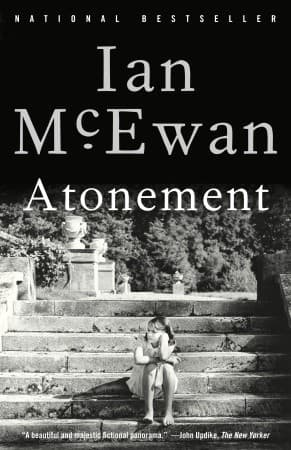
- Atonement
Ian McEwan
4.4 (70) average on GoodreadsFeatures intricate narrative structure, literary prose, and exploration of time and memory.
- Life of Pi
Yann Martel
3.9 (1.3M) average on GoodreadsFantasyLiterary fiction with philosophical undertones and a focus on inner lives and meaning.
- The Old Man and the Sea
Ernest Hemingway
3.8 (831k) average on GoodreadsLiterary FictionA Cuban fisherman's long struggle with a giant marlin becomes a story of endurance and dignity, now retold for young adults with illustrations, phonetic guides, and writing prompts in Traditional Chinese.
- One Hundred Years of Solitude
Gabriel García Márquez
4.1 (753k) average on GoodreadsLiterary FictionThrough the multi-generational story of the Buendía family, a mythical town deals with the repeating patterns of time, love, and solitude, as the extraordinary mixes with the ordinary.
- The Goldfinch
Donna Tartt
3.9 (720k) average on GoodreadsLiterary FictionHaunted by a tragic explosion and clutching a stolen Dutch masterpiece, a young orphan navigates the opulent drawing rooms of New York and the gritty underbelly of the art world, desperately seeking connection and redemption amidst a life spiraling into crime and obsession.
- Little Fires Everywhere
Celeste Ng
4.1 (713k) average on GoodreadsLiterary FictionIn Shaker Heights, an artist and her daughter move in, and their free-spirited lives clash with a rule-bound matriarch, revealing hidden conflicts beneath a perfect surface.




Enjoyed the summary?
A summary gives you the shape of the book. The book itself has the detail, the examples and the voice.
Find The Hours on AmazonAs an Amazon Associate, BookBrief earns from qualifying purchases. How we're funded