
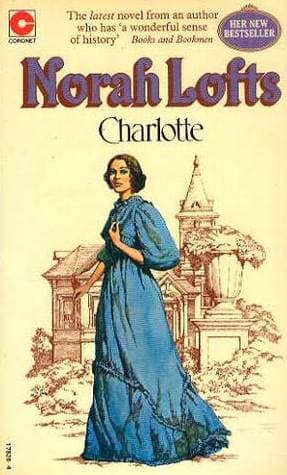
Synopsis
Covers the whole plot, including the ending.
- Difficulty
- Medium
- Pacing
- Moderate
- Mood
- Atmospheric, Suspenseful, Melancholy, Mysterious
- Read it if
- You enjoy gothic-tinged historical mysteries with strong female characters and a focus on psychological suspense and hidden secrets.
- Skip it if
- You prefer fast-paced thrillers or stories with clear-cut heroes and villains from the start.
Charlotte Plot Summary
Covers the whole plot, including the ending.
The Death of John Vincent and Charlotte's Flight
The novel opens in Charlotte's oppressive Cornwall home, ruled by her stern father and the presence of her sickly stepbrother, John Vincent. Charlotte wants freedom. John Vincent, a delicate child, dies suddenly. While illness is the official cause, whispers start in the community, subtly blaming Charlotte. Her father's coldness and others' talk make her situation unbearable. Fearing accusation and desperate to escape the stifling atmosphere and her own mixed feelings of guilt, Charlotte decides to flee. She leaves her past and the questions about John Vincent's death behind. She takes only a few things and little money, heading into the unknown English countryside.
Arrival at Mrs. Armitage's School
After days of hard travel and searching for work, Charlotte arrives at a remote girls' school run by Mrs. Armitage. The school is stark and unwelcoming. Mrs. Armitage is a strong, untrusting woman with a stern manner and a secret air. Desperate for work and a place to hide, Charlotte uses a false name, Miss Smith, and invents a past. Mrs. Armitage, though suspicious, needs a teacher and hires Charlotte. She makes it clear she expects hard work and obedience. There is an unspoken tension between the two women from the start. Mrs. Armitage seems to sense Charlotte's hidden past, a fact she plans to use.
Life at the School and a New Pupil
Charlotte, now Miss Smith, settles into the school's strict routine. The environment is plain, and the other teachers are quiet. She focuses on her duties. Her gentle nature soon makes her popular with some younger pupils, who lack kindness. A new pupil arrives, a delicate, sickly child named Lucy. Lucy reminds Charlotte of John Vincent, both in her physical weakness and her sweet, vulnerable way. Charlotte feels an immediate, strong affection for Lucy. She pours her maternal instincts and desire for peace into caring for the child. She becomes Lucy's main caregiver and protector. Their relationship quickly deepens beyond teacher and student, becoming almost obsessive for Charlotte.
Lucy's Declining Health and Mrs. Armitage's Watch
As weeks pass, Lucy's health declines. She has a cough, weakness, and a general frailty, like John Vincent before he died. Charlotte, always by Lucy's side, grows more anxious. She tries to nurse Lucy back to health, but it seems useless. Mrs. Armitage watches with calculating eyes. Her vague suspicions grow stronger as she sees Charlotte's intense attachment to Lucy and the child's decline. The headmistress's veiled comments and pointed questions about Charlotte's past create fear. Charlotte worries her secret will be exposed and that history is repeating itself.
Lucy's Death and Renewed Accusations
Despite Charlotte's desperate care, young Lucy's condition worsens, and she dies. The death shocks the small school and community. Mrs. Armitage uses the chance to openly accuse Charlotte of neglect, if not worse, suggesting a pattern of behavior. The similarities to John Vincent's death are too clear to ignore, for Mrs. Armitage and for Charlotte. Charlotte is plunged into guilt and self-doubt. The local authorities are informed, and an investigation begins. Terrified of a trial and convinced no one will believe her, Charlotte flees again, leaving the school and the dead child. She is now a fugitive, haunted by two deaths.
A New Identity and a New Beginning
After her second flight, Charlotte travels further into the English countryside. She adopts another new name, 'Mrs. Brown,' and creates a new, believable story. She finds work as a governess or companion to a kind, unsuspecting family in a remote village. This family, perhaps a widower with children or an elderly couple, offers her a safe place and a chance for a normal life. Charlotte, though always looking over her shoulder, tries to bury her past and focus on her new duties. She finds comfort in the children, if any, and the quiet pace of rural life, but the shadow of her past tragedies remains. This makes her wary of forming close relationships.
The Arrival of the Detective and the Unraveling Past
Charlotte's fragile peace breaks with the arrival of a detective, Mr. Thorne, who has been tracking her. He does not immediately say why he is there but starts to quietly investigate Charlotte's background and behavior. He asks questions of her employers and the villagers. Charlotte recognizes the danger and feels trapped. The detective's presence forces her to face the lies she has built her new life on. The story includes flashbacks or internal thoughts where Charlotte relives parts of her past, especially John Vincent's death and Lucy's. The detective's investigation makes Charlotte revisit her memories and understand the truth.
Confrontation and Confession
The detective, Mr. Thorne, eventually confronts Charlotte. He shows her the evidence he gathered, linking her to both John Vincent's and Lucy's deaths. Cornered and unable to run, Charlotte confesses her true identity and tells her story. She describes her childhood home's oppressive atmosphere, her father's coldness, and her intense, complicated feelings for John Vincent. She strongly denies any bad intentions but admits to certain actions or inactions that, looking back, might have contributed to the children's deaths. She struggles with her memory, unsure of the exact order of events or her precise role, questioning her own mind and blame.
The Truth About John Vincent's Death
At a key moment, Charlotte details John Vincent's death. She explains he was a very frail child. She also reveals that her father, in his stern way, denied the boy proper medical attention or, through neglect, contributed to his decline. Charlotte might have been present during a critical moment, or made a decision (or failed to make one) that, while not meant to harm, had fatal results for the delicate child. She expresses deep regret and the guilt she has carried. She also implicates her father, showing a household where neglect and a lack of care were common, leading to the tragedy. Her father's oppressive nature was a main reason for her initial escape.
The Truth About Lucy's Death and Mrs. Armitage's Role
Charlotte recounts the events at Mrs. Armitage's school. She explains her strong affection for Lucy and her desperate attempts to care for her. It comes out that Lucy, like John Vincent, had a severe, existing illness. Importantly, Charlotte exposes Mrs. Armitage's true nature: the headmistress deliberately withheld proper medical care for Lucy, perhaps to save money, or even to create a situation where she could blackmail or control Charlotte. Mrs. Armitage recognized Charlotte's weakness and used Lucy's illness as leverage. She deliberately created an environment that led to the child's death and then blamed Charlotte. Charlotte was an easy scapegoat, and Mrs. Armitage's 'suspicions' were planned manipulations.
Redemption and Resolution
With both stories fully revealed, the detective, Mr. Thorne, understands the full, tragic truth. He sees that Charlotte, while perhaps showing poor judgment or intense emotion, was not a malicious murderer. The systemic neglect in her father's house and Mrs. Armitage's deliberate actions were the real causes. Charlotte's name is cleared of the most serious accusations. While she will always bear the pain of her experiences and the guilt of the children's deaths, she is no longer a fugitive. The resolution brings a sense of release and the chance for a future where she can live without constant fear, though deeply marked by the past. The novel ends with Charlotte finding a fragile but real sense of peace and a path to rebuilding her life, no longer defined by running or false accusations.
Charlotte Characters
Charlotte
Protagonist
A young woman haunted by two mysterious deaths, constantly fleeing her past.
Charlotte is a complex and deeply troubled young woman, initially introduced as a sensitive and somewhat naive individual trapped in an oppressive household. She possesses a strong yearning for independence and kindness, which often manifests as an intense, almost obsessive, affection for vulnerable children. Her actions are driven by a mix of fear, guilt, and a profound desire to protect, yet her own insecurities and past traumas lead her to make impulsive decisions. She struggles with self-doubt, constantly questioning her own memories and culpability in the children's deaths. Her journey is one of self-discovery and a painful search for truth amidst a fog of suspicion and manipulation.
Relationships: John Vincent (stepbrother, object of intense, complicated affection); Mrs. Armitage (employer, manipulator, accuser); Lucy (pupil, object of intense, protective affection, tragically dies); Mr. Thorne (detective, pursuer, ultimately her confidante and exonerator)
John Vincent
Supporting/Catalyst
Charlotte's frail stepbrother whose death triggers her initial flight.
John Vincent is Charlotte's sickly young stepbrother, a delicate and vulnerable child whose mysterious death serves as the catalyst for Charlotte's entire journey. He is primarily presented through Charlotte's memories and the lingering guilt she feels. His frailty and sweet nature evoke a strong, protective, and perhaps overly intense, response from Charlotte. His death is initially shrouded in ambiguity, making Charlotte question her own actions and complicity. He represents the first great tragedy in Charlotte's life and the initial source of her deep-seated fear and self-reproach, setting the pattern for future events.
Relationships: Charlotte (step-sister, caregiver, deeply affected by his death); Charlotte's Father (father, negligent towards his health)
Mrs. Armitage
Antagonist
The stern, manipulative headmistress who exploits Charlotte's past.
Mrs. Armitage is the formidable and calculating headmistress of the remote girls' school where Charlotte seeks refuge. She is a shrewd and untrusting woman, quick to spot Charlotte's vulnerability and hidden past. She is primarily driven by self-interest, whether it be financial gain or maintaining control over her small domain. She deliberately withholds proper care for Lucy and then manipulates the situation to frame Charlotte, using her 'suspicion' as a weapon. Her cold, unfeeling nature and her willingness to exploit others make her a significant antagonist, embodying the external forces that prey on Charlotte's anxieties.
Relationships: Charlotte (employer, accuser, manipulator); Lucy (pupil, victim of her neglect)
Lucy
Supporting/Catalyst
A frail pupil at the school whose death mirrors John Vincent's, deepening Charlotte's despair.
Lucy is a delicate and sickly pupil at Mrs. Armitage's school, whose appearance and health immediately remind Charlotte of John Vincent. She becomes the object of Charlotte's intense affection and protective instincts, serving as a conduit for Charlotte's unresolved guilt and her desperate need to atone. Lucy's declining health and eventual death plunge Charlotte into a second wave of despair and accusations, propelling the narrative forward. Her vulnerability highlights Charlotte's compassion but also her recurring tragedy, until the truth of Mrs. Armitage's neglect is uncovered.
Relationships: Charlotte (pupil, object of intense care and affection); Mrs. Armitage (headmistress, negligent towards her health)
Mr. Thorne
Supporting
The persistent detective who uncovers the truth behind Charlotte's past.
Mr. Thorne is the methodical and astute detective tasked with tracking down Charlotte. Initially, he represents the relentless pursuit of justice and the threat of exposure for Charlotte. However, as he meticulously gathers evidence and listens to Charlotte's fragmented confessions, he evolves into a figure of understanding and ultimately, a facilitator of truth. He is patient and observant, piecing together the complex narrative of Charlotte's life and the two mysterious deaths. He serves as an external force that ultimately helps Charlotte confront her past and achieve a measure of redemption, becoming her unlikely ally.
Relationships: Charlotte (pursuer, investigator, ultimately her confidante)
Charlotte's Father
Supporting/Antagonist (initial)
Charlotte's cold and oppressive father whose neglect contributes to John Vincent's death.
Charlotte's father is a stern, unyielding, and emotionally distant man who presides over an oppressive household. His coldness and lack of compassion are significant factors in Charlotte's initial unhappiness and her desire to escape. He is implicated in John Vincent's death through his neglect and refusal to provide adequate care for his sickly son. He represents the rigid, unforgiving societal expectations and familial pressures that Charlotte seeks to escape, and his actions set the stage for her lifelong burden of guilt and flight. He is a symbol of the suffocating environment from which Charlotte desperately longs to break free.
Relationships: Charlotte (father, source of oppression and emotional neglect); John Vincent (father, negligent towards his health)
Charlotte Themes
Guilt and Self-Doubt
Guilt and self-doubt affect Charlotte throughout her journey. From John Vincent's death, she feels a vague sense of blame, unsure if she is a 'murderer.' This inner struggle grows worse with outside accusations and Lucy's death, which mirrors the first. Charlotte's inability to trust her memories and her constant questioning of her intentions drive her to flee and cause her deep distress. The book shows how guilt, even unproven, can shape a person's identity and actions, forcing them into a cycle of fear and avoidance.
“In darker moments, even Charlotte herself cannot be sure.”
Identity and Reinvention
Charlotte's repeated flights mean she must shed old identities and create new ones. She uses different names and invents new pasts, trying to erase her history and escape its results. This theme explores how fragile identity is when faced with trauma and society's judgment. Each new persona ('Miss Smith,' 'Mrs. Brown') is an attempt to find safety and a fresh start, but the past always catches up. The novel suggests that true identity cannot be made up. It must be faced and understood, no matter what names one uses. Her journey is ultimately about reclaiming her true self by confronting the truth.
“She fled deep into the countryside and there taught at a school run by the untrusting and untrustworthy Mrs Armitage, who was prepared to keep quiet about Charlotte's past - but only up to a point.”
Oppression and Freedom
Charlotte's first flight is a desperate attempt to get away from her father's oppressive home, marked by his emotional coldness and John Vincent's death. This wish for freedom appears throughout the novel, as she constantly tries to escape her past and the accusations that follow her. However, true freedom is hard to find as her inner guilt and external pursuers keep her tied down. The book examines different kinds of oppression – from family, society, and self – and Charlotte's struggle to break free. It shows that freedom is not just physical escape but also psychological release from one's own problems.
“She fled deep into the countryside and there taught at a school run by the untrusting and untrustworthy Mrs Armitage, who was prepared to keep quiet about Charlotte's past - but only up to a point.”
The Nature of Truth and Memory
A central theme is how hard it is to know the truth, especially when seen through memory and emotion. Charlotte's memory of events, particularly John Vincent's death, is broken and unclear, clouded by guilt and trauma. The novel constantly asks what 'really' happened. It suggests that truth is often personal and can be hidden by bias, fear, and others' manipulations (like Mrs. Armitage). The detective, Mr. Thorne, tries to put together a clear story. Still, the book emphasizes how hard it is to be absolutely certain, especially when relying on a main character's unreliable memory.
“Had Charlotte been responsible for the death of the little pupil she loved? And has that crime been repeated? In darker moments, even Charlotte herself cannot be sure.”
Societal Judgment and Reputation
The novel shows the strong and often damaging power of societal judgment and reputation in 19th-century England. The first whispers and blame after John Vincent's death are enough to make Charlotte leave home, even without solid proof. Her later flights come from fear of public accusation and the lasting stain on her character. Mrs. Armitage effectively uses Charlotte's vulnerable reputation to manipulate and accuse her. The story highlights how easily a woman's reputation could be ruined and how hard it was to get it back, forcing Charlotte into a life of hiding and false identities.
“Strangers pried, asked too many questions and pointed accusing fingers at Charlotte - herself eager to escape from the oppressive atmosphere of her father's home.”
Plot Devices & Literary Techniques
Unreliable Narrator
Charlotte's subjective and fragmented memory of events.
The narrative relies heavily on Charlotte's perspective, but her memories of the crucial events surrounding John Vincent's and Lucy's deaths are often hazy, contradictory, and deeply colored by her guilt and trauma. This device keeps the reader in suspense, mirroring Charlotte's own self-doubt and making it difficult to discern the objective truth until the final revelations. It forces the reader to question Charlotte's culpability and intentions, creating a pervasive atmosphere of psychological suspense and moral ambiguity. The 'unreliable narrator' emphasizes the subjective nature of memory under duress.
Parallel Events (Doubling)
The mirroring deaths of John Vincent and Lucy.
The most prominent plot device is the striking parallel between the death of Charlotte's stepbrother, John Vincent, and the later death of her pupil, Lucy. Both are frail, delicate children who become objects of Charlotte's intense affection, and both die under mysterious circumstances, with Charlotte becoming the primary suspect. This 'doubling' intensifies Charlotte's guilt and the reader's suspicion, suggesting a pattern of behavior or fate. It is crucial to the mystery, as the repetition forces both Charlotte and the detective to re-examine the past, ultimately revealing the manipulations and external factors that link the two tragedies.
The Fugitive Arc
Charlotte's repeated flights from justice and pursuit.
The entire plot is structured around Charlotte's repeated flights from her past and the authorities. Her initial escape from Cornwall, followed by her second flight from Mrs. Armitage's school, establishes a clear 'fugitive arc.' This device creates constant tension and a sense of impending discovery, as Charlotte attempts to build new lives under assumed identities, always looking over her shoulder. The pursuit by Mr. Thorne is the culmination of this arc, forcing Charlotte to finally stop running and confront the truth, providing a clear narrative drive towards resolution.
The Confessional Narrative
Charlotte's recounting of her story to the detective.
Much of the truth is revealed through Charlotte's extended confession to Mr. Thorne. This device allows for a gradual unveiling of information, often in a non-linear fashion, as Charlotte struggles to articulate her fragmented memories and emotions. The detective acts as a catalyst, prompting her to delve deeper into her past. The confessional format emphasizes Charlotte's internal struggle and her journey towards self-awareness, as the act of telling her story becomes part of her therapeutic process and the path to her ultimate exoneration, bringing clarity to the reader as well.
Charlotte Quotes
“A woman's heart is a deep ocean of secrets, and Charlotte's was no exception.”
“In the end, we are all prisoners of our own choices, bound by the chains we forge ourselves.”
“Love is not a gentle breeze but a tempest that uproots everything in its path.”
“History does not remember the quiet lives, only the loud deeds.”
“A house is not made of stone and timber, but of memories and dreams.”
“Sometimes the bravest thing a woman can do is to simply endure.”
“The past is a ghost that haunts the present, whispering secrets we dare not hear.”
“In a world ruled by men, a woman's voice is her most dangerous weapon.”
“We are all actors on the stage of life, playing parts we did not choose.”
“The heart has its own reasons, which reason does not know.”
“A single moment can change the course of a lifetime, like a pebble thrown into a still pond.”
“To love is to risk everything, and yet, what is life without that risk?”
“The truest mirror is not glass, but the eyes of those who know us best.”
“In the silence between words, the soul speaks loudest.”
Quiz
10 questions on the plot and the characters. Each answer comes with a short explanation.
Question 1
What event triggers Charlotte's departure from her father's home?
- Her father's remarriage to a woman she dislikes
- The death of John Vincent and subsequent accusations against her
- A financial scandal that ruins her family's reputation
- Her engagement to a man her father disapproves of
Show answer
B. The death of John Vincent and subsequent accusations against her Charlotte flees after John Vincent's death, when strangers begin asking questions and pointing accusing fingers at her, undermining her family's respectability.
Question 2
Where does Charlotte find refuge after leaving home?
- A wealthy aunt's estate in London
- A school in the countryside run by Mrs. Armitage
- A convent where she becomes a nun
- A remote cottage owned by a sympathetic farmer
Show answer
B. A school in the countryside run by Mrs. Armitage Charlotte flees deep into the countryside and becomes a teacher at a school run by Mrs. Armitage, who offers her a hiding place.
Question 3
What is Mrs. Armitage's attitude toward Charlotte's past?
- She is completely trusting and never questions Charlotte
- She is untrusting and only keeps quiet about it up to a point
- She openly accuses Charlotte and threatens to expose her
- She helps Charlotte fabricate a new identity without reservations
Show answer
B. She is untrusting and only keeps quiet about it up to a point Mrs. Armitage is described as untrusting and untrustworthy, prepared to keep quiet about Charlotte's past but only up to a point, indicating conditional support.
Question 4
What central question arises when events are recreated in the story?
- Whether Charlotte's father was involved in John Vincent's death
- Whether Charlotte was responsible for the death of a little pupil she loved
- Whether Mrs. Armitage is secretly Charlotte's mother
- Whether John Vincent faked his own death to escape debt
Show answer
B. Whether Charlotte was responsible for the death of a little pupil she loved The book raises the question of whether Charlotte caused the death of a little pupil she loved, adding suspense and moral ambiguity to her character.
Question 5
How does Charlotte herself feel about the accusations against her?
- She is completely confident of her innocence at all times
- She is unsure and doubts herself in darker moments
- She admits guilt but claims it was an accident
- She blames others and refuses to reflect on her actions
Show answer
B. She is unsure and doubts herself in darker moments In darker moments, Charlotte cannot be sure if she was responsible, highlighting her internal conflict and the theme of uncertainty.
Question 6
What theme is emphasized by Charlotte's flight and the questions about her past?
- The joys of rural life versus urban corruption
- The struggle for women's education in the 19th century
- The fragility of respectability and the burden of secrets
- The inevitability of fate and predestination
Show answer
C. The fragility of respectability and the burden of secrets The book explores how outward respectability is easily undermined by secrets and accusations, forcing Charlotte to flee and live with hidden truths.
Question 7
Why might Charlotte be particularly vulnerable to accusations after John Vincent's death?
- She had a public argument with him shortly before he died
- She was eager to escape her oppressive home, making her seem suspicious
- She inherited a large sum of money from him
- She was the only witness to his death
Show answer
B. She was eager to escape her oppressive home, making her seem suspicious Charlotte's eagerness to escape her father's oppressive home could make her a target for suspicion, as it might be interpreted as guilt or a motive.
Question 8
What does the book suggest about the possibility of Charlotte repeating a crime?
- It is confirmed that she committed multiple murders
- It raises the question of whether a similar crime has been repeated
- It shows she is framed for crimes she did not commit
- It implies she is a serial killer with a pattern
Show answer
B. It raises the question of whether a similar crime has been repeated The book hints at the possibility that Charlotte might have repeated a crime, adding to the mystery and her own doubts, but does not confirm it outright.
Question 9
How does the setting of the countryside school contribute to the story's tension?
- It provides a peaceful escape where Charlotte's past is forgotten
- It isolates Charlotte but also traps her with Mrs. Armitage's conditional secrecy
- It symbolizes Charlotte's complete break from society and morality
- It serves as a backdrop for a romantic subplot that distracts from the mystery
Show answer
B. It isolates Charlotte but also traps her with Mrs. Armitage's conditional secrecy The remote school offers refuge but also creates a claustrophobic environment where Charlotte is dependent on Mrs. Armitage's unreliable silence, heightening suspense.
Question 10
What broader historical or social context might influence the characters' actions in 'Charlotte'?
- The Industrial Revolution's impact on rural communities
- Victorian-era emphasis on respectability and women's limited options
- The rise of detective fiction and public fascination with crime
- Political unrest and class struggles in 19th-century England
Show answer
B. Victorian-era emphasis on respectability and women's limited options As historical fiction set likely in the 19th century, the book reflects Victorian values where respectability is crucial and women like Charlotte have few escape routes, making her flight and secrecy plausible.
Charlotte FAQ
What is 'Charlotte' by Norah Lofts about?
'Charlotte' follows Charlotte, a young woman who flees her oppressive family home in Cornwall after the mysterious death of John Vincent, which draws suspicion toward her. She takes a teaching position at a rural school run by the manipulative Mrs. Armitage, but her past resurfaces when similar tragic events occur, forcing Charlotte to confront whether she was responsible for a pupil's death and if history is repeating itself.
Why should I read 'Charlotte'?
This historical fiction romance blends suspense and psychological depth, exploring themes of guilt, secrecy, and societal pressure in 19th-century England. With its atmospheric setting and unreliable narrator in Charlotte, it keeps readers questioning her innocence while delving into the constraints faced by women of the era.
What is the background/setting of 'Charlotte'?
Set in 19th-century Cornwall and the English countryside, the novel contrasts Charlotte's stifling, respectable family home with the isolated rural school where she seeks refuge. This historical backdrop highlights the rigid social norms and gossip-driven communities that fuel the plot's tension and Charlotte's desperation to escape.
What are the most memorable quotes from 'Charlotte'?
Key quotes include Charlotte's reflections on her guilt, such as 'In darker moments, even Charlotte herself cannot be sure,' and Mrs. Armitage's manipulative warning about keeping quiet 'only up to a point.' These lines underscore the novel's themes of uncertainty and moral ambiguity.
What writing style does Norah Lofts use in 'Charlotte'?
Lofts employs a descriptive, atmospheric prose style that immerses readers in the historical setting, with a focus on psychological introspection. The narrative shifts between third-person omniscient and Charlotte's inner turmoil, creating suspense through subtle hints and unreliable perspectives.
What minor details add significant meaning in 'Charlotte'?
Small details like the oppressive atmosphere of Charlotte's father's home and Mrs. Armitage's untrusting nature subtly reinforce themes of entrapment and suspicion. The recurring motif of 'questions' from strangers hints at the community's role in perpetuating Charlotte's guilt and isolation.
What are some subtle foreshadowing moments in 'Charlotte'?
Early mentions of Charlotte's eagerness to escape and Mrs. Armitage's conditional secrecy foreshadow the eventual unraveling of her past. The death of John Vincent is subtly linked to later events at the school, suggesting a pattern of tragedy that Charlotte might be repeating.
What unexpected character connections exist in 'Charlotte'?
Unexpected ties emerge between Charlotte's family in Cornwall and the rural community around Mrs. Armitage's school, where gossip and suspicion bridge the geographical divide. Mrs. Armitage's own hidden motives connect to broader societal pressures that entrap Charlotte.
What are unspoken character motivations in 'Charlotte'?
Charlotte's desire to escape is driven not just by suspicion over John Vincent's death but by a deeper need for autonomy in a restrictive society. Mrs. Armitage's willingness to hide Charlotte's past stems from her own self-interest and control over the school, rather than genuine compassion.
What psychological complexities do characters exhibit in 'Charlotte'?
Charlotte grapples with repressed guilt and self-doubt, making her an unreliable narrator who questions her own actions. Mrs. Armitage displays a manipulative psyche, using Charlotte's vulnerability to maintain power, while secondary characters like the accusing strangers reflect societal judgment and hypocrisy.
What are the major emotional turning points in 'Charlotte'?
Key emotional moments include Charlotte's flight from Cornwall, her realization that Mrs. Armitage's support is conditional, and the climax where similar deaths force her to confront her past. These turning points amplify her isolation and internal conflict over innocence versus guilt.
How do relationship dynamics evolve in 'Charlotte'?
Charlotte's relationship with Mrs. Armitage shifts from tentative dependence to distrust as secrets are leveraged. Her interactions with the community transform from hope for a fresh start to renewed alienation, mirroring her earlier experiences in Cornwall and deepening the novel's exploration of betrayal.
Which parts of 'Charlotte' remain ambiguous or open-ended?
The novel leaves ambiguous whether Charlotte is truly responsible for the deaths of John Vincent or the pupil, and if the events are coincidental or a repeated crime. This uncertainty extends to her ultimate fate and the true motives of characters like Mrs. Armitage, inviting reader interpretation.
What are controversial scenes or decisions in 'Charlotte'?
Controversial elements include Charlotte's decision to flee rather than confront accusations, which some might see as cowardice, and Mrs. Armitage's exploitation of her past. The portrayal of Charlotte's potential guilt without clear resolution sparks debate over morality and justice in the historical context.
'Charlotte' ending explained: how it ends & what it means
The ending sees Charlotte facing the recreation of tragic events, with lingering questions about her culpability. It suggests that societal pressure and personal doubt may trap her in a cycle of guilt, whether innocent or not, highlighting themes of fate and the inescapability of one's past in a judgmental world.
About the author
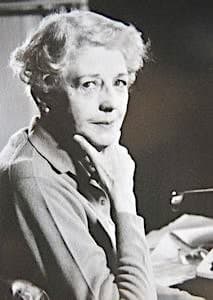
Norah Lofts was a British author known for her historical fiction. Among her notable works are "The Concubine," which explores themes of love and power in a historical context, and "Charlotte," a novel that delves into personal and societal struggles. Her writing often reflects a deep understanding of character and setting.
Similar books
- Rebecca
Daphne du Maurier
4.2 (450k) average on GoodreadsThrillerFeatures a young woman haunted by a past event, a gothic setting, and psychological suspense.
- Jane Eyre
Charlotte Brontë
4.1 (1.6M) average on GoodreadsHistorical FictionExplores themes of a young woman's struggle for independence, secrets, and a restrictive environment.
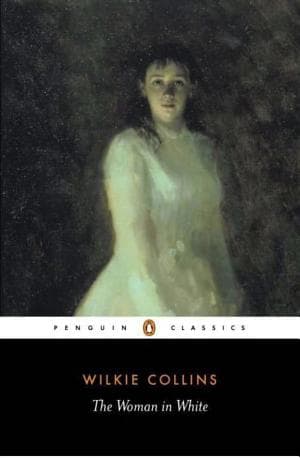
- The Woman in White
Wilkie Collins
4.0 (132k) average on GoodreadsHistorical FictionA classic Victorian sensation novel with a complex mystery, hidden identities, and a focus on female vulnerability.
- Fingersmith
Sarah Waters
4.0 (81k) average on GoodreadsHistorical FictionWaters' Fingersmith offers a more complex and subversive exploration of female identity, sexuality, and class within a similar Victorian setting. While Charlotte focuses on conventional romance, Fingersmith deconstructs it, providing deeper psychological insights and challenging societal norms more directly than Lofts' work.
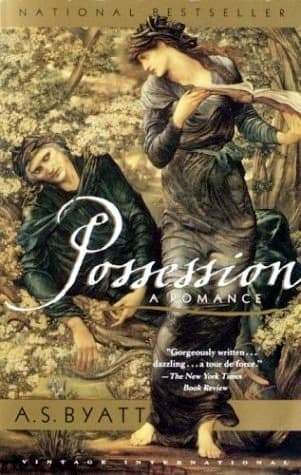
- Possession
A.S. Byatt
4.3 (13k) average on GoodreadsRomanceByatt's Possession intertwines a historical love story with an academic mystery, offering layers of intellectual depth and literary critique that are largely absent in Charlotte. While both feature historical romance, Byatt's novel engages with literary theory and Victorian poetry, providing a richer, more scholarly experience compared to Lofts' more straightforward narrative.
- To Kill a Mockingbird
Harper Lee
4.3 (4.5M) average on GoodreadsHistorical FictionIn the 1930s Jim Crow South, Harper Lee writes about racial injustice, moral growth, and the quiet courage of a lawyer father, Atticus Finch, as seen through his young daughter's eyes.




Enjoyed the summary?
A summary gives you the shape of the book. The book itself has the detail, the examples and the voice.
Find Charlotte on AmazonAs an Amazon Associate, BookBrief earns from qualifying purchases. How we're funded