

Synopsis
Covers the whole plot, including the ending.
- Difficulty
- Medium
- Pacing
- Moderate
- Mood
- Darkly humorous, Satirical, Disturbing, Nihilistic
- Read it if
- You enjoy dark humor, social satire, transgressive fiction, and unreliable narrators. Perfect for fans of Palahniuk's signature style.
- Skip it if
- You are easily offended by graphic content, sexual themes, or nihilistic perspectives. Not for readers seeking heartwarming or straightforward plots.
Choke Plot Summary
Covers the whole plot, including the ending.
The Choking Scam Begins
Victor Mancini, a medical-school dropout working at the colonial theme park 'Amusement,' regularly performs a scam to pay for his mother, Ida's, expensive care at the Fentress facility. He dines at upscale restaurants, intentionally chokes on food, and is 'saved' by a concerned patron. These 'saviors,' feeling a connection, often send him money or become long-term benefactors. Victor believes he offers them a moment of heroism. His life outside the scam involves attending sex addiction meetings to meet women and visiting his increasingly senile mother, who often confuses him with historical figures or past lovers.
Amusement Park Life and Childhood Flashbacks
Victor's job at 'Amusement' involves reenacting historical scenes. The park itself is a decaying, anachronistic place, mirroring Victor's life. While working, Victor often has flashbacks to his childhood. These memories show his mother, Ida, as a nomadic, free-spirited, and often neglectful parent who kidnapped him from his father at a young age. Ida moved them constantly, homeschooling Victor with unconventional methods and exposing him to a chaotic life, which shaped his adult personality and his need for affection, even if he seeks it through manipulation.
Meeting Dr. Paige Marshall
During a visit to the Fentress care facility, Victor meets Dr. Paige Marshall, an eccentric and beautiful doctor who claims to be studying his mother's rare medical condition. Paige is fascinated by Ida's mental state and her bizarre, often contradictory, statements. Victor is attracted to Paige, seeing her as a potential romantic interest, despite her professional role. Their interactions have a strange tension, as Paige seems to know more about Ida's past than Victor does, hinting at secrets and a deeper connection to the Mancini family. This encounter introduces a new layer of mystery and potential truth into Victor's carefully constructed world.
Ida's Revelation and the Messiah Myth
Ida's dementia-fueled ramblings increasingly focus on a prophecy about Victor. She claims he is the reincarnation of Jesus Christ, destined to perform miracles and save humanity. She believes she is the Virgin Mary, having conceived him immaculately. These statements, initially dismissed by Victor as ravings, begin to take on a strange weight, especially as Dr. Paige Marshall shows an unusual interest in them. Ida's stories are fragmented, mixing biblical allusions with her own tumultuous past, creating a confusing but compelling narrative that Victor struggles to reconcile with his mundane, cynical life. The 'Messiah' myth becomes a central, unsettling element of the plot.
The Search for Victor's Father
Prompted by Ida's fragmented memories and Dr. Marshall's encouragement, Victor searches for his biological father, whom Ida claims he never met. Ida's stories suggest his father was a charming, manipulative man named 'Lord High Everything Else,' a character from her past who abandoned her. Paige, with her medical knowledge and access to records, assists Victor, providing him with clues. This search is about uncovering Victor's true origins and understanding the missing piece of his identity, which has been obscured by Ida's fabricated narratives and his own complicated childhood. The journey is more complex than anticipated.
The Truth About Ida's Illness
Dr. Paige Marshall eventually tells Victor that Ida's condition is not simply dementia. She explains that Ida has been voluntarily faking her illness for years, using self-deception and manipulation. Paige confesses that she is not a doctor but a researcher fascinated by Ida's psychological condition, which she calls 'Repressed Memory Syndrome with Delusional Fabrication.' Paige admits she has been observing Ida for a long time, even before Victor brought her to Fentress. This revelation shatters Victor's understanding of his mother and his entire past, exposing the depth of Ida's lying and how much Victor has been a pawn in her schemes.
The Messiah Conspiracy Deepens
Following the revelation of Ida's fabricated illness, Paige clarifies the true nature of the Messiah prophecy. She explains that Ida, driven by a desire for control and meaning, specifically engineered Victor's upbringing to fulfill a self-created messianic narrative. Ida's goal was to raise a 'chosen one' who would bring her fame. Paige reveals that Ida meticulously documented her plans, including specific instructions for Victor's 'miracles' and teachings. Victor is horrified to learn that his entire life, including his perceived traumas and personality traits, were all orchestrated by his mother, making him a living performance piece designed for her gratification.
Victor's Existential Crisis and Reckoning
The full scope of Ida's manipulation sends Victor into an existential crisis. He realizes that his identity, memories, and personality have been constructed by his mother. His choking scam, his sexual compulsions, and his entire worldview are revealed to be direct products of Ida's twisted psychological experiment. Victor confronts Ida, but she remains evasive, clinging to her delusions or feigning ignorance. This confrontation forces Victor to question everything he thought he knew about himself and his relationship with his mother, leading him to a desperate search for genuine selfhood outside of her control.
The Fentress Fire and Ida's Escape
A fire breaks out at the Fentress care facility, giving Ida an opportunity to escape. Victor is unsure if the fire was accidental or orchestrated by Ida herself, adding another layer of mystery to her manipulative nature. Her disappearance leaves Victor in limbo, as he no longer has to pay for her care, but also loses the physical presence of the woman who defined his life. This event, while seemingly a release, only deepens Victor's emotional turmoil. He now faces the daunting task of forging an identity independent of his mother's influence, without the option of direct confrontation or resolution.
Victor Embraces His 'Messiah' Role
After Ida's escape and the full revelation of her manipulation, Victor, surprisingly, begins to lean into the 'Messiah' role his mother created for him. Instead of rejecting it, he starts to see its potential for control and influence. He uses the stories and techniques Ida taught him, combined with his own manipulative instincts, to gain followers and benefactors. This embrace is not born of genuine belief, but rather a cynical acceptance of a convenient identity. Victor uses his fabricated history to attract people who are desperate for meaning, mirroring his earlier scam but on a grander, more spiritual scale. He becomes a reluctant, yet effective, cult leader.
Paige's Departure and Victor's New Path
Dr. Paige Marshall, having completed her research and perhaps disgusted by Victor's embrace of his 'Messiah' role, eventually leaves. Her departure means the end of Victor's last tether to normalcy and truth. With Paige gone, Victor is alone to navigate his new identity. He continues to attract followers, performing 'miracles' that are often just elaborate tricks or coincidences, but are interpreted as divine by his eager disciples. Victor's life transforms from a series of small, desperate scams into a larger, more organized deception, where he is the central figure, a false prophet in a world yearning for belief.
The Cycle Continues
In the end, Victor Mancini fully embodies the role his mother designed for him, becoming a manipulative figure who preys on the vulnerabilities of others, much like Ida did. He continues to attract followers, using his fabricated past and his mother's 'prophecy' to gain their devotion and financial support. The novel concludes with Victor having achieved a form of success and stability, but at the cost of genuine connection and self-discovery. He has become a mirror image of Ida, perpetuating a cycle of deception and control, never truly escaping the psychological cage she built for him, but rather choosing to reign within it.
Principal Figures
Victor Mancini
Protagonist
A medical-school dropout and sex addict who runs a choking scam.
Victor is a deeply conflicted and manipulative individual, driven by a desperate need for connection and a distorted sense of responsibility towards his mother, Ida. He works at a colonial theme park and funds Ida's care through an elaborate choking scam, where he pretends to nearly die in restaurants to elicit sympathy and financial support from his 'saviors.' He is a sex addict who frequents support groups, not for recovery, but to pick up women. His life is a constant performance, a coping mechanism developed in response to his chaotic and manipulative upbringing.
Relationships: Ida Mancini (Son-mother; deeply complex, manipulative, and co-dependent.); Dr. Paige Marshall (Romantic interest and researcher who uncovers Victor's past.)
Ida Mancini
Antagonist/Supporting
Victor's manipulative mother, a former con artist who feigns dementia.
Ida is Victor's mother, a highly intelligent and profoundly manipulative woman who feigns advanced dementia at the Fentress care facility. In her youth, she was a nomadic, free-spirited, and often neglectful parent who kidnapped Victor from his father. She meticulously documented her plans to raise Victor as a messianic figure, believing he would bring her fame and significance. Her 'illness' is a carefully constructed performance designed to control Victor and maintain her fabricated reality. She represents the source of Victor's psychological trauma and his inherited manipulative tendencies.
Relationships: Victor Mancini (Mother-son; deeply manipulative, controlling, and psychologically damaging.); Dr. Paige Marshall (Subject of Paige's research; a figure of fascination and study.)
Dr. Paige Marshall
Supporting
A mysterious researcher who uncovers the truth about Ida and Victor.
Paige initially presents herself as a doctor studying Ida's rare condition at Fentress, but is later revealed to be a researcher fascinated by Ida's unique psychological state, which she terms 'Repressed Memory Syndrome with Delusional Fabrication.' She is intelligent, observant, and somewhat eccentric. Paige is instrumental in helping Victor uncover the truth about his mother's manipulations and his own past. She develops a complex relationship with Victor, oscillating between professional interest and romantic attraction, ultimately serving as a catalyst for his self-discovery.
Relationships: Victor Mancini (Romantic interest and intellectual collaborator in uncovering his past.); Ida Mancini (Research subject; deeply fascinated by Ida's psychological condition.)
Denny
Supporting
Victor's friend and fellow employee at 'Amusement'.
Denny is Victor's best friend and co-worker at the colonial theme park 'Amusement.' He is a loyal but somewhat dim-witted character who often serves as a sounding board for Victor's schemes and anxieties. Denny is a simple, earnest individual who believes in the historical accuracy of the theme park, despite its obvious flaws. His unquestioning nature provides a stark contrast to Victor's cynicism and manipulation, highlighting Victor's isolation and his inability to form genuine connections.
Relationships: Victor Mancini (Friend and co-worker; a source of stability and occasional comic relief.)
The Saviors
Mentioned/Supporting
Wealthy patrons who 'save' Victor during his choking scam.
The saviors are the unwitting benefactors of Victor's choking scam. They are wealthy, often lonely, and emotionally vulnerable individuals who experience a profound sense of purpose and connection after 'saving' Victor. They send him money, gifts, and letters, believing they have a special bond with him. They represent society's yearning for heroism and meaning, which Victor cynically exploits. They are a collective character, illustrating the human need to feel significant and the ease with which that need can be manipulated.
Relationships: Victor Mancini (Benefactor-beneficiary; a one-sided relationship based on deception and perceived heroism.)
The Sex Addicts
Mentioned/Supporting
Members of Victor's sex addiction support group.
These are the various individuals Victor encounters at his sex addiction support group meetings. Victor attends not for recovery, but to pick up women, finding them vulnerable and easily manipulated. The diverse array of addicts, each with their own bizarre compulsions and tragic stories, provides a backdrop for Victor's own struggles with intimacy and control. They highlight the pervasive nature of addiction and the complex, often contradictory, ways people seek connection and escape.
Relationships: Victor Mancini (Fellow attendee; Victor uses them for his own sexual gratification.)
Themes & Insights
Identity and Self-Deception
The novel explores how identity is constructed, often through fabrication and self-deception. Victor's entire life is a performance, from his choking scam to his interactions at sex addiction meetings. His mother, Ida, is the ultimate deceiver, crafting Victor's identity from birth with her 'Messiah' prophecy. This theme appears in Victor's constant questioning of who he truly is once he learns his past was a lie, and his eventual choice to embrace a manufactured identity. The colonial theme park 'Amusement' further symbolizes this, presenting a fabricated history as reality.
“You are a living, breathing testament to my genius. Every quirk, every neurosis, every single thing about you was designed.”
Manipulation and Control
Manipulation is central to the narrative, showing how individuals exert power over others for personal gain or a twisted sense of purpose. Ida manipulates Victor throughout his life, fabricating his past and destiny. Victor, in turn, manipulates his 'saviors' and the women at sex addiction meetings. The choking scam is a direct example of this, where Victor exploits the human desire to be a hero. This theme highlights how control can destroy genuine connection, creating a world where everyone is a player in someone else's game.
“When you save someone's life, you're bound to them forever. You're their hero. And heroes get paid.”
The Search for Meaning and Belonging
Despite the cynicism, the characters in 'Choke' are all, in their own way, searching for meaning and belonging. Victor desperately seeks connection, even if through manipulation. His 'saviors' find meaning in their heroic acts. Ida herself, in her twisted way, seeks significance by creating a 'Messiah.' This theme is highlighted by the loneliness felt by many characters, who grasp onto fabricated narratives or destructive relationships in their quest for purpose. The novel suggests that in a chaotic world, people will often create their own meaning, however false.
“Everyone wants to be a hero. Everyone wants to be saved.”
The Nature of Addiction
Addiction is explored in its various forms, extending beyond substance abuse to include sex addiction, the addiction to being a 'savior,' and even Ida's addiction to control. Victor's sex addiction is a prominent example, serving as a substitute for genuine intimacy. The 'saviors' become addicted to the feeling of heroism and their connection to Victor. The novel portrays addiction as a compulsive behavior driven by underlying psychological needs, often leading to self-destructive patterns and an inability to form healthy relationships. It highlights the cyclical nature of these dependencies.
“You can be addicted to almost anything, if you try hard enough.”
Family Dysfunction and Trauma
The novel examines the impact of a dysfunctional family on an individual's development. Victor's chaotic childhood, marked by his mother's neglect, manipulation, and constant relocation, directly shapes his adult neuroses and manipulative tendencies. Ida's own trauma and mental instability are passed down, creating a cycle of psychological damage. The revelations about Ida's true nature expose the extent of the familial trauma, forcing Victor to confront the fact that his entire identity is a product of his upbringing. This theme highlights the lasting and often destructive legacy of family dynamics.
“My mother was a genius, a monster, and the only person who ever truly loved me, in her own twisted way.”
Plot Devices & Literary Techniques
The Choking Scam
Victor's method of eliciting financial support from strangers.
The choking scam is the primary plot device that drives Victor's immediate actions and provides the initial hook for the reader. It serves multiple functions: it funds Ida's care, highlights Victor's manipulative nature, and demonstrates the human desire to be a hero. The scam is a metaphor for Victor's life, where he constantly performs and relies on others' emotional vulnerabilities. It also introduces the 'saviors,' a collective character that illustrates broader societal themes of loneliness and the search for meaning.
Ida's Dementia/Feigned Illness
Victor's mother's apparent mental decline, which is later revealed to be a deception.
Ida's feigned dementia is a crucial plot device that establishes the initial conflict (Victor's need for money for her care) and creates a powerful sense of mystery. It allows Ida to deliver cryptic pronouncements about Victor's past and destiny, slowly building the 'Messiah' narrative without immediate suspicion. The eventual revelation that her illness is a fabrication completely upends the narrative, exposing the depth of her manipulation and forcing Victor to re-evaluate his entire life, serving as a major turning point in the plot.
Childhood Flashbacks
Victor's fragmented memories of his unconventional upbringing.
The frequent childhood flashbacks serve as a non-linear narrative device, gradually revealing the chaotic and manipulative nature of Victor's upbringing under Ida. These memories provide context for Victor's adult neuroses, his sex addiction, and his inability to form genuine connections. They build suspense by slowly unveiling Ida's true character and her long-term plan for Victor, creating a mosaic of his past that eventually clicks into place with the larger revelations. They are essential for understanding Victor's psychological state.
The Messiah Prophecy
Ida's belief that Victor is the reincarnation of Jesus Christ.
The Messiah prophecy is a central plot device that initially appears as a delusion of Ida's dementia but is later revealed to be a carefully constructed narrative by her. It provides a framework for Ida's manipulative parenting and Victor's eventual, reluctant embrace of the role. This prophecy raises questions about faith, belief, and the human need for a savior. It ultimately becomes a cynical tool for Victor to gain control and meaning in his life, mirroring his mother's original intentions but on his own terms.
Choke Quotes
“Every so often, I'd go to the library and take out a stack of books and bring them home and pore over them. I was looking for the 'secret.' The thing that would make everything make sense. The thing that would make me happy.”
“The trick to not feeling cheated by the world is to believe that you're being cheated by the world. Because then you're always expecting it.”
“We're a nation of strangers. We all live in a tiny little apartment inside our own heads.”
“You can only get so much from a book. You can't get a hug. You can't get a kiss. You can't get a shoulder to cry on.”
“You're not a beautiful and unique snowflake. You're the same decaying organic matter as everyone else, and we are all part of the same compost pile.”
“If you don't know what you want, you end up with a lot of stuff you don't.”
“I used to think my life was a tragedy, but now I realize it's a comedy.”
“The greatest prison people live in is the fear of what other people think.”
“We all have a purpose. We all have a reason for being here. Some of us just don't know what it is yet.”
“What do you do when the person who is supposed to love you the most is the person who hurts you the most?”
“You can't really know what you want until you know what you don't want.”
“Maybe we all have a little bit of the 'choke' in us. The part that wants to be saved, even if we don't know why.”
“It's only when we're at our most vulnerable that we truly connect with others.”
“I'm not a hero. I'm just a guy who chokes on food in restaurants to get attention.”
Quiz
10 questions on the plot and the characters. Each answer comes with a short explanation.
Question 1
What is Victor Mancini's primary motivation for faking choking incidents in upscale restaurants?
- To gain notoriety and fame.
- To pay for his own luxurious lifestyle.
- To cover the elder care costs for his mother.
- To research human psychology for a book.
Show answer
C. To cover the elder care costs for his mother. Victor's ingenious scam of faking choking is explicitly stated to be for the purpose of paying for his mother's elder care.
Question 2
What kind of workshops does Victor frequent when he's not executing his choking scam?
- Creative writing seminars.
- Sexual addiction recovery workshops.
- Financial planning classes.
- Volunteer charity events.
Show answer
B. Sexual addiction recovery workshops. The description clearly states Victor 'cruises sexual addiction recovery workshops for action.'
Question 3
What is Victor Mancini's profession, aside from his scamming activities?
- A chef in an upscale restaurant.
- A medical-school professor.
- An actor at a colonial theme park.
- A therapist for addiction recovery.
Show answer
C. An actor at a colonial theme park. Victor 'spends his days working at a colonial theme park,' which is his legitimate, though likely unfulfilling, job.
Question 4
Which of the following best describes Victor Mancini's relationship with his mother?
- He is estranged from her and rarely visits.
- He has a close, loving relationship with her, despite her condition.
- He visits his 'addled mom' to whom he feels a complex obligation.
- He resents her and avoids contact whenever possible.
Show answer
C. He visits his 'addled mom' to whom he feels a complex obligation. The text mentions he 'visits his addled mom,' indicating a regular, if perhaps complicated, interaction driven by obligation for her care.
Question 5
What is the core psychological concept behind Victor's choking scam?
- Exploiting people's desire for recognition.
- Leveraging the guilt and sense of responsibility in those who 'save' him.
- Appealing to people's general generosity towards strangers.
- Manipulating people through fear of legal repercussions.
Show answer
B. Leveraging the guilt and sense of responsibility in those who 'save' him. The description specifies that patrons 'feeling responsible for Victor’s life, go on to send checks to support him,' highlighting the exploitation of their sense of responsibility.
Question 6
How does the book characterize Victor Mancini in relation to contemporary society?
- As a hero for our times.
- As an antihero for our deranged times.
- As a typical, well-adjusted individual.
- As a victim of circumstance.
Show answer
B. As an antihero for our deranged times. The text explicitly states, 'Victor Mancini, a medical-school dropout, is an antihero for our deranged times.'
Question 7
What previous academic path did Victor Mancini abandon?
- Law school.
- Art school.
- Medical school.
- Business school.
Show answer
C. Medical school. Victor is identified as 'a medical-school dropout,' indicating his prior academic pursuit.
Question 8
What aspect of Chuck Palahniuk's writing style is highlighted by the description of 'Choke'?
- His ability to create heartwarming, inspirational stories.
- His use of traditional narrative structures and moralistic themes.
- His visionary perspective and satirical approach to contemporary issues.
- His focus on realistic portrayals of everyday life and relationships.
Show answer
C. His visionary perspective and satirical approach to contemporary issues. The text describes Palahniuk as 'the visionary we need and the satirist we deserve,' pointing to his unique and critical style.
Question 9
The description mentions Victor's mother is 'addled.' What does this imply about her condition?
- She is physically frail but mentally sharp.
- She suffers from a mental or cognitive impairment.
- She is emotionally unstable but otherwise healthy.
- She is perfectly healthy and well-adjusted.
Show answer
B. She suffers from a mental or cognitive impairment. 'Addled' typically means confused or muddled, often due to age or illness, strongly implying a cognitive impairment.
Question 10
Based on the provided text, what overarching theme is suggested by Victor's actions and the author's characterization?
- The triumph of the human spirit against adversity.
- A critique of societal norms and the desperate measures people take within a 'deranged' modern world.
- The importance of family bonds and unconditional love.
- The pursuit of personal happiness through conventional means.
Show answer
B. A critique of societal norms and the desperate measures people take within a 'deranged' modern world. Victor's 'ingenious scam' for elder care, his antihero status in 'deranged times,' and Palahniuk being a 'satirist' all point to a thematic exploration and critique of societal dysfunction and individual responses to it.
Choke FAQ
What is Victor Mancini's primary motivation for faking choking incidents?
Victor's main motivation is to financially support his mother, Ida Mancini, who is suffering from dementia and requires expensive care in a nursing home. His elaborate scam of pretending to choke on food allows him to guilt his 'saviors' into sending him money, which he then uses for her medical bills and his own subsistence.
Besides faking choking, what is Victor's other significant source of income or activity?
Victor works at a colonial theme park called D-Block, where he portrays an indentured servant named Thomas. This job provides him with a meager but consistent wage, and also allows him an outlet for his historical fascinations, though he often breaks character and discusses modern topics with patrons.
Who is Dr. Paige Marshall and what is her role in Victor's life?
Dr. Paige Marshall is a doctor who Victor meets and develops a relationship with, initially believing she is the reincarnation of his mother's childhood friend. She becomes a significant romantic interest and confidante, despite her unconventional theories about ancient artifacts and the potential for human cloning through relics.
What is the significance of the 'relics' Victor's mother, Ida, collects?
Ida Mancini collects various seemingly random objects, believing them to be 'relics' that once belonged to Jesus Christ. She is convinced that if enough of these relics are gathered, it could facilitate a new immaculate conception or even clone Jesus, a delusion that deeply influences Victor's upbringing and later interactions with Dr. Marshall.
How does Victor use sexual addiction recovery meetings?
Victor attends sexual addiction recovery meetings not for genuine recovery, but to find women to have casual sex with. He exploits the vulnerability and shared intimacy of these groups to identify potential partners, viewing them as a convenient hunting ground for his own sexual compulsions.
What is the true identity of Victor's biological father, as revealed by Ida?
Ida eventually reveals that Victor's biological father is not the man she told him about, but rather the 'savior' who rescued her from a choking incident. She claims Victor was conceived through an immaculate conception facilitated by this savior, tying into her belief system about relics and miraculous births.
What is the recurring motif of 'choking' beyond Victor's scam?
Beyond Victor's literal faked choking, the motif extends to characters being 'choked' by their past, their addictions, or societal expectations. Ida is choked by her dementia and delusions, Victor by his sexual compulsions and the burden of caring for his mother, and various characters by their inability to escape destructive patterns.
How does the colonial theme park setting subtly mirror Victor's personal life?
The colonial theme park, with its reenactments of indentured servitude and historical oppression, subtly mirrors Victor's own feelings of being enslaved by his past, his mother's illness, and his own compulsions. He is 'indentured' to his mother's care and his self-destructive behaviors, much like the characters he portrays.
What is the significance of the name 'Choke' for the novel?
The title 'Choke' refers not only to Victor's scam but also to the broader themes of suffocation, inability to speak or express oneself truly, and being overwhelmed by circumstances. Characters are often 'choking' on their secrets, their pasts, or their inability to connect authentically, leading to a sense of being trapped or stifled.
How does Victor's upbringing by Ida contribute to his adult psychological issues?
Ida's highly unconventional and often delusional parenting, particularly her obsession with relics and the immaculate conception of Victor, deeply warped his understanding of reality, sexuality, and relationships. This chaotic upbringing instilled in him a profound sense of confusion, detachment, and an inability to form healthy attachments, driving his compulsive behaviors.
Discuss Victor's 'savior complex' and how it manifests.
Victor both exploits and is a product of a 'savior complex.' He manipulates others into 'saving' him during his choking scams, but also carries the burden of feeling like he must 'save' his mother. This dynamic creates a twisted sense of self-worth and responsibility, where his identity is intertwined with being either saved or a perceived savior.
What role does denial play in Victor's psychological makeup?
Denial is a cornerstone of Victor's psychology. He denies the true nature of his sexual addiction, rationalizes his scams, and initially resists confronting the traumatic truths of his past and his mother's mental state. This denial allows him to maintain a distorted reality that protects him from overwhelming emotional pain.
How does Victor's detached narration style reflect his internal state?
Victor's often cynical, emotionally flat, and observational narration reflects his profound psychological detachment. This style allows him to distance himself from the often shocking and disturbing events of his life, functioning as a coping mechanism to avoid genuine emotional engagement and vulnerability.
Is Victor a truly redeemable character by the end of the novel?
The question of Victor's redeemability is debatable. While he gains some self-awareness and confronts certain truths about his past, his fundamental compulsions and manipulative tendencies remain largely unresolved. The ending offers a glimmer of hope through his relationship with Dr. Marshall, but his journey towards genuine redemption is far from complete, leaving it open to interpretation.
How does the novel satirize organized religion and faith?
The novel satirizes organized religion through Ida's extreme and delusional interpretation of faith, particularly her obsession with relics and the immaculate conception. It exaggerates the absurdity of blind faith and the potential for religious narratives to be twisted into personal delusions, highlighting the bizarre extremes people go to for meaning or salvation.
What is the significance of the ending where Victor finds a 'relic' in Dr. Marshall's possession?
The ending where Victor finds a 'relic' (a supposed piece of Jesus's foreskin) in Dr. Marshall's possession is highly ambiguous. It suggests that either Dr. Marshall is as delusional as Ida, or that Victor is perpetuating his mother's delusions through his own interpretation of events. It leaves the reader questioning the nature of truth and whether Victor has truly escaped his past or is simply continuing its cycle.
Does the novel offer a clear moral message, or is it more about social commentary?
The novel primarily functions as social commentary rather than offering a clear moral message. It skewers various aspects of contemporary society—addiction recovery culture, commercialized history, and dysfunctional family dynamics—without necessarily prescribing solutions. Its aim is more to provoke thought and discomfort about the absurdities and hypocrisies of modern life.
How does Palahniuk use humor in 'Choke' to address dark themes?
Palahniuk employs dark, cynical, and often absurd humor to tackle heavy themes like sexual addiction, mental illness, and existential despair. This humor acts as a coping mechanism for the characters and the reader, allowing for a degree of detachment that makes the uncomfortable truths more digestible, while also highlighting the inherent absurdity of human suffering and societal norms.
About the author
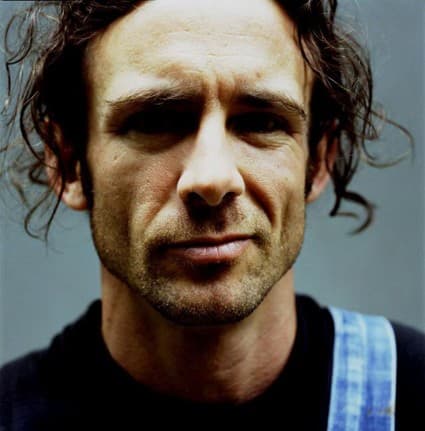
Chuck Palahniuk is a highly influential contemporary author, best known for his debut novel "Fight Club." His works, including "Haunted" and "Guts," are characterized by their transgressive themes, dark humor, and often shocking narratives. Palahniuk's distinctive style has earned him a significant cult following and cemented his reputation as a master of postmodern fiction.
Similar books
- Fight Club
Chuck Palahniuk
4.2 (499k) average on GoodreadsThrillerShares Palahniuk's distinct voice, satirical edge, themes of consumerism, and anti-establishment sentiment.
- American Psycho
Bret Easton Ellis
3.8 (242k) average on GoodreadsThrillerFeatures a morally ambiguous protagonist, explores themes of identity, social commentary, and a dark, often disturbing tone.
- Trainspotting
Irvine Welsh
4.1 (153k) average on GoodreadsThrillerExplores the lives of societal outcasts with raw, explicit language and a gritty, unvarnished look at human behavior.
- The Perks of Being a Wallflower
Stephen Chbosky
4.2 (1.3M) average on GoodreadsPsychologyThrough letters, a shy high school freshman learns to navigate first love, trauma, and self-discovery, stepping off the sidelines and into life.
- Eleanor Oliphant Is Completely Fine
Gail Honeyman
4.3 (708k) average on GoodreadsLiterary FictionA lonely woman's structured life changes when an IT guy and an elderly man help her learn to open her heart.
- One Flew Over the Cuckoo's Nest
Ken Kesey
4.2 (631k) average on GoodreadsPsychologyIn a mind-bending asylum, the boisterous Randle McMurphy wages a defiant war against the tyrannical Nurse Ratched, inspiring his fellow inmates, including the seemingly catatonic Chief Bromden, to reclaim their lost humanity.





Enjoyed the summary?
A summary gives you the shape of the book. The book itself has the detail, the examples and the voice.
Find Choke on AmazonAs an Amazon Associate, BookBrief earns from qualifying purchases. How we're funded