

Synopsis
Covers the whole plot, including the ending.
- Difficulty
- Medium
- Pacing
- Moderate
- Mood
- Melancholy, Reflective, Thought-provoking, Romantic
- Read it if
- You enjoy classic Bengali literature, intricate character studies, and explorations of societal norms and female agency in historical India.
- Skip it if
- You prefer fast-paced plots or straightforward romance without moral complexities and emotional ambiguity.
Chokher Bali Plot Summary
Covers the whole plot, including the ending.
Mahendra's Marriage and Binodini's Arrival
Mahendra, a young, educated man from a wealthy Kolkata family, initially does not want to marry, preferring to spend time with his mother, Rajlakshmi. However, he eventually gives in to family pressure and marries Asha, a naive, uneducated girl from the countryside. Their early days are filled with gentle, though somewhat shallow, affection. Soon after, Rajlakshmi, worried about Mahendra's complete focus on Asha and feeling ignored, arranges for Binodini, a beautiful, intelligent, and recently widowed young woman, to come live with them. Binodini, having a good education, quickly impresses everyone with her wit and charm, subtly changing the household's dynamics, especially the close bond between Mahendra and Asha.
Binodini's Growing Influence
Binodini, initially a companion for Rajlakshmi, soon becomes Asha's tutor and confidante. She teaches Asha to read and write, and helps her with her new life. Asha, innocent and trusting, grows very fond of Binodini, unaware of the subtle changes happening around her. Meanwhile, Mahendra, initially uninterested in Binodini, finds himself more and more drawn to her intelligence and sophisticated conversation, qualities his simple wife lacks. He begins spending more time with Binodini, having intellectual discussions that excite him, while Asha feels increasingly ignored and alone, though she struggles to express her unease.
Bihari's Observation and Warning
Bihari, Mahendra's best friend and a man with strong morals, often visits the household. He watches the growing closeness between Mahendra and Binodini with increasing concern. He sees Mahendra's growing obsession and Asha's quiet suffering. Bihari, who secretly has feelings for Binodini, tries to subtly warn Mahendra about his improper behavior, appealing to his sense of duty and loyalty to Asha. However, Mahendra, blinded by his growing obsession and his own intellectual pride, dismisses Bihari's concerns, seeing them as jealousy or being too cautious, further distancing his friend and widening the gap in his own household.
The Developing Love Triangle
Mahendra becomes completely obsessed with Binodini, giving her much attention and gifts, while Asha withdraws further, heartbroken and confused. Binodini, despite her growing feelings for Mahendra, also knows the moral issues and the pain she is causing Asha. Bihari, seeing the family turmoil, feels he must protect Asha and confront Mahendra, which leads to arguments and tension between the two friends. Binodini herself struggles with her conscience, torn between her desire for Mahendra's intellectual company and her awareness of their destructive path. The household is now fully consumed by the unspoken desires and resentments of the three main characters.
Binodini's Departure and Mahendra's Regret
Overwhelmed by the guilt of betraying Asha and the moral difficulties of her situation, Binodini decides to leave Mahendra's house. Her departure creates an emptiness in Mahendra's life, and he suddenly faces the hollowness of his actions. He realizes the extent of his foolishness and the pain he has caused Asha. Driven by a mix of remorse and continued obsession, Mahendra goes looking for Binodini, hoping to restart their connection, but also dealing with the results of his choices. Asha, meanwhile, is left alone to cope with the aftermath, her trust shattered and her spirit wounded.
The Pursuit and Bihari's Protection
Mahendra tracks Binodini to various places, trying to persuade her to return to him, often using manipulative arguments about their intellectual bond. Binodini, though still attracted to him, is wary of his changeability and the chance of more heartbreak. Bihari, having learned of Mahendra's pursuit, steps in to protect Binodini. He offers her shelter and talks to her about the importance of self-respect and the true nature of love, comparing his own steadiness with Mahendra's impulsive desires. Bihari's actions come from his genuine affection for Binodini and his concern for her well-being, as well as his desire to keep Asha happy.
Asha's Reconciliation and Binodini's Revelation
After a period of suffering and thought, Asha, having matured greatly through her ordeal, decides to confront Binodini. She seeks her out, not with anger, but with a new understanding and a desire for reconciliation. During their emotional meeting, Binodini confesses her deep regret for the pain she caused and reveals her true feelings: that she has come to love Bihari, recognizing his integrity and selfless devotion. This confession is a turning point, as Binodini acknowledges the shallowness of her initial attraction to Mahendra and embraces a deeper love, one based on respect and stability, which Bihari represents.
Mahendra's Final Realization
Mahendra, seeing the changes in Asha and Binodini, and after a period of intense self-reflection, finally accepts the extent of his mistakes. He recognizes his selfish and fickle nature, and the irreversible damage he inflicted on his marriage and friendships. He understands that his pursuit of Binodini came more from intellectual pride and a desire for novelty than genuine love. He sees Asha's quiet strength and unwavering loyalty, realizing the true depth of her love and the preciousness of what he almost lost. This realization brings him deep regret and a desire for redemption.
Binodini's Choice and Departure
Despite Mahendra's pleas for her return and Bihari's sincere proposal of marriage, Binodini makes a firm choice for her future. She rejects both men, explaining that she cannot return to a life that caused so much pain and that she cannot marry Bihari, as she believes her past would always affect their relationship. Instead, Binodini chooses independence and self-reliance. She decides to dedicate her life to service and spiritual growth, embracing a life of quiet dignity away from the complexities of romantic problems and societal expectations, thus asserting her will and making her own future.
Reconciliation and New Beginnings
With Binodini's departure, Mahendra and Asha slowly begin the difficult process of rebuilding their marriage. Mahendra, humbled, dedicates himself to making amends and earning back Asha's trust. Asha, wounded but strong, gradually opens her heart again, her love for Mahendra lasting despite his wrongs. Bihari, though heartbroken by Binodini's refusal, respects her decision and continues his life of selfless service and moral uprightness, finding comfort in his principles. The novel ends with a sense of closure, though not necessarily a happy ending for all, emphasizing the results of actions and the possibility of growth and forgiveness within societal rules.
Principal Figures
Mahendra
Protagonist
A selfish and fickle young man, initially charmed by intellectual stimulation over genuine affection.
Mahendra is a well-educated, affluent young man from a respectable Kolkata family. Initially portrayed as devoted to his mother, he is self-absorbed and prone to intellectual vanity. He marries Asha, a simple girl, but quickly grows bored with her lack of intellectual companionship. His superficiality leads him to an infatuation with Binodini, disregarding the pain he inflicts on his wife and friend. He is impulsive and struggles with commitment, constantly seeking novelty and intellectual validation.
Relationships: Asha (Husband, initially doting, then neglectful and unfaithful, eventually seeking reconciliation.); Binodini (Object of infatuation, intellectual companion, emotional entanglement.); Bihari (Best friend, rival for Binodini's affection, moral conscience.); Rajlakshmi (Devoted son, later neglectful due to infatuation.)
Binodini
Protagonist/Catalyst
A beautiful, intelligent, and spirited widow who challenges societal norms and stirs the household.
Binodini is a young, educated, and attractive widow, forced by societal constraints to live a life of dependence. She possesses a sharp intellect and a strong will, making her feel stifled in her circumstances. Her arrival in Mahendra's household acts as a catalyst, exposing the superficiality of relationships and challenging the conventional roles of women. She is complex, initially driven by a desire for intellectual companionship and perhaps a touch of mischief, but ultimately seeks self-respect and independence.
Relationships: Mahendra (Object of mutual intellectual attraction and infatuation, later rejected.); Asha (Friend, tutor, later a source of guilt and reconciliation.); Bihari (Admirer, protector, object of her true, mature affection, but ultimately rejected for independence.); Rajlakshmi (Companion, later a source of tension.)
Asha
Protagonist
A naive, innocent, and devoted wife who matures through suffering and betrayal.
Asha is a simple, uneducated girl from a rural background, married into an affluent urban family. She is initially naive, trusting, and deeply devoted to her husband, Mahendra. Her innocence makes her vulnerable to the emotional turmoil caused by Binodini's presence. Through betrayal and suffering, Asha undergoes a significant transformation, evolving from a dependent, childlike wife into a woman of quiet strength, resilience, and mature understanding. Her love for Mahendra, though tested, remains steadfast.
Relationships: Mahendra (Wife, initially loved, then neglected and betrayed, eventually reconciled.); Binodini (Friend, student, later a rival and catalyst for her growth, eventually reconciled.); Bihari (Protector, kind friend.)
Bihari
Supporting/Moral Compass
Mahendra's steadfast and morally upright best friend, who provides a contrast to Mahendra's impulsiveness.
Bihari is Mahendra's best friend and a man of unwavering integrity and deep moral conviction. He is selfless, responsible, and possesses a strong sense of duty. He secretly harbors profound feelings for Binodini, recognizing her intelligence and spirit, but never acts on them inappropriately. Bihari serves as the moral compass of the novel, consistently trying to guide Mahendra and protect Asha. His love for Binodini is pure and respectful, contrasting sharply with Mahendra's selfish infatuation.
Relationships: Mahendra (Best friend, moral antagonist, rival for Binodini's affection.); Binodini (Admirer, protector, sincere suitor whose proposal is rejected.); Asha (Kind friend, protector.)
Rajlakshmi
Supporting
Mahendra's doting but possessive mother, whose actions inadvertently cause much of the household's conflict.
Rajlakshmi is Mahendra's mother, initially possessive of her son's affection. She is a traditional Bengali matriarch, well-meaning but often shortsighted in her decisions. Her initial jealousy of Asha and her subsequent decision to bring Binodini into the household, hoping to regain Mahendra's attention, inadvertently sets off the chain of events that leads to the domestic crisis. She is concerned with appearances and family honor, but her emotional needs often cloud her judgment.
Relationships: Mahendra (Doting, possessive mother.); Asha (Daughter-in-law, initially a rival for Mahendra's attention.); Binodini (Companion, later a source of scandal and concern.)
Annapurna
Mentioned/Supporting
Rajlakshmi's sister-in-law and Mahendra's aunt, a traditional figure who offers advice.
Annapurna is Rajlakshmi's sister-in-law and Mahendra's aunt. She represents a more traditional, conservative voice within the family. While not central to the main plot, she occasionally offers advice and observations, often reflecting the prevailing societal norms and expectations. She is a figure of stability and conventional wisdom, contrasting with the more volatile emotions and modern challenges faced by the younger generation.
Relationships: Rajlakshmi (Sister-in-law, confidante.); Mahendra (Aunt, advisor.)
Themes & Insights
The Constraints and Agency of Women in 19th Century Bengal
The novel clearly shows the limited choices available to women, especially widows, in late 19th-century Bengali society. Binodini, despite her intelligence and beauty, is initially dependent and vulnerable, seen as a burden or an object of desire. Asha's initial naivety comes from her lack of education, a common issue for women. The story explores how these women navigate societal expectations, their fight for identity, and their eventual assertions of independence, whether through Binodini's choice of freedom or Asha's quiet strength in rebuilding her marriage. The 'chokher bali' (sand in the eye) metaphor itself speaks to the discomfort and disruption a woman like Binodini caused in a patriarchal household.
“The curse of widowhood, Binodini, is not that one lives without a husband, but that one is denied the right to live at all.”
The Nature of Love and Infatuation
Tagore carefully distinguishes between superficial attraction and real, lasting love. Mahendra's initial 'love' for Asha is shown as possessive and somewhat childish, based on physical affection and novelty. His later obsession with Binodini is intellectual and ego-driven, a search for excitement rather than a deep connection, leading to chaos. In contrast, Bihari's love for Binodini is selfless, respectful, and constant, though not returned romantically. Asha's love, initially naive, matures through suffering into a deep, forgiving bond. The novel criticizes how quickly passion fades when not based on respect and understanding, and celebrates the strength of true affection.
“Love, when it is real, is not a sudden storm, but a slow, steady rain that nourishes the earth.”
Intellectualism vs. Emotional Maturity
Mahendra, an educated man, prides himself on his intellect, yet his emotional immaturity and selfishness lead him to ruin. He is drawn to Binodini's intelligence, which he finds lacking in Asha. However, his intellectual pursuits are separate from moral responsibility and empathy. Bihari, while also intelligent, shows great emotional maturity, self-control, and a strong moral compass, which guides his actions. The novel suggests that true wisdom is not just intellectual ability, but the combination of intellect with empathy, ethical behavior, and emotional intelligence. Mahendra's journey is one of learning this painful lesson.
“A man's learning is not in his books, but in his heart and in his actions.”
The Destructive Power of Selfishness and Jealousy
Selfishness, mainly shown by Mahendra and initially by Rajlakshmi, acts as a damaging force throughout the story. Mahendra's self-centered pursuit of his own desires, first with Asha and then with Binodini, blinds him to the suffering he causes. Rajlakshmi's initial jealousy of Asha's bond with Mahendra leads her to bring Binodini into the household, starting the chain of events. This theme highlights how unchecked personal desires, when put before empathy and responsibility, can break family harmony, destroy trust, and cause deep emotional wounds to everyone involved, creating unhappiness and regret.
“When one’s own desire becomes the only truth, all other truths become lies.”
Plot Devices & Literary Techniques
The Unattainable Ideal
Binodini represents an ideal that neither Mahendra nor Bihari can fully possess, leading to her ultimate independence.
Binodini, with her intelligence and beauty, becomes an unattainable ideal for both Mahendra and Bihari, albeit for different reasons. For Mahendra, she represents the intellectual stimulation and novelty he craves, but he cannot commit to her fully without betraying Asha, nor can he truly understand her deepest desires. For Bihari, she is the woman he truly loves and respects, but her past and her desire for independence prevent her from accepting his proposal. This device highlights the limitations of societal expectations and the complexities of human relationships, as Binodini ultimately chooses to forge her own path rather than be defined by either man.
Dramatic Irony
The audience is often aware of the characters' true feelings or impending conflicts before the characters themselves.
Dramatic irony is frequently employed, particularly in the early stages of Mahendra's infatuation and Asha's naivety. The reader understands the danger and emotional complexities of Binodini's presence long before Asha comprehends the threat to her marriage. Similarly, Mahendra's self-deception about his 'love' for Binodini is clear to the reader, and to Bihari, while Mahendra remains oblivious. This creates tension and suspense, as the audience anticipates the inevitable emotional fallout, highlighting the characters' blindness to their own emotions and the consequences of their actions.
Symbolism of the 'Chokher Bali' (Sand in the Eye)
The title itself symbolizes Binodini's disruptive and irritating presence in the conventional household.
The title, 'Chokher Bali' (literally 'sand in the eye'), serves as a powerful symbol. It refers to Binodini, who, despite her beauty and charm, becomes an irritant and a source of discomfort within Mahendra's household. Like sand in the eye, her presence, though initially perhaps unnoticed or even welcomed, causes increasing irritation, pain, and eventually threatens the stability and peace of the family. It symbolizes her role as a disruptive force, challenging the established order and exposing the weaknesses and hypocrisies within the seemingly harmonious domestic sphere.
Epistolary Elements
Letters exchanged between characters reveal inner thoughts and advance the plot.
Letters play a crucial role in revealing the characters' inner thoughts, desires, and conflicts, which they might not express openly in conversation. The exchange of letters between Binodini and Mahendra, and later between Binodini and Asha, allows for a deeper exploration of their complex emotions, their struggles with morality, and their changing perspectives. These letters not only advance the plot by communicating vital information but also provide intimate glimpses into the characters' psychological states, adding layers of nuance and personal reflection that would be difficult to achieve through dialogue alone.
Chokher Bali Quotes
“Women's hearts are like water; they are easily swayed by the wind.”
“The world is a stage, and we are merely players.”
“To love is to suffer. To avoid suffering one must not love. But then one suffers from not loving. Therefore, to love is to suffer, not to love is to suffer. To suffer is to suffer. To be happy is to love. To be happy then is to suffer. But suffering makes one unhappy. Therefore, to be unhappy one must love, or love to suffer, or suffer from too much happiness.”
“A woman's beauty is her greatest asset, but also her greatest curse.”
“The human heart is a strange thing; it often desires what it cannot have.”
“Sometimes, silence speaks louder than words.”
“True happiness lies not in possession, but in contentment.”
“Love is a fire that consumes everything in its path.”
“The past is a stubborn ghost; it always finds a way to haunt the present.”
“Duty often clashes with desire, and in that conflict, hearts are broken.”
“It is easier to forgive an enemy than to forgive a friend who has betrayed you.”
“The greatest tragedy is not death, but life without love.”
“In the labyrinth of the heart, one often loses oneself.”
“A caged bird may sing, but its song is never truly free.”
Quiz
10 questions on the plot and the characters. Each answer comes with a short explanation.
Question 1
What is the name of Mahendra's childhood friend and cousin who comes to live with him and Asha?
- Behari
- Binodini
- Ramesh
- Brajadas
Show answer
A. Behari Behari is Mahendra's close childhood friend and cousin who is initially considered as a match for Asha before Mahendra marries her.
Question 2
Who is Binodini initially proposed to marry before she becomes a widow and later enters Mahendra's household?
- Mahendra
- Behari
- A wealthy but uncultured man from a distant village
- A medical student from Calcutta
Show answer
C. A wealthy but uncultured man from a distant village Binodini, despite her intelligence and beauty, is married off to an uncultured man from a distant village and soon becomes a widow, highlighting the societal constraints on women.
Question 3
What is the primary reason Mahendra initially loses interest in his medical studies after marrying Asha?
- He decides to pursue a career in literature instead.
- He becomes completely engrossed in his new wife, Asha, neglecting his responsibilities.
- He falls ill and is unable to continue his studies.
- He travels abroad for an extended period.
Show answer
B. He becomes completely engrossed in his new wife, Asha, neglecting his responsibilities. Mahendra's initial infatuation with Asha leads him to neglect his medical studies, prioritizing his domestic life over his professional aspirations.
Question 4
How does Binodini first gain influence and a place in Mahendra's household after becoming a widow?
- She is Mahendra's distant relative and is invited by his mother to assist Asha.
- She is a childhood friend of Asha and seeks refuge after her husband's death.
- She is a governess hired to educate Asha.
- She is a patient whom Mahendra treats and later brings home.
Show answer
A. She is Mahendra's distant relative and is invited by his mother to assist Asha. Binodini is a distant relative of Mahendra's and is brought into the household by Mahendra's mother to provide companionship and guidance to the naive Asha.
Question 5
What is the symbolic significance of the title 'Chokher Bali' (Sand in the Eye)?
- It refers to the irritation and discord Binodini brings into Asha's peaceful married life.
- It symbolizes the fleeting nature of love and desire.
- It represents the blindness of love in Bengali society.
- It is a metaphor for the dusty streets of Calcutta.
Show answer
A. It refers to the irritation and discord Binodini brings into Asha's peaceful married life. The title 'Chokher Bali' refers to Binodini, who, like a grain of sand, causes irritation and discomfort, disrupting the harmony and peace in Asha's life and her relationship with Mahendra.
Question 6
Which character serves as a moral compass and often expresses disapproval of Mahendra's erratic behavior and infidelity?
- Asha
- Mahendra's mother, Rajlakshmi
- Behari
- Binodini
Show answer
C. Behari Behari consistently acts as a voice of reason and morality, attempting to guide Mahendra and expressing his disapproval of Mahendra's actions and neglect of Asha.
Question 7
What is the primary societal constraint faced by Binodini that shapes her actions and desires?
- Her lack of education and social standing.
- Her status as a childless widow in a conservative society.
- Her family's poverty and inability to provide for her.
- Her physical illness that prevents her from living independently.
Show answer
B. Her status as a childless widow in a conservative society. Binodini's status as an educated, intelligent, but childless widow in a patriarchal society severely limits her options and fuels her desire for love, companionship, and a meaningful life.
Question 8
How does Asha attempt to win back Mahendra's attention after he becomes distant and drawn to Binodini?
- She confronts Binodini directly and demands she leave the house.
- She tries to emulate Binodini's intelligence and charm, and seeks to improve her own education.
- She confides in Mahendra's mother and seeks her intervention.
- She threatens to leave Mahendra and return to her parents' home.
Show answer
B. She tries to emulate Binodini's intelligence and charm, and seeks to improve her own education. Asha, realizing Binodini's intellectual appeal to Mahendra, attempts to educate herself and cultivate her own intellect, hoping to rekindle Mahendra's interest.
Question 9
What is the ultimate fate of Binodini at the end of the novel?
- She marries Mahendra and becomes the mistress of the house.
- She marries Behari and finds a respectable place in society.
- She rejects both Mahendra and Behari, choosing an independent life of service or pilgrimage.
- She commits suicide due to her inability to find happiness.
Show answer
C. She rejects both Mahendra and Behari, choosing an independent life of service or pilgrimage. Binodini, after a complex emotional journey, ultimately rejects conventional marriage and societal expectations, choosing a path of independence and spiritual fulfillment, often by going on a pilgrimage or serving others.
Question 10
How does the novel 'Chokher Bali' challenge traditional notions of marriage and women's roles in 19th-century Bengali society?
- It promotes arranged marriages as the ideal form of union.
- It portrays women as solely confined to domestic duties and subservient to men.
- It explores female desire, the complexities of extramarital relationships, and a woman's right to choose her own path.
- It suggests that education for women leads to societal breakdown.
Show answer
C. It explores female desire, the complexities of extramarital relationships, and a woman's right to choose her own path. The novel is revolutionary for its time, delving into the inner lives and desires of its female characters, particularly Binodini, and questioning the strictures placed upon women in marriage and society, allowing for the exploration of their agency and emotional complexities.
Chokher Bali FAQ
What is the central premise of 'Chokher Bali' and its historical setting?
'Chokher Bali' explores the complex relationships and emotional turmoil within a Bengali joint family in early 20th-century Calcutta, a period of significant social change. The story primarily revolves around the young widow Binodini, who disrupts the conventional domestic harmony upon her arrival.
Who are the main characters and their initial relationships?
The main characters are Mahendra, a somewhat spoiled and self-absorbed medical student; his innocent and devoted wife, Asha; Mahendra's domineering mother, Rajlakshmi; and the intelligent, beautiful, and recently widowed Binodini. Mahendra and Asha are newly married, while Binodini is initially introduced as an orphan seeking shelter.
How does Binodini come to live with Mahendra's family, and what is her background?
Binodini, a well-educated and assertive young widow, is initially considered as a bride for Mahendra but is rejected due to his mother's preference for Asha. Later, after her husband's death, she is invited by Rajlakshmi to stay in their home as a companion for Asha, who lacks intellectual stimulation.
What is the nature of the relationship that develops between Binodini and Mahendra?
Binodini and Mahendra develop a forbidden intellectual and emotional intimacy, initially fueled by Mahendra's neglect of Asha and Binodini's desire for recognition and love. Their relationship progresses from a shared understanding to a passionate, albeit morally ambiguous, affair.
How does Asha react to the growing closeness between her husband and Binodini?
Asha, initially naive and adoring of Binodini, gradually becomes aware of the emotional distance from Mahendra and the deepening bond between him and Binodini. She experiences profound heartbreak and confusion, leading to a loss of her innocence and trust.
What is the significance of the 'chokher bali' (sand in the eye) metaphor in the title?
The title 'Chokher Bali' refers to something that is constantly irritating or painful, like sand in the eye. It is initially used by Rajlakshmi to describe Binodini's unwelcome presence, but it metaphorically applies to the disruptive and painful impact Binodini has on the lives of Mahendra, Asha, and the entire family.
How does Bihari's character serve as a foil to Mahendra?
Bihari, Mahendra's loyal and principled friend, acts as a moral compass and a voice of reason. While Mahendra is impulsive and self-indulgent, Bihari demonstrates self-control, empathy, and a profound, selfless love for Binodini, offering her respect and understanding without expectation.
Are there subtle hints about Binodini's past or unfulfilled desires before she arrives at Mahendra's house?
Yes, Binodini's initial rejection as a bride for Mahendra, despite her education and beauty, highlights the societal constraints on women. Her keen intellect and desire for a meaningful connection, which were unfulfilled in her brief marriage, subtly foreshadow her yearning for something more than a conventional widow's life.
What role does the joint family structure play in exacerbating the conflicts?
The restrictive and interdependent nature of the joint family intensifies the conflicts by forcing characters into close proximity and making their emotional entanglements public. The lack of personal space and the constant scrutiny from family members, particularly Rajlakshmi, amplify the tension and make escape from the situation difficult.
How does Mahendra's upbringing contribute to his character flaws?
Mahendra's upbringing as an only child, doted upon by his mother Rajlakshmi, fostered a sense of entitlement and an inability to deal with consequences or make mature decisions. This indulgence led to his self-centeredness and his tendency to seek immediate gratification, contributing to his infidelity and emotional immaturity.
Analyze Binodini's psychological motivations for pursuing Mahendra.
Binodini, as an intelligent and vibrant widow, feels stifled by societal expectations and her own unfulfilled intellectual and emotional needs. Her pursuit of Mahendra is driven by a desire for intellectual companionship, a craving for love and recognition, and perhaps a subconscious rebellion against her constrained circumstances, seeking to reclaim agency and experience life fully.
How does Asha's psychological state evolve throughout the novel?
Asha begins as an innocent, devoted, and somewhat dependent wife, whose world revolves around Mahendra. As she witnesses his betrayal, her psychological state shifts to profound heartbreak, confusion, and a gradual awakening to the complexities of human relationships and her own burgeoning self-awareness, leading her to question her place and purpose.
Discuss the psychological impact of societal expectations on Binodini as a widow.
As a widow, Binodini is psychologically burdened by the societal expectation of asceticism and self-denial, which clashes with her intelligent and passionate nature. This suppression of her desires and intellect leads to frustration and a deep sense of injustice, fueling her actions to seek fulfillment outside conventional norms.
Is Binodini a villain, a victim, or a complex character defying easy categorization?
Binodini is best viewed as a complex character, defying simple categorization. While her actions cause suffering, she is also a victim of societal constraints and her own unfulfilled desires. Her intelligence, assertiveness, and vulnerability make her a nuanced figure whose choices stem from a deep yearning for life and love.
To what extent does 'Chokher Bali' critique or uphold traditional Bengali social norms regarding marriage and widowhood?
'Chokher Bali' strongly critiques traditional Bengali social norms, particularly the restrictive lives imposed on widows and the patriarchal expectations within marriage. It highlights the emotional and psychological toll of these norms on individuals, advocating for a more nuanced understanding of women's desires and agency.
What is the ultimate fate of Binodini, and what does it signify?
Binodini ultimately chooses a path of renunciation, rejecting Mahendra's offer to live with him and instead aligning herself with Bihari, though not in a conventional marriage. Her decision signifies a rejection of societal judgment and Mahendra's fickle love, opting for self-respect and a quiet life of dignity, possibly in service or spiritual pursuit.
Could Mahendra have had a truly happy marriage with Asha without Binodini's interference?
It is debatable. While Binodini acts as a catalyst, Mahendra's inherent immaturity, self-centeredness, and intellectual restlessness suggest that his marriage with Asha, though initially loving, might have eventually faced challenges due to his inability to appreciate her simple devotion or find intellectual stimulation solely within her.
How does the novel explore the concept of love in its various forms?
The novel explores love as naive devotion (Asha for Mahendra), passionate and forbidden desire (Binodini and Mahendra), selfish and possessive attachment (Mahendra for Binodini), and selfless, enduring respect (Bihari for Binodini). It contrasts these forms, showing love's capacity to both uplift and destroy.
What enduring message does 'Chokher Bali' offer to modern readers?
'Chokher Bali' offers an enduring message about the complexities of human relationships, the destructive power of unfulfilled desires, and the importance of individual agency, particularly for women, even within restrictive social structures. It highlights the timeless struggle between societal expectations and personal happiness.
About the author
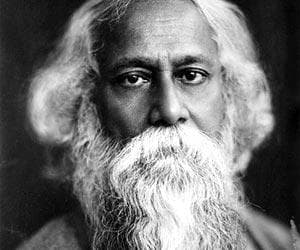
Rabindranath Tagore was a Bengali poet, writer, playwright, composer, philosopher, social reformer and painter. He reshaped Bengali literature and music as well as Indian art with Contextual Modernism in the late 19th and early 20th centuries. Author of the "profoundly sensitive, fresh and beautiful" poetry of Gitanjali, he became in 1913 the first non-European and the first lyricist to win the Nobel Prize in Literature. Tagore's poetic songs were viewed as spiritual and mercurial; however, his "elegant prose and magical poetry" remain largely unknown outside Bengal. He was a fellow of the Royal Asiatic Society. Referred to as "the Bard of Bengal", Tagore was known by sobriquets: Gurudeb, Kobiguru, Biswokobi.
Similar books
- The Home and the World
Rabindranath Tagore
3.8 (4k) average on GoodreadsHistorical FictionExplores similar themes of marriage, nationalism, and female liberation in a historical Indian context.
- The Old Man and the Sea
Ernest Hemingway
3.8 (831k) average on GoodreadsLiterary FictionA Cuban fisherman's long struggle with a giant marlin becomes a story of endurance and dignity, now retold for young adults with illustrations, phonetic guides, and writing prompts in Traditional Chinese.
- One Hundred Years of Solitude
Gabriel García Márquez
4.1 (753k) average on GoodreadsLiterary FictionThrough the multi-generational story of the Buendía family, a mythical town deals with the repeating patterns of time, love, and solitude, as the extraordinary mixes with the ordinary.
- The Goldfinch
Donna Tartt
3.9 (720k) average on GoodreadsLiterary FictionHaunted by a tragic explosion and clutching a stolen Dutch masterpiece, a young orphan navigates the opulent drawing rooms of New York and the gritty underbelly of the art world, desperately seeking connection and redemption amidst a life spiraling into crime and obsession.
- Little Fires Everywhere
Celeste Ng
4.1 (713k) average on GoodreadsLiterary FictionIn Shaker Heights, an artist and her daughter move in, and their free-spirited lives clash with a rule-bound matriarch, revealing hidden conflicts beneath a perfect surface.
- Eleanor Oliphant Is Completely Fine
Gail Honeyman
4.3 (708k) average on GoodreadsLiterary FictionA lonely woman's structured life changes when an IT guy and an elderly man help her learn to open her heart.






Enjoyed the summary?
A summary gives you the shape of the book. The book itself has the detail, the examples and the voice.
Find Chokher Bali on AmazonAs an Amazon Associate, BookBrief earns from qualifying purchases. How we're funded