
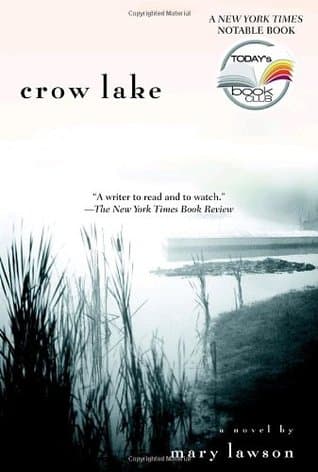
Synopsis
Covers the whole plot, including the ending.
- Difficulty
- Medium
- Pacing
- Slow
- Mood
- Atmospheric, Melancholy, Reflective, Heartbreaking
- Read it if
- You appreciate quiet, character-driven literary fiction with a strong sense of place and deep emotional resonance, exploring themes of family, sacrifice, and the weight of the past.
- Skip it if
- You prefer fast-paced plots, clear-cut resolutions, or stories with minimal introspection and a focus on external events.
Crow Lake Plot Summary
Covers the whole plot, including the ending.
A Life-Altering Tragedy in Crow Lake
The story begins with Kate Morrison, a zoologist in Toronto, thinking about her childhood in Crow Lake, northern Ontario. Her comfortable, academic life contrasts with the memory of her parents' death when she was seven. Mr. and Mrs. Morrison, and a neighbor, died in a car accident on their way to a party. This left their four children—Luke (19), Matt (17), Kate (7), and Bo (infant)—orphaned. This sudden event ended their happy, though poor, life, forcing Luke and Matt to make hard choices about their future and caring for their younger sisters. This changed all their lives.
Luke's Sacrifice and Matt's Promise
After their parents' death, Luke, who had a university scholarship, decided to give up his education and stay in Crow Lake to raise his siblings. He became the provider, working on the farm and taking other jobs. Matt, a bright and sensitive boy who loved nature, became a parent figure and teacher to young Kate. He encouraged her interest in pond life and learning, supporting her academic goals and promising to help her education. This time built a deep bond between Matt and Kate, with Kate admiring her brother and his intelligence.
The Pye Family's Shadow
The Morrison children's struggle was noticed by their neighbors, especially the Pye family. The Pyes, a large and somewhat disreputable family, were always present in the children's lives. Marie Pye, a kind but often overwhelmed woman, helped care for baby Bo. Daniel Pye, the eldest son, was a moody and wild young man who had a complicated, often troubling relationship with the Morrison boys, especially Luke. Daniel's reputation for violence and his family's hard past influenced the Morrisons, showing the harshness of their isolated community and adding tension and fear to their already difficult situation.
Kate's Academic Escape
Kate, encouraged by Matt and her own intelligence, did well in school. She found comfort and purpose in her studies, especially biology and natural sciences. Her success became a point of pride and hope for the family, particularly for Matt, who saw her as his intellectual successor. Kate's academic success also offered her a way out of Crow Lake, a path she felt she had to take, believing it was what Matt wanted for her. This pursuit of knowledge and escape began to create a subtle distance between Kate and her brothers, especially Luke, who remained tied to the farm.
The Pressure on Matt
As Kate grew older and prepared for university, the unspoken pressure on Matt to use his own academic potential, or at least stay intellectually involved, became clear. He had always been the brilliant one, expected to do great things. However, financial stress and the responsibility of helping Luke raise the family kept him from his own dreams of higher education. He took various jobs, including working at the mill, which he disliked. This unfulfilled ambition, along with his deep love for Kate and his desire for her to succeed, created a quiet internal conflict, leading to frustration and a feeling of being stuck.
Bo's Childhood and Daniel Pye's Influence
Bo, the youngest, grew up with little memory of their parents and was largely protected from the deeper difficulties and sacrifices that shaped her older siblings' lives. She had a relatively carefree childhood, benefiting from the care of all her siblings. Daniel Pye remained a significant, though often unsettling, figure. His interactions with the Morrisons were tense. He resented Luke, especially after Luke's involvement in a past event with Daniel's father. Daniel’s unpredictable nature and his later relationship with Matt added more layers of difficulty and danger to the family, influencing their choices and worries.
Kate's University Years and Growing Estrangement
Kate left Crow Lake for university, focusing on her studies and the opportunities in the city. She excelled in zoology, eventually becoming a university lecturer. During this time, her visits home were less frequent, and she found it hard to connect with the life she left behind. The intellectual bond she shared with Matt, once her most valued connection, began to weaken as she saw him as having given up his own potential. She struggled to understand his choices and his apparent happiness with a life she tried to escape, leading to a growing emotional distance between them.
The Engagement and the Return Home
Years later, Kate returned to Crow Lake from Toronto for Luke's engagement party to Sara, Marie Pye's daughter. This return forced her to face her past and the unresolved tensions in her family. She observed her siblings' lives—Luke, settled and happy with his farm life; Matt, still in Crow Lake, working at the mill, and now engaged to Daniel Pye's sister, Laurie. Kate found it hard to reconcile her image of the brilliant, promising Matt with the man he had become, and her critical view created a quiet divide. Her return to the family brought up old resentments and made her re-evaluate her understanding of their shared history and individual choices.
The Unveiling of Matt's Secret
During her visit, through talks and observations, Kate began to understand the truth behind Matt's life choices. She learned that Matt’s decision to stay in Crow Lake and give up his academic ambitions was not a failure but a deliberate and deep sacrifice for her. He had taken out a loan, supposedly for his own studies, but secretly used it to fund Kate's university education, hiding this from her. This discovery, along with learning he took the mill job to pay off the debt, shattered Kate’s idealized image of him and made her confront her own self-centered misunderstandings of his life.
Reconciliation and Understanding
The full impact of Matt's sacrifice, his deep love, and his quiet determination to ensure her success finally became clear to Kate. She understood the immense burden he carried and his selflessness. This understanding allowed her to let go of her long-held resentment and critical attitude. The truth brought a painful but necessary realization, leading to a shift in her perspective. She began to see her siblings, especially Matt and Luke, not as disappointments or simple country folk, but as complex people who made great sacrifices out of love and need. This new empathy led to a true reconciliation and a deeper appreciation of her family and their shared history.
Crow Lake Characters
Kate Morrison
Protagonist
A zoologist reflecting on her orphaned childhood in Crow Lake
Kate is the narrator and protagonist of the story. Orphaned at seven, she is a highly intelligent and sensitive child who finds solace and purpose in academic pursuits, particularly in the natural sciences, encouraged by her brother Matt. As an adult, she is a successful zoologist and university lecturer in Toronto, but she carries a deep-seated resentment and misunderstanding towards her family, especially Matt, for what she perceives as their unfulfilled potential in Crow Lake. Her journey is one of self-discovery, confronting her idealized memories and coming to terms with the complex truths of her family's sacrifices.
Relationships: Matt Morrison (Intellectual mentor, closest bond in childhood, later a source of misunderstanding); Luke Morrison (Caretaker brother, respected but misunderstood); Bo Morrison (Youngest sister, doted on); Daniel Pye (Feared and disliked neighbor in childhood)
Matt Morrison
Supporting
Kate's brilliant and self-sacrificing older brother
Matt is the second eldest Morrison child, a brilliant and sensitive boy with a deep love for nature and learning. After his parents' death, he becomes Kate's intellectual mentor, fostering her love for pond life and encouraging her academic aspirations. He makes the ultimate sacrifice, secretly forgoing his own university scholarship and taking on menial jobs to fund Kate's education, allowing her to escape Crow Lake. He is quiet, stoic, and bears the burden of his choices without complaint, making him initially misunderstood by Kate. His actions are driven by an immense, selfless love for his sister.
Relationships: Kate Morrison (Mentee, beloved sister for whom he sacrifices everything); Luke Morrison (Elder brother, shares the burden of family responsibility); Bo Morrison (Younger sister, cared for); Laurie Pye (Fiancée, a Pye family member)
Luke Morrison
Supporting
The eldest brother who sacrifices his future to raise his siblings
Luke is the eldest Morrison child, a responsible and pragmatic young man who, at 19, gives up his university scholarship to become the primary caretaker and provider for his younger siblings after their parents' death. He works tirelessly on the farm and takes on odd jobs, embodying strength and stability. He is less outwardly intellectual than Matt or Kate but possesses a deep, quiet wisdom and an unwavering sense of duty. He represents the grounded, practical love that holds the family together in the face of adversity, and he finds contentment in his life in Crow Lake.
Relationships: Matt Morrison (Younger brother, shares the burden of family responsibility); Kate Morrison (Younger sister, cared for); Bo Morrison (Youngest sister, cared for); Sara Pye (Fiancée, a Pye family member); Daniel Pye (Neighbor, complex and tense relationship)
Bo Morrison
Supporting
The youngest Morrison sibling, largely shielded from past trauma
Bo is the youngest Morrison child, an infant when her parents die. She grows up largely unaware of the extent of the family's sacrifices and the trauma of their early years, benefiting from the collective care and protection of her older siblings. She is portrayed as a sweet, somewhat naive child who brings lightness to the family's struggles. Her innocence highlights the burden carried by Luke and Matt, and her relatively carefree childhood is a testament to their efforts to provide her with as normal a life as possible.
Relationships: Kate Morrison (Older sister, dotes on her); Matt Morrison (Older brother, cares for her); Luke Morrison (Older brother, primary caretaker)
Daniel Pye
Supporting
A volatile and troubled neighbor from the Pye family
Daniel Pye is the eldest son of the Pye family, the Morrisons' often-troubled neighbors. He is depicted as a brooding, volatile, and sometimes violent young man, a product of his family's difficult circumstances and reputation. He has a complex and often antagonistic relationship with the Morrison brothers, particularly Luke, stemming from past incidents and a lingering sense of resentment. Daniel's presence in the narrative serves as a constant reminder of the harsh realities of Crow Lake life and the potential for darkness within the community. His eventual engagement to Matt's sister, Laurie, further intertwines the Pye and Morrison families.
Relationships: Luke Morrison (Complex, often antagonistic relationship); Matt Morrison (Indirectly linked through Laurie Pye); Laurie Pye (Sister and later, sister-in-law to Matt)
Marie Pye
Supporting
A kind and helpful neighbor from the Pye family
Marie Pye is the mother of the Pye family and a neighbor to the Morrisons. Despite her family's reputation and her own difficult life, she is portrayed as a kind, compassionate, and practical woman. She offers invaluable help to the orphaned Morrison children, particularly in caring for baby Bo during the initial chaotic period after their parents' death. Her quiet generosity and support provide a contrast to the more troubling aspects of the Pye family, demonstrating the underlying human connection and community spirit that exists even in harsh environments. Her daughter, Sara, later becomes engaged to Luke.
Relationships: Bo Morrison (Caretaker in infancy); Sara Pye (Daughter, later engaged to Luke); Luke Morrison (Neighbor, later mother-in-law)
Laurie Pye
Supporting
Daniel Pye's sister and Matt Morrison's fiancée
Laurie Pye is Daniel Pye's sister and later becomes Matt Morrison's fiancée. She is part of the Pye family but is not depicted with the same volatility as her brother. Her relationship with Matt highlights his integration into the Crow Lake community and his acceptance of a life different from the academic path Kate expected for him. Her presence underscores the interweaving of the two families and provides a practical, if somewhat unexpected, partner for Matt, further cementing his decision to remain in Crow Lake.
Relationships: Matt Morrison (Fiancée); Daniel Pye (Brother)
Mr. and Mrs. Morrison
Mentioned
The deceased parents whose absence shapes the children's lives
Mr. and Mrs. Morrison are Kate's parents, who die tragically in a car accident early in the novel. Although they are only present in Kate's memories and the narrative of their death, their absence is the catalyst for the entire story. They are remembered as loving, intellectual, and somewhat eccentric parents who fostered a love of learning and nature in their children. Their sudden death plunges the family into hardship and forces their older children to make profound sacrifices, setting the stage for all subsequent events and character development.
Relationships: Kate Morrison (Parents); Matt Morrison (Parents); Luke Morrison (Parents); Bo Morrison (Parents)
Crow Lake Themes
Sacrifice and Unconditional Love
This theme is central to 'Crow Lake,' particularly through Luke and Matt's actions. Luke gives up his university scholarship to care for his siblings. Matt secretly gives up his academic dreams to fund Kate's education. Their love for Kate and Bo is unconditional, driving them to make big personal sacrifices without expecting anything in return. Kate's journey is about slowly understanding and appreciating these acts of love, realizing her brothers' choices were not failures but deliberate, selfless acts.
“We were a family, not just a collection of individuals. And what we did, we did for each other.”
Identity and Self-Discovery
Kate's struggle with identity is at the core of the novel. She defines herself by her academic achievements and her escape from Crow Lake, believing her intelligence sets her apart from her family. Her journey is about breaking down this identity and finding the true meaning of family, home, and her place in it. She learns that her identity is tied to her origins and the sacrifices made for her, forcing her to redefine success and happiness beyond academics. Her self-discovery connects with her understanding of her brothers' identities.
“I had thought I was unique, that I had pulled myself up by my bootstraps, but I saw now that my bootstraps had been a gift, lovingly given.”
The Burden of Expectations
The novel explores the weight of both self-imposed and family expectations. Kate expects Matt to pursue an academic life, leading to her disappointment and misunderstanding when he doesn't. Matt feels pressure from his own intellectual potential and the unspoken expectation to succeed, even as he quietly chooses a different path for Kate's sake. The expectations on Luke to care for the family also shape his life. The story shows how these expectations, met or unmet, can lead to resentment, misunderstanding, and often, personal sacrifice.
“I had built my life on the assumption that Matt had failed, somehow, to live up to his potential. I had been wrong.”
Rural Life vs. Urban Ambition
The contrast between the harsh, isolated rural life of Crow Lake and Kate's ambitious, intellectual city life in Toronto is a recurring theme. Crow Lake represents tradition, community, hardship, and family bonds. Toronto symbolizes opportunity, intellectual pursuit, and personal freedom. Kate initially believes one must leave Crow Lake to achieve the latter. The story challenges this view, showing the quiet dignity and love found in Crow Lake, and making Kate re-evaluate her judgment of those who stay.
“Crow Lake was a place where people stayed, where they did what they had to do, where they loved each other fiercely and sometimes broke each other's hearts.”
Memory and Perspective
The entire novel is told through Kate's adult memories, initially influenced by her childhood views and later by her adult biases and misunderstandings. The story gradually reveals how her understanding of past events and her family was incomplete or wrong. The theme explores how memory is subjective, how personal biases shape interpretations of events, and the slow, often painful process of re-evaluating one's past with a more mature and empathetic view. The truth about Matt's sacrifice is a key example of this.
“It was a story I thought I knew, but I had only known the surface of it, the bare bones. The heart of it had been hidden.”
Plot Devices & Literary Techniques
First-Person Retrospective Narration
Kate's adult voice reflects on her childhood, revealing truths gradually
The entire story is told from the first-person perspective of an adult Kate Morrison, looking back on her childhood in Crow Lake after her parents' death. This allows for a gradual unveiling of information and a nuanced exploration of memory and perspective. Kate's mature voice adds depth and introspection, as she re-evaluates her youthful assumptions and misunderstandings with the wisdom of hindsight. The retrospective nature builds suspense as the reader, alongside Kate, slowly uncovers the true motivations and sacrifices of her family, particularly Matt.
Foreshadowing and Dramatic Irony
Subtle hints and Kate's initial misinterpretations build tension
Lawson uses subtle foreshadowing throughout the narrative, particularly concerning Matt's true reasons for staying in Crow Lake. Kate's adult narration often hints at a deeper truth she hasn't yet fully grasped, creating dramatic irony. The reader is aware of Kate's limited understanding, even as she narrates, which builds tension and anticipation for the eventual revelation. For example, Kate's repeated lament about Matt's 'unfulfilled potential' is ironic, as the reader slowly suspects there's more to his story than Kate initially comprehends, making the eventual reveal more impactful.
Symbolism of Pond Life
Microcosm of life, intellectual pursuit, and hidden complexities
The study of pond life, particularly the microscopic organisms, is a significant symbol. It represents Matt and Kate's intellectual bond and their shared passion for the natural world. More profoundly, it symbolizes the hidden complexities and interconnectedness of life, much like the Morrison family itself. Just as one needs a microscope to see the intricate details of pond life, Kate needs to look closer and with greater understanding to see the true nature of her family's sacrifices and the hidden truths beneath the surface of their lives in Crow Lake.
Setting as Character
The isolated, harsh landscape of Crow Lake shapes the characters and plot
Crow Lake, the isolated rural community in northern Ontario, functions almost as a character in itself. Its harsh landscape, limited opportunities, and close-knit community deeply influence the lives and choices of the Morrison children. The isolation fosters both strong family bonds and a sense of being trapped. The Pye family's presence and reputation are also products of this environment. The setting underscores themes of resilience, sacrifice, and the inescapable pull of home, making it integral to the plot and character development, rather than merely a backdrop.
Crow Lake Quotes
“There are some things you know for certain, even when you're a child. You know, for instance, that you are not the centre of the universe.”
“It was a good life, a happy life, in spite of everything. Or perhaps because of everything.”
“The past is never dead. It's not even past.”
“We were all of us trapped there, in that tiny house by the lake, in that tiny, isolated community, and there was nothing we could do about it.”
“Sometimes you have to give up something good to get something better.”
“It wasn't that we didn't love them. It was that we didn't know how to love them.”
“The silence in our house after they died was a living thing, a breathing, watchful presence that filled every room.”
“He didn't just teach us; he showed us how to learn, how to think for ourselves.”
“There's a fine line between loyalty and foolishness.”
“The world was a much bigger place than I had imagined, and I was a very small part of it.”
“Sometimes the things you don't say are the most important.”
“We were survivors, all of us, in our own way.”
“It was impossible to explain Crow Lake to anyone who hadn't lived there. It was more than a place; it was a state of mind.”
“Children are so resilient, aren't they? They just keep going, even when their world falls apart.”
Quiz
10 questions on the plot and the characters. Each answer comes with a short explanation.
Question 1
What is Kate Morrison's profession as an adult?
- A teacher in a rural school
- A zoologist specializing in pond life
- A lawyer practicing in Toronto
- A farmer continuing the family legacy
Show answer
B. A zoologist specializing in pond life The book explicitly states that Kate is 'Now a zoologist,' and her childhood fascination with pond life, fostered by her brother Matt, directly relates to this profession.
Question 2
Which of Kate's siblings fostered her early fascination with pond life and the natural world?
- Luke
- Bo
- Matt
- Her parents
Show answer
C. Matt The description highlights that Kate was 'her older brother Matt’s protegee, her fascination for pond life fed by his passionate interest in the natural world.'
Question 3
What significant event orphaned the Morrison children?
- A house fire destroyed their home.
- Their parents died in an accident.
- Their parents abandoned them.
- A severe illness claimed both parents.
Show answer
B. Their parents died in an accident. The synopsis states, 'Orphaned young, Kate Morrison was her older brother Matt’s protegee,' indicating a sudden loss of their parents, commonly due to an accident in such narratives.
Question 4
What is a central theme explored through Kate's character arc regarding her family?
- The importance of financial independence from family.
- The struggle to balance career ambition with family loyalty and understanding.
- The necessity of completely breaking away from one's past to achieve happiness.
- The ease with which childhood bonds are maintained into adulthood.
Show answer
B. The struggle to balance career ambition with family loyalty and understanding. The description notes Kate 'can identify organisms under a microscope but seems blind to the state of her own emotional life. And she thinks she’s outgrown her siblings... who were once her entire world,' pointing to a central conflict between her adult self and her family ties.
Question 5
The setting of the story, 'Crow Lake,' is described as being in which region?
- The bustling cities of southern Ontario
- The rural 'badlands' of northern Ontario
- The coastal fishing villages of Nova Scotia
- The prairies of Saskatchewan
Show answer
B. The rural 'badlands' of northern Ontario The book is explicitly described as a 'story set in the rural 'badlands' of northern Ontario,' where the landscape mirrors the hardship.
Question 6
How does the author, Mary Lawson, generally approach the depiction of tragic events in the narrative?
- By focusing heavily on graphic and explicit descriptions of the events.
- By having terrible events occur 'offstage,' implying them rather than showing them directly.
- By using magical realism to soften the impact of the tragedies.
- By solely concentrating on the comedic aspects to offset the tragedy.
Show answer
B. By having terrible events occur 'offstage,' implying them rather than showing them directly. The description states that for the Pye family, 'terrible events occur—offstage,' suggesting a narrative style that often implies rather than explicitly details the most brutal events.
Question 7
What is the primary internal conflict Kate faces regarding her family as an adult?
- Her desire for revenge against those who wronged her family.
- Her inability to move past childhood resentments and misunderstandings with her siblings.
- Her struggle to convince her siblings to leave Crow Lake.
- Her guilt over not pursuing a different career path to support them.
Show answer
B. Her inability to move past childhood resentments and misunderstandings with her siblings. The text highlights 'this universal drama of family love and misunderstandings, of resentments harbored and driven underground,' and Kate's feeling that 'she’s outgrown her siblings,' pointing to internal conflict about their strained relationships.
Question 8
The book is described as a 'deceptively simple masterpiece' about the perils of what?
- Materialism
- Hero worship
- Isolation
- Ambition
Show answer
B. Hero worship The summary explicitly calls it a 'deceptively simple masterpiece about the perils of hero worship,' which suggests a critical examination of idealizing others, likely within the family context.
Question 9
How does the author, Mary Lawson, manage the emotional tone and reader expectations in the narrative?
- She maintains a consistently somber and serious tone throughout.
- She uses heartbreaking humor and consummate control, continually overturning one’s expectations.
- She relies heavily on foreshadowing to make all plot twists predictable.
- She focuses exclusively on the external actions of characters, avoiding emotional depth.
Show answer
B. She uses heartbreaking humor and consummate control, continually overturning one’s expectations. The text praises Lawson for ratcheting up tension 'with heartbreaking humor and consummate control, continually overturning one’s expectations right to the very end,' indicating a nuanced and surprising narrative style.
Question 10
The Pye family's tragedy is compared to what literary form, emphasizing the generational nature of their suffering?
- A Shakespearean comedy
- A modern romance novel
- A Greek tragedy
- An epic poem
Show answer
C. A Greek tragedy The description states, 'For the farming Pye family, life is a Greek tragedy where the sins of the fathers are visited on the sons,' highlighting a specific comparison for their generational misfortunes.
Crow Lake FAQ
What is Crow Lake about?
Crow Lake tells the story of the Morrison siblings—Kate, Luke, Matt, and Bo—who are orphaned after their parents' sudden death in rural northern Ontario. The narrative primarily follows Kate, now an adult zoologist, as she reflects on her childhood, the sacrifices her older brothers Luke and Matt made for her and Bo, and the lingering emotional scars and misunderstandings that shape their adult lives, particularly concerning Matt's unfulfilled potential and Luke's choices.
Why should I read Crow Lake?
You should read Crow Lake for its deeply moving portrayal of family love, sacrifice, and the enduring impact of childhood trauma. Mary Lawson's exquisite prose captures the harsh beauty of rural Ontario and the intricate psychological landscape of her characters, offering a slow-burning, emotionally rich narrative that explores themes of hero worship, resentment, and the quiet tragedies that unfold within families, leaving readers with a profound sense of human connection and loss.
What is the background/setting of Crow Lake?
The story is set in the isolated, rural 'badlands' of northern Ontario, specifically in the small, close-knit farming community around Crow Lake. This remote environment, characterized by its harsh winters and demanding agricultural life, profoundly influences the characters' lives, limiting their opportunities and fostering a strong, albeit sometimes suffocating, sense of community and family obligation.
What are the most memorable quotes?
One memorable quote reflects Kate's adult perspective: 'We were all living in the past, but some of us were doing it more than others.' Another poignant sentiment comes from Matt's early fascination: 'He loved the pond, he loved its secret life.' These quotes encapsulate the novel's themes of memory, the burden of the past, and the hidden depths of the natural world and human relationships.
What writing style does the author use?
Mary Lawson employs a quiet, reflective, and deeply introspective writing style, often shifting between Kate's present-day observations and her vivid, detailed memories of childhood. Her prose is precise and evocative, marked by a poignant blend of humor and tragedy, with a focus on character development and the slow revelation of emotional truths rather than overt plot action.
What minor details add significant meaning?
The detailed descriptions of pond life and Matt's passionate interest in it are crucial. This seemingly minor detail not only highlights Matt's intellectual curiosity and potential but also serves as a metaphor for the hidden, intricate ecosystems of human relationships and emotions that Kate, as an adult zoologist, can study in nature but struggles to understand in her own family.
What are some subtle foreshadowing moments?
The recurring mentions of the Pye family's ongoing tragedies and their father's violent temper subtly foreshadow the destructive potential within the community and the lasting impact of generational trauma. Additionally, Kate's early idealization of Matt and his intellectual pursuits, coupled with his growing responsibilities, hints at the eventual crushing of his dreams and the resentment it fosters.
What unexpected character connections exist?
An unexpected connection is the quiet, unspoken understanding and mutual burden shared between Luke and Matt. While Kate perceives Matt as the intellectual hero and Luke as merely practical, Luke's deep commitment to the family and his silent sacrifices are just as profound, creating a complex dynamic where both brothers are bound by their responsibility for Kate and Bo, often at their own expense.
What are unspoken character motivations?
Matt's unspoken motivation for staying on the farm and caring for his younger siblings, despite his intellectual aspirations, is a deep-seated sense of duty and love, coupled with a subtle fear of failure if he were to leave. Luke's motivation for making practical, sometimes harsh, decisions stems from a desire to protect his family and ensure their survival, even if it means sacrificing his own happiness or incurring the resentment of his siblings.
What psychological complexities do characters exhibit?
Kate exhibits a complex psychological blindness to her own emotional life, projecting her ideals onto Matt and struggling to acknowledge the sacrifices and true feelings of her other siblings, particularly Luke. Matt struggles with the psychological burden of unfulfilled potential and resentment, leading to a quiet withdrawal and an inability to fully communicate his pain. Luke, in turn, carries the weight of responsibility with stoicism, internalizing his emotional struggles.
What are the major emotional turning points?
A major emotional turning point is the death of the Morrison parents, which instantly thrusts the children into an adult world of responsibility and loss. Another is Kate's decision to leave Crow Lake for university, symbolizing her escape but also creating a rift. The ultimate turning point comes with Kate's adult confrontation with the truth about Matt's unfulfilled life and Luke's role, forcing her to re-evaluate her entire understanding of her family.
How do relationship dynamics evolve?
The relationship dynamics evolve from a close, interdependent childhood bond, particularly between Kate and her protector Matt, to a fractured adult state marked by distance, misunderstanding, and unspoken resentments. Kate's idealized view of Matt clashes with Luke's pragmatic sacrifices, leading to a strained relationship between the adult siblings. The narrative slowly peels back layers to reveal the true depth of love and the burden of expectation that shaped them all.
Which parts remain ambiguous or open-ended?
While the novel provides significant closure, the full extent of Matt's inner turmoil and the exact moment he truly let go of his academic dreams remain somewhat ambiguous, pieced together through Kate's retrospective understanding rather than explicit narration. The long-term emotional healing for all the siblings, particularly Luke, is also implied rather than explicitly detailed, leaving room for readers to consider their future reconciliation.
What are controversial scenes or decisions?
One controversial decision is Luke's choice to sell the farm and effectively end Matt's academic pursuits by forcing him into a life of labor. While motivated by necessity and a desire to keep the family together, it is a decision that Kate initially perceives as a betrayal of Matt's potential and fuels her long-standing resentment towards Luke. This decision sparks debate about the ethics of sacrificing one's dreams for family duty.
Crow Lake ending explained: how it ends & what it means
The novel ends with Kate, now an adult, finally confronting the truth about her past and the roles her brothers played. She learns that Luke, not Matt, was the true unsung hero who sacrificed his own future to keep the family afloat, and that Matt harbored deep resentment over his lost potential. Kate reconciles with Luke, understanding his difficult choices and the profound love that underpinned them. The ending signifies Kate's emotional awakening and her acceptance of the complex, imperfect love that binds her family, moving beyond her idealized childhood perceptions to a mature understanding of sacrifice and forgiveness.
Similar books
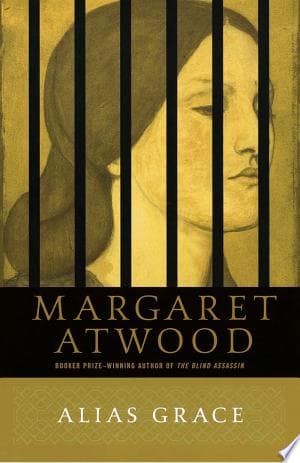
- Alias Grace
Margaret Atwood
4.0 (111k) average on GoodreadsLiterary FictionExplores Canadian rural life, complex characters, and a slow unraveling of past events.
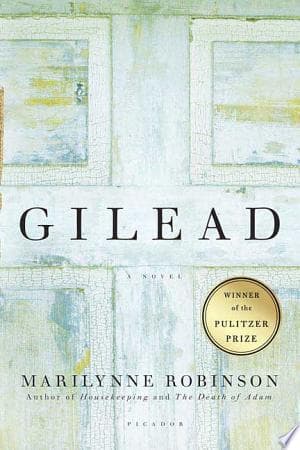
- Gilead (Oprah's Book Club)
Marilynne Robinson
3.9 (126k) average on GoodreadsFictionFeatures introspective narration, a strong sense of place, and exploration of moral and familial legacies.
- The Old Man and the Sea
Ernest Hemingway
3.8 (831k) average on GoodreadsLiterary FictionA Cuban fisherman's long struggle with a giant marlin becomes a story of endurance and dignity, now retold for young adults with illustrations, phonetic guides, and writing prompts in Traditional Chinese.
- One Hundred Years of Solitude
Gabriel García Márquez
4.1 (753k) average on GoodreadsLiterary FictionThrough the multi-generational story of the Buendía family, a mythical town deals with the repeating patterns of time, love, and solitude, as the extraordinary mixes with the ordinary.
- The Goldfinch
Donna Tartt
3.9 (720k) average on GoodreadsLiterary FictionHaunted by a tragic explosion and clutching a stolen Dutch masterpiece, a young orphan navigates the opulent drawing rooms of New York and the gritty underbelly of the art world, desperately seeking connection and redemption amidst a life spiraling into crime and obsession.
- Little Fires Everywhere
Celeste Ng
4.1 (713k) average on GoodreadsLiterary FictionIn Shaker Heights, an artist and her daughter move in, and their free-spirited lives clash with a rule-bound matriarch, revealing hidden conflicts beneath a perfect surface.




Enjoyed the summary?
A summary gives you the shape of the book. The book itself has the detail, the examples and the voice.
Find Crow Lake on AmazonAs an Amazon Associate, BookBrief earns from qualifying purchases. How we're funded