

Synopsis
Covers the whole plot, including the ending.
- Difficulty
- Medium
- Pacing
- Slow
- Mood
- Reflective, Nuanced, Melancholy, Poignant, Observational
- Read it if
- You appreciate meticulously crafted literary short stories that explore the nuances of human emotion and the complexities of small-town life, with a focus on character and internal experience.
- Skip it if
- You prefer fast-paced plots, clear-cut resolutions, or stories with strong external conflict and genre elements.
Dance of the Happy Shades Plot Summary
Covers the whole plot, including the ending.
Walker Brothers Cowboy
The narrator, a young girl, tells about a day she spent with her father, a door-to-door salesman, on his route. Her mother is sick, which is why she goes along. They visit Mrs. Laffey, a lonely woman by the lake. The father and Mrs. Laffey share a quiet moment, suggesting a past connection or shared loneliness. The girl watches, sensing an unspoken history. The day ends at a beach, where her father tries to explain life to his daughter, thinking about his own lost dreams and their harsh reality.
The Shining Houses
Mrs. Fullerton lives in an old, messy house that contrasts with the new, modern homes around it. Mary, a young mother in one of the new houses, first sees Mrs. Fullerton's house as an eyesore. But as her neighbors try to get Mrs. Fullerton's property condemned or bought to 'improve' the neighborhood, Mary starts to sympathize with her. She sees the unfairness and the superficiality of her neighbors' demands, eventually standing alone in her quiet defense of Mrs. Fullerton's right to her home, despite community pressure.
Images
A young girl named Dot has unsettling experiences during a summer visit to a rural area. She meets Joe Phippen, a disturbed man who lives in a shack and is known to be strange and possibly dangerous. Later, while fishing with her father, they find a dead mink in a trap, which deeply affects Dot. The story ends with a tense encounter when Joe Phippen is seen near their property. Dot's father, armed, confronts him, leading to a frightening standoff. These events show Dot the harsh realities of nature and the unpredictable side of people, leaving her uneasy.
Something I've Been Meaning to Tell You
Charity, a widow, lives with her deceased husband Arthur's sister, Et. The story unfolds through Charity's memories, revealing the difficult history of their relationships. Charity remembers her sister, Isla, who was once in love with Arthur. Isla married another man, leaving Arthur to marry Charity. Charity resents Isla, believing Isla made Arthur unhappy, even after their marriage. The story explores the lasting bitterness and unspoken rivalries that shaped their lives, showing how unfulfilled desires and quiet jealousies can affect family bonds.
The Peace of Utrecht
Merope, living away from her hometown, returns to visit her sick mother. The story is mostly Merope's memories of her younger sister, Elly, who died years ago from an illness. Merope feels guilty, believing she failed Elly. She thinks about the emotional burden of caring for her frail mother and the difficulty of moving past the past. The story looks at sibling grief and the lasting impact of loss, as Merope deals with her identity in the shadow of her sister's memory and family demands.
Dance of the Happy Shades
The story focuses on a children's party, hosted by a well-meaning but distant woman. The children are mostly bored, playing games without much excitement. An elderly, eccentric piano teacher, Miss Marsalles, is invited to play. She is at first dismissed as old-fashioned, and her music is not expected to impress the children. However, when she plays a piece called 'The Dance of the Happy Shades,' her performance is better than expected. The music is vibrant and moving, captivating the children and momentarily transporting them. The scene shows how art can connect and inspire, even in unexpected situations, and the beauty in overlooked people.
Postcard
Helen receives a cryptic postcard from her former lover, George, after many years. The vague message brings back memories and unresolved feelings. George was charming but unreliable, and their relationship ended ambiguously. Helen is now married with children and has a stable life, but the postcard shakes her. She struggles with her lingering feelings for George, the 'what ifs' of their past, and the realization that she never truly understood him or their relationship. The story explores the lasting power of past loves and how old connections can disrupt a settled present.
Day of the Butterfly
Myra Sayla, a quiet and sickly girl, is disliked by her classmates. She is poor, wears old clothes, and is seen as strange. The narrator, a more popular girl, first observes Myra with pity and discomfort, influenced by the group. However, when Myra's older brother brings her a beautiful, rare butterfly to school, Myra's quiet dignity and the butterfly's fragility create a moment of unexpected empathy from the narrator. The narrator, defying her friends, offers Myra a small kindness, sharing a private moment that bridges their social divide, hinting at a new understanding of compassion.
Sunday Afternoon
Alva, a young woman, spends a Sunday afternoon at the home of her boyfriend, Garnet, and his intellectual, somewhat critical family. Alva feels out of place, intimidated by their sophisticated conversations. She struggles to contribute and feels judged for her perceived lack of intelligence. The atmosphere is tense, with unspoken issues. Alva observes the family's interactions, especially Garnet's mother, sensing a disconnect and a certain showiness in their intellectualism. The story captures the discomfort of new social settings and the anxiety of trying to fit in, especially when facing perceived superiority.
A Trip to the Coast
Belle, a young woman, goes on a trip to the coast, seemingly for a holiday, but perhaps more to escape. The journey is marked by aimlessness and dissatisfaction. She meets various people and situations, none of which bring her joy. She thinks about her past relationships and choices, feeling increasingly disappointed with her life. The beautiful coastal landscape contrasts with her inner turmoil. The trip becomes a symbol for her search for meaning and identity, leading to a quiet, almost sad, realization about life's complexities and the elusive nature of happiness.
Dance of the Happy Shades Characters
The Narrator (various stories)
Protagonist
Often a young girl or woman observing and experiencing life's complexities.
The narrators across Munro's stories are often young, observant women or girls, navigating the transition from innocence to experience in rural or semi-rural Ontario. They are keenly aware of social dynamics, unspoken tensions, and the hidden lives of those around them. Their inner lives are rich with reflection, curiosity, and a growing understanding of the world's harsh realities and subtle beauties. They are often outsiders or feel a sense of detachment, which allows them a unique vantage point to analyze human behavior and societal norms.
Relationships: Father (Source of comfort and a figure of quiet disillusionment); Mother (Figure of domesticity, sometimes illness or quiet strength); Friends/Classmates (Reflect social pressures and sometimes provide moments of connection)
Mrs. Fullerton
Supporting
An elderly woman whose old house becomes a point of contention in a new subdivision.
Mrs. Fullerton is an elderly, reclusive woman living in an old, unkempt house that predates the modern suburban development around it. She represents a fading way of life and a quiet resistance to progress and conformity. Her house, with its overgrown yard and 'untidy' appearance, is a symbol of individuality and a challenge to the homogeneous aesthetic desired by her new neighbors. She is a figure of quiet dignity and resilience, embodying a sense of belonging to the land that the newcomers lack.
Relationships: Mary (Object of Mary's evolving sympathy and defense)
Father (Walker Brothers Cowboy)
Supporting
A door-to-door salesman grappling with past dreams and present realities.
The father in 'Walker Brothers Cowboy' is a traveling salesman, a man who once harbored grander ambitions but has settled into a life of quiet routine and subtle disappointments. He is kind and gentle, attempting to impart wisdom to his daughter, but also carries a palpable sense of longing for what might have been. His interaction with Mrs. Laffey reveals a hidden layer of his past, suggesting a history of unfulfilled connections and a shared understanding of life's hardships. He represents the ordinary man striving for dignity amidst the mundane.
Relationships: Daughter (Narrator) (Protective, affectionate, attempts to educate); Mrs. Laffey (Past acquaintance, shared history, unspoken understanding)
Isla
Supporting
Charity's sister, a vibrant and independent woman who was once loved by Arthur.
Isla is Charity's sister, a woman remembered for her spirited independence, beauty, and magnetism. She was once the object of Arthur's deep affection, but she chose a different path, marrying someone else. Her presence in Charity's memories is a source of both admiration and bitter resentment. Isla represents a life of more freedom and perhaps greater passion, a contrast to Charity's more conventional existence. Her choices and influence continue to shape the emotional landscape of her sister and brother-in-law, even after her death.
Relationships: Charity (Sister, object of Charity's complex jealousy and admiration); Arthur (Former love interest, source of lingering attachment and resentment)
Charity
Protagonist
A widow reflecting on her life and complex relationships with her sister and deceased husband.
Charity is a widow living with her sister-in-law, Et. She is a woman burdened by the past, particularly the lingering presence of her sister Isla and her deceased husband Arthur. Charity is observant and introspective, constantly replaying memories and analyzing the dynamics of her family. She carries a quiet resentment and a sense of being second-best, especially in comparison to Isla. Her narrative reveals a woman grappling with unfulfilled desires, unspoken jealousies, and the enduring impact of past choices on her present emotional state. She embodies the quiet suffering and complex interiority of many of Munro's female characters.
Relationships: Isla (Sister, object of envy and resentment); Arthur (Deceased husband, source of both love and quiet conflict); Et (Sister-in-law, companion in widowhood)
Miss Marsalles
Supporting
An elderly piano teacher who captivates children with her music.
Miss Marsalles is an elderly, somewhat eccentric piano teacher, initially perceived as an old-fashioned and perhaps insignificant figure at a children's party. She is a representative of traditional art and a bygone era. Despite her unassuming appearance, her performance of 'The Dance of the Happy Shades' reveals a profound artistic spirit and the power of music to transcend age and social barriers. She embodies the idea that beauty and inspiration can come from unexpected sources, challenging superficial judgments and revealing the enduring value of genuine artistic expression.
Relationships: Children at the party (Audience, initially dismissive but ultimately captivated)
Myra Sayla
Supporting
An ostracized, sickly schoolgirl who quietly endures her circumstances.
Myra Sayla is a quiet, sickly, and impoverished girl who is an outcast among her schoolmates. She is often teased or ignored due to her appearance and social standing. Despite her vulnerability, Myra possesses a quiet dignity and resilience. Her brief moment of connection with the narrator, facilitated by the beautiful butterfly, highlights her capacity for wonder and the potential for empathy to bridge social divides. She represents the often-overlooked and marginalized individuals in society, whose inner lives and quiet strength often go unnoticed.
Relationships: Narrator (Day of the Butterfly) (Object of initial pity, then empathy and kindness); Older Brother (Source of comfort and a brief moment of wonder (the butterfly))
Joe Phippen
Mentioned/Antagonist
A mentally disturbed local figure living in isolation.
Joe Phippen is a local figure in 'Images,' known to be mentally unstable and potentially dangerous, living in a dilapidated shack. He represents the wild, untamed, and unsettling aspects of the rural environment. His presence instills fear and a sense of primal threat, particularly in the young narrator, Dot. He is a character who exists on the fringes of society, embodying the unpredictable and sometimes dark side of human nature, challenging the perceived safety of childhood.
Relationships: Dot (Narrator) (Source of fear and unsettling encounter); Dot's Father (Object of confrontation and protective action)
Dance of the Happy Shades Themes
The Complexity of Memory and the Past's Influence
Munro's stories often explore how memory shapes the present. Characters revisit past events, relationships, and decisions, showing how these experiences continue to affect their identities. The past is not fixed but changes as it is reinterpreted, often leading to a deeper, sometimes painful, understanding of oneself and others. In 'Something I've Been Meaning to Tell You,' Charity's story is a re-examination of her sister Isla and husband Arthur's past, showing how old resentments still control her present life. Similarly, in 'The Peace of Utrecht,' Merope is haunted by her deceased sister, Elly, and guilt over her care, showing how past grief can dominate present existence.
“What is the matter with us, what is the matter with me, that I cannot get clear?”
The Quiet Lives of Women and Unfulfilled Desires
Many of Munro's female characters live lives that seem ordinary, but underneath are deep currents of unfulfilled desires, quiet acts of rebellion, and complex emotions. They often deal with societal expectations, domestic roles, and a longing for something more—whether intellectual stimulation, passionate love, or personal freedom. These desires are rarely stated directly but appear in subtle observations, internal thoughts, and small, important gestures. Charity in 'Something I've Been Meaning to Tell You' quietly suffers in the shadow of her sister's more lively life, while the narrator in 'Walker Brothers Cowboy' observes her father's unspoken regrets, perhaps hinting at her own future emotional complexities. The women often find a quiet strength or acceptance in their situations.
“People's lives, in short, were dark, mysterious, and full of a peculiar, unreadable importance.”
The Transition from Innocence to Experience
Several stories explore moments when young characters encounter the harsher, more ambiguous realities of adulthood. This leads to a loss of innocence and a new understanding of life's complexities. These experiences often involve exposure to death, mental illness, social injustice, or the hidden emotional lives of adults. The narrators, usually young girls, observe these events with a keen, often confused, eye, gaining insights that challenge their previous ideas. In 'Images,' young Dot's encounters with Joe Phippen and the trapped mink show her the raw, sometimes violent, aspects of nature and human behavior. In 'Day of the Butterfly,' the narrator's kindness towards Myra Sayla marks a shift from passive observation to active empathy, recognizing the dignity in another's suffering.
“I felt a shiver, a faint, cold ripple of warning, a sense of what I was not to know.”
The Conflict Between Tradition and Modernity
Munro often sets her stories in small, changing towns in rural Ontario, where old ways of life clash with modern and suburban development. This theme explores the tension between preserving heritage and embracing progress, often showing the human cost of such changes. The old ways, though perhaps flawed, represent authenticity and belonging, while the new often means superficiality and a loss of community. 'The Shining Houses' directly addresses this conflict through Mrs. Fullerton's old house, which stands as a symbol against the uniformity and 'improvement' desired by the new suburban residents. The story critiques the superficiality of modern aspirations and defends the right to individual difference.
“They would have to put up with Mrs. Fullerton, and her house, and the way it was, for now.”
Plot Devices & Literary Techniques
First-Person Retrospective Narration
Stories often told by an older, wiser narrator looking back on significant past events.
Munro frequently employs a first-person narrator, often a woman, who recounts events from her youth or a significant period in her past. This retrospective viewpoint allows for a layer of mature reflection and analysis, enabling the narrator to interpret events with the benefit of hindsight. It creates a sense of intimacy and allows for deep psychological exploration, as the narrator not only describes what happened but also how it felt and what it meant. This device is crucial in stories like 'Walker Brothers Cowboy' and 'Something I've Been Meaning to Tell You,' where the present understanding is enriched by revisiting and re-evaluating past experiences.
Epiphany/Moment of Revelation
A sudden, profound realization or insight experienced by a character.
Munro's stories often build towards a subtle, rather than dramatic, epiphany for the protagonist. These are moments of sudden clarity or deep understanding, often triggered by an ordinary event or observation, that shed new light on a character's life, relationships, or the nature of existence. These revelations are rarely joyous but often carry a sense of quiet melancholy or resigned acceptance. The narrator's unexpected empathy for Myra Sayla in 'Day of the Butterfly' or the captivating effect of Miss Marsalles's music in 'Dance of the Happy Shades' serve as such moments, offering a glimpse into profound human connection or artistic beauty amidst the mundane.
Symbolism of Houses and Homes
Architectural spaces represent characters' inner lives, social status, and personal histories.
Houses and homes in Munro's stories are often more than mere settings; they function as powerful symbols. They can represent a character's identity, their social standing, their emotional state, or the clash between different ways of life. An old, cluttered house might symbolize a rich, complex past or a resistance to change, while a new, pristine home might signify superficiality or a desire for conformity. In 'The Shining Houses,' Mrs. Fullerton's old house is a central symbol of individuality and tradition contrasting with the 'shining' new suburban homes representing modernity and homogeneity. This device allows Munro to explore themes of belonging, displacement, and social class through physical spaces.
Unspoken Communication and Subtext
Significant meaning conveyed through gestures, silences, and implied emotions rather than explicit dialogue.
A hallmark of Munro's style is her masterful use of subtext and unspoken communication. Characters often convey profound emotions, desires, and conflicts through gestures, glances, pauses, and what remains unsaid. This creates a rich, complex emotional landscape where much of the story's meaning resides beneath the surface of the dialogue. The quiet, knowing interaction between the father and Mrs. Laffey in 'Walker Brothers Cowboy' or the simmering resentments beneath Charity's calm exterior in 'Something I've Been Meaning to Tell You' are prime examples. This device invites the reader to actively interpret and delve into the psychological depths of the characters.
Dance of the Happy Shades Quotes
“The thing is, I can’t make him out. Is he trying to be kind or is he just trying to get rid of me? Or is he just being himself, which is a bit of a mystery?”
“It was like a dream, the way things were always happening in dreams, where you know what's going to happen but you can't stop it.”
“The people who come to see us are people who want to see us. They're not people who want to see the house.”
“Sometimes she thought that the world was just a collection of stories, and if you knew enough of them, you knew everything.”
“We lived in a world of women, and the men were like visitors, sometimes welcome, sometimes not, but always temporary.”
“There is a way of living that is like a dance, a continuous movement, and if you stop, you fall.”
“All her life she had been afraid of things, but now she was afraid of nothing. She was just tired.”
“The past was not a country she could visit, but a country that visited her, uninvited, at odd moments.”
“It was the kind of day when you felt you could do anything, and nothing would go wrong.”
“She had the feeling that she was always waiting for something to happen, and when it did, it was never quite what she expected.”
“People were always trying to tell you what to do, even if they didn't know anything about you.”
“There was a lot of talk about love, but it seemed to her that most of it was just talk.”
“She had never learned to be casual, to let things slide. Everything had to be just so.”
Quiz
10 questions on the plot and the characters. Each answer comes with a short explanation.
Question 1
In the story 'Dance of the Happy Shades,' what is the name of the woman who runs the music school and hosts the annual recital?
- Miss Farris
- Miss Marsalles
- Miss Henderson
- Miss Avery
Show answer
B. Miss Marsalles Miss Marsalles is the elderly, dedicated piano teacher who organizes the annual recital, a central event in the titular story.
Question 2
In 'Walker Brothers Cowboy,' what does the narrator's father sell door-to-door?
- Farm equipment
- Fish and seafood
- Insurance policies
- Household cleaning products
Show answer
B. Fish and seafood The father in 'Walker Brothers Cowboy' works as a traveling salesman for Walker Brothers, selling fish and seafood to rural customers.
Question 3
What is the primary reason the narrator's mother in 'Walker Brothers Cowboy' is often bedridden?
- A chronic heart condition
- Severe migraines
- Depression and a general sense of decline
- A debilitating physical injury
Show answer
C. Depression and a general sense of decline The mother's illness in 'Walker Brothers Cowboy' is never precisely diagnosed but is depicted as a combination of physical weakness, depression, and a general withdrawal from life, contributing to the family's struggles.
Question 4
In 'The Peace of Utrecht,' what is the narrator's relationship with her sister, Midge?
- They are estranged and haven't spoken in years.
- They live together and share the care of their invalid mother.
- The narrator has moved away, leaving Midge to care for their mother, and feels guilt about it.
- They have a competitive relationship, constantly vying for their mother's attention.
Show answer
C. The narrator has moved away, leaving Midge to care for their mother, and feels guilt about it. In 'The Peace of Utrecht,' the narrator has left her hometown and her sister Midge to care for their ailing mother, a decision that fuels her guilt and shapes her reflections.
Question 5
What is the significance of the 'happy shades' in the title story, 'Dance of the Happy Shades'?
- They are the ghosts of former students who haunt Miss Marsalles' house.
- They represent the carefree innocence of childhood before adult responsibilities.
- It's the name of a difficult, joyful piece of music played by the mentally disabled children at the recital.
- It refers to the colorful curtains in Miss Marsalles' music room.
Show answer
C. It's the name of a difficult, joyful piece of music played by the mentally disabled children at the recital. The 'Dance of the Happy Shades' is a challenging and beautiful piano piece played unexpectedly by a group of mentally disabled children at Miss Marsalles' recital, bringing an unexpected moment of grace and joy.
Question 6
In 'An Ounce of Cure,' what does the narrator drink excessively at the party, leading to a disastrous outcome?
- Wine coolers
- Beer
- Rye whiskey and ginger ale
- Vodka and orange juice
Show answer
C. Rye whiskey and ginger ale The narrator's inexperience with alcohol leads her to drink a significant amount of rye whiskey mixed with ginger ale at a party, resulting in her becoming very ill.
Question 7
The story 'Red Dress—1946' explores the narrator's feelings of social anxiety and awkwardness. What is the central event that heightens these feelings?
- A family reunion where she feels out of place.
- Her first public speaking engagement at school.
- A high school dance where she struggles with her appearance and social interactions.
- A job interview for her first part-time position.
Show answer
C. A high school dance where she struggles with her appearance and social interactions. The high school dance is the central event in 'Red Dress—1946,' where the narrator's insecurities about her homemade dress and her inability to connect with boys are acutely felt.
Question 8
What common theme connects many of the stories in 'Dance of the Happy Shades,' particularly concerning female characters?
- The pursuit of global travel and adventure.
- The challenges of self-discovery, disillusionment, and the constraints of small-town life for women.
- The importance of artistic success and fame.
- Overcoming physical disabilities through sheer willpower.
Show answer
B. The challenges of self-discovery, disillusionment, and the constraints of small-town life for women. A recurring theme across Munro's stories in this collection is the complex journey of female protagonists navigating personal growth, societal expectations, and the often restrictive environments of their rural or semi-rural Ontario settings.
Question 9
In 'Images,' what is the nature of the encounter the young narrator has in the woods that leaves a lasting impression?
- She witnesses a beautiful, rare bird nesting.
- She stumbles upon a group of children playing a secret game.
- She sees two men, one of whom is mentally disturbed, and experiences a moment of fear and unsettling wonder.
- She gets lost and is rescued by a kind stranger.
Show answer
C. She sees two men, one of whom is mentally disturbed, and experiences a moment of fear and unsettling wonder. In 'Images,' the narrator encounters two men while fishing: Joe Phippen, who is 'queer in the head,' and his brother, who tries to control him. This unsettling yet profound encounter introduces her to the darker, more mysterious aspects of human nature.
Question 10
The story 'Boys and Girls' explores the narrator's struggle with gender roles. What significant event marks her tentative rejection of traditional feminine expectations?
- She runs away from home to join a circus.
- She refuses to help her mother with household chores.
- She deliberately leaves a gate open, allowing a horse to escape, rather than helping her father slaughter it.
- She cuts her hair short against her parents' wishes.
Show answer
C. She deliberately leaves a gate open, allowing a horse to escape, rather than helping her father slaughter it. In 'Boys and Girls,' the narrator's act of leaving the gate open to let Flora the horse escape, rather than participating in its inevitable slaughter, is a pivotal moment reflecting her resistance to the harsh realities and gendered expectations of farm life.
Dance of the Happy Shades FAQ
What is the overarching theme connecting the stories in 'Dance of the Happy Shades'?
The collection frequently explores the internal lives of women and girls in rural or semi-rural Ontario, often focusing on moments of self-discovery, disillusionment, or quiet rebellion against societal expectations. Munro delves into the complexities of memory, the passage of time, and the often-unspoken emotional landscapes of ordinary lives.
In 'Walker Brothers Cowboy,' what significant realization does the young narrator have about her mother and the salesman, Mr. Malley?
The narrator observes a subtle moment of connection and shared vulnerability between her mother and Mr. Malley, a traveling salesman. She realizes her mother, despite her stoic demeanor, possesses a hidden depth of longing and a past life she rarely speaks of, hinting at an unfulfilled romantic possibility that transcends her present domesticity.
What is the central conflict in 'The Peace of Utrecht' regarding the two sisters, Mavis and Helen?
Mavis struggles with the guilt and burden of caring for their deceased mother, whose presence still looms over her life, while Helen has moved away and seemingly escaped the responsibility. The conflict arises from Mavis's inability to fully mourn or move on, exacerbated by Helen's detached perspective and the unspoken resentments between them regarding their mother's illness and death.
Describe the pivotal event at the end of the title story, 'Dance of the Happy Shades,' and its impact on Miss Marsalles.
At Miss Marsalles's annual piano recital, a group of mentally disabled children from a nearby institution unexpectedly performs a joyful, uninhibited 'dance of the happy shades.' This spontaneous, heartfelt display, though initially disruptive, brings a profound, almost transcendent joy to Miss Marsalles, validating her life's work and artistic spirit in a way her more 'normal' students never could.
How does the setting of Jubilee, Ontario, influence the characters' lives and choices across multiple stories?
Jubilee, a fictionalized representation of small-town Ontario, often presents characters with limited opportunities and rigid social expectations. This environment can foster a sense of entrapment, leading characters like the mother in 'Walker Brothers Cowboy' to suppress desires, or contributing to the quiet despair and gossip that shape relationships, as seen in 'Images' and 'The Shining Houses.'
In 'Images,' what is the significance of the narrator's encounter with Joe Phippen and the snake?
The encounter with Joe Phippen, an enigmatic and somewhat dangerous figure, and the subsequent discovery of the snake, represents the narrator's first confrontation with raw, untamed nature and the darker, more unsettling aspects of the adult world. It marks a loss of childhood innocence and a dawning awareness of fear and the unpredictable elements of life beyond her sheltered existence.
What subtle detail in 'The Shining Houses' reveals Mrs. Fullerton's deep connection to her old, unkempt property despite its dilapidated state?
Mrs. Fullerton's fierce resistance to the new suburban development, coupled with her meticulous tending of her garden and her memories associated with the house, highlights her deep emotional roots to the land. Her refusal to conform or sell, despite the pressure, signifies her identity being inextricably tied to her home and its history, contrasting sharply with the uniformity of the new 'shining' houses.
How does the recurring motif of water (lakes, rivers, rain) function symbolically in stories like 'Red Dress – 1946' or 'The Peace of Utrecht'?
Water often symbolizes the flow of time, the unconscious, or a boundary between different states of being. In 'Red Dress – 1946,' the rain reflects the narrator's internal turmoil and the external world's indifference, while in 'The Peace of Utrecht,' the lake near the mother's sanatorium might represent a place of transition, memory, or the finality of death, as well as the characters' emotional depths.
Analyze the psychological impact of social class and economic struggle on the characters in 'Postcard.'
In 'Postcard,' the characters' economic circumstances dictate their limited choices and often create a sense of resignation or quiet desperation. The inability to escape their social stratum leads to suppressed desires and strained relationships, as seen in the protagonist's longing for a different life that remains out of reach, contributing to a pervasive sense of unfulfilled potential and regret.
Discuss the psychological concept of 'othering' as applied to the disabled children in 'Dance of the Happy Shades' or Mrs. Fullerton in 'The Shining Houses.'
The disabled children are initially 'othered' by the audience, seen as an intrusion or aberration, until their pure performance breaks down these barriers. Similarly, Mrs. Fullerton is 'othered' by the new residents, perceived as an obstacle to progress due to her age and unconventional lifestyle. Both instances highlight societal discomfort with difference and the power of empathy to bridge divides.
How do the female protagonists in stories like 'Walker Brothers Cowboy' and 'An Ounce of Cure' navigate their burgeoning sexuality and the constraints placed upon them?
These young protagonists experience early awakenings of desire and self-awareness, but often within environments that suppress female agency. The narrator in 'Walker Brothers Cowboy' observes her mother's unspoken longings, while the protagonist in 'An Ounce of Cure' grapples with the consequences of a drunken sexual encounter, revealing the societal double standards and the internal conflict between desire and decorum.
Explore the psychological significance of memory and its unreliability in 'The Peace of Utrecht' and 'The Time of Death.'
In both stories, memory is not a static record but a subjective, often unreliable force that shapes identity and relationships. Helen and Mavis in 'The Peace of Utrecht' have conflicting memories of their mother, influencing their present-day resentments. In 'The Time of Death,' the shifting recollections surrounding the death of the baby highlight how grief and trauma can distort or selectively preserve the past, making objective truth elusive.
Is the ending of 'Dance of the Happy Shades' truly optimistic, or does it carry an underlying melancholic tone?
While the ending appears optimistic due to Miss Marsalles's joy, there's an underlying melancholic tone. Her moment of profound happiness is fleeting and comes from an unexpected source, suggesting that true artistic appreciation and connection are rare in her conventional world. It highlights her isolated existence and the briefness of such transcendent moments, making the joy poignant rather than purely celebratory.
What is the implied fate of the narrator's relationship with the older man in 'An Ounce of Cure'? Is it a moment of liberation or regret?
The story strongly implies a complex mix of liberation and regret. The narrator's drunken encounter is a break from her sheltered life and a taste of adult freedom, but it also leads to social ostracization and a sense of shame. It's a formative experience that, while perhaps liberating in its defiance, leaves her with lingering consequences and a bittersweet reflection on youthful recklessness.
How does Munro use the concept of 'home' in stories like 'The Shining Houses' and 'Day of the Butterfly' to critique societal values?
Munro uses 'home' not just as a physical dwelling but as a symbol of identity, belonging, and social status. In 'The Shining Houses,' the clash between Mrs. Fullerton's old house and the new suburban homes critiques conformity and the loss of individual character. In 'Day of the Butterfly,' the protagonist's home life, contrasted with Jimmy and Myra's poverty, highlights class distinctions and the superficiality of social acceptance.
To what extent do the female characters in the collection achieve genuine liberation or self-fulfillment, given their circumstances?
Genuine liberation or self-fulfillment is often portrayed as elusive or partial for Munro's female characters. While some experience moments of epiphany or quiet defiance (like the mother in 'Walker Brothers Cowboy' or Miss Marsalles), their societal and personal constraints mean full freedom is rarely attained. Instead, they often find solace in small acts of resilience, internal understanding, or fleeting connections, suggesting a more nuanced and often bittersweet form of 'fulfillment.'
In 'The Time of Death,' is the community's reaction to the baby's death primarily one of genuine grief or performative sympathy?
The community's reaction is a complex mix. While there is undoubtedly genuine sympathy and an attempt to offer comfort in a time of tragedy, there's also an element of performative grief and social ritual. The detailed accounts and repeated questioning of the exact 'time of death' suggest a community grappling with the event through prescribed social actions, perhaps to make sense of the senseless or to fulfill communal expectations, rather than solely expressing raw emotion.
About the author
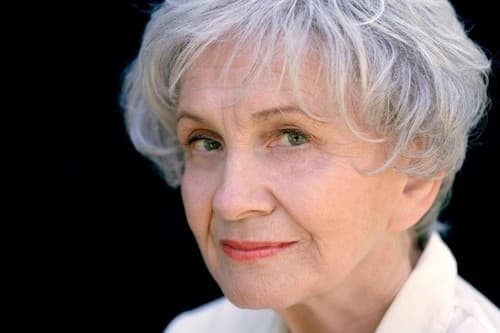
Alice Ann Munro is a Canadian short story writer who won the Nobel Prize in Literature in 2013. Munro's work has been described as revolutionizing the architecture of short stories, especially in its tendency to move forward and backward in time. Her stories have been said to "embed more than announce, reveal more than parade."
Similar books
- Tenth of December
George Saunders
4.0 (62k) average on GoodreadsLiterary FictionA collection of short stories that similarly delve deeply into the interior lives of characters, though with a different tone.
- The Old Man and the Sea
Ernest Hemingway
3.8 (831k) average on GoodreadsLiterary FictionA Cuban fisherman's long struggle with a giant marlin becomes a story of endurance and dignity, now retold for young adults with illustrations, phonetic guides, and writing prompts in Traditional Chinese.
- One Hundred Years of Solitude
Gabriel García Márquez
4.1 (753k) average on GoodreadsLiterary FictionThrough the multi-generational story of the Buendía family, a mythical town deals with the repeating patterns of time, love, and solitude, as the extraordinary mixes with the ordinary.
- The Goldfinch
Donna Tartt
3.9 (720k) average on GoodreadsLiterary FictionHaunted by a tragic explosion and clutching a stolen Dutch masterpiece, a young orphan navigates the opulent drawing rooms of New York and the gritty underbelly of the art world, desperately seeking connection and redemption amidst a life spiraling into crime and obsession.
- Little Fires Everywhere
Celeste Ng
4.1 (713k) average on GoodreadsLiterary FictionIn Shaker Heights, an artist and her daughter move in, and their free-spirited lives clash with a rule-bound matriarch, revealing hidden conflicts beneath a perfect surface.
- Eleanor Oliphant Is Completely Fine
Gail Honeyman
4.3 (708k) average on GoodreadsLiterary FictionA lonely woman's structured life changes when an IT guy and an elderly man help her learn to open her heart.






Enjoyed the summary?
A summary gives you the shape of the book. The book itself has the detail, the examples and the voice.
Find Dance of the Happy Shades on AmazonAs an Amazon Associate, BookBrief earns from qualifying purchases. How we're funded