
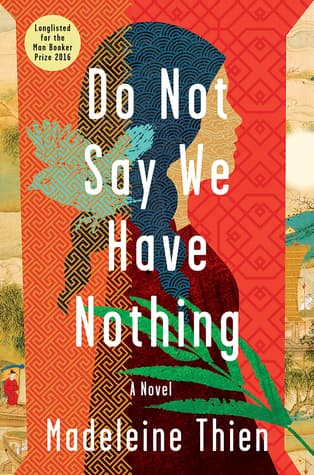
Synopsis
Covers the whole plot, including the ending.
- Difficulty
- Medium
- Pacing
- Moderate
- Mood
- Melancholy, Reflective, Historical, Artistic, Profound
- Read it if
- You enjoy sweeping historical sagas that explore the impact of political upheaval on personal lives, with a focus on art and memory.
- Skip it if
- You prefer fast-paced plots or lighthearted reads, or find non-linear narratives challenging.
Do Not Say We Have Nothing Plot Summary
Covers the whole plot, including the ending.
Marie and Ai-Ming's Arrival
In Vancouver, 1991, ten-year-old Marie, also known as Li-ling, lives with her mother, Jiang Li-hua. Her father, Kai, died by suicide the year before. Li-hua, a former dancer, takes in Ai-Ming, a young Chinese refugee who fled after the Tiananmen Square protests. Ai-Ming has a handwritten manuscript, 'The Book of Records,' which tells the stories of her family and friends during Mao's Cultural Revolution. Marie, drawn to Ai-Ming and the questions about her father's past, begins to learn Chinese from Ai-Ming. This manuscript becomes central to their shared experience, slowly showing the connections between their families and history's impact on their lives.
The Book of Records: Sparrow and Zhuli
The story goes back in time, to the Shanghai Conservatory of Music in the 1960s, through 'The Book of Records.' It introduces Sparrow, a quiet composer, and Zhuli, a talented violinist. Both are students, focused on their art, but increasingly aware of growing political pressures. Kai, a charismatic and gifted pianist, is Zhuli's cousin and Sparrow's close friend. Their lives are linked by their love for music and their developing romantic relationships. Sparrow loves Zhuli, who is drawn to Kai. This creates a complex emotional triangle, set before the artistic community is broken by the Cultural Revolution.
The Onset of the Cultural Revolution
As the Cultural Revolution grows stronger, the Shanghai Conservatory changes from a place for art to a site of political accusations. Musicians and composers are targeted as 'bourgeois intellectuals' and 'enemies of the people.' Sparrow, Zhuli, and Kai, along with their teachers and classmates, must take part in self-criticism and public denunciations. Their beloved Western classical music is banned, and instruments are destroyed. This time marks a big change, forcing them to face the harsh truth that their art, once a source of joy, is now dangerous. The friends try to deal with the increasing fear and violence, attempting to protect each other and their art.
Separation and Re-education
The political purges scatter the friends. Sparrow is sent to a re-education camp in the countryside, where he does forced labor and faces ideological training, all while secretly trying to compose. Zhuli, considered 'unreliable,' is also sent away, her violin taken, her spirit tested by hard conditions and the loss of her music. Kai, because of family ties and some cleverness, avoids the worst punishments at first, but still faces close watch and must compromise his artistic honesty. Their separation makes them adapt to new, harsh realities. Communication becomes hard and risky, leaving them unsure of each other's fates.
Sparrow's Compositions and Zhuli's Resilience
While in the labor camp, Sparrow secretly works on his compositions, using any materials to write down his musical ideas, often inspired by nature and the suffering around him. His music becomes a way to resist and preserve his inner world. Zhuli, despite great hardship and losing her ability to play the violin, keeps a strong inner spirit. She sees much injustice and personal sadness but holds onto the memory of her music and the hope of seeing her friends again. Her strength shows how resilient people can be when facing systematic oppression.
Kai's Survival and Compromises
Kai, driven to survive and protect himself, makes difficult choices during the Cultural Revolution. He uses his intelligence to navigate the dangerous political climate, often siding with those in power or making strategic alliances. These choices help him avoid the worst outcomes, but they cost his artistic integrity and personal relationships. He sees his friends and colleagues suffer, and his inability to openly resist or protect them leaves him with deep guilt. His actions highlight the moral challenges of survival under totalitarian rule.
The Return to Shanghai and Lingering Scars
As the Cultural Revolution ends, Sparrow, Zhuli, and Kai return to Shanghai, but the city and their lives are changed forever. They are no longer the hopeful young artists they once were. The experiences of persecution, loss, and survival have left deep psychological marks. They try to rebuild their lives and music careers, but the past lingers. Relationships are strained, and trust is fragile. Making art now carries the memory of its suppression, and how to create honestly in a world that tried to silence them becomes a main struggle. Sparrow and Zhuli eventually marry, trying to build a new life.
The Tiananmen Square Protests
Decades later, the children of Sparrow, Zhuli, and Kai grow up. Ai-Ming, Sparrow and Zhuli's daughter, and Kai's son, Wen, become involved in the Tiananmen Square protests in 1989. They represent a new generation wanting freedom and change, but also carrying their parents' unspoken burdens. The protests show a clash between the desire for individual liberty and the state's enduring power. The students' hope is crushed by the violent government crackdown, leading to tragic results and forcing Ai-Ming to flee China, eventually finding refuge with Marie's family in Vancouver.
Kai's Departure and Suicide
Kai, Marie's father, after moving to Canada with his wife, Jiang Li-hua, and young Marie, struggles to adjust. The trauma of his past in China, along with the pressures of immigration and the suppression of his artistic self, weigh heavily on him. He leaves his family for a time, unable to make peace with his past and present. Ultimately, unable to escape the psychological burdens of his experiences during the Cultural Revolution and his role in the lives of Sparrow and Zhuli, Kai dies by suicide. His death leaves Marie and Li-hua with deep grief and many questions about his hidden history.
Marie's Investigation and Understanding
In the present, Marie, guided by Ai-Ming and 'The Book of Records,' slowly puts together the complex and often painful history of her father, Kai, and his friends, Sparrow and Zhuli. The manuscript provides insights into the sacrifices, betrayals, and the power of music and love during political turmoil. Through this, Marie begins to understand the impact of the Cultural Revolution and Tiananmen Square on her family, and the reasons for her father's quiet nature and despair. Her journey is one of discovery, grief, and a deeper connection to her heritage.
The Weight of Memory and Forgiveness
As Marie reads 'The Book of Records,' she faces the weight of historical trauma and its effects on her family. She learns about her father's difficult choices, the suffering of Sparrow and Zhuli, and a generation's collective pain. This understanding makes her consider forgiveness, not just for her father, but for the circumstances that shaped his life. She realizes her identity is linked to this past, and understanding it helps her move forward. The story shows that memory, even if painful, is necessary for healing and understanding.
The Power of Music and Storytelling
Music and storytelling are powerful forces throughout the novel. The classical music by Sparrow, Zhuli, and Kai resists ideological suppression, preserving humanity and beauty. 'The Book of Records' itself shows how storytelling preserves memory, connects generations, and witnesses history. Marie's act of translating these stories continues this legacy. The novel suggests that while political regimes may try to silence art and truth, they cannot erase the human need to create, remember, and communicate across time.
Principal Figures
Marie (Li-ling)
Protagonist
A young girl in Vancouver who uncovers her family's hidden past through a mysterious manuscript.
Marie, whose Chinese name is Li-ling, is a curious and sensitive young girl growing up in Vancouver. Her father's suicide leaves her with a profound sense of loss and unanswered questions about his enigmatic life. She is intelligent and observant, drawn to the quiet intensity of Ai-Ming and the mysteries she brings. Marie's journey is driven by a deep need to understand her family's history and her own identity within the context of the traumatic events of the Cultural Revolution and Tiananmen Square. She acts as the primary lens through which the reader experiences the past, piecing together fragments of memory and narrative.
Relationships: Kai (Daughter-father, marked by his suicide and her quest to understand him.); Jiang Li-hua (Daughter-mother, initially strained by grief and unspoken history, later strengthened by shared understanding.); Ai-Ming (Friendship, mentor-mentee, as Ai-Ming guides Marie through 'The Book of Records'.)
Ai-Ming
Supporting
A refugee from Tiananmen Square who brings 'The Book of Records' and helps Marie uncover her family's history.
Ai-Ming is the daughter of Sparrow and Zhuli, and a survivor of the Tiananmen Square crackdown. She is quiet, resilient, and carries the weight of her family's history and her own traumatic experiences. Ai-Ming is the keeper of 'The Book of Records,' a handwritten manuscript detailing the lives of her parents and Kai during the Cultural Revolution. She serves as a bridge between the past and present, patiently guiding Marie through the complex narrative and helping her understand the cultural and political context. Her presence in Marie's life is catalytic, prompting the uncovering of long-buried truths.
Relationships: Sparrow (Daughter-father, deeply influenced by his musical legacy and suffering.); Zhuli (Daughter-mother, sharing a bond forged in shared experience and resilience.); Kai (Familiarity, through her parents' friendship with him.); Marie (Friendship, mentor-mentee, sharing the burden and discovery of history.)
Kai
Supporting/Mentioned
Marie's enigmatic father, a talented pianist whose life is profoundly shaped by the Cultural Revolution.
Kai is a brilliant and charismatic pianist, a central figure in 'The Book of Records' and Marie's father. He is intelligent, adaptable, and possesses a strong will to survive. During the Cultural Revolution, he makes difficult compromises to navigate the political turmoil, often at the expense of his artistic integrity and personal relationships. His experiences leave him deeply scarred, leading to a life marked by internal conflict, secrecy, and ultimately, suicide. His story is one of a man struggling to reconcile his past actions and the trauma he endured with the desire for a normal life.
Relationships: Marie (Father-daughter, marked by his absence and her quest for understanding.); Jiang Li-hua (Husband-wife, a relationship strained by his secrets and eventual suicide.); Sparrow (Close friendship, later complicated by political pressures and their differing paths.); Zhuli (Complicated friendship/romantic tension, particularly early on.)
Sparrow
Supporting
A shy, brilliant composer whose music becomes a form of resistance during the Cultural Revolution.
Sparrow is a gifted and introverted composer, deeply passionate about music. He is Zhuli's husband and Ai-Ming's father. During the Cultural Revolution, he endures severe persecution and forced labor, yet he secretly continues to compose, his music becoming a testament to his resilience and a way to preserve his inner world. He represents the pure, uncompromising spirit of art in the face of political oppression. His compositions are central to the narrative, embodying the beauty and tragedy of his era. He is a man of quiet strength and profound artistic integrity.
Relationships: Zhuli (Husband-wife, a deep, enduring love and artistic partnership.); Ai-Ming (Father-daughter, his legacy profoundly influencing her.); Kai (Close friendship, later strained by the revolution's demands.); Ba Laxi (Friendship and mentorship, sharing a love for music.)
Zhuli
Supporting
A talented and passionate violinist, Sparrow's wife and Ai-Ming's mother, who suffers greatly during the Cultural Revolution.
Zhuli is a vibrant and passionate violinist, whose talent and spirit are severely tested by the Cultural Revolution. She is Sparrow's wife and Ai-Ming's mother. Her love for music is profound, and the loss of her ability to play the violin under persecution is a deep wound. Despite enduring immense suffering, including loss and separation, she maintains a fierce inner strength and resilience. Zhuli represents the enduring human spirit and the struggle to preserve one's identity and hope in the face of systematic oppression. She is a survivor, whose experiences shape her daughter's understanding of history.
Relationships: Sparrow (Wife-husband, a deep, enduring love and artistic partnership.); Ai-Ming (Mother-daughter, sharing a bond forged in resilience and historical burden.); Kai (Complicated friendship/romantic tension, particularly early on.); Ba Laxi (Friendship and mentorship, sharing a love for music.)
Jiang Li-hua
Supporting
Marie's mother, a former dancer who struggles with grief and the secrets of her husband's past.
Jiang Li-hua is Marie's mother and Kai's widow. A former dancer, she carries her own grief and the unspoken burdens of her husband's life and death. She is practical and resilient, working hard to provide for Marie in Vancouver. Her decision to take in Ai-Ming, despite the potential complications, shows her compassion and her own subtle connection to the historical events. She initially struggles with sharing Kai's past with Marie, but eventually comes to terms with the need for understanding and honesty. Her strength lies in her ability to adapt and protect her family.
Relationships: Marie (Mother-daughter, initially strained by unspoken grief, later strengthened by shared understanding.); Kai (Wife-husband, a relationship marked by his secrets, his suffering, and his suicide.); Ai-Ming (Caregiver-refugee, a compassionate act that opens the door to discovery.)
Ba Laxi (Professor Ba)
Supporting
A respected music professor and mentor to Sparrow, Zhuli, and Kai, who suffers persecution during the Cultural Revolution.
Ba Laxi, known as Professor Ba, is a revered music professor at the Shanghai Conservatory, a mentor to Sparrow, Zhuli, and Kai. He represents the older generation of artists who dedicated their lives to Western classical music. During the Cultural Revolution, he is subjected to severe persecution, public humiliation, and forced labor due to his 'bourgeois' artistic pursuits. Despite the brutality, he maintains a dignified resistance and continues to inspire his students, even in their absence. His suffering highlights the devastating impact of political ideology on intellectual and artistic freedom.
Relationships: Sparrow (Mentor-student, sharing a deep bond over music.); Zhuli (Mentor-student, guiding her musical development.); Kai (Mentor-student, though Kai's path diverges more.)
Wen
Mentioned
Kai's son (from a later marriage, or a symbolic 'son' representing the next generation), a student involved in the Tiananmen Square protests.
Wen is introduced as Kai's son, a member of the generation that participated in the Tiananmen Square protests. He embodies the hopes and frustrations of young people in China yearning for democracy and freedom in 1989. His involvement in the protests connects Kai's generation's suffering under the Cultural Revolution to the subsequent political struggles. Wen's fate, along with that of many other students, underscores the tragic consequences of the government crackdown. He serves as a symbolic link, showing how the cycles of political repression continue to impact successive generations.
Relationships: Kai (Father-son, representing the continuation of Kai's lineage into a new era of political struggle.); Ai-Ming (Fellow student and protestor, sharing a common cause.)
Themes & Insights
The Power and Peril of Music and Art
Music is central to the novel, both a source of beauty and a danger. For Sparrow, Zhuli, and Kai, classical music is their life, a universal language. During the Cultural Revolution, it becomes a target, called 'bourgeois' and 'counter-revolutionary.' Instruments are destroyed, and artists are persecuted. Yet, music also becomes a secret way to resist and preserve the human spirit, as Sparrow composes in secret. The novel shows how art can be suppressed, but its power to inspire, connect, and remember cannot be fully put out.
“What would a world sound like, if all the music was gone? What would a world look like, if all the books were burned?”
Memory, History, and Storytelling
The novel explores how history, especially traumatic history, is remembered, forgotten, and passed down. 'The Book of Records' is a literal example of this, a manuscript that keeps the stories of those who lived through the Cultural Revolution. Marie's journey is about piecing together fragmented memories and stories, showing how subjective memory is and how hard it is to face painful truths. Storytelling, through music or words, becomes a vital act against erasure and a way to connect the past to the present, ensuring sacrifices and suffering are not forgotten.
“The past, after all, is not a story you can simply tell. It is a story you must live.”
Survival and Compromise Under Totalitarianism
A main theme is the moral challenges of survival under a totalitarian government. Characters like Kai make difficult choices, navigating dangerous political situations to protect themselves and their families, often at the cost of their artistic honesty or relationships. Sparrow and Zhuli suffer greatly but hold onto their art and love. The novel looks at the psychological cost of living under constant watch, fear, and persecution, where every choice has big consequences. It shows how people adapt, resist, or cooperate, and the lasting scars these choices leave, affecting future generations.
“He had learned to live in the space between what was said and what was true.”
Family and Intergenerational Trauma
The novel shows how historical trauma deeply affects families for generations. Marie's father, Kai, carries the unspoken burdens of the Cultural Revolution, which contribute to his quiet nature and eventual suicide. Ai-Ming, a survivor of Tiananmen Square and the daughter of those who suffered under Mao, also carries this inherited trauma. The story reveals how one generation's experiences—the repression, fear, and loss—are passed down, shaping the identities, relationships, and well-being of the next. Uncovering these hidden histories helps Marie heal and understand.
“The past was not a country he had left, but a country he carried within him.”
Love and Loyalty in Adversity
Despite the harsh political situation and personal betrayals, the novel shows the lasting power of love and loyalty. The deep affection between Sparrow and Zhuli, their support for each other through persecution and separation, shows the strength of their bond. The complex friendships between Sparrow, Zhuli, and Kai, though tested, reveal the human need for connection. Even when forced to denounce others, characters find ways to protect, support, and remember those they love, showing that these basic human emotions can last even in the most dehumanizing times.
“They had lost everything, but they still had each other, and that was something.”
Plot Devices & Literary Techniques
The Book of Records
A handwritten manuscript that serves as a primary source of historical information and a narrative device.
'The Book of Records' is a pivotal plot device. It's a handwritten manuscript brought to Canada by Ai-Ming, chronicling the lives of Sparrow, Zhuli, and Kai during the Cultural Revolution. It functions as a historical document, a personal memoir, and a narrative frame, allowing the story to shift between different time periods and perspectives. For Marie, it is the key to unlocking her father's mysterious past and understanding her family's history. It also symbolizes the power of storytelling to preserve memory and resist historical erasure, acting as a tangible link between generations and a testament to the human spirit.
Alternating Timelines
The narrative shifts between present-day Vancouver (1990s) and China during the Cultural Revolution (1960s-70s) and Tiananmen Square (1989).
The novel employs alternating timelines, moving between Marie's present-day life in Vancouver in the early 1990s and the past events in China, primarily during the Cultural Revolution (1960s-70s) and the Tiananmen Square protests (1989). This structure allows for a gradual revelation of the complex historical narrative, mirroring Marie's own process of discovery. It highlights the intergenerational impact of historical events and creates suspense as the connections between characters and events are slowly unveiled. The past constantly informs and explains the present, showing how history shapes individual lives and national identity.
Music as Metaphor and Motif
Classical music functions as a powerful symbol of beauty, resistance, and human connection.
Music, particularly Western classical music, is a pervasive motif and metaphor throughout the novel. It represents beauty, intellectual freedom, and a universal language that transcends political boundaries. During the Cultural Revolution, music is violently suppressed, making it a symbol of what is lost under totalitarianism. However, it also becomes a quiet form of resistance, as Sparrow secretly composes and the characters cling to their memories of melodies. Music connects the characters across time and space, embodying their deepest emotions, their suffering, and their enduring hope. It is both a source of profound joy and a dangerous truth.
Unreliable Narration / Fragmented Memory
The story is pieced together through various perspectives and incomplete memories, reflecting the difficulty of historical truth.
The narrative often relies on fragmented memories, whispered stories, and the subjective interpretations of characters, particularly through 'The Book of Records' and Marie's attempts to understand it. This creates a sense of an unreliable or incomplete narrative, reflecting the challenge of reconstructing historical truth, especially after periods of censorship and trauma. Characters like Kai carry secrets and unspoken burdens, making their true motivations and experiences difficult to fully grasp. This device emphasizes that history is not a monolithic truth but a collection of personal narratives, often contradictory and incomplete, which must be carefully pieced together.
Do Not Say We Have Nothing Quotes
“In a country that has been broken for too long, a person can become a word, a sound, a silence.”
“Music was the only thing that could not be taken away, not truly, not from the mind.”
“The past is not dead. It's not even past. It's woven into us, into our music, our stories, our silences.”
“To forget was to betray, but to remember was to live with ghosts.”
“What is a country but a collection of stories, some told, some hidden, some violently erased?”
“The language of music, like mathematics, was universal, a way to connect across the vast, terrifying distances of human experience.”
“We lived in a world where the future was always a question mark, and the past was a constantly rewritten novel.”
“Every note was a breath, every silence a held breath, every phrase a story unfolding.”
“Sometimes the greatest act of defiance was simply to exist, to remember, to create.”
“The weight of what was unspoken could crush you more surely than any confession.”
“To be a musician in times like these was to carry a dangerous kind of truth.”
“Our lives were like a fugue, themes repeating, intertwining, sometimes clashing, sometimes resolving.”
“The silence could be a weapon, or it could be a shield. It depended on who wielded it.”
Quiz
10 questions on the plot and the characters. Each answer comes with a short explanation.
Question 1
What is Marie's primary motivation in the present-day narrative of the novel?
- To become a professional pianist like her father.
- To reunite with her mother's estranged family.
- To piece together the story of her fractured family's past in China.
- To escape her own memories of her father's death.
Show answer
C. To piece together the story of her fractured family's past in China. Marie's quest to understand her family's history, particularly her father's, is the driving force behind her interactions with Ai-Ming and her exploration of the family's past.
Question 2
Which major historical event serves as a backdrop for the lives of the older generation characters like Kai, Sparrow, and Zhuli?
- The Great Leap Forward
- The Chinese Cultural Revolution
- The Opium Wars
- The Sino-Japanese War
Show answer
B. The Chinese Cultural Revolution The synopsis explicitly states that the older generation 'lived through Mao’s Cultural Revolution,' which profoundly shaped their lives and artistic pursuits.
Question 3
What is the relationship between Marie and Ai-Ming in the present-day Vancouver narrative?
- They are long-lost sisters.
- Ai-Ming is Marie's childhood friend from China.
- Ai-Ming is the daughter of Marie's father's friend, Sparrow, and helps Marie understand her family's past.
- Ai-Ming is Marie's aunt, recently arrived from China.
Show answer
C. Ai-Ming is the daughter of Marie's father's friend, Sparrow, and helps Marie understand her family's past. Ai-Ming is described as 'Ai-Ming’s father, the shy and brilliant composer, Sparrow,' linking her to Marie's father's generation and making her a key figure in unraveling the family history.
Question 4
What artistic talent is Kai, Marie's father, known for?
- He is a talented violinist.
- He is a gifted painter.
- He is a talented pianist.
- He is a brilliant composer.
Show answer
C. He is a talented pianist. The synopsis explicitly describes Kai as 'her enigmatic father, a talented pianist,' highlighting his musical ability.
Question 5
How do the political campaigns in China affect the artists like Kai, Sparrow, and Zhuli?
- They are celebrated and given more freedom to create.
- They are forced to reimagine their artistic and private selves.
- They are encouraged to leave China for artistic freedom abroad.
- Their art is used to promote the government's agenda without personal impact.
Show answer
B. They are forced to reimagine their artistic and private selves. The synopsis states they 'were forced to reimagine their artistic and private selves during China’s political campaigns,' indicating a profound and challenging impact on their identities and creative expression.
Question 6
Which major protest event involving students is mentioned as a key historical context for the younger generation in the novel?
- The May Fourth Movement
- The Tiananmen Square protests
- The Hundred Flowers Campaign
- The Anti-Rightist Movement
Show answer
B. The Tiananmen Square protests The synopsis clearly states that the children of the Cultural Revolution generation 'became the students protesting in Tiananmen Square,' making this a central event.
Question 7
What is a central theme explored by the novel, as suggested by the description?
- The triumph of capitalism over communism.
- The enduring power of family secrets and the search for truth across generations.
- The superiority of Western artistic traditions.
- The inevitability of historical amnesia.
Show answer
B. The enduring power of family secrets and the search for truth across generations. Marie's quest to 'piece together the tale of her fractured family' and seeking 'answers in the fragile layers of their collective story' directly points to the theme of uncovering and understanding generational history and its impact.
Question 8
The novel's opening line describes a significant event in Marie's early life. What is it?
- Her father leaving them twice, first ending his marriage, then taking his own life.
- Her family's forced relocation during the Cultural Revolution.
- Her first piano recital, which was a disaster.
- The arrival of Ai-Ming in Vancouver.
Show answer
A. Her father leaving them twice, first ending his marriage, then taking his own life. The very first sentence provided in the prompt is: 'In a single year, my father left us twice. The first time, to end his marriage, and the second, when he took his own life. I was ten years old.'
Question 9
What does the phrase 'Do Not Say We Have Nothing' likely imply within the context of the novel's themes?
- A call to embrace materialism and wealth.
- A defiant assertion of the enduring value of art, memory, and human connection despite oppression and loss.
- A lament about the complete destruction of Chinese culture.
- An instruction to maintain silence about past political events.
Show answer
B. A defiant assertion of the enduring value of art, memory, and human connection despite oppression and loss. Given the novel's focus on artists, historical trauma, and Marie's quest to uncover her family's story, the title suggests a resistance to the idea that everything was lost or that their experiences hold no meaning, instead affirming the persistence of memory, art, and identity.
Question 10
The novel is described as 'at once intimate and grandly political.' What does this duality refer to?
- It means the novel is both short and long.
- It explores both personal family stories and the broader impact of historical political events on individuals.
- It combines elements of romance and spy thrillers.
- It is written in both first-person and third-person perspectives.
Show answer
B. It explores both personal family stories and the broader impact of historical political events on individuals. The description highlights the novel's scope: 'rooted in the details of life inside China yet transcendent in its universality' and focusing on 'extended family' within the context of 'Mao’s Cultural Revolution' and 'Tiananmen Square,' demonstrating the intertwining of personal and political narratives.
Do Not Say We Have Nothing FAQ
What is the central premise of 'Do Not Say We Have Nothing'?
The novel primarily follows Marie, a young woman in Vancouver, as she pieces together her family's history in China. Her quest is driven by the arrival of Ai-Ming, a refugee from Tiananmen Square, who brings with her a handwritten manuscript that slowly unveils the intertwined lives of their fathers and their friends during Mao's Cultural Revolution and its aftermath.
Who are the main characters from the older generation whose stories are explored?
The main characters from the older generation are Kai, Marie's father and a gifted pianist; Sparrow, Ai-Ming's father and a shy, brilliant composer; and Zhuli, a violin prodigy. Their lives are deeply intertwined through their shared passion for music and their experiences navigating the brutal political campaigns of Maoist China.
How does the Cultural Revolution impact the musicians' lives?
The Cultural Revolution profoundly impacts their lives by forcing them to abandon 'bourgeois' Western classical music, leading to the destruction of instruments, public denunciations, and re-education through labor. Kai, Sparrow, and Zhuli must choose between artistic integrity and survival, often leading to compromises and immense suffering, forever altering their relationship with music and each other.
What role does the 'Book of Records' play in the narrative?
The 'Book of Records' is a fictional manuscript written by Sparrow, which Ai-Ming brings to Vancouver. It serves as a fragmented, allegorical account of the musicians' lives, their struggles, and the political events they endured. This manuscript is crucial for Marie to understand her family's past and the unspoken traumas that shaped her father's life.
How does the Tiananmen Square protest connect to the earlier generation's experiences?
The Tiananmen Square protest in 1989 is a pivotal event that directly involves Ai-Ming and her generation, mirroring the earlier generation's experiences of state repression and the struggle for freedom and expression. It highlights a cyclical pattern of political violence and the enduring human desire for change, demonstrating how the past continues to haunt the present.
What is the significance of the recurring motif of Bach's Goldberg Variations?
The Goldberg Variations symbolize the enduring power and complexity of music, as well as the characters' attempts to find order and meaning amidst chaos. Kai's mastery of the piece represents his internal world and his refusal to let his artistic spirit be completely crushed, even when external circumstances are devastating.
How does the novel subtly hint at the characters' eventual fates through their musical choices?
The novel subtly hints at their fates; Sparrow's preference for composing and his quiet, internal nature align with his eventual withdrawal and tragic end, while Kai's public performance skills and resilience, even if fractured, allow him to adapt and survive, albeit with deep scars. Zhuli's passionate, fiery violin playing reflects her defiant spirit and eventual disappearance, leaving a lasting mark.
Are there any symbolic connections between the names of characters and their roles?
While not explicitly stated, Sparrow's name might symbolize his gentle nature and his vulnerability to political storms, while Zhuli, meaning 'pearl' or 'bamboo,' could allude to her precious talent and resilience. Kai's name, meaning 'victorious' or 'open,' could represent his struggle between triumph and openness versus the closure forced upon him.
What does Kai's silence and eventual suicide reveal about the long-term psychological impact of trauma?
Kai's silence and suicide illustrate the profound, lingering psychological impact of trauma, particularly the suppression of artistic expression and personal freedom. His inability to fully articulate his past or reconcile with his experiences suggests a deep-seated despair that ultimately becomes unbearable, even years after the initial events.
How does the novel explore the concept of inherited trauma through Marie's perspective?
Through Marie, the novel explores inherited trauma by showing how her father's unspoken past manifests in her own life as a sense of incompleteness and a desperate need for understanding. His emotional distance and eventual suicide directly impact her identity and drive her quest to reconstruct the family narrative, even though she didn't directly experience the events.
What psychological coping mechanisms are evident in the older generation characters during the Cultural Revolution?
During the Cultural Revolution, characters like Kai, Sparrow, and Zhuli exhibit various coping mechanisms: Kai often retreats into his music internally, Sparrow turns to his 'Book of Records' as a form of protest and memory preservation, and Zhuli displays defiance and resilience through her intense musical passion, even when it puts her at risk. These mechanisms are often solitary and deeply internal.
How does Ai-Ming's journey from China to Vancouver impact her psychological state and her relationship with Marie?
Ai-Ming's journey as a refugee, marked by the trauma of Tiananmen Square, leaves her with profound psychological scars, including a need for safety and a cautious approach to sharing her story. Her relationship with Marie is initially driven by practical needs, but as she shares the 'Book of Records,' it evolves into a bond of shared memory and mutual healing, allowing her to process her past.
Is the novel ultimately optimistic or pessimistic about the power of art to transcend political oppression?
The novel offers a nuanced perspective; while art is undeniably suppressed and artists suffer greatly under oppression, it also serves as a vital form of resistance, memory, and solace. The enduring power of music and storytelling, even when fragmented, suggests a cautious optimism about art's ability to survive and connect generations, despite the immense human cost.
What is the novel's stance on the nature of truth and memory, especially concerning historical events?
The novel suggests that truth and memory are complex, subjective, and often fragmented, especially in the context of state-controlled history. The 'Book of Records' itself is a blend of fact and allegory, highlighting how personal narratives and artistic interpretation become crucial for preserving a truer, albeit incomplete, account of the past when official records are distorted.
How does the narrative structure, moving between past and present, contribute to the novel's themes?
The non-linear narrative structure, shifting between Marie's present-day investigation and the past events in China, emphasizes the cyclical nature of history and the enduring impact of the past on the present. It allows for a gradual unveiling of truths, mirroring Marie's own process of discovery and highlighting how memory is constructed over time.
What is the significance of the novel's title, 'Do Not Say We Have Nothing'?
The title is derived from 'The Internationale,' a socialist anthem, but inverts its meaning. While the original line suggests a rallying cry for revolution, the novel's title implies a refusal to acknowledge the loss of culture, freedom, and individual lives. It becomes a poignant statement about the resilience of memory, art, and the human spirit even after immense suffering and destruction.
Does the novel suggest any hope for reconciliation or healing for China's past traumas?
The novel offers a glimmer of hope through the connection between Marie and Ai-Ming, and the act of storytelling itself. While full reconciliation for the nation's past traumas remains elusive, the process of remembering, sharing, and understanding these stories across generations represents a crucial step towards individual and collective healing, even if it's a long and painful journey.
About the author
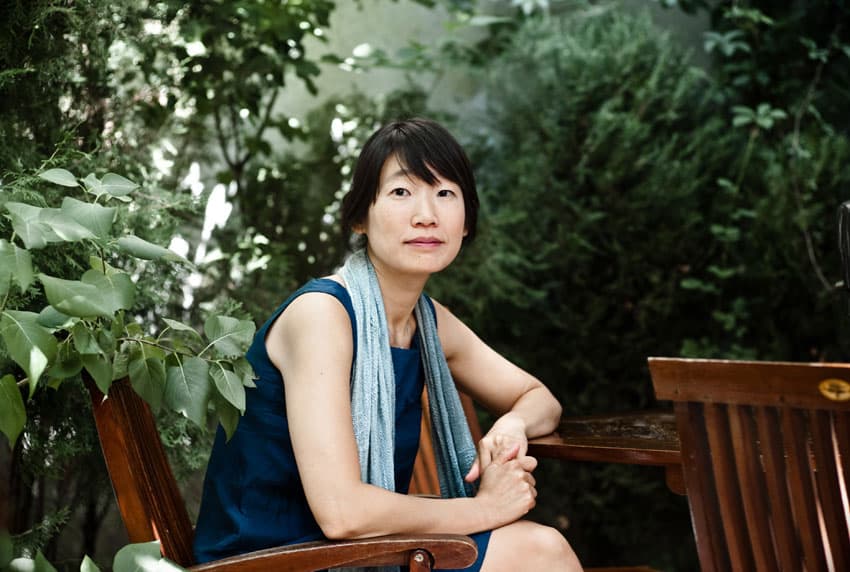
Madeleine Thien is a Canadian author known for her fiction that often explores themes of history, memory, and identity. Her notable work, "Do Not Say We Have Nothing," delves into the impact of China's Cultural Revolution on personal lives and relationships. Thien's writing has received significant recognition, including the Governor General's Award for Fiction.
Similar books
- Pachinko
Min Jin Lee
4.3 (208k) average on GoodreadsLiterary FictionEpic family saga spanning generations, exploring identity and historical hardship.
- The Joy Luck Club
Amy Tan
3.9 (598k) average on GoodreadsHistorical FictionIntergenerational story of Chinese women, exploring mother-daughter relationships and cultural heritage.
- A Fine Balance
Rohinton Mistry
4.3 (129k) average on GoodreadsLiterary FictionDetailed historical fiction set during political turmoil, focusing on the resilience of ordinary people.
- The Old Man and the Sea
Ernest Hemingway
3.8 (831k) average on GoodreadsLiterary FictionA Cuban fisherman's long struggle with a giant marlin becomes a story of endurance and dignity, now retold for young adults with illustrations, phonetic guides, and writing prompts in Traditional Chinese.
- One Hundred Years of Solitude
Gabriel García Márquez
4.1 (753k) average on GoodreadsLiterary FictionThrough the multi-generational story of the Buendía family, a mythical town deals with the repeating patterns of time, love, and solitude, as the extraordinary mixes with the ordinary.
- The Goldfinch
Donna Tartt
3.9 (720k) average on GoodreadsLiterary FictionHaunted by a tragic explosion and clutching a stolen Dutch masterpiece, a young orphan navigates the opulent drawing rooms of New York and the gritty underbelly of the art world, desperately seeking connection and redemption amidst a life spiraling into crime and obsession.




Enjoyed the summary?
A summary gives you the shape of the book. The book itself has the detail, the examples and the voice.
Find Do Not Say We Have Nothing on AmazonAs an Amazon Associate, BookBrief earns from qualifying purchases. How we're funded