

Synopsis
Covers the whole plot, including the ending.
- Difficulty
- Hard
- Pacing
- Variable
- Mood
- Dreamlike, Haunting, Surreal, Nostalgic, Apocalyptic
- Read it if
- You enjoy experimental, stream-of-consciousness prose, Beat Generation literature, or narratives that blend childhood memory with dark fantasy and psychological exploration.
- Skip it if
- You prefer linear plots, conventional narrative structures, or straightforward realism without surreal elements.
Doctor Sax Plot Summary
Covers the whole plot, including the ending.
A Boy's Nightmares in Lowell
The novel begins with young Jack Duluoz, who represents Kerouac, describing his childhood in Lowell, Massachusetts, focusing on his vivid dreams and nightmares. He is troubled by visions of Doctor Sax, a mysterious, cloaked figure with a menacing laugh and a black bag, who seems to embody both fear and a strange appeal. These night visits often come with other strange creatures and a constant feeling of dread, blurring the line between waking life and the subconscious. Jack's worries come from daily life in Lowell—its poverty, its Catholic rules, and the Merrimack River—but they grow into a fantastical realm where Doctor Sax is the mysterious leader.
The World of the Castle and the Snake
Jack's imaginary world grows to include an old, gothic castle on a hill overlooking Lowell, which he believes is Doctor Sax's hideout. This castle becomes central to his fears and fantasies. At the same time, a rumor or vision of a giant black snake starts to spread, growing larger and more threatening, seeming to engulf the town. This snake, a symbol of primal fear and coming disaster, is tied to Doctor Sax's plans, suggesting a grand, apocalyptic event. Jack and his friends often play near the river, a constant reminder of the town's possible vulnerability to this monster.
Childhood Antics and Everyday Fears
Despite the constant supernatural threats, Jack's daily life is full of typical childhood experiences. He plays baseball with friends, explores the town, goes to church, and deals with the rules of his French-Canadian Catholic upbringing. These ordinary moments are always mixed with his vivid inner world. The fears of the giant snake and Doctor Sax are always present, even during innocent activities. His friends, though mostly unaware of his inner struggles, sometimes join his imaginative games, hinting at shared anxieties of growing up in a working-class town.
Doctor Sax's Prophecies
Doctor Sax starts to appear more often in Jack's waking life, or at least in his heightened sense of reality. He is often seen in shadows, on rooftops, or in the empty streets of Lowell at night. Sax speaks in riddles and dark warnings, hinting at a coming disaster for the town. His statements are chilling, strengthening Jack's belief in the real threat of the giant snake and the final confrontation ahead. These encounters deepen Jack's fascination and fear of the mysterious figure, making him question his reality.
The Black Mass and the Ritual
In one disturbing scene, Jack sees what he thinks is a dark ritual performed by Doctor Sax and his shadowy followers inside the castle. The details are vague and dreamlike, but the impression is one of sacrilege and occult power. This event deeply affects Jack, confirming his suspicions about Doctor Sax's bad intentions and his connection to dark forces. It further solidifies the castle as a place of deep evil and the center of the supernatural threat to Lowell, raising the stakes of the story.
The Snake's Awakening
The long-feared giant black snake begins to awaken, its movements causing tremors and unsettling the people of Lowell. Reports of strange sounds, cracks in the earth, and a heavy atmosphere spread through the community. The town becomes anxious and panicked as the mythical creature seems to change from a childhood fear into a real, tangible threat. Jack feels a strange mix of validation and terror, as his deepest nightmare now appears for everyone to see, confirming Doctor Sax's dire predictions.
Doctor Sax's Revelation
As the giant snake's emergence becomes clear, Doctor Sax finally reveals himself more openly to Jack. He explains his purpose, which is not purely evil but a complex, almost cosmic role in the natural cycle of creation and destruction. Sax is a figure of coming change, a catalyst for an apocalyptic event that will cleanse or transform Lowell. His explanations are still cryptic but clarify his motivations, showing him as a more ambiguous figure than first thought, a force of nature rather than simple evil.
Confrontation at the Castle
Jack, now understanding Doctor Sax's complex role, feels drawn to the castle for the final encounter with the giant snake. Doctor Sax, with grim determination, prepares for a ritual battle or intervention. The atmosphere is tense and charged with an otherworldly energy. Jack, though terrified, is also a participant, a witness, and perhaps even an unwitting helper in the unfolding cosmic drama. The castle, once a symbol of fear, now becomes the stage for the climactic struggle that will decide Lowell's fate.
The Snake's Ascension and Metamorphosis
In a climactic, surreal sequence, the giant black snake does not destroy Lowell but rises from its underground lair, shedding its skin and undergoing a miraculous change. It ascends into the sky, transforming into a magnificent, luminous celestial dragon or serpent, a symbol of cosmic renewal rather than destruction. Jack and Doctor Sax witness this event, and perhaps the entire town, though their perception is filtered through Jack's hallucinatory vision. The apocalypse is avoided, replaced by a vision of transcendent beauty and rebirth.
Aftermath and Reflection
After the celestial event, Lowell returns to its ordinary life, but for Jack, nothing is quite the same. The visions of Doctor Sax and the giant snake fade, replaced by a lasting sense of wonder and understanding. Jack reflects on his childhood, the power of imagination, and the thin line between reality and fantasy. The experience leaves him with a deep sense of how everything in the cosmos is connected, and a realization that fear and beauty, destruction and creation, are often two sides of the same coin. The novel ends with Jack, older now, looking back on these formative, dreamlike years with a mix of nostalgia and insight.
Principal Figures
Jack Duluoz
Protagonist
A young, imaginative boy in Lowell, Massachusetts, haunted by dreams and visions.
Jack Duluoz is a sensitive and highly imaginative French-Canadian boy, growing up in the working-class town of Lowell. He possesses an intensely active inner life, prone to vivid dreams, nightmares, and a rich fantasy world populated by figures like Doctor Sax and the giant black snake. He grapples with the mundane realities of his Catholic upbringing, school, and friendships, while simultaneously navigating a personal apocalypse unfolding in his mind. Jack is observant, introspective, and deeply affected by his surroundings, processing the world through a lens of mysticism and dread.
Relationships: Doctor Sax (Fascination and fear, later a complex mentor/guide); His Mother (Source of comfort and Catholic influence); His Friends (Companions in everyday childhood adventures)
Doctor Sax
Antagonist/Mystic Guide
A mysterious, cloaked figure who embodies fear, prophecy, and cosmic power.
Doctor Sax is an enigmatic, almost spectral figure, often appearing in a black cape, slouch hat, and with a menacing leer. He is initially perceived as a source of terror and the orchestrator of an impending doom, associated with a gothic castle and dark rituals. However, as the narrative progresses, Sax reveals a more complex nature: he is a harbinger of change, a cosmic agent who understands the deeper forces at play, guiding Jack through the impending apocalypse. He speaks in riddles and prophecies, representing both the dread of the unknown and a profound, albeit dark, wisdom.
Relationships: Jack Duluoz (Obsessive subject of Jack's fear and fascination; later a cryptic guide)
The Giant Black Snake
Symbolic Antagonist
A monstrous, subterranean serpent threatening Lowell, symbolizing primal fear and cosmic change.
The Giant Black Snake is a pervasive, mythical creature that exists primarily in Jack's imagination but eventually manifests as a looming physical threat to Lowell. It symbolizes deep-seated fears, the destructive power of nature, and an impending, apocalyptic transformation. Its growth and eventual awakening drive much of the plot's tension. Ultimately, it transcends its initial monstrous form to become a symbol of cosmic renewal and transcendence, representing the cyclical nature of destruction and rebirth.
Relationships: Jack Duluoz (Object of Jack's deepest fear and fascination); Doctor Sax (An element within Doctor Sax's cosmic plan)
Jack's Mother
Supporting
A devout French-Canadian Catholic mother, providing stability and religious influence.
Jack's mother, a representation of Kerouac's own mother, embodies the traditional values and religious strictures of their French-Canadian Catholic background. She provides a sense of normalcy and domesticity amidst Jack's fantastical terrors. Her faith, her everyday routines, and her love offer a grounding presence, even as Jack's mind wanders into darker realms. She represents the tangible, familiar world that Jack is both part of and constantly escaping through his imagination.
Relationships: Jack Duluoz (Mother-son bond, offering comfort and traditional guidance)
Lowell, Massachusetts
Setting/Character
The dingy factory town that serves as the backdrop and emotional landscape for Jack's childhood.
Lowell is more than just a setting; it's a character in itself, shaping Jack's anxieties and fantasies. Its factory smokestacks, the Merrimack River, the old houses, and the general atmosphere of working-class life contribute to the novel's gritty realism, which then serves as a stark contrast to Jack's supernatural visions. The town's historical weight, its poverty, and its Catholic community deeply influence Jack's perceptions and fears, making it the crucible for his developing imagination and understanding of the world.
Themes & Insights
The Power of Imagination and Childhood Fear
The novel shows how a child's imagination can turn ordinary reality into a world of terror and wonder. Jack Duluoz's vivid dreams and fantasies about Doctor Sax and the giant snake are not just distractions; they are real experiences that shape how he sees the world. Kerouac shows how childhood anxieties—the unknown, religious rules, the poverty around him—are amplified and personified through these fantasy figures, demonstrating the huge creative and destructive power of a child's mind. The ordinary streets of Lowell become a stage for cosmic battles, highlighting how subjective reality is for young people.
“And it was that I knew that everything was just a dream, a dream of Doctor Sax, a dream of the Castle, a dream of the black snake, a dream of Lowell.”
Good vs. Evil and Cosmic Cycles
While first showing a clear battle between the terrifying Doctor Sax and the innocent Jack, the novel later explores good, evil, and the universe's cyclical nature in a more complex way. Doctor Sax is not purely evil but a complex figure linked to creation and destruction, suggesting that seemingly bad forces can be part of a larger, necessary cosmic process. The giant snake's change from a destructive monster to a celestial being supports this idea, implying that destruction can lead to renewal, and that the universe operates on a balance far beyond human ideas of morality. This ambiguity challenges common ideas of right and wrong.
“For the world is a dream and Doctor Sax is the dreamer, and the dream is a nightmare, but the nightmare is only a dream of love.”
Nostalgia and the Lost Innocence of Childhood
The story is filled with a deep nostalgia for a lost childhood, even one full of terror. Kerouac, writing from a later time, looks back at Jack's early years in Lowell with longing and understanding. The detailed descriptions of the town, the games, and family life evoke a past era, while the fantasy elements highlight the unique way children experience the world before adult disillusionment. The novel suggests that while the fears were real, they were also part of an imaginative period that, once gone, can only be recaptured through memory and art.
“Oh, my childhood, oh, my Lowell, oh, my dreams, I will never forget you.”
The Blurring of Reality and Fantasy
A main theme is the constant mixing of Jack's subjective reality with the objective world. The lines between what is truly happening in Lowell and what Jack's imagination creates are always blurred. Events that seem supernatural to Jack are often based on his daily worries, and vice-versa. This blurring suggests that for a child, the inner world can be as real and powerful as the outer one. Kerouac uses this to explore how subjective perception is and how much the subconscious influences human experience, especially during childhood.
“And I saw him again, standing in the shadows of the factory, or was it just the smoke, or was it just a dream?”
Plot Devices & Literary Techniques
Stream of Consciousness
A narrative style that mimics the free flow of thought, memory, and dreams.
Kerouac employs a stream of consciousness style, allowing the narrative to drift seamlessly between Jack Duluoz's waking observations, vivid dreams, and internal monologues. This device creates an immersive experience, placing the reader directly within Jack's highly subjective and imaginative mind. It blurs the lines between reality and fantasy, making the fantastical elements of Doctor Sax and the snake feel as immediate and real as the mundane details of Lowell. This technique reflects the uninhibited, non-linear thought processes of a child and aligns with Kerouac's spontaneous prose style.
Gothic Imagery and Symbolism
The use of dark, mysterious, and often supernatural elements to create atmosphere and deeper meaning.
The novel is replete with gothic imagery: the dilapidated castle, the cloaked figure of Doctor Sax, the dark rituals, and the monstrous black snake. These elements are not just decorative; they are deeply symbolic. The castle represents a place of hidden fears and power, Doctor Sax embodies the unknown and the cosmic, and the snake symbolizes primal terror and transformation. This gothic framework amplifies the sense of dread and mystery, grounding Jack's internal struggles in a rich, evocative landscape that feels both ancient and deeply personal.
Mythopoesis
The creation of a personal mythology within the narrative.
Kerouac crafts a unique personal mythology around Jack Duluoz's childhood fears and fascinations. Doctor Sax and the giant black snake are not just characters but archetypal figures within Jack's self-created cosmic drama. This device allows Kerouac to explore universal themes of good vs. evil, creation, and destruction through a deeply personal lens. By elevating childhood anxieties into a full-fledged myth, the novel suggests that individual experience can tap into universal archetypes, giving profound meaning to seemingly ordinary events and fears.
Bildungsroman (coming-of-age story)
A novel focusing on the psychological and moral growth of the protagonist from youth to adulthood.
While heavily infused with fantasy, 'Doctor Sax' functions as a bildungsroman, chronicling Jack Duluoz's journey through the anxieties and wonders of childhood towards a nascent understanding of the world. His encounters with Doctor Sax and the giant snake are not merely fantastical adventures but crucial experiences that shape his perception of reality, morality, and the cosmic order. The narrative follows Jack's psychological development as he grapples with fear, meaning, and the transition from innocent belief to a more complex, albeit still wondrous, view of existence.
Doctor Sax Quotes
“The wind was howling like a banshee, and the river was a black snake coiling through the town.”
“And the horror of it was that he loved the horror.”
“The world was a dream, and he was dreaming it.”
“Doctor Sax was the secret heart of the world.”
“All of human life is a dream and a delusion and a brief moment of consciousness in the vast dark.”
“He saw the shadow of the great bat in the moon, and knew his doom was near.”
“The night was full of secrets and the wind was whispering them.”
“Childhood is a time of monsters and angels.”
“And the river flowed on, carrying all the dreams and nightmares to the sea.”
“The dark was not empty, but full of all the things that had ever been.”
“Life is a great show, and we are all just actors in it.”
“He felt the presence of something ancient and powerful, something that predated man.”
“The only truth is the imagination.”
“And the great bat hovered, waiting for the end of the world.”
Quiz
10 questions on the plot and the characters. Each answer comes with a short explanation.
Question 1
What is the name of the protagonist's alter ego and the main character through whose eyes the story is told?
- Jack Kerouac
- Jack Duluoz
- Dr. Sax
- Lowell Duluoz
Show answer
B. Jack Duluoz The protagonist of 'Doctor Sax' is Jack Duluoz, a fictionalized version of Jack Kerouac himself, growing up in Lowell.
Question 2
In what specific town does Jack Duluoz grow up, which is also Kerouac's real-life hometown?
- Boston, Massachusetts
- New York City, New York
- Lowell, Massachusetts
- Concord, New Hampshire
Show answer
C. Lowell, Massachusetts The novel is set in Lowell, Massachusetts, Kerouac's actual hometown, which is vividly depicted as a dingy factory town.
Question 3
What is Dr. Sax's signature attire, as described in the novel?
- A white lab coat and spectacles
- A flowing cape and a slouch hat
- A tailored suit and a fedora
- Leather jacket and motorcycle boots
Show answer
B. A flowing cape and a slouch hat Dr. Sax is consistently portrayed with his distinctive flowing cape and slouch hat, contributing to his mysterious and sinister appearance.
Question 4
What kind of creatures are central to Dr. Sax's apocalyptic vision and the impending doom he foresees?
- Giant scorpions
- Mutated rats
- Giant snakes
- Vampiric bats
Show answer
C. Giant snakes Dr. Sax's apocalyptic pronouncements often revolve around the emergence of giant snakes that threaten to engulf the world.
Question 5
The novel blends which two literary elements to create its unique narrative style?
- Historical fact and journalistic reporting
- Memory and dream
- Scientific data and philosophical debate
- Autobiography and political commentary
Show answer
B. Memory and dream The novel is explicitly described as 'deftly mingling memory and dream,' which is a hallmark of Kerouac's prose in this work.
Question 6
What is the primary role of Dr. Sax in Jack Duluoz's world?
- A friendly mentor providing guidance
- A feared, cryptic figure associated with apocalypse and hidden knowledge
- A historical figure Jack researches for a school project
- A rival gang leader in Lowell
Show answer
B. A feared, cryptic figure associated with apocalypse and hidden knowledge Dr. Sax is presented as a 'cryptic, apocalyptic hipster phantom' who embodies the fears and mysteries of Jack's fantasy world, rather than a benevolent figure.
Question 7
What does the 'haunting novel of intensely felt adolescence' primarily explore through Jack Duluoz's experiences?
- The economic struggles of working-class families
- The transition from childhood imagination to the harshness of adult reality
- The political corruption in small American towns
- The impact of war on a young boy's psyche
Show answer
B. The transition from childhood imagination to the harshness of adult reality The novel focuses on Jack's intensely felt adolescence, where his rich fantasy world populated by figures like Dr. Sax grapples with the encroaching reality of growing up.
Question 8
How does Kerouac's writing style in 'Doctor Sax' contribute to the novel's atmosphere?
- Through precise, detached, and minimalist descriptions
- Through academic, structured, and highly formal language
- Through authentic, rolling rhythms and a 'drunk with eagerness for life' quality
- Through satirical, ironic, and cynical observations
Show answer
C. Through authentic, rolling rhythms and a 'drunk with eagerness for life' quality The provided review explicitly states, 'Kerouac dreams of America in the authentic rolling rhythms of a Whitman or a Thomas Wolfe, drunk with eagerness for life,' highlighting his distinctive, immersive style.
Question 9
What significant event, based on real-life experience, does the novel culminate in, symbolizing a loss of innocence or a transition?
- Jack's departure from Lowell to attend college
- A major flood in Lowell, which is a real event from Kerouac's childhood
- Dr. Sax revealing his true identity to Jack
- Jack leading a local baseball team to victory
Show answer
B. A major flood in Lowell, which is a real event from Kerouac's childhood The novel culminates with a massive flood in Lowell, a real event from Kerouac's childhood, which serves as a powerful, climactic symbol of the end of an era and the destruction of the old world.
Question 10
How does Dr. Sax's 'insinuating leer' and role as an 'apocalyptic hipster phantom' reflect the thematic tension in the novel?
- It represents the innocent and carefree nature of childhood games.
- It embodies the blend of alluring mystery and underlying dread that accompanies Jack's coming-of-age and his imaginative world.
- It signifies a purely evil force Jack must overcome through conventional means.
- It portrays a purely comedic character designed to relieve tension.
Show answer
B. It embodies the blend of alluring mystery and underlying dread that accompanies Jack's coming-of-age and his imaginative world. Dr. Sax, with his 'insinuating leer' and 'apocalyptic hipster phantom' persona, perfectly encapsulates the novel's blend of childhood fantasy, the allure of the unknown, and the underlying sense of impending doom and the loss of innocence.
Doctor Sax FAQ
What is the central premise of 'Doctor Sax'?
'Doctor Sax' chronicles the childhood and adolescent experiences of Jack Duluoz in Lowell, Massachusetts, as he grapples with the interplay of his vivid imagination and the mundane, often grim, realities of his working-class upbringing. The enigmatic figure of Doctor Sax, a shadowy, apocalyptic phantom, serves as a recurring symbol and catalyst within Jack's rich fantasy world, influencing his perceptions of good and evil.
Who is Doctor Sax, and what is his role in Jack Duluoz's world?
Doctor Sax is a mysterious, often menacing, figure in Jack Duluoz's feverish imagination, characterized by his flowing cape, slouch hat, and leering demeanor. He embodies both a dark, apocalyptic force and a guide through the supernatural elements of Jack's fantasies, frequently appearing during moments of fear, wonder, or impending doom, and symbolizing the darker, more profound truths Jack perceives.
Where is the primary setting for the novel, and how does it influence the story?
The novel is primarily set in Lowell, Massachusetts, a dingy factory town that heavily influences Jack Duluoz's experiences. The gritty urban landscape, the French-Canadian immigrant community, and the backdrop of the Merrimack River provide a tangible reality against which Jack's fantastical visions unfold, creating a stark contrast between his inner world and his external environment.
What kind of narrative style does Kerouac employ in 'Doctor Sax'?
Kerouac utilizes a stream-of-consciousness, often dreamlike narrative style, blending memory and fantasy seamlessly. His prose is characterized by its rhythmic, almost poetic quality, reflecting the spontaneous bop prosody he developed, and capturing the raw, uninhibited flow of Jack Duluoz's thoughts and perceptions without strict adherence to conventional plot structures.
How does the novel explore the transition from childhood innocence to adolescent awareness?
'Doctor Sax' explores this transition through Jack Duluoz's evolving understanding of the world, where his early, unbridled fantasies gradually confront the harshness of reality, including death, poverty, and the complexities of human nature. The presence of Doctor Sax often marks these pivotal moments, symbolizing the loss of innocence and the dawning of a more complex, often frightening, awareness.
Are there any specific historical events or local legends from Lowell that influence the narrative?
While not explicitly detailed as historical events, the novel draws heavily on the atmosphere of working-class Lowell in the 1930s, including its French-Canadian immigrant community and the industrial landscape. Kerouac weaves in local folklore and the palpable sense of decay and renewal associated with such a town, imbuing the setting with a mythic quality that grounds Jack's fantastical visions.
What is the significance of the black snake imagery that appears throughout the book?
The black snake is a potent recurring symbol in 'Doctor Sax,' often associated with primal fear, danger, and the subconscious. It represents the lurking threats and hidden anxieties of Jack's world, both real and imagined, and its eventual transformation or confrontation often signifies a breakthrough or a moment of profound realization for Jack.
How do the 'ghosts and demons' that populate Jack's world relate to his real-life experiences?
The 'ghosts and demons' in Jack's fantasy world are often symbolic manifestations or exaggerations of his real-life fears, anxieties, and observations. For example, the pervasive sense of poverty, the strictures of Catholicism, or the presence of death in his community are transmuted into the spectral figures and apocalyptic scenarios he envisions, providing a coping mechanism and a way to process his experiences.
Is Doctor Sax a purely imaginary figure, or does he represent a real person or archetype?
Doctor Sax is primarily an imaginary figure, a projection of Jack Duluoz's subconscious, but he can be interpreted as an archetype representing the shadow self, the inevitable confrontation with mortality, or even the darker aspects of the divine. He embodies the unseen forces that shape Jack's understanding of the universe, bridging the gap between childhood fantasy and nascent philosophical inquiry.
How does Kerouac's own background influence Jack Duluoz's character and experiences?
Kerouac explicitly drew from his own French-Canadian upbringing in Lowell, Massachusetts, making Jack Duluoz a thinly veiled autobiographical character. Jack's Catholic schooling, his family dynamics, his friendships, and his imaginative inner life directly mirror Kerouac's own formative experiences, infusing the novel with a deep sense of personal authenticity and nostalgic reflection.
What psychological theories might help interpret Jack Duluoz's rich fantasy life?
Jack Duluoz's rich fantasy life could be interpreted through Freudian concepts of the id and ego, where his imagination acts as a release for subconscious desires and fears. Jungian archetypes, particularly the 'shadow' figure embodied by Doctor Sax, and the 'puer aeternus' representing the eternal child, also offer frameworks for understanding his psychological development and the symbolic nature of his visions.
How does Jack's Catholicism shape his perception of Doctor Sax and the apocalyptic themes?
Jack's Catholic upbringing profoundly influences his perception of Doctor Sax, often casting him as a demonic or purgatorial figure, and shaping his understanding of good, evil, sin, and redemption. The apocalyptic themes in the novel draw heavily on Catholic eschatology, with Doctor Sax frequently playing a role in a grand, final judgment or transformation, reflecting Jack's deep-seated religious anxieties and hopes.
What is the psychological impact of the constant blurring between reality and fantasy on Jack Duluoz?
The constant blurring between reality and fantasy allows Jack Duluoz to process the often-harsh realities of his life in Lowell, providing an emotional outlet and a means of imposing order or meaning onto chaos. Psychologically, it suggests a highly sensitive and imaginative mind that uses internal narratives to cope with external pressures, potentially leading to a unique, albeit sometimes isolated, perspective on the world.
How does the novel explore the theme of mortality through Jack's eyes?
The novel explores mortality through Jack Duluoz's early encounters with death, both real and imagined, and his contemplation of the afterlife, heavily influenced by his Catholic background. Doctor Sax often appears during moments of perceived danger or death, prompting Jack to confront his own fears of non-existence and the fragility of life, contributing to his deepening existential awareness.
Is 'Doctor Sax' ultimately a hopeful or a pessimistic novel?
'Doctor Sax' is arguably more hopeful than pessimistic, despite its exploration of dark themes and anxieties. While it delves into fear, death, and apocalyptic visions, it ultimately celebrates the power of imagination and the resilience of the human spirit. Jack Duluoz's journey, though fraught with darkness, is also a testament to the transformative power of creativity and the enduring quest for meaning.
How does the novel fit into Kerouac's broader body of work, particularly the Duluoz Legend?
'Doctor Sax' is a foundational text within Kerouac's Duluoz Legend, an ambitious autobiographical cycle of novels. It establishes the childhood origins and psychological landscape of Jack Duluoz (Kerouac's alter ego), providing crucial backstory and thematic groundwork for later works, illustrating the development of his unique narrative voice and his enduring fascination with memory and self-exploration.
What is the significance of the novel's 'apocalyptic hipster phantom' description of Doctor Sax?
The description 'apocalyptic hipster phantom' highlights Doctor Sax's dual nature: 'apocalyptic' refers to his association with end-times visions and profound transformations, while 'hipster phantom' suggests a detached, cool, and somewhat mysterious knowledge of the universe, predating and transcending conventional understanding. This blend makes him a uniquely Kerouacian figure, both ancient and modern in his symbolic power.
How does Kerouac use language to convey the 'accents and texture' of his boyhood in Lowell?
Kerouac masterfully uses language to convey the 'accents and texture' of Lowell through vivid, sensory descriptions, incorporating French-Canadian colloquialisms, and mimicking the rhythms of spoken word. His long, winding sentences and improvisational style create an immersive atmosphere, allowing the reader to experience the sights, sounds, and emotional nuances of Jack's childhood environment directly.
About the author

Jean-Louis Lebris de Kérouac, known as Jack Kerouac, was an American novelist and poet who, alongside William S. Burroughs and Allen Ginsberg, was a pioneer of the Beat Generation.
Similar books
- On The Road
Jack Kerouac
3.6 (349k) average on GoodreadsLifestyleShares Kerouac's distinctive prose style and autobiographical elements, though 'Doctor Sax' is more internally focused.
- A Portrait of the Artist as a Young Man
James Joyce
3.6 (128k) average on GoodreadsLiterary FictionExplores the psychological and spiritual development of a young protagonist through an introspective, literary lens.
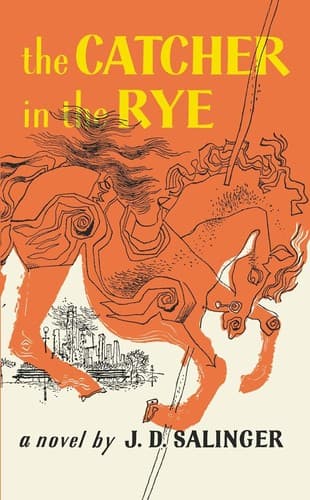
- The Catcher in the Rye
J.D. Salinger
3.8 (2.7M) average on GoodreadsYoung AdultBoth novels explore adolescent angst, but Salinger's The Catcher in the Rye uses a more conventional narrative structure and focuses on psychological realism and social alienation. Kerouac's Doctor Sax takes a decidedly more abstract and fantastic approach, blurring the lines between reality and a child's vivid, often terrifying imagination, with less emphasis on social realism and more on the mythic.
- The Old Man and the Sea
Ernest Hemingway
3.8 (831k) average on GoodreadsLiterary FictionA Cuban fisherman's long struggle with a giant marlin becomes a story of endurance and dignity, now retold for young adults with illustrations, phonetic guides, and writing prompts in Traditional Chinese.
- One Hundred Years of Solitude
Gabriel García Márquez
4.1 (753k) average on GoodreadsLiterary FictionThrough the multi-generational story of the Buendía family, a mythical town deals with the repeating patterns of time, love, and solitude, as the extraordinary mixes with the ordinary.
- The Goldfinch
Donna Tartt
3.9 (720k) average on GoodreadsLiterary FictionHaunted by a tragic explosion and clutching a stolen Dutch masterpiece, a young orphan navigates the opulent drawing rooms of New York and the gritty underbelly of the art world, desperately seeking connection and redemption amidst a life spiraling into crime and obsession.





Enjoyed the summary?
A summary gives you the shape of the book. The book itself has the detail, the examples and the voice.
Find Doctor Sax on AmazonAs an Amazon Associate, BookBrief earns from qualifying purchases. How we're funded