
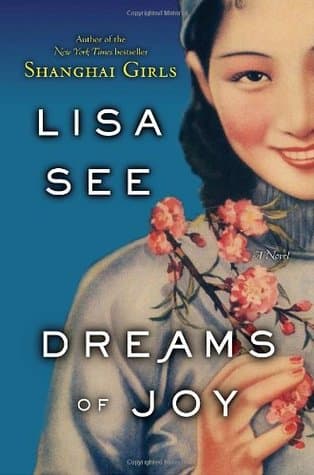
Synopsis
Covers the whole plot, including the ending.
- Difficulty
- Medium
- Pacing
- Moderate
- Mood
- Historical, Dramatic, Emotional, Intense, Educational
- Read it if
- You enjoy historical fiction set in mid-20th century China, exploring complex mother-daughter relationships and the impact of political upheaval on personal lives.
- Skip it if
- You prefer light-hearted reads or are not interested in detailed depictions of famine and political oppression.
Dreams of Joy Plot Summary
Covers the whole plot, including the ending.
A Secret Revealed
Nineteen-year-old Joy, living in Los Angeles in 1957, overhears a conversation between her mother, Pearl, and her aunt, May. She learns her father, Sam, is not her biological father; Z.G. Li, a Chinese artist, is. This discovery shatters Joy's sense of identity. She feels like an outsider in her American life. Joy, wanting to connect with her heritage and Z.G. Li, decides to run away to Communist China. She believes she will find acceptance and purpose in the new society.
Pearl's Desperate Pursuit
Devastated by Joy's disappearance and terrified for her safety, Pearl makes the decision to leave her life in America. She sells her Chinese restaurant, entrusts her younger daughter, May, with Sam, and travels to Shanghai. Pearl is driven by a mother's love and guilt over the secrets she kept from Joy. Her mission is clear: find Joy, explain the past, and bring her home, no matter the personal cost or the dangers of Communist rule.
Arrival in Shanghai
Joy arrives in Shanghai and is quickly swept up in the revolutionary fervor. She meets her biological father, Z.G. Li, who seems to adapt to the new regime despite his past as a 'bourgeois' artist. Joy, idealistic and eager, volunteers for Communist Party initiatives, including propaganda and farm labor. Meanwhile, Pearl's arrival in Shanghai meets suspicion and bureaucratic obstacles. She struggles to navigate the complex environment, facing language barriers and constant Party surveillance, while searching for Joy.
Life on the Collective Farm
Joy is assigned to a collective farm. She initially embraces the communal spirit and hard labor, believing she contributes to a better China. However, idealism gives way to the harsh realities of farm life. She endures grueling work, meager rations, and pressure to meet impossible quotas. The collective's initial enthusiasm fades as food shortages increase and Party demands grow. Joy witnesses the loss of individual freedoms and growing fear among villagers, but remains committed to the cause, though with doubts.
Pearl's Difficult Journey Inland
Pearl, after difficulty and using old connections, gets permission to travel inland, following rumors of foreign students. Her journey is dangerous, with poor travel conditions, food scarcity, and constant suspicion from officials. She meets people, some sympathetic, others hostile, who show the impact of Communist policies. Pearl's determination is unwavering, fueled by her love for Joy and a growing understanding of the suffering in the Chinese countryside.
The Great Leap Forward Begins
As the Great Leap Forward intensifies, the collective farm where Joy resides reaches its breaking point. Farmers melt down tools for steel, use unscientific agricultural practices, and provide inflated harvest reports. Food becomes scarce, leading to widespread famine. Joy and other villagers suffer from malnutrition and disease. The initial revolutionary fervor is replaced by desperation. She witnesses many deaths, including children, and begins to understand the catastrophic consequences of the Party's policies.
Reunion and Revelation
Pearl finds Joy on the collective farm, but their reunion is bittersweet. Joy is emaciated and disillusioned. Pearl, seeing the devastating conditions, tries to convince Joy to return home, but Joy, despite her suffering, feels loyalty to the people she has endured with. During this time, Pearl learns more about Z.G. Li's true nature and his opportunistic adaptation to the Communist regime. This further complicates Joy's understanding of her parentage and her mothers' choices.
Escape Attempts and Betrayals
Pearl and Joy, with a few trusted friends from the collective, try to escape the famine-stricken area and reach the coast. Their journey is dangerous, with desperate villagers, zealous Party officials, and starvation. They make agonizing decisions, sacrificing some for others' survival. Betrayals occur, showing the extreme pressures people are under. Pearl's resourcefulness and determination are tested as she tries to protect Joy.
The Cost of Survival
As their escape becomes desperate, Pearl realizes only one of them might make it to safety. In an act of maternal sacrifice, Pearl helps Joy escape China, knowing she likely will not survive or will face severe punishment. She uses her remaining resources, past connections, and courage to give Joy a chance at a future. This selfless act shows the depth of Pearl's love and her redemption for the secrets she kept.
Joy's Return and Legacy
Joy, bearing the scars of her experiences in China and the loss of her mother, Pearl, eventually returns to America. She is no longer the idealistic girl who ran away. Her time in China, witnessing the horrors of the Great Leap Forward and human strength, has transformed her. She carries memories of the famine, sacrifices, and her mother's love. Joy's return marks the beginning of her healing and her acceptance of her complex identity, honoring both her Chinese heritage and her American upbringing.
Principal Figures
Joy
Protagonist
A spirited young woman who seeks her identity in Communist China.
Joy is a nineteen-year-old in 1957, fiercely independent, idealistic, and somewhat rebellious. She feels like an outsider in her American life and longs for a deeper connection to her Chinese heritage. Upon learning her true parentage, she impulsively runs to China, seeking a sense of belonging and purpose in the burgeoning New Society. Her initial idealism is gradually shattered by the harsh realities of the Great Leap Forward, but her resilience and capacity for empathy grow through her suffering.
Relationships: Pearl (Biological mother; initially strained due to secrets, later deepens into profound love and sacrifice.); May (Aunt; also her mother figure during early life.); Z.G. Li (Biological father; initially idolized, later revealed to be opportunistic and somewhat detached.); Sam (Adoptive father; a stable, loving presence in her American life.)
Pearl
Protagonist
Joy's biological mother, who risks everything to save her daughter.
Pearl is a strong-willed, resilient woman who has built a successful life in America after escaping a traumatic past in China. She carries the burden of deep family secrets, particularly about Joy's true parentage, which she kept to protect her daughters. Her love for Joy is fierce and unwavering, driving her to undertake a perilous journey to Communist China to find and rescue her daughter. She is resourceful, courageous, and ultimately makes the ultimate sacrifice for Joy's survival, demonstrating immense maternal love and redemption.
Relationships: Joy (Biological daughter; complex relationship due to secrets, ultimately one of profound, sacrificing love.); May (Sister; a lifelong bond, often strained but deeply supportive.); Z.G. Li (Past lover and biological father of Joy; a complicated, painful history.); Sam (Husband; a loving and supportive partner.)
Z.G. Li
Supporting
Joy's biological father, a renowned artist adapting to the Communist regime.
Z.G. Li is a charismatic and talented artist, once loved by both Pearl and May. In Communist China, he navigates the political landscape by adapting his art and public persona to suit the Party's demands, often at the expense of his artistic integrity and personal values. He is an opportunist and a survivor, skilled at self-preservation. While he acknowledges Joy as his daughter, his love for her is overshadowed by his concern for his own position and safety within the regime, making him a distant and ultimately disappointing figure.
Relationships: Joy (Biological daughter; a distant and somewhat self-serving relationship.); Pearl (Past lover; a source of complex history and unresolved feelings.); May (Past lover; a source of complex history and unresolved feelings.)
May
Supporting
Pearl's sister and Joy's aunt, a steady anchor in America.
May is Pearl's younger sister, who has always played a significant role in Joy's upbringing. She is more pragmatic and grounded than Pearl, often serving as a calming influence. While she also carries the weight of the family secrets, she remains in America to care for Sam and Pearl's younger daughter, providing a stable home. Her love for Joy is evident in her concern and her support for Pearl's dangerous mission.
Relationships: Pearl (Sister; a deep, enduring bond despite past jealousies and secrets.); Joy (Niece; a loving, maternal relationship.); Sam (Brother-in-law; a trusted family member.)
Sam
Supporting
Pearl's husband and Joy's adoptive father, a kind and supportive man.
Sam is Pearl's loving husband and the man Joy believes is her father for most of her life. He is a kind, steady, and supportive presence in the family. Though not Joy's biological father, he loves her as his own. His quiet strength and understanding provide a contrast to the tumultuous emotions and dangerous circumstances Pearl and Joy face in China. He represents the stable, loving home Joy leaves behind and eventually returns to.
Relationships: Pearl (Husband; a loving and supportive partner.); Joy (Adoptive father; a deeply loving and paternal relationship.); May (Brother-in-law; a trusted family member.)
Mei
Supporting
A young girl on the collective farm who befriends Joy.
Mei is a young girl from the collective farm who forms a bond with Joy. She represents the innocence and vulnerability of the Chinese people caught in the famine. Her struggles and eventual fate highlight the devastating impact of the Great Leap Forward on the most defenseless members of society. Mei's friendship helps Joy understand the human cost of the political policies and deepens Joy's empathy for the villagers.
Relationships: Joy (Friend; a bond forged in shared hardship.)
Old Man Wei
Supporting
A wise elder on the collective farm who offers guidance.
Old Man Wei is an elder on the collective farm, a repository of traditional wisdom and a voice of subtle dissent. He initially helps Joy understand the nuances of rural Chinese life and the local customs. As the famine worsens, he represents the resilience and quiet defiance of the older generation, who have seen much hardship. His presence provides a connection to China's past and a critical perspective on the Party's policies, guiding Joy with his experience.
Relationships: Joy (Mentor/guide; offers wisdom and practical advice.)
Themes & Insights
The Search for Identity and Belonging
Joy's main struggle is to understand who she is and where she belongs. Raised in America but with Chinese roots and hidden parentage, she feels torn between two worlds. Her journey to China is an attempt to find a new identity connected to her biological father and the 'New Society.' However, the realities she faces force her to reconcile her American upbringing with her Chinese heritage, shaping a more nuanced sense of self. This theme is clear when Joy learns about Z.G. Li and feels compelled to find him, believing he holds the key to her true self, and later, as she faces disillusionment on the collective farm.
“I had always felt like a girl divided, Chinese in America, American in China. Now I knew why.”
Maternal Love and Sacrifice
A cornerstone of the novel is the enduring love of a mother, especially through Pearl. Her decision to leave her safe life in America and embark on a dangerous journey into famine-stricken China to save Joy shows unconditional love. Pearl's past actions, though deceitful, were driven by a desire to protect Joy. Her ultimate sacrifice highlights her devotion. This theme is powerfully shown in the climax where Pearl ensures Joy's escape at the cost of her own life.
“A mother's love is a powerful thing, Pearl thought. It could cross oceans, break through walls, survive famine and war.”
The Dangers of Idealism and Totalitarianism
The novel shows how unchecked idealism can lead to catastrophic consequences, especially with totalitarian control. Joy arrives in China full of revolutionary fervor, eager to contribute to the 'New Society.' She initially believes the Communist Party's propaganda. But her experiences on the collective farm, witnessing famine, forced labor, and loss of life during the Great Leap Forward, strip away her illusions. The story exposes the human cost of a regime that prioritizes ideology over individual well-being and truth. The widespread starvation and suffering on the collective farm directly show this theme.
“Hope was a dangerous thing in China. It could make you do things, say things, believe things that weren't true.”
Memory, Secrets, and Forgiveness
The story is deeply tied to the impact of past secrets and their shadow on the present. Pearl's decision to conceal Joy's true paternity drives much of the initial conflict, leading to Joy's flight. The journey to China forces both Pearl and Joy to confront these secrets, understand the motivations behind them, and work towards forgiveness. The historical memories of Pearl's past in Shanghai and the collective trauma of the Great Leap Forward are central to the characters' development and their eventual reconciliation. The initial revelation of Joy's true father starts the entire story, setting this theme in motion.
“A secret was like a seed. Once planted, it grew, twisting and turning, until it choked everything else.”
Plot Devices & Literary Techniques
The Journey as Metaphor
Physical travel mirrors internal transformation.
Both Joy's and Pearl's physical journeys across continents and into the heart of rural China serve as powerful metaphors for their internal transformations. Joy's journey from naive idealism to disillusioned maturity reflects the harsh realities she encounters. Pearl's arduous trek to find Joy symbolizes her own emotional journey of atonement, sacrifice, and the deepening of her maternal love. The dangerous and difficult nature of their travels mirrors the internal obstacles they must overcome and the profound changes they undergo.
Dramatic Irony
The reader knows more than the characters, especially about China's future.
Dramatic irony is frequently used, particularly concerning the historical context. The reader is aware of the devastating consequences of the Great Leap Forward, which began in 1958, while Joy initially arrives in 1957 full of hope. This creates a sense of foreboding and tragedy as Joy's idealism is slowly eroded by the unfolding disaster. The reader also understands the full weight of Pearl's family secrets and the motivations behind them, often before Joy does, which amplifies the emotional impact of their eventual confrontations and reconciliations.
Symbolism of Food
Food represents survival, prosperity, and cultural connection.
Food serves as a powerful symbol throughout the novel. In America, Pearl's successful Chinese restaurant symbolizes prosperity, cultural preservation, and a connection to her heritage. In China, the increasing scarcity of food during the Great Leap Forward directly symbolizes the failure of the Communist policies, the suffering of the people, and the struggle for bare survival. The presence or absence of food marks the changing fortunes of the characters and the nation, highlighting the stark contrast between abundance and famine.
The Unreliable Narrator (partial)
Characters' limited perspectives shape initial understanding.
While the narration is generally third-person, the story often presents events through the limited perspectives of Joy and Pearl, making them partially unreliable in their initial interpretations. Joy, with her youthful idealism, initially misinterprets the true nature of the 'New Society' and her father, Z.G. Li. Pearl, burdened by guilt and secrets, initially struggles to communicate her full truth to Joy. This device allows for gradual revelations and a deeper understanding of characters' motivations and the complex historical context as their perspectives evolve.
Dreams of Joy Quotes
“When you have nothing, you are free to choose a new path.”
“In China, everything is political. Even love.”
“The past is like a string. You can cut it, but it's still there, just in smaller pieces.”
“A mother’s heart is a deep well, at the bottom of which you will always find forgiveness.”
“To be truly free, you must first be free in your mind.”
“Sometimes, the strongest love is the one that lets go.”
“Hope is a small, fragile bird, but it can fly through the darkest storms.”
“A secret is a heavy burden, even if it's meant to protect someone.”
“The greatest journey is the one you take to find yourself.”
“To truly understand someone, you must walk in their shoes, even if those shoes are worn and dusty.”
“The rice bowl is never truly empty as long as there is family.”
“Silence can speak louder than words, especially when it hides the truth.”
“Sometimes, the hardest thing to do is to forgive yourself.”
“Home is not always a place, but a feeling of belonging.”
Quiz
10 questions on the plot and the characters. Each answer comes with a short explanation.
Question 1
Why does Joy run away to Shanghai in early 1957?
- To escape an arranged marriage in the United States.
- To find her birth father, the artist Z.G. Li.
- To pursue a career as a revolutionary in Communist China.
- To reunite with her aunt May, who had returned to China.
Show answer
B. To find her birth father, the artist Z.G. Li. Joy runs away to Shanghai after discovering family secrets, specifically to find her birth father, Z.G. Li, with whom both Pearl and May were once in love.
Question 2
What is the primary motivation for Pearl to follow Joy to China?
- To explore her own roots and revisit her past in Shanghai.
- To ensure Joy's safety and attempt reconciliation.
- To join the Communist movement alongside her daughter.
- To confront Z.G. Li about his past actions.
Show answer
B. To ensure Joy's safety and attempt reconciliation. Devastated by Joy’s flight and terrified for her safety, Pearl is determined to save her daughter, no matter the personal cost, hoping for reconciliation.
Question 3
Who is Z.G. Li in relation to Joy?
- He is her adopted father.
- He is her biological father.
- He is her uncle.
- He is a family friend who helps her in China.
Show answer
B. He is her biological father. Joy runs away to Shanghai to find her birth father, the artist Z.G. Li, with whom both May and Pearl were once in love.
Question 4
What historical period and political climate does Joy initially embrace upon arriving in China?
- The Nationalist Party's rule before the Communist takeover.
- The New Society of Red China under the Communist regime.
- Post-Cultural Revolution reforms and openness.
- The Sino-Japanese War era.
Show answer
B. The New Society of Red China under the Communist regime. Dazzled by Z.G. Li, and blinded by idealism and defiance, Joy throws herself into the New Society of Red China, heedless of the dangers in the Communist regime.
Question 5
The novel is described as featuring 'one of the most tragic episodes in China’s history.' Which specific historical event is this likely referring to, given the timeframe and context?
- The Nanjing Massacre
- The Cultural Revolution
- The Great Leap Forward and subsequent famine
- The Boxer Rebellion
Show answer
C. The Great Leap Forward and subsequent famine Given the setting of early 1957 and the mention of converging journeys threatening their lives, the novel is likely referring to the Great Leap Forward and the devastating famine that followed, which began around this period.
Question 6
What kind of family secrets are uncovered that prompt Joy's initial flight to China?
- Secrets about her mother's hidden wealth.
- Secrets about her true parentage and her birth father.
- Secrets about her American father's past as a spy.
- Secrets about a long-lost sibling.
Show answer
B. Secrets about her true parentage and her birth father. Reeling from newly uncovered family secrets, Joy runs away to Shanghai in early 1957 to find her birth father.
Question 7
How does Joy's initial view of the Communist regime change throughout her journey?
- She maintains her unwavering idealism and defiance, never questioning the regime.
- She becomes increasingly disillusioned as she experiences the dangers and harsh realities of the regime.
- She becomes a high-ranking official within the Communist Party.
- Her views are not explicitly stated, only her actions.
Show answer
B. She becomes increasingly disillusioned as she experiences the dangers and harsh realities of the regime. Joy initially throws herself into the New Society 'heedless of the dangers in the Communist regime,' implying that she later confronts these dangers, leading to a change in her perspective as she experiences the 'almost insurmountable challenges' and 'tragic episodes.'
Question 8
What is the relationship between 'Shanghai Girls' and 'Dreams of Joy'?
- 'Dreams of Joy' is a standalone novel with no connection to 'Shanghai Girls'.
- 'Dreams of Joy' is a prequel to 'Shanghai Girls'.
- 'Dreams of Joy' is a sequel, continuing the story of Pearl and May and introducing Pearl's daughter, Joy.
- 'Dreams of Joy' features entirely new characters in a different historical setting.
Show answer
C. 'Dreams of Joy' is a sequel, continuing the story of Pearl and May and introducing Pearl's daughter, Joy. The description states, 'acclaimed author Lisa See returns to the story of sisters Pearl and May from Shanghai Girls, and Pearl’s strong-willed nineteen-year-old daughter, Joy.' This indicates 'Dreams of Joy' is a continuation or sequel.
Question 9
Beyond the political dangers, what kind of personal challenges does Pearl face in her quest to find Joy?
- She struggles with learning the Chinese language and customs for the first time.
- She confronts old demons and almost insurmountable challenges from her past.
- She faces constant rejection from Joy, who refuses to acknowledge her.
- She is constantly pursued by American authorities trying to bring her back.
Show answer
B. She confronts old demons and almost insurmountable challenges from her past. The description notes, 'Pearl confronts old demons and almost insurmountable challenges as she follows Joy,' indicating personal struggles beyond just the political landscape.
Question 10
What is the underlying theme of the novel regarding the pursuit of idealism versus the harshness of reality?
- Idealism always triumphs over adversity, leading to positive societal change.
- The novel explores how youthful idealism, particularly in a volatile political climate, can lead to dangerous and tragic consequences.
- Reality is always worse than any ideal, making all idealistic pursuits futile.
- The primary focus is on the beauty of Chinese culture, not political themes.
Show answer
B. The novel explores how youthful idealism, particularly in a volatile political climate, can lead to dangerous and tragic consequences. Joy is described as 'blinded by idealism and defiance' and 'heedless of the dangers in the Communist regime,' only for her and Pearl's lives to be threatened by 'one of the most tragic episodes in China’s history.' This juxtaposition highlights the dangerous collision of idealism with harsh reality.
Dreams of Joy FAQ
What is the central conflict that drives the plot of 'Dreams of Joy'?
The central conflict revolves around Joy's impulsive decision to run away to Communist China in 1957 to find her birth father, Z.G. Li, and Pearl's desperate, perilous journey to follow and save her daughter from the escalating dangers of the Maoist regime and the unfolding Great Leap Forward.
Who are the main characters and their key relationships at the beginning of the novel?
The main characters are Pearl, a Chinese immigrant living in Los Angeles, and her nineteen-year-old daughter, Joy. Their relationship is strained by Joy's recent discovery of her true parentage, revealing that Z.G. Li, an artist in Shanghai, is her biological father, not Pearl's American husband, Sam.
What historical period and major events does 'Dreams of Joy' cover?
'Dreams of Joy' is set in early 1957 and spans several years, primarily covering the Anti-Rightist Campaign and the devastating Great Leap Forward in Communist China. These events led to widespread famine and persecution, profoundly impacting the lives of Joy, Pearl, and the people they encounter.
How does Joy's idealism influence her initial experiences in China?
Joy, blinded by idealism and defiance, initially embraces the New Society of Red China with fervor. She believes in its promise of equality and progress, volunteering for communal projects and becoming a fervent supporter of the Communist Party, which makes her oblivious to the early warning signs of the regime's oppressive nature.
What motivates Pearl's decision to leave her life in America and follow Joy to China?
Pearl is driven by overwhelming maternal love and fear for Joy's safety. Devastated by Joy's flight and knowing the dangers of Communist China, Pearl feels an urgent need to protect her daughter, atoning for past secrets and determined to reconcile with Joy no matter the personal cost or hardship.
What is the significance of the character Z.G. Li beyond being Joy's birth father?
Z.G. Li represents not only Joy's biological link but also a painful past for Pearl and May, as both sisters were once in love with him. His artistic idealism initially aligns with the revolutionary spirit, but his eventual persecution as a 'rightist' highlights the regime's betrayal of its own intellectuals.
How does Pearl's past as a 'Shanghai Girl' inform her actions and perceptions in China?
Pearl's experiences as a 'Shanghai Girl' and her harrowing journey to America during wartime give her a deep understanding of survival, deception, and the fragility of life under political upheaval. This past makes her acutely aware of the dangers Joy faces and fuels her resilience in navigating the complexities of Communist China.
Are there any subtle connections to 'Shanghai Girls' that enrich the narrative of 'Dreams of Joy'?
Yes, the novel continues the narrative arc of Pearl and May's lives, revealing the long-term consequences of their choices and secrets from 'Shanghai Girls'. The reappearance of Z.G. Li and the exploration of Joy's parentage directly stem from events in the previous book, deepening the family's intertwined history and emotional baggage.
How does the author use the setting of rural villages versus urban Shanghai to highlight different aspects of the Great Leap Forward?
The author contrasts the initial deceptive prosperity and political fervor in urban Shanghai with the brutal reality of starvation and forced labor in the remote rural villages. This highlights how the Great Leap Forward's policies were implemented and experienced differently, with the countryside bearing the brunt of the famine and communal failures.
How does Joy's character evolve from naive idealist to a more pragmatic survivor?
Joy's evolution is marked by a harsh awakening to the realities of the Communist regime. She transitions from an idealistic volunteer to a pragmatic survivor as she witnesses famine, persecution, and the betrayal of her ideals, forcing her to make difficult choices for her own survival and the protection of others.
Analyze Pearl's psychological journey of guilt and redemption throughout the novel.
Pearl's journey is deeply rooted in guilt over the secret of Joy's paternity and her perceived failure to protect her daughter. Her relentless pursuit of Joy in China is an act of redemption, confronting her past demons and proving her unwavering love, ultimately finding a measure of peace through sacrifice and reconciliation.
How does the mother-daughter dynamic between Pearl and Joy shift and develop amidst the extreme circumstances?
The extreme circumstances force Pearl and Joy to confront their long-standing resentments and misunderstandings. As they face shared hardships, their dynamic shifts from one of conflict and mistrust to mutual understanding, respect, and profound love, forging an unbreakable bond that transcends their past secrets.
What psychological impact does the constant threat of surveillance and political denunciation have on the characters?
The pervasive surveillance and threat of denunciation create an environment of intense paranoia and fear, forcing characters like Z.G. Li and others to self-censor, betray friends, or internalize their dissent. This psychological pressure erodes trust and freedom, impacting their mental well-being and moral choices.
To what extent can Joy be considered responsible for her own suffering, given her initial choices?
While Joy's initial idealism and defiance lead her to China, her suffering is largely a consequence of the brutal and unpredictable nature of the Communist regime, which she could not have foreseen. Her early choices, though naive, do not fully negate the systemic oppression and tragedy she endures, which were beyond her control.
Does the novel offer a hopeful or tragic outlook on the enduring human spirit in the face of immense suffering?
The novel presents a complex outlook that blends both tragedy and hope. While it unflinchingly portrays the immense suffering and loss during the Great Leap Forward, it also highlights the resilience of the human spirit, the enduring power of family love, and the will to survive, offering a glimmer of hope for future generations.
How does the ending of 'Dreams of Joy' provide closure while also leaving room for reflection on the characters' future?
The ending provides a sense of closure regarding Pearl and Joy's immediate survival and reconciliation, establishing a renewed mother-daughter bond. However, it also leaves room for reflection on the lasting scars of their experiences and the uncertain future for those who endured the Great Leap Forward, hinting at the long-term psychological and emotional recovery they face.
What is the novel's stance on the promises of revolution versus its harsh realities?
The novel critically examines the promises of revolution, particularly the Communist ideal of a 'New Society.' It starkly contrasts these initial utopian visions with the harsh realities of political persecution, famine, and the suppression of individual freedoms, ultimately portraying the revolution as a source of immense suffering rather than liberation for many.
How does the character of May, though not physically present for much of the novel, continue to influence Pearl's decisions?
May's presence is felt through Pearl's memories and her lingering guilt over their shared past, particularly concerning Z.G. Li and Joy's paternity. Pearl's determination to save Joy is partly an attempt to rectify past wrongs and honor the complex bond she shares with her sister, whose life and choices continue to resonate within Pearl.
About the author

Lisa See is an American writer and novelist. Her books include On Gold Mountain: The One-Hundred-Year Odyssey of My Chinese-American Family (1995), a detailed account of See's family history, and the novels Flower Net (1997), The Interior (1999), Dragon Bones (2003), Snow Flower and the Secret Fan (2005), Peony in Love (2007) and Shanghai Girls (2009), which made it to the 2010 New York Times bestseller list. Both Shanghai Girls and Snow Flower and the Secret Fan received honorable mentions from the Asian/Pacific American Awards for Literature.
Similar books
- The Good Earth
Pearl S. Buck
4.0 (223k) average on GoodreadsHistorical FictionDepicts the struggles of Chinese families through historical change and hardship.
- The Joy Luck Club
Amy Tan
3.9 (598k) average on GoodreadsHistorical FictionBoth examine mother-daughter dynamics and cultural identity, but 'The Joy Luck Club' primarily focuses on Chinese immigrant experiences in America and the generational divide, without the intense, direct historical immersion into the Great Leap Forward that 'Dreams of Joy' provides.
- To Kill a Mockingbird
Harper Lee
4.3 (4.5M) average on GoodreadsHistorical FictionIn the 1930s Jim Crow South, Harper Lee writes about racial injustice, moral growth, and the quiet courage of a lawyer father, Atticus Finch, as seen through his young daughter's eyes.
- The Great Gatsby
F. Scott Fitzgerald
3.9 (3.8M) average on GoodreadsHistorical FictionIn the opulent Roaring Twenties, a mysterious millionaire's lavish parties hide his desperate, tragic pursuit of a lost love, exposing the emptiness within the American Dream.
- Pride and Prejudice
Jane Austen
4.3 (3M) average on GoodreadsHistorical FictionIn a society focused on status and money, Elizabeth Bennet navigates love and pride, challenging Mr. Darcy and social expectations to find true affection.
- Angels & Demons
Dan Brown
3.9 (2.7M) average on GoodreadsThrillerA Harvard symbologist races through Rome's ancient sites, deciphering cryptic clues to unmask the Illuminati and stop a vengeful plot to destroy the Vatican with a stolen antimatter weapon.




Enjoyed the summary?
A summary gives you the shape of the book. The book itself has the detail, the examples and the voice.
Find Dreams of Joy on AmazonAs an Amazon Associate, BookBrief earns from qualifying purchases. How we're funded