
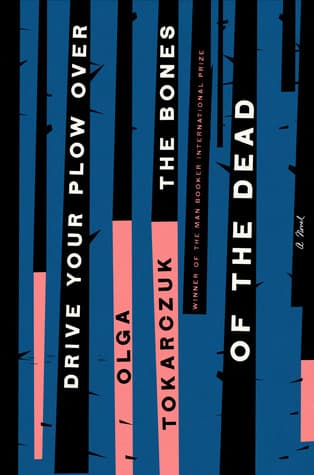
Synopsis
Covers the whole plot, including the ending.
- Difficulty
- Medium
- Pacing
- Moderate
- Mood
- Atmospheric, Philosophical, Darkly Humorous, Provocative
- Read it if
- You enjoy unique literary mysteries with philosophical depth, strong female protagonists, and a focus on animal rights and environmental themes.
- Skip it if
- You prefer fast-paced, traditional thrillers or dislike ambiguous endings and eccentric narrators.
Drive Your Plow Over the Bones of the Dead Plot Summary
Covers the whole plot, including the ending.
The Discovery of Big Foot's Body
The story opens with Janina Duszejko, an elderly woman living in a remote Polish village near the Czech border, discovering the body of her neighbor, Big Foot, who was a poacher. His death is gruesome, having choked on a deer bone. Janina, a reclusive former bridge engineer with a deep love for animals and an interest in astrology and William Blake, immediately suspects that animals are taking revenge on humans for their cruelty. She reports the death to the police, but her theories are dismissed. She lives an isolated life, often only interacting with her few neighbors and the animals she adores, seeing herself as their protector. This event starts a chain of mysterious deaths that Janina believes are connected and driven by a primal justice.
The Death of the President
Shortly after Big Foot's death, another prominent villager, the President of the Local Hunting Club, is found dead in his home. His body is discovered by Janina and her friend Oddball, who had gone to check on him after he failed to respond to calls. The President's death is also unusual; he is found naked, face down, with beetle larvae crawling on his body. Janina notes the absence of any human tracks around his house and the presence of numerous animal tracks, further solidifying her conviction that animals are punishing those who harm them. The local authorities, including Chief Inspector Wozny, continue to disregard Janina's 'insane' theories, much to her frustration, as they search for human perpetrators.
The President's Dogs and Janina's Astrology
After the President's death, Janina becomes concerned about his hunting dogs, which are missing. She believes they might have been involved in his death or are suffering. Her attempts to involve the police in finding the dogs are met with indifference. Janina spends her days translating William Blake's poetry and meticulously charting astrological transits, convinced that celestial alignments offer clues to the earthly events unfolding around her. She sees the deaths as a manifestation of cosmic justice, a karmic retribution for the mistreatment of animals. Her astrological readings often point to difficult planetary aspects, particularly those involving Saturn, which she interprets as a harbinger of suffering and fate, reinforcing her conviction that these deaths are not random.
The President's Funeral and the Priest's Sermon
The President's funeral becomes a public spectacle, attended by many villagers and hunters. During the sermon, the local Priest delivers a eulogy that Janina finds offensive. The Priest praises the President's hunting prowess, portraying him as a righteous man and a provider, and even suggests that hunting is a divinely sanctioned activity. Janina, a staunch animal rights advocate, is incensed by this glorification of violence against animals, especially in a sacred space. She silently protests, her anger simmering, seeing the church as complicit in the cruelty. This event further isolates Janina from the community, deepening her sense of alienation and reinforcing her belief that society is morally corrupt.
The Death of the Commandant
The series of mysterious deaths continues with the discovery of the Commandant, a former military officer and a prominent figure in the local hunting community, dead in his car. He is found with his head covered in a swarm of flies, and there are strange, unexplained marks on his body. Janina is among the first to arrive at the scene. She notices the peculiar circumstances and the lack of any obvious human foul play, once again attributing the death to animal revenge. The police, however, are baffled and continue to pursue human suspects, dismissing Janina's persistent attempts to connect the deaths to animal cruelty and astrological patterns. This further solidifies her resolve to investigate on her own.
Janina's Allies: Oddball, Dizzy, and Good News
Despite the general dismissal from the community and authorities, Janina finds a few allies who tolerate or even entertain her eccentric theories. These include Oddball, her elderly neighbor and friend, who often helps her with practical matters; Dizzy, a former student of hers and now an entomology enthusiast who shares her love for nature; and Good News, a young woman who runs a second-hand clothes shop and has a gentle spirit. These individuals provide Janina with some measure of companionship and a sounding board for her unconventional ideas, though even they often struggle to fully grasp the depth of her convictions. Their willingness to listen provides Janina with a sense of validation in an otherwise hostile environment.
The Death of the Priest
The wave of mysterious deaths reaches a new peak with the discovery of the Priest's body. He is found dead in the forest, near a game camera, having seemingly died of exposure. Janina, upon seeing the body, notes the presence of a deer's head lying nearby, positioned in a way that suggests a deliberate act. This scene deeply affects her, confirming her belief that the animals are delivering a powerful message. The police are now under immense pressure to solve the string of murders, which are increasingly seen as ritualistic or connected to some local vendetta. Janina's theories, though still dismissed, become more urgent in her own mind as she feels closer to understanding the pattern.
The Investigation and Janina's Frustration
Throughout the investigation, Janina tirelessly tries to convince Chief Inspector Wozny and the other officers that the deaths are not random and are linked to the victims' cruelty towards animals. She presents her astrological charts, her observations of animal tracks, and her interpretations of the 'signs' left at each crime scene. However, her efforts are consistently met with skepticism, ridicule, and condescension. The authorities view her as an eccentric old woman, her theories as fantastical, and her presence as a nuisance. This constant dismissal fuels Janina's frustration and reinforces her conviction that she must act independently to bring justice to the animals.
The Trap and the Revelation
As the hunting season approaches and another prominent hunter, the Warden, remains alive, Janina meticulously plans her final act. She learns of a hunting party and, using her knowledge of the terrain and the hunters' habits, sets a 'trap' for the Warden. The Warden is found dead, having been struck by a falling tree branch, and then attacked by a swarm of angry hornets. It is at this point, through a series of internal monologues and subtle hints, that the truth is revealed: Janina herself has been orchestrating these 'animal' revenge killings. She meticulously planned each death, using her intimate knowledge of the area and the victims' routines to make them appear as accidents or animal attacks.
Janina's Confession and Escape
After the Warden's death, Janina confides in Dizzy and Good News, revealing her role in the killings. She explains her motivation: to avenge the animals that the hunters so cruelly slaughtered and to bring a form of justice that the human legal system refused to acknowledge. Dizzy, initially shocked, grapples with the revelation, while Good News seems to understand, perhaps even sympathize, with Janina's extreme actions. Knowing that she cannot remain in the village, Janina prepares to flee. Her escape is aided by Dizzy and Good News, who understand that her actions, however extreme, stemmed from a moral conviction and a deep love for the natural world. The novel concludes with Janina disappearing into the wilderness, leaving the village to ponder the mysterious deaths.
Drive Your Plow Over the Bones of the Dead Characters
Janina Duszejko
Protagonist
An eccentric elderly woman, former bridge engineer, astrologer, and animal rights advocate.
Janina is the novel's narrator and protagonist, an elderly woman living in a remote Polish village. She is highly intelligent, deeply sensitive, and fiercely independent, but also seen as an eccentric recluse by most villagers. She possesses a profound love for animals, translating the poetry of William Blake, and studying astrology, which she uses to interpret the world and the mysterious deaths occurring around her. Her moral compass is entirely aligned with the natural world, leading her to believe that animals are capable of exacting revenge on their human tormentors. This conviction ultimately drives her to take matters into her own hands.
Relationships: Big Foot (Neighbor, first murder victim); Oddball (Elderly friend and confidante); Dizzy (Former student, ally, and eventual confidante); Good News (Young woman, ally, and confidante); Chief Inspector Wozny (Police officer, her antagonist in the investigation); The President (Neighbor, hunter, murder victim); The Commandant (Hunter, murder victim); The Priest (Religious leader, hunter, murder victim); The Warden (Hunter, final murder victim)
Oddball
Supporting
Janina's elderly neighbor and most consistent friend, who helps her with practical matters.
Oddball is Janina's closest neighbor and friend, a kind-hearted and somewhat simple man who often helps her with chores and listens to her theories, even if he doesn't fully understand them. He is a pragmatic individual, grounded in the realities of village life, and serves as a foil to Janina's more philosophical and mystical inclinations. Despite his initial skepticism, he remains loyal to Janina, providing her with companionship and practical assistance, such as driving her around. He represents the ordinary folk who are sometimes bewildered by, yet still tolerant of, Janina's eccentricities.
Relationships: Janina Duszejko (Close friend and neighbor)
Dizzy
Supporting
Janina's former student, an entomology enthusiast who becomes her intellectual confidante.
Dizzy is a young man, a former student of Janina's from her engineering days, who now works at a local shop and has a passion for entomology. He shares Janina's appreciation for the natural world, albeit from a scientific perspective, and is one of the few people who genuinely listens to her ideas, even if he doesn't always agree. He helps Janina with her Blake translations and eventually becomes a crucial confidante, grappling with the moral implications of her actions. Dizzy represents a younger generation grappling with environmental ethics and the moral complexities of justice.
Relationships: Janina Duszejko (Former student, intellectual confidante, later accomplice); Good News (Friend, fellow confidante)
Good News
Supporting
A young woman who runs a second-hand clothes shop and befriends Janina.
Good News is a gentle, compassionate young woman who runs a second-hand clothes shop in the nearby town. She is another of Janina's few friends, drawn to her unique perspective and kindness towards animals. She often provides Janina with practical help and emotional support, listening without judgment. Her character embodies innocence and empathy, contrasting with the harshness of the hunters and the indifference of the authorities. She ultimately accepts Janina's confession with a quiet understanding, reflecting a different moral perspective on justice.
Relationships: Janina Duszejko (Friend, confidante, later accomplice); Dizzy (Friend, fellow confidante)
Chief Inspector Wozny
Antagonist
The local police chief who dismisses Janina's theories about the murders.
Chief Inspector Wozny is the primary police officer investigating the mysterious deaths. He represents the conventional, rational, and often bureaucratic arm of the law. He consistently dismisses Janina's 'insane' theories about animal revenge and astrology, viewing her as a nuisance and an unreliable source. His character embodies the failure of the established system to understand or address the deeper moral issues Janina raises, making him an unwitting antagonist to her quest for justice. He is focused on human perpetrators and conventional motives, blind to the environmental and ethical dimensions of the crimes.
Relationships: Janina Duszejko (Investigator, dismissive of her theories)
Big Foot
Mentioned
Janina's neighbor and the first victim, a poacher.
Big Foot is Janina's neighbor and the first victim discovered in the novel. He is a local poacher, known for his cruelty towards animals. His gruesome death, choking on a deer bone, immediately ignites Janina's theory of animal revenge. Though he dies early in the narrative, his death sets the entire plot in motion, serving as the catalyst for Janina's vigilante actions and her astrological interpretations. His character represents the type of human cruelty towards nature that Janina vehemently opposes.
Relationships: Janina Duszejko (Neighbor, first murder victim)
The President
Mentioned
President of the Local Hunting Club and the second murder victim.
The President is a prominent figure in the local hunting community and the second victim of the mysterious deaths. His position as the head of the hunting club makes him a symbol of the organized cruelty against animals that Janina despises. His death, found naked with beetle larvae, further fuels Janina's conviction that the animals are exacting their revenge in bizarre and symbolic ways. His character represents the institutionalized violence against nature that Janina is fighting against.
Relationships: Janina Duszejko (Neighbor, hunter, murder victim)
The Commandant
Mentioned
A former military officer and hunter, the third murder victim.
The Commandant is a retired military officer and another member of the local hunting community who becomes the third victim. His death, found in his car with a swarm of flies, adds to the escalating sense of dread and mystery in the village. Like the other victims, his profession and hobbies connect him directly to the exploitation of animals, making him a target in Janina's eyes. His death further perplexes the authorities and reinforces Janina's conviction about the pattern of retribution.
Relationships: Janina Duszejko (Hunter, murder victim)
The Priest
Mentioned
The local priest who glorifies hunting, becoming a murder victim.
The Priest is the local religious leader who, to Janina's horror, uses his sermons to justify and even praise hunting, portraying it as a divinely sanctioned activity. He embodies the societal and religious complicity in animal cruelty that Janina so vehemently condemns. His eventual death, found near a game camera with a deer's head, is particularly symbolic, representing the ultimate retribution for his spiritual endorsement of violence against nature. His character highlights the clash between traditional human-centric morality and Janina's biocentric ethics.
Relationships: Janina Duszejko (Religious authority, hunter, murder victim)
The Warden
Mentioned
The final hunter and murder victim, whose death completes Janina's revenge.
The Warden is the final victim in Janina's series of revenge killings. He is a prominent hunter and a symbol of the pervasive cruelty towards animals that Janina is fighting against. His death, appearing as an 'accident' involving a falling tree and hornets, brings Janina's carefully planned retribution to its climax. His demise signifies the culmination of her efforts to bring justice to the animal world and serves as the final piece of her intricate, vengeful puzzle.
Relationships: Janina Duszejko (Hunter, final murder victim)
Drive Your Plow Over the Bones of the Dead Themes
Justice and Retribution
The novel explores the concept of justice, specifically whether human laws adequately protect the natural world. Janina believes that conventional justice fails animals, leading her to enact a brutal form of retribution. The mysterious deaths are presented as 'animal revenge,' challenging the reader to consider if such violent acts can be justified when conventional systems fail. This theme is central to Janina's character, as her actions are driven by a moral conviction that those who harm animals deserve punishment, even if it means stepping outside human law. Her personal justice system is a direct response to the perceived injustice against nature.
“What kind of world is this, where killing and suffering are the norm?”
Humanity's Relationship with Nature
A core theme is the often-abusive relationship between humans and the natural world, particularly through hunting and exploitation. Janina acts as the voice of nature, condemning human cruelty and advocating for animal rights. The hunters represent humanity's dominion over animals, while Janina champions a more harmonious, biocentric view. The plot is a direct consequence of this strained relationship, as Janina's actions are a violent protest against the perceived subjugation and suffering of animals at the hands of humans. The book forces a re-evaluation of anthropocentric views.
“We live in a world that is dying, and we are the ones killing it.”
Sanity, Madness, and Social Outcasts
The novel questions the boundaries between sanity and madness, particularly through Janina's character. Her unconventional beliefs, such as her deep connection to animals and her astrological interpretations, lead the community and authorities to dismiss her as a 'mad old woman.' This theme explores who society deems worthy of a voice and whose perspectives are marginalized. Janina's 'madness' can also be interpreted as a heightened moral clarity, making her an outcast whose insights are ignored. Her isolation is a direct consequence of her refusal to conform to societal norms.
“People who are considered mad are often the only ones who see the truth.”
Fate, Free Will, and Astrology
Astrology is more than just a hobby for Janina; it is a framework through which she understands fate and the interconnectedness of events. She meticulously charts planetary movements, believing they reveal the underlying patterns of life and death, suggesting that the deaths are not random but fated. This theme explores the tension between predetermined destiny and individual agency, with Janina ultimately taking free will into her own hands to fulfill what she sees as a cosmic imperative. Her belief in fate provides a moral justification for her actions, framing them as inevitable.
“The stars do not lie. They show us the way, if only we learn to read them.”
The Power of Narrative and Voice
As the narrator, Janina controls the story, and her unique voice shapes the reader's perception of events. This theme explores whose stories get told and whose are silenced. Janina's voice, initially dismissed by the authorities, becomes the sole lens through which the reader experiences the mystery and its resolution. Her narrative challenges the dominant, human-centric narratives of the village, asserting an alternative, animal-centric perspective. The novel itself is an act of giving voice to the marginalized and the unheard, both Janina and the animals she champions.
“A human life is worth no more than an animal's.”
Plot Devices & Literary Techniques
First-Person Narrative (Reliable/Unreliable)
Janina's subjective perspective as the sole narrator.
The entire story is told from Janina Duszejko's first-person perspective. This device immerses the reader in her unique worldview, her philosophical musings, and her deep empathy for animals. It also creates a dynamic tension around her reliability as a narrator. While she presents her theories about animal revenge with conviction, the reader is left to question the extent of her 'madness' versus her 'truth,' until the very end when her role as the perpetrator is revealed, retroactively re-contextualizing her narrative as both deeply subjective and cunningly manipulative.
Astrology and William Blake
Used as interpretive frameworks for understanding events and Janina's worldview.
Janina's twin passions, astrology and the poetry of William Blake, serve as powerful interpretive lenses within the narrative. Astrology provides a cosmic framework for her understanding of fate, character, and the unfolding murders, allowing her to connect earthly events to celestial patterns. Blake's poetry, particularly his themes of innocence, experience, and divine retribution, offers a moral and philosophical backdrop for her actions and beliefs. These devices are not merely hobbies; they are integral to Janina's worldview, providing her with a language and a justification for her radical actions and challenging conventional, rational explanations for the deaths.
Animal Symbolism and Anthropomorphism
Animals are central to the plot, representing victims, avengers, and moral compasses.
Animals are not just background elements but central characters and symbols in the novel. Janina's deep empathy leads her to almost anthropomorphize them, seeing them as capable of complex emotions and even organized retribution. Each death is attributed to 'animal revenge,' with specific animals or animal-related elements (deer bones, beetle larvae, swarming flies, a deer's head) featuring prominently at the crime scenes. This device highlights the theme of humanity's relationship with nature and forces the reader to consider the moral agency of non-human beings, as well as Janina's own complex psychology.
Remote, Isolated Setting
The village's remoteness amplifies Janina's isolation and the insular nature of its community.
The isolated setting of the Kłodzko Valley, a remote village near the Czech border, plays a crucial role. This geographical isolation mirrors Janina's social isolation from the community and the wider world. The harsh winters and dense forests create an atmosphere of foreboding and allow the murders to occur with minimal immediate scrutiny. The insular nature of the community, where hunters hold significant sway and outsiders like Janina are easily dismissed, further amplifies the sense of injustice and the lack of external intervention, making Janina's vigilante actions seem almost inevitable in this contained world.
Red Herring/Misdirection
The narrative consistently points to animal revenge, obscuring Janina's true role.
The novel masterfully employs misdirection, consistently presenting the mysterious deaths as acts of 'animal revenge.' Janina's theories, while dismissed by the police, are presented to the reader with such conviction and circumstantial evidence (animal tracks, specific animal-related details at crime scenes) that the reader is led to believe, or at least seriously consider, the possibility of animals as perpetrators. This sustained red herring effectively conceals Janina's true role as the murderer until the very end, making the revelation a shocking and impactful twist that re-frames the entire narrative.
Drive Your Plow Over the Bones of the Dead Quotes
“Tell me, how are we to understand the world if we don't even understand the most basic things?”
“The world is a machine, and we are just its cogs. If one cog breaks, another takes its place.”
“Every animal knows the world better than we do. They are part of it, whereas we just visit.”
“Evil is always somewhere else, never here. That's why it's so hard to fight.”
“There is nothing more dangerous than a person who thinks they are doing good.”
“To be alone means to be free.”
“People are like moths, always drawn to the light, even if it burns them.”
“The dead don't care about anything. They are beyond all earthly concerns.”
“All living creatures are connected, like threads in a great tapestry.”
“The world is full of signs, if only we knew how to read them.”
“It's a peculiar thing, this human need to categorize everything, to put it into neat little boxes.”
“What is memory if not a story we tell ourselves about the past?”
“Sometimes the greatest truth lies in the most unlikely places.”
“We are all just trying to make sense of the chaos, each in our own way.”
Quiz
10 questions on the plot and the characters. Each answer comes with a short explanation.
Question 1
What is Janina Duszejko's primary hobby and intellectual pursuit during the dark winter days?
- Gardening and cultivating rare plants
- Studying astrology and translating William Blake's poetry
- Writing her own poetry and memoirs
- Birdwatching and cataloging local wildlife
Show answer
B. Studying astrology and translating William Blake's poetry Janina is known for her fascination with astrology, which she uses to interpret events, and her deep appreciation for William Blake, whose poetry she translates.
Question 2
Who is the first victim discovered in the remote Polish village?
- The President
- The Chief of Police
- Big Foot
- The Priest
Show answer
C. Big Foot The first death that sets the plot in motion is that of Janina's neighbor, known as Big Foot, found choked on a deer bone.
Question 3
What is Janina's controversial theory about the cause of the deaths in the village?
- A serial killer from outside the village
- Revenge carried out by animals
- Accidental deaths due to the harsh winter conditions
- A curse placed on the village by an old witch
Show answer
B. Revenge carried out by animals Janina firmly believes that the animals, particularly those hunted and abused by the victims, are exacting revenge for their mistreatment.
Question 4
Which specific animal is often associated with the victims' deaths, often found near the bodies?
- Wolves
- Deer
- Bears
- Wild boars
Show answer
B. Deer Many of the victims are involved in hunting, and deer often play a symbolic or direct role in their demise, such as Big Foot choking on a deer bone.
Question 5
What is Janina's general attitude towards humans versus animals?
- She prefers human company and finds animals unpredictable.
- She is indifferent to both humans and animals.
- She prefers the company of animals and often finds humans disappointing or cruel.
- She believes animals are inferior to humans in every way.
Show answer
C. She prefers the company of animals and often finds humans disappointing or cruel. The book explicitly states Janina's 'not-so-secret preference for the company of animals over humans,' a key aspect of her character.
Question 6
How do the local authorities and most villagers react to Janina's theories about the murders?
- They take her ideas seriously and involve her in the investigation.
- They dismiss her as a 'crank' and a recluse, largely ignoring her input.
- They find her theories amusing but ultimately harmless.
- They are fearful of her and actively try to silence her.
Show answer
B. They dismiss her as a 'crank' and a recluse, largely ignoring her input. Janina's reputation as a 'crank' means her insights are consistently overlooked and dismissed by the authorities, despite her being correct.
Question 7
The novel explores the theme of 'justice and tradition.' How does Janina's personal sense of justice often conflict with the traditional views of the community?
- She believes in strict legal enforcement, while the community prefers leniency.
- She advocates for environmental protection and animal rights, challenging the community's hunting traditions and anthropocentric views.
- She upholds religious dogma, while the community is largely secular.
- She believes in collective punishment, while the community focuses on individual accountability.
Show answer
B. She advocates for environmental protection and animal rights, challenging the community's hunting traditions and anthropocentric views. Janina's deep empathy for animals and her belief in their right to life directly clash with the village's traditional hunting practices and the perceived dominance of humans over nature.
Question 8
What is the significance of William Blake's poetry, particularly 'The Marriage of Heaven and Hell,' to Janina's worldview?
- It provides a blueprint for her astrological predictions.
- It reinforces her belief in the dualities of good and evil, and the idea that conventional morality can be inverted or challenged.
- It serves as a distraction from the grim realities of the murders.
- It inspires her to become a poet herself.
Show answer
B. It reinforces her belief in the dualities of good and evil, and the idea that conventional morality can be inverted or challenged. Blake's work, particularly his questioning of traditional morality and his emphasis on seeing the world differently, resonates deeply with Janina's own reinterpretation of justice and her challenge to societal norms.
Question 9
Towards the end of the novel, what is revealed about Janina's role in the murders?
- She discovers the real killer is a shadowy organization.
- She realizes that the deaths were all a series of bizarre accidents.
- She is the perpetrator, acting as an avenger for the animals.
- She helps the police catch a known serial killer who had been hiding in the village.
Show answer
C. She is the perpetrator, acting as an avenger for the animals. In a shocking twist, it is revealed that Janina herself has been systematically murdering the men responsible for cruelty to animals, fulfilling her own prophecy of animal revenge.
Question 10
The novel is described as a 'provocative exploration of the murky borderland between sanity and madness.' How does Janina's character embody this theme?
- She is clearly insane from the start, and her actions are purely irrational.
- Her unconventional beliefs and actions are dismissed as madness by others, yet her 'madness' leads her to a form of justice that society fails to provide.
- She pretends to be mad to avoid suspicion, but is actually perfectly sane.
- Her sanity fluctuates, but she ultimately succumbs to complete madness.
Show answer
B. Her unconventional beliefs and actions are dismissed as madness by others, yet her 'madness' leads her to a form of justice that society fails to provide. Janina's 'madness' in believing animals are enacting revenge is ultimately revealed to be her own calculated and 'sane' pursuit of justice, blurring the line between what society deems rational and irrational.
Drive Your Plow Over the Bones of the Dead FAQ
What is Drive Your Plow Over the Bones of the Dead about?
The book follows Janina Duszejko, an eccentric elderly woman living in a remote Polish village, who believes that animals are committing murders in retaliation for human cruelty, particularly hunting. As a series of mysterious deaths befall local hunters, Janina, an astrologer and William Blake enthusiast, tries to convince the authorities of her theory, despite being dismissed as a 'madwoman.'
Why should I read Drive Your Plow Over the Bones of the Dead?
You should read it for its unique blend of literary fiction, philosophical inquiry, and mystery, all narrated by an unforgettable, unreliable protagonist. It challenges conventional notions of justice, sanity, and humanity's relationship with nature, offering a deeply thought-provoking experience wrapped in a compelling whodunit.
What is the background/setting of Drive Your Plow Over the Bones of the Dead?
The story is set in a secluded, sparsely populated village in the Kłodzko Valley, near the Polish-Czech border, during the harsh winter months. This isolated, mountainous region, often blanketed in snow, becomes a character itself, emphasizing the characters' detachment from mainstream society and the primal nature of the events unfolding.
What are the most memorable quotes?
One memorable quote is Janina's repeated assertion, 'I am not a lunatic.' Another significant one, reflecting her philosophy, is 'We are tiny, insignificant creatures, and the world is vast and full of mysteries. And yet, we imagine we are at its center.' The title itself, a quote from William Blake, is central to the book's themes.
What writing style does Olga Tokarczuk use?
Tokarczuk employs a lyrical, philosophical, and often darkly humorous style, narrated in the first person by Janina. Her prose is rich with astrological observations, poetic allusions to William Blake, and detailed descriptions of nature, blending the mundane with the mystical and the investigative with the existential.
What minor details add significant meaning?
Janina's detailed astrological charts for each victim, initially dismissed as eccentric ramblings, subtly align with the timing and nature of their deaths, hinting at a meticulously planned revenge. Her constant references to 'Ailments' that afflict her, rather than conventional sickness, suggest a deeper, more spiritual connection to suffering and injustice.
What are some subtle foreshadowing moments?
Janina's early, passionate rants about the injustices suffered by animals at the hands of hunters, coupled with her deep knowledge of the local terrain and the victims' routines, subtly foreshadow her later involvement. Also, the recurring motif of animals observing humans, particularly the deer, hints at their 'witness' role in the narrative.
What unexpected character connections exist?
The most unexpected connection is between Janina, her young protégé Dizzy, and the deceased Father Rustle. It is revealed that Dizzy is Father Rustle's son, a secret kept due to the priest's celibacy vows. This connection adds a layer of suppressed history and hypocrisy to the community.
What are unspoken character motivations?
Janina's unspoken motivation extends beyond mere animal rights; it's a profound, almost spiritual, quest for cosmic justice and a desperate need to be heard and taken seriously. The local police's unspoken motivation is to maintain social order and protect the prominent members of the community, even at the cost of ignoring Janina's valid observations.
What psychological complexities do characters exhibit?
Janina exhibits a complex blend of paranoia, acute observational skills, deep empathy for animals, and an unwavering conviction in her own 'truth,' blurring the lines between eccentricity and profound insight. Her isolation exacerbates her psychological state, making her both a marginalized figure and a sharp, if unconventional, detective.
What are the major emotional turning points?
A major turning point is the death of Janina's beloved dogs, which deeply traumatizes her and fuels her anger against the hunters. Another is when Janina finally realizes she must take matters into her own hands, shifting from passive observation and protest to active intervention, culminating in her confession.
How do relationship dynamics evolve?
Janina's relationships with the villagers are initially strained by her eccentricities, but her bond with Dizzy, her former student, deepens into a protective, almost familial connection. Her relationship with Oddball, a neighbor who shares her love for Blake, evolves into a quiet partnership, providing her with an intellectual and emotional confidant.
Which parts remain ambiguous or open-ended?
The true nature of Janina's 'Ailments' and whether her astrological predictions are genuinely guiding her or merely reflections of her own biases remain somewhat ambiguous. The extent to which the animals are truly 'avenging' or if Janina is projecting her desires onto them is left for the reader to interpret.
What are controversial scenes or decisions?
The most controversial aspect is Janina's ultimate decision to take justice into her own hands, committing the murders of the hunters she deems guilty. This act forces readers to confront difficult questions about vigilante justice, the limits of the law, and whether her actions are justified given the perceived systemic failures.
Drive Your Plow Over the Bones of the Dead ending explained: how it ends & what it means
The book ends with Janina confessing to the murders, revealing herself as the vigilante who killed the hunters, believing she was acting on behalf of the wronged animals and the cosmic order. She is arrested but feels a sense of peace, having enacted her own form of justice. The ending signifies a radical critique of human-centric justice systems and celebrates the voice of the marginalized, asserting that 'the weak' can find power and agency outside conventional societal norms.
About the author
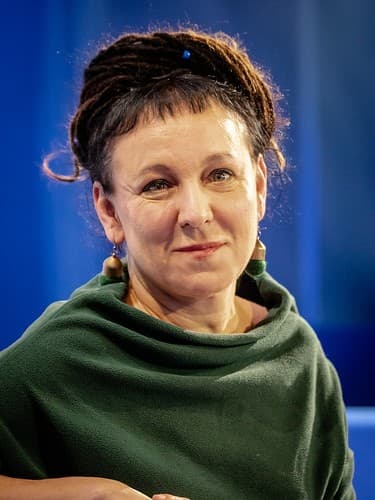
Olga Tokarczuk is a Polish author known for her contributions to contemporary literature. Her notable works include "Drive Your Plow Over the Bones of the Dead," a novel that explores themes of nature and morality, and "Flights," which delves into travel and the human experience. Tokarczuk was awarded the Nobel Prize in Literature in 2018 for her narrative imagination.
Similar books
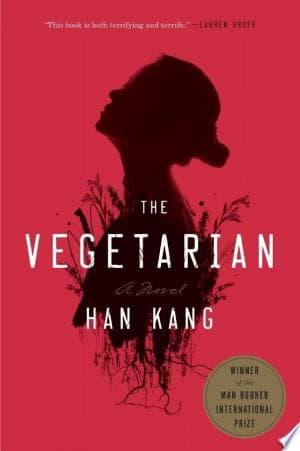
- The Vegetarian
Han Kang
3.6 (93k) average on GoodreadsLiterary FictionExplores a woman's radical rebellion against societal norms with a focus on body and nature.
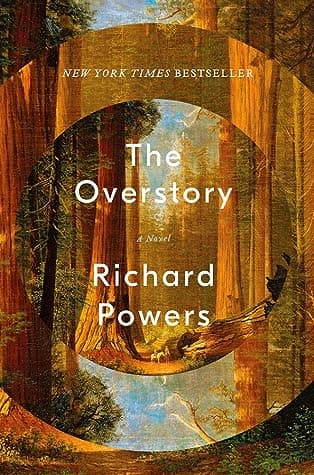
- The Overstory
Richard Powers
4.1 (73k) average on GoodreadsLiterary FictionWhile both novels are deeply concerned with environmental themes and the interconnectedness of life, The Overstory uses a multi-perspective, sprawling narrative to illustrate the vast network of human and arboreal lives, grounded in extensive scientific detail. Drive Your Plow, in contrast, focuses on a single, highly idiosyncratic perspective, using a more intimate, almost fable-like approach to critique human impact on nature, relying on philosophy and myth rather than scientific exposition.
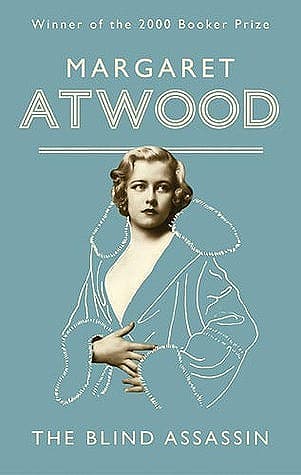
- The Blind Assassin
Margaret Atwood
4.0 (136k) average on GoodreadsLiterary FictionBoth books employ a nested narrative structure and a strong, distinctive female voice to unravel a mystery that reveals deeper societal critiques. Atwood's novel uses a fictional 'pulp' story within the main narrative to comment on gender, class, and war, similar to how Tokarczuk uses the murder mystery to explore environmental ethics and justice. However, Tokarczuk's protagonist is more overtly an outsider and activist, whereas Atwood's characters navigate more traditional societal constraints.
- The Old Man and the Sea
Ernest Hemingway
3.8 (831k) average on GoodreadsLiterary FictionA Cuban fisherman's long struggle with a giant marlin becomes a story of endurance and dignity, now retold for young adults with illustrations, phonetic guides, and writing prompts in Traditional Chinese.
- One Hundred Years of Solitude
Gabriel García Márquez
4.1 (753k) average on GoodreadsLiterary FictionThrough the multi-generational story of the Buendía family, a mythical town deals with the repeating patterns of time, love, and solitude, as the extraordinary mixes with the ordinary.
- The Goldfinch
Donna Tartt
3.9 (720k) average on GoodreadsLiterary FictionHaunted by a tragic explosion and clutching a stolen Dutch masterpiece, a young orphan navigates the opulent drawing rooms of New York and the gritty underbelly of the art world, desperately seeking connection and redemption amidst a life spiraling into crime and obsession.



Enjoyed the summary?
A summary gives you the shape of the book. The book itself has the detail, the examples and the voice.
Find Drive Your Plow Over the Bones of the Dead on AmazonAs an Amazon Associate, BookBrief earns from qualifying purchases. How we're funded