

Synopsis
Covers the whole plot, including the ending.
- Difficulty
- Medium
- Pacing
- Slow
- Mood
- Dark, Unsettling, Disturbing, Melancholy, Allegorical
- Read it if
- You are looking for a deeply unsettling, allegorical exploration of rebellion, patriarchy, and the human psyche, with a strong focus on body autonomy and mental health. Fans of 'Kafka-esque' transformations and dark, literary fiction will find this compelling.
- Skip it if
- You prefer fast-paced plots, clear resolutions, or light, comforting reads. This book contains disturbing imagery, themes of violence, and mental deterioration that some readers may find difficult.
The Vegetarian Plot Summary
Covers the whole plot, including the ending.
The Ordinary Life and the Nightmare's Genesis
Yeong-hye, a quiet and obedient wife, lives a routine life with her husband, Mr. Cheong. He describes her as ordinary, even dull, and their marriage lacks passion. One night, Yeong-hye has vivid, disturbing nightmares with images of blood, violence, and animal slaughter. These dreams are so intense that she empties her refrigerator of all meat and says she will become a vegetarian. This sudden, unexplainable decision upsets Mr. Cheong, who sees it as an act of defiance and a disruption of their organized, traditional life. He struggles to understand her change, seeing it as an inconvenience and an embarrassment.
Family Intervention and Public Humiliation
Yeong-hye's vegetarianism grows into a complete refusal to eat any animal products, making her thin and withdrawn. Worried about her declining health and social implications, her family holds an intervention at her parents' house. Her father, a strict man, becomes angry at her refusal to eat meat, seeing it as a personal insult and extreme disrespect. He physically attacks her, hitting her head against the table and trying to force-feed her pork. In an act of rebellion, Yeong-hye cuts her wrist with a fruit knife, shocking everyone and confirming her family's belief that she is mentally unwell.
The Divorce and the Brother-in-Law's Obsession
After the violent family dinner and Yeong-hye's continued refusal to eat, Mr. Cheong decides to divorce her. He cannot tolerate her changed behavior and the social stigma it brings. Yeong-hye moves in with her older sister, In-hye, and In-hye's husband, also named Mr. Cheong. In-hye's husband, an artist who makes video installations, becomes fascinated by a Mongolian birthmark on Yeong-hye's buttock. He sees it as a symbol of innocence and a powerful artistic inspiration. He starts to imagine painting flowers on her body, especially her birthmark, in a sexually charged art project.
The Floral Body Art Project
Mr. Cheong, the artist, convinces Yeong-hye to be part of his art project. This involves painting her naked body with flowers, focusing on her birthmark. Yeong-hye, increasingly distant from reality and seemingly uncaring about social rules, agrees. The project ends with a video shoot where she is painted and then has a sexually explicit scene with her brother-in-law, both covered in paint. In-hye finds the footage and the affair, which leads to a violent fight between the sisters and In-hye's husband. The incident shatters In-hye's view of her sister and her marriage, showing the deep tensions and unspoken desires in the family.
Further Deterioration and Hospitalization
After the art project scandal, Yeong-hye's condition gets much worse. She stops eating completely, believing she is turning into a tree, and says she wants to live only on sunlight and water. Her body wastes away, and she becomes increasingly delusional, speaking in broken, poetic sentences about roots and leaves. Worried for her life, In-hye and her family admit Yeong-hye to a psychiatric hospital. Despite the doctors' efforts, Yeong-hye refuses to eat, rejecting all food. This solidifies her symbolic transformation and her rejection of human consumption.
In-hye's Burden and Struggle
The story then shifts to In-hye's perspective, showing her heavy burden and growing sadness as she cares for her sister in the hospital. In-hye, a seemingly strong and practical woman, finds her life falling apart because of Yeong-hye's illness, her husband's infidelity, and society's judgment of their family. She struggles to understand Yeong-hye's transformation, moving between pity, frustration, and a faint, unsettling hint of understanding. In-hye tries different ways to get Yeong-hye to eat, including force-feeding, but all attempts fail against Yeong-hye's firm belief in her change into a plant.
The Tree Metamorphosis
Inside the psychiatric hospital, Yeong-hye's delusion of becoming a tree reaches its peak. She spends her days standing still, looking out the window, convinced that she is growing roots into the ground and that leaves are sprouting from her body. She refuses clothes, preferring to be naked, and shivers constantly from the cold. Yet, she expresses a deep sense of peace in her imagined transformation. She speaks only in metaphors about plants, sun, and water, completely separate from human society and its demands. Her body continues to weaken, but her spirit, in its own way, seems to find a kind of freedom.
The Final Drive and Shared Vulnerability
As Yeong-hye's condition gets worse, In-hye decides to move her to a different, more specialized hospital. During the car ride, Yeong-hye's extreme thinness and pale skin make her look almost transparent. In-hye, overcome with grief and the sheer impossibility of her sister's situation, starts to cry uncontrollably. Yeong-hye, in a rare moment of clarity or perhaps empathy, reaches out and wipes away In-hye's tears. This small gesture shows the deep, though broken, bond between the sisters and In-hye's growing understanding of Yeong-hye's desire to escape the human condition. The drive represents In-hye's final, desperate attempt to save her sister, while also showing her own vulnerability and breakdown.
The Vegetarian Characters
Yeong-hye
Protagonist
A woman who renounces meat and gradually transforms, both physically and mentally, into a plant-like state.
Yeong-hye begins as a submissive, unremarkable wife, described by her husband as 'completely ordinary.' Her transformation is triggered by violent nightmares of animal cruelty, leading her to vegetarianism and a radical rejection of societal norms. She becomes increasingly withdrawn, emaciated, and delusional, believing she is turning into a tree. Her journey is a quiet but profound rebellion against the violence and expectations of the human world, seeking an escape into a pure, non-violent existence. She is driven by an intense desire for autonomy and purity, even at the cost of her own life.
Relationships: Mr. Cheong (husband) (distant, conventional, ultimately divorces her); In-hye (sister) (caretaker, frustrated, ultimately empathetic); Mr. Cheong (brother-in-law) (artistically obsessive, sexually exploitative); Father (abusive, authoritarian)
Mr. Cheong (Yeong-hye's husband)
Supporting
Yeong-hye's conventional, self-absorbed husband who divorces her after her transformation.
Mr. Cheong is a mundane, practical man who values order, social standing, and routine. He views Yeong-hye's vegetarianism as an inconvenience and an embarrassment, disrupting his comfortable life. He sees her as a possession and is incapable of understanding or empathizing with her inner turmoil. His perspective highlights the patriarchal and superficial aspects of Korean society. He ultimately divorces her, unable to cope with her deviation from the norm, effectively abandoning her to her fate.
Relationships: Yeong-hye (husband-wife, later divorced; his perspective is the initial narrative lens); In-hye (acquaintance, through Yeong-hye)
In-hye
Supporting
Yeong-hye's older sister, a pragmatic and initially critical woman who becomes her primary caretaker.
In-hye is the pragmatic, responsible, and seemingly strong older sister. She initially tries to 'fix' Yeong-hye, driven by a sense of duty and a desire to maintain family honor. Despite her frustrations and a moment of violence towards her sister, she ultimately becomes Yeong-hye's primary caretaker, enduring immense personal suffering and societal judgment. Her perspective offers a more nuanced view of Yeong-hye's transformation, eventually leading her to a fragile understanding and a profound sense of shared vulnerability. She represents the burden of care and the struggle to reconcile societal expectations with individual suffering.
Relationships: Yeong-hye (sister, caretaker, complex and strained bond); Mr. Cheong (husband) (husband-wife, relationship fractured by his affair with Yeong-hye); Father (daughter, carries family burdens)
Mr. Cheong (In-hye's husband)
Supporting
A cynical artist who develops an erotic and exploitative obsession with Yeong-hye.
In-hye's husband is an artist whose cynicism and detached observation mask a predatory nature. He becomes sexually and artistically obsessed with Yeong-hye's birthmark and her passive, ethereal presence. He exploits her vulnerability for his transgressive art project, blurring the lines between art, desire, and abuse. His actions highlight the objectification of women and the dark side of artistic expression. He is driven by a desire for unconventional beauty and a fascination with the taboo, showing little genuine concern for Yeong-hye's well-being.
Relationships: In-hye (husband-wife, relationship destroyed by his affair); Yeong-hye (brother-in-law, artistic muse, sexual object)
Father
Supporting
Yeong-hye and In-hye's authoritarian and abusive father.
The father is a stern, traditional, and physically abusive patriarch. He embodies the patriarchal violence and rigid expectations of Korean society. His inability to tolerate Yeong-hye's deviation from the norm leads to his violent attempt to force-feed her meat, which is a pivotal moment in her rebellion. He represents the oppressive forces that Yeong-hye is trying to escape, and his actions are a direct catalyst for her further withdrawal and self-destructive path. He shows no understanding or compassion for his daughter's suffering.
Relationships: Yeong-hye (abusive father-daughter); In-hye (demanding father-daughter)
Mother
Supporting
Yeong-hye and In-hye's quiet, submissive mother.
The mother is a largely silent and submissive figure, accustomed to her husband's authority. While she expresses some concern for Yeong-hye's health, she is largely powerless to intervene effectively against her husband or to truly understand Yeong-hye's choices. She represents the quiet suffering and resignation often found within traditional patriarchal family structures. Her presence highlights the generational patterns of submission and the difficulty of breaking free from established roles.
Relationships: Yeong-hye (mother-daughter, concerned but ineffective); Father (submissive wife)
Hospital Doctor
Mentioned
A medical professional who attempts to treat Yeong-hye's physical and mental deterioration.
The doctor represents the medical establishment's inability to comprehend or treat Yeong-hye's condition, which transcends conventional illness. They attempt to use medical interventions and force-feeding, but these methods are ineffective against Yeong-hye's profound psychological and spiritual transformation. The doctor's frustration highlights the limitations of Western medicine when faced with a rebellion that is existential rather than purely clinical.
Relationships: Yeong-hye (patient-doctor, ultimately unsuccessful); In-hye (provides information and advice to the caretaker)
The Vegetarian Themes
Rebellion and Autonomy
Yeong-hye's decision to become a vegetarian, caused by violent nightmares, is her first act of rebellion against a life defined by passivity and societal expectations. This seemingly small act grows into a search for independence, rejecting not only meat but eventually her entire human identity. Her refusal to eat, her wish to become a tree, and her embrace of an existence beyond human suffering are all desperate attempts to control her own body and spirit in a patriarchal and violent world. This theme appears when she cuts her wrist after her father tries to force-feed her, a violent claim of self-ownership.
“I’m not an animal anymore,” she said. “I don’t need meat.”
Violence and Cruelty
Violence is present throughout the novel, both directly and indirectly. Yeong-hye's nightmares are full of animal slaughter, showing a deeper societal cruelty. Her father's physical abuse, her husband's emotional neglect, and her brother-in-law's sexual exploitation are all forms of violence against her. Even In-hye's attempts to force-feed her sister can be seen as a form of well-meaning violence. Yeong-hye's vegetarianism and desire to become a tree are direct responses to this widespread violence, a desperate attempt to escape a world she sees as brutal. The novel suggests that the human condition itself includes various forms of cruelty.
“What kind of animal dreams are those? You’re not a dog or a pig or anything.”
Objectification and Control
Yeong-hye is repeatedly treated as an object and controlled by the men in her life. Her husband sees her as a domestic convenience, her father as a disobedient child, and her brother-in-law as an artistic inspiration and sexual object. Her body is a point of conflict, with others trying to dictate what she eats, wears, and how she acts. Her refusal to eat and her desire to turn into a plant are radical rejections of this objectification, an attempt to reclaim her body and mind from outside control. The body art project with flowers clearly shows this objectification, reducing her to a canvas for someone else's idea.
“Her body was a mere convenience for him, a tool for his own comfort.”
Identity and Transformation
The novel explores the changing and delicate nature of identity through Yeong-hye's radical change. Her journey from 'ordinary wife' to 'vegetarian' to 'tree' is a deep transformation, challenging common ideas of selfhood. Her physical wasting and mental delusions are tied to a spiritual search for a new, non-human identity free from the limits and violence of her human existence. This transformation is deeply unsettling to those around her, who struggle to recognize or accept her changing self, showing society's pressure to conform to a fixed identity. Her belief in growing roots and leaves is the clearest expression of this theme.
“I was a tree. I had roots, deep in the earth.”
Mental Illness and Societal Response
Yeong-hye's behavior, while seen by her family as mental illness (schizophrenia, anorexia), can also be seen as a radical response to trauma and societal oppression. The novel criticizes how society labels those who deviate from the norm as sick, failing to understand the reasons for their distress. Her family and doctors try to 'cure' her with standard methods, but these approaches fail because they do not address the deep, existential nature of her rebellion. Her hospitalization and forced feeding show how inadequate institutional responses are to deep psychological and spiritual crises.
“She’s gone completely insane. She’s starving herself.”
Plot Devices & Literary Techniques
Multiple Perspectives/Shifting Narrators
The story is told through the eyes of three different characters, each offering a limited and subjective view of Yeong-hye.
The novel is divided into three parts, each narrated from a different character's perspective: Yeong-hye's husband, her brother-in-law, and her sister, In-hye. This narrative technique prevents the reader from ever fully understanding Yeong-hye directly, mirroring the other characters' inability to truly comprehend her. Each narrator's biases, desires, and limitations color their perception of Yeong-hye, highlighting her enigmatic nature and the theme of objectification. This structure emphasizes that Yeong-hye is largely seen through the lens of others' expectations and projections, rather than as an autonomous subject.
Symbolism of Vegetarianism and Trees
Vegetarianism and the transformation into a tree symbolize Yeong-hye's rejection of violence and her quest for purity.
Yeong-hye's vegetarianism is not merely a dietary choice but a symbolic act of renouncing the inherent violence of the human world, particularly the consumption of flesh. As her transformation progresses, her desire to become a tree symbolizes a complete escape from human suffering, a return to a pure, non-violent, and self-sustaining state. Trees represent rootedness, stillness, and a connection to nature, offering a stark contrast to the volatile and destructive human society she seeks to abandon. Her emaciated body and belief in growing roots are literal manifestations of this symbolism.
Body as a Site of Rebellion and Control
Yeong-hye's body becomes the central battleground for her autonomy and others' attempts to control her.
Throughout the novel, Yeong-hye's body is the primary medium for her rebellion and the target of others' control. Her refusal to eat, her self-harm, her participation in the art project, and her physical deterioration all represent her struggle for agency. Her body is force-fed, painted, and institutionalized, demonstrating how external forces try to impose their will upon her. Ultimately, her body's transformation into a tree-like state is her final, desperate act of reclaiming herself, even if it leads to self-annihilation. The birthmark on her buttock, for example, becomes a focal point of artistic and sexual obsession.
Dream Sequences
Vivid and violent dream sequences act as catalysts for Yeong-hye's initial transformation.
The novel opens with Yeong-hye's disturbing nightmares of blood, animal slaughter, and brutality. These dreams are not merely psychological manifestations but potent symbolic catalysts that trigger her radical shift to vegetarianism. They represent a deep-seated revulsion against the violence she perceives in the world, both literal and metaphorical. The dreams are so visceral that they force her to confront a primal truth about existence, leading her to reject the 'normal' human condition and embark on her transformative journey. They are the genesis of her rebellion.
The Vegetarian Quotes
“Before my wife turned vegetarian, I'd always thought of her as completely unremarkable in every way.”
“I want to swallow you, have you melt into me and flow through my veins.”
“All I want is to not eat meat.”
“I'm not doing this because I want to die. I'm doing it because I want to live.”
“The dream isn't inside me, it's outside, all around me.”
“She had no blood on her hands, but she felt as though her whole body was steeped in it.”
“Plants don't scream. They don't have blood.”
“I'm a monster. From now on, I'm a monster.”
“The world is a cruel place, and human beings are cruel creatures.”
“She wanted to become a tree. To have leaves instead of hair, branches instead of arms.”
“There's no such thing as right or wrong in this world.”
“I'm not doing this to be difficult. I'm doing it because I can't do anything else.”
“Her body was a door, and she was trying to close it.”
“Sometimes I think that human beings are just animals pretending not to be.”
Quiz
10 questions on the plot and the characters. Each answer comes with a short explanation.
Question 1
What specific event triggers Yeong-hye's decision to become vegetarian?
- A health scare diagnosed by her doctor
- Her sister's influence and encouragement
- Recurring nightmares filled with blood and brutality
- A documentary about animal cruelty
Show answer
C. Recurring nightmares filled with blood and brutality Yeong-hye's vegetarianism begins after she experiences violent, bloody nightmares that torment her, leading her to purge meat from her diet as a way to cleanse herself from these disturbing visions.
Question 2
Who is the first person to attempt to force-feed meat to Yeong-hye?
- Her brother-in-law
- Her father
- Her husband
- Her sister
Show answer
B. Her father During a family dinner, Yeong-hye's father becomes enraged by her refusal to eat meat and violently attempts to force-feed her, an act that marks a turning point in her family's escalating attempts to control her.
Question 3
What artistic project does Yeong-hye's brother-in-law create involving her body?
- A series of paintings depicting her as a flower
- A video installation where she acts out scenes from his dreams
- A film featuring painted flowers on her naked body
- A sculpture molded from her body casts
Show answer
C. A film featuring painted flowers on her naked body Yeong-hye's brother-in-law, a video artist, becomes obsessed with her body and creates a film where he paints elaborate flowers on her naked skin, exploiting her vulnerability for his art.
Question 4
Why does Yeong-hye's husband initially view her vegetarianism as problematic?
- He believes it will make her physically weak and unable to work
- He sees it as a rejection of social norms and his control over their ordinary life
- He worries it will be too expensive to maintain separate meals
- He fears it will attract negative attention from their neighbors
Show answer
B. He sees it as a rejection of social norms and his control over their ordinary life Yeong-hye's husband values their controlled, ordinary life, and her sudden vegetarianism disrupts this order, challenging social expectations and his authority in their marriage.
Question 5
What happens to Yeong-hye after her brother-in-law's film project ends?
- She returns to her husband and resumes eating meat
- She becomes a successful artist in her own right
- She is institutionalized in a psychiatric hospital
- She moves abroad to start a new life
Show answer
C. She is institutionalized in a psychiatric hospital After the traumatic events involving her brother-in-law, Yeong-hye's mental state deteriorates further, leading to her hospitalization in a psychiatric facility where she continues to refuse food.
Question 6
How does In-hye, Yeong-hye's sister, primarily react to Yeong-hye's transformation throughout the novel?
- With jealousy and resentment toward Yeong-hye's freedom
- With detached curiosity, treating it as a psychological case study
- With a mix of concern, guilt, and a desire to protect and understand her
- With anger and attempts to force Yeong-hye back to normalcy
Show answer
C. With a mix of concern, guilt, and a desire to protect and understand her In-hye serves as a more compassionate figure, struggling with her own life while feeling responsible for Yeong-hye. She oscillates between worry, self-blame, and a futile effort to comprehend her sister's descent.
Question 7
What symbolic meaning is often associated with Yeong-hye's desire to become a plant or tree?
- It represents her wish for financial independence and growth
- It symbolizes her rejection of human violence and desire for a pure, non-violent existence
- It reflects her artistic aspirations to merge with nature in her paintings
- It indicates a delusional break from reality with no deeper meaning
Show answer
B. It symbolizes her rejection of human violence and desire for a pure, non-violent existence Yeong-hye's fantasy of transforming into a plant or tree stems from her horror at human brutality (seen in her nightmares and experienced from others). Plants represent an innocent, non-predatory state free from the bloodshed and violence she associates with meat-eating and human interaction.
Question 8
Which character's perspective is NOT directly featured as a narrator in the novel's three parts?
- Yeong-hye's husband
- Yeong-hye's brother-in-law
- Yeong-hye herself
- Yeong-hye's sister, In-hye
Show answer
C. Yeong-hye herself The novel is divided into three sections, each narrated by a different character close to Yeong-hye: her husband, her brother-in-law, and her sister In-hye. Yeong-hye's own thoughts and feelings are only revealed indirectly through their observations and her actions, emphasizing her isolation and the ways others project onto her.
Question 9
What critical theme is explored through the brother-in-law's video art and his obsession with Yeong-hye?
- The commercialization of mental illness in modern media
- The conflict between traditional and contemporary art forms in Korea
- The male gaze and the objectification of the female body as a form of violence and control
- The therapeutic potential of art in healing trauma
Show answer
C. The male gaze and the objectification of the female body as a form of violence and control The brother-in-law's project is not truly collaborative; he uses Yeong-hye's vulnerable, vegetative state to fulfill his own erotic and artistic fantasies. This highlights how her body becomes a site for others' desires and control, paralleling the broader societal and familial violations she endures.
Question 10
In the final section, what realization does In-hye come to regarding her own life and Yeong-hye's struggle?
- That she should have been more forceful in making Yeong-hye eat to save her
- That Yeong-hye's rebellion was a selfish act that destroyed their family
- That she, too, has lived a life of suppressed violence and unfulfilled desires, mirroring Yeong-hye's internal conflict
- That modern psychiatry has failed patients like Yeong-hye and needs reform
Show answer
C. That she, too, has lived a life of suppressed violence and unfulfilled desires, mirroring Yeong-hye's internal conflict In-hye reflects on her own marriage, her stifling routine, and her repressed emotions. She begins to see Yeong-hye not just as a victim or a case, but as someone who acted on a deep, violent impulse (to not eat, to become a plant) that In-hye herself has buried. This connects the 'violence within' theme to both sisters.
The Vegetarian FAQ
What is 'The Vegetarian' about?
The novel follows Yeong-hye, a seemingly ordinary South Korean housewife who, after experiencing violent nightmares, decides to stop eating meat entirely. Her decision triggers a chain of increasingly disturbing events as her husband, brother-in-law, and sister attempt to control her, leading to her psychological and physical unraveling. The story explores themes of rebellion, autonomy, and the violence embedded in societal and familial structures.
Why should I read 'The Vegetarian'?
It's a powerful, unsettling exploration of female autonomy, societal pressure, and the body as a site of rebellion, written in sparse, haunting prose. As a Man Booker International Prize winner, it offers a unique blend of psychological depth, allegory, and visceral imagery that challenges readers to confront themes of control, desire, and transformation.
What is the background/setting of 'The Vegetarian'?
Set in contemporary South Korea, the novel unfolds in domestic and institutional spaces—Yeong-hye's apartment, her sister's home, and later a psychiatric hospital. The setting reflects the rigid social expectations and patriarchal norms that constrain the characters, particularly women, emphasizing the claustrophobic pressure Yeong-hye rebels against.
What are the most memorable quotes?
Key quotes include Yeong-hye's declaration, 'I had a dream,' which sparks her transformation, and her repeated assertion, 'I'm not eating meat,' symbolizing her defiance. Another poignant line is, 'She wanted to become a tree,' reflecting her desire to escape her human body and its violations, highlighting the novel's themes of metamorphosis and alienation.
What writing style does the author use?
Han Kang employs a sparse, precise, and often detached prose style, with vivid, surreal imagery—especially in descriptions of Yeong-hye's dreams and bodily transformations. The narrative is divided into three parts, each from a different perspective (husband, brother-in-law, sister), creating a fragmented, Kafka-esque tone that mirrors the characters' psychological disintegration.
What minor details add significant meaning?
Small details like the Mongolian mark on Yeong-hye's body (a birthmark) symbolize her innate, unchangeable nature and connection to something primal. The repeated imagery of plants and trees—such as her obsession with photosynthesis—subtly reinforces her desire to transcend human violence and become part of the natural world.
What are some subtle foreshadowing moments?
Early scenes where Yeong-hye's husband dismisses her vegetarianism as a 'phase' foreshadow the escalating attempts to control her. Her nightmares of blood and meat hint at the visceral violence to come, while her sister In-hye's initial concern subtly previews her own later struggles with societal expectations and caregiving.
What unexpected character connections exist?
Yeong-hye's brother-in-law, an artist, becomes obsessed with her as a muse for his erotic video project, blurring lines between art, voyeurism, and violation. This connection reveals how even those outside her immediate family exploit her rebellion, tying her vegetarianism to broader themes of objectification and desire.
What are unspoken character motivations?
Yeong-hye's husband is motivated by a need for social conformity and control, masking his insecurity. Her brother-in-law is driven by a repressed artistic and sexual obsession, using Yeong-hye to fulfill his fantasies. In-hye, her sister, is motivated by guilt and a desire to protect family appearances, even as she grapples with her own unhappiness.
What psychological complexities do characters exhibit?
Yeong-hye exhibits a dissociative psychology, retreating into a plant-like state to escape trauma. Her husband shows cognitive dissonance, rationalizing his cruelty as care. In-hye embodies internal conflict, balancing societal duty with empathy, while the brother-in-law displays a toxic mix of artistic ambition and predatory desire, blurring sanity and obsession.
What are the major emotional turning points?
Key turning points include Yeong-hye's initial nightmare and decision to stop eating meat, which shocks her family; the brother-in-law's video project, which escalates her objectification; and her hospitalization, where she attempts to become a tree, marking her complete psychological break. In-hye's final visit to the hospital, where she questions her own life, is another emotional climax.
How do relationship dynamics evolve?
Yeong-hye's marriage deteriorates from indifference to outright hostility as her husband tries to force-feed her. Her relationship with her brother-in-law shifts from familial to exploitative, culminating in sexual violation. With her sister In-hye, it moves from concern to a fraught caretaker dynamic, revealing shared but unspoken struggles with societal expectations.
Which parts remain ambiguous or open-ended?
The novel leaves ambiguous whether Yeong-hye's transformation is a mental breakdown, a spiritual awakening, or both. The ending, with In-hye questioning her own life as Yeong-hye lies hospitalized, offers no resolution, inviting debate on the possibility of escape or redemption. The exact nature of Yeong-hye's dreams and their connection to reality is also left unclear.
What are controversial scenes or decisions?
Controversial scenes include the brother-in-law's erotic video project involving Yeong-hye, which blurs consent and art, and the forced feeding attempts by her husband. Yeong-hye's decision to starve herself and attempt photosynthesis is debated as either a profound rebellion or a tragic descent into madness, highlighting the novel's unsettling exploration of agency and violation.
'The Vegetarian' ending explained: how it ends & what it means
The novel ends with Yeong-hye hospitalized after trying to become a tree by starving herself, while her sister In-hye visits, reflecting on her own constrained life. This ambiguous conclusion suggests Yeong-hye's rebellion has led to a complete break from society, but also questions whether any escape is possible. It underscores themes of sacrifice, the limits of autonomy, and the pervasive violence of normative expectations.
What does Yeong-hye's vegetarianism symbolize?
Yeong-hye's vegetarianism symbolizes a radical rejection of violence—both the physical violence of eating meat and the metaphorical violence of societal and familial control. It becomes a sacred act of autonomy, representing her desire to purify herself from the brutality she perceives in human nature, ultimately leading to her attempt to transcend humanity entirely.
How does the novel address gender and power?
The novel critiques patriarchal power through Yeong-hye's subjugation by her husband and brother-in-law, who see her body and choices as theirs to control. Her rebellion highlights the extreme measures women must take to assert autonomy in a rigid society, with In-hye's storyline illustrating the internalized pressures and sacrifices women face to maintain social harmony.
What role do dreams and surrealism play?
Dreams and surreal elements, like Yeong-hye's bloody nightmares and her belief she can photosynthesize, serve as portals to her subconscious and the novel's allegorical layers. They blur reality and fantasy, emphasizing her psychological trauma and the absurdity of the violence she endures, creating a Kafka-esque atmosphere that challenges literal interpretation.
How is the body portrayed in the novel?
The body is portrayed as a site of conflict—subject to societal control, familial violation, and personal rebellion. Yeong-hye's body becomes a battleground, from forced feedings to erotic exploitation, culminating in her desire to shed it entirely by becoming a tree. This highlights themes of autonomy, objectification, and the struggle to exist beyond physical and social constraints.
About the author

Han Kang is a South Korean writer. She won the Man Booker International Prize for fiction in 2016 for The Vegetarian, a novel about a woman's descent into mental illness and neglect from her family. The novel is also one of the first of her books to be translated into English.
Similar books
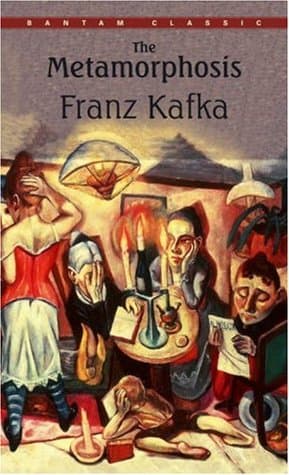
- The Metamorphosis
Franz Kafka
3.8 (643k) average on GoodreadsFantasyFeatures a surreal physical transformation as an allegory for alienation and family dysfunction.
- My Brilliant Friend
Elena Ferrante
4.0 (201k) average on GoodreadsLiterary FictionExamines complex female relationships and the subtle ways women struggle for identity and freedom within oppressive structures.
- The Old Man and the Sea
Ernest Hemingway
3.8 (831k) average on GoodreadsLiterary FictionA Cuban fisherman's long struggle with a giant marlin becomes a story of endurance and dignity, now retold for young adults with illustrations, phonetic guides, and writing prompts in Traditional Chinese.
- One Hundred Years of Solitude
Gabriel García Márquez
4.1 (753k) average on GoodreadsLiterary FictionThrough the multi-generational story of the Buendía family, a mythical town deals with the repeating patterns of time, love, and solitude, as the extraordinary mixes with the ordinary.
- The Goldfinch
Donna Tartt
3.9 (720k) average on GoodreadsLiterary FictionHaunted by a tragic explosion and clutching a stolen Dutch masterpiece, a young orphan navigates the opulent drawing rooms of New York and the gritty underbelly of the art world, desperately seeking connection and redemption amidst a life spiraling into crime and obsession.
- Little Fires Everywhere
Celeste Ng
4.1 (713k) average on GoodreadsLiterary FictionIn Shaker Heights, an artist and her daughter move in, and their free-spirited lives clash with a rule-bound matriarch, revealing hidden conflicts beneath a perfect surface.




Enjoyed the summary?
A summary gives you the shape of the book. The book itself has the detail, the examples and the voice.
Find The Vegetarian on AmazonAs an Amazon Associate, BookBrief earns from qualifying purchases. How we're funded