
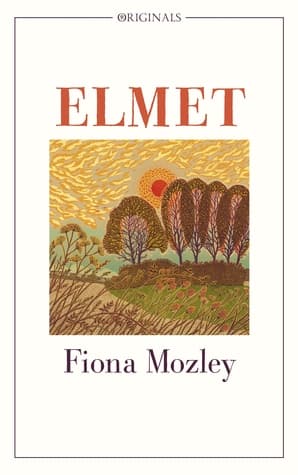
Synopsis
Covers the whole plot, including the ending.
- Difficulty
- Medium
- Pacing
- Moderate
- Mood
- Atmospheric, Unsettling, Lyrical, Melancholy, Intense
- Read it if
- You appreciate literary fiction with a strong sense of place, exploring themes of family, nature, class struggle, and the allure and danger of living outside societal norms.
- Skip it if
- You prefer fast-paced thrillers, lighthearted stories, or are sensitive to descriptions of violence and a pervasive sense of melancholy.
Elmet Plot Summary
Covers the whole plot, including the ending.
The Wildwood Home
Daniel remembers his childhood with his older sister Cathy and their father in a house their father built in Elmet, Yorkshire. Their life was off-grid; they hunted, foraged, and lived by their own rules, away from society. Their father, a large man who was once a bare-knuckle boxer, taught them survival skills and gave them a deep connection to the land. Despite their unusual upbringing, their small family had a strong sense of love and safety. They sometimes went to school, where their differences from other children were clear.
Daddy's Return and Rage
Their father often disappeared for days or weeks without explanation. He would return with money and either a deep calm or unsettling rage. Daniel and Cathy learned to understand their father's moods, knowing his anger was powerful, though rarely aimed at them. These absences and returns made the family more insular, as they relied only on each other for support, strengthening their bond and their separation from the outside world.
Early Encounters with the Tykes
When Daniel and Cathy briefly attended school, they were immediately seen as outsiders. Cathy, especially, showed strong independence and a quick temper, often fighting with other children. During this time, they learned about the local gentry, the Tyke family, who owned most of the land and controlled the village. The Tykes' children attended the same school, and the social hierarchy was obvious. These brief interactions hinted at the class tensions and power imbalances that would later threaten their family's way of life.
The First Confrontation
As Daniel and Cathy grew older, their family's isolation was increasingly threatened. The Tykes, especially Mr. Tyke and his sons, began to assert ownership over the woodland their father believed was theirs. This led to early, hidden confrontations where the Tykes made their intentions clear, demanding the family leave. Their father, usually a man of few words but great physical presence, responded with quiet defiance, refusing to be intimidated. These encounters were unsettling, bringing a sense of dread and hinting at the growing conflict over their home and way of life.
Cathy's Growing Fierceness
Cathy's personality grew tougher as outside pressures increased. She became fiercely protective of Daniel and their father, showing a quick temper and a willingness to use violence when provoked. This mirrored her father's own suppressed aggression, suggesting a shared trait. She was not afraid to confront those who threatened them, whether local bullies or the encroaching Tykes. Her actions, born of loyalty and love, also hinted at a dangerous potential, making her a formidable, yet unpredictable, force in the family's struggle for survival.
The Escalating Provocations
The Tykes' provocations became more open and aggressive. They trespassed on the family's land, damaged their property, and openly threatened them, trying to force them out. These acts were meant to break the family's resistance and show the Tykes' power. Their father, despite his great strength, tried to calm things down, seeking a peaceful solution, but his patience wore thin. The family's once peaceful life was shattered by constant watchfulness and fear of the Tykes, pushing them to their limit.
Daddy's Violent Past Revealed
Through fragmented memories and quiet talks, Daniel and Cathy learned more about their father's past. They discovered he was a famous bare-knuckle boxer, known for his strength and ferocity. This violent past explained his physical power and his deep wish for a peaceful, secluded life, away from conflict. His reclusiveness was a deliberate choice, an attempt to escape a life of violence and protect his children from it. This revelation added depth to his character, explaining both his immense strength and his hesitation to use it.
The Final Stand
The Tykes' harassment reached a critical point, making their father abandon his peaceful approach. A final, brutal fight occurred between him and the Tyke men. The fight was savage, showing their father's raw strength and years of suppressed violence. He defended his family and home with primal ferocity, severely injuring his opponents. This climactic battle was a desperate act of self-preservation, but it also had severe consequences, ending any hope of a peaceful resolution or continued isolation.
The Aftermath and Disappearance
After the violent confrontation, their father disappeared. Daniel and Cathy were left to deal with the immediate aftermath, including the injured Tykes and the now undeniable intrusion of the outside world. His disappearance was a profound blow, leaving them feeling abandoned and vulnerable. They had to face the harsh realities of their situation without his protection, dealing with the legal and social fallout of the fight and the sudden void left by his absence.
Cathy's Revenge
Cathy, driven by strong loyalty to her father and belief in their right to the land, refused to accept defeat. Filled with anger and a desire for justice, she took decisive, violent action against the Tykes. Her actions were extreme, reflecting her deep love for her family and her ingrained capacity for revenge. This act of revenge was a tragic end to the family's struggle, ensuring the conflict left a lasting mark on everyone involved and solidifying Cathy's transformation into a formidable figure.
Daniel's Quest
Years later, Daniel, now an adult, is still haunted by his childhood events. He sets out on a journey, driven by a deep need to find Cathy and understand the full truth of what happened. His quest is not just a physical search but also an emotional and psychological one. He revisits memories and tries to reconcile the idyllic past with the violent present. He seeks closure and a connection to his lost family, hoping to find his sister and, in doing so, find peace for himself.
Elmet Characters
Daniel
Protagonist
The sensitive, reflective narrator who recounts his family's story.
Daniel is the younger child and the narrator of the story, looking back on his childhood. He is more observant and reflective than his sister, often internalizing the events around him. He possesses a deep love for his family and the natural world, and his perspective provides a poignant, often melancholic, lens through which the family's struggles are viewed. He is deeply affected by the violence but also carries a sense of wonder about their unique way of life.
Relationships: Daddy (Adoring son, looks up to his father as a protector and guide.); Cathy (Close brother, often the recipient of Cathy's fierce protection and loyalty.)
Cathy
Supporting/Co-protagonist
Daniel's fiercely protective and increasingly volatile older sister.
Cathy is Daniel's older sister, strong-willed, independent, and fiercely protective of her family. She possesses a wild spirit and a quick temper, often clashing with the outside world. As the story progresses, she embodies the raw, untamed aspects of their family, mirroring her father's capacity for violence when provoked. Her loyalty is absolute, but her methods can be extreme, leading her down a path of retribution and self-destruction.
Relationships: Daddy (Adoring daughter, fiercely loyal and inherits many of his traits.); Daniel (Protective older sister, often acting as his defender and confidante.)
Daddy
Supporting/Pivotal
The children's enigmatic, powerful father, a former bare-knuckle boxer seeking a peaceful life.
Daddy is a man of immense physical strength and quiet dignity, who built their home in the woods with his own hands. A former bare-knuckle boxer, he sought to escape his violent past and provide a peaceful, self-sufficient life for his children. He teaches them survival skills and instills a deep love for nature. Despite his calm demeanor, a powerful, dormant rage lies within him, which surfaces when his family and home are threatened. He is the anchor of their unconventional existence.
Relationships: Daniel (Loving and protective father, teaches him about nature and survival.); Cathy (Loving and protective father, sees much of himself in her fierce spirit.); The Tykes (Antagonistic relationship, provoked into conflict over land ownership.)
Mr. Tyke
Antagonist
The wealthy, controlling landowner who seeks to dispossess the family of their home.
Mr. Tyke is the patriarch of the Tyke family, a powerful and influential landowner in Elmet. He represents the established order and the capitalist drive for ownership and control. He views the family's unconventional existence on his land as an affront and a challenge to his authority. He is relentless in his efforts to remove them, using legal threats and intimidation, and ultimately resorting to violence, embodying the oppressive forces of the outside world.
Relationships: Daddy (Primary antagonist, constantly clashing over land rights and control.); His Sons (Authoritarian father, expects obedience and enforces his will through them.)
The Tyke Sons
Supporting Antagonists
Mr. Tyke's aggressive and entitled sons who assist in harassing the family.
The Tyke sons are extensions of their father's will, embodying the petty cruelty and entitlement of their class. They are instrumental in the harassment of Daniel's family, carrying out their father's orders and often escalating the provocations. They are less nuanced than their father, serving primarily as physical enforcers and symbols of the external threat. Their actions contribute directly to the escalating violence.
Relationships: Mr. Tyke (Obedient and aggressive sons, carry out his bidding.); Daddy, Cathy, Daniel (Harassers and antagonists, directly involved in the physical confrontations.)
The Land/Elmet
Setting/Character
The wild, ancient landscape that provides both refuge and conflict for the family.
The Elmet landscape, particularly the copse where the family lives, functions almost as a character itself. It is a place of refuge, sustenance, and deep spiritual connection for Daniel's family, offering freedom from societal constraints. However, it is also the source of conflict, as its ownership is disputed. The land is ancient, wild, and indifferent to human laws, reflecting the family's own untamed nature and their struggle against the 'civilized' world.
Relationships: Daniel's Family (Source of life, home, and identity, deeply intertwined with their existence.); The Tykes (Object of desire and control, subject of their ownership claims.)
Elmet Themes
The Conflict Between Nature and Civilization
The novel explores the tension between a life in harmony with nature and the demands of modern society, shown by the Tyke family. Daniel's family thrives in their wild, self-sufficient life, but this independence is threatened by the legal, property-driven world outside. The ancient woods of Elmet contrast sharply with the cultivated fields and the Tykes' 'ownership' of the land. This highlights the clash between primal freedom and societal control. This is clear in the family's foraging life versus the Tykes' desire for profit from the land.
“'We lived apart, in the house that Daddy built for us with his bare hands. We foraged and hunted. When we were younger, Daniel and Cathy had gone to school. But we were not like the other children then, and we were even less like them now.'”
Family Bonds and Loyalty
At its heart, 'Elmet' is a powerful look at fierce, unconditional love and loyalty within a family, especially between father and children, and siblings. Despite their isolation and unusual lives, Daniel, Cathy, and Daddy share an unbreakable bond, protecting each other fiercely. Cathy's extreme actions are driven by overwhelming love for her father and brother. This theme explores the sacrifices people make to defend their family, even when it leads to tragic outcomes, as seen in Cathy's vengeful acts after her father's disappearance.
“'Daddy always said that the little copse in Elmet was ours alone. Not in the way that the Tykes owned their land, with paper and deeds, but in the way that it belonged to us because we lived in it, and breathed it, and knew every tree and stream.'”
The Cycle of Violence and Its Legacy
The novel examines the pervasive nature of violence, both inherited and provoked. Daddy's past as a bare-knuckle boxer suggests a tendency for aggression that he tries to suppress but cannot escape. This capacity for violence is mirrored in Cathy, who becomes increasingly fierce and vengeful. The story suggests that violence, once started, creates a cycle, leading to more retribution and destruction, even when justified by self-defense or loyalty. The confrontations with the Tykes show how outside aggression can ignite hidden violence, continuing a tragic chain of events.
“'The terrible violence in Daddy grew. Not a violence that he used on us, but one that was always there, simmering, waiting for a reason to break out.'”
Social Class and Injustice
The contrast between the Tyke family and Daniel's family highlights themes of social class, power dynamics, and injustice. The Tykes, representing the wealthy gentry, feel entitled to control the land and the lives of those beneath them. Their actions are driven by a sense of ownership and a desire to maintain social dominance, ignoring the family's deep connection to the land. This conflict exposes the unfairness of a system where legal ownership often outweighs moral right and where the powerful can exploit the vulnerable, creating a deep sense of injustice for the family.
“'They circled like vultures. Local men, greedy and watchful. They wanted our land. They always had.'”
Plot Devices & Literary Techniques
Non-linear Narrative
The story is told through Daniel's fragmented memories, shifting between past and present.
The narrative structure of 'Elmet' is non-linear, with Daniel recounting his childhood memories while simultaneously describing his present-day search for Cathy. This device creates a sense of mystery and suspense, as the reader gradually pieces together the events that led to the family's downfall. It also allows for a deeper exploration of themes like memory, trauma, and the enduring impact of the past on the present, highlighting how Daniel continually grapples with his experiences.
Foreshadowing
Subtle hints and ominous descriptions throughout the early chapters hint at the impending violence and tragedy.
Foreshadowing is skillfully used to build tension and a sense of impending doom. Descriptions of Daddy's 'terrible violence' simmering beneath the surface, Cathy's growing fierceness, and the early, unsettling encounters with the Tykes all hint at the violent climax that will eventually unfold. This technique creates a pervasive atmosphere of dread, making the reader aware that the family's idyllic but precarious existence cannot last, heightening the emotional impact of the eventual tragedy.
Symbolism of the Woods/Elmet
The natural landscape symbolizes freedom, refuge, and the wild, untamed spirit of the family.
The woods of Elmet are a powerful symbol throughout the novel. Initially, they represent freedom, self-sufficiency, and a sanctuary from the outside world for Daniel's family. As the conflict escalates, the woods also symbolize the untamed, primal nature of the family's spirit and their resistance to domestication. The encroaching 'civilization' attempting to claim the woods represents the loss of this freedom and the destruction of their unique way of life, making the landscape integral to the family's identity and struggle.
The Absent Mother Figure
The complete absence of a mother figure emphasizes the unique and intense father-children bond.
The complete absence of a mother figure in Daniel's family is a significant plot device. It accentuates the intense, almost insular bond between Daddy, Cathy, and Daniel, making their family unit feel even more unique and isolated. This absence strengthens the thematic focus on paternal love and sibling loyalty, as well as highlighting the children's reliance solely on their father for guidance and protection, amplifying the impact of his eventual disappearance.
Elmet Quotes
“The wind was a constant companion, a presence that shaped the trees and the people who lived amongst them.”
“We lived by different rules, rules written in the earth and the sky, not in any book.”
“A man's worth isn't measured by what he owns, but by what he can do with his hands.”
“The woods kept our secrets, swallowed them whole, and gave nothing back.”
“Violence was a language he understood, a language he spoke with his whole body.”
“There was a wildness in us, a refusal to be tamed, that ran deeper than blood.”
“The world outside our clearing was a place of noise and rules, a place we didn't belong.”
“Justice, when it came, was often a rough and ready thing, shaped by the land itself.”
“We learned to read the land, to understand its moods, its promises, and its threats.”
“The past was a weight, a heavy coat we couldn't shed, no matter how far we ran.”
“Sometimes the quiet was so deep it felt like a sound in itself.”
“Love was a complicated thing, tangled with loyalty and fear, and a fierce, protective instinct.”
“Every tree had a story, every stone a memory, if you only knew how to listen.”
“We were ghosts in the making, fading slowly into the landscape.”
Quiz
10 questions on the plot and the characters. Each answer comes with a short explanation.
Question 1
What kind of dwelling did Daddy build for his family in Elmet?
- A traditional brick house
- A house built with his bare hands, likely from natural materials
- A renovated old cottage
- A caravan on the edge of the woods
Show answer
B. A house built with his bare hands, likely from natural materials The synopsis explicitly states that Daddy built the house for them with his bare hands, emphasizing their self-sufficient and unconventional lifestyle.
Question 2
Who are the two children living with Daddy in Elmet?
- Daniel and Sarah
- David and Cathy
- Daniel and Cathy
- Michael and Anna
Show answer
C. Daniel and Cathy The synopsis clearly names Daniel and Cathy as the children in the family unit.
Question 3
What is Daniel doing at the beginning of the story, based on the synopsis?
- He is returning home to Elmet.
- He is heading north, looking for someone.
- He is living a simple life with his family.
- He is confronting the local men.
Show answer
B. He is heading north, looking for someone. The first sentence of the synopsis states: 'Daniel is heading north. He is looking for someone.' This sets up the narrative framework.
Question 4
What is the primary reason the 'local men' begin to 'circle like vultures' around the family?
- They are concerned for the children's welfare.
- They want to offer help to Daddy.
- They are 'greedy and watchful' and likely want the family's land or resources.
- They are trying to involve the family in local community events.
Show answer
C. They are 'greedy and watchful' and likely want the family's land or resources. The synopsis describes the local men as 'greedy and watchful' and 'circl[ing] like vultures,' implying they have predatory intentions, likely related to the land Daddy claimed as 'theirs alone.'
Question 5
How did Daniel and Cathy's relationship with school change over time?
- They initially struggled but eventually integrated well.
- They never went to school at all.
- They went to school when younger but became even less like other children now.
- They were always popular and well-adjusted.
Show answer
C. They went to school when younger but became even less like other children now. The synopsis states: 'When they were younger, Daniel and Cathy had gone to school. But they were not like the other children then, and they were even less like them now.' This indicates a growing divergence from mainstream society.
Question 6
What contradictory behavior does Daddy exhibit, according to the description?
- He is always gentle but never speaks.
- He disappears and returns with rage, but is at peace at home.
- He encourages the children to be social but keeps them isolated.
- He built their house but never maintained it.
Show answer
B. He disappears and returns with rage, but is at peace at home. The synopsis highlights this contradiction: 'Sometimes Daddy disappeared, and would return with a rage in his eyes. But when he was at home he was at peace.' This suggests a complex and potentially volatile character.
Question 7
What theme does the novel 'Elmet' explicitly explore regarding the bond between family members?
- The superficiality of family ties in modern society.
- How deep the bond between father and child can go.
- The inevitable break-down of family units under pressure.
- The importance of extended family networks.
Show answer
B. How deep the bond between father and child can go. The synopsis concludes by stating 'as well as an exploration of how deep the bond between father and child can go,' directly referencing this theme.
Question 8
The synopsis describes the family's early life as having 'turned sour and fearful.' What is the primary cause of this shift?
- A natural disaster destroyed their home.
- Daddy's growing 'terrible violence' and the circling 'greedy and watchful' local men.
- The children's desire to leave Elmet and live in the city.
- A severe shortage of food and resources.
Show answer
B. Daddy's growing 'terrible violence' and the circling 'greedy and watchful' local men. The synopsis links the 'sour and fearful' turn to the increased external threat from 'greedy and watchful' local men and the internal escalation of 'the terrible violence in Daddy.'
Question 9
What is the significance of the 'little copse in Elmet' that Daddy claimed was 'theirs alone'?
- It was a place where they buried their family treasures.
- It represented their perceived autonomy and ownership, which was challenged by external forces.
- It was a secret meeting place for the family and their friends.
- It was the only source of food for their foraging lifestyle.
Show answer
B. It represented their perceived autonomy and ownership, which was challenged by external forces. Daddy's claim that the copse was 'theirs alone' is immediately followed by 'But that wasn't true. Local men, greedy and watchful, began to circle like vultures,' indicating that this claim of ownership and independence is central to the conflict and their precarious place in society.
Question 10
How does the synopsis characterize 'Elmet' as a commentary on contemporary society?
- It celebrates the integration of rural and urban communities.
- It is a lyrical commentary on contemporary society and one family's precarious place in it.
- It criticizes the lack of government intervention in family matters.
- It highlights the benefits of complete isolation from modern life.
Show answer
B. It is a lyrical commentary on contemporary society and one family's precarious place in it. The synopsis explicitly describes 'Elmet' as 'Atmospheric and unsettling, Elmet is a lyrical commentary on contemporary society and one family's precarious place in it,' directly answering the question.
Elmet FAQ
What is the core premise of 'Elmet'?
Elmet tells the story of Daniel and Cathy, who live off-grid in a house built by their father, John, in a secluded copse in Elmet. Their idyllic, unconventional life is threatened when local landowners, the Price family, assert their claim over the land, leading to escalating tensions and violence rooted in past injustices.
Who are the main characters in the book?
The main characters are Daniel, the narrator, who looks back on his childhood; Cathy, his fierce and protective older sister; and their father, John, a former bare-knuckle boxer with a troubled past and a deep connection to the land. The antagonists are the wealthy and manipulative Price family, particularly Mr. Price.
What is the significance of the 'Elmet' setting?
Elmet refers to a historical ancient British kingdom, and in the book, it represents a wild, untamed, and almost mythical place where John tries to create an independent life for his children. It symbolizes their isolation, their connection to nature, and the precariousness of their existence outside societal norms.
How does the narrative structure contribute to the story's atmosphere?
The story is narrated by an adult Daniel looking back on his childhood, giving it a reflective and often melancholic tone. This retrospective perspective allows for foreshadowing and a sense of impending doom, as the reader knows from the outset that the 'simplicity' of their early life has 'turned sour and fearful.'
What kind of relationship do Daniel and Cathy have with their father, John?
Daniel and Cathy share an intensely close and dependent relationship with John. He is their sole provider, protector, and educator, teaching them survival skills and instilling a strong sense of family loyalty. Despite his violent past and unpredictable moods, they view him as a loving and powerful figure.
What is the 'terrible violence in Daddy' mentioned in the synopsis?
John's 'terrible violence' refers to his past as a bare-knuckle boxer, which he left behind for his children, but also his inherent capacity for brutality when provoked or when his family is threatened. This violence is both a protective force and a destructive one, ultimately leading to tragic consequences.
What is the historical injustice that fuels the conflict with the Price family?
The conflict stems from the Price family's historical enclosure of common land, dispossessing local families, including John's ancestors. John's act of building his home on their land is a direct challenge to this historical injustice and a reclamation of what he believes is rightfully theirs.
Are there any symbolic elements related to nature or animals in the book?
Yes, nature is deeply symbolic. The copse itself is a sanctuary but also a contested territory. Animals like the vultures circling represent the predatory nature of the Price family, while the children's skills in foraging and hunting symbolize their connection to the wild and their defiance of conventional society.
How does Cathy's character develop throughout the story?
Cathy starts as a fierce and protective older sister, almost a co-parent. As tensions escalate, her protective instincts become more pronounced and violent, mirroring her father's. She embodies a raw, untamed strength and a complete devotion to her family, willing to go to extreme lengths to defend them.
What psychological impact does their isolated upbringing have on Daniel and Cathy?
Their isolated upbringing fosters incredible resilience, resourcefulness, and a deep bond with each other and their father. However, it also leaves them socially awkward, distrustful of outsiders, and unprepared for the complexities of mainstream society, contributing to their vulnerability when their world is threatened.
How does John's past as a boxer influence his parenting style and worldview?
John's boxing past instills in him a primal sense of protection and a belief in physical strength as a means of survival and justice. He teaches his children to be self-sufficient and defiant, viewing the outside world as inherently threatening, a worldview shaped by his own experiences of being exploited and marginalized.
What is the psychological significance of the 'house that Daddy built for them with his bare hands'?
The house represents John's attempt to create a safe, self-sufficient haven for his children, a physical manifestation of his love and his rejection of societal norms. It symbolizes their identity and independence, making its threat by the Price family a deeply personal and existential assault.
Is 'Elmet' a critique of modern society or a celebration of alternative living?
It is arguably both. It celebrates the deep family bonds and self-sufficiency of their alternative lifestyle, but it also critiques modern society's relentless pursuit of wealth, its disregard for nature, and its historical injustices that marginalize those who live outside the system. Ultimately, it shows the fragility of such an existence.
What moral ambiguities does the novel explore regarding John's actions?
The novel presents John as a complex figure: a loving father and a protector, but also a man capable of extreme violence. His actions, while driven by a desire to defend his family and reclaim stolen land, are not always morally straightforward, forcing the reader to question the nature of justice and retribution outside the law.
How does the ending of 'Elmet' contribute to its overall message?
The tragic and violent ending underscores the impossibility of maintaining their isolated idyll against the encroaching forces of modern society and historical power structures. It suggests that while resistance can be powerful, it often comes at a devastating cost, leaving lasting scars on the survivors like Daniel.
What role does memory play in Daniel's narration?
Memory is central to Daniel's narration, as he recounts his childhood from a later, more detached perspective. This allows him to piece together events and understand the deeper implications of his father's actions and the family's struggles, even as some details remain hazy or tinged with nostalgia and trauma.
Can 'Elmet' be considered a modern folk tale or myth?
Yes, 'Elmet' strongly resonates with elements of a modern folk tale. Its isolated setting, the powerful, almost mythical figure of John, the struggle against oppressive forces, and its exploration of primal themes like family, land, and justice give it a timeless, allegorical quality, akin to traditional myths.
Similar books
- Where the Crawdads Sing
Delia Owens
4.5 (975k) average on GoodreadsHistorical FictionFeatures a protagonist living isolated in nature, dealing with societal prejudice and a strong connection to the land.
- My Absolute Darling
Gabriel Tallent
3.6 (39k) average on GoodreadsLiterary FictionExplores a child's intense, isolated upbringing with a dangerous father figure and themes of survival and violence.
- The Old Man and the Sea
Ernest Hemingway
3.8 (831k) average on GoodreadsLiterary FictionA Cuban fisherman's long struggle with a giant marlin becomes a story of endurance and dignity, now retold for young adults with illustrations, phonetic guides, and writing prompts in Traditional Chinese.
- One Hundred Years of Solitude
Gabriel García Márquez
4.1 (753k) average on GoodreadsLiterary FictionThrough the multi-generational story of the Buendía family, a mythical town deals with the repeating patterns of time, love, and solitude, as the extraordinary mixes with the ordinary.
- The Goldfinch
Donna Tartt
3.9 (720k) average on GoodreadsLiterary FictionHaunted by a tragic explosion and clutching a stolen Dutch masterpiece, a young orphan navigates the opulent drawing rooms of New York and the gritty underbelly of the art world, desperately seeking connection and redemption amidst a life spiraling into crime and obsession.
- Little Fires Everywhere
Celeste Ng
4.1 (713k) average on GoodreadsLiterary FictionIn Shaker Heights, an artist and her daughter move in, and their free-spirited lives clash with a rule-bound matriarch, revealing hidden conflicts beneath a perfect surface.





Enjoyed the summary?
A summary gives you the shape of the book. The book itself has the detail, the examples and the voice.
Find Elmet on AmazonAs an Amazon Associate, BookBrief earns from qualifying purchases. How we're funded