
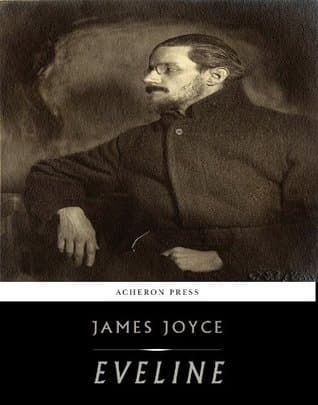
Synopsis
Covers the whole plot, including the ending.
- Difficulty
- Medium
- Pacing
- Slow
- Mood
- Melancholy, Reflective, Anxious, Oppressive
- Read it if
- You appreciate classic modernist short stories exploring themes of duty, escape, and paralysis, with a focus on internal conflict and psychological depth.
- Skip it if
- You prefer fast-paced plots with clear resolutions or stories with optimistic, action-driven narratives.
Eveline Plot Summary
Covers the whole plot, including the ending.
A Glimpse of Home
Eveline Hill sits by the window in her Dublin home, watching the familiar street and remembering her childhood. She notices changes in the neighborhood, with new houses replacing the field where she and her siblings, including her deceased brother Ernest and her living brother Harry (who works in England), used to play. She feels a sense of weariness and dust in her life, which contrasts with the promise of escape. Her thoughts turn to her abusive father, who has grown more violent since her mother's death, and her difficult responsibilities caring for the household and her younger siblings, as well as managing the family's money.
The Weight of Duty
Eveline's daily life is a cycle of chores and her father's demands. She manages the household budget, often haggling with tradesmen and giving her father her entire weekly earnings. Her father frequently threatens her with physical violence, especially on Saturday nights when he is drunk, and often accuses her of wasting money. She remembers her mother's life of 'commonplace sacrifices' and believes she is headed for a similar fate. The thought of escaping this oppressive environment grows stronger as she holds two letters in her lap: one for Harry and one for her father.
Memories of Her Mother
Eveline's memories are shaped by her mother's suffering. She remembers her mother's constant struggle and eventual mental decline, ending with her mother's final, haunting words: 'Derevaun Seraun! Derevaun Seraun!' (an unintelligible phrase that suggests madness or despair). This memory reinforces Eveline's fear of a similar fate of domestic drudgery and emotional annihilation. She promised her mother on her deathbed that she would keep the home together, a promise that now feels like a heavy chain binding her to her current life.
Frank's Promise
Eveline's thoughts turn to Frank, a sailor she met who offers her a way out. She remembers their courtship, how he would meet her outside the shop where she worked and walk her home, telling her stories of his travels to Buenos Ayres. He is kind and lively, unlike her stern father. Frank has proposed marriage and promises to take her to Buenos Ayres, a place of warmth, new experiences, and freedom from her burdensome life in Dublin. He represents adventure and a chance for happiness, a contrast to her current existence.
Her Father's Disapproval
Eveline's father strongly disapproves of Frank, which further complicates her decision. He had once found them together and threatened Frank, forbidding Eveline to see him again. Despite this, Eveline secretly continued their relationship. Her father's hostility towards Frank, combined with his general abusive nature, makes the idea of escaping with Frank even more appealing. However, his disapproval also fuels her guilt and indecision, as she struggles with the conflicting desires for personal happiness and filial duty.
The Allure of Buenos Ayres
Eveline pictures a future in Buenos Ayres with Frank, imagining a life where she would be respected as a married woman, free from the constant fear of her father's violence and the drudgery of her domestic responsibilities. She dreams of a place where she can have her own home, make her own decisions, and experience love and happiness. This vision of a new beginning is attractive, representing a complete break from the suffocating familiarity of her Dublin life. The warmth and exoticism of Buenos Ayres symbolize a fresh start.
The Promise to Her Mother
The promise Eveline made to her dying mother—to keep the home together—weighs heavily on her conscience. This vow acts as a powerful tether, binding her to her current life and making the decision to leave incredibly difficult. She feels a strong obligation to honor her mother's memory and sacrifice, even if it means sacrificing her own happiness. The memory of her mother's hard life and her final, meaningless words, 'Derevaun Seraun,' serve as a constant reminder of the potential for despair if she stays, yet also as a moral imperative to stay.
The Farewell at the Port
Eveline arrives at the North Wall with Frank, the bustling port filled with the sounds of the sea and departing ships. Frank holds her hand, his excitement clear as he urges her towards the gangway. The ship's whistle blows, signaling its imminent departure. Eveline feels a growing sense of panic and internal turmoil. The reality of leaving, the finality of the decision, overwhelms her. The sights and sounds of the port, while representing freedom for Frank, intensify her fear and indecision.
A Plea for Rescue
As Frank pulls her towards the ship, Eveline is overcome by nausea and fear. She feels her heart pounding and her hands growing cold. In her distress, she silently prays to God to direct her, to show her what her duty is. She feels trapped between the promise of a new life and the familiar, oppressive security of her current existence. The enormity of the decision paralyzes her, and she seeks a divine sign to resolve her agonizing internal conflict.
Paralysis at the Gangway
When Frank tries to pull her onto the ship, Eveline resists, gripping the iron railing with all her might. She realizes suddenly that she cannot go. Her face turns white, and her eyes are fixed, showing no emotion or recognition of Frank. She is paralyzed by fear and indecision, unable to respond to Frank's desperate pleas. The life she knows, even with its hardships, is too powerful a force to abandon for the unknown, and she remains rooted to the spot, a statue of despair.
Frank's Despair
Frank, confused and hurt by Eveline's sudden refusal, calls out to her, urging her to come. He tries to pull her once more, but her grip on the railing is unyielding. As the ship's whistle sounds again and the vessel prepares to depart, Frank is forced to board alone, leaving Eveline behind. He faces a solitary journey, his dreams of a shared future shattered by Eveline's paralysis. Eveline, meanwhile, remains on the quay, her face blank, having chosen the familiar torment over the frightening unknown.
Eveline Characters
Eveline Hill
Protagonist
A young woman trapped between duty and the desire for escape.
Eveline is a nineteen-year-old woman living in Dublin, burdened by domestic responsibilities and an abusive father. She is meek, dutiful, and deeply rooted in her past, particularly her promise to her dying mother. While she yearns for a better life and the love offered by Frank, her deep-seated fears, sense of obligation, and attachment to the familiar paralyze her when faced with the opportunity for change. She is a product of her oppressive environment, struggling with agency and self-determination.
Relationships: Frank (Suitor and potential liberator, offering escape and marriage.); Eveline's Father (Abusive, tyrannical, and controlling parent.); Eveline's Mother (Deceased, but her memory and a deathbed promise heavily influence Eveline's decisions.); Ernest (Deceased brother, a fond childhood memory.); Harry (Brother working in England, providing some financial support but absent from her daily life.)
Frank
Supporting
Eveline's suitor, a sailor who offers her a new life abroad.
Frank is a kind, lively, and adventurous sailor who has traveled the world, including Buenos Ayres. He represents escape, romance, and a life of freedom and respect, a stark contrast to Eveline's dreary existence. He genuinely loves Eveline and offers her a chance at marriage and a new beginning. While he is a catalyst for Eveline's internal conflict, he ultimately cannot overcome her deep-seated fears and paralysis, leaving him bewildered and abandoned at the story's end.
Relationships: Eveline Hill (Romantic interest and fiancée, whom he hopes to marry and take to Buenos Ayres.)
Eveline's Father
Antagonist
An abusive and controlling patriarch who keeps Eveline tethered to her home.
Eveline's father is a central figure of oppression in her life. He is abusive, frequently drunk, and often threatens Eveline with violence. He controls her earnings and disparages her, making her home a place of fear rather than comfort. His disapproval of Frank further solidifies his role as an obstacle to Eveline's happiness. He represents the patriarchal constraints and the suffocating domesticity that Eveline desperately wishes to escape, yet also the familiar, albeit painful, anchor of her existence.
Relationships: Eveline Hill (Abusive father-daughter relationship, marked by fear and control.); Eveline's Mother (Deceased wife, whom he also treated poorly.)
Eveline's Mother
Mentioned
Deceased, but her memory and deathbed promise profoundly influence Eveline.
Eveline's mother is a spectral presence whose memory profoundly shapes Eveline's decisions. Her life was one of 'commonplace sacrifices,' marked by hardship and eventual mental decline. Eveline's promise to her on her deathbed—to keep the home together—is a powerful emotional chain. Her mother's final, nonsensical words, 'Derevaun Seraun,' symbolize the madness and despair that Eveline fears for herself if she remains in Dublin, yet also underscore the weight of her filial duty.
Relationships: Eveline Hill (Mother-daughter bond, characterized by a deathbed promise and shared suffering.); Eveline's Father (Husband, who treated her poorly.)
Ernest
Mentioned
Eveline's deceased brother, a fond memory from her childhood.
Ernest is Eveline's deceased brother, remembered fondly from their childhood days playing in the field that has since been replaced by new houses. His memory contributes to Eveline's nostalgia for a simpler past, before the weight of her adult responsibilities and her father's increased abuse. He represents an idealized past that contrasts with her present difficulties, but he holds no direct influence on her current dilemma.
Relationships: Eveline Hill (Brother, a childhood playmate.)
Harry
Mentioned
Eveline's brother who works in England.
Harry is Eveline's brother who works in England and occasionally sends money home. While he is alive and contributes financially, his physical absence means he offers no direct emotional support or practical help to Eveline in her daily struggles. He represents another sibling who has escaped the immediate confines of the Dublin home, but his distance means he cannot intervene in Eveline's dilemma. Eveline writes him a letter, indicating her intent to leave, but he remains a distant figure.
Relationships: Eveline Hill (Brother, distant but provides some financial support.)
Eveline Themes
Paralysis and Inaction
This theme is central to 'Eveline,' seen in her inability to make a decisive choice and act. Despite her longing for escape and Frank's clear offer, Eveline remains rooted at the quay, unable to board the ship. Her fear of the unknown, combined with the familiar, oppressive comfort of her routine, leaves her immobile. This paralysis is not just physical; it is emotional and psychological, stemming from her conflicting desires and strong sense of duty. The story ends with her literal paralysis, her hands gripping the railing as Frank is swept away, symbolizing her entrapment in her own indecision.
“She stood motionless, in that trance of distress. A bell clanged upon her heart. She knew that it was useless to struggle against the strong will that held her. She set her white face to him, passive, like a helpless animal. Her eyes gave him no sign of love or farewell or recognition.”
Duty Versus Personal Happiness
Eveline is torn between her duty, especially the promise made to her dying mother to 'keep the home together,' and her desire for personal happiness and a new life with Frank. Her mother's life of 'commonplace sacrifices' and her final, despairing words haunt Eveline, emphasizing the weight of her obligation. This conflict is worsened by her abusive father, who makes her life miserable but also serves as a strange anchor of familiarity. Ultimately, her perceived duty and the fear of breaking her promise win over her longing for a better future, leading her to sacrifice her own happiness.
“She had hard work to keep the house together and to see that the two young children who had been left to her charge went to school regularly and got their meals. It was hard work—a hard life—but now that she was about to leave it she did not find it a wholly undesirable life.”
Escape and Entrapment
The story explores the tension between the desire for escape and the forces that lead to entrapment. Frank and Buenos Ayres represent a romantic escape from Eveline's dreary, oppressive life in Dublin. The thought of a new home, a husband, and freedom from her father's abuse is appealing. However, Eveline is trapped by several factors: her promise to her mother, her fear of the unknown, her attachment to familiar routines, and the psychological hold of her abusive father. The familiar, even if painful, becomes a prison she cannot leave, showing the psychological complexity of entrapment.
“She must escape! Frank would save her. He would give her life, perhaps love, too. But she wanted to cry. She could not go. All the seas of the world tumbled about her heart. He was drawing her into them: he would drown her. She gripped the iron railing with both hands.”
Nostalgia and the Past's Hold
Eveline often retreats into childhood memories, recalling happy times with her siblings, especially Ernest, and the 'brown field' where they played. These nostalgic recollections contrast sharply with the harsh realities of her present life, creating a longing for lost innocence. However, the past is also a source of her entrapment, particularly the memory of her mother's suffering and the deathbed promise. The familiar sights and sounds of Dublin, even her abusive father, are deeply ingrained in her mind, making a break with the past incredibly difficult and ultimately impossible.
“She was going to leave all that old life, to leave her home. All the dear familiar objects had an appeal that she had never noticed before, an appeal that seemed to speak to her now for the last time.”
The Oppression of Domestic Life
Eveline's life is defined by the relentless drudgery and emotional abuse within her home. She is responsible for managing the household, caring for her younger siblings, and enduring her father's tyranny. The description of her mother's 'commonplace sacrifices' and her eventual decline into madness shows the suffocating nature of their domestic existence. The house, rather than being a sanctuary, is a prison of duty and fear. This theme highlights the limited options and the emotional toll on women in early 20th-century Dublin, where domesticity could be a trap rather than a haven.
“She had hard work to keep the house together and to see that the two young children who had been left to her charge went to school regularly and got their meals. It was hard work—a hard life.”
Plot Devices & Literary Techniques
Epiphany
A sudden, profound realization that paralyzes the protagonist.
Joyce's concept of epiphany is central to 'Eveline.' While an epiphany typically implies a moment of sudden spiritual or moral revelation, for Eveline, it's a moment of devastating realization that leads to inaction. At the quay, as Frank pulls her towards the ship, Eveline experiences a visceral, overwhelming understanding that she cannot go. This isn't a liberating insight, but rather a paralyzing one, revealing the depth of her fear and her inability to break free from her past and duties. It's a moment of anti-climax, cementing her tragic fate.
Symbolism of Place (Dublin vs. Buenos Ayres)
Contrasting locations representing stagnation and escape.
Dublin, particularly Eveline's home, symbolizes stagnation, oppression, and the weight of the past. It is described with images of dust, decay, and familiar misery. In stark contrast, Buenos Ayres, the destination Frank offers, symbolizes freedom, adventure, warmth, and the promise of a new, happier life. The sea and the ship act as a conduit between these two symbolic poles. Eveline's inability to cross the threshold onto the ship underscores her ultimate choice of the familiar, suffocating past over the frightening, liberating future.
The Deathbed Promise
A vow made to her dying mother that binds Eveline to her home.
The promise Eveline made to her mother 'to keep the home together as long as she could' is a powerful plot device that drives Eveline's internal conflict. It acts as a moral and emotional chain, preventing her from embracing the opportunity Frank offers. This promise, made in a moment of grief and vulnerability, becomes an unbreakable bond that dictates her fate. It highlights the profound influence of the deceased on the living and the burden of perceived duty, ultimately leading to her paralysis and inability to escape her circumstances.
The Window as a Motif
A recurring image representing observation, longing, and confinement.
The window is a significant motif in 'Eveline.' It's where the story opens, with Eveline looking out at the familiar street, observing changes but remaining physically confined. It represents her passive observation of life passing by and her longing for something beyond her immediate grasp. She can see the world, but she cannot fully participate in it. The window symbolizes her desire for escape while simultaneously highlighting her entrapment within her home and her own psyche, unable to break through the metaphorical glass into a new reality.
Eveline Quotes
“She was to go away with him by the nightboat to Buenos Ayres.”
“Her father was not so bad then, and sometimes in the evenings he used to play the piano for her.”
“She had hard work to keep the house together and to see that the two young children who had been left to her charge went to school regularly and got their meals.”
“She had to gather up every cent of the eight shillings her father gave her and spend it on the house.”
“He took her to see The Bohemian Girl and she felt elated as she sat in an unaccustomed part of the theatre with him.”
“He would save her. He would give her life, perhaps love, too.”
“Her eyes gave him no sign of love or farewell or recognition.”
“She stood up in a sudden impulse of terror. Escape! She must escape!”
“She looked at the squalid room. There she had been a child playing with her brothers and sisters.”
“All the seas of the world tumbled about her heart. He was drawing her into them: he would drown her.”
“She felt her cheeks glow with shame and yet, she was a little proud to be there with him.”
“She prayed to God to direct her, to show her what was her duty.”
“Her father was invariably cross every Saturday night.”
“She knew that she would not cry many tears at Papan's death.”
Quiz
10 questions on the plot and the characters. Each answer comes with a short explanation.
Question 1
What is Eveline's primary internal conflict throughout the story?
- Whether to pursue a career in music or art.
- Whether to stay with her abusive father or elope with Frank.
- Whether to convert to a different religion or remain Catholic.
- Whether to confront her father about his drinking or ignore it.
Show answer
B. Whether to stay with her abusive father or elope with Frank. Eveline is torn between her sense of duty to her family and the promise of a new life with Frank abroad, away from her father's mistreatment.
Question 2
What promise did Eveline make to her dying mother?
- To always keep the house clean.
- To look after the house and keep the family together.
- To marry a respectable man from Dublin.
- To never leave Ireland.
Show answer
B. To look after the house and keep the family together. Eveline's mother made her 'promise to keep the home together as long as she could,' a promise that significantly binds Eveline to her current life.
Question 3
What is Frank's profession or background as described by Eveline?
- He is a sailor who travels the world.
- He is a shopkeeper from a neighboring town.
- He is a wealthy businessman from America.
- He is a local musician Eveline met at a dance.
Show answer
A. He is a sailor who travels the world. Frank is described as a 'sailor' and 'ship's steward' who has 'travelled the world,' offering Eveline a chance to escape her monotonous life.
Question 4
Where does Eveline plan to go with Frank?
- England
- America
- Buenos Ayres
- Australia
Show answer
C. Buenos Ayres Frank plans to take Eveline to Buenos Ayres, a distant and exotic location that represents freedom and a new beginning for her.
Question 5
What specific object does Eveline notice repeatedly in her home that symbolizes her trapped existence?
- The dusty old piano
- The broken window pane
- The yellowing photograph of a priest
- Her mother's old shawl
Show answer
C. The yellowing photograph of a priest Eveline repeatedly looks at the 'yellowing photograph of a priest, a school friend of her father,' which, along with other dusty objects, emphasizes the stagnation and decay of her home life.
Question 6
What is the primary emotion Eveline experiences at the very end of the story, preventing her from leaving?
- Excitement and anticipation for her new life.
- Love for her father and siblings.
- Paralysis and a sense of duty mixed with fear.
- Anger at Frank for pressuring her.
Show answer
C. Paralysis and a sense of duty mixed with fear. At the critical moment, Eveline is overcome by a 'paralysis' and 'helplessness,' unable to move and ultimately unable to depart, her face showing 'no sign of love or farewell or recognition.'
Question 7
How does Eveline's father react to her relationship with Frank?
- He is indifferent, as he is often drunk.
- He initially tolerates it but then forbids her from seeing him.
- He encourages it, hoping she will leave and ease his burden.
- He is unaware of the relationship.
Show answer
B. He initially tolerates it but then forbids her from seeing him. Initially, her father 'had not been so bad then, and she had been a happy child.' But later, he 'had found out the affair and forbidden her to have anything to say to him.'
Question 8
Which sense is most powerfully evoked during Eveline's final moments on the quay, contributing to her decision?
- Sight, as she sees the ship about to depart.
- Touch, as Frank grips her hand.
- Sound, particularly a 'distress' call or the 'moaning' of her mother.
- Smell, from the river or the departing ship.
Show answer
C. Sound, particularly a 'distress' call or the 'moaning' of her mother. As the ship's whistle sounds, Eveline hears 'a bell ringing as if for a death-knell' and recalls her mother's 'life of commonplace sacrifices closing in final craziness,' linking her mother's 'moaning' to her own potential fate.
Question 9
The theme of 'paralysis' is central to 'Eveline.' Which of the following best describes its manifestation in the story?
- Eveline's physical inability to move from her chair at the beginning of the story.
- The political stagnation of Ireland at the time the story is set.
- Eveline's psychological inability to escape her past, duties, and fears, culminating in her physical immobility.
- Frank's inability to convince Eveline to leave with him.
Show answer
C. Eveline's psychological inability to escape her past, duties, and fears, culminating in her physical immobility. The paralysis is primarily psychological, manifesting as Eveline's inability to break free from the emotional and societal bonds of her past and her family obligations, leading to her final, literal paralysis at the quay.
Question 10
What is the significance of the dust and 'odor of dusty cretonne' in Eveline's home?
- It indicates her negligence in housekeeping.
- It symbolizes the decay, stagnation, and oppressive past of her life in Dublin.
- It suggests her family is too poor to afford proper cleaning supplies.
- It highlights her father's lack of care for their living conditions.
Show answer
B. It symbolizes the decay, stagnation, and oppressive past of her life in Dublin. The pervasive dust and specific 'odor of dusty cretonne' are sensory details that evoke the suffocating, unchanging, and decaying atmosphere of Eveline's home, mirroring her trapped existence and the weight of her past.
Eveline FAQ
What is the central conflict Eveline faces at the beginning of the story?
Eveline Hill, a young woman living in early 20th-century Dublin, is torn between her dreary, duty-bound life at home with her abusive father and the promise of a new life in Buenos Aires with her sailor lover, Frank. She sits by the window, recalling memories that highlight the stagnation and unhappiness of her current existence.
Who is Frank, and what does he represent to Eveline?
Frank is a kind, adventurous sailor whom Eveline met when he was on shore leave. He represents escape, romance, and a life of adventure and respectability away from the oppressive atmosphere of her Dublin home. He promises to marry her and take her to Argentina.
What promise does Eveline recall making to her dying mother?
Eveline remembers promising her mother that she would keep the home together and look after her father. This promise weighs heavily on her, creating a significant moral dilemma as she contemplates abandoning her familial duties for personal happiness.
What specific details about her father's behavior contribute to Eveline's desire to leave?
Eveline's father is depicted as verbally and sometimes physically abusive, often threatening her with violence and taking her wages. She recalls him quarreling with her deceased brother, Ernest, and the constant fear she lives under, particularly when he is drunk.
What is the ultimate decision Eveline makes at the moment of departure?
At the very last moment, as she stands on the gangway ready to board the ship to Buenos Aires with Frank, Eveline is overcome by paralyzing fear and a sense of duty. She refuses to step onto the boat, effectively abandoning Frank and her chance at a new life, remaining frozen and unresponsive.
How do the sounds and smells of Dublin contribute to Eveline's internal struggle?
The 'dusty cretonne' of her window curtains and the familiar street organ playing evoke a sense of stagnation and the inescapable routine of her life. These sensory details ground her in her past and present, making the leap into the unknown with Frank seem even more daunting.
What is the significance of the image of the 'brown, cretonne' curtains Eveline observes?
The dusty, brown cretonne curtains symbolize the drabness, decay, and confinement of Eveline's life. They represent the unchanging, suffocating domesticity from which she longs to escape, yet ultimately cannot.
How does the memory of her mother's 'life of commonplace sacrifices' influence Eveline's final choice?
Eveline's memory of her mother's exhausted, repetitive life, culminating in her mother's descent into 'that life of commonplace sacrifices,' profoundly impacts her. It suggests a cyclical pattern of female suffering and duty in her family, which she fears repeating but also feels bound by.
What is the psychological impact of Eveline's promise to her mother?
The promise creates an immense psychological burden, trapping Eveline in a cycle of filial duty and guilt. It functions as a powerful internal barrier, preventing her from pursuing her own happiness and freedom, even when the opportunity is presented.
How does fear manifest in Eveline's final moments on the quay?
Fear manifests as a paralyzing force, described as a 'wave of nausea' and a 'sudden impulse of terror.' It renders her physically immobile and emotionally numb, transforming her into a passive object rather than an active agent of her own destiny.
Discuss Eveline's psychological paralysis in terms of her inability to act.
Eveline's psychological paralysis is evident in her inability to make a definitive choice until the very last second, and then her complete physical and emotional shutdown. She is overwhelmed by conflicting duties, fears of the unknown, and past trauma, leading to an almost catatonic state when faced with a life-altering decision.
To what extent is Eveline's decision a result of societal expectations for women in early 20th-century Ireland?
Eveline's decision is heavily influenced by societal expectations that placed women primarily in domestic roles, responsible for family care and maintaining the home. Her promise to her mother and her ingrained sense of duty reflect these patriarchal norms, making escape feel like a betrayal rather than liberation.
Could Eveline's final decision be interpreted as a form of self-preservation, despite its tragic outcome?
One could argue that Eveline's decision, though seemingly tragic, is a form of self-preservation from the unknown. The fear of a completely new life, a new country, and a man she doesn't fully know might have been more terrifying than the familiar misery of her current existence, leading her to choose the 'devil she knows.'
Is Frank a truly viable escape for Eveline, or is there an element of idealization in her perception of him?
While Frank appears kind and offers a clear path to escape, there's an element of idealization in Eveline's perception. Her limited experience with romance and her desperate desire for freedom might lead her to overlook potential challenges or the reality of marrying a sailor and moving to a foreign land, making him more a symbol of escape than a fully known entity.
What is the symbolic significance of the sea and the ship in Eveline's story?
The sea and the ship symbolize the vast, unknown, and potentially terrifying realm of freedom and adventure. For Eveline, they represent a pathway to a new life, but also an overwhelming void of uncertainty that ultimately proves too frightening for her to enter.
How does Joyce's use of free indirect discourse reveal Eveline's inner turmoil?
Joyce masterfully uses free indirect discourse to blend Eveline's thoughts and feelings directly into the narrative, allowing readers intimate access to her indecision, fears, and memories. This technique blurs the line between narrator and character, making her internal conflict palpable.
What role do Eveline's deceased siblings, Ernest and Harry, play in her narrative?
Eveline's deceased brothers, Ernest and Harry, represent lost potential and fragmented family. Ernest's death leaves her more vulnerable to her father's abuse, and Harry's absence (working in the church decorating business) places more responsibility on Eveline, reinforcing her isolated and burdened existence.
About the author
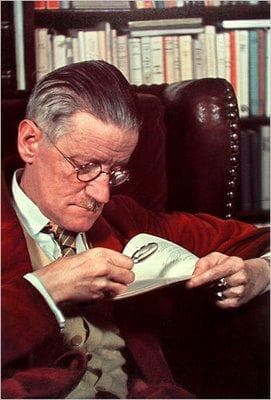
James Augustine Aloysius Joyce was an Irish novelist, poet, and literary critic. He contributed to the modernist avant-garde movement and is regarded as one of the most influential and important writers of the 20th century. Joyce's novel Ulysses (1922) is a landmark in which the episodes of Homer's Odyssey are paralleled in a variety of literary styles, particularly stream of consciousness. Other well-known works are the short-story collection Dubliners (1914), and the novels A Portrait of the Artist as a Young Man (1916) and Finnegans Wake (1939). His other writings include three books of poetry, a play, letters, and occasional journalism.
Similar books
- Mrs Dalloway
Virginia Woolf
3.8 (361k) average on GoodreadsFictionWhile both 'Eveline' and Mrs Dalloway utilize stream of consciousness to delve into characters' internal lives over a single day, Woolf's protagonist, Clarissa Dalloway, despite her internal struggles, exhibits a greater degree of social engagement and a more active, though internal, agency compared to Eveline's profound paralysis and inaction.
- Sons and Lovers
David Herbert Lawrence
Both works explore the suffocating influence of family on an individual's life. However, Lawrence's Paul Morel, despite his struggles with his mother and societal expectations, ultimately makes definitive, albeit complex, choices regarding his relationships and future, whereas Eveline remains tragically paralyzed, unable to act on her desire for escape.
- To Kill a Mockingbird
Harper Lee
4.3 (4.5M) average on GoodreadsHistorical FictionIn the 1930s Jim Crow South, Harper Lee writes about racial injustice, moral growth, and the quiet courage of a lawyer father, Atticus Finch, as seen through his young daughter's eyes.
- The Great Gatsby
F. Scott Fitzgerald
3.9 (3.8M) average on GoodreadsHistorical FictionIn the opulent Roaring Twenties, a mysterious millionaire's lavish parties hide his desperate, tragic pursuit of a lost love, exposing the emptiness within the American Dream.
- Pride and Prejudice
Jane Austen
4.3 (3M) average on GoodreadsHistorical FictionIn a society focused on status and money, Elizabeth Bennet navigates love and pride, challenging Mr. Darcy and social expectations to find true affection.
- Angels & Demons
Dan Brown
3.9 (2.7M) average on GoodreadsThrillerA Harvard symbologist races through Rome's ancient sites, deciphering cryptic clues to unmask the Illuminati and stop a vengeful plot to destroy the Vatican with a stolen antimatter weapon.






Enjoyed the summary?
A summary gives you the shape of the book. The book itself has the detail, the examples and the voice.
Find Eveline on AmazonAs an Amazon Associate, BookBrief earns from qualifying purchases. How we're funded