

Synopsis
Covers the whole plot, including the ending.
- Difficulty
- Medium
- Pacing
- Variable
- Mood
- Melancholy, Hopeful, Quirky, Profound, Introspective
- Read it if
- You enjoy emotionally rich literary fiction exploring grief, memory, and the search for meaning through a unique child's perspective, with a blend of historical context and experimental narrative.
- Skip it if
- You prefer straightforward plots without digressions, or find child narrators overly precocious, or are sensitive to detailed descriptions of trauma and loss.
Extremely Loud & Incredibly Close Plot Summary
Covers the whole plot, including the ending.
The Discovery of the Key
Nine-year-old Oskar Schell, still struggling with the grief of losing his father, Thomas Schell, in the 9/11 attacks, finds a small envelope hidden in a blue vase in his father's closet. Inside the envelope is a key and the word 'Black.' This discovery sparks Oskar's imaginative and analytical mind, convincing him that the key holds a secret message from his father. He carefully catalogs his father's belongings, often replaying the last messages his father left on the answering machine from the Twin Towers. Oskar's mother, Linda Schell, is also deeply affected by Thomas's death, often withdrawing, which further isolates Oskar in his grief and his new detective work.
The Search for 'Black'
Believing the name 'Black' on the envelope is a clue, Oskar plans to visit every person named Black in the New York City phone book, convinced one of them will know something about the key and his father. He creates detailed maps and notes for his expedition. He carries various tools and inventions in his satchel, including a tambourine for comfort and a camera to document his journey. This quest becomes his way of coping, a way to feel connected to his father and to process his overwhelming grief and anxiety, which appear as various fears and social difficulties. He often exaggerates his inventions and achievements to the people he meets.
Meeting Mr. Black
During his extensive search, Oskar meets the elderly Mr. Black, a retired doorman living in the same building as Oskar's grandmother. Mr. Black, who is deaf and communicates mainly through a notepad, initially dismisses Oskar's questions about the key. However, Oskar's persistence and unique personality interest Mr. Black, and the two form an unusual friendship. Mr. Black agrees to join Oskar on his continued search for the key's lock, seeing it as an adventure and a way to ease his own loneliness. Their outings give Oskar a companion and an audience for his theories, even if Mr. Black cannot offer direct answers about the key.
Grandfather's Narrative: Thomas Schell Sr.
Mixed with Oskar's story are chapters from his grandfather, Thomas Schell Sr., who is mute because of his traumatic experiences during the Dresden bombing in World War II. He communicates by writing in notebooks and on his hands. His chapters describe his deep love for Anna, his first love who died in Dresden, and his later marriage to Oskar's grandmother. His inability to speak after the war, a deliberate choice due to the overwhelming nature of language in the face of immense suffering, deeply affects his relationships, especially with his son, Thomas Jr. (Oskar's father), whom he abandoned for a time.
Grandmother's Narrative: A Life of Waiting
Another parallel story comes from Oskar's grandmother, called 'Grandma.' Her story details her move to New York after the war, her marriage to Thomas Schell Sr., and her lasting love for him despite his emotional distance and muteness. She describes her 'room' in the apartment, a space filled with memories and a deep sense of waiting — waiting for her husband to return, waiting for him to speak, waiting for a connection that often eludes them. She reveals the complexities of her relationship with her husband, including his abandonment of her and their son, and her later efforts to keep their family together, often quietly observing their pain.
The Father's Last Messages
Oskar often listens to the voicemails his father left on September 11th, a ritual that is both painful and comforting. He keeps the answering machine hidden, afraid his mother will erase the messages. These fragmented recordings constantly remind him of his father's last moments and fuel his desperate need for closure. He imagines his father falling from the tower, a vivid and disturbing image that haunts him. The messages represent the last tangible link to his father's living voice, and Oskar clings to them as proof of his father's existence and love, even as they intensify his grief and trauma.
The Renter and the Secrets
Oskar's grandmother reveals she has a renter living in her spare room. This 'renter' is, in fact, Oskar's grandfather, Thomas Schell Sr., who has returned after years of absence. He has been living in the apartment, quietly observing his family, including Oskar. This revelation adds another layer of complexity to the family's history of secrets and unspoken pain. Oskar's grandfather, though physically present, remains emotionally distant and unable to communicate verbally, further reflecting the theme of fractured communication and the impact of trauma across generations. Oskar's grandmother has kept his presence a secret from Oskar for a long time.
The Meaning of 'Black' Revealed
After many visits to people named Black, Oskar eventually meets a Mr. Black who recognizes the key. It is revealed that the key belongs to a safe deposit box and that 'Black' was merely a naming convention his father used for his various projects. The key was not left for Oskar, nor was it a secret message from his father. Instead, it was a key that Thomas Schell Sr. (Oskar's grandfather) had given to Thomas Schell Jr. (Oskar's father) to keep. The key's true owner is a locksmith named Mr. Black, who had previously owned the safe deposit box. This realization is both a letdown and a form of closure for Oskar.
The Safe Deposit Box
Oskar, with his grandfather, eventually goes to the bank and opens the safe deposit box. Inside, they find nothing of great monetary value or a grand revelation. Instead, it contains a small, worn collection of trinkets and mementos that belonged to Oskar's grandfather, including photographs and letters related to his first love, Anna, and his experiences in Dresden. The contents are deeply personal to his grandfather but hold no direct message from Oskar's father. This discovery, while not providing the grand solution Oskar had hoped for, still connects him to his family's past and the shared experience of loss and memory.
The Reversal of Falling
In the aftermath of his quest, Oskar finds a series of photographs of a man falling from the World Trade Center. He arranges them in reverse chronological order, creating a flipbook that shows the man appearing to fly upwards, back into the building. This act of reversing the fall becomes a symbolic way for Oskar to cope with the trauma of his father's death. It represents his desire to undo the tragedy, to bring his father back, and to find a sense of control over an uncontrollable event. While it does not erase the pain, it offers him a personal, imaginative way to process his grief and find a fragile sense of peace.
Family Reconnection
Though the key did not lead to a grand message from his father, Oskar's journey brings a subtle shift in his family dynamics. His mother, who had been emotionally distant, begins to engage more with him. His grandfather, though still mute, is now a known presence in their lives, and there is a tentative understanding between him and Oskar. The shared experience of loss, and Oskar's persistent search for connection, opens some of the long-held secrets and silences within the family. While communication remains imperfect and grief is still present, there is a sense of tentative healing and a renewed, if fragile, bond among them.
Extremely Loud & Incredibly Close Characters
Oskar Schell
Protagonist
A precocious and grieving nine-year-old boy on a quest for meaning after his father's death.
Oskar is an exceptionally intelligent, imaginative, and quirky nine-year-old. He invents, collects, and obsesses over details, using his intellect as a shield against the overwhelming grief of losing his father on 9/11. He suffers from anxiety, social awkwardness, and various phobias (like public transport). His internal world is rich and complex, filled with theories, inventions, and a profound desire to understand the world and his place in it. He is deeply empathetic but struggles to connect with others due to his unique way of processing emotions.
Relationships: Thomas Schell Jr. (Beloved father, lost on 9/11; central to Oskar's grief and quest.); Linda Schell (Mother, with whom he has a complex, often strained relationship due to shared and individual grief.); Thomas Schell Sr. (Grandfather, initially unknown to Oskar, later a silent companion and source of family history.); Grandma (Grandmother, a quiet, supportive figure who harbors family secrets.); Mr. Black (Elderly, deaf doorman who becomes Oskar's unexpected companion on his quest.)
Thomas Schell Jr.
Deceased Father/Catalyst
Oskar's inventive and loving father, whose death on 9/11 triggers the narrative.
Thomas Schell Jr. is remembered through Oskar's memories, voicemails, and inventions. He was a creative and playful father who encouraged Oskar's intellectual curiosity and imagination, often setting up elaborate 'reconnaissance expeditions' for him. His death in the World Trade Center on September 11th is the central trauma of the book, leaving a gaping void in Oskar's life and driving his quest for meaning. He is depicted as a deeply loving father who understood his son's unique mind.
Relationships: Oskar Schell (Son, with whom he shared a deep, intellectual, and playful bond.); Linda Schell (Wife, whose love for him continues after his death.); Thomas Schell Sr. (Father, from whom he experienced abandonment and a complex, largely unspoken relationship.); Grandma (Mother, who loved and supported him.)
Linda Schell
Supporting
Oskar's mother, struggling with her own grief and trying to protect her son.
Linda Schell is Oskar's mother, who also suffers immensely from the loss of her husband. Her grief manifests differently than Oskar's; she often retreats into herself, appearing distant or overwhelmed. She struggles to connect with Oskar, who blames her for not answering his father's last phone calls. Despite her emotional struggles, she secretly knows about Oskar's quest and covertly follows him, leaving messages for the 'Blacks' he is scheduled to visit, trying to cushion his inevitable disappointment. Her love for Oskar is profound, but her grief often makes it difficult to express.
Relationships: Oskar Schell (Son, with whom she has a strained but deeply loving relationship, complicated by shared grief.); Thomas Schell Jr. (Deceased husband, whose memory she deeply cherishes.); Thomas Schell Sr. (Father-in-law, whose presence she eventually accepts.); Grandma (Mother-in-law, with whom she shares a quiet understanding.)
Thomas Schell Sr. (Grandfather)
Supporting
Oskar's mute grandfather, a survivor of Dresden, haunted by his past.
Oskar's grandfather is a man profoundly scarred by the Dresden bombing, which rendered him mute. He carries notebooks to communicate, writing down everything he cannot say, including his deep love for his first wife, Anna, who died in Dresden. He married Oskar's grandmother but later abandoned his family, unable to cope with the demands of life and communication. He represents the intergenerational trauma of war and the struggle to process and communicate unimaginable loss. He secretly returns to live with Oskar's grandmother and later accompanies Oskar on parts of his quest.
Relationships: Oskar Schell (Grandson, with whom he forms a silent, understanding bond.); Thomas Schell Jr. (Son, whom he abandoned and never fully reconciled with.); Grandma (Wife, who endures his muteness and emotional absence with unwavering love.); Anna (Deceased first love, whose memory he cherishes and who is a constant presence in his thoughts.)
Grandma (Oskar's Grandmother)
Supporting
Oskar's grandmother, a resilient woman who endures loss and emotional distance with quiet strength.
Oskar's grandmother is a woman of immense resilience and quiet strength. She married Thomas Schell Sr. despite his muteness and profound emotional scars, enduring his abandonment and eventual return with unwavering love. She creates a 'room' in her apartment that functions as a sanctuary and a metaphor for her waiting and endurance. She is a silent observer of her family's pain and secrets, holding them together in her own way. She secretly allows her husband to live with her again, keeping his presence hidden from Oskar for a time.
Relationships: Oskar Schell (Grandson, whom she cares for and observes with understanding.); Thomas Schell Jr. (Son, whom she loved and lost.); Thomas Schell Sr. (Husband, whom she loves deeply despite his muteness and past abandonment.); Linda Schell (Daughter-in-law, with whom she shares a silent bond of grief.)
Mr. Black
Supporting
A centenarian, deaf doorman who becomes Oskar's unexpected companion.
Mr. Black is a 103-year-old retired doorman who lives in Oskar's grandmother's building. He is deaf and communicates through a notepad. Initially gruff and dismissive, he is gradually charmed by Oskar's eccentricities and agrees to accompany him on his quest. He sees the adventure as a way to alleviate his own profound loneliness and boredom. He offers Oskar a non-judgmental presence and a sounding board, even if he cannot provide answers about the key. His presence highlights the theme of unexpected connections and the comfort found in shared journeys.
Relationships: Oskar Schell (Unlikely friend and companion on his quest.)
Extremely Loud & Incredibly Close Themes
Grief and Loss
The novel explores the many aspects of grief, especially after a traumatic public event like 9/11. Oskar's elaborate quest for the key shows his inability to process his father's sudden and violent death. His mother's quiet withdrawal, his grandfather's muteness after Dresden, and his grandmother's 'waiting' room all show different, often isolated, responses to overwhelming loss. The book emphasizes that grief is not linear and often appears in unconventional ways, driving characters to seek meaning and connection afterward. The repeated listening to voicemails and the imagined falling of his father highlight how trauma persists and intrudes.
“I started to cry, and I cried and cried and cried, and I couldn't stop. I cried so much that I thought my heart was going to pop out of my body. My heart was thumping so hard, it was like it was trying to escape.”
Communication and Silence
A main theme is the struggle to communicate, especially when facing immense suffering. Oskar's grandfather is literally mute, choosing silence after the horrors of Dresden, which deeply affects his relationships with his son and wife. Oskar himself struggles with verbal communication, often using inventions, letters, and internal monologues. His mother's grief makes her emotionally distant. The book suggests that words can be insufficient or overwhelming, and characters often use other forms of expression—notes, objects, actions, or simply shared presence—to convey their deepest feelings and process their trauma. The voicemails from Oskar's father are the last, fragmented attempts at communication.
“I started to write letters to people I didn't know, and I would just tell them things, and I would mail them, and I would imagine them reading them.”
The Search for Meaning and Closure
Oskar's entire quest for the lock to the mysterious key is a desperate attempt to find meaning and closure after his father's death. He believes the key holds a secret, a final message from his father that will explain everything. This search goes beyond the key itself, as he tries to understand his father's life, his family's history, and his own place in the world. The journey ultimately reveals that closure is not necessarily found in a grand revelation but in the process of searching, connecting with others, and developing personal coping mechanisms, like the 'reversal of falling' flipbook, that allow for a fragile peace.
“I needed to find the lock that fit the key, because I knew that if I could find the lock, I could find the answer.”
Intergenerational Trauma and Memory
The novel shows how trauma, especially from historical events like the Dresden bombing and 9/11, affects generations. Oskar's grandfather's muteness and deep grief over Anna directly affect his relationship with his son, Thomas Jr., and indirectly affect Oskar. The family's history is full of unspoken pain and secrets, creating a legacy of emotional distance. Oskar's journey to understand his father inadvertently leads him to uncover his grandparents' past, showing how personal and collective memories, both shared and hidden, shape individual identities and family dynamics. The book suggests that acknowledging and trying to understand these past traumas is important for healing.
“What about the 'why'? Why did it happen? I wanted to know the why. I needed to know the why.”
The Power of Imagination and Invention
Oskar uses his imagination and inventive spirit as his main way of coping. He creates elaborate theories, devises unique inventions (like the 'six-sense' device), and reimagines painful realities (like the 'reversal of falling'). His father also encouraged this imaginative play, setting up 'expeditions.' While sometimes leading him to fanciful conclusions, Oskar's imagination helps him process overwhelming emotions and maintain a sense of control in a world that feels chaotic. It shows how humans can create meaning and hope even in the darkest circumstances.
“I started to imagine things. I imagined that I could fly. I imagined that I could go back in time. I imagined that I could stop things from happening.”
Plot Devices & Literary Techniques
The Mysterious Key
A physical object that serves as the central catalyst for Oskar's quest.
The key is the primary MacGuffin of the story. It is a tangible object that Oskar believes holds the secret to his father's death and a final message from him. Its ambiguous nature drives the entire plot, propelling Oskar across New York City and into various encounters. While its ultimate revelation is mundane, its symbolic power as a conduit for Oskar's grief and his search for meaning is immense. It allows the narrative to explore themes of loss, connection, and the arbitrary nature of closure.
Multiple Narrators and Perspectives
The story is told through the alternating viewpoints of Oskar, his grandfather, and his grandmother.
The use of multiple first-person narrators (Oskar, his grandfather Thomas Schell Sr., and his grandmother) provides a kaleidoscopic view of grief, memory, and family history. Each narrator has a distinct voice and struggles with communication in unique ways (Oskar's precocious but anxious voice, his grandfather's written notes, his grandmother's internal monologues). This device allows the author to explore the intergenerational impact of trauma, present different facets of the family's secrets, and create a richer, more complex emotional landscape, showing how individual experiences of loss intertwine and diverge.
Visual and Typographical Elements
The text incorporates photographs, varied typography, and visual formatting.
The novel extensively uses visual elements such as photographs, drawings, different fonts, blank spaces, and even flip-book sequences. These elements are not mere embellishments but integral parts of the storytelling. They reflect Oskar's unique way of processing information, his anxiety, and his father's playful nature. For the grandfather's narrative, the increasing density of text on the page visually represents his struggle with language and the overwhelming nature of his memories. These devices immerse the reader in the characters' minds and emphasize themes of communication, memory, and the limitations of conventional language.
The Voicemails
Recordings of Oskar's father's last phone calls before his death.
The voicemails left by Thomas Schell Jr. from the World Trade Center are a recurring and deeply impactful plot device. They serve as a constant, agonizing reminder of his father's final moments and fuel Oskar's obsession with the key. For Oskar, they are a tangible link to his father's living voice and a source of both comfort and profound trauma. The fragmented nature of the messages reflects the sudden and incomplete nature of his father's departure, highlighting the difficulty of finding closure in such a devastating event.
The 'Reversal of Falling' Flipbook
A series of photographs arranged to show a man flying upwards.
This is a powerful symbolic device that Oskar creates to cope with his father's death. By arranging photographs of a man falling from the Twin Towers in reverse order, he creates an illusion of the man flying back up. This act represents Oskar's desperate desire to undo the tragedy, to bring his father back, and to exert some control over an uncontrollable and horrific event. It's a poignant illustration of the human mind's capacity to create its own narratives and find a fragile sense of peace, even if it's an imagined one, in the face of insurmountable grief.
Extremely Loud & Incredibly Close Quotes
“I hope you never have to think about anything as much as I think about you.”
“What if you were to open a book, and find that it was about you? What if you were to open a book, and find that it was about you, and you didn't like it? What if you were to open a book, and find that it was about you, and you didn't like it, and you couldn't close it?”
“I spent a year not talking to anyone, and my brother spent a year talking to everyone. We were both trying to find our way back to the world.”
“But I kept going, because I was on a mission. And I knew that when I found the lock, I would find the truth.”
“It was a beautiful day. The kind of day that makes you want to lie down in the middle of the street and let a bus run over you.”
“Sometimes I can hear my bones straining under the weight of all the lives I'm not living.”
“I started making lists of all the things I was afraid of. Then I started crossing them off. It didn't make them go away, but it made them smaller.”
“I wanted to tell her that I was a human being, and that I was capable of making mistakes, and that I was sorry for them. But I couldn't.”
“The only way to remember is to forget. And the only way to forget is to remember.”
“I had to invent a language that would allow me to speak without speaking, to say everything by saying nothing.”
“I wanted to make things that were true. I wanted to make things that were beautiful. I wanted to make things that were true and beautiful.”
“Heavy boots and heavy hearts. That's how we walked through the city.”
“Sometimes I can't tell the difference between what's real and what I've just imagined.”
“I realized that I didn't want to be a part of a world that didn't have him in it.”
Quiz
10 questions on the plot and the characters. Each answer comes with a short explanation.
Question 1
What object does Oskar find in his father's closet that sparks his quest?
- A photograph of an unknown woman
- A small, intricately carved wooden box with a key inside
- A hidden letter addressed to 'Black', with no return address
- A collection of unusual stamps from around the world
Show answer
B. A small, intricately carved wooden box with a key inside Oskar discovers a small, heavy envelope with the word 'Black' written on it, inside of which is a key and a small, intricately carved wooden box.
Question 2
What is the name of the woman Oskar's grandfather met during the bombing of Dresden?
- Anna
- Ruth
- Heidi
- Ingrid
Show answer
B. Ruth Oskar's grandfather meets Ruth Black after the bombing of Dresden, and she becomes a significant figure in his life.
Question 3
What specific item does Oskar often carry in his 'heavy boots' during his expeditions?
- His father's old camera
- A collection of rare coins
- A tambourine and maracas
- A magnifying glass and notebook
Show answer
C. A tambourine and maracas As a percussionist, Oskar often carries his tambourine and maracas in his boots, using them to make music and express himself.
Question 4
What is the primary reason Oskar's grandfather (Thomas Schell Sr.) becomes mute?
- A childhood accident that damaged his vocal cords.
- He took a vow of silence after his first love, Anna, died in Dresden.
- A traumatic experience during World War II left him with severe PTSD.
- He developed a rare neurological condition that prevented him from speaking.
Show answer
B. He took a vow of silence after his first love, Anna, died in Dresden. Thomas Schell Sr. stops speaking after the death of his pregnant love, Anna, during the bombing of Dresden, choosing to communicate only through writing.
Question 5
How does Oskar attempt to cope with his grief after his father's death?
- He isolates himself from everyone and stops attending school.
- He starts an aggressive campaign to raise awareness for 9/11 victims.
- He invents things, plays his instruments, and embarks on a quest to find the lock for his father's key.
- He begins writing a detailed memoir of his father's life.
Show answer
C. He invents things, plays his instruments, and embarks on a quest to find the lock for his father's key. Oskar channels his grief into his inventions, his music, and most significantly, his 'reconnaissance expeditions' to find the lock that matches his father's key.
Question 6
What is the significance of the phrase 'Extremely Loud and Incredibly Close' in the context of the book?
- It refers to the sounds of New York City that Oskar finds overwhelming.
- It describes the feeling of the plane hitting the World Trade Center, as recounted in one of the voicemails.
- It is a secret code phrase Oskar and his father used for their adventures.
- It's the title of a poem Oskar's grandfather wrote about his lost love.
Show answer
B. It describes the feeling of the plane hitting the World Trade Center, as recounted in one of the voicemails. The phrase appears in the transcription of one of the voicemails Oskar's father left, describing the sounds of the plane hitting the building.
Question 7
Who is the 'Renter' in Oskar's apartment building?
- Oskar's maternal grandmother, who moved in to help his mother.
- Oskar's grandfather, Thomas Schell Sr., who has returned but hasn't revealed his identity to Oskar.
- A mysterious stranger who claims to have known Oskar's father.
- A new tenant in the building who becomes a friend to Oskar.
Show answer
B. Oskar's grandfather, Thomas Schell Sr., who has returned but hasn't revealed his identity to Oskar. The Renter is revealed to be Oskar's grandfather, who has returned to New York but is living in his ex-wife's apartment building, observing Oskar from afar.
Question 8
What is the true origin of the key Oskar found?
- It was a key to a safe deposit box his father kept at work.
- It belonged to Oskar's grandfather, a key to a safety deposit box containing his life savings.
- It was a key to a secret compartment in his father's study.
- It was a replica key his father had made for a game they played.
Show answer
B. It belonged to Oskar's grandfather, a key to a safety deposit box containing his life savings. The key belonged to Oskar's grandfather (Thomas Schell Sr.) and was for a safety deposit box containing his life savings, a key he had given to Oskar's father for safekeeping.
Question 9
What major historical event is explored through the perspective of Oskar's grandparents?
- The Great Depression in America.
- The Holocaust and its aftermath.
- The bombing of Dresden during World War II.
- The Vietnam War and its impact on American families.
Show answer
C. The bombing of Dresden during World War II. The novel delves into the experiences of Oskar's grandparents during World War II, particularly focusing on the devastating bombing of Dresden and its profound effects on their lives.
Question 10
What does Oskar ultimately learn about the 'Black' associated with the key?
- It was his father's secret code name for a project.
- It refers to a specific family name, and the key was given to Oskar's father by a Mr. Black.
- It symbolized the darkness and grief his father felt before his death.
- It was simply a random word written on the envelope with no deeper meaning.
Show answer
B. It refers to a specific family name, and the key was given to Oskar's father by a Mr. Black. The key was given to Oskar's father by a Mr. Black (William Black), who was the last person to have the key and was trying to return it to its rightful owner, Oskar's grandfather.
Extremely Loud & Incredibly Close FAQ
What is the central mystery Oskar Schell tries to solve after his father's death?
Oskar discovers a mysterious key in a small envelope hidden in his father's closet. The envelope has the word 'Black' written on it, leading Oskar to believe the key holds a secret his father intended for him to find, and he embarks on a quest to find every person named Black in New York City.
How does Oskar cope with his grief and anxiety following his father's death on 9/11?
Oskar copes through a combination of intense intellectual pursuits, meticulous organization, and self-invented challenges like his 'reconnaissance expeditions.' He also engages in self-harming behaviors, such as pulling out his eyelashes, and constructs elaborate inventions to manage his fears and feelings of helplessness.
Who are the two primary narrators, and what is their relationship to Oskar?
The primary narrators are Oskar Schell, a nine-year-old boy, and his paternal grandparents. His grandfather, Thomas Schell Sr., narrates through unsent letters to his son (Oskar's father), and his grandmother, also named Grandma, narrates through her own letters and a 'history of everything' she writes.
What is the significance of the bombings of Dresden and Hiroshima in the book?
These historical events are deeply significant as they represent the personal traumas experienced by Oskar's grandparents. His grandfather lost his entire family in the Dresden bombing, and his grandmother witnessed the aftermath of Hiroshima, shaping their lives and their ability to connect and communicate about loss.
How does Oskar's relationship with his mother evolve throughout his quest?
Initially, Oskar feels a distance from his mother, believing she doesn't understand his grief or his mission. He later discovers that she was aware of his expeditions all along and had secretly called ahead to inform the 'Blacks' of his impending visits, demonstrating her quiet support and love.
What role does Mr. Black, the super-centenarian, play in Oskar's journey?
Mr. Black, a 103-year-old tenant in Oskar's building, becomes an unexpected companion on some of Oskar's expeditions. He provides a sense of connection and an audience for Oskar's thoughts, even though he is mostly deaf and often doesn't fully grasp Oskar's words, symbolizing a shared, if imperfect, human presence.
What is the ultimate revelation about the key Oskar finds?
The key ultimately belongs to Oskar's grandfather, Thomas Schell Sr., who had given it to Oskar's father. It was meant to open a safe deposit box containing a single photograph, but it was not a mystery specifically created by Oskar's father for him, which is a source of disappointment for Oskar.
How does the novel explore themes of communication and silence?
The novel heavily explores these themes through Oskar's grandfather, who became mute after the Dresden bombing, and his grandmother, who struggled with expressing herself. Oskar himself often struggles to articulate his feelings, relying on inventions and written letters, highlighting the difficulties and importance of communication in processing trauma.
What is the significance of the flipbook images at the end of the novel?
The flipbook images depict a person falling from the Twin Towers, but shown in reverse, making it appear as if they are ascending. This symbolizes Oskar's desire to reverse the events of 9/11, to undo the loss, and to find a way to bring his father back, offering a poignant image of hope and denial.
How does Oskar's 'Great Explorer' persona help him cope?
Oskar's 'Great Explorer' persona provides him with a structured framework for his grief. It transforms his search for answers into a heroic quest, giving him a sense of purpose and agency in a world where he feels powerless, allowing him to externalize and manage his immense internal pain.
What does the 'Heavy Boots' invention represent in Oskar's emotional landscape?
The 'Heavy Boots' invention, designed to prevent him from floating away, represents Oskar's overwhelming fear of disconnection and loss of control. It's a literal manifestation of his anxiety about disappearing or being unable to ground himself in the face of his father's sudden absence.
How does the non-linear narrative structure contribute to the novel's themes?
The non-linear structure, with its alternating narrators and jumps in time, mirrors the fragmented nature of memory and trauma. It allows the reader to piece together the story alongside Oskar, reflecting the difficulty of understanding complex grief and historical suffering, and emphasizing how past events echo in the present.
What is the role of the 'Rented Room' that Oskar's grandmother lives in?
The 'Rented Room' is a symbolic space of emotional retreat and self-preservation for Oskar's grandmother. It represents her attempt to create a safe, controlled environment where she can process her grief and maintain a semblance of sanity after the cumulative traumas she has endured, keeping her apart from the world.
How does the novel explore the concept of inherited trauma?
The novel demonstrates inherited trauma through the profound impact of the Dresden and Hiroshima bombings on Oskar's grandparents, which in turn affects their ability to parent and connect, thus influencing Oskar's own experiences of grief. His grandfather's muteness and his grandmother's emotional distance are direct results of their past, passed down to Oskar.
Is Oskar's search for the key ultimately successful in bringing him peace?
While the key itself doesn't unlock the specific answer Oskar hoped for, the journey of searching and connecting with strangers, and the eventual understanding of his family's history, brings him a form of peace. He learns about resilience, the interconnectedness of human experience, and the quiet strength of his mother, allowing him to begin processing his grief.
What significance do the various 'Blacks' Oskar meets hold for him?
Each 'Black' Oskar encounters offers a different facet of human connection and experience. While none directly solve the key's mystery, they provide Oskar with empathy, stories, and brief moments of shared humanity, helping him to feel less alone in his grief and broadening his understanding of the world beyond his immediate pain.
How does the author use typography and unconventional formatting in the novel?
Jonathan Safran Foer uses unique typography, such as varying font sizes, blank pages, photographs, and even words clustered together, to visually represent Oskar's thoughts, his grandfather's silence, and the overwhelming nature of trauma. This unconventional formatting enhances the emotional impact and reinforces the fragmented narrative.
About the author

Jonathan Safran Foer is an American novelist. He is known for his novels Everything Is Illuminated (2002), Extremely Loud & Incredibly Close (2005), Here I Am (2016), and for his non-fiction works Eating Animals (2009) and We Are the Weather: Saving the Planet Begins at Breakfast (2019). He teaches creative writing at New York University.
Similar books
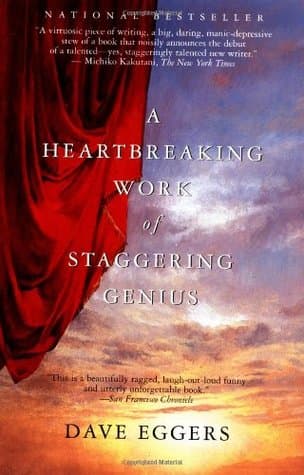
- A Heartbreaking Work of Staggering Genius
Dave Eggers
3.7 (171k) average on GoodreadsLiterary FictionExplores grief and family through an experimental, often humorous, and deeply personal lens.
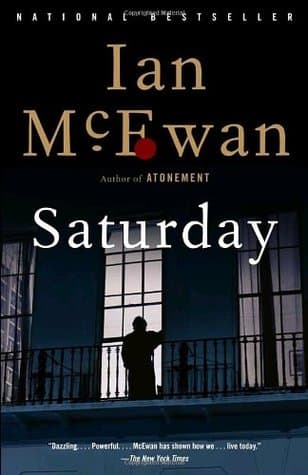
- Saturday
Ian McEwan
3.6 (63k) average on GoodreadsLiterary FictionMcEwan's Saturday also explores post-9/11 anxieties but uses a more traditional, realist narrative structure focused on a single day and a single protagonist's internal world. While McEwan excels at psychological realism and intricate plotting, Foer's novel embraces fragmentation and intertextuality to convey the emotional impact of trauma, offering a less conventional but potentially more viscerally affecting experience. Foer's strength is in emotional resonance through unconventional means, while McEwan's is in detailed psychological exploration within a realist framework.
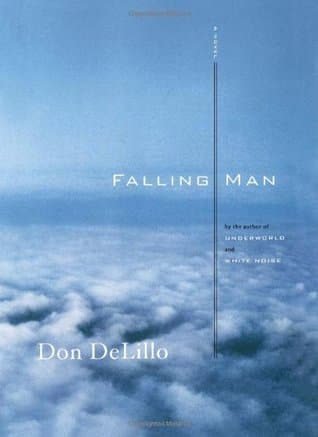
- Falling Man
Don DeLillo
3.2 (13k) average on GoodreadsLiterary FictionDeLillo's Falling Man is another significant 9/11 novel, but it adopts a starker, more existential, and often bleak tone, focusing on the lasting psychological scars and the difficulty of processing the event through a more adult and detached perspective. Foer, conversely, offers a more optimistic (though still melancholic) exploration of healing and human connection through the eyes of a child, employing a highly stylized and often more emotionally direct, though potentially manipulative, narrative. DeLillo's prose is often minimalist and critical, while Foer's is expansive and emotionally driven.
- The Old Man and the Sea
Ernest Hemingway
3.8 (831k) average on GoodreadsLiterary FictionA Cuban fisherman's long struggle with a giant marlin becomes a story of endurance and dignity, now retold for young adults with illustrations, phonetic guides, and writing prompts in Traditional Chinese.
- One Hundred Years of Solitude
Gabriel García Márquez
4.1 (753k) average on GoodreadsLiterary FictionThrough the multi-generational story of the Buendía family, a mythical town deals with the repeating patterns of time, love, and solitude, as the extraordinary mixes with the ordinary.
- The Goldfinch
Donna Tartt
3.9 (720k) average on GoodreadsLiterary FictionHaunted by a tragic explosion and clutching a stolen Dutch masterpiece, a young orphan navigates the opulent drawing rooms of New York and the gritty underbelly of the art world, desperately seeking connection and redemption amidst a life spiraling into crime and obsession.



Enjoyed the summary?
A summary gives you the shape of the book. The book itself has the detail, the examples and the voice.
Find Extremely Loud & Incredibly Close on AmazonAs an Amazon Associate, BookBrief earns from qualifying purchases. How we're funded