
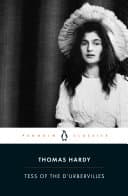
Synopsis
Covers the whole plot, including the ending.
- Difficulty
- Medium
- Pacing
- Moderate
- Mood
- Melancholy, Tragic, Poignant, Dark, Romantic
- Read it if
- You enjoy classic tragic romances with strong social commentary and detailed character studies.
- Skip it if
- You prefer lighthearted stories or are sensitive to themes of sexual assault, societal injustice, and a bleak ending.
Tess of the D'Urbervilles Plot Summary
Covers the whole plot, including the ending.
The Pedigree and the Promise
The story begins in Marlott. John Durbeyfield, a simple carter, learns from Parson Tringham that he is a direct descendant of the noble D'Urberville family. This news excites John and his wife, Joan. Despite their poverty, they imagine a better future for their seven children, especially their eldest daughter, Tess. Tess, a beautiful and innocent young woman, is unsure but agrees to her mother's plan to visit the wealthy Stoke-d'Urbervilles in Trantridge. They hope to get help or a job, believing them to be rich relatives.
The Encounter at Trantridge
Tess Durbeyfield feels guilty after an accident involving her family's horse, Prince. She decides to approach the Stoke-d'Urbervilles in Trantridge. She meets Alec d'Urberville, a handsome but immoral young man, who is immediately drawn to her. Alec knows his family only bought the D'Urberville name, but he pretends they are relatives. He offers Tess a job caring for his mother's chickens. Tess is hesitant and uneasy about Alec's intentions, but she accepts the job out of duty to her struggling family, hoping to send money home.
The Ruin of Tess
While working in Trantridge, Tess faces Alec's constant advances and manipulative charm. One night, after a village fair where Alec saves Tess from a fight, he drives her through a thick fog and gets lost. He leaves her to rest in the woods, then returns and takes advantage of her while she is asleep. Tess feels violated and deeply ashamed. She returns home to Marlott, heartbroken and pregnant. She gives birth to a sick child, whom she names Sorrow, and tries to baptize herself, but the baby dies soon after.
A New Beginning at Talbothays Dairy
Years pass. Tess wants to escape her past and find work where no one knows her. She leaves Marlott and takes a job as a milkmaid at Talbothays Dairy. Here, she finds some peace and happiness. She becomes friends with other milkmaids—Izz Huett, Marian, and Retty Priddle—and falls in love with Angel Clare. Angel is an educated, unconventional young man studying farming to go against his family's wish for him to become a clergyman. Angel is captivated by Tess's natural beauty and purity, believing her to be an innocent country maid.
Love and Confession
Angel Clare asks Tess to marry him. Despite her deep love for him, Tess is troubled by her past with Alec. She tries to confess her secret many times, even writing a letter that she slips under his door, but it slides under the carpet and remains unread. On their wedding day, Tess finally tells Angel about her history with Alec d'Urberville and the birth of her child. Angel, despite his modern views, is shocked and deeply disappointed; he cannot accept Tess's confession.
The Broken Vows
After Tess's confession, Angel's first reaction is cold rejection. He cannot overcome social prejudices and his own perfect ideas of purity, despite Tess's tearful pleas and explanation of how she was victimized. He tells her he needs time to think. After a short, tense period, he decides to leave England for Brazil to start a new farm. He advises Tess to return to her family and gives her money, but his departure leaves Tess heartbroken and feeling condemned.
Struggles and Hardship
After Angel leaves, Tess refuses money from his family and struggles to support herself. She travels to Flintcomb-Ash, a harsh farm, where she works as a field-hand alongside Marian and Izz Huett, who also love Angel unhappily. The work is hard, and Tess suffers extreme poverty, cold, and hunger. She tries to visit Angel's family for help but is turned away by his brothers, who dislike her. She only gets a small sum from his father, who does not know her full story.
The Return of Alec
While working at Flintcomb-Ash, Tess unexpectedly meets Alec d'Urberville. He has gone through a superficial religious change and become a traveling preacher. Seeing Tess, Alec is immediately drawn to her again and abandons his new faith, determined to win her back. He constantly pursues her, appearing at her workplace and even following her to Marlott when she returns to care for her sick mother. He promises to provide for her and her family, taking advantage of Tess's desperation and her family's growing poverty.
The Compromise
Tess's family faces eviction and extreme poverty, especially after her father, John Durbeyfield, dies. Alec d'Urberville, having bought the Durbeyfield cottage, offers Tess's family a place to live if Tess agrees to live with him. Completely desperate and feeling that Angel has abandoned her, Tess, believing she has no other choice to save her family from homelessness and starvation, finally gives in to Alec's demands and becomes his mistress. She moves with him to Sandbourne, living a life of luxury but deep unhappiness.
Angel's Return and Revelation
Angel Clare, having gotten sick in Brazil and thought about his harsh treatment of Tess, returns to England, ready to forgive her. He searches for her and eventually finds her living in a fancy boarding house in Sandbourne with Alec d'Urberville, whom she presents as her husband. Overwhelmed by shame and guilt, and realizing what she has done, Tess confronts Angel. She explains her forced situation and expresses her lasting love for him, but tells him it is too late.
The Murder
After Angel leaves, Tess is filled with despair, rage, and a strong sense of injustice. Feeling trapped and ruined by Alec, and believing he has destroyed her last chance for happiness with Angel, Tess confronts Alec in their rooms. In a moment of uncontrolled passion and desperation, she stabs him to death. The landlady finds Alec's body, and Tess flees, finding Angel again. She tells him she has killed Alec and is now truly free.
Brief Respite and Capture
Angel, despite the shocking news of Alec's murder, stays with Tess. They spend a few happy days together, hiding in an old, empty mansion and later at Stonehenge, where Tess falls asleep on an altar stone. This short time is the only period Tess truly feels happy and connected with Angel. However, their peace is brief. The authorities find them at Stonehenge, and Tess is arrested, accepting her fate calmly.
The Price of Purity
Tess Durbeyfield is tried, found guilty, and sentenced to death for Alec d'Urberville's murder. On the day of her execution, Angel Clare and Tess's younger sister, Liza-Lu, watch from a distance as a black flag is raised, signaling that the sentence has been carried out. Angel and Liza-Lu, as Tess wished, walk away hand-in-hand, symbolizing the continuation of Tess's spirit through her sister and the lasting tragedy of her life, which was sacrificed to strict social rules and cruel fate.
Principal Figures
Tess Durbeyfield
Protagonist
A beautiful, pure-hearted country girl, victimized by circumstance and social norms.
Tess is a young, innocent, and inherently virtuous woman from a poor rural family. She possesses a deep capacity for love and a strong moral compass, but her beauty makes her vulnerable to exploitation. Despite enduring immense suffering, including rape, abandonment, and social ostracization, she strives to maintain her integrity and provide for her family. She is often described as 'a pure woman,' highlighting the novel's central argument against Victorian moral hypocrisy. Her actions are frequently driven by a sense of duty and self-sacrifice.
Relationships: Alec d'Urberville (Her seducer and later her reluctant protector/tormentor.); Angel Clare (Her true love and husband, who initially abandons her.); John Durbeyfield (Her father, whose lineage triggers the family's downfall.); Joan Durbeyfield (Her mother, who pushes her towards the D'Urbervilles.); Liza-Lu Durbeyfield (Her younger sister, whom she entrusts to Angel.)
Alec d'Urberville
Antagonist
The manipulative and predatory 'cousin' who ruins Tess's life.
Alec is the wealthy, unscrupulous son of the Stoke-d'Urberville family, who bought the D'Urberville name. He is initially portrayed as a charming but predatory seducer, lacking moral scruples. He takes advantage of Tess's innocence and vulnerability. Later, he undergoes a brief, superficial religious conversion, only to revert to his former ways upon encountering Tess again, becoming her persistent tormentor and, eventually, her reluctant provider. His character embodies the destructive forces of male privilege and moral hypocrisy in Victorian society.
Relationships: Tess Durbeyfield (His victim, lover, and eventual murderer.); Mrs. d'Urberville (His blind, indulgent mother.)
Angel Clare
Protagonist/Love Interest
An intellectual and unconventional man who falls in love with Tess but cannot overcome societal prejudice.
Angel is the youngest son of a clergyman, who rejects a traditional path to pursue farming. He is intelligent, idealistic, and initially appears to be more progressive than his peers, valuing natural beauty and purity over social standing. He genuinely loves Tess but is ultimately a product of his time, unable to reconcile his idealized vision of her with her past. His moral rigidity and inability to forgive Tess's 'fall' lead to immense suffering for both of them, highlighting the hypocrisy of Victorian morality.
Relationships: Tess Durbeyfield (His wife and true love, whom he abandons.); Reverend James Clare (His strict, religious father.); Mrs. Clare (His mother.); Cuthbert and Felix Clare (His brothers, who disapprove of Tess.); Izz Huett, Marian, Retty Priddle (Milkmaids who also love him.)
John Durbeyfield
Supporting
Tess's father, whose discovery of his noble lineage sets the tragedy in motion.
John Durbeyfield is a simple, somewhat lazy, and often tipsy carter. His discovery of being a descendant of the D'Urbervilles inflates his sense of self-importance and sparks the family's ambition for social advancement. He is largely passive and ineffectual, relying on his wife and children to manage their poverty. His death ultimately pushes the family into even greater destitution, forcing Tess into her final, tragic choices.
Relationships: Tess Durbeyfield (His eldest daughter.); Joan Durbeyfield (His wife.)
Joan Durbeyfield
Supporting
Tess's mother, who pushes her daughter towards the wealthy D'Urbervilles.
Joan Durbeyfield is Tess's well-meaning but often misguided mother. She is practical and ambitious for her children, particularly Tess, whom she sees as their best hope for escaping poverty. Her naive belief in the power of social connection and her incomplete understanding of the world's dangers lead her to push Tess towards the Stoke-d'Urbervilles, inadvertently contributing to her daughter's tragedy. She is affectionate but lacks the foresight to protect Tess from exploitation.
Relationships: Tess Durbeyfield (Her eldest daughter.); John Durbeyfield (Her husband.)
Liza-Lu Durbeyfield
Supporting
Tess's younger sister, who embodies her innocence and is entrusted to Angel.
Liza-Lu is Tess's younger sister, described as being 'almost a spiritualized image of Tess herself.' She represents Tess's unblemished innocence and potential for a better future. Tess requests that Angel marry Liza-Lu after her death, symbolizing a hope for redemption and continuity of Tess's 'pure' spirit. Her presence at the end with Angel signifies a poignant, if bittersweet, continuation of Tess's legacy.
Relationships: Tess Durbeyfield (Her older sister.); Angel Clare (Entrusted to him by Tess.)
Izz Huett
Supporting
A milkmaid at Talbothays who is also in love with Angel Clare.
Izz is one of the milkmaids at Talbothays Dairy who falls in love with Angel Clare. She is quiet, loyal, and deeply devoted to Angel, even after he chooses Tess. After Tess's abandonment, Izz nearly accompanies Angel to Brazil but is stopped by his coldness when she admits her love. She later works alongside Tess at Flintcomb-Ash, enduring similar hardships, and her enduring affection for Angel highlights the depth of his charm and the pain he inadvertently causes.
Relationships: Angel Clare (Unrequited love interest.); Tess Durbeyfield (Friend and fellow milkmaid.)
Marian
Supporting
A milkmaid at Talbothays who befriends Tess and suffers from unrequited love for Angel.
Marian is another of the milkmaids at Talbothays, a robust and good-hearted woman who, like Izz and Retty, is in love with Angel Clare. She becomes a close friend to Tess. After Angel's departure, Marian struggles with alcoholism and works alongside Tess at Flintcomb-Ash, her downward spiral reflecting the harsh realities faced by women without male support. She remains loyal to Tess, offering what little comfort she can.
Relationships: Angel Clare (Unrequited love interest.); Tess Durbeyfield (Close friend and fellow milkmaid.)
Themes & Insights
The Hypocrisy of Victorian Morality
Hardy strongly criticizes Victorian society's strict and often conflicting moral rules, especially about female chastity. Society, and even Angel Clare, judges Tess as 'impure,' even though she is a victim of circumstance. Her 'fall' with Alec is seen as an unforgivable stain, while men's wrongs are often ignored or easily forgiven. The subtitle 'A Pure Woman' directly challenges these social judgments, arguing that Tess's goodness and moral integrity remain despite her experiences. This theme is clear in Angel's inability to forgive Tess's past, contrasting with his own minor mistakes, and the social condemnation that pushes Tess to desperation.
“'Why didn't you tell me there was danger in men-folk? Why didn't you warn me?'”
Fate vs. Free Will
The novel explores how much human lives are controlled by outside forces (fate, chance, social situations) versus individual choices. Tess is repeatedly a victim of bad coincidences (the horse's death, the unread letter) and others' manipulative actions (Alec). The Durbeyfield family's 'discovery' of their lineage itself seems fated, starting a chain of events. While Tess makes choices, they are often limited by her few options, poverty, and social expectations, suggesting her tragic end is less her fault and more a result of an uncaring world and an unforgiving society.
“''Justice'' was done, and the President of the Immortals, in Aeschylean phrase, had ended his sport with Tess.”
Social Class and Poverty
The harsh realities of social class and poverty are central to Tess's struggles. The Durbeyfields' desperate financial state is the main reason Tess seeks help from the Stoke-d'Urbervilles, which directly leads to her ruin. Her later choices, such as working at Flintcomb-Ash and eventually returning to Alec, are largely forced by the need to survive and support her family. Hardy shows how poverty limits freedom and exposes people, especially women, to exploitation, highlighting the brutal economic realities behind Victorian social structures.
“'What was to be done? She had no money, and she could not work.'”
The Corrupting Influence of Civilization and the Purity of Nature
Hardy often contrasts the corrupting effects of human society, especially city and upper-class environments, with the perceived purity and healing power of nature. Tess is most innocent and happy when working close to the land, such as at Talbothays Dairy, where she finds love and a sense of belonging. In contrast, places like Trantridge (Alec's home) and Sandbourne (where Tess lives with Alec at the end) are linked with moral decay and artificiality. Even Angel's 'enlightened' views are ultimately flawed by social conditioning, stopping him from truly accepting Tess's natural purity.
“'She was a child of nature, not of the drawing-room.'”
Love and Betrayal
Love in the novel is closely tied to betrayal, both intentional and unintentional. Tess's love for Angel is deep and real, yet it is betrayed by his inability to overcome social prejudices and his abandonment. Alec's 'love' is a possessive, destructive force, based on manipulation and exploitation. Tess herself feels she betrays Angel by returning to Alec, even if it is out of desperation. The theme examines how fragile love is when faced with harsh realities and the devastating results of broken trust and unkept promises.
“'O, you have torn my life all to pieces... made me a mere puppet!'”
Plot Devices & Literary Techniques
Foreshadowing
Hints and omens that suggest future tragic events.
Hardy frequently employs foreshadowing to build a sense of impending doom and inevitability. Examples include the initial meeting with Parson Tringham, which sets the Durbeyfield tragedy in motion; the accident with Prince, which directly leads to Tess's encounter with Alec; and the various omens and superstitions observed by the characters. This device reinforces the novel's themes of fate and the limited agency of individuals against powerful forces, making Tess's ultimate end feel tragically predestined.
Symbolism
Objects, settings, and events representing deeper meanings.
Symbolism is pervasive. The Durbeyfield family's horse, Prince, symbolizes Tess's innocence and its violent death foreshadows her own 'fall.' Talbothays Dairy represents pastoral innocence and natural purity, while Flintcomb-Ash symbolizes harsh labor and despair. Stonehenge, where Tess is finally captured, is a symbol of ancient, immutable forces and a sacrificial altar. The 'black flag' at the end is a stark symbol of Tess's execution and the ultimate triumph of societal judgment over individual purity. These symbols enrich the narrative, adding layers of meaning to Tess's journey.
Irony
Situational and dramatic irony highlighting the tragic contrast between appearance and reality.
The novel is replete with irony. The subtitle 'A Pure Woman' is the most prominent, ironically contrasting society's judgment of Tess with her inherent innocence and moral integrity. Angel Clare's name itself is ironic, as he acts anything but angelic in his abandonment of Tess. The Durbeyfields' 'noble' lineage brings not fortune but ruin. Dramatic irony is present in Tess's unread letter of confession, which could have saved her marriage, highlighting the cruel twists of fate and miscommunication that plague her life. This device underscores the tragic nature of Tess's story and the flawed perceptions of the characters.
The Unsent/Unread Letter
A letter containing a crucial confession that is never properly delivered or read.
This specific plot device is a powerful example of how miscommunication and chance can alter destinies. Tess writes a detailed confession of her past to Angel and slips it under his door. However, it slides under the carpet and remains unread until after their wedding, when it is too late. This single failure of communication prevents Angel from processing the truth beforehand and confronting his prejudices, leading to his shock and abandonment of Tess. It highlights the role of cruel fate and minor coincidences in shaping major life events.
Tess of the D'Urbervilles Quotes
“Once a woman's name is breathed on by calumny, she is no more to be a member of the social body but a ghost, to move about in the shadows and to be spoken of only in whispers.”
“Justice was prepared; and at a later date, when Tess was no more, Angel Clare found it possible to marry Liza-Lu, Tess's younger sister.”
“The greater the sinner, the greater the saint.”
“Why it was that upon this beautiful feminine tissue, sensitive as gossamer, and practically blank as snow as yet, there should have been traced such a coarse pattern as it was doomed to receive!”
“But the D'Urbervilles, though an ancient and knightly family, were not rich.”
“A strong current of her nature ran in an opposite direction to the artificialities of her position.”
“She was a mere vessel of emotion untinctured by experience.”
“Some women's love of being loved is insatiable; and Tess's was of the kind.”
“The beauty or ugliness of a character lay not in its achievements, but in its aims and impulses.”
“Where was Tess's guardian angel? Where was the providence of her simple faith?”
“The greatest misfortune of Tess's life was not her seduction, but that she could not make Angel Clare understand her.”
“She was a child of nature, and her heart was open to the influences of the seasons.”
“He had been her lover in the guise of her husband.”
“The oblong white ceiling, with this black square in the middle, impressed Tess with a sense of terrible completeness.”
“The ache of modernism was in his view.”
Quiz
10 questions on the plot and the characters. Each answer comes with a short explanation.
Question 1
What is the initial event that drives Tess Durbeyfield to connect with the wealthy D'Urbervilles?
- Her desire for adventure and travel.
- Her family's sudden inheritance of a large sum of money.
- Her family's poverty and the discovery of their D'Urberville lineage.
- A direct invitation from Alec D'Urberville to work on his estate.
Show answer
C. Her family's poverty and the discovery of their D'Urberville lineage. Tess's family poverty, coupled with her father's discovery of their noble D'Urberville ancestry, compels her to seek assistance from the wealthy D'Urbervilles.
Question 2
Who is the character described as Tess's 'cousin' whose actions lead to her initial downfall?
- Angel Clare
- John Durbeyfield
- Alec D'Urberville
- Mr. Crick
Show answer
C. Alec D'Urberville Alec D'Urberville is the 'cousin' who seduces Tess, leading to her pregnancy and the beginning of her tragic journey.
Question 3
What is the subtitle of 'Tess of the D'Urbervilles' as mentioned in the description?
- A Fallen Woman
- A Pure Woman
- A Woman Scorned
- A Woman of Wessex
Show answer
B. A Pure Woman The novel is subtitled 'A Pure Woman,' which highlights Hardy's intention to challenge societal judgments of Tess.
Question 4
What is the central moral dilemma Tess faces regarding Angel Clare?
- Whether to marry him for his wealth or for love.
- Whether to reveal her past with Alec D'Urberville or remain silent.
- Whether to pursue a career or become a housewife.
- Whether to move to another country with him or stay in England.
Show answer
B. Whether to reveal her past with Alec D'Urberville or remain silent. Tess's primary internal conflict after falling in love with Angel Clare is whether to confess her past with Alec and the birth of her child, Sorrow, or keep it hidden.
Question 5
Which character offers Tess 'love and salvation' but struggles to accept her past?
- Alec D'Urberville
- Angel Clare
- Dairyman Crick
- Reverend Clare
Show answer
B. Angel Clare Angel Clare is the idealistic man who falls in love with Tess and initially offers her hope, but his rigid moral code prevents him from fully forgiving her past.
Question 6
What significant social criticism does the novel offer, particularly through Tess's experiences?
- The dangers of industrialization on rural life.
- The hypocrisy and rigid conventions of Victorian society regarding female purity.
- The ineffectiveness of the legal system in rural areas.
- The decline of the aristocracy in England.
Show answer
B. The hypocrisy and rigid conventions of Victorian society regarding female purity. The novel powerfully criticizes the double standards and unforgiving social conventions of Victorian society, which harshly judged women like Tess for circumstances often beyond their control.
Question 7
After Angel leaves her, where does Tess find work, and what is the nature of her labor there?
- At a textile factory, operating machinery.
- As a dairymaid at Talbothays, where she met Angel.
- At Flintcomb-Ash, performing harsh, physically demanding farm labor.
- As a governess for a wealthy family.
Show answer
C. At Flintcomb-Ash, performing harsh, physically demanding farm labor. After Angel abandons her, Tess endures grueling, back-breaking farm work at Flintcomb-Ash, contrasting sharply with the idyllic life at Talbothays.
Question 8
What is the ultimate fate of Tess Durbeyfield?
- She lives a long and peaceful life with Angel Clare in Brazil.
- She commits suicide after being abandoned by both Alec and Angel.
- She is executed for the murder of Alec D'Urberville.
- She becomes a wealthy independent woman, defying societal expectations.
Show answer
C. She is executed for the murder of Alec D'Urberville. Tess murders Alec D'Urberville in a desperate act to escape his control and reunite with Angel, leading to her eventual arrest and execution at Stonehenge.
Question 9
What symbolic role does Stonehenge play in the novel's climax?
- It is where Tess and Angel renew their wedding vows.
- It serves as a place of ancient, pagan sanctuary where Tess briefly finds peace before her capture.
- It is the site of Alec D'Urberville's murder.
- It represents the industrial progress that Tess despises.
Show answer
B. It serves as a place of ancient, pagan sanctuary where Tess briefly finds peace before her capture. Stonehenge, with its ancient and mysterious atmosphere, provides a brief, almost pagan, refuge for Tess and Angel before she is discovered and arrested, emphasizing her connection to nature and a world pre-dating rigid Christian morality.
Question 10
How does Angel Clare ultimately react to Tess's past and her actions at the very end of the novel?
- He completely abandons her and never returns.
- He fully forgives her and attempts to rescue her, even after the murder.
- He testifies against her in court, leading to her conviction.
- He marries Liza-Lu, Tess's younger sister, immediately after Tess's death.
Show answer
B. He fully forgives her and attempts to rescue her, even after the murder. After Tess's desperate act of killing Alec, Angel finally understands and forgives her, trying to help her escape. His ultimate act is to take Liza-Lu, Tess's sister, by the hand, suggesting a continuation of Tess's purity through her sister.
Tess of the D'Urbervilles FAQ
What is the central conflict Tess Durbeyfield faces throughout the novel?
Tess's central conflict stems from the clash between her inherent purity and the societal judgments and misfortunes that brand her as 'impure.' She struggles to reconcile her past trauma with her desire for love and acceptance, particularly when her secret threatens her relationship with Angel Clare.
How does Alec D'Urberville first encounter Tess, and what is the immediate consequence?
Alec D'Urberville first encounters Tess when her family sends her to claim kinship with the wealthy D'Urbervilles. He immediately becomes infatuated with her, and his subsequent seduction, often interpreted as rape, results in Tess's pregnancy and the birth of her short-lived child, Sorrow.
Who is Angel Clare, and what role does he play in Tess's life?
Angel Clare is a clergyman's son who rejects his family's traditional path to pursue farming. He falls deeply in love with Tess, seeing her as an embodiment of nature's purity, and offers her a chance at a new life. However, his inability to forgive her past ultimately leads to their separation and Tess's further despair.
Why does Tess ultimately return to Alec D'Urberville after Angel leaves her?
After Angel abandons her, Tess faces extreme poverty and social ostracism. To protect her younger siblings and provide for her family, she reluctantly becomes Alec's mistress, seeing it as the only viable way to survive and fulfill her familial obligations, despite her profound hatred for him.
What is the significance of the subtitle 'A Pure Woman'?
The subtitle 'A Pure Woman' is Hardy's direct challenge to Victorian societal hypocrisy, asserting Tess's inherent moral purity despite her sexual experiences and societal condemnation. It forces readers to question conventional definitions of purity and consider the innocence of a 'wronged' woman.
Are there any subtle indications of Tess's fate early in the novel, perhaps through symbolism or foreshadowing?
Yes, Hardy employs significant foreshadowing. The Durbeyfield's ancient lineage, described as a 'D'Urberville' by the parson, immediately sets a tragic destiny in motion. The accidental death of Prince, the family horse, also foreshadows Tess's loss of innocence and the beginning of her misfortunes, linking her fate to an initial act of desperation.
How does the landscape of Wessex contribute to the novel's themes or character development?
The landscapes of Wessex are integral to the novel, reflecting Tess's emotional states and societal pressures. The fertile Talbothays Valley symbolizes her brief period of happiness and love with Angel, while the bleak Flintcomb-Ash represents her subsequent hardship and suffering, reinforcing the oppressive naturalistic forces at play.
What is the significance of the 'club-walking' scene in the novel's opening?
The club-walking scene is pivotal as it introduces Tess's beauty and innocence, and it's where Angel Clare first sees her, though they do not speak. This missed connection foreshadows their later, more complicated relationship and the tragic consequences of their initial separation, hinting at a path not taken.
Are there any subtle connections between the Durbeyfield family's poverty and the broader societal critique Hardy presents?
Hardy subtly connects the Durbeyfield's poverty to the crumbling feudal system and the harsh realities of agricultural labor. Their inability to sustain themselves without 'claiming kin' with the D'Urbervilles highlights the systemic injustices that force Tess into vulnerable situations, critiquing a society that offers little support to its working poor.
How does Tess's initial passivity contribute to her tragic journey?
Tess's initial passivity, particularly in her encounters with Alec, stems from her youth, inexperience, and the societal power imbalances of the time. This lack of agency leaves her vulnerable to exploitation and sets in motion a chain of events she struggles to control, highlighting her victimhood within a rigid social structure.
Analyze Angel Clare's psychological motivations for abandoning Tess after her confession.
Angel's abandonment of Tess is rooted in his idealized perception of her as a pure, unblemished maiden, which clashes violently with the reality of her past. His psychological motivations include a deeply ingrained Victorian moralism, a fear of societal judgment, and an inability to reconcile his intellectual liberalism with his emotional conservatism, leading to a profound hypocrisy.
What internal conflict does Tess experience regarding her 'secret' before confessing to Angel?
Tess experiences agonizing internal conflict regarding her 'secret.' She grapples with intense fear of losing Angel's love and the shame associated with her past, balanced against her inherent honesty and desire for a true, unburdened relationship. This psychological struggle highlights her moral integrity despite her circumstances.
How does Tess's act of killing Alec D'Urberville demonstrate a shift in her psychological state?
Tess's act of killing Alec signifies a profound psychological shift from passive endurance to active rebellion. It represents her breaking point, a desperate assertion of agency and a final, violent rejection of her oppressor. This act, though tragic, is a moment of liberation from his control, albeit one with dire consequences.
Is Tess ultimately a victim of fate, society, or her own choices?
Tess is primarily a victim of society's rigid moral codes and patriarchal structures, which condemn her for circumstances beyond her control. While she makes choices, they are often constrained by her limited options and the relentless misfortunes of fate, making her a tragic figure caught in a web of external forces.
Could Angel Clare be considered a villain, or is he merely a product of his time?
While not a traditional villain, Angel Clare is deeply flawed. He is a product of his time, embodying Victorian hypocrisy and class prejudice, but his actions are also driven by personal weakness and an inability to truly see beyond conventional morality. His failure to forgive Tess makes him an agent of her suffering, even if his intentions aren't purely malicious.
How does the ending, with Tess's execution, reinforce Hardy's critique of Victorian society?
Tess's execution at Stonehenge is the ultimate condemnation of Victorian society. It symbolizes the tragic injustice of a system that punishes the innocent while failing to address the root causes of their suffering. Hardy uses it to highlight the fatal consequences of rigid moralism and the lack of compassion for women like Tess.
Debate: Was Tess's confession to Angel Clare a mistake, or was it an act of necessary integrity?
Tess's confession was an act of profound integrity, driven by her desire for an honest relationship and her inability to live a lie. While it led to her immediate downfall, it also affirmed her inherent 'purity' by refusing deceit. Arguably, withholding the truth would have compromised her character, even if it bought her temporary peace.
What is the symbolic significance of Stonehenge in the novel's climax?
Stonehenge serves as a powerful symbol in the climax, representing ancient, pagan justice that stands in stark contrast to the rigid, unforgiving Christian morality of Victorian society. It is a place of primal connection and pre-Christian ritual, offering Tess a temporary sanctuary before her final, inevitable capture and execution, highlighting a clash of civilizations and moral codes.
About the author
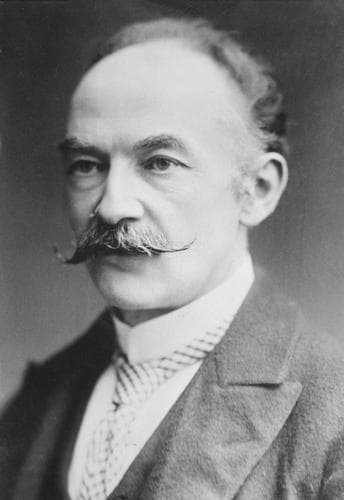
Thomas Hardy was an English novelist and poet. A Victorian realist in the tradition of George Eliot, he was influenced both in his novels and in his poetry by Romanticism, including the poetry of William Wordsworth. He was highly critical of much in Victorian society, especially on the declining status of rural people in Britain, such as those from his native South West England.
Similar books
- Jude the Obscure
Thomas Hardy
3.8 (64k) average on GoodreadsHistorical FictionExplores similar themes of societal oppression, unfulfilled love, and tragic fate within Victorian England.
- Wuthering Heights
Emily Brontë
3.9 (1.3M) average on GoodreadsHistorical FictionA classic tragic romance with passionate, doomed lovers and a sense of inescapable destiny.
- Far from the Madding Crowd
Thomas Hardy
3.9 (129k) average on GoodreadsHistorical FictionFeatures strong female protagonists in rural settings facing complex romantic and social challenges, though with a less tragic outcome.
- Adam Bede
George Eliot
3.8 (23k) average on GoodreadsHistorical FictionEliot's novel also explores moral transgression in a rural setting but typically offers a more conventional path to societal reintegration and redemption through repentance, unlike Hardy's more pessimistic and critical view of societal justice for Tess.
- To Kill a Mockingbird
Harper Lee
4.3 (4.5M) average on GoodreadsHistorical FictionIn the 1930s Jim Crow South, Harper Lee writes about racial injustice, moral growth, and the quiet courage of a lawyer father, Atticus Finch, as seen through his young daughter's eyes.
- The Great Gatsby
F. Scott Fitzgerald
3.9 (3.8M) average on GoodreadsHistorical FictionIn the opulent Roaring Twenties, a mysterious millionaire's lavish parties hide his desperate, tragic pursuit of a lost love, exposing the emptiness within the American Dream.




Enjoyed the summary?
A summary gives you the shape of the book. The book itself has the detail, the examples and the voice.
Find Tess of the D'Urbervilles on AmazonAs an Amazon Associate, BookBrief earns from qualifying purchases. How we're funded