
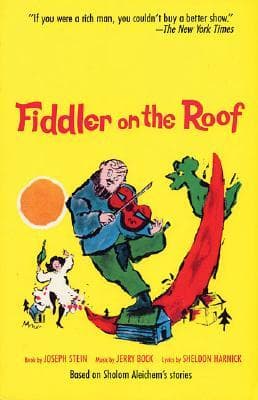
Synopsis
Covers the whole plot, including the ending.
- Difficulty
- Easy
- Pacing
- Moderate
- Mood
- Heartwarming, Bittersweet, Reflective, Hopeful, Culturally Rich
- Read it if
- You want to explore themes of tradition vs. change, family, faith, and resilience in the face of persecution, set against a backdrop of rich cultural heritage.
- Skip it if
- You prefer fast-paced thrillers or stories without significant emotional depth and historical context.
Fiddler on the Roof Plot Summary
Covers the whole plot, including the ending.
Tradition
Tevye, a poor Jewish milkman in Anatevka, introduces his life and the lives of his fellow villagers. He explains that 'Tradition' guides their community, from dress to marriage. He highlights the roles of Papa, Mama, Sons, and Daughters, stressing that without tradition, their lives would be like a 'fiddler on the roof.' He also introduces his wife, Golde, and their five daughters, especially the eldest three: Tzeitel, Hodel, and Chava, who are nearing marriage age.
Matchmaker, Matchmaker
Tevye's three eldest daughters, Tzeitel, Hodel, and Chava, discuss their future at home. Tzeitel worries about not being matched yet, while Hodel and Chava dream of marrying for love, which goes against village traditions. They sing 'Matchmaker, Matchmaker,' sharing their fears and hopes about the husbands Yente, the village matchmaker, might find. They dread being paired with old, unappealing men, but also recognize the security an arranged marriage offers.
If I Were a Rich Man
While on his milk route, Tevye thinks about being a rich man. He imagines the luxuries wealth would bring: a large house, many servants, and enough money to study holy books without working. He fantasizes about buying a 'small, respectable' wife, even though he loves Golde. His humorous and heartfelt song, 'If I Were a Rich Man,' shows his deep faith and his desire for a life free from poverty.
The First Match: Tzeitel and Lazar Wolf
Yente visits Golde with news of a match for Tzeitel: Lazar Wolf, the wealthy but much older butcher. Golde is happy about the good provider. Tevye is hesitant because Lazar Wolf is significantly older than Tzeitel, but Golde convinces him to meet the butcher. Over drinks at the tavern, Tevye reluctantly agrees to the match, believing it is the best financial choice for his daughter. He returns home to tell Golde, unaware of Tzeitel's secret love.
Tzeitel's Plea and Perchik's Arrival
Tzeitel is upset by the news of her engagement to Lazar Wolf. She tearfully tells Tevye she loves Motel Kamzoil, the poor tailor, and they have secretly promised to marry. Tevye, torn between tradition and his daughter's happiness, agrees to let them marry, breaking the arranged marriage custom. Meanwhile, Perchik, a radical student from Kiev, arrives in Anatevka. He challenges the villagers' traditional ways and asks Tevye for room and board in exchange for tutoring his younger daughters.
Tevye's Dream and Tzeitel's Wedding
To convince Golde to let Tzeitel marry Motel instead of Lazar Wolf, Tevye invents a terrifying dream. In his 'dream,' Golde's deceased grandmother, Tzeitel, and Lazar Wolf's formidable deceased wife, Fruma-Sarah, appear. Fruma-Sarah threatens to haunt Tzeitel if she marries Lazar Wolf, while Grandma Tzeitel blesses Tzeitel and Motel's union. Golde, scared by the dream, agrees to the marriage. Tzeitel and Motel's wedding is joyful, but Russian authorities interrupt it with a pogrom.
Hodel and Perchik's Love
Perchik, the student, keeps challenging the villagers' traditions. He encourages young people to dance together, which was previously unheard of between unmarried men and women. During these interactions, Hodel and Perchik grow close. He proposes to her, not asking Tevye for permission, but informing him of their decision. Tevye is shocked by this further break from tradition but, seeing their love and Perchik's conviction, he gives his reluctant blessing, realizing times are changing.
Hodel's Departure to Siberia
Tsarist police arrest Perchik for his revolutionary activities and exile him to Siberia. Hodel, in love and committed to Perchik's ideals, decides to follow him. Tevye takes her to the train station, where they share a heartbreaking farewell. Hodel explains her decision to Tevye, singing 'Far From the Home I Love,' showing her loyalty to Perchik despite the great personal sacrifice. Tevye is left to cope with another daughter choosing love and a new path over his cherished traditions.
Chava and Fyedka's Forbidden Love
Chava, Tevye's third daughter, falls in love with Fyedka, a young Russian Orthodox Christian. Their relationship deeply defies Jewish tradition and Tevye's religious beliefs. When Chava asks Tevye for permission to marry Fyedka, Tevye is devastated. He forbids the marriage, unable to accept a union outside their faith. Despite his prohibition, Chava and Fyedka elope, marrying in a church, leading Tevye to disown her and treat her as if she were dead.
Anatevka Eviction
The Jewish community of Anatevka receives official orders from the Tsar to evacuate their village within three days. The news brings shock and despair. The villagers, who have lived in Anatevka for generations, must pack their belongings and leave their homes, synagogue, and way of life. They sing 'Anatevka,' a lament for the home they are losing and the traditions being uprooted. Tevye and his family prepare for their forced migration, unsure of their future.
The Family's Departure
As the villagers prepare to leave Anatevka, Tevye and Golde make plans for their family. Tzeitel and Motel, now with a baby, decide to go to Warsaw. Lazar Wolf, having lost his match, also plans to leave. Tevye, Golde, and their two youngest daughters, Shprintze and Bielke, decide to travel to America, where Golde's brother lives. Before they leave, Chava and Fyedka appear, announcing they are leaving for Krakow and offering to send for Tevye's family when settled. Tevye, still unable to fully accept Chava, acknowledges her presence with a subtle gesture, showing his lingering love.
Final Journey
Tevye and his family, with the remaining villagers, gather their few belongings and begin their exodus from Anatevka. The stage fills with carts and people, all heading toward an uncertain future. Tevye, carrying his milk cart, sees the fiddler on the roof, a symbol of their precarious yet enduring traditions. He gestures for the fiddler to come with them, showing that while their physical home is lost, their traditions and faith will go with them wherever they go. The musical ends with the villagers scattering, carrying their heritage into the unknown.
Principal Figures
Tevye
Protagonist
A poor Jewish milkman and father of five daughters.
Tevye is a devout, philosophical, and humorous man who constantly engages in conversations with God. He struggles to reconcile his deeply held religious traditions with the changing world and the independent choices of his daughters. Despite his poverty, he maintains a strong sense of faith and a loving, though sometimes exasperated, relationship with his family. He is the moral center of the story, representing the resilience and adaptability of his community.
Relationships: Golde (Wife, partner in life's struggles, often the more practical one.); Tzeitel (Eldest daughter, whose marriage first challenges his traditional views.); Hodel (Second daughter, who pushes the boundaries of tradition by marrying for love and following her husband into exile.); Chava (Third daughter, whose marriage outside their faith causes Tevye his deepest pain and challenges his ability to forgive.); Motel Kamzoil (Son-in-law, initially seen as poor and weak, but gains Tevye's respect.); Perchik (Son-in-law, a revolutionary student who introduces new ideas and challenges Tevye's worldview.); Lazar Wolf (Wealthy butcher, initially Tzeitel's intended husband, representing traditional arranged marriages.)
Golde
Supporting
Tevye's practical and strong-willed wife.
Golde is the pragmatic matriarch of the family, often stern and focused on survival and the well-being of her daughters. She is a traditional woman who initially champions arranged marriages for financial security. While she appears less outwardly philosophical than Tevye, she possesses a deep, unspoken love for him and her children. Her strength helps hold the family together through hardship and change, though she is also deeply rooted in the traditions of Anatevka.
Relationships: Tevye (Husband, a partnership built on shared history, love, and mutual (if sometimes bickering) respect.); Tzeitel (Daughter, whose marriage she initially tries to arrange for financial gain.); Hodel (Daughter, whose decision to follow Perchik is difficult for Golde to accept.); Chava (Daughter, whose interfaith marriage causes Golde immense sorrow.)
Tzeitel
Supporting
Tevye's eldest daughter, who challenges the tradition of arranged marriage.
Tzeitel is the eldest of Tevye's five daughters. She is quiet and dutiful but possesses an inner strength that allows her to stand up for her love for Motel. Her refusal of Lazar Wolf's proposal marks the first significant break from tradition within Tevye's family. She represents the yearning for personal happiness over societal expectations and the beginning of the generational shift away from strict adherence to tradition.
Relationships: Tevye (Father, whom she must convince to break tradition for her marriage.); Motel Kamzoil (Husband, her childhood sweetheart whom she loves deeply.); Lazar Wolf (Potential husband, whom she rejects.)
Hodel
Supporting
Tevye's second daughter, who marries for love and follows her husband into exile.
Hodel is more intellectual and spirited than Tzeitel, drawn to Perchik's revolutionary ideas and his challenge to the status quo. She is fiercely independent and articulate, demonstrating a growing awareness of the world beyond Anatevka. Her decision to marry Perchik and then follow him to Siberia is a profound act of love and commitment, representing a further departure from the traditional life her parents envisioned.
Relationships: Tevye (Father, whom she loves but whose traditions she ultimately transcends.); Perchik (Husband, her intellectual and emotional partner, whose ideals she shares.)
Chava
Supporting
Tevye's third daughter, who marries outside the Jewish faith.
Chava is quieter and more studious than her sisters, often found with a book. Her love for Fyedka, a Russian Orthodox Christian, represents the most significant challenge to Tevye's traditions and faith. Her marriage to Fyedka leads to her being disowned by her father, highlighting the severe consequences of defying deeply ingrained religious and cultural boundaries. She embodies the painful conflict between individual love and communal identity.
Relationships: Tevye (Father, whose love and acceptance she tragically loses due to her marriage.); Fyedka (Husband, a Russian Christian whose love for Chava transcends religious barriers.)
Motel Kamzoil
Supporting
A poor but determined tailor who marries Tzeitel for love.
Motel is initially portrayed as a timid and impoverished tailor, lacking the confidence to ask Tevye for Tzeitel's hand. However, he possesses a quiet determination and a deep love for Tzeitel. His willingness to wait and his eventual courage to confront Tevye demonstrate his growth. He symbolizes the triumph of genuine affection and individual choice over the strictures of arranged marriages, and his eventual success in his trade shows his resilience.
Relationships: Tzeitel (Wife, his childhood sweetheart.); Tevye (Father-in-law, whom he eventually earns the respect of.)
Perchik
Supporting
A radical student from Kiev who introduces new ideas to Anatevka.
Perchik is an intellectual and a revolutionary, challenging the traditional ways of Anatevka with his modern ideas about equality, social justice, and personal freedom. He acts as a catalyst for change, particularly for Hodel, whom he inspires to think beyond the confines of their village. His political activism eventually leads to his arrest and exile, reflecting the broader political unrest in Russia and its impact on Jewish communities.
Relationships: Hodel (Wife, his intellectual and emotional equal.); Tevye (Father-in-law, whom he engages in philosophical debates and earns a grudging respect from.)
Fyedka
Supporting
A kind Russian Orthodox Christian who falls in love with Chava.
Fyedka is a young, literate, and thoughtful Russian Christian who defies the prevailing anti-Semitism and social boundaries to fall in love with Chava. He is respectful and open-minded, sharing Chava's love for books and learning. His relationship with Chava represents the ultimate challenge to Tevye's traditions and highlights the potential for love to bridge cultural and religious divides, even amidst significant societal prejudice.
Relationships: Chava (Wife, whom he loves and marries despite the disapproval of her family.); Tevye (Father-in-law, who disowns him and Chava due to their interfaith marriage.)
Yente
Supporting
The village matchmaker.
Yente is the quintessential busybody of Anatevka, a gossipy and traditional matchmaker who believes firmly in the old ways of arranged marriages. She serves as a comedic foil but also represents the societal pressure on young women to marry. Her role diminishes as the daughters increasingly make their own choices, symbolizing the fading relevance of her profession in a changing world.
Relationships: Golde (Friend and client, with whom she often gossips and arranges matches.); Tevye (Client, for whose daughters she tries to find suitable husbands.)
Lazar Wolf
Supporting
The wealthy but aging butcher of Anatevka.
Lazar Wolf is a respected and well-off member of the community, representing the traditional ideal of a good provider in an arranged marriage. He is initially Tzeitel's intended husband, chosen for his wealth and status. His disappointment when Tzeitel rejects him highlights the shift in values from financial security to romantic love. He is a relatively straightforward character, serving as a contrast to the younger, more rebellious generation.
Relationships: Tzeitel (Initially betrothed, but rejected by her for Motel.); Tevye (Initial agreement for Tzeitel's hand, later broken.)
Themes & Insights
Tradition vs. Change
The main theme of 'Fiddler on the Roof' is the struggle to keep tradition in a changing world. Tevye constantly deals with this conflict as his daughters' choices challenge the customs of arranged marriages and religious boundaries. Each daughter's marriage shows a further weakening of the 'Tradition' Tevye values, forcing him to adjust his views. The forced eviction from Anatevka at the end of the play symbolizes the ultimate, unavoidable change that uproots their entire way of life, making them carry their traditions in a new, less structured way.
“Tradition! Without our traditions, our lives would be as shaky as... as a fiddler on the roof!”
Love and Marriage
The musical explores different kinds of love and marriage, from traditional arranged unions to modern romantic love. Tzeitel's choice of Motel, Hodel's commitment to Perchik, and Chava's forbidden love for Fyedka all highlight the growing importance of individual affection over communal expectations and financial security. Tevye's conversations with Golde about their own love, in 'Do You Love Me?', show a deep, lasting bond that goes beyond the initial practicality of their arranged marriage, bridging old and new ideals of partnership.
“Is there a custom for this? Of course there is, Tevye. It's called 'love.'”
Faith and Resilience
Despite constant hardship, poverty, and persecution, the Jewish community of Anatevka, especially Tevye, keeps strong faith in God. Tevye's frequent, often humorous, talks with God show his reliance on faith for guidance and comfort. Even as their traditions are challenged and they are forced from their homes, their spiritual resilience remains. The final image of Tevye carrying his milk cart and gesturing to the Fiddler suggests their faith and traditions are portable, essential parts of their identity that will continue wherever they go.
“Dear God, did you have to make me a poor man? Couldn't you have made me a rich man, just once?”
Persecution and Displacement
The story's setting includes rising anti-Semitism and political unrest in Tsarist Russia. The pogrom at Tzeitel's wedding and the eventual expulsion of the Jewish community from Anatevka are reminders of the constant threat of persecution and forced displacement. This theme highlights the unstable existence of minority groups and the impact of political instability on individual lives. The villagers' forced exodus symbolizes the historical reality of Jewish diaspora and the ongoing struggle for safety and a homeland.
“We have been chosen, Tevye. Chosen to suffer.”
Plot Devices & Literary Techniques
The Fiddler on the Roof
A symbolic figure representing precarious tradition and survival.
The Fiddler is a recurring visual and symbolic motif. He represents the precariousness of the Jewish community's life in Anatevka, balancing precariously on the roof, much like their traditions are constantly at risk of falling. He also symbolizes the enduring spirit, music, and cultural heritage that persists despite the instability and changes. Tevye's final gesture to the Fiddler, inviting him to come along, signifies that while their physical home is lost, their traditions and spirit will travel with them.
Tevye's Monologues to God
Direct addresses to God that reveal Tevye's inner thoughts and struggles.
Tevye frequently addresses God directly, often in a conversational and even argumentative manner. These monologues serve as a device to reveal his innermost thoughts, his struggles with faith, tradition, and his daughters' choices, and his unique sense of humor. They allow the audience direct insight into his philosophical and emotional journey, making him a deeply relatable character as he grapples with universal questions of existence, family, and belief. They also provide comic relief and exposition.
The Dream Sequence (Fruma-Sarah)
A fabricated dream used to manipulate Golde into accepting Tzeitel and Motel's marriage.
Tevye invents a terrifying dream involving Golde's dead grandmother and Lazar Wolf's formidable deceased wife, Fruma-Sarah. This elaborate fabrication is a clever and humorous plot device Tevye uses to bypass Golde's traditional resistance and persuade her to allow Tzeitel to marry Motel. It highlights Tevye's resourcefulness and his willingness to bend the rules (or create new ones) when his daughters' happiness is at stake, while also providing a visually dramatic and comedic scene.
The Broken Glass at Weddings
A Jewish wedding custom symbolizing the fragility of life and the destruction of the Temple.
The breaking of the glass at the end of the Jewish wedding ceremony is a traditional custom. In 'Fiddler on the Roof,' it serves as a poignant reminder of the fragility of life and the historical suffering of the Jewish people, particularly in the context of the rising anti-Semitism. At Tzeitel's wedding, the breaking of the glass is immediately followed by the pogrom, brutally linking the symbol of historical suffering to the present-day persecution faced by the community.
Fiddler on the Roof Quotes
“Tradition! Tradition! ... Without our traditions, our lives would be as shaky as a fiddler on the roof!”
“A fiddler on the roof. Sounds crazy, no? But here, in our little village of Anatevka, every one of us is a fiddler on the roof, trying to scratch out a pleasant, simple tune without breaking his neck.”
“As the Good Book says, 'When a poor man eats a chicken, one of them is sick.'”
“Because, if I try to bend that far, I'll break.”
“A sign! He was a sign! It was a sign!”
“And in the whole world, the world is changing. So, what's wrong with a little change around here?”
“In this world, it is no longer enough for a girl to be a good cook and a good mother. She must also be an educated person.”
“Do you love me?”
“For two people to marry, they must love each other very much.”
“It's a new world, Tevye. A new world.”
“Money is the world's curse. Thank God, we don't have any.”
“Rabbi, we have a problem. We don't have a matchmaker anymore.”
“May God bless and keep you, Tevye. May God bless and keep you, Golde.”
“And in the middle of it all, a fiddler, playing his tune. And who is this fiddler? And why is he on the roof?”
Quiz
10 questions on the plot and the characters. Each answer comes with a short explanation.
Question 1
What is Tevye's profession at the beginning of 'Fiddler on the Roof'?
- Butcher
- Tailor
- Milkman
- Baker
Show answer
C. Milkman Tevye is a poor milkman who delivers milk with his horse, although he frequently laments that he doesn't have a horse, just a 'horse'.
Question 2
Which of Tevye's daughters is the first to marry for love, breaking tradition?
- Chava
- Hodel
- Tzeitel
- Shprintze
Show answer
C. Tzeitel Tzeitel is the first daughter to marry for love, choosing Motel the tailor over Lazar Wolf, the butcher, who was arranged by Yente.
Question 3
What is the name of the village where Tevye and his family live?
- Anatevka
- Motelburg
- Perchikgrad
- Fiddler's Green
Show answer
A. Anatevka The entire story unfolds in the small, traditional Jewish village of Anatevka, which is ultimately evacuated.
Question 4
What is the primary reason Tevye struggles with Chava's marriage to Fyedka?
- Fyedka is poor and cannot support Chava.
- Fyedka is a Russian soldier, an enemy of their people.
- Fyedka is not Jewish, which violates his religious tradition.
- Chava is too young to be married.
Show answer
C. Fyedka is not Jewish, which violates his religious tradition. Tevye's deepest struggle is with Chava marrying outside the Jewish faith, as it goes against his core religious beliefs and traditions, leading him to disown her.
Question 5
Which song features Tevye debating with God about his life and the traditions?
- Sunrise, Sunset
- If I Were a Rich Man
- Tradition
- Matchmaker, Matchmaker
Show answer
B. If I Were a Rich Man 'If I Were a Rich Man' is Tevye's iconic soliloquy where he imagines a life of wealth and debates with God about the purpose and fairness of his current circumstances.
Question 6
What does Perchik, the student revolutionary, initially try to teach Tevye's daughters?
- How to cook traditional Jewish dishes
- Modern dance steps
- Russian history and literature
- How to read and write in Hebrew
Show answer
B. Modern dance steps Perchik, a progressive student, challenges tradition by encouraging the daughters to dance with men, starting with himself and Hodel at the wedding.
Question 7
What is the ultimate fate of the Jewish community of Anatevka?
- They successfully resist the Russian authorities and remain.
- They are forced to emigrate from Russia due to an edict from the Tsar.
- They are integrated into Russian society and lose their Jewish identity.
- A new, more tolerant governor is appointed, allowing them to stay.
Show answer
B. They are forced to emigrate from Russia due to an edict from the Tsar. The Jewish community is ultimately forced to leave Anatevka by an edict from the Tsar, scattering them to various parts of the world, including America and Poland.
Question 8
How does Tevye attempt to convince Golde to accept Tzeitel's marriage to Motel?
- He bribes her with money he secretly saved.
- He arranges a meeting between Motel and Golde to plead his case.
- He invents a dream involving Golde's dead grandmother and Lazar Wolf's dead wife.
- He threatens to disown Tzeitel if Golde doesn't agree.
Show answer
C. He invents a dream involving Golde's dead grandmother and Lazar Wolf's dead wife. Tevye cleverly invents a dramatic dream where Golde's grandmother Tzeitel and Lazar Wolf's deceased wife Fruma-Sarah warn against the marriage to Lazar Wolf, convincing Golde to accept Motel.
Question 9
The 'Fiddler on the Roof' metaphor primarily represents what concept within the play?
- The joy and celebration of Jewish weddings.
- The precarious balance between tradition and change in their lives.
- The artistic expression found in the community despite hardship.
- The watchful eye of God over their village.
Show answer
B. The precarious balance between tradition and change in their lives. Tevye explains that the fiddler represents the precariousness of their lives, trying to make music without breaking their necks, symbolizing the delicate balance of tradition and survival in a changing world.
Question 10
During the 'L'Chaim' scene, what act of surprising camaraderie occurs between the Jewish men and the Russian soldiers?
- They exchange gifts and stories about their families.
- They share a bottle of schnapps and attempt a traditional Russian dance.
- They discuss politics and find common ground on social issues.
- They compete in a friendly game of chess.
Show answer
B. They share a bottle of schnapps and attempt a traditional Russian dance. Despite the underlying tensions, during the 'L'Chaim' song, the Jewish men and Russian soldiers share drinks and attempt to teach each other their respective dances, a brief moment of shared humanity before the pogrom.
Fiddler on the Roof FAQ
What is the central premise of Fiddler on the Roof, and where is it set?
Fiddler on the Roof centers on Tevye, a poor Jewish milkman, and his family in the fictional shtetl of Anatevka, Russia, in 1905. The story explores his struggles to maintain Jewish traditions in the face of changing times and growing antisemitism, particularly through the marriages of his three eldest daughters.
Who are Tevye's five daughters, and what are their defining characteristics?
Tevye has five daughters: Tzeitel, the eldest, who is practical and traditional; Hodel, who is intelligent and falls for a revolutionary; Chava, who is bookish and falls for a non-Jewish man; Shprintze; and Bielke. The younger two are still children and less developed in the main plot, but the eldest three drive much of the narrative through their choices in marriage.
What is the significance of the 'Fiddler on the Roof' metaphor?
The Fiddler on the Roof symbolizes the precariousness and uncertainty of Jewish life in Anatevka, constantly trying to maintain balance and tradition without falling. It represents the delicate dance between tradition and change, and the ever-present threat of external forces disrupting their lives.
How does Tevye's relationship with God evolve throughout the story?
Tevye frequently engages in direct, often humorous, conversations with God, questioning His will and seeking guidance. While he maintains his faith, his dialogues become increasingly poignant as he grapples with his daughters' choices and the harsh realities of the expulsions, reflecting a deeper, more complex spiritual struggle.
What role does Yente the Matchmaker play in the initial plot?
Yente is a busybody matchmaker who initially tries to arrange a marriage between Tzeitel and Lazar Wolf, the wealthy butcher. Her role highlights the traditional arranged marriage customs of the time, which Tevye's daughters begin to challenge, setting off the central conflicts of the play.
How does Perchik challenge the traditional views of Anatevka?
Perchik is a radical student who introduces new ideas about revolution, social justice, and love-based marriages to Anatevka. He directly challenges Tevye's traditional views by asking Hodel to marry him for love, without a matchmaker or dowry, and encourages her to embrace a more modern, activist role.
What specific historical event forces the Jewish community to leave Anatevka?
The Jewish community is forced to leave Anatevka due to a 'pogrom,' an organized massacre or expulsion of a particular ethnic group, specifically Jews, sanctioned by the Tsar. This event, known as the Edict of Expulsion, reflects the widespread antisemitic policies in early 20th-century Russia.
What is the significance of the song 'Tradition' at the beginning of the show?
'Tradition' serves as the foundational anthem, establishing the strict social and religious order that governs life in Anatevka. It introduces the roles of the father, mother, son, and daughter, and the importance of adhering to long-held customs, which the subsequent plot then proceeds to unravel.
How does Tevye's internal conflict regarding Chava's marriage differ from his reactions to Tzeitel and Hodel?
Tevye's conflict over Chava marrying Fyedka, a non-Jew, is far more profound and painful than his struggles with Tzeitel's and Hodel's choices. While he eventually accepts Tzeitel's love match and Hodel's revolutionary path, Chava's interfaith marriage represents a complete break from Jewish tradition, leading him to disown her, though he later offers a silent blessing.
What subtle detail in the final scene suggests a glimmer of hope or continuity for the community?
In the final scene, as the community disperses, the Fiddler is seen following Tevye's family, implying that the spirit of their culture and the challenges of maintaining balance will continue wherever they go. It suggests that while their physical home is lost, their identity and traditions persist.
Discuss the psychological impact of the 'L'Chaim' scene on Tevye and Lazar Wolf's relationship.
The 'L'Chaim' scene, where Tevye and Lazar Wolf celebrate the supposed engagement of Tzeitel, showcases Tevye's ability to navigate social situations and his momentary pride in a traditional, advantageous match. The subsequent revelation that Tzeitel loves Motel shatters this illusion, highlighting Tevye's internal conflict between societal expectation and his daughters' happiness.
What does Tevye's dream sequence reveal about his manipulation tactics?
Tevye's elaborate dream sequence, featuring Grandma Tzeitel and Fruma-Sarah, is a clever, albeit manipulative, fabrication designed to convince Golde to allow Tzeitel to marry Motel instead of Lazar Wolf. It reveals his strategic thinking and his willingness to use fear and superstition to achieve his desired outcome for his daughter's happiness.
How does the character of Motel, the tailor, represent a quiet form of progress?
Motel, initially timid and poor, represents a quiet form of progress through his unwavering love for Tzeitel and his determination to marry her despite his lack of wealth. His eventual success as a tailor and his ability to buy a sewing machine symbolize individual ambition and the potential for a better life through hard work, even within changing traditions.
What is the significance of the wedding breaking up in the middle of the celebration?
The breaking up of Tzeitel and Motel's wedding by the Russian constable and his men serves as a stark reminder of the ever-present threat of antisemitism and the fragility of Jewish life. It foreshadows the eventual expulsion and underscores that even moments of joy are subject to external, violent disruption.
How does the final image of the scattered community reflect the broader themes of the book?
The final image of the scattered community, heading in different directions towards new lives in America, Poland, and Siberia, powerfully encapsulates the themes of displacement, resilience, and the enduring nature of Jewish identity. It highlights the forced migration and the search for new homes while carrying their traditions with them.
What is the implied fate of Hodel and Perchik?
Hodel follows Perchik to Siberia, where he has been exiled for his revolutionary activities. Their fate is left open-ended, but her decision to join him signifies her commitment to love and her embrace of his ideals, even in the face of immense hardship. It suggests a future of struggle but also of shared purpose.
How does Golde's character provide a counterpoint to Tevye's philosophical musings?
Golde, Tevye's wife, often serves as a pragmatic and grounded counterpoint to his philosophical and often humorous musings with God. She is more concerned with the practicalities of daily life, the family's survival, and upholding tradition, frequently bringing Tevye back to reality and challenging his sometimes-idealistic views.
What is the symbolic meaning of the villagers' repeated use of the phrase 'To Life!' (L'Chaim)?
The phrase 'L'Chaim' (To Life!) is a recurring toast throughout the play, symbolizing the community's resilience, their celebration of life despite hardship, and their enduring hope. It's a declaration of vitality and joy in the face of persecution and uncertainty, affirming their existence and spirit.
About the author

Joseph Stein was an American playwright and librettist best known for his work on the musical "Fiddler on the Roof." The show, which explores themes of tradition and change in a Jewish community, has become a significant part of American theater. Stein's contributions to the field of musical theater have left a lasting impact.
Similar books
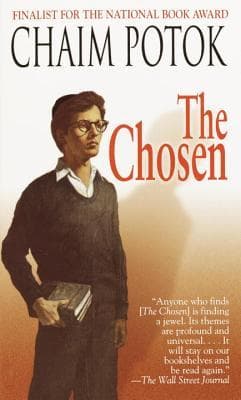
- The Chosen
Chaim Potok
3.9 (253) average on GoodreadsFantasyExplores the complexities of tradition, faith, and father-son relationships within a Jewish community.
- My Name Is Asher Lev
Chaim Potok
4.2 (36k) average on GoodreadsHistorical FictionDeals with an individual's struggle to reconcile personal passion with the demands of their religious community.
- Les Misérables
Victor Hugo
4.2 (683k) average on GoodreadsHistorical Fiction'Fiddler on the Roof' shares with 'Les Misérables' a deep engagement with historical upheaval and the struggles of ordinary people against societal injustice. Both musicals feature protagonists (Tevye and Jean Valjean) who grapple with moral dilemmas and personal sacrifice amidst widespread suffering. However, 'Fiddler' focuses more intensely on the internal conflict of tradition and cultural identity within a specific community, whereas 'Les Misérables' offers a broader, more epic scope of social revolution and individual redemption across different strata of society, as discussed by scholars like Ethan Mordden (2004) in 'Open a New Window: The Broadway Musical in the 1960s'.
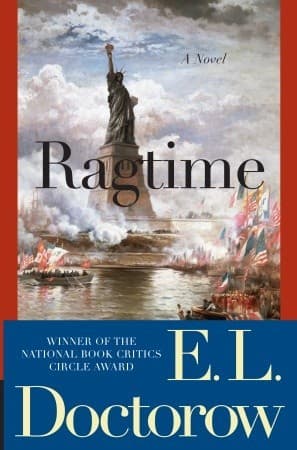
- Ragtime
E.L. Doctorow
3.9 (38k) average on GoodreadsLiterary FictionBoth 'Fiddler on the Roof' and 'Ragtime' are historical fictions that explore the American experience at the turn of the 20th century, though 'Fiddler' is set in Russia. 'Ragtime' intricately weaves together the stories of three distinct groups—WASP suburbanites, African American musicians, and Eastern European immigrants—to examine themes of class, race, and assimilation in a rapidly changing America. While 'Fiddler' centers on the dissolution of a single cultural tradition, 'Ragtime' explores the clash and convergence of multiple cultures and their struggles for recognition and justice, often with a more direct and explicit engagement with systemic racism and classism, as analyzed by theatre critic Ben Brantley (1998) in his review for The New York Times.
- To Kill a Mockingbird
Harper Lee
4.3 (4.5M) average on GoodreadsHistorical FictionIn the 1930s Jim Crow South, Harper Lee writes about racial injustice, moral growth, and the quiet courage of a lawyer father, Atticus Finch, as seen through his young daughter's eyes.
- The Great Gatsby
F. Scott Fitzgerald
3.9 (3.8M) average on GoodreadsHistorical FictionIn the opulent Roaring Twenties, a mysterious millionaire's lavish parties hide his desperate, tragic pursuit of a lost love, exposing the emptiness within the American Dream.



Enjoyed the summary?
A summary gives you the shape of the book. The book itself has the detail, the examples and the voice.
Find Fiddler on the Roof on AmazonAs an Amazon Associate, BookBrief earns from qualifying purchases. How we're funded