

Synopsis
Covers the whole plot, including the ending.
- Difficulty
- Hard
- Pacing
- Slow
- Mood
- Melancholy, Brooding, Tragic, Atmospheric
- Read it if
- You enjoy deep dives into the psychological landscapes of post-Civil War Southern aristocracy, complex character studies, and rich, evocative prose.
- Skip it if
- You prefer fast-paced plots with clear resolutions, or find stream-of-consciousness narratives challenging.
Flags in the Dust Plot Summary
Covers the whole plot, including the ending.
The Return of Bayard Sartoris and the Shadow of War
The novel begins with young Bayard Sartoris returning to Jefferson, Mississippi, after flying in World War I. His twin brother, John Sartoris, a brave pilot, died in the war. This loss deeply affects Bayard and darkens the Sartoris family. The family head, old Bayard Sartoris (Colonel Sartoris), a banker and the last of the Civil War generation, is a quiet man who struggles to understand his grandson's post-war trauma. Aunt Jenny Du Pre, the strong and clever older woman, tries to keep order and tradition in the chaotic Sartoris house. She often talks about the great past of the Sartoris family. Young Bayard immediately drives his car very fast and does dangerous stunts, seemingly trying to escape his sadness and his brother's memory.
Narcissa Benbow's Quiet Life and Young Bayard's Pursuit
Narcissa Benbow, a refined and somewhat delicate young woman, lives a quiet life in Jefferson with her brother, Horace Benbow, a lawyer and glassblower. Narcissa is the opposite of the reckless Sartoris spirit; she values stability and proper behavior. Young Bayard Sartoris, despite his unpredictable actions, is drawn to her delicate beauty and quiet nature. He starts to pursue her, often in a forceful way, showing he cannot express his emotions normally. Narcissa, though at first careful of his dangerous reputation and the Sartoris family's wild history, finds herself drawn to his intensity, perhaps seeing a vulnerability under his boldness. Their interactions show a tension between her wish for peace and his need for excitement and escape.
The First Accident and Mounting Family Concern
Young Bayard's dangerous acts increase, leading to a serious car accident where he barely survives. This event shows his physical strength but does little to stop his self-destructive habits. Old Bayard, though stern on the outside, worries deeply about his grandson's behavior. He sees reflections of the Sartoris family's historical recklessness and the tragic ends of previous generations. Aunt Jenny, always practical, tries to step in, scolding young Bayard and trying to teach him responsibility. Narcissa, seeing his close calls with death, worries more about his apparent wish to die. Yet, her concern for him only grows, making her feelings of apprehension and attraction more complex.
Marriage to Narcissa and a Brief Period of Calm
Amid the family's worries, young Bayard and Narcissa Benbow marry. For a short time, their marriage seems to calm Bayard. He appears to settle into a more domestic routine. Narcissa, despite her fears, hopes their marriage will bring him peace and stability. The family, especially old Bayard and Aunt Jenny, feels careful optimism, believing Narcissa's gentle presence might be the answer to the Sartoris pattern of recklessness. This period, however, is fragile, a temporary quiet before Bayard's inner problems and the weight of his past trauma return.
The Return of Recklessness and the First Departure
The fragile peace in young Bayard's life breaks as his post-war trauma and John's memory return. He goes back to reckless driving and dangerous pursuits, unable to escape the emptiness left by his brother's death and his war experiences. Narcissa gets pregnant, but instead of settling him, the coming fatherhood seems to make his fear and restlessness worse. Unable to handle the responsibilities of family life and his own grief, Bayard suddenly leaves Narcissa, disappearing from Jefferson without explanation. His departure devastates Narcissa and greatly disappoints the Sartoris family, confirming their fears about his inability to find lasting peace.
Narcissa's Pregnancy and Horace's Return
After Bayard leaves, Narcissa gives birth to a son, whom she names Benbow Sartoris, after her own family. The birth brings a mix of joy and sadness amid her heartbreak and uncertainty. Around this time, her brother, Horace Benbow, returns to Jefferson after being away. Horace, a sensitive and artistic person, gives much-needed emotional support to Narcissa, helping her with the challenges of being a single mother and the social judgment that comes with Bayard's leaving. He restarts his law practice and his glassblowing hobby, offering a quiet, intellectual contrast to the loud and often tragic Sartoris world. Horace's presence shows the difference between the two families' ways of life and their burdens.
Old Bayard's Final Ride
Young Bayard eventually returns to Jefferson, but his self-destructive habits continue. In a tragic event, he takes his grandfather, old Bayard Sartoris, for a ride in a new, powerful car. Despite old Bayard's age and weak health, young Bayard drives very fast, repeating his earlier reckless behavior. The ride is too much for the old man, who has a heart attack and dies. This event is a terrible blow to the family, especially Aunt Jenny, who sees the ongoing pattern of Sartoris men causing their own destruction. Young Bayard feels guilty, but this only makes him seek self-destruction more, rather than finding a way to heal.
The Search for Oblivion and Horace's Obsession
After his grandfather's death, young Bayard seeks oblivion more intensely. He does dangerous stunts, drinks too much, and generally acts as if he wants to die. He cannot find comfort or escape the constant grief and guilt. Meanwhile, Horace Benbow, while supporting Narcissa, gets involved with a woman named Belle Mitchell, a divorced woman with a troubled past. Horace, with his romantic and somewhat naive feelings, is drawn to her, despite Narcissa's quiet disapproval. Their relationship creates tension, showing Horace's own struggles with identity and his wish to escape the small-town limits of Jefferson, much like Bayard, though in different ways.
Aunt Jenny's Efforts and the Continuing Decline
Aunt Jenny Du Pre, the strong will of the Sartoris household, tries very hard to instill some sense of responsibility and order in young Bayard. She scolds him, talks to him about the family legacy, and tries to make him recognize his duties to Narcissa and his son. However, her efforts fail against Bayard's deep trauma and his constant pursuit of danger. He continues to waste his inheritance and do increasingly risky things, seemingly unable to break free from the cycle of Sartoris recklessness. The family, especially Aunt Jenny, watches helplessly as he declines further, affected by his brother John's memory and the weight of their family's past.
The Final Flight and Bayard's Death
The novel reaches its tragic end as young Bayard Sartoris, unable to escape his inner problems, leaves Jefferson again. He goes to an airfield in Ohio, where he starts to test a new, experimental airplane. This final act is the ultimate sign of his death wish, a desperate attempt to rejoin his brother in the freedom of the sky. Despite warnings and the danger, he pushes the plane to its limits. The plane crashes, killing Bayard. His death, while devastating to Narcissa and the family, feels almost expected, the result of his post-war trauma and the Sartoris family's inherited pattern of recklessness and self-destruction. The news reaches Jefferson, leaving Narcissa and Aunt Jenny to mourn the last Sartoris male of their generation.
Narcissa's Future and the Legacy of Sartoris
With young Bayard's death, Narcissa is left a widow, raising their son, Benbow Sartoris, alone. She is a resilient person, determined to protect her son from the destructive legacy of the Sartoris name. Aunt Jenny, though heartbroken, remains the steadfast older woman, making sure the family's traditions continue, even if only in memory. The novel ends with the lasting presence of the Sartoris past, the grand, tragic history of a family known for its courage, recklessness, and ultimate self-destruction. Narcissa and her son represent a fragile hope for a different future, one perhaps free from the past that defined and destroyed the Sartoris men.
Principal Figures
Bayard Sartoris (Young Bayard)
Protagonist
WWI veteran haunted by his twin brother's death and driven by self-destructive impulses.
Young Bayard is the central figure of the novel, a World War I flying ace who returns to Jefferson deeply traumatized by the death of his twin brother, John, and his experiences in the war. He is driven by a restless, self-destructive energy, manifesting in reckless driving, dangerous stunts, and a general disregard for his own safety. He struggles with guilt, grief, and an inability to connect with the world or his family. His actions are often impulsive and cruel, pushing away those who care for him, particularly Narcissa. He embodies the Sartoris family's inherited traits of courage and recklessness, but twisted into a modern, nihilistic despair.
Relationships: John Sartoris (twin brother, whose death deeply traumatizes him); Old Bayard Sartoris (grandfather, whom he inadvertently causes to die); Aunt Jenny Du Pre (great-aunt, who tries to guide him); Narcissa Benbow Sartoris (wife, whom he abandons); Benbow Sartoris (son, whom he never truly knows)
Narcissa Benbow Sartoris
Supporting
Refined and quiet young woman who marries young Bayard, enduring his abandonment and raising their son.
Narcissa is a delicate, reserved, and somewhat fragile young woman from a respectable Jefferson family. She represents stability, tradition, and a quiet strength that contrasts sharply with the chaotic Sartoris world. Initially drawn to young Bayard despite his dangerous reputation, she marries him and tries to provide a grounding influence. She endures his abandonment and the tragedy of his death with a quiet dignity, focusing her energy on raising their son, Benbow. She is a symbol of endurance and the potential for a different future for the Sartoris lineage, untainted by the family's historical recklessness.
Relationships: Young Bayard Sartoris (husband, who abandons her and dies); Horace Benbow (brother, her primary confidant and support); Benbow Sartoris (son, her hope for the future)
Old Bayard Sartoris (Colonel Sartoris)
Supporting
Patriarch of the Sartoris family, a stoic and traditional figure haunted by the family's legacy.
Old Bayard is the elderly patriarch, a former Confederate cavalryman and a successful banker. He is a stoic, often silent figure who embodies the fading grandeur of the Old South. He carries the weight of the Sartoris name and its history of courage and recklessness. He deeply loves his grandson but struggles to understand or connect with young Bayard's post-war trauma and self-destructive behavior. His death, caused by young Bayard's reckless driving, is a symbolic passing of the torch of self-destruction and a pivotal moment in the novel.
Relationships: Young Bayard Sartoris (grandson, whom he loves but cannot save); Aunt Jenny Du Pre (sister-in-law, his companion and the family's other anchor); John Sartoris (Civil War) (father, whose legacy he upholds)
Aunt Jenny Du Pre
Supporting
Sharp-witted and pragmatic matriarch, the voice of reason and tradition in the Sartoris household.
Aunt Jenny is the formidable and outspoken matriarch of the Sartoris family. She is the pragmatic counterpoint to the Sartoris men's romanticized recklessness, constantly trying to instill order, common sense, and responsibility. She serves as the family's historian, keeper of its legends, and its moral compass, often scolding young Bayard for his behavior. Despite her sharp tongue, she deeply loves her family and grieves their tragic fates, representing the enduring spirit and resilience amidst the family's self-destruction. She is a survivor, a witness to generations of Sartoris folly.
Relationships: Old Bayard Sartoris (brother-in-law and companion); Young Bayard Sartoris (great-nephew, whom she tries to save); Narcissa Benbow Sartoris (niece-in-law, whom she supports); John Sartoris (brother, whose legend she helps maintain)
Horace Benbow
Supporting
Narcissa's sensitive, artistic brother, a lawyer and glassblower, seeking escape from provincial life.
Horace is Narcissa's brother, a sensitive, intellectual, and somewhat naive lawyer who is also a passionate glassblower. He represents a different kind of Southern male, more artistic and less bound by the traditional codes of honor and recklessness that define the Sartoris men. He provides emotional support to Narcissa during her struggles with young Bayard. Horace is depicted as somewhat detached from the harsh realities of life, often retreating into his aesthetic pursuits. He eventually becomes entangled with Belle Mitchell, showcasing his own longing for escape and a romanticized view of life, which ultimately leads to his own form of disillusionment.
Relationships: Narcissa Benbow Sartoris (sister, whom he deeply cares for); Belle Mitchell (lover, a complicated and ultimately destructive relationship)
John Sartoris (Young Bayard's Twin)
Mentioned
Young Bayard's twin brother, a WWI aviator whose death haunts the protagonist.
John Sartoris is young Bayard's twin brother, a celebrated and fearless WWI aviator who is killed in action. Although he never appears alive in the novel, his presence is profoundly felt. He represents the epitome of the Sartoris courage and recklessness, but also the tragic, self-destructive path that his brother seems destined to follow. John's death is the catalyst for young Bayard's trauma and his subsequent pursuit of oblivion, making him a central, though absent, character who shapes the entire narrative.
Relationships: Young Bayard Sartoris (twin brother, whose ghost obsesses him)
Caspey and Simon
Supporting
African-American servants of the Sartoris family, providing a grounded perspective and comic relief.
Caspey and Simon are two African-American servants who work for the Sartoris family. Caspey, a returning WWI veteran, brings a new, sometimes boastful and assertive, perspective to the traditional Southern household, challenging old norms. Simon, the older and more experienced servant, is fiercely loyal to the Sartoris family and often provides a grounded, cynical, and humorous commentary on their follies. They represent the changing racial dynamics of the post-war South and offer an external, often critical, view of the Sartoris family's aristocratic drama. Their interactions provide moments of both comic relief and poignant observation.
Relationships: Sartoris Family (loyal servants, often providing commentary)
Belle Mitchell
Supporting
A divorced woman with a troubled past who becomes involved with Horace Benbow.
Belle Mitchell is a divorcee who comes to Jefferson and becomes romantically involved with Horace Benbow. She is depicted as a complex character, possessing a certain allure but also a troubled, manipulative, and ultimately destructive nature. Her relationship with Horace highlights his naive idealism and his longing for an escape from his provincial life. She represents a different kind of female character than Narcissa, one less constrained by Southern decorum and more driven by her own desires and past experiences. Her presence ultimately brings unhappiness to Horace.
Relationships: Horace Benbow (lover, a complicated and ultimately destructive relationship)
Themes & Insights
The Legacy of the Past and the Decline of the Old South
The novel is about the lasting impact of the past, especially the Civil War and the romanticized ideas of the Old South, on the present. The Sartoris family, with its history of courage, honor, and recklessness, shows the fading glory and decline of this era. Young Bayard's self-destruction is a modern example of an inherited 'curse' that affects Sartoris men, who cannot adapt to a changing world. Aunt Jenny constantly talks about past glories, while old Bayard represents the quiet, dying generation. The family's inability to escape its own history leads to its tragic fall, symbolizing the broader societal change in the South.
“That's the Sartoris curse,' Aunt Jenny said, 'and it's been the ruin of every man in the family, as far back as I can remember.”
Trauma, Grief, and Self-Destruction
Young Bayard's character explores post-war trauma and unresolved grief. The death of his twin brother, John, and his experiences in World War I leave him deeply scarred. This leads to a constant search for escape through reckless behavior. His self-destructive acts—speeding cars, dangerous flying—are desperate attempts to outrun his inner pain and his brother's memory. This theme shows the psychological cost of war and the difficulty of returning to civilian life when affected by loss and guilt. His death is a tragic result of his inability to process his trauma and find healing.
“He was trying to die, he knew it. He was trying to die to get rid of the ghost of his brother, and the ghosts of all the Sartoris men who had gone before him.”
Masculinity and Honor in the Post-War South
The novel examines changing ideas of masculinity and honor after World War I, contrasting the traditional, often destructive, Sartoris code with new realities. Sartoris men are defined by a heroic, almost mythical, courage that often borders on recklessness, leading to their deaths. Young Bayard struggles to combine this inherited code with his modern trauma. Horace Benbow shows a different, more sensitive and artistic masculinity, though he also struggles to find his place. The theme explores how the pressure to conform to or reject traditional masculine ideals affects the characters' fates and the family's decline, especially in a South still dealing with its history of martial honor.
“The Sartoris men were a race of soldiers, and they died in battle or on the field of honor, or trying to break their necks in some foolhardy way.”
The Role of Women and Resilience
In contrast to the self-destructive men, the women in the novel, especially Aunt Jenny and Narcissa, show resilience, practicality, and life's enduring strength. Aunt Jenny is the steady older woman who tries to keep the family together and preserve its legacy, even as she sees its decline. Narcissa, though delicate at first, shows quiet strength and determination in raising her son after Bayard leaves and dies. These women often pick up the pieces, mourn, and carry on, symbolizing a hope for continuity and a different future, perhaps one free from the men's destructive tendencies.
“It was the women who had to keep the Sartorises alive, to bear them and bury them and keep their names alive, while the men went out and got themselves killed.”
Memory and Storytelling
Memory and storytelling are central to the novel. The past is often brought up and reinterpreted through family legends and personal stories. Aunt Jenny is the main storyteller, recounting tales of past Sartoris men, especially the Civil War John Sartoris. She shapes the family's identity and keeps its myths alive. These stories offer a sense of heritage but also trap the characters in a cycle of repetition, as young Bayard feels he must live up to or tragically repeat his ancestors' reckless acts. The story itself moves between present events and historical echoes, showing how the past always influences the present in Yoknapatawpha County.
“The past is never dead. It's not even past.”
Plot Devices & Literary Techniques
The Sartoris Family Curse
A perceived inherited doom of recklessness and self-destruction afflicting the male line.
The 'Sartoris curse' is a recurring motif that explains the inherent recklessness and self-destructive tendencies of the Sartoris men. It's not a literal curse, but a pattern of behavior passed down through generations, characterized by an almost pathological need for danger, a romanticized view of honor, and an inability to adapt to modern life. It manifests in young Bayard's daredevil flying and driving, mirroring the martial exploits of his ancestors. This device provides a tragic framework for the narrative, suggesting that the characters are fated to repeat the mistakes of their forebears, making their downfall seem inevitable and deeply ingrained in their very being.
Symbolism of the Automobile and Airplane
Vehicles representing speed, modernity, and young Bayard's self-destructive drive.
The automobile, and later the airplane, are powerful symbols throughout the novel. Young Bayard's reckless driving of cars at breakneck speeds immediately establishes his post-war trauma and death wish. The car represents modernity, speed, and a dangerous freedom, contrasting with the slower, more traditional pace of Jefferson. The airplane, specifically, links young Bayard to his deceased twin, John, and symbolizes the ultimate escape, a return to the freedom and danger of wartime, and ultimately, a means to self-destruction. These vehicles are not merely modes of transport but extensions of Bayard's internal turmoil and his desperate pursuit of oblivion.
The Absent Brother (John Sartoris)
The ghost of young Bayard's twin brother, a constant, haunting presence driving the protagonist's actions.
Though deceased before the novel begins, John Sartoris, young Bayard's twin brother, is a pervasive and powerful presence. He functions as a psychological plot device, a ghost that haunts young Bayard and fuels his self-destructive behavior. John represents the idealized, heroic, and ultimately tragic Sartoris male, and Bayard's actions are often an attempt to either emulate, escape, or somehow rejoin his brother. The memory of John's death is the central trauma that young Bayard cannot overcome, making John a crucial, though invisible, character who drives the protagonist's entire arc towards self-annihilation.
The Old South vs. The New South
A thematic juxtaposition highlighting the clash between traditional values and post-WWI modernity.
This device highlights the transitional period in which the novel is set, where the romanticized, aristocratic values and traditions of the Old South (represented by old Bayard, Aunt Jenny's stories) clash with the realities of the post-WWI era and the emerging New South. Young Bayard's trauma and reckless modern vehicles symbolize the destructive aspects of this transition, while characters like Caspey and Simon represent changing racial dynamics. The novel explores how individuals and families struggle to adapt to a world that no longer values the old codes of honor in the same way, leading to cultural and personal disintegration. This tension underscores the tragedy of the Sartoris family's inability to move forward.
Flags in the Dust Quotes
“The past is never dead. It's not even past.”
“Living is a process of breaking yourself free from the shell of your birth.”
“Man is the sum of his misfortunes.”
“It's not when you die that's important, it's what you do before you die.”
“Memory, like a house, has many rooms.”
“The quality of courage is not to be judged by the result, but by the effort.”
“There is no such thing as 'was,' only 'is.'”
“A man is the sum of his ancestors.”
“The aim of every artist is to arrest motion, which is life, by artificial means and hold it fixed so that a hundred years later, when a stranger looks at it, it begins to move again since it is life.”
“We are all of us, always, the sum of what we have done.”
“Grief has no language; it is a silence.”
“The heart of man is a dark forest.”
“You cannot swim for new horizons until you have courage to lose sight of the shore.”
“The only thing that can save a man is to work.”
Quiz
10 questions on the plot and the characters. Each answer comes with a short explanation.
Question 1
Which prominent Yoknapatawpha County family is at the center of 'Flags in the Dust'?
- The Compsons
- The Snopeses
- The Sartorises
- The Bundrens
Show answer
C. The Sartorises 'Flags in the Dust' is primarily concerned with the decline and fate of the aristocratic Sartoris family, a foundational family in Faulkner's fictional Yoknapatawpha County.
Question 2
What significant historical event has recently concluded, heavily influencing the characters, particularly young Bayard Sartoris?
- The American Civil War
- World War I
- The Spanish-American War
- The Great Depression
Show answer
B. World War I The novel opens with the aftermath of World War I, and young Bayard Sartoris's reckless behavior and internal struggles are directly attributed to his experiences as a pilot during the war.
Question 3
Who is the patriarch of the Sartoris family at the beginning of 'Flags in the Dust'?
- Colonel John Sartoris
- Old Bayard Sartoris
- Young Bayard Sartoris
- Buddy Sartoris
Show answer
B. Old Bayard Sartoris Old Bayard Sartoris, the grandfather, is the living patriarch who struggles to understand and cope with his grandson's post-war recklessness and the changing times.
Question 4
What is the primary characteristic that defines young Bayard Sartoris's post-war behavior?
- A deep commitment to family traditions and stability
- A desire to embrace modernity and leave the past behind
- Reckless, self-destructive acts fueled by a death wish or survivor's guilt
- A quiet pursuit of scholarly interests and intellectual growth
Show answer
C. Reckless, self-destructive acts fueled by a death wish or survivor's guilt Young Bayard's post-war life is marked by extreme risk-taking, reckless driving, and a general disregard for his own safety, often interpreted as a manifestation of survivor's guilt or a subconscious desire for death after his brother's demise in the war.
Question 5
How does the character of Narcissa Benbow fit into the Sartoris family's story?
- She is the loyal family cook and confidante.
- She eventually marries young Bayard Sartoris.
- She is Old Bayard's estranged daughter.
- She is a symbol of the emerging new South, independent and career-focused.
Show answer
B. She eventually marries young Bayard Sartoris. Narcissa Benbow, a refined and somewhat fragile figure, marries young Bayard. Her pregnancy and the birth of their child become a poignant counterpoint to Bayard's destructive path, representing a hope for continuation that he ultimately rejects.
Question 6
Which theme is most central to 'Flags in the Dust'?
- The triumph of modernity over tradition
- The redemptive power of love and forgiveness
- The decline of the aristocratic Southern family and the burden of the past
- The pursuit of the American Dream through hard work and innovation
Show answer
C. The decline of the aristocratic Southern family and the burden of the past A core theme of 'Flags in the Dust' is the decay and eventual demise of the old Southern aristocracy, represented by the Sartoris family, and the heavy, often destructive, influence of their own legendary past on the present generation.
Question 7
What is the ultimate fate of young Bayard Sartoris?
- He finds peace and settles down to raise his family.
- He dies in a reckless airplane crash.
- He leaves Yoknapatawpha County to start a new life elsewhere.
- He is imprisoned for one of his many reckless acts.
Show answer
B. He dies in a reckless airplane crash. Consistent with his self-destructive trajectory, young Bayard dies in a plane crash, a final act of recklessness that seals the fate of his immediate branch of the Sartoris line.
Question 8
How does the character of Miss Jenny Du Pre serve as a foil or counterpoint within the Sartoris household?
- She embodies the progressive future, constantly challenging traditional views.
- She is a voice of practical common sense, stern wisdom, and a link to a more stable past, often disapproving of the men's recklessness.
- She encourages young Bayard's wild behavior, finding it amusing.
- She represents the refined, delicate Southern lady, averse to any conflict.
Show answer
B. She is a voice of practical common sense, stern wisdom, and a link to a more stable past, often disapproving of the men's recklessness. Miss Jenny Du Pre is Old Bayard's sister and a formidable presence in the house. She is a sharp-tongued, pragmatic woman who often scolds the Sartoris men for their foolishness, serving as a grounding, albeit often ignored, voice of reason and a practical link to the past.
Question 9
The title 'Flags in the Dust' suggests a particular thematic emphasis. What does 'flags in the dust' most likely symbolize in the context of the novel?
- The triumph of military victory and patriotism.
- The fading glory and decay of a proud, yet ultimately doomed, lineage and its traditions.
- The vibrant energy of a new generation rising from the ashes of war.
- The forgotten heroes of past battles, waiting to be rediscovered.
Show answer
B. The fading glory and decay of a proud, yet ultimately doomed, lineage and its traditions. The title 'Flags in the Dust' metaphorically represents the decline of the Sartoris family and the old Southern aristocracy. The 'flags' symbolize their past glory, pride, and traditions, while 'in the dust' signifies their decay, irrelevance, and eventual oblivion.
Question 10
How does the complete text of 'Flags in the Dust' differ significantly from its abridged 1929 publication, 'Sartoris'?
- 'Sartoris' includes an additional subplot involving the Snopes family that 'Flags in the Dust' omits.
- 'Flags in the Dust' is a much longer, more comprehensive version, restoring significant character development, thematic depth, and narrative details that were cut from 'Sartoris'.
- The ending of 'Sartoris' is optimistic, while 'Flags in the Dust' concludes tragically.
- 'Flags in the Dust' changes the names of several key characters, including Bayard Sartoris.
Show answer
B. 'Flags in the Dust' is a much longer, more comprehensive version, restoring significant character development, thematic depth, and narrative details that were cut from 'Sartoris'. As noted in the book description, 'Flags in the Dust' is the complete, original text, while 'Sartoris' was a heavily cut version. This means 'Flags in the Dust' restores much of Faulkner's original vision, offering more depth to characters and themes that were condensed or removed in the earlier publication.
Flags in the Dust FAQ
What is Flags in the Dust about?
Flags in the Dust is a sprawling saga chronicling the decline of the Sartoris family, an aristocratic Southern clan, in the aftermath of World War I. It primarily follows young Bayard Sartoris's reckless attempts to cope with the trauma of war and the death of his twin brother, John, through daredevil acts and a general disregard for his own life, all set against the backdrop of Yoknapatawpha County.
Why should I read Flags in the Dust?
You should read Flags in the Dust to experience Faulkner's raw, unedited vision of the Sartoris family's decline, offering a deeper and more complex narrative than its later, abridged version, Sartoris. It provides essential groundwork for understanding his Yoknapatawpha County and introduces themes of Southern decay, ancestral legacy, and the psychological scars of war that would define much of his later work.
What is the background/setting of Flags in the Dust?
The novel is set in Jefferson, Mississippi, and the surrounding Yoknapatawpha County, Faulkner's fictionalized version of Lafayette County, Mississippi, in the years immediately following World War I. It vividly portrays the post-war South, grappling with changing social structures, the lingering impact of the Civil War's mythology, and the challenges of modernity clashing with traditional aristocratic values.
What are the most memorable quotes?
One memorable passage describes the Sartoris family's 'doom' as 'a fierce and ancestral lust for life' that ironically leads to their self-destruction. Another captures the essence of Southern time: 'For the South, it was not a matter of 'yesterday' but of 'a long time ago,' a difference in perception that shaped its historical burden.
What writing style does the author use?
Faulkner employs a dense, often stream-of-consciousness style characterized by long, complex sentences, shifting perspectives, and a rich, evocative vocabulary. He frequently interweaves present action with historical flashbacks and internal monologues, creating a layered narrative that mirrors the characters' complex psychological states and the weight of their family history.
What minor details add significant meaning?
The repeated motif of horses and fast cars, particularly Bayard's reckless driving, symbolizes the Sartoris family's untamed spirit and their self-destructive tendencies. Additionally, the detailed descriptions of the Sartoris mansion and its decaying grandeur subtly reflect the family's fading prominence and the erosion of their traditional values.
What are some subtle foreshadowing moments?
Early descriptions of Bayard's daredevil stunts and his almost suicidal disregard for safety, even before he returns from the war, subtly foreshadow his ultimate tragic end. His grandfather's constant recounting of ancestral heroics also foreshadows how Bayard feels compelled to live up to or defy that legacy, leading to his own downfall.
What unexpected character connections exist?
The surprising, almost symbiotic relationship between the aristocratic Sartoris family and their former slave, Simon, reveals a complex, often uncomfortable bond rooted in generations of shared history and mutual, if unequal, dependency. Simon acts as both a loyal servant and a critical observer, bridging the gap between two vastly different worlds.
What are unspoken character motivations?
Bayard Sartoris's primary unspoken motivation is a profound survivor's guilt and an inability to process the death of his twin brother, John, in the war. His recklessness is less about thrill-seeking and more about a subconscious desire for self-punishment or to rejoin his brother in death, rather than truly living in a world without him.
What psychological complexities do characters exhibit?
Bayard exhibits severe post-traumatic stress and a fatalistic nihilism, masked by an outward bravado. Narcissa Benbow, initially drawn to Bayard, struggles with her own desires for stability and societal acceptance against her fascination with his dangerous allure, revealing a conflict between convention and passion.
What are the major emotional turning points?
A significant turning point is Bayard's marriage to Narcissa, which briefly offers a glimmer of hope for his redemption and a return to normalcy, only for his self-destructive impulses to reassert themselves. Another is the birth of his son, Benbow, which briefly grounds him but ultimately fails to divert him from his path.
How do relationship dynamics evolve?
Bayard's relationship with Narcissa evolves from a tentative courtship to a strained marriage, marked by his emotional distance and her growing despair. His relationship with his grandfather, Bayard Sr., remains fraught, as the elder Bayard struggles to understand and guide his grandson while clinging to his own idealized past.
Which parts remain ambiguous or open-ended?
The true extent of Bayard's guilt over John's death and whether he truly seeks death or merely release remains somewhat ambiguous. The novel also leaves open the question of whether the Sartoris line truly ends in tragedy or if the birth of Benbow offers a faint, distant hope for a different future, free from the ancestral curse.
What are controversial scenes or decisions?
Bayard's repeated and seemingly senseless acts of self-endangerment, particularly his fatal airplane crash, can be controversial. Readers may debate whether his death is an inevitable consequence of his psychological trauma or a choice that could have been averted, leading to discussions about free will versus determinism in his fate.
Flags in the Dust ending explained: how it ends & what it means
The novel concludes with Bayard Sartoris's death in an airplane crash, a final, self-willed act of recklessness. His death signifies the tragic end of a certain branch of the Sartoris male line, consumed by its own legacy and inability to adapt. It symbolizes the death of the old South's aristocratic ideals and the devastating, lingering effects of war on individuals and families, leaving behind a new generation (his son, Benbow) to potentially forge a different path.
About the author
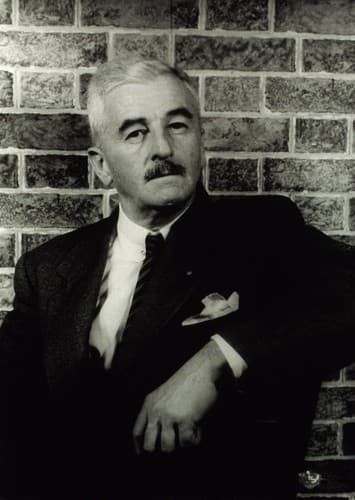
William Cuthbert Faulkner was an American writer known for his novels and short stories set in the fictional Yoknapatawpha County, based on Lafayette County, Mississippi, where Faulkner spent most of his life. A Nobel laureate, Faulkner is one of the most celebrated writers of American literature and often is considered the greatest writer of Southern literature.
Similar books
- The Sound and the Fury
William Faulkner
3.9 (158k) average on GoodreadsLiterary FictionExplores a decaying Southern family with complex psychological themes and non-linear narrative.
- Light in August
William Faulkner
3.9 (56k) average on GoodreadsLiterary FictionFeatures complex characters grappling with their pasts and the social structures of the American South.
- The Sun Also Rises
Ernest Hemingway
3.8 (366k) average on GoodreadsHistorical FictionHemingway's novel captures the 'Lost Generation's' ennui with stark, minimalist prose. Flags in the Dust, in contrast, offers a richer tapestry of internal monologue, a more intricate social hierarchy, and a more complex narrative structure, foreshadowing Faulkner's later experimental techniques.
- The Old Man and the Sea
Ernest Hemingway
3.8 (831k) average on GoodreadsLiterary FictionA Cuban fisherman's long struggle with a giant marlin becomes a story of endurance and dignity, now retold for young adults with illustrations, phonetic guides, and writing prompts in Traditional Chinese.
- One Hundred Years of Solitude
Gabriel García Márquez
4.1 (753k) average on GoodreadsLiterary FictionThrough the multi-generational story of the Buendía family, a mythical town deals with the repeating patterns of time, love, and solitude, as the extraordinary mixes with the ordinary.
- The Goldfinch
Donna Tartt
3.9 (720k) average on GoodreadsLiterary FictionHaunted by a tragic explosion and clutching a stolen Dutch masterpiece, a young orphan navigates the opulent drawing rooms of New York and the gritty underbelly of the art world, desperately seeking connection and redemption amidst a life spiraling into crime and obsession.






Enjoyed the summary?
A summary gives you the shape of the book. The book itself has the detail, the examples and the voice.
Find Flags in the Dust on AmazonAs an Amazon Associate, BookBrief earns from qualifying purchases. How we're funded