

Synopsis
Covers the whole plot, including the ending.
- Difficulty
- Medium
- Pacing
- Moderate
- Mood
- Wry, Melancholic, Ironic, Reflective
- Read it if
- You enjoy Nabokov's distinctive prose, explorations of identity and memory, and tragicomic tales of misguided idealism.
- Skip it if
- You prefer clear resolutions, fast-paced action, or stories with overt political messaging.
Glory Plot Summary
Covers the whole plot, including the ending.
Early Childhood and Émigré Life
The novel introduces Martin Edelweiss, a young Russian émigré, reflecting on his early life. Born into a privileged family in Tsarist Russia, his childhood is marked by a deep connection to nature and a detached relationship with his parents. His father, a wealthy landowner, is largely absent, while his mother, a beautiful but often melancholy woman, provides an inconsistent presence. The tranquility of their life is disrupted by the Russian Revolution. Martin and his mother are forced to flee, leaving behind their estate and the familiar landscapes of their homeland. This displacement shapes Martin's identity, creating a longing for a lost past and a feeling of being an outsider in his new European surroundings.
Switzerland and Early Adulthood
After their escape, Martin and his mother settle in Switzerland. Martin attends various schools, struggling to find his place among his peers and often retreating into his own inner world. He develops a deep, almost mystical attachment to Russia, a land he remembers through a child's eyes and which he idealizes as a place of beauty and meaning. During this period, he meets and becomes infatuated with Zina Mertz, a spirited and intelligent Russian girl also living in exile. Their relationship, however, is marked by Martin's shyness and Zina's independent nature, preventing it from developing into anything substantial, much to Martin's quiet despair. His experiences in Switzerland reinforce his sense of being adrift, fueling his desire for a grand purpose.
Cambridge University and the Search for Meaning
Martin moves to England to study at Cambridge University. He attempts to apply himself to his studies, particularly literature, but finds himself increasingly disengaged from academic life. His mind frequently wanders, preoccupied with romantic fantasies and a sense of dissatisfaction with his mundane existence. He feels a growing urge to perform some heroic deed, something that would give his life meaning and perhaps impress Zina, who remains a significant figure in his thoughts. He develops a fascination with 'glory' – a nebulous concept of courageous action and self-sacrifice. This period highlights his internal conflict between the expectations of a conventional life and his yearning for an extraordinary one.
Reunion with Zina and Unrequited Love
During a break from his studies, Martin travels to Berlin, where he meets Zina Mertz again. He is still deeply in love with her and, mustering his courage, proposes marriage. Zina, however, gently but firmly rejects him. She expresses affection for him but states that she does not love him in the way required for marriage, finding him too passive and lacking clear direction in life. This rejection devastates Martin and exacerbates his feelings of inadequacy and aimlessness. It solidifies his conviction that he must achieve something remarkable, something that would prove his worth not only to Zina but also to himself. Her words, though painful, inadvertently push him towards his ultimate, perilous decision.
The Idea of 'Zoorland'
Following Zina's rejection and his continued dissatisfaction with his life, Martin begins to formulate a daring and dangerous plan. He decides he will secretly cross the border back into Soviet Russia, a venture he privately calls 'Zoorland' – a playful yet deeply significant name for his imagined heroic journey. He envisions this act as a personal pilgrimage, a way to reclaim his lost homeland, assert his courage, and achieve the 'glory' he so desperately craves. This idea becomes an obsession, consuming his thoughts and providing a singular focus for his previously aimless existence. He begins to make vague preparations, gathering information and fantasizing about the details of his clandestine adventure.
Preparations and Secrecy
Martin dedicates himself to planning his 'Zoorland' expedition. He studies maps, learns basic Russian phrases, and considers various routes and disguises. He maintains strict secrecy about his true intentions, offering vague excuses to his mother and friends about travel plans or academic pursuits. He finds excitement and purpose in these preparations, feeling that he is finally taking control of his destiny. He experiences moments of doubt and fear, but these are quickly overshadowed by his unwavering resolve and the romanticized vision of his heroic return. His secrecy isolates him further, but he views it as a necessary part of his grand, solitary quest.
Encounters with Fellow Émigrés
During his preparations, Martin encounters various Russian émigrés, each with their own perspective on their lost homeland. Some are bitter and politically active, yearning for the overthrow of the Bolshevik regime. Others have assimilated into European life, trying to forget the past. Martin finds himself unable to fully connect with either group. His own feelings for Russia are more personal and less political, a romanticized longing for a place of memory and identity. These interactions highlight his unique position and the individuality of his quest, setting him apart from the collective grievances or resignations of the émigré community. He feels an urgency to act, to bridge the gap between his idealized Russia and the harsh reality of the Soviet state.
The Departure
With his preparations complete, Martin finally sets off. He travels by train, making his way eastward across Europe, his destination the Soviet border. The journey is filled with apprehension and exhilaration. He reflects on his life, his unrequited love for Zina, and the concept of 'glory' that has driven him to this point. He feels a sense of liberation as he leaves behind the comforts and constraints of his émigré life, embracing the unknown. The narrative emphasizes his internal state, his heightened senses, and the dreamlike quality of his journey as he approaches the threshold of his self-imposed adventure. He carries with him a sense of destiny, convinced that this act will define him.
Crossing the Border
Martin reaches the border region, a desolate and dangerous area. Under the cover of darkness, he attempts to cross into Soviet territory. The act itself is fraught with peril, requiring stealth, courage, and luck. The narrative builds tension as he navigates the fences, watchtowers, and patrols. He succeeds in crossing, a moment of profound, if fleeting, triumph. However, the immediate aftermath is not the glorious homecoming he imagined. He finds himself in a hostile and unwelcoming landscape, the reality of Soviet Russia different from his romanticized vision. The 'glory' he sought begins to feel hollow and dangerous, as he becomes aware of the mortal risks he has taken.
Encounter and Disappearance
Once inside Soviet territory, Martin's brief triumph gives way to a grim reality. He encounters a local, possibly a border guard or a peasant, whose reaction is suspicion and hostility. The exact details of what happens next are vague, adding to the novel's enigmatic quality. The narrative implies that Martin is either captured or killed shortly after his infiltration. His fate is not explicitly stated, leaving the reader to infer the tragic outcome of his perilous adventure. The story concludes without a definitive resolution for Martin, emphasizing the futility and ultimate cost of his romanticized quest for 'glory' in a harsh, unforgiving world. His disappearance is his final, silent act of defiance.
Principal Figures
Martin Edelweiss
Protagonist
A young, idealistic Russian émigré obsessed with achieving 'glory' through a perilous return to his homeland.
Martin is a sensitive, introspective, and somewhat naive young man, haunted by the loss of his childhood in Russia. He struggles with feelings of inadequacy and aimlessness in his émigré life. His deep romanticism leads him to idealize Russia and to yearn for a heroic purpose. He often retreats into his own imagination, constructing elaborate fantasies. While intelligent, he lacks practical ambition in conventional terms, preferring to pursue an abstract concept of 'glory'. His shyness and unrequited love for Zina Mertz fuel his desperate need for a defining act.
Relationships: Zina Mertz (Unrequited love interest, inspiration for his quest); Martin's Mother (Loving but somewhat detached and melancholy parent); Martin's Father (Absent and largely idealized figure from his past)
Zina Mertz
Supporting
Martin's independent and pragmatic love interest, whose rejection indirectly spurs his adventure.
Zina is a strong-willed, intelligent, and realistic young Russian émigré. Unlike Martin, she is more grounded in reality and less prone to romantic fantasies. She is kind but firm in her rejection of Martin's marriage proposal, seeing his lack of direction. She represents a connection to Martin's past and a potential future, but her practicality contrasts sharply with his idealism. Her clear-sightedness, though painful for Martin, inadvertently serves as a catalyst for his desperate quest for meaning.
Relationships: Martin Edelweiss (Friend, object of his unrequited love)
Martin's Mother
Supporting
A beautiful and somewhat melancholic émigré, Martin's primary family connection.
Martin's mother is depicted as a beautiful but often fragile and somewhat self-absorbed woman. She loves Martin but is often lost in her own thoughts and memories of their lost past. She represents the lingering sorrow and displacement of the émigré generation. While she provides Martin with a home and support, she doesn't fully understand or engage with his deeper aspirations, particularly his yearning for 'glory'. Her presence highlights the emotional distance that can exist even within a loving family unit, particularly in the context of profound loss.
Relationships: Martin Edelweiss (Son)
Martin's Father
Mentioned
A wealthy landowner whose absence and pre-revolutionary life form part of Martin's idealized past.
Martin's father is largely an absent figure in the narrative, primarily existing in Martin's memories and idealized recollections of his pre-revolutionary childhood. He represents the lost world of Tsarist Russia, a world of privilege and stability that was violently taken away. His wealth and status contribute to the idyllic image of Russia that Martin holds, but his personal presence is minimal, making him more of a symbol than an active character. His absence contributes to Martin's sense of yearning for a lost heritage.
Relationships: Martin Edelweiss (Father)
Darwin
Supporting
Martin's British friend at Cambridge, representing a more conventional academic path.
Darwin is Martin's friend from Cambridge University. He is a more conventional, academically inclined young man, engaged with his studies and less prone to Martin's flights of fancy. He provides a contrast to Martin's introspective and often detached nature, embodying a more typical path for a university student. Their interactions highlight Martin's growing disengagement from mainstream life and his increasing preoccupation with his own unique, perilous project. Darwin serves to ground Martin's more fantastical thoughts, even if Martin ultimately disregards his more conventional advice.
Relationships: Martin Edelweiss (University friend)
The Narrator
Supporting
An unnamed, omniscient voice that occasionally interjects with ironic and reflective commentary.
The narrator of 'Glory' is an omniscient, often ironic, and subtly detached voice that guides the reader through Martin's story. While not a character within the plot, the narrator's presence is significant for its distinctive tone, philosophical digressions, and occasional foreshadowing. The narrator often comments on Martin's naiveté, his romanticism, and the futility of his quest, yet also conveys a certain tenderness for the protagonist. This narrative voice shapes the reader's understanding of Martin's motivations and the tragic irony of his pursuit of 'glory'.
Themes & Insights
The Illusion vs. Reality of 'Glory'
The novel explores Martin's romanticized pursuit of 'glory' – a heroic, self-sacrificing act – and the stark, often brutal reality he encounters. Martin idealizes the concept, believing it will give his life meaning and prove his worth, particularly to Zina. His 'Zoorland' project is born from this illusion. However, the narrative subtly undermines this ideal, showing the danger, loneliness, and probable futility of his quest. The ambiguity of his fate at the end suggests that true 'glory' in such a context is either unattainable or comes at an unbearable cost, far removed from the romantic fantasies he cherished. The contrast between his imagined triumph and the grim border crossing highlights this theme.
“He longed for something that would give his life a definite meaning, a purpose, a glory.”
Exile and the Search for Identity
Martin's life as a Russian émigré is central to his identity crisis. Displaced from his homeland at a young age, he constantly feels like an outsider in Western Europe. His idealized memory of Russia becomes a powerful, almost mystical force, representing a lost paradise and the true source of his identity. His decision to return, even illegally, is an attempt to reclaim this lost identity and bridge the gap between his past and present. The novel portrays the psychological impact of exile, the longing for roots, and the desperate measures individuals might take to reconnect with their heritage, even if it means confronting a changed and dangerous reality.
“He belonged nowhere, to no country, to no tradition, to no future.”
Romanticism vs. Pragmatism
This theme is shown in the contrast between Martin's dreamy, idealistic nature and the more pragmatic perspectives of characters like Zina. Martin is driven by romantic notions of heroism, adventure, and unrequited love, shaping his perception of the world and his ultimate goal. Zina, on the other hand, is realistic and grounded, refusing to be swayed by Martin's vague aspirations. Her rejection, based on his lack of practical direction, pushes Martin further into his romanticized, perilous path. The novel suggests that while romanticism can inspire grand gestures, it often clashes with the harsh realities of life, particularly in the political climate of the 20th century.
“Zina was a realist, Martin was a romantic, and between them lay an abyss.”
The Nature of Memory and Nostalgia
Memory plays a role in shaping Martin's motivations. His childhood memories of Russia are highly idealized, filled with a nostalgic glow that contrasts sharply with the grim reality of the Soviet state. These memories fuel his longing and his 'Zoorland' project, becoming more vivid and appealing than his present life. The novel explores how memory can be selective, romanticized, and ultimately a powerful, sometimes deceptive, force. It highlights the human tendency to cling to a past that may no longer exist, especially for those in exile, and how this nostalgia can drive individuals to extraordinary, often tragic, actions.
“His Russia was a country of memory, a country that perhaps had never existed outside his imagination.”
Plot Devices & Literary Techniques
Unreliable Narration (Subtle)
The narrative often reflects Martin's subjective, romanticized perspective, blurring the line between his imagination and objective reality.
While the narrator is omniscient, the story is deeply filtered through Martin's romantic and often naive worldview. His idealized memories of Russia, his fantasies of 'glory,' and his interpretation of events are presented with a certain degree of irony that hints at their unreliability. The reader is invited to understand Martin's internal world but also to recognize the gap between his perceptions and the harsh external reality. This subtle unreliability is key to understanding the tragic irony of his quest, as his 'glory' is largely a product of his own mind.
'Zoorland' as a Symbol
Martin's private term for his perilous journey represents his romanticized, almost childlike, vision of his quest.
The name 'Zoorland' is a whimsical, invented term that Martin uses for his secret mission to re-enter Soviet Russia. It functions as a powerful symbol of his romanticism, his escapism, and the almost fantastical nature of his ambition. The childlike quality of the name contrasts sharply with the deadly seriousness of the venture, highlighting the gap between Martin's internal world and the external political reality. It encapsulates his desire for a personal, mythical adventure rather than a politically motivated act, setting him apart from other émigrés.
Ambiguous Ending
Martin's ultimate fate is left uncertain, enhancing the novel's themes of the futility of his quest and the elusive nature of 'glory'.
The novel deliberately leaves Martin's final fate unresolved after his border crossing. This ambiguity is a crucial plot device. It denies the reader the satisfaction of a clear heroic or tragic conclusion, instead emphasizing the profound and often silent cost of his actions. By not explicitly stating his death or capture, Nabokov underscores the idea that Martin's 'glory' was a personal, internal pursuit, and its external validation is irrelevant or impossible. The ambiguity forces the reader to confront the emptiness of a quest for an abstract ideal in a brutal world, making his disappearance more poignant than a definitive end.
Glory Quotes
“The only way to get rid of a temptation is to yield to it.”
“It was one of those days when the air is so clear and bright that it seems to have been newly laundered.”
“Youth is a kind of delicious madness.”
“Happiness is only an occasional episode in the general drama of pain.”
“He liked the idea of being a stranger, of moving through a world that was not quite his own.”
“Every individual is a one-man nation.”
“The past is a foreign country; they do things differently there.”
“There are some people who, in order to be happy, need to be unhappy.”
“He had a passion for maps, for the intricate patterns of roads and rivers, the delicate tracery of borders.”
“The greatest pleasure of all is in the escape, in the flight into the unknown.”
“Memory, like a house, has many rooms.”
“One day, all this will be yours. But not yet.”
“The world was a book, and those who do not travel read only one page.”
“There are dreams that are more real than reality itself.”
Quiz
10 questions on the plot and the characters. Each answer comes with a short explanation.
Question 1
What is the primary motivation for Martin Edelweiss's 'perilous, daredevil project'?
- To retrieve lost family heirlooms from his former estate in Russia.
- To escape political persecution in Western Europe.
- To impress the girl he loves and prove his worth.
- To join a revolutionary movement within the Soviet Union.
Show answer
C. To impress the girl he loves and prove his worth. The synopsis explicitly states Martin embarks on the project 'hoping to impress his love,' indicating his primary motivation is romantic.
Question 2
At what age is Martin Edelweiss when he decides to undertake his 'perilous, daredevil project'?
- Eighteen
- Twenty-two
- Twenty-five
- Thirty
Show answer
B. Twenty-two The book description states Martin Edelweiss is 'a twenty-two-year-old Russian émigré' when the story unfolds and he embarks on his project.
Question 3
What is the specific nature of Martin's 'perilous, daredevil project'?
- He plans to publish a controversial anti-Soviet manifesto.
- He intends to smuggle valuable artifacts out of the Soviet Union.
- He attempts an illegal re-entry into the Soviet Union.
- He aims to assassinate a high-ranking Soviet official.
Show answer
C. He attempts an illegal re-entry into the Soviet Union. The text clearly states his project is 'an illegal attempt to re-enter the Soviet Union,' from which he had fled.
Question 4
Which of the following best describes the tone Nabokov uses in depicting Martin Edelweiss's story?
- Earnest and tragic
- Humorous and lighthearted
- Wryly ironic
- Somber and suspenseful
Show answer
C. Wryly ironic The first line of the synopsis describes 'Glory' as 'the wryly ironic story of Martin Edelweiss.'
Question 5
What is the primary reason Martin's love interest refuses to marry him?
- She is already engaged to another man.
- She believes him to be 'of no account,' lacking distinction.
- Their families have a long-standing feud.
- She disapproves of his political views.
Show answer
B. She believes him to be 'of no account,' lacking distinction. Martin is described as 'a Russian émigré of no account,' and his project is an attempt to impress his love, implying her refusal stems from his perceived lack of significance.
Question 6
When did Martin Edelweiss and his mother flee from the Soviet Union?
- 1917
- 1919
- 1922
- 1924
Show answer
B. 1919 The synopsis explicitly states that he and his mother 'had fled in 1919.'
Question 7
The synopsis mentions that Martin 'succeeds' in his project. What is the immediate consequence of this success?
- He is immediately reunited with his love interest.
- He achieves widespread fame and recognition.
- He suffers a 'terrible cost.'
- He establishes a new life within the Soviet Union.
Show answer
C. He suffers a 'terrible cost.' The text states, 'He succeeds--but at a terrible cost,' implying that despite achieving his goal, there are severe negative repercussions.
Question 8
The title 'Glory' for a story about a 'twenty-two-year-old Russian émigré of no account' who undertakes a 'perilous, daredevil project' to impress a girl, which ends at a 'terrible cost,' primarily suggests what thematic element?
- The inevitable triumph of heroic aspirations.
- A critique of the Soviet regime's suppression of individual glory.
- The elusive, often ironic, or self-destructive nature of seeking personal glory.
- The celebration of youthful idealism and adventurous spirit.
Show answer
C. The elusive, often ironic, or self-destructive nature of seeking personal glory. Given the description of Martin as 'of no account' and the 'wryly ironic' tone, coupled with the 'terrible cost' despite 'success,' the title 'Glory' points to a theme of the complex, often unfulfilled or ironic pursuit of personal renown.
Question 9
What characteristic of Martin Edelweiss is explicitly challenged by his decision to embark on the 'perilous, daredevil project'?
- His Russian heritage.
- His status as 'of no account.'
- His love for the girl.
- His émigré status.
Show answer
B. His status as 'of no account.' The description states he is 'of no account' and undertakes the project 'hoping to impress his love,' which implies he wants to prove he is not 'of no account' but rather someone worthy of admiration and glory.
Question 10
Considering the 'wryly ironic' nature of the story, what can be inferred about the ultimate outcome of Martin's attempt to impress his love?
- He successfully wins her hand in marriage, fulfilling his dream.
- His 'terrible cost' likely overshadows any potential 'glory' or success in winning her affection.
- She remains unaware of his venture, making his efforts futile.
- He impresses her, but she decides to pursue her own 'daredevil project.'
Show answer
B. His 'terrible cost' likely overshadows any potential 'glory' or success in winning her affection. The 'wryly ironic' description, combined with the 'terrible cost' of his success, strongly suggests that his efforts to gain glory and impress his love will likely backfire or be rendered meaningless by the negative consequences, rather than leading to a straightforward happy ending.
Glory FAQ
What is the central conflict driving Martin Edelweiss's actions throughout the novel?
Martin's central conflict stems from his deep-seated desire for recognition and a meaningful existence, fueled by his love for Sonya Zilanov and her refusal to marry him due to his perceived lack of accomplishment. This internal struggle pushes him towards drastic measures, believing a 'daredevil project' will validate him and win her admiration.
Who is Sonya Zilanov, and what role does she play in Martin's motivations?
Sonya Zilanov is the object of Martin's intense affection and a significant catalyst for his ambition. Her rejection of his marriage proposal, explicitly stating her desire for a more 'glorious' partner, directly inspires his desperate plan to illegally re-enter Soviet Russia, hoping to prove his worth and impress her.
What is the 'perilous, daredevil project' Martin undertakes, and what is its immediate goal?
The 'perilous, daredevil project' is Martin's clandestine and illegal attempt to cross the border back into Soviet Russia, the country he and his mother fled in 1919. His immediate goal is to achieve a personal feat of 'glory' that will make him noteworthy, primarily to impress Sonya and perhaps to find a sense of purpose.
Where does the majority of the story take place before Martin's final journey?
Much of the story unfolds in various European cities where Martin and his mother, Mrs. Edelweiss, live as émigrés, particularly in Switzerland and later Berlin. These settings emphasize their displaced status and Martin's aimless existence before his radical decision.
What 'terrible cost' does Martin face as a consequence of his project?
The 'terrible cost' of Martin's project is his likely demise or capture within Soviet Russia. The novel strongly implies, without explicitly stating, that his re-entry is a one-way trip, leading to his disappearance and presumed death, sacrificing his life for a fleeting, unobserved act of 'glory.'
Are there any subtle hints about Martin's eventual fate before he embarks on his journey?
Yes, there are subtle hints, particularly in the melancholy and almost suicidal undertones of his resolve. His profound sense of being 'of no account' and the extreme nature of his plan suggest a finality, reinforced by the farewells and the lack of a clear escape strategy, foreshadowing a tragic end.
How does the character of Vasily Zilanov, Sonya's father, subtly influence Martin?
Vasily Zilanov, a former general and a figure of the old guard, subtly influences Martin through his own stories of Russian glory and his strong sense of national identity. While not directly encouraging the border crossing, his presence reinforces Martin's idealized view of Russia and the concept of heroic action, albeit from a different era.
Is there any significance to Martin's surname, Edelweiss, given his Russian background?
The surname Edelweiss, a white mountain flower often associated with purity, rarity, and a certain romantic ideal, offers a subtle irony. It contrasts with Martin's initial aimlessness and his later pursuit of a 'glory' that is ultimately futile and self-destructive, hinting at a fragile, perhaps doomed, aspiration.
How does Martin's relationship with his mother, Mrs. Edelweiss, evolve or remain static throughout the story?
Martin's relationship with his mother remains largely static in its foundational tenderness, but it's marked by her increasing concern and his growing secrecy. While she provides a stable, loving presence, Martin increasingly shields his true intentions from her, highlighting his isolation in his grand plan and her ultimate powerlessness to deter him.
What psychological factors contribute to Martin's decision to undertake such a dangerous project?
Martin's decision is driven by a complex mix of an inferiority complex, a desperate need for validation, and romantic idealism. He feels a profound lack of purpose as an émigré and believes a grand, heroic gesture is the only way to earn love and self-respect, rather than pursuing conventional achievements.
How does Martin's perception of 'glory' differ from conventional understandings of the term?
Martin's 'glory' is intensely personal and often unobserved, differing from conventional understandings that usually involve public recognition or tangible achievements. For him, the act itself, the sheer daring and the fulfillment of a personal quest, constitutes glory, regardless of external acknowledgment or practical outcome.
To what extent does Martin's Russian émigré identity contribute to his psychological state and actions?
Martin's émigré identity profoundly shapes his psychological state. The displacement, the loss of his homeland, and the perceived meaninglessness of his life abroad fuel his yearning for a definitive act that connects him to a grander narrative, even if it means returning to the very place he fled.
Is Martin's project an act of genuine heroism or a misguided, romanticized suicide?
This is open to interpretation. While Martin undoubtedly sees it as heroism, the narrative's wry irony suggests it's a misguided, romanticized suicide. His 'glory' is unobserved and likely ends in futility, making it more a tragic self-sacrifice born of desperation than a truly heroic endeavor with a meaningful impact.
How does Nabokov use irony to comment on Martin's pursuit of 'glory'?
Nabokov employs profound irony by titling the book 'Glory' while depicting Martin's pursuit as ultimately futile, unobserved, and likely fatal. The 'glory' he seeks is entirely subjective and yields no tangible reward or public recognition, subtly mocking the romanticized notions of heroism that drive him.
What is the implied fate of Martin Edelweiss, and why does Nabokov leave it ambiguous?
The implied fate is Martin's capture or death within Soviet Russia. Nabokov leaves it ambiguous to heighten the novel's irony and underscore the nature of Martin's 'glory.' The lack of a definitive outcome emphasizes that his act is a personal, internal triumph (or tragedy), unrecorded by history and unconfirmed by external witnesses, making his 'glory' entirely his own, and perhaps, ultimately, an illusion.
Does the novel offer any hope or redemption for characters struggling with displacement?
The novel offers little overt hope or redemption for characters struggling with displacement, at least not through Martin's chosen path. Instead, it seems to suggest the profound difficulty, even the tragic consequences, of trying to reclaim a lost identity or find purpose through grand, unrealistic gestures in the face of such displacement.
How does the final image of Martin, disappearing into Soviet territory, resonate with the novel's themes?
The final image of Martin disappearing into Soviet territory powerfully resonates with themes of ultimate sacrifice, the elusive nature of 'glory,' and the profound isolation of the émigré experience. It underscores the tragic irony of his quest: he seeks to reconnect with his homeland but vanishes into its oppressive unknown, achieving a private, unobserved 'glory' at the cost of his life.
About the author
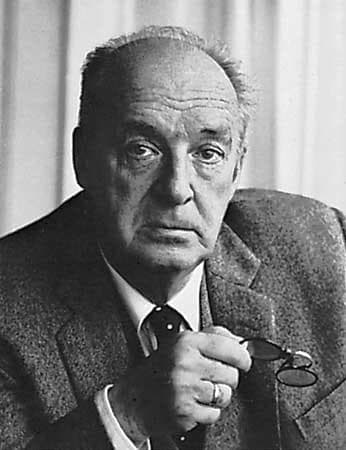
Vladimir Vladimirovich Nabokov, also known by the pen name Vladimir Sirin, was an expatriate Russian and Russian-American novelist, poet, translator, and entomologist. Born in Imperial Russia in 1899, Nabokov wrote his first nine novels in Russian (1926–1938) while living in Berlin, where he met his wife. He achieved international acclaim and prominence after moving to the United States, where he began writing in English. Nabokov became an American citizen in 1945 and lived mostly on the East Coast before returning to Europe in 1961, where he settled in Montreux, Switzerland.
Similar books
- Mary
Vladimir Nabokov
3.7 (5k) average on GoodreadsLiterary FictionEarly Nabokov work featuring Russian émigrés and themes of memory and lost love.
- Laughter in the Dark
Vladimir Nabokov
4.0 (13k) average on GoodreadsLiterary FictionExplores the downfall of a foolish protagonist, driven by obsession and poor judgment.
- A Hero of Our Time
Mikhail Lermontov
4.1 (48k) average on GoodreadsLiterary FictionFeatures a disillusioned, romantic anti-hero on a journey, grappling with existential questions.
- The Great Gatsby
F. Scott Fitzgerald
3.9 (3.8M) average on GoodreadsHistorical FictionBoth novels feature characters driven by an idealized vision. However, Gatsby's 'green light' is firmly rooted in a past love and material wealth, representing a tangible, if ultimately unattainable, American Dream. Martin's 'Zoorland' is far more abstract, a philosophical yearning for a perfect, untainted existence that transcends material or romantic aspirations, making his pursuit more existential.
- The Old Man and the Sea
Ernest Hemingway
3.8 (831k) average on GoodreadsLiterary FictionA Cuban fisherman's long struggle with a giant marlin becomes a story of endurance and dignity, now retold for young adults with illustrations, phonetic guides, and writing prompts in Traditional Chinese.
- One Hundred Years of Solitude
Gabriel García Márquez
4.1 (753k) average on GoodreadsLiterary FictionThrough the multi-generational story of the Buendía family, a mythical town deals with the repeating patterns of time, love, and solitude, as the extraordinary mixes with the ordinary.






Enjoyed the summary?
A summary gives you the shape of the book. The book itself has the detail, the examples and the voice.
Find Glory on AmazonAs an Amazon Associate, BookBrief earns from qualifying purchases. How we're funded