

Synopsis
Covers the whole plot, including the ending.
- Difficulty
- Medium
- Pacing
- Slow
- Mood
- Nostalgic, Melancholic, Reflective, Poetic
- Read it if
- You enjoy introspective literary fiction, stories of first love and nostalgia, or are interested in Nabokov's early works.
- Skip it if
- You prefer fast-paced plots, clear-cut resolutions, or dislike stories heavily reliant on memory and internal monologue.
Mary Plot Summary
Covers the whole plot, including the ending.
The Berlin Boarding House
Lev Ganin, a young Russian émigré, lives in a rundown Berlin boarding house with other exiles, including the old poet Podtyagin, the dancer Lyudmila Rubanski, and the rude Alfyorov. Ganin feels stuck and unhappy with his life, which consists of short romances and no clear goal. He just ended an affair with Klara, another resident, and spends his days thinking, often watching his neighbors' routines. The atmosphere is one of shared sadness for a lost Russia, mixed with the worries and small arguments of their confined lives in a foreign country.
Alfyorov's Revelation
Ganin learns from Alfyorov, a particularly annoying boarder, that Alfyorov's wife, Mary, will arrive from Russia in a few days. Alfyorov, not knowing Ganin's past, constantly brags about Mary, showing Ganin a photo of her. Ganin first thinks it's a coincidence, but a growing sense of familiarity and Alfyorov's detailed description of Mary make Ganin realize something. He is shocked to understand that this 'Mary' is his first and most cherished love from his youth in Russia.
Memories of Youth
After this discovery, Ganin is lost in vivid memories, reliving his time with Mary in the sunny, perfect setting of pre-revolutionary Russia. He remembers their first meeting, their secret meetings in the woods, their shared innocent joys, and their strong emotional bond. These memories are filled with nostalgia and longing, a stark contrast to his dull Berlin life. The memories are so powerful they feel more real than his present, bringing back old feelings of love and passion.
The Affair with Mary
Ganin's memories go deeper into his affair with Mary. He remembers their passionate moments, their letters, and their promises. He recalls the feeling of endless possibility and the purity of their emotions. However, he also remembers what caused their separation – the coming war, his enlistment, and losing touch. These memories are tinged with a sad understanding of how youth and circumstances pulled them apart, leaving a lasting mark on his heart.
Podtyagin's Illness and Departure
While Ganin is lost in thought, life in the boarding house goes on. The old poet Podtyagin, weak and getting sicker, prepares for his long-awaited trip to Paris, hoping for a new start and inspiration. His departure brings both hope and worry to the other residents. Ganin feels a quiet sympathy for the old man, seeing the shared longing for a lost past and a better future that many émigrés feel. Podtyagin's trip is a subtle contrast to Ganin's own inner journey.
Klara's Persistence
Klara, still in love with Ganin despite their recent breakup, tries to talk to him and restart their romance. She visits his room, tries to get him to talk, and shows her affection. However, Ganin, focused on his memories of Mary and her arrival, remains distant. His mind is entirely on his past love, making him ignore Klara's attempts and her feelings for him. His detachment causes Klara much pain, showing his self-centeredness.
The Plan to Intercept Mary
Driven by his renewed love and the strong desire to reclaim his past, Ganin makes a bold plan. He intends to meet Mary at the train station when she arrives, before Alfyorov can. He believes that if he sees her first, he can convince her to leave Alfyorov and start their life together. This plan becomes his only focus, consuming his thoughts and actions, and giving his previously aimless life a new sense of purpose. He carefully plans the timing and details of his secret meeting.
Deceiving Alfyorov
To carry out his plan, Ganin needs to make sure Alfyorov is not at the train station when Mary arrives. He cleverly tricks Alfyorov, subtly changing the time on Alfyorov's alarm clock and encouraging him to drink a lot. Ganin's actions are driven by his strong desire to reunite with Mary, even if it means betraying his unsuspecting neighbor. This deception shows Ganin's desperation and his willingness to ignore ethics to achieve his romantic ideal.
The Night of Anticipation
The night before Mary's arrival is a time of intense waiting for Ganin. He lies awake, unable to sleep, his mind full of images of Mary, both from his memories and his imagined future with her. The thought of seeing her again, of perhaps recapturing their first love, fills him with almost unbearable excitement and longing. He carefully imagines their reunion, picturing every detail of their meeting and the words they will say, solidifying his romantic ideal of her.
The Journey to the Station
Ganin leaves for the train station in the early morning, his heart beating with hope and fear. As he travels through the waking city, the harsh reality of Berlin's streets and the grey light of dawn begin to slowly chip away at the idealized image of Mary he has built in his mind. The physical journey reflects an inner change, as the perfect Mary of his memories begins to clash with the possible reality of a woman who has lived a separate life, married another man, and faced the difficulties of revolution.
A Change of Heart
As Ganin nears the train station, he has a sudden realization. He understands that the Mary he has so clearly brought back in his memories is an idealized version, a ghost of his youth, not the real woman who will step off the train. He recognizes that meeting her now would spoil the perfection of his memories and that the past cannot truly be brought back. He decides, with a deep, sad acceptance, not to meet her. He turns away from the station, leaving his idealized first love forever in his memory.
Departure from Berlin
After making his decision, Ganin returns to the boarding house, packs his bags, and quietly leaves. He leaves behind the dreary Berlin pension, the unappealing Alfyorov, and the lingering presence of his past love. His departure marks a break from his stagnant life and a readiness to move forward, free from the illusions of youth or the weight of nostalgia. He leaves with a sense of freedom, having come to terms with his past and chosen to embrace an uncertain but perhaps more real future, leaving Mary to her new life without ever seeing her again.
Principal Figures
Lev Ganin
Protagonist
A young, restless Russian émigré haunted by his first love.
Ganin is a young Russian officer living in exile in a Berlin boarding house. He is characterized by a deep sense of nostalgia for his pre-revolutionary past and a feeling of aimlessness in his present. He is intelligent, observant, and prone to introspection, often lost in his own thoughts and memories. While capable of charm, he can also be manipulative, as seen in his deception of Alfyorov. He seeks meaning and connection, but often finds himself detached from his immediate surroundings and relationships.
Relationships: Mary (His idealized first love from youth.); Alfyorov (His neighbor and Mary's husband, whom he despises and deceives.); Klara (A young woman he has recently ended an affair with, who still loves him.); Podtyagin (An elderly poet in the boarding house, for whom Ganin feels a quiet sympathy.)
Mary
Central Figure (primarily in memory)
Ganin's idealized first love from his Russian youth.
Mary is primarily experienced through Ganin's vivid and nostalgic memories. She represents the innocence, beauty, and purity of his youth in pre-revolutionary Russia. In Ganin's recollections, she is enchanting, passionate, and the embodiment of first love. The actual Mary, Alfyorov's wife, remains an unseen figure for the majority of the novel, existing as a projection of Ganin's romantic ideal rather than a fully developed character in the present narrative. Her true nature in the present is left ambiguous.
Relationships: Lev Ganin (Her first love, from whom she was separated.); Alfyorov (Her current husband.)
Alfyorov
Antagonist/Foil
Ganin's boorish neighbor and Mary's unsuspecting husband.
Alfyorov is a self-important, garrulous, and somewhat pathetic Russian émigré. He is oblivious to Ganin's past connection to Mary and constantly boasts about his wife, making him an irritating presence for Ganin and other residents. He represents the mundane, unromantic reality that Ganin wishes to escape. His lack of sensitivity and his pompous demeanor make him an easy target for Ganin's deception, serving as a stark contrast to Ganin's more refined and introspective nature.
Relationships: Lev Ganin (His neighbor, whom he unknowingly frustrates and is deceived by.); Mary (His wife, whom he expects to arrive.)
Klara
Supporting
A young woman in love with Ganin, recently spurned.
Klara is another resident of the boarding house, a young woman who has recently had an affair with Ganin. She is still deeply in love with him and struggles with his emotional detachment and ultimate rejection. She represents the immediate, tangible present that Ganin largely ignores in favor of his memories. Her vulnerability and genuine affection highlight Ganin's self-absorption and his focus on an idealized past.
Relationships: Lev Ganin (Her former lover, whom she still loves deeply.)
Podtyagin
Supporting
An elderly, ailing Russian poet living in the boarding house.
Podtyagin is an elderly Russian poet who, despite his failing health, holds onto the dream of traveling to Paris. He embodies the lingering hopes and quiet despair of many émigrés, clinging to a romanticized vision of the future or a lost past. His impending journey serves as a poignant reminder of the transient nature of life and the unfulfilled aspirations that characterize the exile experience. Ganin feels a quiet kinship with him, recognizing a shared melancholic spirit.
Relationships: Lev Ganin (A fellow resident for whom Ganin feels a quiet empathy.)
Lyudmila Rubanski
Supporting
A dancer in the boarding house, a figure of fleeting desire.
Lyudmila Rubanski is a dancer who lives in the boarding house. She is a figure of fleeting attraction for Ganin, representing the superficial and transient nature of his current romantic entanglements before Mary's memory reasserts itself. She is lively and somewhat flirtatious, adding to the ensemble of émigré characters but without deep personal connection to Ganin's central conflict.
Relationships: Lev Ganin (A fellow resident for whom Ganin feels a passing attraction.)
Antonina Gornotsvetov
Supporting
The strict, observant landlady of the boarding house.
Antonina Gornotsvetov is the landlady of the Berlin boarding house. She is a stern and observant figure, managing the diverse group of Russian émigrés under her roof. She represents the practical, mundane aspects of their exile, often concerned with rules and appearances. Her presence provides a grounding, if somewhat oppressive, backdrop to the residents' internal and external dramas.
Relationships: Lev Ganin (Her tenant, whom she observes.)
Themes & Insights
Nostalgia and the Idealized Past
The novel is full of nostalgia, especially Ganin's longing for his youth in pre-revolutionary Russia and his first love, Mary. His memories are vivid, sensory, and very romanticized, serving as an escape from the dull reality of his Berlin exile. Nabokov explores how memory can selectively improve the past, creating an ideal that the present can never match. Ganin's entire reason for wanting to meet Mary is fueled by this idealized memory, which ultimately proves to be untouchable and better left alone. The contrast between the vibrant past and the dull present is always there.
“He remembered his past as a man remembers a tune, the words of which he has forgotten, and which he can only hum, with the tune itself becoming distorted in the process.”
The Elusiveness of Reality
Nabokov explores how reality is subjective, especially how memory and desire can shape what we see. For Ganin, the 'real' Mary exists more strongly in his mind than the physical woman arriving on the train. The novel suggests that the idealized past is often more powerful and satisfying than any possible present meeting. Ganin's decision not to meet Mary shows that some illusions, once broken by reality, can never be restored. The physical world of the Berlin boarding house often feels less real to Ganin than his internal world of memories.
“He understood that his love for Mary was at an end. It had ended there, with the ghostly Mary of his imagination, at the moment he recognized her face in Alfyorov's photograph.”
Exile and Disillusionment
The novel shows the lives of Russian émigrés in Berlin, highlighting their shared sense of loss, displacement, and unhappiness. The boarding house is a small example of this experience, filled with people holding onto parts of their past or to fragile hopes for the future. Ganin's initial aimlessness and his unhappiness with his present life are signs of this larger theme. The émigrés are caught between a lost homeland and an unfulfilling present, their identities often defined by what they have left behind. Their interactions are tinged with a collective sadness and a yearning for what was.
“All of them were exiles, forever separated from their native land, and their lives were like a prolonged, anxious dream.”
The Nature of First Love
Mary looks at the deep and lasting impact of first love. Ganin's romance with Mary is shown as pure, intense, and important in shaping his understanding of love and beauty. It represents a time of innocence and endless possibility. The novel suggests that while first love may not always last in its original form, its memory can become a powerful and almost sacred point of reference throughout one's life. Ganin's final decision to keep the memory rather than face the reality speaks to the unique and often untouchable quality of first romantic experiences.
“He loved her with that pure, boundless, and somewhat absurd love that only first love can be.”
Plot Devices & Literary Techniques
Flashback/Memory
Ganin's extensive and vivid recollections of his past with Mary.
The novel heavily relies on Ganin's extended flashbacks and detailed memories of his first love with Mary. These memories are triggered by the revelation that Alfyorov's wife is Mary, and they form the emotional core of the narrative. The flashbacks are not linear but rather a stream of consciousness, imbued with sensory details and emotional intensity, allowing the reader to experience Ganin's idealized past as vividly as he does. This device creates a strong contrast between the vibrant past and the dull present, highlighting the power of nostalgia and memory to shape perception and motivation.
Foil Characters
Characters who contrast with Ganin to highlight his traits and themes.
Alfyorov serves as a primary foil to Ganin. Alfyorov's boorishness, self-importance, and obliviousness contrast sharply with Ganin's introspection, sensitivity, and cunning. This contrast highlights Ganin's internal world and his romantic idealization of Mary. Klara also acts as a foil, representing immediate, unidealized affection that Ganin disregards, further emphasizing his focus on the distant, perfect Mary. These contrasts allow Nabokov to explore Ganin's character and the central themes of the novel more effectively.
Symbolism of the Train Station
The train station as a place of transition, choice, and confrontation with reality.
The train station is a pivotal symbolic location in the novel. It represents a threshold between past and future, between memory and reality. It is the place where Ganin intends to reclaim his past with Mary, but it ultimately becomes the site of his profound realization and his decision to let go. The arrival of the train symbolizes the inevitable confrontation with a changed reality, forcing Ganin to choose between preserving an idealized memory and attempting to revive a past that no longer exists. His turning away from the station marks his acceptance of this truth and his movement towards a new beginning.
Dramatic Irony
The audience knows Ganin's connection to Mary, while Alfyorov remains oblivious.
Dramatic irony is a key element, particularly concerning Alfyorov. The reader is aware of Ganin's intense personal connection to Mary and his burgeoning plan, while Alfyorov remains completely oblivious, continuing to boast about his wife to Ganin. This creates tension and adds a layer of pathos and humor to Alfyorov's character, as his innocent pronouncements inadvertently fuel Ganin's scheme. The irony heightens the sense of Ganin's internal struggle and the emotional stakes of his deception.
Mary Quotes
“The only thing worse than a man you don't love is a man you do love who is a coward.”
“He knew that the past was not dead, but merely sleeping.”
“The world was a mere reflection of his own inner chaos.”
“There are people who, for no apparent reason, make you feel terribly alone.”
“He had always been a connoisseur of farewells.”
“Memory, of course, is a great artist.”
“The present moment was always escaping him, dissolving into the past before he could grasp it.”
“One could not love without a certain amount of self-deception.”
“Life's deepest meaning, he often thought, lay in its impermanence.”
“The greatest joy lay in anticipation, not in fulfillment.”
“He felt a terrible tenderness for his past, as if it were a child he had abandoned.”
“It was impossible to be genuinely sad about something that had never truly existed.”
“The world was full of mirrors, reflecting back only what he wished to see.”
Quiz
10 questions on the plot and the characters. Each answer comes with a short explanation.
Question 1
What is the name of the protagonist who relives his first love affair in the Berlin rooming house?
- Alexey Ivanovich
- Lev Ganin
- Anton Sergeyevich
- Ivan Borisovich
Show answer
B. Lev Ganin The protagonist of 'Mary' is Lev Ganin, a young officer living in a Berlin rooming house.
Question 2
In what city does the main action of the novel take place, where Ganin resides in a rooming house?
- Paris
- London
- Berlin
- Prague
Show answer
C. Berlin Lev Ganin lives in a rooming house in Berlin, where he encounters other Russian émigrés.
Question 3
Who is the 'decidedly unappealing boarder' living next to Ganin, whom he discovers is Mary's husband?
- Podtyagin
- Alfyorov
- Klara
- Kolya
Show answer
B. Alfyorov Ganin discovers that Alfyorov, the unappealing boarder in the next room, is Mary's husband.
Question 4
What is the primary literary device Nabokov uses to convey Ganin's memories of Mary and pre-revolutionary Russia?
- Prophecy
- Flashbacks
- Allegory
- Satire
Show answer
B. Flashbacks Ganin 'relives his first love affair' through detailed memories and flashbacks, contrasting with his present reality.
Question 5
What historical event is mentioned as having separated Mary from her husband and contributed to the émigré community in Berlin?
- World War I
- The Russian Revolution
- The Crimean War
- The Napoleonic Wars
Show answer
B. The Russian Revolution Mary's husband is 'temporarily separated from her by the Revolution', indicating the significant impact of the Russian Revolution on the characters' lives.
Question 6
What is the central theme explored through Ganin's recollection of Mary, contrasting with his present circumstances?
- The pursuit of wealth
- The disillusionment of political activism
- Nostalgia and the idealized past versus harsh reality
- The importance of social status
Show answer
C. Nostalgia and the idealized past versus harsh reality The novel highlights 'nostalgia' for Ganin's first love and the 'idyllic ambience of pre-revolutionary Russia' in 'stark contrast' to his unappealing present.
Question 7
What is Ganin's ultimate decision regarding his plan to meet Mary at the train station?
- He goes to the station and confronts Alfyorov.
- He decides not to go to the station, letting her reunion with Alfyorov proceed.
- He sends a letter to Mary, warning her about Alfyorov.
- He leaves Berlin before Mary arrives.
Show answer
B. He decides not to go to the station, letting her reunion with Alfyorov proceed. In a pivotal moment, Ganin decides not to meet Mary at the train station, choosing to preserve his idealized memories rather than confront the reality of their reunion.
Question 8
How does Ganin manipulate Alfyorov to ensure he can't meet Mary at the train station?
- He steals Alfyorov's train ticket.
- He gets Alfyorov drunk and ensures he misses the train.
- He locks Alfyorov in his room.
- He convinces the landlady to delay Alfyorov.
Show answer
B. He gets Alfyorov drunk and ensures he misses the train. Ganin gets Alfyorov drunk on the night before Mary's arrival, ensuring that Alfyorov oversleeps and misses his opportunity to meet her at the station.
Question 9
What does Ganin realize about his feelings for Mary by the end of the novel, particularly concerning his idealized memories?
- He still loves her passionately and wants to reunite.
- He understands that his love was for an idealized past, not the present person.
- He feels indifferent towards her, having moved on completely.
- He resents her for marrying Alfyorov.
Show answer
B. He understands that his love was for an idealized past, not the present person. Ganin's decision not to meet Mary signifies his realization that his love was for the 'Mary' of his youth and memories, an ideal that the real, present Mary could not live up to, especially as Alfyorov's wife.
Question 10
Besides Ganin and Alfyorov, what other character in the rooming house is a fellow Russian émigré who shares Ganin's longing for Russia and dies during the novel?
- Klara
- Lydia
- Podtyagin
- Anton
Show answer
C. Podtyagin Podtyagin is an elderly Russian poet and émigré in the rooming house who yearns to return to Russia and eventually dies, representing another aspect of the émigré experience.
Mary FAQ
What is the central premise of 'Mary'?
The novel centers on Lev Ganin, a Russian émigré in a Berlin boarding house, who discovers that his first love, Mary, is the wife of his fellow boarder, Alfyorov. Ganin spends a week reliving his idyllic past romance with Mary, while simultaneously plotting to intercept her before she reunites with her husband.
Who is Lev Ganin and what is his emotional state at the beginning of the novel?
Lev Ganin is a young, vigorous Russian officer living in exile in Berlin. He feels a sense of stagnation and ennui, marked by a recent breakup with Lyudmila and a general aimlessness, which makes him particularly susceptible to nostalgic reverie once Mary's identity is revealed.
Describe the character of Alfyorov and his relationship with Ganin.
Alfyorov is a rather pathetic and unappealing fellow boarder, described as plump and dull, who frequently boasts about his wife, Mary, whom he expects to arrive from Russia. Ganin initially tolerates him but develops disdain and a sense of rivalry upon realizing Alfyorov is married to his beloved Mary.
What role do the other Russian émigrés in the boarding house play?
The other émigrés, such as Podtyagin, Kolin, and Lyudmila, provide a backdrop of shared exile and nostalgia, often engaging in trivial conversations or expressing their own longing for Russia. They highlight the communal yet isolated existence of the displaced Russians and offer minor interactions that punctuate Ganin's internal journey.
How does Ganin spend the week leading up to Mary's expected arrival?
Ganin spends the week intensely reliving his past romance with Mary through vivid memories, triggered by the knowledge that she is arriving. He meticulously reconstructs their youthful encounters in pre-revolutionary Russia, contrasting them with his present reality and the grim prospect of her reunion with Alfyorov.
Is Mary ever physically present in the novel?
No, Mary is never physically present in the novel. She exists solely as a construct of Ganin's memory and imagination, a figure of idealized first love. The entire narrative builds towards her arrival, but Ganin ultimately decides not to meet her.
What is the significance of the train station in the climax?
The train station is the physical setting for Ganin's ultimate decision. It represents the point of intersection between his idealized past and the harsh reality of the present. By choosing not to meet Mary there, he symbolically preserves his memory of her untainted by potential disappointment or the reality of her marriage to Alfyorov.
Are there any subtle indications that Ganin's memory of Mary might be idealized or unreliable?
While Ganin's memories are presented as vivid and fresh, the very intensity and perfection he attributes to Mary, especially in contrast to his current life, suggest an element of idealization. The fact that she is married to Alfyorov, a man Ganin despises, also hints at a reality that might not align with his romanticized vision.
What is the implied fate of Alfyorov after Ganin's departure?
Alfyorov is left completely unaware of Ganin's plot and subsequent departure, presumably waiting at the train station for Mary's arrival, which Ganin has ensured will not happen as planned for Alfyorov. His fate is one of continued ignorance and likely disappointment, as Mary will arrive to find him absent and Ganin gone.
How does Ganin's nostalgia for Mary relate to his longing for pre-revolutionary Russia?
Ganin's love for Mary is deeply intertwined with his nostalgia for pre-revolutionary Russia, representing a lost innocence, beauty, and a world that no longer exists. She embodies the idyllic past he can never reclaim, making his yearning for her a metaphor for his longing for his lost homeland and youth.
Discuss the psychological impact of exile on Ganin and other characters.
Exile creates a profound sense of displacement and longing for the past among the characters. For Ganin, it intensifies his nostalgic retreat into memories as a coping mechanism, while for others like Podtyagin, it manifests as a quiet resignation or a desperate clinging to trivial routines, highlighting the psychological toll of their lost world.
What does Ganin's decision not to meet Mary reveal about his character?
Ganin's decision reveals a profound desire to preserve the purity of his idealized memory over confronting a potentially disappointing reality. It shows a certain romantic idealism, perhaps also a fear of tarnishing his perfect past, and a realization that true happiness lies not in revisiting the past but in moving forward, albeit to an uncertain future.
How does the novel explore the theme of memory versus reality?
'Mary' constantly juxtaposes Ganin's vivid, idealized memories with the mundane, often bleak reality of his émigré life. The entire narrative is a testament to the power of memory to shape perception, and the ultimate climax demonstrates his choice to prioritize the 'reality' of his memory over the potentially disappointing truth of a physical reunion.
Is Ganin's final act an act of selfishness or self-preservation?
This is debatable. It can be seen as selfish because he manipulates Alfyorov and leaves Mary in an uncertain situation. However, it can also be interpreted as self-preservation, as he protects his own emotional well-being and the integrity of his cherished memories from a potentially disillusioning encounter, choosing to move towards a new future.
What is the significance of Ganin leaving Berlin at the end of the novel?
Ganin's departure from Berlin signifies his symbolic break from the past and the confines of his nostalgic reverie. By leaving the city and Mary behind, he is choosing to embark on a new, unwritten future, suggesting a maturity and a willingness to move beyond the limitations of his idealized memories.
Could Mary have been a different person in reality than Ganin remembers?
Absolutely. Ganin's memories are filtered through the lens of first love and nostalgia, making Mary an almost mythical figure. It is highly probable that the real Mary, now married to Alfyorov and having lived through the Revolution, would be a different, more complex person than the idealized girl in Ganin's mind, which is precisely why he avoids meeting her.
How does the ending of 'Mary' reflect Nabokov's broader literary themes?
The ending, with its emphasis on memory, illusion, and the artist's ability to shape reality, strongly reflects Nabokov's recurring themes. It highlights the subjective nature of perception, the power of nostalgia, and the idea that an imagined past can be more compelling and 'real' than a mundane present, a concept explored in many of his later works.
Is 'Mary' a purely romantic novel, or does it contain elements of critique?
While it has strong romantic elements through Ganin's nostalgia, 'Mary' is not purely romantic. It subtly critiques the dangers of living solely in the past and the potential for idealization to blind one to reality. The portrayal of the émigré community also offers a poignant, sometimes satirical, look at their displaced existence, adding layers beyond simple romance.
About the author
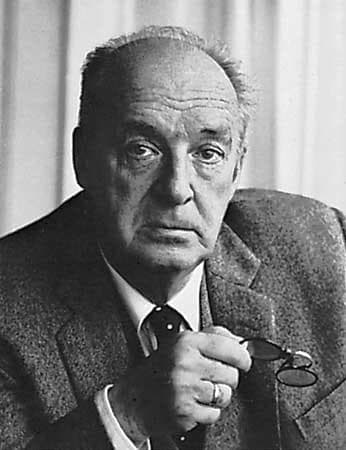
Vladimir Vladimirovich Nabokov, also known by the pen name Vladimir Sirin, was an expatriate Russian and Russian-American novelist, poet, translator, and entomologist. Born in Imperial Russia in 1899, Nabokov wrote his first nine novels in Russian (1926–1938) while living in Berlin, where he met his wife. He achieved international acclaim and prominence after moving to the United States, where he began writing in English. Nabokov became an American citizen in 1945 and lived mostly on the East Coast before returning to Europe in 1961, where he settled in Montreux, Switzerland.
Similar books
- A High Wind in Jamaica
Richard Hughes
3.8 (9k) average on GoodreadsChildren'sExplores the loss of childhood innocence and the subjective nature of memory.
- The Master And Margarita
Mikhail Bulgakov
4.3 (243k) average on GoodreadsFantasyFeatures Russian émigré life and a blend of realism with fantastical elements, though 'Mary' is more grounded.
- The Old Man and the Sea
Ernest Hemingway
3.8 (831k) average on GoodreadsLiterary FictionA Cuban fisherman's long struggle with a giant marlin becomes a story of endurance and dignity, now retold for young adults with illustrations, phonetic guides, and writing prompts in Traditional Chinese.
- One Hundred Years of Solitude
Gabriel García Márquez
4.1 (753k) average on GoodreadsLiterary FictionThrough the multi-generational story of the Buendía family, a mythical town deals with the repeating patterns of time, love, and solitude, as the extraordinary mixes with the ordinary.
- The Goldfinch
Donna Tartt
3.9 (720k) average on GoodreadsLiterary FictionHaunted by a tragic explosion and clutching a stolen Dutch masterpiece, a young orphan navigates the opulent drawing rooms of New York and the gritty underbelly of the art world, desperately seeking connection and redemption amidst a life spiraling into crime and obsession.
- Little Fires Everywhere
Celeste Ng
4.1 (713k) average on GoodreadsLiterary FictionIn Shaker Heights, an artist and her daughter move in, and their free-spirited lives clash with a rule-bound matriarch, revealing hidden conflicts beneath a perfect surface.






Enjoyed the summary?
A summary gives you the shape of the book. The book itself has the detail, the examples and the voice.
Find Mary on AmazonAs an Amazon Associate, BookBrief earns from qualifying purchases. How we're funded