

Synopsis
Covers the whole plot, including the ending.
- Difficulty
- Easy
- Pacing
- Moderate
- Mood
- Adventurous, Historical, Exciting, Perilous
- Read it if
- You enjoy true stories of adventure, wartime experiences, and the unique voice of Roald Dahl. Perfect for those interested in historical memoirs with a touch of the extraordinary.
- Skip it if
- You prefer pure fiction, dislike detailed accounts of war, or are looking for a lighthearted story without significant danger or hardship.
Going Solo Plot Summary
Covers the whole plot, including the ending.
Journey to Tanganyika and Shell Oil
After school, Roald Dahl, at twenty-two, takes a job with Shell Oil Company in East Africa. He sails from England. In Dar es Salaam, Tanganyika (now Tanzania), he is sent to a remote region to distribute Shell products. His job involves long travels across the African bush, meeting local tribes, and managing oil distribution. He is one of few white Europeans in his isolated posts and adapts to colonial life, including encounters with wildlife and the wilderness. He describes his first impressions of the continent and its people.
Encounters with Wildlife and Local Culture
During his time with Shell, Dahl recounts several memorable and often dangerous encounters. He describes a black mamba snake entering a house, leading to a frantic effort to kill it. He also details a close call with a lioness that tries to drag away a house servant, which he confronts. Beyond wildlife, Dahl observes and interacts with various local tribes, learning about their customs. He describes the differences between European and African cultures, often with respect for the local people's endurance and traditions, while acknowledging the colonial context.
The Outbreak of World War II in Africa
Life in Tanganyika changes dramatically with the start of World War II. News reaches the isolated European community, and British colonial authorities prepare for conflict, especially with German presence nearby. Dahl, with other British civilians, rounds up German nationals living in Tanganyika and takes them to internment camps. This task is done with duty and discomfort, as many Germans were long-time residents and neighbors. The war changes Dahl's role from oil distributor to a participant in the war's initial, local efforts.
Joining the Royal Air Force
Wanting to contribute more to the war, Roald Dahl leaves his job with Shell Oil and joins the Royal Air Force. He travels to Nairobi, Kenya, to enlist. His training involves basic instruction and medical exams. He describes the friendship among recruits and the anticipation of what is ahead. This decision marks a big change, moving him from colonial administration to aerial combat. He wants to be a fighter pilot, driven by patriotism and a desire for adventure.
Flight Training in Kenya and Iraq
Dahl's flight training begins in Nairobi, where he learns to fly Tiger Moths. He recounts the challenges of learning, the strict instructors, and the thrill of flying. After initial training, he goes to Iraq for advanced instruction, flying more powerful aircraft. He describes the basic conditions of the desert airfields, the heat, and the constant threat of accidents during training. Several trainees die in crashes, showing the dangers of learning to fly combat aircraft. Dahl continues, developing the skills to be a fighter pilot.
First Operational Flight and Crash Landing
After training, Dahl is assigned to a Hurricane squadron in Libya, part of the Desert Air Force. His first operational flight is to fly his Hurricane from Egypt to his squadron's base in Libya. However, due to incorrect coordinates from his commanding officer, he gets lost as night falls and runs out of fuel over the Western Desert. Trying an emergency landing in the dark, his plane crashes, causing severe head injuries, a smashed nose, and temporary blindness. Fellow RAF personnel rescue him and take him to a makeshift hospital, where he begins a long and painful recovery, barely surviving.
Recovery and Return to Duty
After his crash, Roald Dahl gets medical treatment and slowly recovers. He spends time in military hospitals, including one in Alexandria, Egypt, for his severe injuries, especially to his head and face. Recovery is painful, but he wants to return to flying. Despite lasting physical scars and trauma, he convinces the medical board he is fit for duty. His endurance allows him to rejoin a Hurricane squadron, ready for combat.
The Battle of Athens and First Victories
Dahl is assigned to 80 Squadron, defending Greece against German forces. He fights in aerial battles over Athens. During these dogfights, he experiences the chaos and terror of combat. He recounts shooting down his first enemy aircraft, a German Junkers Ju 88, a moment that is both exciting and serious. He describes the skill and bravery of his fellow pilots, and the odds they faced against the Luftwaffe's numbers. His squadron suffers losses, but Dahl emerges as a capable fighter pilot.
Crete and the Retreat
As the German invasion of Greece grows, Dahl's squadron must evacuate to the island of Crete. But Crete soon comes under attack from German paratroopers and bombers. The RAF pilots, including Dahl, continue to fight despite being outnumbered, often flying many sorties a day from makeshift airfields. The situation becomes impossible, and the remaining RAF personnel are ordered to leave Crete. Dahl describes the chaotic retreat, leaving equipment and facing constant danger, as they barely escape the island, showing the desperate Allied defense.
Further Combat in the Middle East and Malaria
After retreating from Crete, Dahl's squadron moves to locations in the Middle East, including Palestine and Syria, where they continue combat against Vichy French forces and later German aircraft. He describes more aerial victories and the harsh conditions of desert warfare. However, the cumulative toll of combat, heat, and unsanitary conditions leads him to get severe malaria. The illness makes him too sick to fly, ending his active combat career as a fighter pilot. He is invalided out of active flying duty, finishing his direct part in the war's aerial battles.
Principal Figures
Roald Dahl
Protagonist
Young adventurer and wartime fighter pilot, navigating early adulthood and global conflict.
Roald Dahl is the author and central figure of 'Going Solo.' He begins as a young man seeking adventure, taking a job with Shell Oil in Tanganyika. He is observant, curious, and possesses a dry wit. His experiences in Africa, from encountering wildlife to managing oil distribution, shape his understanding of the world. With the outbreak of WWII, he transitions into a determined and courageous fighter pilot for the RAF, demonstrating resilience in the face of severe injury and intense combat. His narrative voice is engaging, often humorous, and unflinchingly honest about his fears and triumphs.
Relationships: His Mother (distant but loving; writes letters to her); Various Shell colleagues (professional acquaintances and fellow expatriates); Fellow RAF pilots (comrades-in-arms, sharing dangers and camaraderie)
Mdisho
Supporting
Dahl's African house servant in Tanganyika.
Mdisho is Roald Dahl's loyal and resourceful house servant during his time in Tanganyika. He is depicted as a brave and quick-thinking individual, particularly during the incident with the black mamba snake and the lioness attack. Mdisho serves as Dahl's link to the local culture and provides practical assistance in the challenging African environment. His presence highlights the colonial context of Dahl's early experiences and offers a glimpse into the daily lives and interactions between Europeans and Africans in that era. He is a steadfast and reliable presence in Dahl's isolated postings.
Relationships: Roald Dahl (employer-servant relationship, with an underlying mutual respect)
O.C. (Commanding Officer)
Supporting
Dahl's first commanding officer in the RAF, responsible for his near-fatal crash.
This unnamed Commanding Officer is significant for inadvertently causing Roald Dahl's severe crash during his first operational flight. He provides Dahl with incorrect coordinates for his destination in Libya, leading Dahl to run out of fuel and attempt a blind emergency landing in the desert. While his error is critical, he also represents the sometimes chaotic and unorganized aspects of early wartime logistics. He is a figure of authority whose mistake has profound consequences for Dahl's physical health and early combat experience.
Relationships: Roald Dahl (superior officer who makes a critical error affecting Dahl)
David Coke
Supporting
Fellow RAF pilot and friend.
David Coke is one of Roald Dahl's fellow fighter pilots in 80 Squadron. He is mentioned as a capable and brave pilot, sharing the dangers and camaraderie of aerial combat over Greece and Crete. He represents the many young men who fought alongside Dahl, facing overwhelming odds against the Luftwaffe. Dahl's descriptions of Coke contribute to the portrayal of the intense bonds formed between pilots in wartime, and the shared experiences of fear, loss, and moments of triumph in the air.
Relationships: Roald Dahl (fellow pilot, comrade-in-arms)
Pat Pattle
Supporting
Legendary South African RAF ace, Dahl's squadron mate.
Pat Pattle is introduced as a highly skilled and legendary South African fighter ace in Dahl's squadron. He is depicted as an exceptionally brave and effective pilot, responsible for an incredible number of enemy kills. Pattle embodies the heroism and tactical prowess of the Allied pilots, serving as an inspiration and a sobering reminder of the high stakes of aerial combat. His presence in the narrative underscores the elite nature of fighter pilots and the extraordinary feats of courage performed during the war, even as he ultimately meets a tragic end.
Relationships: Roald Dahl (squadron mate, highly respected by Dahl)
The Matron
Supporting
Head nurse at the military hospital where Dahl recovers from his crash.
The Matron is the stern but ultimately caring head nurse at the military hospital in Alexandria where Roald Dahl recovers from his severe crash injuries. She represents the medical personnel who cared for the wounded servicemen. Her strict demeanor is balanced by her dedication to her patients' well-being. She plays a crucial role in Dahl's recovery, overseeing his medical care and offering a degree of comfort and discipline during a very painful and uncertain period of his life.
Relationships: Roald Dahl (nurse-patient relationship, strict but caring)
The Doctor (Alexandria)
Supporting
Military doctor overseeing Dahl's recovery in Alexandria.
The Doctor in Alexandria is responsible for Roald Dahl's medical treatment following his crash. He is portrayed as attentive and professional, working to mend Dahl's severe head and facial injuries. His medical expertise is crucial in saving Dahl's life and facilitating his recovery, even though the process is long and painful. He represents the medical efforts on the front lines, dealing with the brutal consequences of aerial warfare and working to get pilots back in the air, if possible.
Relationships: Roald Dahl (doctor-patient relationship)
The German Pilots
Antagonist
The anonymous enemy in the sky, representing the threat of the Luftwaffe.
The German Pilots, primarily flying Junkers Ju 88s and Messerschmitts, are the anonymous antagonists in the skies. They represent the formidable and deadly opposition faced by the RAF during World War II. Dahl describes them as skilled and aggressive, making aerial combat a terrifying and dangerous endeavor. While individuals are not named, their presence is constant, embodying the direct threat to Dahl's life and the overall Allied war effort. They are the targets of Dahl's combat missions and the source of intense dogfights.
Relationships: Roald Dahl (combatants, enemies)
Themes & Insights
Adventure and the Call to Action
Adventure is central to Dahl's early life and choices. His move to Tanganyika is driven by a desire for experiences beyond the ordinary. This desire for adventure mixes with a sense of duty during wartime. When WWII starts, Dahl joins the RAF, seeing it as the ultimate adventure and a way to participate in a global event. This theme appears in his descriptions of African landscapes, wildlife, and the experience of flying a fighter plane in combat.
“And so, at the age of twenty-two, I was off to Africa, to the land of the black mamba and the lion and the rhino and the elephant, to the land of the great green mamba and the puff adder and the python, to the land of the wildebeest and the zebra and the giraffe.”
The Brutality and Absurdity of War
'Going Solo' portrays the realities of World War II, especially aerial combat. Dahl's story shows the injuries, the threat of death, and the loss of friends. His crash landing, severe injuries, and recovery show the physical and psychological toll of war. Beyond the violence, Dahl also touches on absurdities, like incorrect mission coordinates or chaotic retreats. The odds faced by the RAF in Greece and Crete show the desperate nature of some battles.
“In the air, there were no rules. There was only one thing: to kill or be killed. And it was a very lonely business.”
Resilience and Survival
Dahl's journey shows resilience. He survives a plane crash that leaves him badly injured and partly blind, yet he fights to recover and return to flying. This theme is also clear in the RAF squadrons, who fight against superior enemy forces with fewer resources. Dahl's ability to adapt to Africa's challenges, survive a crash, and then face combat pressure shows a capacity for endurance and a will to survive.
“I had been smashed up, but I was still alive. And I was going to fly again.”
Colonialism and Cultural Encounters
Dahl's time in Tanganyika gives a look at British colonialism in East Africa. He describes the isolated lives of European expatriates, their interactions with local people, and the attitudes of the time. His encounters with Mdisho, the black mamba, and the lion attack offer glimpses into cultural differences and the challenges of living in an unfamiliar land. While not overtly political, Dahl's observations show power dynamics and the impact of European presence on African society, often with a sense of wonder at the local people's ways of life.
“Life in the bush was a mixture of loneliness and excitement, of danger and beauty, of boredom and fascination.”
Plot Devices & Literary Techniques
First-Person Narrative
Provides an intimate, subjective account of the events from Dahl's perspective.
The entire book is narrated in the first person by Roald Dahl himself. This allows for an intimate and personal account of his experiences, thoughts, and emotions. It gives the reader direct access to his unique voice, observations, and dry humor, making the extraordinary events feel more immediate and authentic. The subjective nature of the narrative is crucial for understanding his motivations, fears, and the impact of the war on him personally, rather than as a detached historical record.
Vivid Anecdotes
Individual, detailed stories that illustrate broader themes and experiences.
Dahl structures much of his narrative around distinct, memorable anecdotes. Examples include the detailed recounting of the black mamba incident, the lion attack, his crash landing in the desert, and specific aerial dogfights. These standalone stories are rich in detail, character, and suspense, serving to illustrate the dangers, excitements, and realities of his life in Africa and during the war, making the narrative highly engaging and memorable. They are like mini-stories within the larger memoir.
Juxtaposition of Adventure and Danger
Contrasting thrilling experiences with life-threatening situations.
Dahl consistently juxtaposes the thrill and excitement of his adventures (e.g., exploring Africa, learning to fly) with the ever-present danger. The beauty of the African landscape is contrasted with venomous snakes and predatory animals. The exhilaration of flying a Hurricane is immediately followed by the terror of combat or a near-fatal crash. This device heightens the drama and tension, emphasizing the fine line between adventure and peril that defined much of Dahl's early adult life.
Understated Humor
A dry, often dark, wit used to describe serious or absurd situations.
Despite the serious and often grim subject matter, Dahl employs an understated, dry, and sometimes dark sense of humor. This humor often arises from his observations of human behavior, the absurdities of military bureaucracy, or his own predicaments. It serves to lighten the tone, make the narrative more engaging, and provide a coping mechanism for the harsh realities he describes. This characteristic wit is a hallmark of Dahl's writing style and makes even the most frightening moments palatable.
Going Solo Quotes
“A life is made up of a great number of small incidents and a small number of great ones.”
“I began to realize how simple life could be if one had a regular routine to follow with fixed hours, a fixed salary, and very little original thinking to do.”
“It is impossible to make your eyes twinkle if you are not feeling twinkly yourself.”
“The life of a writer is absolute hell compared with the life of a businessman.”
“A little nonsense now and then is relished by the wisest men.”
“It doesn't matter who you are or what you look like, so long as somebody loves you.”
“The more precarious the situation, the sweeter the success.”
“I had a passion for learning how to do things the right way.”
“Those who don't believe in magic will never find it.”
“The moment that you feel that, just possibly, you're walking down the street naked, exposing too much of your heart and your mind and what exists on the inside, showing too much of yourself. That's the moment you may be starting to get it right.”
“It's about how you pick yourself up after a fall and keep going.”
“The greatest secrets are always hidden in the most unlikely places.”
“I have a passion for teaching kids to become readers, to become comfortable with a book, not daunted. Books shouldn't be daunting, they should be funny, exciting and wonderful; and learning to be a reader gives a terrific advantage.”
“Love is a wonderful thing. You never have to take it out and dust it.”
Quiz
10 questions on the plot and the characters. Each answer comes with a short explanation.
Question 1
What was Roald Dahl's initial job in Africa before World War II began?
- A teacher at a local school
- A manager for the Shell Oil Company
- A journalist for a newspaper
- A wildlife conservationist
Show answer
B. A manager for the Shell Oil Company In 'Going Solo', Dahl describes working for the Shell Oil Company in East Africa, which was his first job after leaving school, before he joined the Royal Air Force.
Question 2
What incident in Africa involved a dangerous encounter with a wild animal?
- A lion attack while on safari
- A black mamba snake in his bathroom
- An elephant charging his vehicle
- A crocodile in a river
Show answer
B. A black mamba snake in his bathroom Dahl recounts a terrifying experience where he found a black mamba snake, one of the deadliest in the world, in his bathroom in Africa, highlighting the dangers of his time there.
Question 3
Why did Roald Dahl join the Royal Air Force?
- He was drafted by the government
- He wanted to escape his job in Africa
- He volunteered after World War II broke out
- He was inspired by a family tradition
Show answer
C. He volunteered after World War II broke out Dahl volunteered for the Royal Air Force when World War II began, driven by a sense of duty and adventure, as described in the book's narrative of his transition from Africa to wartime service.
Question 4
What was a major challenge Dahl faced during his pilot training?
- Learning to fly in bad weather conditions
- A crash landing in the desert
- Struggling with navigation skills
- Conflicts with his instructors
Show answer
B. A crash landing in the desert Dahl survived a serious crash landing in the Libyan Desert during a training flight, which left him injured and was a pivotal, frightening event in his early flying career.
Question 5
How does Dahl describe his experiences in the Battle of Athens?
- As a routine patrol mission
- As a chaotic and intense dogfight
- As a peaceful reconnaissance operation
- As a training exercise gone wrong
Show answer
B. As a chaotic and intense dogfight In 'Going Solo', Dahl vividly portrays the Battle of Athens as a chaotic and intense aerial dogfight against German forces, emphasizing the adrenaline and danger of combat.
Question 6
What theme is prominently explored through Dahl's interactions with locals in Africa?
- The simplicity of rural life
- Cultural misunderstandings and colonialism
- The importance of family bonds
- The joy of exploration
Show answer
B. Cultural misunderstandings and colonialism Dahl's narrative often reflects on cultural misunderstandings and the impacts of colonialism, as he navigates life in Africa under British rule, adding depth to his personal growth.
Question 7
Which character assisted Dahl after his crash landing in the desert?
- A fellow RAF pilot
- A Bedouin tribesman
- An Italian soldier
- A member of the Long Range Desert Group
Show answer
D. A member of the Long Range Desert Group After his crash, Dahl was rescued by a soldier from the Long Range Desert Group, a British military unit, who found him and helped him get medical attention, as detailed in the book.
Question 8
What does Dahl's time as a fighter pilot reveal about his personal traits?
- His fear of failure
- His resilience and adaptability
- His preference for solitude
- His lack of interest in technology
Show answer
B. His resilience and adaptability Through various challenges, such as crashes and combat, Dahl demonstrates remarkable resilience and adaptability, key traits that helped him survive and thrive as a pilot.
Question 9
In what way does 'Going Solo' connect to Dahl's later career as a writer?
- It provided direct material for his children's books
- It inspired his dark humor and storytelling style
- It led him to abandon writing altogether
- It focused solely on technical aviation details
Show answer
B. It inspired his dark humor and storytelling style The adventures and near-death experiences in 'Going Solo' contributed to Dahl's unique blend of dark humor and vivid storytelling, which later characterized his famous children's books and adult stories.
Question 10
What was a key difference between Dahl's expectations of war and the reality he faced?
- He expected more glory but found boredom
- He anticipated easy victories but encountered harsh struggles
- He thought it would be short but it lasted years
- He believed in strict discipline but found chaos
Show answer
B. He anticipated easy victories but encountered harsh struggles Dahl entered the war with romanticized ideas of adventure and easy triumphs, but the reality involved intense fear, injury, and the brutal challenges of aerial combat, as depicted in his candid recollections.
Going Solo FAQ
What is 'Going Solo' by Roald Dahl about?
'Going Solo' is the autobiographical sequel to 'Boy,' chronicling Roald Dahl's young adulthood from 1938 to 1941. It details his time working for the Shell Oil Company in East Africa, his enlistment in the Royal Air Force at the outbreak of World War II, and his harrowing experiences as a fighter pilot, including a near-fatal crash in the Libyan Desert and combat missions in Greece.
Why should I read 'Going Solo'?
Readers should dive into 'Going Solo' for its gripping, firsthand account of a literary legend's transformation from a young man seeking adventure into a wartime hero. Dahl's signature wit and vivid storytelling bring to life the absurdities of colonial Africa, the brutal realities of aerial combat, and the resilience of the human spirit, making it both an entertaining and profoundly moving memoir.
What is the background/setting of 'Going Solo'?
The memoir unfolds across two primary settings: the exotic, colonial landscapes of Tanganyika (now Tanzania) in East Africa, where Dahl works for Shell and encounters wildlife and local cultures, and the war-torn theaters of World War II, including training bases in Kenya, combat zones over Greece, and the vast, unforgiving Libyan Desert where he crashes.
What are the most memorable quotes from 'Going Solo'?
Notable quotes include Dahl's reflection on war: 'A fighter pilot in those days had to be able to shoot straight and fly straight and that was about all,' highlighting the grim simplicity of survival. Another is his description of the African landscape: 'The sky was a deep, deep blue and the sun was a fierce white ball,' capturing the vivid, almost surreal beauty he experienced.
What writing style does Roald Dahl use in 'Going Solo'?
Dahl employs his characteristic blend of dark humor, crisp prose, and vivid imagery, making even the most terrifying events—like his plane crash or dogfights—accessible and engaging. His tone is conversational yet poignant, often understating danger with wit, which amplifies the emotional impact of his wartime traumas and personal growth.
What minor details add significant meaning in 'Going Solo'?
Small details, such as Dahl meticulously describing the 'little black snakes' in Africa or the exact mechanics of his Gladiator biplane, ground the narrative in tangible reality. These specifics not only enhance authenticity but also symbolize the unpredictable dangers—both natural and man-made—that shaped his journey from innocence to experience.
What are some subtle foreshadowing moments in 'Going Solo'?
Early scenes, like Dahl's near-miss with a lion in Africa or his initial fascination with flying, subtly foreshadow the life-and-death stakes of his later wartime exploits. His casual mention of learning to shoot in Africa prefigures the combat skills he'll desperately need, while the isolation of the desert setting hints at the 'going solo' theme of self-reliance.
What unexpected character connections exist in 'Going Solo'?
Dahl forms unlikely bonds, such as with his servant, Mdisho, whose loyalty in Africa contrasts with the impersonal violence of war. Later, his brief but intense camaraderie with fellow pilots, many of whom perish, underscores the fragile human connections that sustained him amidst the chaos, highlighting themes of friendship and loss.
What are unspoken character motivations in 'Going Solo'?
Beneath Dahl's adventurous exterior lies a deep-seated desire to prove himself and escape the mundane, driven by the early loss of his father and the expectations of his era. His enlistment isn't just patriotic; it's a personal quest for identity and purpose, masked by his understated, often humorous narration.
What psychological complexities do characters exhibit in 'Going Solo'?
Dahl himself displays a complex mix of bravado and vulnerability, joking about dangers while grappling with fear and survivor's guilt after comrades die. Supporting characters, like the stoic ground crew or shell-shocked pilots, reveal the psychological toll of war, often conveyed through subtle actions rather than explicit dialogue.
What are the major emotional turning points in 'Going Solo'?
Key emotional shifts include Dahl's crash in the Libyan Desert, where he confronts mortality and isolation; his first combat mission, which shatters any romanticized view of war; and the loss of close friends, which deepens his sense of grief and resilience. These moments mark his transition from naive youth to hardened veteran.
How do relationship dynamics evolve in 'Going Solo'?
Relationships evolve from the hierarchical, colonial interactions in Africa to the egalitarian, life-dependent bonds among pilots in war. Dahl's connection with Mdisho starts as employer-servant but grows into mutual respect, while his wartime friendships are intense yet fleeting, reflecting the transient, high-stakes environment of combat.
Which parts of 'Going Solo' remain ambiguous or open-ended?
Dahl leaves some aspects ambiguous, such as the full emotional impact of his wartime trauma, which he often downplays with humor. The memoir ends with his return to England, but his future beyond the war—including his writing career—is only hinted at, leaving readers to ponder how these experiences shaped the beloved author he became.
What are controversial scenes or decisions in 'Going Solo'?
Some readers might find Dahl's depictions of colonial Africa, with its paternalistic attitudes toward locals, controversial by modern standards. Additionally, his matter-of-fact accounts of violence and death in war, while historically accurate, can be jarring, raising debates about the glorification versus reality of combat in memoirs.
'Going Solo' ending explained: how it ends & what it means
The memoir concludes with Dahl returning to England in 1941, injured and weary, but alive. This ending symbolizes both an end to his 'solo' adventures and a new beginning, as the experiences forge his resilience and perspective, subtly setting the stage for his future literary success. It underscores themes of survival and the indelible mark of war on a generation.
About the author
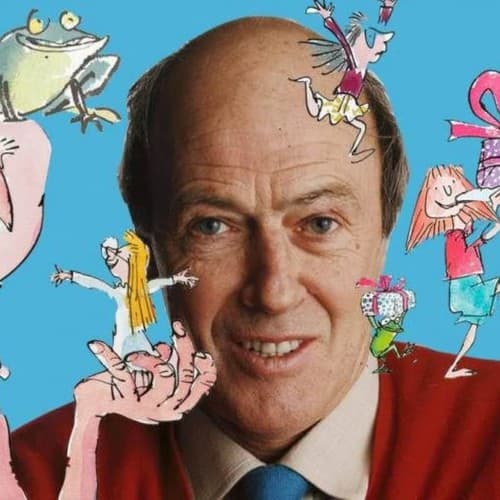
Roald Dahl was a British popular author of children's literature and short stories, a poet, and wartime fighter ace. His books have sold more than 300 million copies worldwide. Dahl has been called "one of the greatest storytellers for children of the 20th century".
Similar books
- The Diary of a Young Girl
Anne Frank
4.2 (2.7M) average on GoodreadsBiographyA personal account of wartime experiences, though from a vastly different perspective, offering historical insight.
- I Know Why the Caged Bird Sings
Maya Angelou
4.2 (409k) average on GoodreadsBiographyWhile both are autobiographical, Angelou's memoir delves deeply into themes of identity, racism, trauma, and psychological development through introspection and self-analysis. 'Going Solo' is more externally focused, chronicling adventures and wartime experiences, with less emphasis on internal emotional growth or the complexities of self-discovery, especially regarding romance.
- The Perks of Being a Wallflower
Stephen Chbosky
4.2 (1.3M) average on GoodreadsPsychologyThrough letters, a shy high school freshman learns to navigate first love, trauma, and self-discovery, stepping off the sidelines and into life.
- Eleanor Oliphant Is Completely Fine
Gail Honeyman
4.3 (708k) average on GoodreadsLiterary FictionA lonely woman's structured life changes when an IT guy and an elderly man help her learn to open her heart.
- One Flew Over the Cuckoo's Nest
Ken Kesey
4.2 (631k) average on GoodreadsPsychologyIn a mind-bending asylum, the boisterous Randle McMurphy wages a defiant war against the tyrannical Nurse Ratched, inspiring his fellow inmates, including the seemingly catatonic Chief Bromden, to reclaim their lost humanity.
- The Bell Jar
Sylvia Plath
4.0 (591k) average on GoodreadsPsychologyIn the suffocating grip of 1950s expectations, a brilliant young woman's descent into mental illness is painted with such vivid, internal clarity that her 'insanity' feels terrifyingly rational and inevitable.





Enjoyed the summary?
A summary gives you the shape of the book. The book itself has the detail, the examples and the voice.
Find Going Solo on AmazonAs an Amazon Associate, BookBrief earns from qualifying purchases. How we're funded