
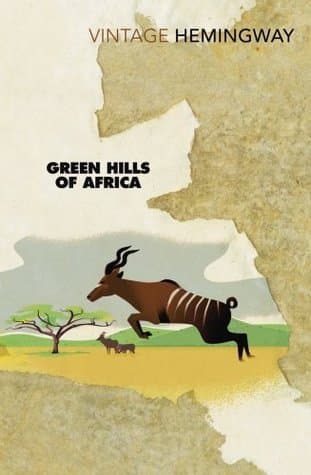
Synopsis
Covers the whole plot, including the ending.
- Difficulty
- Medium
- Pacing
- Moderate
- Mood
- Reflective, Adventurous, Atmospheric, Masculine
- Read it if
- You are a fan of Hemingway's prose, interested in big-game hunting narratives, or enjoy travelogues with a strong sense of place and philosophical undertones.
- Skip it if
- You are sensitive to detailed descriptions of hunting animals or prefer fast-paced, plot-driven fiction.
Green Hills of Africa Plot Summary
Covers the whole plot, including the ending.
Arrival in Tanganyika and Early Hunts
Ernest Hemingway, called 'Mr. Jackson' by some trackers, and his wife Pauline (P.O.M.) begin a month-long safari in Tanganyika. Their main goal is to hunt kudu, a challenging antelope. They are with professional hunter Karl ('Pop') and several local trackers. The first days involve long, hard treks through the bush. Hemingway often feels frustrated by close calls and missed chances. He describes the landscape, sounds, and physical demands of the hunt, showing a man deeply involved in the wilderness and the chase, while also dealing with the competitive aspect of hunting with P.O.M.
The Frustration of the Kudu Hunt
Hemingway's frustration grows as he fails to find a trophy kudu. He describes the vast plains, the heat, and the constant effort to track animals. He tells of several times when a good trail led nowhere or a shot was missed. Adding to his annoyance, P.O.M., despite having less experience, shoots a magnificent kudu. Hemingway feels a mix of pride for her and personal disappointment. This creates a subtle competitive tension, as Hemingway's ego as a hunter is challenged, making him even more determined.
Shifting Focus and Elephant Encounters
The safari party moves their camp to new hunting grounds. During this time, Hemingway talks with Pop and other expedition members about hunting, the beauty of the African landscape, and the ethics of killing. He describes the elephants they see, observing them with respect beyond just hunting. While the main goal remains big game, these encounters offer moments to think about Africa's wildness and the hunter's place in it. This highlights the contrast between the thrill of the chase and a thoughtful appreciation of nature.
The Search for the Big Kudu Intensifies
Driven by his desire for a trophy kudu, Hemingway pushes himself to his limits. He endures long walks, intense heat, and the constant threat of wild animals. He describes the detailed art of tracking, the subtle signs left by game, and the patience needed. His story emphasizes the physical and mental endurance required for the hunt, showing it as a test of skill and will. Despite many close calls and the trackers' exhaustion, the elusive big kudu avoids him, building suspense and Hemingway's obsession. He feels a deep connection to the land and animals, seeing the hunt as a way to truly experience Africa.
A Successful Rhino Hunt
Unexpectedly, the hunting party tracks and successfully takes down a rhinoceros. This hunt, though not his main goal, gives Hemingway a significant trophy and a needed boost to his morale after the kudu hunt's frustrations. He describes the rhino's power and danger, and the precision needed for the shot. The successful kill is told with a sense of accomplishment and respect for the animal. This experience temporarily shifts his focus from the kudu, letting him enjoy a different kind of hunting success and think about the varied challenges and rewards of African game.
The Return to the Kudu Quest
After the rhino hunt, Hemingway's focus returns to his initial goal: the kudu. He feels a deep, almost spiritual, connection to hunting this specific animal, seeing it as a personal challenge and a symbol of his engagement with the African wilderness. He continues to push his trackers and himself, exploring new areas and enduring more physical discomfort. The story shows his strong determination and the almost mystical appeal the kudu has for him, portraying the hunt as a personal quest for validation and connection with nature.
The Climax of the Kudu Hunt
After much tracking and many false leads, Hemingway and his tracker, M'Cola, finally spot a truly magnificent kudu bull. The description of the animal is clear and respectful, showing its beauty and power. Hemingway recounts the tense stalk, careful positioning, and the important shot. This moment is shown as the culmination of his entire safari, a profound experience beyond just hunting. The successful taking of the kudu is described with joy, relief, and deep respect for the animal, fulfilling his long-held desire and bringing a sense of completion to his personal challenge in Africa.
The End of the Safari and Reflections
With the successful kudu hunt, the safari ends. Hemingway reflects on his entire experience, the friendships made, the challenges overcome, and Africa's beauty. He talks about the future of big game hunting and the development threatening the wilderness. There is a bittersweet feeling as he prepares to leave, a sense of having achieved something important while also knowing such wild places are impermanent. He expresses his deep love for Africa and the unique freedom and intensity it offers, solidifying his connection to the continent.
Literary Discussions and African Writers
Throughout the safari, often during breaks or in the evenings, Hemingway discusses literature with Pop. He shares his views on contemporary writers, the challenges of writing great prose, and the importance of authenticity. He thinks about other authors, the difficulty of writing a great novel, and the possibility of an 'African writer' emerging. These conversations offer insight into Hemingway's literary philosophy and his aspirations as a writer, weaving his artistic concerns into the hunting story and showing his constant intellectual engagement.
The Journey Home and Lasting Impressions
As the safari concludes, the party begins the long journey back to civilization. Hemingway describes dismantling the camp, packing trophies, and saying goodbye to the trackers. He carries not just physical trophies, but also the lasting memories and experiences of the African wilderness. The story ends with a lingering sense of Africa's impact on him—a place that tested him, fulfilled his desires, and left him with a deep appreciation for its wild beauty and the thrill of the hunt. He looks back at the 'green hills' with longing and understanding.
Principal Figures
Ernest Hemingway (Narrator)
Protagonist
An American author on safari, driven by the challenge of big-game hunting and a deep connection to nature.
Hemingway is the central figure and narrator, providing a first-person account of his safari. He is a passionate big-game hunter, particularly obsessed with finding a trophy kudu. He is competitive, both with the animals and subtly with his wife, and takes immense pride in his skill as a tracker and marksman. Beyond the hunt, he is a reflective intellectual, constantly pondering the nature of writing, the beauty of the landscape, and the ethics of his pursuits. He is physically robust but also susceptible to frustration and ego, making him a complex and relatable figure.
Relationships: Pauline Pfeiffer (P.O.M.) (Wife and fellow hunter, sometimes a source of competitive tension.); Karl (Pop) (Professional hunter and mentor, providing guidance and companionship.); M'Cola (Primary tracker, respected for his skill and knowledge of the bush.)
Pauline Pfeiffer (P.O.M.)
Supporting
Hemingway's wife, an enthusiastic hunter who sometimes outshines her husband.
P.O.M. (Poor Old Mama) is Hemingway's wife and a key companion on the safari. She is portrayed as an eager and capable hunter, often surprising Hemingway with her skill and success, most notably by shooting a fine kudu before he does. While she shares his passion for the hunt, she also acts as a grounding presence, offering support and sometimes a gentle counterpoint to his intense focus. Her successes sometimes fuel Hemingway's competitive drive, but their bond remains strong.
Relationships: Ernest Hemingway (Husband, fellow hunter, and companion on the safari.); Karl (Pop) (Professional hunter and guide for the couple.)
Karl (Pop)
Supporting
The experienced professional hunter who guides Hemingway and P.O.M.
Pop is the professional hunter leading the safari. He is depicted as a knowledgeable, calm, and highly experienced outdoorsman, embodying the traditional figure of the white hunter. He provides practical guidance, shares his wisdom about the animals and the land, and engages in philosophical discussions with Hemingway about hunting, writing, and life. He serves as a mentor and a steady presence, often mediating Hemingway's frustrations and sharing his appreciation for the African wilderness. His advice and companionship are crucial to the success and enjoyment of the safari.
Relationships: Ernest Hemingway (Client, hunting partner, and intellectual conversationalist.); Pauline Pfeiffer (P.O.M.) (Client and fellow hunter.)
M'Cola
Supporting
Hemingway's primary native tracker, known for his exceptional skill and dedication.
M'Cola is one of the native trackers who accompanies Hemingway. He is portrayed as an incredibly skilled and patient tracker, possessing an almost supernatural ability to read the signs of the bush. Hemingway holds immense respect for M'Cola's expertise and endurance, often relying on his keen senses and knowledge to locate game. M'Cola is a quiet but essential character, representing the deep indigenous connection to the land and the traditional wisdom of the African people. His dedication and tracking prowess are instrumental in Hemingway's eventual success.
Relationships: Ernest Hemingway (Hunter whose success heavily relies on M'Cola's tracking skills.); Karl (Pop) (Colleague in the hunting party.)
Abdullah
Supporting
Another native tracker, often with a more lighthearted or less focused demeanor than M'Cola.
Abdullah is another native tracker in the safari party. He is depicted as being less intense or focused than M'Cola, sometimes prone to distraction or humor. While still skilled, he offers a contrast to M'Cola's solemn dedication, providing moments of levity or demonstrating the varying personalities within the native crew. Hemingway observes Abdullah's actions and reactions, sometimes with amusement, sometimes with a touch of frustration, but always acknowledging his role in the overall expedition.
Relationships: Ernest Hemingway (Hunter and employer.); M'Cola (Fellow tracker.)
The Kudu
Antagonist/Symbolic
The elusive and majestic antelope, representing Hemingway's ultimate hunting challenge.
The kudu, particularly the large bull kudu, serves as the primary 'antagonist' and a powerful symbol in the book. It is the object of Hemingway's most intense desire and frustration. Its elusiveness and beauty make it the ultimate trophy, representing the pinnacle of the hunting challenge. The kudu embodies the wild, untamed spirit of Africa and the personal test Hemingway seeks to overcome. Its eventual capture provides the climax of the narrative and a deep sense of personal fulfillment for the author.
Relationships: Ernest Hemingway (The object of his intense hunting obsession.)
Themes & Insights
The Allure and Ethics of Hunting
The book explores the complex relationship between humans and hunting. Hemingway shows hunting as more than a sport; it is a primal engagement with nature that tests skill, endurance, and character. He considers the ethics of killing, showing deep respect for the animals he hunts and their land. The thrill of the chase, the needed patience, and respect for the prey are central. For example, his frustration with the kudu highlights the challenge, while his reverence for the rhino after the kill shows the ethical side. The hunt is a way to connect with an authentic, wild existence.
“A man must be a hunter. He must hunt to live. If he is not a hunter, he is not a man. Then he is a woman, or a sheep, or a goat, or a pig, or a chicken.”
The Beauty and Fragility of the African Wilderness
Hemingway paints a vivid picture of the African landscape, describing its vastness, beauty, and wild spirit. From the 'green hills' to the dusty plains, the environment is almost a character, shaping the hunters' experiences. He emphasizes sensory details: the heat, smells, and sounds of the bush. Beneath this appreciation is a sad awareness of its fragility, even in the 1930s. He often laments the growth of civilization and the potential loss of this untouched wilderness, knowing that the Africa he experiences is quickly disappearing. This theme appears in his long, descriptive passages about the landscape and his discussions with Pop about the future of big game.
“I had loved country all my life; the country was the only thing that could not betray you. There were never any problems with the country.”
The Nature of Writing and Storytelling
Mixed with the hunting story are frequent talks about literary theory and writing. Hemingway discusses his artistic philosophy, the challenges of writing truthfully, and the importance of authenticity. He thinks about other authors, the difficulty of writing a great novel, and the possibility of an 'African writer' emerging. These discussions, often with Pop, show Hemingway's self-awareness as an artist and his constant pursuit of literary excellence. The book itself, presented as a 'true narrative,' applies his literary principles, showing his belief that a well-told story, even non-fiction, can convey deep truths. This is clear in his careful word choice and precise descriptions.
“A writer's problem does not change. He himself changes, but his problem remains the same. It is always how to write truly, and having found what is true, to project it in such a way that it becomes a part of the experience of the person who reads it.”
Man's Relationship with Nature and Himself
The safari acts as a test for Hemingway's self-discovery and a way to explore humanity's place in nature. Through the physical demands of the hunt, the solitude of the bush, and direct encounters with wild animals, Hemingway seeks to test himself and find authenticity. The pursuit of the kudu becomes a metaphor for a personal quest, a way to prove his manhood and connect with something primal within himself. His frustrations, successes, and reflections on life and death in the wilderness all lead to a deeper understanding of his character and his connection to the natural order. This theme is embodied in his relentless pursuit and the deep satisfaction he feels upon reaching his goal.
“You did not really think of yourself as a hunter. You just hunted. You were a hunter. You had always been a hunter.”
Plot Devices & Literary Techniques
First-Person Narrative
The story is told entirely from Hemingway's perspective, offering direct access to his thoughts and experiences.
The use of a first-person narrative allows the reader to directly experience the safari through Hemingway's eyes and mind. This device creates an intimate and immediate connection, immersing the reader in his physical sensations, emotional frustrations, intellectual musings, and philosophical debates. It lends authenticity to his account, supporting his claim of presenting a 'true narrative' of Africa. We witness his competitive spirit, his respect for the land and animals, and his reflections on writing, making the book a deeply personal and subjective journey.
Digressions and Philosophical Discussions
The narrative frequently veers from the immediate action to explore broader ideas about literature, life, and Africa.
Hemingway employs frequent digressions, often in the form of conversations with Pop or internal monologues, to explore themes beyond the immediate hunt. These discussions cover topics like the craft of writing, the nature of courage, the authenticity of experience, and the future of the African wilderness. This device elevates the book from a mere hunting memoir to a work of literary and philosophical inquiry. It allows Hemingway to showcase his intellectual depth and integrate his artistic concerns with his adventures, providing layers of meaning and context to the physical journey.
Symbolism of the Kudu
The elusive kudu represents Hemingway's ultimate challenge, personal validation, and the spirit of wild Africa.
The kudu functions as a powerful symbol throughout the narrative. Initially, it symbolizes the ultimate hunting challenge, an elusive and magnificent trophy that Hemingway desperately seeks to validate his skill. As the hunt progresses, it evolves to represent a personal quest, a test of his endurance and will. Ultimately, the successful taking of the kudu symbolizes not just a hunting triumph, but a profound connection to the wild heart of Africa and a sense of personal fulfillment. Its majestic nature embodies the beauty and untamed spirit of the continent.
Competitive Dynamics
Subtle competition, particularly between Hemingway and P.O.M., fuels his drive and adds narrative tension.
A subtle but significant plot device is the competitive dynamic, primarily between Hemingway and his wife, P.O.M. When P.O.M. successfully bags a kudu before he does, it fuels Hemingway's already intense desire to secure his own trophy. This friendly rivalry adds a layer of personal challenge and narrative tension to the hunting quest. It underscores Hemingway's ego and his need for personal accomplishment, making his eventual success with his own kudu even more satisfying as he overcomes not only the challenge of the animal but also his own competitive impulses.
Green Hills of Africa Quotes
“Africa was a country that was made for hunting. It was a place where you could go and be a man, and where you could prove yourself.”
“I did not want to write about Africa. I wanted to write about what I felt about Africa, and I wanted to write the truth.”
“A man can be destroyed but not defeated.”
“We had a good day, and the sun was good, and the country was good, and it was good to be alive.”
“There is no hunting like the hunting of man, and those who have hunted armed men long enough and liked it, never care for anything else thereafter.”
“If a man is to write a story that he wants to be true, he must be true to himself.”
“It was a lovely country, and it was a pleasure to hunt in it.”
“The great thing about Africa is that you can get away from everything.”
“We were learning something new every day, and it was exciting.”
“The problem with American writers is that they have never been hungry.”
“It was impossible to be lonely in Africa. There was too much to see, too much to do.”
“You can always tell a good writer by the way he writes about food.”
“The wind was blowing hard, and it was cold, but it was a good cold, a clean cold.”
“All my life I’ve been trying to learn how to write, and I still don’t know how.”
Quiz
10 questions on the plot and the characters. Each answer comes with a short explanation.
Question 1
What primary activity does Hemingway document during his month in East Africa?
- Studying local wildlife for conservation efforts
- Participating in big-game hunting safaris
- Exploring ancient ruins and historical sites
- Writing a fictional novel inspired by the landscape
Show answer
B. Participating in big-game hunting safaris The book is explicitly described as a journal of a month on safari in the great game country, capturing Hemingway's fascination with big-game hunting.
Question 2
Who accompanied Ernest Hemingway on his December 1933 journey to East Africa?
- His hunting guide, Pop
- His close friend and fellow writer, F. Scott Fitzgerald
- His wife, Pauline
- A team of researchers
Show answer
C. His wife, Pauline The introductory text states that 'he and his wife Pauline journeyed in December 1933.'
Question 3
What specific month and year did Hemingway's safari in East Africa take place?
- January 1934
- December 1933
- November 1933
- February 1934
Show answer
B. December 1933 The description clearly states that he and Pauline 'journeyed in December 1933.'
Question 4
Beyond the thrill of the hunt, what other significant aspect of Africa does Hemingway's book portray?
- The challenges of colonial governance
- The vibrant urban life of African cities
- The glory of the African landscape and wilderness beauty
- The history of the local tribes and their customs
Show answer
C. The glory of the African landscape and wilderness beauty The text mentions it is 'an impassioned portrait of the glory of the African landscape and of the beauty of a wilderness.'
Question 5
What kind of 'game' is specifically mentioned in relation to Hemingway's hunting interest?
- Small game like rabbits and birds
- Waterfowl and fish
- Big-game
- Mountain game like goats and sheep
Show answer
C. Big-game The description highlights Hemingway's 'fascination with - big-game hunting.'
Question 6
What potential threat to the African wilderness is acknowledged in the book's description?
- Natural disasters like droughts and floods
- Overpopulation of certain animal species
- The incursions of man
- Invasive plant species
Show answer
C. The incursions of man The text states the wilderness was 'even then, being threatened by the incursions of man.'
Question 7
What literary form does 'Green Hills of Africa' primarily take?
- A collection of short stories
- A fictional novel with African settings
- A lyrical journal or non-fiction account
- A historical analysis of East African wildlife
Show answer
C. A lyrical journal or non-fiction account The book is described as Hemingway's 'lyrical journal of a month on safari,' indicating it's a non-fiction account.
Question 8
The book is described as an 'examination of the lure of the hunt.' What does this imply about Hemingway's perspective?
- He views hunting purely as a sport without deeper meaning.
- He explores the psychological and emotional reasons behind the appeal of hunting.
- He criticizes the act of hunting as morally wrong.
- He focuses only on the practical techniques and strategies of hunting.
Show answer
B. He explores the psychological and emotional reasons behind the appeal of hunting. An 'examination of the lure' suggests an exploration of the deeper, often psychological, reasons for its appeal, not just the physical act.
Question 9
Given the description, what can be inferred about Hemingway's writing style in 'Green Hills of Africa'?
- It is highly academic and scientific, focusing on data.
- It is dry and factual, devoid of personal reflection.
- It is evocative and personal, reflecting his experiences and emotions.
- It is primarily dialogue-driven, like a play script.
Show answer
C. It is evocative and personal, reflecting his experiences and emotions. Describing it as a 'lyrical journal' and an 'evocative account' suggests a personal, expressive, and emotionally resonant writing style.
Question 10
The book captures Hemingway's 'well-known interest in - and fascination with - big-game hunting.' What does this imply about his prior public persona?
- He was primarily known for his work as a conservationist.
- His interest in hunting was a newly developed hobby.
- He had an established public reputation for being involved in hunting or similar adventurous pursuits.
- He was known for being a recluse who rarely engaged in public activities.
Show answer
C. He had an established public reputation for being involved in hunting or similar adventurous pursuits. 'Well-known interest' implies that this aspect of his life was already familiar to the public before the book's publication, contributing to his adventurous persona.
Green Hills of Africa FAQ
What is the central premise of 'Green Hills of Africa'?
'Green Hills of Africa' is a non-fiction account of Ernest Hemingway's month-long safari in Tanganyika (modern-day Tanzania) in December 1933. It details his big-game hunting experiences, particularly his pursuit of a kudu, alongside reflections on writing, literature, and the African landscape.
Who are the main companions on Hemingway's safari?
Hemingway is accompanied by his wife, Pauline Pfeiffer (referred to as P.O.M. or Pop), his professional hunter, Philip Percival (Pop), and his gun-bearer, M'Cola. Karl, a rival hunter, also features prominently in the narrative as Hemingway's competition for the largest kudu.
What kind of animals does Hemingway primarily hunt in the book?
While Hemingway hunts various plains game like gazelle, wildebeest, and zebra for camp meat, his primary focus and ambition throughout the narrative is to hunt a magnificent greater kudu, a notoriously elusive antelope with impressive spiraled horns.
How does Hemingway portray the African landscape and its people?
Hemingway portrays the African landscape with immense reverence and lyrical detail, emphasizing its beauty, vastness, and the thrill of the wilderness. He generally depicts the local African people, particularly his trackers and porters, with respect for their skill and knowledge, though through the lens of a Western hunter.
Is 'Green Hills of Africa' purely a hunting narrative?
No, it's far more than just a hunting narrative. Hemingway interweaves detailed hunting sequences with extensive digressions on the craft of writing, literary criticism (often disparaging of contemporary American writers), the ethics of hunting, and philosophical musings on life, death, and the pursuit of excellence.
What is the significance of the competition with Karl?
The competition with Karl, another white hunter, for the largest kudu serves as a significant narrative driver, fueling Hemingway's ambition and frustration. It highlights his competitive nature and his desire to prove himself as a hunter, pushing him to increasingly difficult and remote areas.
What role does the character of M'Cola play in the story?
M'Cola is Hemingway's skilled and loyal gun-bearer and tracker, whose expertise and quiet competence are frequently praised. He embodies the practical knowledge and silent efficiency essential to a successful safari, often guiding Hemingway to game and demonstrating a deep understanding of the bush.
How does Hemingway use the concept of 'luck' in the book?
Luck is a recurring theme, often invoked by Hemingway to explain both successes and failures in hunting. He frequently attributes the appearance or disappearance of game to 'luck,' suggesting an element of fate or chance beyond skill, particularly when his efforts to find a large kudu are frustrated.
What is the implied tension between Hemingway and Pauline (P.O.M.)?
While largely supportive, an underlying tension is occasionally implied, particularly when Pauline shows more immediate success in hunting or expresses fatigue with the strenuous nature of the safari. This subtle dynamic reflects the complexities of their marital relationship amidst the demanding environment.
How does Hemingway's drive for the 'perfect' kudu reflect his personality?
Hemingway's relentless and almost obsessive pursuit of the largest and most magnificent kudu reveals his perfectionism, his competitive spirit, and his profound need for mastery and validation. It shows his deep-seated desire to confront and conquer challenges, both in hunting and in writing.
What psychological effect does the African wilderness have on Hemingway?
The African wilderness profoundly affects Hemingway, providing a sense of purity, challenge, and a powerful connection to primal instincts. It acts as a crucible where he can test his courage, skill, and endurance, offering a temporary escape from the complexities and perceived corruptions of civilization.
How does Hemingway cope with frustration and failure during the hunt?
Hemingway often copes with frustration and failure, particularly when losing a track or missing a shot, through intense internal monologues, sometimes self-deprecating or blaming 'luck.' He uses these moments to reflect on the nature of the hunt and to reaffirm his determination, often finding solace in the beauty of the surroundings.
What is the psychological significance of Hemingway's literary digressions?
The literary digressions serve as a psychological coping mechanism and a means of self-definition. By criticizing other writers and articulating his own artistic philosophy, Hemingway reinforces his identity as a serious artist, asserting his intellectual prowess and distinct approach to literature, even amidst the physical demands of the safari.
Is 'Green Hills of Africa' a reliable factual account, or does it contain fictionalized elements?
While presented as non-fiction, Hemingway's 'Green Hills of Africa' is often viewed as a semi-fictionalized memoir. He admitted to shaping events and dialogues for dramatic effect, blurring the lines between objective reporting and subjective interpretation to create a more compelling narrative that serves his artistic vision.
How does the book reflect Hemingway's views on the 'true' American writer?
Hemingway uses the book to articulate his strong opinions on what constitutes a 'true' American writer, emphasizing honesty, directness, and a deep engagement with life. He often criticizes contemporaries for being overly intellectual or detached, positioning himself as the authentic voice of American experience.
What is the underlying commentary on conservation, given the hunting theme?
Despite being a hunting book, there's an underlying commentary on conservation. Hemingway expresses concern for the diminishing wilderness and the impact of human encroachment, lamenting the loss of untouched landscapes and the threat to wildlife, even as he participates in big-game hunting.
How does Hemingway use the contrast between the primitive hunt and modern civilization?
Hemingway uses this contrast to highlight the perceived purity and authenticity of the hunt against the artificiality and corruption of modern civilization. The African wilderness offers a return to fundamental truths and challenges, providing a stark alternative to the complexities of urban life and literary circles.
What is the meaning behind the final sentence, 'I was learning something'?
The final sentence, 'I was learning something,' suggests a profound, ongoing process of self-discovery and understanding. It implies that the safari, beyond just hunting, was a transformative experience, offering deep insights into himself, the natural world, and the craft of writing, lessons that continue to unfold.
About the author
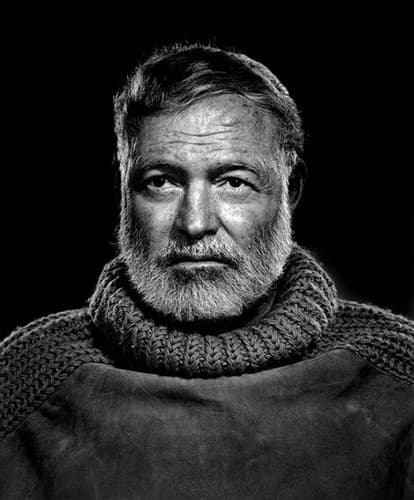
Ernest Miller Hemingway was an American novelist, short-story writer, and journalist. His economical and understated style—which included his iceberg theory—had a strong influence on 20th-century fiction, while his adventurous lifestyle and public image brought him admiration from later generations. Hemingway produced most of his work between the mid-1920s and the mid-1950s, and he was awarded the 1954 Nobel Prize in Literature. He published seven novels, six short-story collections, and two nonfiction works. Three of his novels, four short-story collections, and three nonfiction works were published posthumously. Many of his works are considered classics of American literature.
Similar books
- Death in the Afternoon
Ernest Hemingway
3.7 (8k) average on GoodreadsLifestyleAnother non-fiction work by Hemingway exploring a specific sport (bullfighting) with cultural and philosophical depth.
- Eat, Pray, Love
Elizabeth Gilbert
3.6 (1.5M) average on GoodreadsLifestyleA heartbroken writer leaves her conventional life for a year-long global search for pleasure in Italy, spiritual devotion in India, and unexpected love and balance in Bali.
- Wild: From Lost to Found on the Pacific Crest Trail
Cheryl Strayed
4.0 (615k) average on GoodreadsLifestyleAfter losing her mother and her marriage, a young woman impulsively hikes over a thousand miles of the Pacific Crest Trail alone, finding strength and healing in the unforgiving wilderness.
- Into Thin Air: A Personal Account of the Mount Everest Disaster
Jon Krakauer
4.2 (395k) average on GoodreadsLifestyleOn May 10, 1996, ambition and a sudden, violent storm turned Mount Everest into a deadly trap, leaving Jon Krakauer to tell the harrowing story of a disaster that took lives and shattered climbers' dreams.
- On The Road
Jack Kerouac
3.6 (349k) average on GoodreadsLifestyleDean Moriarty and Sal Paradise go on a wild, cross-country trip with jazz, drugs, and a desperate search for meaning on America's post-war roads.
- A Walk in the Woods: Rediscovering America on the Appalachian Trail
Bill Bryson
4.1 (346k) average on GoodreadsLifestyleBill Bryson humorously describes his ill-prepared yet insightful attempt to hike the Appalachian Trail, meeting unique characters and the raw beauty of the wilderness.





Enjoyed the summary?
A summary gives you the shape of the book. The book itself has the detail, the examples and the voice.
Find Green Hills of Africa on AmazonAs an Amazon Associate, BookBrief earns from qualifying purchases. How we're funded