

Synopsis
Covers the whole plot, including the ending.
- Difficulty
- Medium
- Pacing
- Slow
- Mood
- Melancholy, Reflective, Bleak, Detached
- Read it if
- You appreciate literary fiction exploring themes of identity, post-colonialism, and the search for belonging, with a focus on character psychology and a somewhat detached narrative style.
- Skip it if
- You prefer fast-paced plots, clear moral resolutions, or characters with strong agency and emotional warmth.
Half a Life Plot Summary
Covers the whole plot, including the ending.
A Precarious Beginning in India
Willie Chandran grows up in a South Indian village. His father, a Brahmin, married a lower-caste woman in a radical move, then embraced an ascetic life, leaving society. His father's story, a rebellion against his own family, is told to Willie in pieces. This unusual upbringing makes Willie feel like an outsider, always aware of his father's fake detachment and his mother's quiet acceptance of her lower position. He sees the dishonesty in the adults around him, especially his father's 'half-life' of spiritual pretense, and wants a more real existence, though he does not know what that means. His early life has a sense of not belonging anywhere and a vague wish to escape.
London Calling: The Promise of Escape
At eighteen, Willie Chandran leaves India for London in the 1950s, supposedly to study. He arrives with few contacts and a naive view of the world. London at first means freedom and a chance to leave his past, but he quickly finds himself lost among the city's immigrant and bohemian groups. He goes to a technical college, but his studies are less important than his search for identity and belonging. He watches other immigrants, especially from the West Indies and Africa, trying to build new lives, often with a mix of confidence and hidden insecurity. Willie feels a similar sense of displacement, struggling to define himself outside his Indian background.
Literary Pretensions and Early Success
In London, Willie falls in with a group of aspiring writers and thinkers. He starts writing short stories, at first without much belief, using his broken memories of India. To his surprise, these stories are published and get some critical attention, especially for their exotic feel. This unexpected success gives him a superficial sense of identity and purpose. He finds he can create a persona as a writer, even if he feels his work lacks real depth or connection to his true self. He learns to write stories that appeal to European audiences, further separating him from his own real experiences, becoming a performer of identity rather than someone who explores it.
Meeting Ana: A New Horizon
While in London, Willie meets Ana, a young woman of Portuguese descent from an unnamed former Portuguese colony in East Africa. She is studying in London and is drawn to Willie's stories and his seemingly exotic background. Ana is beautiful, confident, and seems to offer a way to a more stable and meaningful life than his current bohemian existence. She is drawn to his quiet intensity and his 'foreignness,' and he, in turn, is drawn to her apparent strength and the promise of a different future. Their relationship grows quickly, and Ana represents a big change, offering a possible escape from his aimless London life.
Life in the African Colony
Willie decides to marry Ana and move with her to her family's estate in the unnamed Portuguese colony in East Africa. He leaves his new writing career and takes on a new, quieter life. Here, he lives his own 'half-life,' managing parts of Ana's family's large, decaying property and adapting to the rhythm of colonial life. He is a 'man of leisure,' away from the urgency of London and the complexities of India. He observes the colonial society, the interactions between the Portuguese settlers and the African natives, and the slow decline of the old order. He finds a certain contentment in this passive existence, a refuge from the pressures of self-definition.
The Illusion of Happiness
For many years, Willie lives a seemingly perfect life with Ana on her family's estate. They have two daughters, and he finds some peace in the routine and the beautiful, though fading, surroundings. He learns the local language and talks with the African workers, but always from a distant observer's position. He believes he has found happiness, a quiet life free from his past worries. However, this happiness is built on passivity and avoidance. He rarely writes, and his intellectual life stops growing. The colonial world around them, though seemingly stable, is slowly falling apart, a fact he chooses to ignore.
The Seeds of Discontent
As the years pass, the political situation in the colony begins to change. There are rumors of independence movements and growing unrest among the African people. Willie, at first protected, cannot completely ignore these changes. More importantly, his own inner restlessness starts to appear. His 'half-life' of quiet contentment begins to feel empty. He realizes that he has traded one form of escape for another, and that his identity is still largely undefined, merely a reflection of his surroundings. The appearance of his happiness starts to crack, showing the underlying emptiness he had tried to escape.
The Affair and Betrayal
Driven by a vague sense of unhappiness and a longing for something more, or perhaps just different, Willie starts an affair with a younger woman, a visitor to the colony. This act betrays Ana and the quiet life they have built together. The affair is not born of deep passion but rather a desperate attempt to feel alive, to assert some form of control in a life that has become too passive. It breaks the fragile peace of his marriage and reveals the underlying flaws in his character and his relationship with Ana. This infidelity marks a turning point, signaling the end of his African 'half-life'.
Departure and Disintegration
The political situation in the colony quickly worsens, with independence becoming certain and bringing increasing violence and chaos. The Portuguese settlers begin to flee. At the same time, Willie's affair is discovered, leading to the painful end of his marriage to Ana. Faced with the collapse of both his personal life and the colonial world around him, Willie decides to leave Africa. His departure is sudden and marks the end of his long stay there, leaving Ana and their daughters behind. He is again without roots, having failed to truly build a meaningful life in Africa.
Return to Europe and a New 'Half-Life'
Willie returns to Europe, first to Germany, then to London, bringing little with him besides his past. He tries to reconnect with old friends, but finds himself even more alone than before. He is older, wiser in some ways, but still fundamentally unfulfilled. He thinks about his life, recognizing the series of 'half-lives' he has lived — in India, in London, in Africa — each a form of escape or incomplete involvement. The novel ends with Willie in Europe, still searching, still an outsider, his journey having come full circle without truly solving his basic search for identity and authenticity. He remains a man constantly moving, defined by his inability to fully commit to any single place or self.
Principal Figures
Willie Chandran
Protagonist
A man adrift, perpetually seeking but never fully finding his identity.
Willie Chandran is a sensitive, introspective, and somewhat passive man, marked by an early sense of displacement due to his father's unconventional marriage and ascetic lifestyle. He is a keen observer of human behavior but often struggles to act decisively. His quest for identity takes him from India to London, then to Africa, but he remains an outsider, adopting different personas and 'half-lives' rather than forging a true self. He possesses a mild artistic talent but lacks the conviction to fully pursue it, often settling for superficial success or quiet contentment. His deepest flaw is his reluctance to fully engage with life's complexities and his tendency to evade difficult truths.
Relationships: Willie's Father (Source of Willie's initial sense of displacement and observer of his father's 'performance' of asceticism.); Ana (Wife and partner in his African 'half-life,' later betrayed by Willie.); Marcus (A friend from his London days, representing a more assertive, albeit flawed, immigrant experience.)
Willie's Father
Supporting
A Brahmin ascetic who defied caste, creating a 'half-life' for himself and his family.
Willie's father is a Brahmin who, out of a rebellious spirit, married a lower-caste woman and subsequently adopted a life of self-imposed asceticism. His life is a performance of detachment, a calculated withdrawal from society that is both an act of defiance and a form of self-deception. He instills in Willie an early awareness of the constructed nature of identity and the potential for a 'half-life.' Though a distant figure, his choices profoundly shape Willie's perception of the world and his own quest for authenticity. He represents a flawed ideal of rebellion and spiritual purity.
Relationships: Willie Chandran (Father who shapes Willie's early life through his unconventional choices and 'half-life' example.); Willie's Mother (Husband, who married her in defiance of caste norms but then retreated into asceticism.)
Willie's Mother
Supporting
A lower-caste woman who lives a life of quiet endurance and resignation.
Willie's mother is a lower-caste woman who married his Brahmin father, an act that brought both defiance and social ostracism. She lives a life of quiet endurance, accepting her husband's asceticism and her subordinate position within their unusual household. She is a figure of quiet suffering and resignation, providing a contrast to her husband's performative detachment. Her presence highlights the social constraints and caste realities that Willie observes in India, contributing to his desire for escape. She represents the often-unspoken costs of social rebellion and personal compromise.
Relationships: Willie Chandran (Mother, a figure of quiet resignation in his childhood.); Willie's Father (Wife, married in defiance of caste, living under his ascetic shadow.)
Ana
Supporting
Willie's wife, a strong-willed woman from a Portuguese African colony.
Ana is a beautiful, intelligent, and strong-willed woman of Portuguese descent from an unnamed East African colony. She meets Willie in London and is drawn to his quiet intensity and 'exotic' background. She brings Willie to her family's decaying estate in Africa, offering him a new life and a sense of belonging. Ana is practical and grounded, managing their household and the estate, often taking the lead in their relationship. She represents a potential anchor for Willie, a chance for a stable and meaningful life, but ultimately becomes a victim of his restlessness and inability to commit fully. Her strength eventually gives way to the pain of betrayal.
Relationships: Willie Chandran (Wife, who offers him a life in Africa, later betrayed by him.)
Marcus
Supporting
A fellow immigrant writer in London, representing a different path to self-invention.
Marcus is a West Indian writer Willie encounters in London. He is more assertive and politically conscious than Willie, actively embracing the immigrant experience and using his background as material for his writing. He represents a more direct, perhaps even aggressive, approach to self-invention and claiming one's place in the literary world. While Willie is quiet and observational, Marcus is boisterous and performative, often exaggerating his experiences. He serves as a foil to Willie, showing an alternative, albeit equally constructed, path for a young, aspiring writer from the colonies in London.
Relationships: Willie Chandran (Acquaintance and fellow aspiring writer in London.)
The African Workers
Mentioned
The indigenous population of Ana's colonial estate, observed by Willie.
The African workers are the indigenous people employed on Ana's family estate in the Portuguese colony. They are largely seen through Willie's detached, observational lens. They represent the silent, often exploited, undercurrent of colonial society, their lives inextricably linked to the land and the whims of their European employers. While Willie learns their language and interacts with them, he never fully integrates into their world, maintaining his position as an outsider. Their presence highlights the power dynamics of colonialism and the impending social upheaval.
Relationships: Willie Chandran (Observed by Willie; he interacts with them as an employer/landowner.); Ana (Their employer and mistress of the estate.)
Themes & Insights
The Search for Identity and Authenticity
The main theme of the novel is Willie Chandran's lifelong, often passive, search for a true self. From his early awareness of his father's 'performance' of asceticism, Willie wants an authentic life, yet he constantly adopts 'half-lives' — as a student, a writer, a colonial landowner — that are more about avoiding reality than real involvement. He struggles to combine his Indian heritage with his experiences in the West and Africa, never fully belonging anywhere or committing to one identity. This theme is clear in his shallow writing career in London and his contented but ultimately empty existence in the African colony.
“What I had been doing was to pretend to myself that I was whole. I had been living a half a life.”
The Nature of 'Half-Lives'
The idea of a 'half-life' is central, meaning an existence that is incomplete, partial, or based on avoidance rather than full commitment. Willie's father lives a 'half-life' of performed asceticism, while Willie himself adopts various 'half-lives' — as a writer whose stories are not deeply felt, or as a colonial landowner living a life of leisure without true purpose. These 'half-lives' offer comfort and escape from difficult realities but ultimately leave Willie feeling unfulfilled and lost. The novel explores the appeal and the ultimate emptiness of such an existence, where one is never fully present or engaged.
“I had been living a half a life, the second half of a life that had been started by others.”
Colonialism and Post-Colonial Dislocation
The novel explores the psychological and social effects of colonialism and its aftermath on individuals. Willie, as an Indian in London and then in a Portuguese African colony, experiences deep displacement. He is an outsider in every setting, reflecting the wider sense of not belonging faced by many after empire. The declining Portuguese colony, with its strict social rules and coming collapse, shows the fragility of the colonial world. Willie's passive observation of the African natives and the European settlers highlights the inherent inequalities and the eventual breakdown of colonial power, mirroring his own personal fragmentation.
“He seemed to have come to the end of his journey, but the world was still there, and he was still in it.”
Betrayal and its Consequences
Betrayal appears on many levels in the novel. Willie's father betrays social norms and perhaps his own family through his marriage and later asceticism. Willie, in turn, betrays Ana through his affair, breaking their 'half-life' of contentment in Africa. More subtly, Willie repeatedly betrays his own potential and his longing for authenticity by choosing the easiest paths and avoiding confrontation. These acts of betrayal, both personal and self-inflicted, lead to isolation, loss, and a lasting sense of unfulfillment, showing the destructive power of unaddressed desires and unresolved identities.
“I had betrayed Ana, but in a way I had also betrayed myself, the self that had sought peace and a kind of truth in that African place.”
Plot Devices & Literary Techniques
First-Person Retrospective Narration
Willie Chandran recounts his life story from a later, more reflective point in time.
The novel is narrated by Willie Chandran in the first person, looking back on his life from a position of experience and detachment. This allows for a reflective tone, where Willie can analyze his past choices and motivations with a degree of insight he likely lacked at the time. The retrospective nature emphasizes the theme of unfulfillment, as he recounts a life of 'half-lives' from the vantage point of someone who has not found completion. It also allows for a degree of unreliability, as his memories and interpretations are filtered through his current understanding.
Geographical Displacement
Willie's journey across continents mirrors his internal search for identity.
Willie's physical movement from India to London to Africa and back to Europe is a key plot device. Each geographical shift represents an attempt to reinvent himself and escape the constraints of his previous life. However, instead of finding a new identity, he often carries his unresolved issues with him, creating a series of 'half-lives' in each location. The different settings – a traditional Indian village, bohemian London, a decaying Portuguese colony – serve as distinct backdrops against which Willie's internal struggles with belonging, authenticity, and colonial identity are played out.
The Unnamed Colony
The specific Portuguese African colony is deliberately left unnamed, making it a symbolic setting.
The decision to leave the Portuguese African colony unnamed is a deliberate stylistic choice. It elevates the setting from a specific historical place to a more symbolic representation of colonialism in general, and of a transient, decaying world. By not naming it, Naipaul universalizes the experience of colonial decline and the sense of unrootedness felt by both colonizers and those, like Willie, who merely pass through. It underscores the idea that Willie's experiences there, while specific, are also emblematic of a broader human condition of displacement and the search for meaning in fading empires.
The Motif of Performance
Characters, particularly Willie and his father, 'perform' their identities or roles.
The motif of performance is evident throughout the novel, starting with Willie's father, who 'performs' his asceticism as a calculated act of rebellion and detachment. Willie himself learns to 'perform' the role of a writer in London, crafting stories that appeal to an audience rather than expressing deep personal truth. In Africa, he performs the role of the quiet, contented colonial landowner. This device highlights the constructed nature of identity and the ways in which individuals adopt roles to navigate social expectations or to evade genuine self-discovery, leading to lives that are only partially lived.
Half a Life Quotes
“He had come to believe that to be a man was to be a creator, to make something new, to leave a mark.”
“The world was not a place for the innocent, he had learned. It was a place for those who knew how to take, and how to keep.”
“Living in London, he felt like a page torn from a book, adrift and meaningless.”
“He had always imagined that his life would be a story, with a beginning, a middle, and an end. But it was just a series of episodes, without connection.”
“The past was not a foreign country; it was a ghost that walked beside him, sometimes silent, sometimes whispering.”
“He had gone to Africa to escape, but he had only brought himself with him.”
“Love, he found, was not a grand passion, but a series of small accommodations, a delicate balance of needs and compromises.”
“He had given up one kind of illusion only to embrace another.”
“The world was full of people who lived half-lives, never quite committing, never quite fulfilling.”
“He understood then that freedom was not just the absence of chains, but the presence of choice, and the courage to make it.”
“To be an artist, he had always believed, was to be true to oneself, no matter the cost. But what if oneself was a shifting, uncertain thing?”
“The silence of the African countryside was not empty; it was filled with the weight of unseen histories, unheard stories.”
“He felt like a traveller who had arrived at a destination he hadn't chosen, and now didn't know how to leave.”
“Every new place was a chance to reinvent himself, and every reinvention was a further step away from who he truly was, or might have been.”
Quiz
10 questions on the plot and the characters. Each answer comes with a short explanation.
Question 1
Willie Chandran's father, a Brahmin ascetic, makes what kind of bargain with his lower-caste wife?
- He agrees to move to a big city if she converts to his religion.
- He marries her on the condition that their children will be raised without traditional caste distinctions.
- He marries her after she agrees to live a life of self-denial alongside him.
- He marries her after she agrees to give him 'half a life' – a portion of her life.
Show answer
D. He marries her after she agrees to give him 'half a life' – a portion of her life. Willie's father marries his lower-caste wife after she agrees to give him 'half a life,' a peculiar and symbolic bargain that sets a precedent for Willie's own life of partial commitments.
Question 2
What is Willie Chandran's primary motivation for leaving India and moving to London?
- To pursue a pre-arranged marriage with a wealthy Indian woman living abroad.
- To escape the perceived hollowness of his father's life and seek a more authentic existence.
- To join a political movement advocating for Indian independence from British rule.
- To study advanced engineering at a prestigious British university.
Show answer
B. To escape the perceived hollowness of his father's life and seek a more authentic existence. Willie leaves India largely to escape the self-denial and perceived inauthenticity of his father's life, hoping to find a truer identity and experience in London.
Question 3
In London, Willie Chandran initially tries to establish himself as what kind of professional?
- A lawyer
- A teacher
- A writer
- A doctor
Show answer
C. A writer In London, Willie attempts to become a writer, finding some facile and unsatisfying success with short stories that exploit his background.
Question 4
What is the name of the woman Willie Chandran marries and moves with to Africa?
- Savita
- Ana
- Priya
- Isabella
Show answer
B. Ana Willie marries Ana, a woman he meets in London, and they move together to her family's land in an unnamed Portuguese colony in East Africa.
Question 5
What is the primary characteristic of the African colony where Willie and Ana settle?
- It is a bustling, rapidly developing economic hub.
- It is a decaying Portuguese colony, marked by colonial grandeur and pretension.
- It is a newly independent nation struggling with post-colonial identity.
- It is an isolated, self-sufficient agricultural community far from any major cities.
Show answer
B. It is a decaying Portuguese colony, marked by colonial grandeur and pretension. The colony is depicted as a decaying Portuguese possession, characterized by lingering colonial attitudes, pretension, and a sense of stasis.
Question 6
The theme of 'fraudulent bargains that make up an identity' is central to the novel. How does Willie's relationship with Ana in Africa exemplify this theme?
- Willie fully embraces his role as a landowner and becomes genuinely invested in the colony's future.
- Willie finds true happiness and a complete sense of self through his marriage and life in Africa, overcoming his past anxieties.
- Willie lives a 'half a life' with Ana, never fully committing to his marriage or his role in the colony, ultimately betraying the happiness he finds.
- Willie discovers that Ana has been living a double life, which forces him to confront his own deceptions.
Show answer
C. Willie lives a 'half a life' with Ana, never fully committing to his marriage or his role in the colony, ultimately betraying the happiness he finds. Willie's life with Ana in Africa is another instance of a 'half a life.' He finds a superficial happiness but never fully commits, ultimately feeling compelled to betray it, reflecting the theme of identity built on incomplete or fraudulent commitments.
Question 7
What eventually compels Willie to 'betray' the happiness he finds in Africa?
- He receives a large inheritance from his family in India, requiring his return.
- He becomes disillusioned with the colonial society and feels a renewed urge to escape and seek something more.
- Ana demands that he return to London to pursue a more lucrative career.
- The colony descends into civil war, making it unsafe for him to remain.
Show answer
B. He becomes disillusioned with the colonial society and feels a renewed urge to escape and seek something more. Willie's nature is one of constant seeking and partial commitment. His 'betrayal' of his African happiness stems from a renewed sense of restlessness and dissatisfaction with the stagnant colonial existence, prompting him to move on.
Question 8
What is the significance of the title 'Half a Life' in relation to Willie Chandran's journey?
- It refers to the fact that Willie only lives to middle age.
- It symbolizes Willie's inability to fully commit to any place, relationship, or identity, living a life of partial engagements.
- It suggests that Willie literally spends half his life in India and the other half abroad.
- It means Willie only experiences happiness for half of his life.
Show answer
B. It symbolizes Willie's inability to fully commit to any place, relationship, or identity, living a life of partial engagements. The title 'Half a Life' encapsulates Willie's central struggle: his inability to fully inhabit any identity, place, or relationship. He constantly moves on, leaving behind partial commitments and never fully realizing a complete existence.
Question 9
How does Willie's father's initial 'self-denial' influence Willie's own choices and worldview?
- Willie adopts his father's ascetic lifestyle and seeks spiritual enlightenment.
- Willie rebels against his father's perceived hollowness by constantly seeking an 'authentic' life, though often failing to find it.
- Willie tries to emulate his father's success as a writer and intellectual.
- Willie feels compelled to return to India to care for his aging father.
Show answer
B. Willie rebels against his father's perceived hollowness by constantly seeking an 'authentic' life, though often failing to find it. Willie grows up sensing the 'hollowness' of his father's self-denial and vows to live more authentically. This initial observation fuels his subsequent migrations and quests, even as he often falls into similar patterns of inauthenticity.
Question 10
The novel's narrative style is described as moving with 'dreamlike swiftness.' How does this contribute to the reader's understanding of Willie's character?
- It emphasizes the clear, logical progression of Willie's decisions and their direct consequences.
- It highlights Willie's active and decisive role in shaping his own destiny.
- It mirrors Willie's often passive, drifting nature, and his tendency to move through life without deep engagement.
- It suggests that much of Willie's life is imagined rather than actually experienced.
Show answer
C. It mirrors Willie's often passive, drifting nature, and his tendency to move through life without deep engagement. The 'dreamlike swiftness' of the narrative reflects Willie's own detached and often passive journey through life. He drifts from one place and situation to another without deeply rooting himself, making his experiences feel somewhat unreal or fleeting.
Half a Life FAQ
What is the central premise of 'Half a Life' and Willie Chandran's journey?
'Half a Life' follows Willie Chandran's quest for identity and authenticity, beginning with his disillusionment with his father's ascetic life in India. He moves to London seeking a more genuine existence, then to a Portuguese colony in Africa, constantly grappling with the fraudulent bargains he makes to define himself and find belonging.
Who are Willie Chandran's parents and how do their backgrounds influence him?
Willie is the son of a Brahmin ascetic father and a lower-caste mother. His father's self-denial and the arranged, somewhat incongruous marriage create a sense of inauthenticity and hollowness that Willie observes and vows to escape, fueling his early desire for a different life.
How does London contribute to Willie's development, or lack thereof, in the novel?
In 1950s London, Willie immerses himself in immigrant and literary bohemias, where he cultivates a persona as a writer. However, this period is marked by facile connections and an unsatisfying career, ultimately failing to provide the deep authenticity he seeks, instead offering a superficial escape.
What role does Ana play in Willie's life in the African colony?
Ana is a wealthy, mixed-race woman in the Portuguese colony whom Willie marries. She provides him with a comfortable life, a sense of belonging, and a temporary escape from his existential anxieties. Their relationship is complex, built on a foundation of mutual convenience and projection rather than deep understanding.
What is the significance of the 'half a life' concept in the title?
The title 'Half a Life' refers to Willie's fragmented existence, where he lives different personas in different places, never fully committing or being truly himself. It suggests that his various attempts at identity, from the writer in London to the husband in Africa, only constitute partial, incomplete lives, lacking true integration.
How does Willie's relationship with his father's past in India subtly resurface in his later life?
Willie's early rejection of his father's asceticism and the 'hollowness' he perceived subtly manifests in his own inability to commit fully to any identity or place. His passive acceptance of situations, much like his father's resignation, reveals a recurring pattern of avoidance and a lack of genuine engagement, despite his initial rebellion.
Are there any symbolic parallels between the decaying Portuguese colony and Willie's internal state?
The decaying Portuguese colony, with its fading grandeur and pretension, mirrors Willie's own internal state of decline and unfulfillment. Just as the colony is built on a facade, Willie's happiness there is ultimately revealed to be fragile and based on superficial arrangements, destined for betrayal.
What is the unspoken agreement or 'fraudulent bargain' between Willie and Ana?
The unspoken bargain between Willie and Ana is one of mutual convenience and projection. Willie finds a stable, comfortable life and an identity as a husband, while Ana gains a companion who doesn't challenge her status quo or expose her own vulnerabilities. It's a life lived on terms that avoid deeper truths about themselves and their desires.
How does Willie's 'career as a writer' in London foreshadow his later betrayals?
Willie's 'facile and unsatisfying career as a writer' in London, where he writes without deep conviction or originality, foreshadows his later betrayals. His inability to genuinely create or commit to his art reflects a deeper pattern of superficiality and a willingness to adopt convenient roles, which culminates in his betrayal of Ana and their life.
Analyze Willie Chandran's core psychological conflict regarding authenticity.
Willie's core psychological conflict stems from his deep-seated desire for authenticity contrasted with his chronic inability to achieve it. He yearns for a genuine self but repeatedly adopts pre-made identities, personas, or situations that offer comfort and escape, rather than confronting the difficult work of self-discovery and commitment.
How does Willie's passivity contribute to his inability to form a stable identity?
Willie's passivity is a defining trait that prevents him from forging a stable identity. Rather than actively pursuing his own path, he allows himself to be swept along by circumstances, accepting roles and relationships that are offered to him, whether in London or Africa, without truly owning them or investing himself fully.
Discuss the psychological impact of Willie's constant geographical displacement.
Willie's constant geographical displacement from India to England to Africa reflects and reinforces his internal displacement. Each move offers a chance for a new beginning and a new identity, but it also prevents him from confronting and integrating his past selves, leading to a fragmented psyche and a perpetual sense of being an outsider.
In what ways does Willie's relationship with Ana reveal his fear of true intimacy and self-revelation?
Willie's relationship with Ana is built on a comfortable distance, revealing his fear of true intimacy. He accepts the life she offers without probing too deeply into her or his own desires, preferring the safety of a defined role over the vulnerability of self-revelation. His eventual betrayal can be seen as an escape from this comfortable but ultimately unfulfilling arrangement.
Is Willie Chandran a sympathetic character, or is he primarily a critique of a certain type of modern individual?
Willie can be seen as both. While his yearning for authenticity and his struggles with identity evoke some sympathy, Naipaul largely portrays him as a critique of a modern individual who avoids true self-confrontation, opting for superficiality and convenience. His choices, though understandable, ultimately lead to a 'half a life,' highlighting the consequences of such avoidance.
How does the novel's 'dreamlike swiftness' of narrative impact its themes of identity and reality?
The 'dreamlike swiftness' of the narrative emphasizes the transient and often illusory nature of Willie's experiences and identities. It blurs the lines between his different 'lives,' suggesting that they are all part of a larger, somewhat unrealized dream, reinforcing the idea that his reality is constructed and often lacks solidity.
To what extent does 'Half a Life' comment on the post-colonial experience and the search for identity beyond colonial structures?
'Half a Life' deeply comments on the post-colonial experience by showing Willie's struggles as an Indian man navigating former colonial powers (England, Portuguese Africa). His search for identity is inextricably linked to escaping the legacies of colonialism, but he often finds himself adopting new forms of colonial pretension or remaining an outsider, unable to fully shed its influence.
Could Willie's final departure from Africa be interpreted as a genuine act of self-assertion or another escape?
Willie's final departure from Africa is open to interpretation. It could be seen as an act of self-assertion, finally breaking free from a stagnant life and a relationship built on pretense. However, given his history, it can also be viewed as another escape, a continuation of his pattern of abandoning situations when they become too demanding or fail to satisfy his elusive quest for authenticity, without truly resolving his internal conflicts.
What is the significance of the ending, where Willie travels to Germany, and what does it suggest about his future?
The ending, with Willie traveling to Germany to live with Ana's sister, suggests a continuation of his pattern of seeking refuge and new beginnings in unfamiliar places, often through the connections of others. It implies that his quest for a whole, authentic life is far from over, and he may continue to live 'half a life' in new settings, perpetually searching rather than finding.
About the author
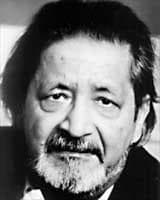
Sir Vidiadhar Surajprasad Naipaul was a Trinidadian-born British writer of works of fiction and nonfiction in English. He is known for his comic early novels set in Trinidad, his bleaker novels of alienation in the wider world, and his vigilant chronicles of life and travels. He wrote in prose that was widely admired, but his views sometimes aroused controversy. He published more than thirty books over fifty years.
Similar books
- A House for Mr Biswas
V. S. Naipaul
3.8 (18k) average on GoodreadsLiterary FictionExplores themes of identity, displacement, and the search for meaning in a post-colonial context with Naipaul's signature style.
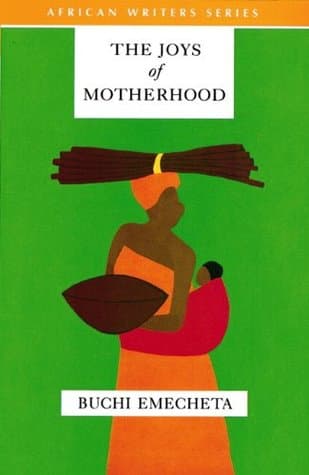
- The Joys of Motherhood
Buchi Emecheta
4.1 (5k) average on GoodreadsHistorical FictionOffers a critical look at life in colonial and post-colonial Africa, focusing on the struggles and disillusionment of its characters.
- Disgrace
J. M. Coetzee
3.8 (87k) average on GoodreadsLiterary FictionA bleak and incisive portrayal of a character's decline and the complex social landscape of post-apartheid South Africa.
- Americanah
Chimamanda Ngozi Adichie
4.3 (264k) average on GoodreadsLiterary FictionWhile both "Half a Life" and "Americanah" explore themes of migration, identity, and cultural dislocation, they do so from vastly different perspectives. Adichie's "Americanah" offers a more vibrant and often more optimistic, albeit still critical, view of the immigrant experience, particularly for African women in the West. Her protagonist, Ifemelu, is an active and vocal agent of her own destiny, confronting issues of race, class, and identity with agency and a strong sense of self. In contrast, Naipaul's Willie Chandran is largely passive, a spectator in his own life, and his journey is marked by a profound sense of disillusionment and emotional sterility. Adichie's prose is more accessible and often infused with humor and warmth, fostering a greater emotional connection with her characters, whereas Naipaul's style in "Half a Life" is more austere and detached, emphasizing the bleakness of Willie's existence. "Americanah" also explicitly engages with contemporary issues like race relations in America and the internet's role in shaping identity, which are largely absent from Naipaul's more inwardly focused narrative.
- The Old Man and the Sea
Ernest Hemingway
3.8 (831k) average on GoodreadsLiterary FictionA Cuban fisherman's long struggle with a giant marlin becomes a story of endurance and dignity, now retold for young adults with illustrations, phonetic guides, and writing prompts in Traditional Chinese.
- One Hundred Years of Solitude
Gabriel García Márquez
4.1 (753k) average on GoodreadsLiterary FictionThrough the multi-generational story of the Buendía family, a mythical town deals with the repeating patterns of time, love, and solitude, as the extraordinary mixes with the ordinary.





Enjoyed the summary?
A summary gives you the shape of the book. The book itself has the detail, the examples and the voice.
Find Half a Life on AmazonAs an Amazon Associate, BookBrief earns from qualifying purchases. How we're funded