
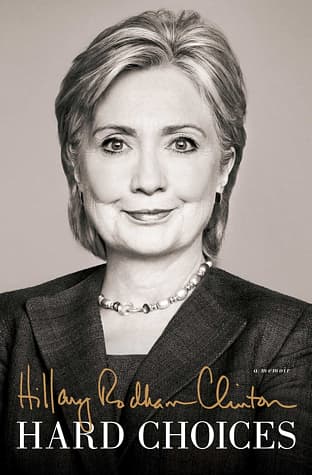
Core Idea
- Difficulty
- Medium
- Read it if
- You are interested in the inner workings of U.S. foreign policy during the Obama administration, the challenges of global diplomacy, or Hillary Clinton's personal reflections on leadership and major international events.
- Skip it if
- You prefer a concise overview rather than a detailed, comprehensive account of political events, or you are looking for a highly critical or non-establishment perspective on U.S. foreign policy.
Key Takeaways from Hard Choices
The Indispensable Nation: A Burden and a Privilege
America's unique global role demands constant, nuanced engagement, not withdrawal.
Clinton advocates for American leadership on the global stage, stating its 'indispensable' role in addressing international crises and promoting stability. She argues that a void created by American disengagement is often filled by less helpful actors or leads to greater instability. She stresses that this leadership requires a mix of diplomatic pressure, economic influence, and military strength, applied thoughtfully and with an understanding of local situations. The book describes the ongoing work of maintaining alliances and projecting influence, even when domestic pressures favor isolationism. For Clinton, American exceptionalism brings an obligation to lead, no matter how difficult the choices.
“America remains the indispensable nation. Time and again, when there is a problem somewhere in the world, people look to us to help solve it.”
In the book: Her extensive travels to 112 countries and nearly a million miles covered demonstrate the sheer scale of the diplomatic effort required to maintain this global presence. Specific examples include her engagement with the Arab Spring, the pivot to Asia, and efforts to contain Iran's nuclear ambitions.
Try this: Policy makers and citizens alike should recognize the long-term strategic costs of isolationism and support robust diplomatic efforts. Individuals can stay informed about global events and advocate for thoughtful, engaged foreign policy.
Related ideas: american-exceptionalism, global-leadership, diplomacy
Smart Power: Beyond Hard vs. Soft
Combining diplomacy, development, and defense for effective foreign policy.
Clinton supports 'smart power' as the best approach to foreign policy, moving beyond the simple division of 'hard power' (military force) and 'soft power' (cultural influence). Smart power involves combining all available tools—diplomatic negotiation, economic sanctions or incentives, development aid, and, when needed, military intervention or deterrence. This approach recognizes that no single tool is enough for every challenge and that effective statecraft requires flexibility and coordination across government agencies. It highlights the importance of investing in diplomacy and development as preventative measures, rather than relying only on military responses to crises, aiming for lasting solutions.
“Smart power is the ability to combine hard and soft power into an effective strategy. It means using a full range of tools—diplomatic, economic, military, political, and cultural—to achieve our goals.”
In the book: Her efforts in negotiating the New START treaty with Russia (hard power via arms control, soft power via renewed diplomatic ties), the use of sanctions against Iran (economic leverage), and the civilian-military 'surge' in Afghanistan (combining development with security efforts) are prime examples.
Try this: Governments should prioritize funding for diplomatic and development agencies alongside defense budgets. Individuals can support organizations that promote international cooperation and aid.
Related ideas: smart-power, foreign-policy-tools, statecraft
The Arab Spring's Complex Aftermath
Hopes for democracy met with unforeseen challenges and tragic consequences.
Clinton provides an insider's view of the Arab Spring, detailing the initial hope for democratic changes and the later disappointment as those hopes met with established authoritarianism, sectarian divisions, and the rise of extremist groups. She recounts the difficult decisions the U.S. government faced regarding intervention, support for new movements, and managing the aftermath in countries like Egypt, Libya, and Syria. The narrative shows the complexity of supporting democratic change in regions with little democratic tradition, revealing that even well-intentioned interventions can have unintended and often tragic consequences, pointing to the limits of outside influence in internal revolutions.
“The choices made during these tumultuous times would determine whether a new era of freedom would dawn or whether the old cycles of repression and violence would continue.”
In the book: Her detailed accounts of the U.S. response to the revolutions in Egypt (Mubarak's fall), Libya (NATO intervention), and the early stages of the Syrian civil war illustrate the constant stream of difficult choices and the rapid shifts in regional dynamics.
Try this: When evaluating foreign policy interventions, recognize the inherent unpredictability of social and political upheaval. Support initiatives that foster long-term, indigenous democratic development rather than imposing external solutions.
Related ideas: arab-spring, democratic-transition, foreign-intervention
The Power of Women: A Catalyst for Progress
Empowering women is not just a human right, but a strategic imperative for global stability.
A repeated idea throughout the book is Clinton's belief that women's full participation in society—economically, politically, and socially—is not just about human rights but is a key factor in national and global prosperity and stability. She argues that societies that sideline women are less stable, less prosperous, and more prone to extremism. Her time as Secretary of State included efforts to integrate gender equality into U.S. foreign policy, from promoting women's entrepreneurship to advocating for their inclusion in peace talks. This view elevates women's empowerment from a humanitarian concern to a strategic foreign policy tool.
“When women participate in the economy and in politics, societies are more stable and prosperous.”
In the book: Her efforts to launch the '100 Women Initiative' and championing women's rights in Afghanistan and other developing nations, often linking aid and diplomatic engagement to gender equality metrics, provide concrete examples of this commitment.
Try this: Advocate for policies that promote gender equality both domestically and internationally. Support organizations working to empower women in education, business, and leadership roles.
Related ideas: women-empowerment, gender-equality, development-aid
The Pivot to Asia: Rebalancing Global Priorities
Shifting strategic focus to a rising Asia, particularly China, to secure future prosperity.
Clinton describes the 'pivot to Asia' as a necessary rebalancing of U.S. foreign policy, shifting focus from the post-9/11 emphasis on the Middle East to the growing economic and geopolitical importance of the Asia-Pacific region. This involved strengthening alliances with partners like Japan and South Korea, engaging with emerging powers like India and Indonesia, and managing the rise of China. She stresses the need for both cooperation and competition with China, acknowledging its economic power while addressing human rights concerns and maritime disputes. The pivot marks a long-term strategic shift to secure U.S. economic interests and maintain stability in the 21st century's most dynamic region.
“America's future prosperity and security are inextricably linked to the Asia-Pacific.”
In the book: Her numerous trips to Asian countries and her instrumental role in articulating and implementing the 'pivot' policy, including advocating for the Trans-Pacific Partnership (TPP) and addressing territorial disputes in the South China Sea, serve as key evidence.
Try this: Understand the growing importance of Asia in global affairs. Support policies that foster constructive engagement and competition with China, and strengthen alliances in the Indo-Pacific.
Related ideas: pivot-to-asia, china-relations, geopolitics
The Hunt for Bin Laden: Unwavering Resolve Amidst Risk
The ultimate hard choice required absolute secrecy and immense courage.
Clinton offers an account of the decision-making process that led to the raid on Osama bin Laden's compound. She conveys the tension in the Situation Room, the differing intelligence assessments, and the pressure on President Obama to make a choice with global implications. Her narrative highlights the mix of intelligence gathering, covert operations, and diplomatic risk-management needed for such a sensitive mission. It shows that even with the best information, leaders often face choices with no guaranteed outcome, where courage and conviction must override fear of failure, showing a truly 'hard choice' with strategic and emotional weight.
“It was a decision that would define much of President Obama's first term, and certainly my time as Secretary of State: the hunt for Osama bin Laden.”
In the book: Her detailed recollection of the Situation Room discussions, the intelligence briefings, and the minute-by-minute updates during the raid itself provide a rare, first-hand look at this historic event.
Try this: Appreciate the complexity and pressure faced by leaders in national security decisions. Recognize that even in moments of clear objectives, the path to achieving them is often fraught with uncertainty and risk.
Related ideas: osama-bin-laden, counterterrorism, national-security
Diplomacy's Enduring Value
Despite its frustrations, patient and persistent diplomacy is essential to prevent conflict.
Throughout her memoir, Clinton consistently reinforces the important, though often unglamorous, role of diplomacy. She acknowledges its frustrations—the endless negotiations, the cultural misunderstandings, the slow pace of progress—but argues for its essential nature in preventing conflicts and encouraging international cooperation. Her experiences across countless meetings show that sustained engagement, even with adversaries, is crucial. This view challenges the urge for quick military solutions, advocating instead for the patient, persistent work of building relationships, finding common ground, and reducing tensions through dialogue, ultimately saving lives and resources.
“Diplomacy is often slow, frustrating, and thankless, but it is ultimately the best way to prevent conflict and advance our interests.”
In the book: Her extensive efforts to build a global coalition against Iran's nuclear program, or her work to reset relations with Russia, despite later challenges, exemplify the long-term commitment and persistence required in diplomatic endeavors.
Try this: Support diplomatic solutions over military interventions where possible. Understand that effective foreign policy is often a marathon, not a sprint, requiring patience and sustained effort.
Related ideas: diplomacy, international-relations, conflict-prevention
Cybersecurity: The New Frontier of Conflict
The digital realm presents unprecedented threats requiring innovative defense strategies.
Clinton identifies cybersecurity as one of the most pressing and evolving threats of the 21st century. She recounts the growing awareness within the State Department of the widespread nature of cyberattacks, from state-sponsored espionage and intellectual property theft to the potential for critical infrastructure disruption. The book highlights the challenge of developing effective international norms and defenses in a domain where adversaries operate with speed and anonymity. This insight points to the need for a comprehensive national and international strategy to protect digital assets, a challenge that goes beyond traditional military and diplomatic boundaries and requires constant vigilance and adaptation.
“The digital landscape was rapidly becoming a new battlefield, and our adversaries were already there.”
In the book: Her discussions on the Stuxnet virus and the increasing frequency of cyber intrusions targeting government agencies and corporations during her tenure illustrate the tangible threats and the nascent understanding of this new form of warfare.
Try this: Prioritize cybersecurity in personal and professional life. Advocate for government and industry investment in robust cyber defenses and international cooperation on cyber norms.
Related ideas: cybersecurity, cyberwarfare, digital-threats
Leadership Under Pressure: Personal and Political
Navigating global crises demands resilience, adaptability, and emotional fortitude.
Beyond the policy details, Clinton's memoir explores leadership under extreme pressure. She provides personal reflections on the emotional toll of constant travel, high-stakes decisions, and the scrutiny that comes with being a global figure. The book subtly reveals the resilience needed to maintain focus and effectiveness amidst personal fatigue, political criticism, and the weight of international crises. It speaks to the human element of statecraft, where individual choices, character, and the ability to adapt to unforeseen circumstances affect global outcomes. Her personal journey from rival to Secretary of State under Obama also speaks to the importance of overcoming past divisions for a greater purpose.
“All of us face hard choices in our lives. Life is about making such choices. Our choices and how we handle them shape the people we become.”
In the book: Her candid discussions about the demands of her travel schedule, the personal impact of events like the Benghazi attack, and her relationship with President Obama, despite their past rivalry, all illustrate the personal side of leadership.
Try this: Develop resilience and adaptability in your own leadership roles. Recognize that effective leadership often involves making difficult choices with incomplete information and managing personal well-being alongside professional responsibilities.
Related ideas: leadership, decision-making, resilience
Hard Choices Quotes
“It’s not enough to just show up. You have to fight for your place, fight for your ideas, fight for your vision.”
“The most important thing is to make sure that we are always moving forward, even if it’s one step at a time.”
“There are no easy answers in foreign policy. Only hard choices.”
“I was reminded that the world is a messy place, and that sometimes even the best intentions can lead to unintended consequences.”
“Diplomacy is about finding common ground, even when it seems impossible.”
“Every day, I woke up determined to do everything I could to protect our country and advance our values.”
“The arc of history bends toward justice, but it doesn't bend on its own.”
“Sometimes you have to take a stand, even when it’s unpopular.”
“One of the great lessons of my time as Secretary of State was how much of the world is still struggling with basic human rights.”
“I learned that governing is not about grand gestures, but about grinding out progress day by day.”
“The future belongs to those who show up.”
“It’s easy to be a critic. It’s harder to be a builder.”
“We need to keep our eyes on the horizon, but our feet firmly planted on the ground.”
“I believe in the power of America to be a force for good in the world.”
Quiz
10 questions on the main ideas. Each answer comes with a short explanation.
Question 1
What surprising offer did newly elected President Barack Obama extend to Hillary Rodham Clinton after her 2008 presidential run?
- A position as Vice President
- Appointment as the United States Ambassador to the United Nations
- The role of Secretary of State
- A seat on the Supreme Court
Show answer
C. The role of Secretary of State The book explicitly states that President Obama, her former rival, asked her to serve in his administration as Secretary of State, which she accepted.
Question 2
According to the book, what is the core theme that shapes individuals, as stated by Hillary Rodham Clinton at the beginning of her personal chronicle?
- The influence of one's family background
- The impact of economic circumstances
- Our choices and how we handle them
- The pursuit of power and influence
Show answer
C. Our choices and how we handle them Hillary Rodham Clinton opens her book by stating, “Life is about making such choices. Our choices and how we handle them shape the people we become.”
Question 3
Which of the following was NOT explicitly mentioned as a major challenge Secretary Clinton and President Obama faced during her tenure?
- A rising competitor in China
- Growing threats from Iran and North Korea
- The global climate change crisis
- A widespread global pandemic
Show answer
D. A widespread global pandemic The book mentions repairing alliances, winding down wars, a global financial crisis, China, Iran, North Korea, and revolutions in the Middle East. While climate change is discussed as a major trend, a global pandemic is not listed among the immediate challenges they faced.
Question 4
How many countries did Secretary Clinton visit and approximately how many miles did she travel during her four years as Secretary of State?
- 75 countries, half a million miles
- 112 countries, nearly one million miles
- 90 countries, 750,000 miles
- 100 countries, 1.2 million miles
Show answer
B. 112 countries, nearly one million miles The text states, 'By the end of her tenure, Secretary Clinton had visited 112 countries, traveled nearly one million miles...'
Question 5
What term does Secretary Clinton use to describe the optimal approach for the United States to deliver security and prosperity in a rapidly changing world?
- Hard power
- Soft power
- Smart power
- Economic power
Show answer
C. Smart power The book mentions her analysis 'of how we can best use “smart power” to deliver security and prosperity in a rapidly changing world.'
Question 6
What specific foreign policy dilemma is highlighted as one of the toughest choices she and her colleagues grappled with, particularly regarding sending Americans into harm’s way?
- Deciding on trade sanctions against Russia
- The decision to send Americans into harm’s way, from Afghanistan to Libya to the hunt for Osama bin Laden
- Negotiating a nuclear deal with Iran
- Establishing diplomatic relations with Cuba
Show answer
B. The decision to send Americans into harm’s way, from Afghanistan to Libya to the hunt for Osama bin Laden The text explicitly states they 'grappled with some of the toughest dilemmas of US foreign policy, especially the decision to send Americans into harm’s way, from Afghanistan to Libya to the hunt for Osama bin Laden.'
Question 7
Which of the following groups does Secretary Clinton NOT specifically advocate for the full participation in society within her passionate case for human rights?
- Women
- Youth
- LGBT people
- Indigenous populations
Show answer
D. Indigenous populations The book states she 'makes a passionate case for human rights and the full participation in society of women, youth, and LGBT people.' While she may support indigenous rights, they are not explicitly listed in this specific context.
Question 8
What does Secretary Clinton aim to distinguish between as an astute eyewitness to decades of social change?
- Historical events and future predictions
- Diplomatic rhetoric and actual policy outcomes
- The trendlines from the headlines
- Domestic issues and international affairs
Show answer
C. The trendlines from the headlines The text notes she 'distinguishes the trendlines from the headlines and describes the progress occurring throughout the world, day after day.'
Question 9
The book frames the United States as what kind of nation in the context of a rapidly changing world?
- A leading economic power
- An indispensable nation
- A benevolent hegemon
- A global mediator
Show answer
B. An indispensable nation The final paragraph of the summary states, '—one in which America remains the indispensable nation.'
Question 10
Beyond her role as Secretary of State, what was Hillary Rodham Clinton's expected political path immediately after her 2008 presidential run, before President Obama's offer?
- To lead a major non-profit organization
- To write a memoir about her presidential campaign
- To return to representing New York in the United States Senate
- To pursue a career in academia
Show answer
C. To return to representing New York in the United States Senate The book states, 'In the aftermath of her 2008 presidential run, she expected to return to representing New York in the United States Senate.'
Hard Choices FAQ
What is 'smart power' as discussed in Hard Choices?
In 'Hard Choices,' Hillary Rodham Clinton advocates for 'smart power,' a foreign policy approach that combines the full range of diplomatic, economic, military, political, and cultural tools. It emphasizes using diplomacy and development alongside military strength to achieve foreign policy objectives and promote American interests and values.
Does 'Hard Choices' offer insights into the decision-making process during the Osama bin Laden raid?
Yes, 'Hard Choices' provides an inside account of the complex deliberations and hard choices made by Hillary Rodham Clinton and the Obama administration leading up to the raid that killed Osama bin Laden. She details the pressures, intelligence assessments, and strategic considerations involved in that critical decision.
How does 'Hard Choices' differ from other memoirs by former Secretaries of State?
'Hard Choices' distinguishes itself by offering a unique perspective as the first memoir by a former First Lady who also served as Secretary of State, providing a blend of personal narrative, political analysis, and a focus on women's rights and global interconnectivity. While other memoirs detail diplomatic efforts, Clinton's book also reflects on her journey from presidential candidate to chief diplomat.
What role did Hillary Clinton play in repairing international alliances during her tenure?
Hillary Clinton dedicated significant effort to repairing alliances that had been strained, particularly after the Bush administration. 'Hard Choices' details her extensive travels and diplomatic engagements aimed at rebuilding trust, strengthening partnerships, and reaffirming America's commitment to multilateralism and international cooperation.
Does 'Hard Choices' cover the Arab Spring revolutions?
Yes, 'Hard Choices' offers Hillary Rodham Clinton's firsthand account and analysis of the Arab Spring revolutions across the Middle East. She discusses the challenges these uprisings posed to U.S. foreign policy, the dilemmas faced by the administration, and the difficult choices made in response to rapidly evolving political landscapes.
What is Hillary Clinton's view on human rights in 'Hard Choices'?
Hillary Rodham Clinton makes a passionate case for human rights throughout 'Hard Choices,' emphasizing their importance in U.S. foreign policy. She advocates for the full participation of women, youth, and LGBT people in society, viewing their empowerment as crucial for global progress and stability.
How does 'Hard Choices' address the rising influence of China?
In 'Hard Choices,' Hillary Rodham Clinton discusses the strategic challenges and opportunities presented by China's growing influence on the global stage. She details the diplomatic efforts to manage this complex relationship, addressing issues from economic competition to human rights and regional security.
Is 'Hard Choices' suitable for readers interested in women's roles in global politics?
Absolutely, 'Hard Choices' is highly relevant for readers interested in women's roles in global politics. As the first female Secretary of State, Hillary Rodham Clinton shares her unique experiences and perspectives, and dedicates significant attention to the empowerment of women and girls worldwide as a key foreign policy objective.
About the author
Hillary Rodham Clinton is an American politician, diplomat, and author. She is known for her non-fiction works, including "What Happened," which reflects on her 2016 presidential campaign, and "Hard Choices," which discusses her tenure as Secretary of State. Clinton has played a significant role in U.S. politics and public service over several decades.
Similar books
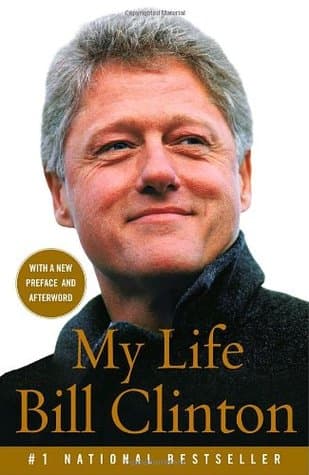
- My Life
Bill Clinton
3.7 (44k) average on GoodreadsPoliticsAnother extensive political memoir from a former U.S. President, offering deep insights into governance and decision-making.
- The World According to Garp
John Irving
4.1 (205k) average on GoodreadsLiterary FictionThis is an error. 'The World According to Garp' is a work of fiction and not similar to 'Hard Choices'.
- 1984
George Orwell
4.2 (3.1M) average on GoodreadsPoliticsIn a future where surveillance and thought control are absolute, a man's search for truth clashes with the Party, showing that hope can be a form of rebellion.
- Animal Farm
George Orwell
4.0 (2.7M) average on GoodreadsPoliticsA farm animals' rebellion against humans turns into a pig-led dictatorship, showing how power corrupts and revolutionary ideals are betrayed.
- Freakonomics: A Rogue Economist Explores the Hidden Side of Everything
Steven D. Levitt
4.0 (709k) average on GoodreadsBusinessThis book uses economic principles to reveal the surprising incentives behind everything from drug dealing and real estate to cheating teachers and the decline of crime.
- I Am Malala: The Story of the Girl Who Stood Up for Education and Was Shot by the Taliban
Malala Yousafzai
4.1 (419k) average on GoodreadsPoliticsA teenage girl from a Taliban-controlled valley refuses to give up her books, becoming a global voice for education even after an assassination attempt.





Enjoyed the summary?
A summary gives you the shape of the book. The book itself has the detail, the examples and the voice.
Find Hard Choices on AmazonAs an Amazon Associate, BookBrief earns from qualifying purchases. How we're funded