
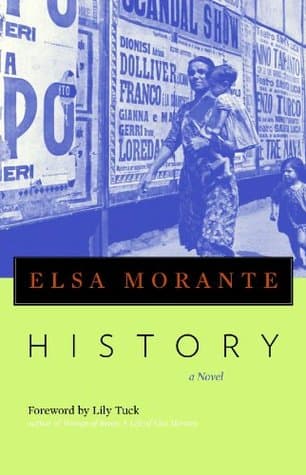
Synopsis
Covers the whole plot, including the ending.
- Difficulty
- Hard
- Pacing
- Slow
- Mood
- Bleak, Melancholy, Profound, Humanistic, Unforgiving
- Read it if
- You want a powerful, unflinching portrayal of ordinary lives caught in the machinery of war, with deep psychological insight and a focus on the resilience and suffering of the innocent.
- Skip it if
- You prefer fast-paced plots, lighthearted themes, or stories with clear heroes and optimistic resolutions.
History Plot Summary
Covers the whole plot, including the ending.
Ida's Quiet Desperation and Early Losses
The novel introduces Ida Mancuso, a timid and anxious schoolteacher in Rome. She is always burdened by her Jewish heritage (which she tries to conceal) and the societal pressures of Fascist Italy. She is a widow, having lost her husband, and lives with her adolescent son, Nino. Nino is a rebellious and often irresponsible young man, contrasting sharply with his mother's reserved nature. He is often out with friends, engaged in petty crimes and black market activities, seemingly oblivious to the escalating dangers of World War II. Ida struggles to maintain a semblance of normalcy and provide for them amidst rationing and the constant threat of air raids. Her anxiety is a pervasive undercurrent to her daily existence.
The Rape and Unexpected Pregnancy
One fateful night, a German soldier, Gunther, on his way to North Africa, billets in Ida's apartment. Despite her desperate attempts to avoid him, he rapes her. The encounter leaves Ida traumatized and pregnant. She hides the pregnancy as long as possible, fearing the shame and the added burden. Eventually, she gives birth to a boy she names Giuseppe, or Useppe. Useppe is a fragile, sensitive, and innocent child whose very existence becomes a source of both immense love and overwhelming fear for Ida, who is terrified of the war's potential to claim him.
Nino's Wartime Adventures and Growing Indifference
As Useppe grows, Nino becomes more deeply entangled in the war's chaos. Initially, he is drawn to Fascist youth movements, enjoying the camaraderie and sense of belonging. However, his allegiances shift with the changing tides of the war. He later joins partisan groups, engaging in dangerous missions and living a life of constant risk. Nino's transformation is marked by a growing detachment from his mother and Useppe. His life becomes a series of fleeting encounters and dangerous escapades. He occasionally returns home, bringing brief moments of joy and fleeting hope, but always leaves again, drawn back to the thrill and danger of his chosen path.
Life in the San Lorenzo Ghetto
Ida and Useppe continue to live in San Lorenzo, one of Rome's poorer and more heavily bombed districts. Their daily lives are a constant struggle against hunger, fear, and the pervasive destruction of war. Air raids become regular, forcing them to seek shelter in crowded, damp cellars. Ida's anxiety for Useppe's safety intensifies with each new bombing. Useppe, despite his tender age, experiences the harsh realities of war, often witnessing death and destruction, yet maintaining a remarkable innocence and a deep connection to nature and the few moments of simple joy he finds.
The Evacuation and Return
As the war intensifies and Rome becomes an increasingly dangerous place, Ida and Useppe are forced to evacuate. They join countless others fleeing the city, enduring a difficult journey to the countryside. They find temporary shelter in a remote village, experiencing the poverty and resilience of the rural population. This period highlights the war's universal impact, as ordinary people from all walks of life are uprooted and forced to adapt to unimaginable hardships. Despite the challenges, Ida's primary focus remains Useppe's survival, and she makes every sacrifice to protect him.
The Tragic Death of Blitz
Nino's beloved dog, Blitz, a German Shepherd, is a constant companion during Nino's early years and a source of comfort for Ida and Useppe. Blitz is loyal and protective, a symbol of unwavering affection in a world filled with instability. However, during one of Nino's partisan escapades, Blitz is tragically killed. His death is a profound loss for the family, particularly for Nino, and is a poignant reminder of how the war indiscriminately claims lives, even those of innocent animals, further eroding any remaining sense of normalcy or joy.
Nino's Final Recklessness and Death
Nino's life as a partisan and later as a black marketeer becomes increasingly reckless. He is involved in various illicit activities, often driving stolen vehicles and living on the edge. Despite his mother's constant worry and pleas for caution, Nino remains unyielding in his pursuit of freedom and adventure. His wild lifestyle eventually catches up with him when he dies in a motorcycle accident. His death is a crushing blow to Ida, who had already endured so much. It represents the final, irreversible loss of her first son, leaving her with only Useppe.
Useppe's Illness and Fragile Existence
Useppe, always a delicate child, begins to suffer from increasingly severe epileptic seizures. His fragile health is a constant source of terror for Ida, who attributes his condition to the traumatic circumstances of his conception and birth. The seizures become more frequent and debilitating, highlighting his inherent vulnerability and the physical toll of his difficult start in life. Ida desperately seeks medical help, but resources are scarce in post-war Italy, and the underlying cause of Useppe's condition remains a mystery, adding to Ida's despair and sense of powerlessness.
The Post-War Struggle and Ida's Isolation
Even after the official end of World War II, life for Ida and Useppe remains a struggle. Rome is rebuilding, but poverty and scarcity persist. Ida continues to work as a schoolteacher, but her pay is meager, and she often has to take on additional work. Her already timid nature becomes more pronounced, and she retreats further into herself. Her world narrows to her devotion to Useppe. She witnesses society's superficial return to 'normalcy,' but for her, the scars of war run deep, and her isolation from the burgeoning post-war consumerism and optimism grows.
Useppe's Profound Innocence and Connection to Life
Throughout his short life, Useppe possesses a remarkable purity and an almost spiritual connection to nature and the simple joys of existence. He communicates largely through his eyes. His words are often simple, yet profound. He finds wonder in everyday things—a flower, an animal, a ray of sunlight. This innocence stands in stark contrast to the brutality of the world around him. His gentle nature and capacity for pure love become a beacon of hope and a source of meaning for Ida, even as his health declines.
The Final Decline and Death of Useppe
Useppe's epileptic seizures become more frequent and severe, eventually leading to a rapid decline in his health. Despite Ida's tireless efforts and desperate prayers, Useppe's small body can no longer sustain itself. He dies, leaving Ida utterly devastated. His death is the final, most unbearable blow, robbing her of the only pure love and reason for living she had left. The narrative emphasizes the immense tragedy of a beautiful, innocent life extinguished by circumstances beyond his control, a direct consequence of the 'History' that shaped his brief existence.
Ida's Despair and the Indifference of History
After Useppe's death, Ida's world collapses entirely. She is left with an unbearable grief and a profound sense of emptiness. Her life, once defined by her efforts to protect her sons, is now devoid of purpose. The novel concludes with Ida's desolate existence, highlighting the ultimate powerlessness of individuals against the vast, impersonal forces of 'History.' Her suffering, like that of countless others, is swallowed by the grand narrative of political events, underscoring the novel's central theme of the ordinary individual's struggle against an indifferent, often cruel, world.
Principal Figures
Ida Mancuso
Protagonist
A timid, anxious schoolteacher struggling to protect her sons amidst the horrors of World War II.
Ida Mancuso is a deeply introverted and perpetually anxious woman, haunted by her hidden Jewish heritage and the constant fear of persecution. She is a widow and a dedicated, if somewhat ineffectual, mother. Her life is defined by quiet suffering and a desperate, almost obsessive, love for her children, particularly Useppe. She is a survivor, enduring immense personal tragedy and the widespread devastation of war with a stoic, albeit fragile, resilience. Her timidity often prevents her from asserting herself, making her a passive victim of circumstances.
Relationships: Nino (Her first son; a source of both worry and fleeting joy, whom she loves despite his recklessness.); Useppe (Her second son, conceived in rape; the sole focus of her love and reason for living, whose fragile existence becomes her obsession.); Gunther (The German soldier who rapes her, leading to Useppe's birth; a traumatic, brief encounter.)
Nino Mancuso
Supporting
Ida's rebellious and adventurous elder son, drawn to the excitement and danger of wartime activities.
Nino is Ida's first son, a spirited, handsome, and often reckless young man. He embodies a thirst for life and adventure that contrasts sharply with his mother's timidity. He is charismatic and popular, easily adapting to the changing political landscape, moving from Fascist youth to partisan fighter, and later a black marketeer. While he loves his family, his desire for freedom and thrill often leads him away from them. He is a complex character, capable of both deep affection (especially for his dog, Blitz, and Useppe) and profound indifference to the dangers he courts.
Relationships: Ida (His mother; he loves her but often frustrates and worries her with his independence and dangerous choices.); Useppe (His younger half-brother; he has a tender, protective affection for Useppe, often bringing him joy and small gifts.); Blitz (His loyal dog and constant companion; their bond highlights Nino's capacity for deep affection.)
Giuseppe (Useppe) Mancuso
Supporting
Ida's innocent, delicate, and profoundly sensitive second son, a symbol of pure life amidst devastation.
Useppe is Ida's second son, conceived through rape. He is a fragile, sensitive, and profoundly innocent child, often described with an almost ethereal quality. Despite his difficult birth and the harsh realities of wartime Rome, he possesses a remarkable purity and a deep, almost mystical, connection to nature and the simple joys of life. He experiences the world with an intense, unblemished wonder, often seeming oblivious to the surrounding horror. His vulnerability and eventual illness underscore the novel's tragic themes of innocence lost and the indiscriminate suffering inflicted by history.
Relationships: Ida (His mother; she loves him obsessively and dedicates her life to protecting his fragile existence.); Nino (His older half-brother; Nino shows him great tenderness and affection, often playing with him and bringing him joy.)
Blitz
Supporting
Nino's loyal German Shepherd, a symbol of unconditional love and innocence amidst the war.
Blitz is Nino's beloved German Shepherd dog. He is a loyal, protective, and intelligent animal, often accompanying Nino on his adventures. Blitz provides a comforting presence for Ida and Useppe when Nino is away, and his unconditional love stands in stark contrast to the human cruelty and indifference prevalent during the war. His tragic death is a significant moment, symbolizing the pervasive loss of innocence and the indiscriminate nature of suffering that affects even the most blameless creatures.
Relationships: Nino (His devoted owner and best friend, with whom he shares a deep bond.); Ida and Useppe (Provides comfort and companionship to them when Nino is absent.)
Gunther
Mentioned
The German soldier who rapes Ida, an anonymous agent of the war's brutality.
Gunther is a German soldier, briefly encountered by Ida when he is billeted in her apartment. He is depicted as a typical, albeit brutal, soldier of the occupying forces. His act of rape is swift and violent, leaving Ida pregnant with Useppe. He represents the impersonal, dehumanizing aspect of war, where individuals become instruments of violence and suffering, leaving lasting scars without conscious intent or connection.
Relationships: Ida (His victim; their encounter is brief and traumatic, with profound consequences.)
Various Minor Characters
Mentioned
A collective of ordinary people encountered by Ida and her sons, representing the diverse impact of war.
Throughout the novel, Ida and her sons encounter a multitude of minor characters: neighbors, fellow evacuees, partisans, black marketeers, and ordinary citizens. These characters include the prostitutes Nino associates with, the various partisans he fights alongside, the rural families who provide shelter during evacuation, and the street vendors and beggars of Rome. They serve to illustrate the wide-ranging effects of the war on different social strata and individual lives, providing a mosaic of human resilience, desperation, cruelty, and occasional kindness.
Relationships: Ida, Nino, Useppe (Brief, often transactional or observational interactions that highlight the shared human experience of wartime.)
Themes & Insights
The Indifference of History to Individual Suffering
This is the central theme of the novel. Morante argues that 'History,' as written by powerful men and marked by grand political events, is oblivious to the immense suffering it inflicts upon ordinary individuals. Ida's quiet desperation, her struggle to feed and protect her children, the trauma of rape, and the ultimate loss of both sons are presented as insignificant footnotes in the larger, impersonal narrative of war. The narrative frequently interjects with ironic, detached historical summaries, juxtaposing the 'facts' of history with the visceral, personal tragedies experienced by the Mancuso family. For example, the bombing of San Lorenzo is a mere statistic in history books, but for Ida and Useppe, it is a terrifying, life-altering event.
“History, however, is not concerned with the fate of individuals, but with the destiny of nations.”
The Loss of Innocence
The novel depicts the erosion of innocence, both literally and figuratively, under the relentless pressure of war. Useppe, with his pure heart and connection to life, embodies ultimate innocence, which is tragically extinguished by his illness. This illness is a direct consequence of his traumatic origins and the war's lingering effects. Nino, while never truly 'innocent' in the conventional sense, loses any remaining naivety as he goes deeper into the violence and moral ambiguities of partisan life and the black market. Even Ida, though an adult, loses her innocence in the face of brutal rape and the constant threat to her children, forcing her to confront humanity's darkest aspects.
“And Useppe, the little child, had to bear the whole weight of History on his tiny shoulders.”
Maternal Love and Sacrifice
Ida's character is defined by her fierce, unwavering, and often desperate maternal love, particularly for Useppe. Her entire existence becomes centered on protecting her children, providing for them, and shielding them from the horrors of the war. She endures poverty, humiliation, and grief, making countless sacrifices for their well-being. This theme explores a mother's primal instinct to safeguard her offspring, even when faced with insurmountable odds. Ida's love is both a source of her strength and the ultimate cause of her suffering when she loses her sons.
“Her love for Useppe was a wound that would never heal, the only thing that gave meaning to her existence.”
The Brutality and Absurdity of War
Morante vividly portrays war's multifaceted brutality, not just through direct combat but through its devastating impact on civilian life: starvation, displacement, random violence, and psychological trauma. The novel also highlights war's absurdity, where human lives are squandered for abstract political ideals, and individuals are reduced to pawns in a senseless game. Nino's changing allegiances, the senseless deaths, and the pervasive fear illustrate the arbitrary nature of wartime suffering. The narrative often contrasts leaders' grand pronouncements with the squalid, terrifying realities faced by ordinary people.
“The war, a river in flood, swept away everything, leaving only mud and debris.”
Social Injustice and Class Divide
The novel clearly illustrates the deep-seated social injustices and class divides that persist even during wartime. Ida and her family, living in the impoverished San Lorenzo district, are among the most vulnerable to the war's ravages. They suffer from lack of food, inadequate shelter, and limited access to healthcare, while wealthier individuals often find ways to mitigate the hardships. The contrast between the suffering of the urban poor and the indifference or opportunism of some members of the middle and upper classes is a recurring motif, underscoring how war exacerbates existing inequalities.
“For the poor, history was always the same: hunger, fear, and the endless struggle to survive.”
Plot Devices & Literary Techniques
Omniscient Narrator with Editorial Commentary
A highly intrusive and opinionated narrator who frequently interjects historical facts and philosophical observations.
The narrator in 'History' is not merely a storyteller but an active, judgmental presence. This omniscient voice frequently breaks the fourth wall, offering direct commentary on the events, the characters' psychology, and, most notably, the nature of 'History' itself. The narrator provides historical context, statistics, and philosophical musings, often with a sarcastic or despairing tone, directly contrasting the grand sweep of historical events with the minute, yet devastating, personal tragedies. This device reinforces the novel's central theme of the indifference of history to individual suffering and shapes the reader's interpretation of the events.
Juxtaposition of Personal and Historical Narratives
The alternating presentation of intimate character experiences with factual, detached historical accounts.
Morante masterfully employs juxtaposition by alternating between the deeply personal, emotionally charged narrative of Ida and her sons' daily lives and the cold, factual accounts of historical events (dates, battles, political shifts). This technique highlights the chasm between the 'official' record of history and the lived experience of those caught within it. For example, a scene detailing Ida's struggle to find food for Useppe might be followed by a paragraph outlining the strategic importance of a particular battle. This contrast emphasizes the novel's core message: that history often overlooks the individual human cost of its grand narratives.
Symbolism of Useppe's Innocence
Useppe represents pure, unadulterated life and innocence, tragically vulnerable to the forces of 'History'.
Useppe, with his ethereal beauty, profound sensitivity, and almost spiritual connection to the world, functions as a powerful symbol of pure innocence. His existence, born from an act of violence amidst war, yet embodying such unblemished goodness, makes him a poignant representation of what 'History' destroys. His recurring illness and eventual death are not just personal tragedies but symbolic acts, signifying the ultimate triumph of the brutal, indifferent forces of the world over pure, innocent life. His vulnerability underscores the novel's indictment of human cruelty and the senselessness of war.
Animal Companions as Moral Barometers
The presence and fate of animals (Blitz, Bella) reflect the humanity or brutality of the characters and the war.
Animals in 'History,' particularly Nino's dog Blitz and Useppe's cat Bella, serve as more than just pets; they act as moral barometers and symbols of uncomplicated affection and loyalty. Blitz's unwavering devotion to Nino and his tragic death underscore the indiscriminate nature of the war's destruction. Bella's presence offers comfort and a connection to the natural world for Useppe. Their fates often mirror the characters' own struggles and losses, highlighting the profound impact of the war on all living beings and emphasizing the contrast between animal innocence and human brutality.
History Quotes
“The past is a foreign country; they do things differently there.”
“The poor are always present, their suffering constant, a testament to the repetitive nature of human misery.”
“Every war is a crime, even when it is called a liberation.”
“History is a disease. Humanity is a disease. Only the animals are innocent.”
“The true heroes are those who resist, even when resistance seems futile.”
“Memory is a fragile thing, easily distorted, easily lost.”
“The greatest cruelty is not always violent; sometimes it is simply indifference.”
“Children, in their ignorance, are often the only ones who see clearly.”
“Love, even in the darkest times, is the only true act of rebellion.”
“The silence of God is the loudest sound in a world of suffering.”
“Hope is a dangerous thing, but despair is a deadlier one.”
“The small gestures of kindness are the only real monuments against oblivion.”
“Every life, no matter how humble, carries the weight of all history.”
“To forget is to participate in the crime.”
Quiz
10 questions on the plot and the characters. Each answer comes with a short explanation.
Question 1
Which of the following best describes the central character, Ida Mancuso?
- A wealthy socialite who uses her influence to help others during the war.
- A schoolteacher struggling to survive and protect her children during wartime.
- A young partisan fighter actively resisting the German occupation.
- A factory worker who becomes a prominent figure in the black market.
Show answer
B. A schoolteacher struggling to survive and protect her children during wartime. Ida Mancuso is clearly described as a schoolteacher whose primary struggle is for life and bread for herself and her children amidst the war.
Question 2
What is the primary motivation for Elsa Morante to write 'History'?
- To celebrate the heroic actions of Italian soldiers during World War II.
- To document the economic recovery of Italy after the war.
- To show the impact of grand historical events on ordinary people's lives.
- To romanticize the experience of living in remote Italian villages.
Show answer
C. To show the impact of grand historical events on ordinary people's lives. The text states Morante's ambition was to write an account of 'what history - the great political events driven by men of power, wealth, and ambition - does when it reaches the realm of ordinary people struggling for life and bread.'
Question 3
How does Ida Mancuso become pregnant with her second son?
- Through a consensual relationship with a local Italian man.
- She is raped by a German soldier who then falls in love with her.
- Her deceased husband's brother fathers the child.
- She adopts a war orphan and raises him as her own.
Show answer
B. She is raped by a German soldier who then falls in love with her. The synopsis explicitly states, 'A German soldier on his way to North Africa rapes her, falls in love with her, and leaves her pregnant with a boy.'
Question 4
What is the attitude of Ida Mancuso's feckless teenage son towards the war?
- He actively participates in humanitarian aid efforts.
- He treats it as a playground, seemingly oblivious to its gravity.
- He dedicates himself to protecting his mother and younger brother.
- He becomes a cynical and disillusioned intellectual.
Show answer
B. He treats it as a playground, seemingly oblivious to its gravity. The text describes him as 'feckless' and states he 'treats the war as his playground,' indicating a lack of serious engagement or understanding of its dangers.
Question 5
Which of the following historical details is NOT mentioned as a 'glimpse' caught in the novel?
- Bombing raids.
- A major naval battle in the Mediterranean.
- Street crimes.
- A cattle car from which human cries emerge.
Show answer
B. A major naval battle in the Mediterranean. The text lists 'bombing raids, street crimes, a cattle car from which human cries emerge, an Italian soldier succumbing to frostbite on the Russian front' as glimpses, but no major naval battles.
Question 6
What literary device is used to describe the war's pervasive influence on the characters?
- A gentle breeze.
- A distant echo.
- A river in flood.
- A quiet whisper.
Show answer
C. A river in flood. The text states, 'each caught up by the war which is like a river in flood,' using a simile to convey its overwhelming and uncontrollable nature.
Question 7
What specific experience did Elsa Morante have that directly influenced her ambition to write 'History'?
- She served as a nurse on the front lines during the war.
- She spent a year in hiding among remote farming villages, witnessing the war's impact.
- She interviewed many high-ranking military officials about their wartime strategies.
- She worked as a journalist, reporting from various European capitals.
Show answer
B. She spent a year in hiding among remote farming villages, witnessing the war's impact. The introduction explicitly states, 'There she witnessed the full impact of the war and first formed the ambition to write an account of what history... does when it reaches the realm of ordinary people.' This 'there' refers to 'a year in hiding among remote farming villages.'
Question 8
What overarching theme does the 'dumb endurance of peasants' who must 'get by with less than nothing' convey in the novel?
- The resilience of the human spirit in the face of extreme hardship.
- The intellectual superiority of rural populations over urban dwellers.
- The inherent futility of any attempt to resist oppressive regimes.
- A critique of modern agricultural practices during wartime.
Show answer
A. The resilience of the human spirit in the face of extreme hardship. The phrase 'dumb endurance' suggests a silent, uncomplaining strength in the face of unimaginable poverty and suffering, highlighting the resilience of ordinary people.
Question 9
The synopsis mentions a German soldier who rapes Ida, 'falls in love with her, and leaves her pregnant.' How does this complex interaction contribute to the novel's 'unforgiving' nature?
- It presents a romanticized view of wartime relationships, softening the harsh realities.
- It complicates the moral landscape, showing how extreme situations can blur lines between victim and aggressor, and love and violence.
- It is a minor plot point with little impact on Ida's overall struggle.
- It serves to demonstrate the German soldier's redemption and ultimate heroism.
Show answer
B. It complicates the moral landscape, showing how extreme situations can blur lines between victim and aggressor, and love and violence. The 'unforgiving' nature of the novel is underscored by such a traumatic event leading to a lasting consequence (pregnancy) and the confusing emotional entanglement described, preventing easy moral judgments and highlighting the brutal complexities of war on personal lives.
Question 10
Considering the novel's focus on 'what history... does when it reaches the realm of ordinary people,' what is the likely narrative perspective or tone regarding 'men of power, wealth, and ambition'?
- A celebratory and admiring tone, praising their leadership.
- A detached, journalistic account, avoiding any judgment.
- A critical and perhaps resentful tone, viewing them as agents of suffering for the common person.
- An empathetic portrayal, highlighting the burdens of their responsibilities.
Show answer
C. A critical and perhaps resentful tone, viewing them as agents of suffering for the common person. The framing describes history as 'driven by men of power, wealth, and ambition' and then focuses on the 'impact' and 'struggling for life and bread' of ordinary people. This juxtaposition implies a critical view of those in power, holding them responsible for the suffering of the masses, aligning with the novel's 'unforgiving' nature.
History FAQ
What is the central premise of Elsa Morante's 'History'?
'History' explores the devastating impact of World War II on ordinary Italian citizens, particularly focusing on the lives of those marginalized and powerless. It contrasts the grand, often brutal, sweep of historical events driven by powerful men with the daily struggles for survival, dignity, and basic necessities faced by common people, highlighting their resilience and suffering.
Who is Ida Mancuso, and what is her initial situation at the start of the novel?
Ida Mancuso is a widowed schoolteacher living in Rome with her teenage son, Nino. She is introverted and somewhat fragile, already burdened by her husband's death and Nino's reckless, often irresponsible behavior, which she struggles to control amidst the escalating chaos of wartime Italy.
How does the German soldier's act of violence shape Ida's life and the subsequent plot?
A German soldier rapes Ida, an act of violence that leads to her unexpected pregnancy. This event irrevocably alters her life, as her focus shifts entirely to the survival and protection of her new son, Useppe. His birth and subsequent care become the central driving force of her existence, providing a fragile beacon of hope amidst the surrounding destruction.
Who is Nino, and how does his character contrast with Ida's?
Nino is Ida's older son, a spirited and often rebellious teenager who initially views the war as an adventure or a playground for his youthful escapades. He frequently disappears, engages in black market activities, and later joins various factions. His impulsive, life-affirming, yet often dangerous nature stands in stark contrast to Ida's internal, suffering, and protective maternal instincts.
What role does the character of Useppe play in the narrative?
Useppe, Ida's second son, represents innocence, vulnerability, and a pure, unadulterated joy for life. His presence brings moments of profound tenderness and beauty into Ida's harsh existence, serving as a symbol of hope and the enduring human spirit, even as his precarious health underscores the fragility of life during wartime.
How does the novel depict the experience of Jewish people during the war in Rome?
The novel includes harrowing glimpses of the fate of Jewish people in Rome, notably through the chilling description of a cattle car from which human cries emerge, implicitly heading towards concentration camps. This detail serves as a stark reminder of the broader atrocities of the Holocaust, extending the novel's scope beyond the immediate Italian experience to universal suffering.
Are there any characters in the novel who represent the intellectual or artistic response to the war?
Yes, characters like Davide Segre, a young Jewish intellectual and poet, offer a different perspective. He grapples with the philosophical and existential implications of the war, often expressing profound despair and a sense of the world's moral collapse. His intellectual struggles provide a contrast to the more visceral, survival-driven experiences of characters like Ida and Nino.
What is the significance of the recurring motif of animals in the novel?
Animals, particularly Useppe's dog, Blitz, and the general presence of stray animals, often serve as silent witnesses to human suffering and resilience. They embody a primal innocence and an unyielding will to survive, mirroring the human characters' struggles but without the burden of human consciousness or historical understanding. Blitz's loyalty and Useppe's bond with him highlight pure, unconditional affection.
How does the novel use the Italian landscape and urban settings to reflect its themes?
The novel contrasts the bombed-out, decaying urban landscapes of Rome, symbolizing the destruction of civilization, with the harsh, enduring natural landscapes of the remote farming villages. These villages, where Morante herself hid, represent a timeless, almost primeval existence where people live closer to the earth, enduring history's ravages with stoic resilience and a focus on basic survival.
How does Ida's psychological state evolve throughout her ordeal?
Ida's psychological state shifts from a fragile, almost passive existence to one dominated by fierce maternal protectiveness and an internal world of suffering. She becomes increasingly withdrawn, finding solace only in Useppe's presence. Her initial timidity gives way to a profound, almost primal endurance, though she remains emotionally scarred and perpetually anxious about her son's well-being.
What psychological impact does Nino's reckless behavior have on Ida?
Nino's recklessness and frequent disappearances cause Ida immense psychological distress, ranging from chronic anxiety to profound grief and helplessness. She constantly fears for his safety and struggles with her inability to control him, which exacerbates her sense of isolation and powerlessness amidst the war's chaos. His actions often force her into difficult, dangerous situations.
How does the novel explore the psychology of survival under extreme conditions?
'History' delves into the raw, often instinctual psychology of survival, showing characters driven by hunger, fear, and the desperate need to protect loved ones. It highlights the human capacity for endurance, adaptation, and even finding fleeting moments of joy amidst unimaginable hardship, while also exposing the psychological toll of constant deprivation and violence.
What is the psychological significance of Useppe's unique sensitivity and eventual illness?
Useppe's extraordinary sensitivity to the world, his pure joy, and his later illness can be interpreted as a psychological metaphor for the fragility of innocence and goodness in a brutal world. His eventual decline underscores the war's pervasive, inescapable damage, even to the most untouched and beloved beings, suggesting that no one truly escapes its scars.
Is 'History' a critique of historical narratives focused solely on 'great men' and political events?
Absolutely. Morante explicitly critiques traditional historical narratives by foregrounding the experiences of the marginalized – women, children, the poor, and the disabled – whose lives are crushed by 'History' but rarely recorded. The novel argues that true history resides in the suffering and resilience of ordinary people, not just in the actions of leaders.
How does the novel's cyclical structure or sense of repetition contribute to its message?
The novel often employs a cyclical or repetitive structure, with characters facing similar struggles across different phases of the war or subsequent generations. This repetition emphasizes the enduring, almost timeless nature of human suffering and the relentless, unchanging impact of 'History' on the powerless, suggesting that cycles of violence and poverty are hard to break.
To what extent does the novel offer hope amidst its pervasive depiction of suffering?
While 'History' is overwhelmingly bleak, hope flickers through moments of pure human connection, maternal love, and the innocent joy of characters like Useppe. The sheer endurance of Ida and the survival of some characters, however scarred, suggest a stubborn, if often tragic, persistence of life. However, it's a very qualified and hard-won hope, not an optimistic one.
What is the significance of the novel's title, 'History'?
The title is deeply ironic and critical. It refers to the 'official' History – the grand political narratives of wars and rulers – which Morante argues is a brutal, destructive force. By capitalizing 'History' in some translations or implicitly, she underscores its oppressive weight, contrasting it with the 'history' of everyday lives, which is often ignored but profoundly affected.
How does Morante's personal experience inform the novel's realism and emotional intensity?
Morante's own experience of hiding in remote villages during WWII, witnessing firsthand the war's impact on ordinary people, imbues 'History' with profound realism and raw emotional intensity. This personal connection allows her to depict the deprivations, fears, and small acts of kindness with an authenticity that resonates deeply, making the suffering palpable.
About the author
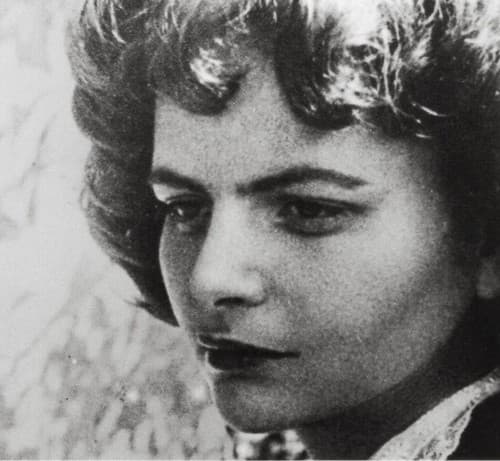
Elsa Morante was an Italian author known for her significant contributions to 20th-century literature. Her notable works include "History," which explores themes of war and human experience through a fictional narrative. Morante's writing often blends personal and historical elements, reflecting the complexities of life during her era.
Similar books
- Austerlitz
W.G. Sebald
4.0 (14k) average on GoodreadsHistorical FictionMeditative, melancholic exploration of memory, history, and the lingering trauma of war.
- The Radetzky March
Joseph Roth
4.1 (8k) average on GoodreadsHistorical FictionEpic historical novel depicting the decline of an empire through the lives of an ordinary family, with a similar sense of historical inevitability.
- To Kill a Mockingbird
Harper Lee
4.3 (4.5M) average on GoodreadsHistorical FictionIn the 1930s Jim Crow South, Harper Lee writes about racial injustice, moral growth, and the quiet courage of a lawyer father, Atticus Finch, as seen through his young daughter's eyes.
- The Great Gatsby
F. Scott Fitzgerald
3.9 (3.8M) average on GoodreadsHistorical FictionIn the opulent Roaring Twenties, a mysterious millionaire's lavish parties hide his desperate, tragic pursuit of a lost love, exposing the emptiness within the American Dream.
- Pride and Prejudice
Jane Austen
4.3 (3M) average on GoodreadsHistorical FictionIn a society focused on status and money, Elizabeth Bennet navigates love and pride, challenging Mr. Darcy and social expectations to find true affection.
- Angels & Demons
Dan Brown
3.9 (2.7M) average on GoodreadsThrillerA Harvard symbologist races through Rome's ancient sites, deciphering cryptic clues to unmask the Illuminati and stop a vengeful plot to destroy the Vatican with a stolen antimatter weapon.




Enjoyed the summary?
A summary gives you the shape of the book. The book itself has the detail, the examples and the voice.
Find History on AmazonAs an Amazon Associate, BookBrief earns from qualifying purchases. How we're funded