

Synopsis
Covers the whole plot, including the ending.
- Difficulty
- Medium
- Pacing
- Moderate
- Mood
- Thought-provoking, Tragic, Suspenseful, Emotional, Somber
- Read it if
- You enjoy thought-provoking literary fiction that explores complex themes of identity, loyalty, love, and political extremism, with a narrative structure reminiscent of Greek tragedy.
- Skip it if
- You prefer light-hearted stories or shy away from narratives dealing with terrorism and the painful consequences of radicalization.
Home Fire Plot Summary
Covers the whole plot, including the ending.
Isma's Departure and the Shadow of the Past
Isma Pasha, the oldest of three siblings, finally escapes the burden of raising her younger sister, Aneeka, and brother, Parvaiz, after their mother's death. She accepts a scholarship to study sociology in Amherst, Massachusetts, a long-held dream. Before leaving London, British intelligence interrogates Isma, a result of her family's past: their father, Adil Pasha, was a jihadist. This questioning, about her brother Parvaiz's recent disappearance, hints at the danger and suspicion that will follow the Pasha siblings, despite Isma's efforts to start a new life in America.
Eamonn and Isma's Unexpected Connection
While in Amherst, Isma meets Eamonn Lone, a charming and wealthy young man. He is the son of Karamat Lone, a British Home Secretary who has strong views on terrorism and is Muslim. Their first meeting is awkward, as Eamonn mistakenly thinks Isma is a waitress. However, they soon connect, bonding over their shared British-Pakistani background, though from very different social levels. Eamonn likes Isma's intelligence and strength, while Isma finds herself captivated by his easy confidence and kindness, a contrast to her years of worry.
Eamonn's Return to London and Aneeka's Entanglement
Eamonn returns to London after his time in America. Isma, hoping to keep their new connection, gives him Aneeka's contact information. Eamonn and Aneeka, a striking and independent law student, quickly begin an intense romantic relationship. Their affair is physical and emotionally consuming, becoming the main part of Aneeka's life. Eamonn does not know that Aneeka has a hidden reason for being with him: she thinks he can help find her missing brother, Parvaiz, who she suspects has gone to Syria to join a jihadi group, following their father.
Parvaiz's Deception and Journey to Raqqa
Parvaiz, feeling lost and wanting a sense of belonging and purpose, is influenced by Farooq, an extremist recruiter. Farooq uses Parvaiz's insecurities and his desire to connect with the past of his deceased jihadi father, Adil Pasha, whom Parvaiz never knew. Believing he is going to Turkey for a sound engineering job, Parvaiz is tricked into crossing the border into Syria, where he finds himself in Raqqa, the main city of ISIS. He quickly understands the harsh reality of his situation, far from the ideal of brotherhood and purpose he was promised.
Aneeka's Plea and Karamat Lone's Refusal
Aneeka, desperate to save Parvaiz, tells Eamonn's father, Karamat Lone, about her relationship with Eamonn and her brother's situation during a televised interview. She publicly asks for help, using her closeness with Eamonn to pressure the Home Secretary. However, Karamat Lone, unwilling to risk his political career and tough-on-terror image, publicly denies any connection to the Pasha family and refuses to help. This effectively dooms Parvaiz and destroys Aneeka's hopes and her relationship with Eamonn, who feels used.
Eamonn's Betrayal and Parvaiz's Desperation
Eamonn is deeply hurt and angered by Aneeka's manipulation, feeling used and betrayed. He ends their relationship, unable to accept her actions with his feelings for her. Meanwhile, Parvaiz, now very disappointed with ISIS and scared for his life, makes a desperate attempt to escape Raqqa. He records a video message for his sisters, expressing his regret and love, and tries to reach the Turkish border, helped by a contact. His escape is dangerous, and he is always aware of the severe results if ISIS catches him.
Parvaiz's Capture and Execution
Despite his efforts, ISIS fighters catch Parvaiz while he tries to escape Raqqa. They accuse him of treason. In a public event, Parvaiz is beheaded, an act filmed and shared online as propaganda. This brutal event reaches the Pasha sisters, devastating them and confirming their worst fears. The news solidifies the family's tragic connection to extremism and shatters any remaining hope of Parvaiz's return, leaving Aneeka and Isma to deal with grief and public scrutiny.
Aneeka's Act of Defiance and Mourning
After Parvaiz's execution, Aneeka begins a public act of mourning. She travels to Turkey, determined to get her brother's body and bring him home for burial, believing it is a basic human right. However, the British government, led by Karamat Lone, refuses to return Parvaiz's remains, calling him a terrorist. This refusal increases Aneeka's anger and sense of injustice, turning her personal grief into a political statement and bringing international media attention to her situation. Isma, though critical of Aneeka's methods, supports her sister.
Eamonn's Reckoning and Journey to Turkey
Feeling guilty about his part in Aneeka's public humiliation and Parvaiz's fate, Eamonn travels to Turkey. He needs to make amends and reconcile. He finds Aneeka, who is on a hunger strike outside the British embassy, demanding the return of Parvaiz's body. Eamonn, now estranged from his father, tries to close the gap between them, offering support and renewed devotion. He hopes to convince Aneeka to end her hunger strike and to find a way to honor Parvaiz's memory, even as the political stalemate continues.
The Final, Tragic Confrontation
In a shocking ending, Eamonn, trying to show his love and support for Aneeka, is killed. While walking with Aneeka in a public park in Istanbul, a car bomb targets and kills him. A radicalized person, possibly linked to the same extremist groups that drew in Parvaiz, carried out the attack. The explosion is a horrific end to the intertwined fates of the Pasha and Lone families, leaving Aneeka devastated and Karamat Lone in deep grief and political ruin, as violence and extremism claim another life.
Principal Figures
Isma Pasha
Protagonist/Supporting
Eldest sister, seeking her origins and a new life in America
Isma is the eldest of the Pasha siblings, burdened by the responsibility of raising her younger sister, Aneeka, and brother, Parvaiz, after their mother's death. She is intelligent, pragmatic, and deeply conflicted by her family's jihadi legacy. Her journey to America for a PhD represents her yearning for independence and a chance to define herself outside her family's shadow. Despite her attempts to distance herself, she remains fiercely loyal to her siblings, particularly in their times of crisis, and constantly grapples with the tension between her personal desires and familial duty.
Relationships: Aneeka Pasha (Younger sister, complex and loving but often at odds); Parvaiz Pasha (Younger brother, deeply concerned for his well-being); Eamonn Lone (Brief romantic interest, then a bridge to Aneeka); Karamat Lone (Political figure, source of conflict and personal connection)
Aneeka Pasha
Protagonist/Supporting
Beautiful, headstrong younger sister, driven by fierce loyalty and love
Aneeka is the middle Pasha sibling, portrayed as strikingly beautiful, fiercely intelligent, and intensely passionate. She is studying law and possesses a strong sense of justice, which often manifests as defiance. Her love for her brother, Parvaiz, is the driving force behind many of her actions, leading her to manipulate Eamonn Lone in a desperate attempt to save Parvaiz. Aneeka is unafraid to challenge authority and public opinion, using her body and her voice as tools of protest. Her mourning for Parvaiz is public and performative, making her a controversial figure.
Relationships: Isma Pasha (Older sister, source of advice and occasional friction); Parvaiz Pasha (Twin-like bond, intense love and loyalty); Eamonn Lone (Passionate lover, then manipulated for her brother's sake); Karamat Lone (Political adversary, target of her public pleas)
Parvaiz Pasha
Supporting
Vulnerable younger brother, lured into extremism by a desire for identity
Parvaiz is the youngest Pasha sibling, gentle, impressionable, and deeply insecure. He feels overshadowed by his sisters' intelligence and is haunted by the absence of his jihadi father, Adil Pasha. His longing for a sense of belonging and a connection to his father's legacy makes him vulnerable to the manipulative recruitment of Farooq. He is an aspiring sound engineer, a detail that highlights his artistic sensitivity, but ultimately, his search for identity leads him to Syria and a tragic end. He quickly regrets his decision to join ISIS.
Relationships: Isma Pasha (Older sister, source of care and concern); Aneeka Pasha (Older sister, deep emotional bond); Farooq (Manipulative recruiter); Adil Pasha (Deceased jihadi father, his legacy profoundly impacts Parvaiz)
Eamonn Lone
Protagonist/Supporting
Charismatic son of a powerful politician, caught between love and political loyalty
Eamonn is the son of Karamat Lone, the British Home Secretary. He is charming, intelligent, and initially seems disarmingly carefree, despite his privileged background. His relationship with Isma, and then his passionate affair with Aneeka, draw him into the Pasha family's orbit and their complex struggles with identity and extremism. Eamonn struggles with his own identity, both as a Muslim and as the son of a prominent politician, and feels a deep need to prove himself. His love for Aneeka makes him vulnerable to her manipulation, leading to profound personal conflict and ultimately, tragedy.
Relationships: Isma Pasha (Brief romantic interest, then a friend); Aneeka Pasha (Passionate lover, then betrayed, then reconciled); Karamat Lone (Father, strained relationship due to political and personal differences); Monica Lone (Mother, supportive but somewhat detached)
Karamat Lone
Antagonist/Supporting
British Home Secretary, a powerful politician prioritizing his career and public image
Karamat Lone is a high-ranking British politician, the Home Secretary, and a Muslim who has risen to power by adopting a hardline stance on terrorism. He is ambitious, image-conscious, and ruthlessly pragmatic, often putting his political career above personal or familial loyalties. His past as a working-class immigrant who 'made good' informs his strict views on integration and loyalty to Britain. He becomes a central antagonist when he refuses to help Parvaiz and later repatriate his body, viewing the Pasha family as a political liability. His relationship with his son, Eamonn, is strained by their differing moral compasses.
Relationships: Eamonn Lone (Son, strained and ultimately broken relationship); Monica Lone (Wife, supportive but also a witness to his ambition); Aneeka Pasha (Political adversary, target of her public protests)
Adil Pasha
Mentioned
Deceased jihadi father, whose legacy haunts his children
Adil Pasha is the deceased father of Isma, Aneeka, and Parvaiz. He was a British jihadi who left his family to fight in Afghanistan, becoming a notorious figure. Though never seen in the narrative, his shadow looms large over his children's lives, shaping their identities, attracting suspicion from authorities, and influencing Parvaiz's tragic choices. His legacy is a source of both shame and a distorted sense of pride for Parvaiz, who seeks to understand and emulate the father he never knew.
Relationships: Isma Pasha (Father, source of family burden); Aneeka Pasha (Father, source of family notoriety); Parvaiz Pasha (Father, object of his son's misguided hero-worship)
Farooq
Supporting
Manipulative extremist recruiter who grooms Parvaiz
Farooq is the charismatic and cunning extremist recruiter who targets Parvaiz. He preys on Parvaiz's insecurities and his desire for a sense of purpose and belonging, exploiting his connection to his jihadi father. Farooq presents a romanticized and deceptive vision of life in Syria, promising brotherhood and a noble cause, effectively luring Parvaiz into joining ISIS. He represents the insidious nature of radicalization and the exploitation of vulnerable individuals.
Relationships: Parvaiz Pasha (Recruiter and manipulator)
Monica Lone
Supporting
Karamat Lone's wife and Eamonn's mother, a quiet but observant presence
Monica Lone is Karamat's wife and Eamonn's mother. She is depicted as a supportive but somewhat detached figure, aware of her husband's political ambitions and the toll they take. She often acts as a quiet observer, offering subtle critiques or insights into her husband's character. While not directly involved in the central conflict, she provides a glimpse into the Lone family dynamics and the personal cost of Karamat's public life. She maintains a bond with Eamonn, offering him a listening ear.
Relationships: Karamat Lone (Husband, supportive but sometimes critical); Eamonn Lone (Son, loving and understanding)
Themes & Insights
Identity and Belonging
The novel explores the struggle for identity, especially for second-generation immigrants caught between cultures and pasts. The Pasha siblings deal with their father's jihadi history, which affects their present and future. Parvaiz seeks belonging in extremism, Aneeka in defiant love and protest, and Isma in academic study and a new life in America. Eamonn also struggles with his identity as a British Muslim and the son of a powerful politician. The characters constantly figure out who they are based on their family history, religion, and national loyalty, often feeling alienated or misunderstood.
“What is the point of a family if you don't stand by them?”
Love and Loyalty vs. Ideology and Politics
A main theme is the conflict between personal love and family loyalty, and the demands of political ideas or national security. Aneeka's strong love for Parvaiz leads her to manipulate Eamonn, pitting her personal loyalty against Eamonn's family and political goals. Karamat Lone's political ambition and his 'tough on terror' stance make him disown Parvaiz, sacrificing human kindness for public image. The novel shows how these forces meet, leading to severe outcomes and revealing the moral compromises made when love and loyalty are against larger, often harsh, political stories.
“There are people who will always be on the side of justice, and people who will always be on the side of their own.”
The Price of Extremism and Radicalization
The novel shows the destructive effects of Islamic extremism and radicalization. Parvaiz's trip to Raqqa, driven by a misguided search for identity and a connection to his father's past, is a clear warning. The initial appeal of brotherhood quickly gives way to the harsh reality of ISIS, leading to his disappointment and death. The novel also shows how the fear of extremism affects innocent lives, leading to surveillance, suspicion, and the dehumanization of those connected to it, like the Pasha family, showing the wide-reaching effects of such ideas.
“He'd wanted to be part of something, and now he was part of nothing.”
Media and Public Perception
Kamila Shamsie looks at the strong and often misleading role of media in shaping public opinion and stories. Aneeka's public hunger strike and her televised plea for Parvaiz's body turn her personal grief into a political spectacle. Karamat Lone's carefully built public image and his use of media to criticize the Pasha family show how politicians use communication for their own purposes. The novel reveals how personal tragedies can be exaggerated, misunderstood, and used by the media, taking away people's humanity and simplifying complex situations into biased headlines.
“The camera loved her. It loved her grief, her defiance, her beauty.”
Intergenerational Trauma and Legacy
The novel examines how trauma passes through generations, specifically how the controversial history of Adil Pasha, the jihadi father, continues to affect his children's lives. Isma, Aneeka, and Parvaiz are constantly judged and watched because of their father's actions, even though they were children when he left. Parvaiz's tragic decision to follow his father is a direct result of this history and his desire to understand it. The story shows how one generation's choices can place heavy burdens and unavoidable destinies on the next, creating a cycle of pain and suspicion.
“It was impossible to escape the shadow of a man you had never known.”
Plot Devices & Literary Techniques
Intertwined Fates / Mirroring Characters
The lives of the Pasha and Lone families become inextricably linked, reflecting each other's struggles.
The novel masterfully intertwines the destinies of the Pasha siblings and the Lone family. Both families are British Muslims, but represent vastly different social and political positions. The relationship between Isma and Eamonn, and then Aneeka and Eamonn, directly connects these worlds. The mirroring is evident in the fathers: Adil Pasha, the jihadi, and Karamat Lone, the anti-terror Home Secretary, both powerful figures who profoundly impact their children. This device highlights the universal human struggles of identity, love, and loyalty, regardless of political affiliation or social standing, and underscores how personal choices can have far-reaching political consequences.
Epistolary Elements (Video Message)
Parvaiz's video message serves as a crucial emotional and plot device.
Before his capture and execution, Parvaiz records a video message for his sisters. This video serves as a poignant and direct window into his regret, fear, and enduring love for his family. It humanizes him, contrasting sharply with the dehumanizing propaganda videos later released by ISIS. The video also functions as a plot device, offering his sisters, and the reader, a final, intimate connection to Parvaiz and confirming his disillusionment with extremism. It underscores the theme of communication and miscommunication, and the powerful impact of personal testimony versus public narrative.
Public Spectacle and Media Manipulation
Key events are amplified and distorted by public and media attention, driving the narrative.
Shamsie frequently uses public spectacles and media coverage as a driving force in the plot. Aneeka's televised interview and public hunger strike, Karamat Lone's press conferences, and the circulation of Parvaiz's execution video are all instances where personal tragedies are thrust into the public eye. This device highlights how individuals become symbols in larger political narratives, how personal grief can be politicized, and how media can both expose injustice and contribute to its perpetuation. It underscores the theme of public perception versus private reality.
The Antigone Allusion
The narrative structure and themes echo Sophocles' 'Antigone'.
The novel explicitly draws parallels to Sophocles' ancient Greek tragedy 'Antigone', particularly through Isma's studies. This allusion frames the central conflict: Aneeka's defiant insistence on burying her brother, Parvaiz, despite the state's prohibition (mirroring Antigone's defiance of Creon's decree). Karamat Lone embodies the inflexible state authority, prioritizing law and order over familial and religious rites. This intertextual device elevates the personal story to a universal exploration of civil disobedience, moral law versus state law, and the tragic consequences when these forces collide, giving the narrative a timeless and mythic resonance.
The Unseen Father's Shadow
The deceased jihadi father, Adil Pasha, is a powerful, unseen presence.
Adil Pasha, the absent and deceased father of the three siblings, is a crucial plot device despite never appearing directly. His legacy is the inciting incident for many of the family's struggles: the constant surveillance, Parvaiz's radicalization, and the public's judgment of the family. His ghost looms over every decision and interaction, symbolizing the enduring impact of a controversial past on the present. This device effectively conveys themes of intergenerational trauma and the inescapable nature of one's origins, even when those origins are deeply problematic.
Home Fire Quotes
“Isma was free. To be. To do.”
“He was a moth drawn to the flame of her.”
“Loyalty to blood or loyalty to country—that was the choice.”
“The world was full of doors, and he had chosen the wrong one to walk through.”
“She was a woman who had learned to build her own walls.”
“Grief is not a line, carrying you infinitely further from loss. It is a circle, surrounding you at all times.”
“To be British is to be a part of something, but to be Muslim is to be apart from something.”
“He wanted to be a hero in a story, but he had become a villain.”
“Love makes you do things you never thought yourself capable of.”
“The state sees only what it wants to see, and hears only what it wants to hear.”
“Home is not a place, but the people you cannot live without.”
“In the end, we are all stories. Tell yours well.”
“Fear is a country. We are all its citizens.”
“She wore her loneliness like a crown.”
Quiz
10 questions on the plot and the characters. Each answer comes with a short explanation.
Question 1
What is Isma's primary reason for leaving London at the beginning of the novel?
- To escape her family's political notoriety
- To pursue a long-deferred academic opportunity in America
- To search for her missing brother Parvaiz
- To marry Eamonn and start a new life
Show answer
B. To pursue a long-deferred academic opportunity in America Isma accepts an invitation from a mentor in America that allows her to resume her academic dreams, which were put on hold after her mother's death when she had to care for her younger siblings.
Question 2
What motivates Parvaiz to leave London and join a jihadist group?
- A desire for adventure and travel
- Pressure from his sister Aneeka to follow their father's path
- To prove himself to the legacy of his jihadist father whom he never knew
- To escape British authorities who were investigating him
Show answer
C. To prove himself to the legacy of his jihadist father whom he never knew Parvaiz feels compelled to connect with the father he never knew, who was a jihadist, leading him to seek out and join a terrorist organization to prove himself worthy of that legacy.
Question 3
Who is Eamonn and what is his connection to the main conflict?
- A journalist who exposes Parvaiz's activities
- A British government agent monitoring the family
- Son of a powerful British political figure who becomes romantically involved with Aneeka
- Isma's academic mentor in America
Show answer
C. Son of a powerful British political figure who becomes romantically involved with Aneeka Eamonn is the son of a prominent British politician. His relationship with Aneeka entangles their families, creating political and personal tensions that drive the novel's conflict.
Question 4
How does Aneeka attempt to save her brother Parvaiz after he joins the jihadists?
- By traveling to Syria herself to bring him back
- By using her relationship with Eamonn to leverage his father's political influence
- By publicly denouncing him to distance the family from his actions
- By hiring a private security firm to extract him
Show answer
B. By using her relationship with Eamonn to leverage his father's political influence Aneeka leverages her romantic relationship with Eamonn, hoping his father's political power can be used to secure Parvaiz's safe return to Britain, demonstrating her desperate love for her brother.
Question 5
What major theme does the novel explore through the contrasting relationships of Isma and Aneeka with their brother?
- The conflict between academic ambition and family loyalty
- The tension between personal desire and familial responsibility
- The importance of political activism in modern society
- The role of technology in maintaining family connections
Show answer
B. The tension between personal desire and familial responsibility Isma chooses to pursue her own life in America while Aneeka remains fiercely devoted to saving Parvaiz, illustrating the novel's central theme of balancing personal dreams with family obligations.
Question 6
What is the significance of the novel's title 'Home Fire' in relation to its characters?
- It refers to a literal house fire that destroys the family home
- It symbolizes the burning desire for political revolution
- It represents the destructive and consuming nature of familial love and loyalty
- It describes the climate change protests mentioned in the novel
Show answer
C. It represents the destructive and consuming nature of familial love and loyalty The title metaphorically captures how the characters' fierce love for family members (the 'home fire') can be both warming and destructive, ultimately leading to devastating consequences.
Question 7
How does the novel's structure contribute to its exploration of political and personal conflicts?
- Through alternating first-person perspectives of all main characters
- Through a nonlinear timeline that jumps between past and present
- Through five distinct sections, each focused on a different character's viewpoint
- Through documentary-style interviews interspersed with narrative
Show answer
C. Through five distinct sections, each focused on a different character's viewpoint The novel is divided into five sections named after the main characters (Isma, Parvaiz, Eamonn, Aneeka, and Karamat), allowing readers to experience the conflict from multiple perspectives and understand how personal and political forces intersect.
Question 8
What ultimately happens to Parvaiz at the end of the novel?
- He successfully returns to London and is reunited with his sisters
- He is captured by British forces and imprisoned
- He is killed while trying to escape the jihadist group
- He becomes a leader within the terrorist organization
Show answer
C. He is killed while trying to escape the jihadist group Parvaiz dies while attempting to flee the jihadist group, a tragic outcome that results from his quest to connect with his father's legacy and his sisters' efforts to save him.
Question 9
How does Karamat Lone's political position affect the family's situation?
- As Home Secretary, he personally intervenes to rescue Parvaiz
- His refusal to help Parvaiz due to political considerations leads to tragic consequences
- He uses his influence to secretly fund Parvaiz's education abroad
- He publicly supports the family, damaging his own career
Show answer
B. His refusal to help Parvaiz due to political considerations leads to tragic consequences As Britain's Home Secretary, Karamat Lone (Eamonn's father) prioritizes his political standing over helping Parvaiz, demonstrating how institutional power can conflict with personal morality and compassion.
Question 10
What makes the novel's final scene particularly memorable and thematically significant?
- Aneeka's public protest outside Parliament that leads to political reform
- Isma's return to London and reconciliation with her siblings
- Aneeka's vigil with Parvaiz's body at the airport, challenging state authority and media narratives
- Eamonn's decision to renounce his family wealth and join Aneeka in mourning
Show answer
C. Aneeka's vigil with Parvaiz's body at the airport, challenging state authority and media narratives The powerful final scene shows Aneeka maintaining a days-long vigil with her brother's body at the airport, asserting her love and humanity against political dehumanization, and creating a profound image of personal grief confronting state power.
Home Fire FAQ
What is 'Home Fire' about?
'Home Fire' follows the Pasha family—siblings Isma, Aneeka, and Parvaiz—as they grapple with their father's legacy as a jihadist who died en route to Guantanamo. After their mother's death, Isma moves to America, Parvaiz disappears to join ISIS in Syria, and Aneeka falls in love with Eamonn, the son of a British Home Secretary, leading to a tragic collision of love, loyalty, and politics.
Why should I read 'Home Fire'?
This novel offers a gripping, timely exploration of immigration, terrorism, and family loyalty, with complex characters and a suspenseful plot that builds to a devastating, unforgettable climax. It was longlisted for the 2017 Man Booker Prize and praised for its searing emotional impact and political relevance.
What is the background/setting of 'Home Fire'?
The story unfolds across multiple locations: London, where the Pasha siblings grew up; Amherst, Massachusetts, where Isma studies; and Raqqa, Syria, where Parvaiz joins ISIS. The contemporary setting reflects real-world issues of radicalization, state surveillance, and the struggles of Muslim families in Western societies.
What are the most memorable quotes?
Key quotes include Isma's reflection, 'Love. It was the only thing that made you weak, and the only thing that made you strong,' and Aneeka's defiant statement, 'I am my brother's keeper.' These lines encapsulate the novel's themes of sacrifice and familial bonds.
What writing style does the author use?
Kamila Shamsie employs a lyrical, third-person narrative that shifts between characters' perspectives, blending intimate emotional depth with political commentary. The prose is precise and evocative, building tension through subtle foreshadowing and stark contrasts between personal desires and public duties.
What minor details add significant meaning?
Small details like Parvaiz's fascination with sound engineering—which he uses to record ISIS propaganda—symbolize how talents can be twisted by extremist ideologies. Similarly, Aneeka's meticulous care for her brother's body in the final scene underscores her unwavering loyalty, turning a political act into a deeply personal one.
What are some subtle foreshadowing moments?
Early scenes hint at tragedy, such as Parvaiz's childhood obsession with his father's legacy and Isma's fears about his vulnerability. Eamonn's initial detachment from his father's politics foreshadows his eventual, futile attempt to bridge the divide between the Pasha family and the British state.
What unexpected character connections exist?
The link between Eamonn's father, Home Secretary Karamat Lone, and the Pasha siblings' father is pivotal: both are Muslim men in the public eye, but Lone has rejected his heritage to assimilate, creating a mirror to the Pashas' struggle with identity and legacy.
What are unspoken character motivations?
Parvaiz is driven by a deep-seated need to belong and prove himself, stemming from his absent father's shadow. Aneeka's love for Eamonn is intertwined with her desperation to save Parvaiz, revealing how her personal desires are subsumed by familial duty.
What psychological complexities do characters exhibit?
Isma embodies the conflict between freedom and responsibility, guilt over her siblings' fates haunting her new life. Eamonn grapples with privilege and impotence, his love for Aneeka clashing with his inability to challenge his father's political machinations.
What are the major emotional turning points?
Key moments include Parvaiz's decision to leave for Syria, which fractures the family; Aneeka and Eamonn's romance, which offers hope but ultimately becomes a tool for manipulation; and the final airport scene, where Aneeka's vigil for Parvaiz's body leads to a catastrophic public confrontation.
How do relationship dynamics evolve?
The sibling bond shifts from Isma's maternal protectiveness to Aneeka's fierce, single-minded devotion to Parvaiz. Eamonn's relationship with Aneeka transforms from genuine affection to a politically charged bargaining chip, exposing how love can be weaponized in conflicts between family and state.
Which parts remain ambiguous or open-ended?
The novel leaves ambiguous whether Parvaiz truly believed in ISIS ideology or was merely seeking paternal approval. The aftermath of the final scene—particularly the long-term impact on Isma and Eamonn—is unresolved, inviting readers to ponder the enduring scars of the tragedy.
What are controversial scenes or decisions?
Aneeka's use of her relationship with Eamonn to pressure his father, the Home Secretary, sparks debate about manipulation versus desperation. Karamat Lone's refusal to repatriate Parvaiz's body, citing national security, raises questions about state cruelty versus political pragmatism.
'Home Fire' ending explained: how it ends & what it means
The novel ends with Parvaiz dead, his body stranded in Turkey, and Aneeka staging a public vigil at Heathrow Airport to demand its return. In a climactic moment, Karamat Lone orders her removal, leading to a violent scuffle that kills Eamonn—symbolizing how political intransigence destroys innocent lives and love.
How does the novel critique modern politics?
Through Karamat Lone's character, Shamsie critiques assimilationist politics that demand Muslims renounce their heritage. The state's handling of Parvaiz's case highlights the dehumanizing effects of counter-terrorism policies, showing how they exacerbate rather than resolve radicalization.
What role does sacrifice play in the story?
Sacrifice is central: Isma sacrifices her youth to raise her siblings, Parvaiz sacrifices his life for a distorted ideal, and Aneeka sacrifices her relationship with Eamonn for her brother. The novel questions whether such sacrifices are noble or futile in the face of systemic oppression.
About the author
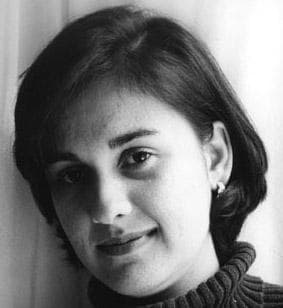
Kamila Shamsie FRSL is a Pakistani and British writer and novelist who is best known for her award-winning novel Home Fire (2017). Named on Granta magazine's list of 20 best young British writers, Shamsie has been described by The New Indian Express as "a novelist to reckon with and to look forward to." She also writes for publications including The Guardian, New Statesman, Index on Censorship and Prospect, and broadcasts on radio.
Similar books
- Exit West
Mohsin Hamid
3.8 (105k) average on GoodreadsLiterary FictionExplores themes of displacement, love, and the impact of conflict on relationships in a contemporary setting.
- Antigone
Sophocles
3.8 (17k) average on GoodreadsFictionThe novel is a modern retelling of the ancient Greek tragedy, focusing on similar themes of familial loyalty versus state law.
- The Old Man and the Sea
Ernest Hemingway
3.8 (831k) average on GoodreadsLiterary FictionA Cuban fisherman's long struggle with a giant marlin becomes a story of endurance and dignity, now retold for young adults with illustrations, phonetic guides, and writing prompts in Traditional Chinese.
- One Hundred Years of Solitude
Gabriel García Márquez
4.1 (753k) average on GoodreadsLiterary FictionThrough the multi-generational story of the Buendía family, a mythical town deals with the repeating patterns of time, love, and solitude, as the extraordinary mixes with the ordinary.
- The Goldfinch
Donna Tartt
3.9 (720k) average on GoodreadsLiterary FictionHaunted by a tragic explosion and clutching a stolen Dutch masterpiece, a young orphan navigates the opulent drawing rooms of New York and the gritty underbelly of the art world, desperately seeking connection and redemption amidst a life spiraling into crime and obsession.
- Little Fires Everywhere
Celeste Ng
4.1 (713k) average on GoodreadsLiterary FictionIn Shaker Heights, an artist and her daughter move in, and their free-spirited lives clash with a rule-bound matriarch, revealing hidden conflicts beneath a perfect surface.





Enjoyed the summary?
A summary gives you the shape of the book. The book itself has the detail, the examples and the voice.
Find Home Fire on AmazonAs an Amazon Associate, BookBrief earns from qualifying purchases. How we're funded