

Synopsis
Covers the whole plot, including the ending.
- Difficulty
- Easy
- Pacing
- Moderate
- Mood
- Melancholy, Heartwarming, Reflective, Hopeful
- Read it if
- You enjoy poignant historical fiction about forbidden love and racial prejudice during WWII, with a focus on Japanese American internment.
- Skip it if
- You prefer fast-paced thrillers or stories without a strong romantic element.
Hotel on the Corner of Bitter and Sweet Plot Summary
Covers the whole plot, including the ending.
A Discovery at the Panama Hotel
In 1986, 56-year-old Henry Lee is among a crowd outside the Panama Hotel in Seattle's Japantown. The hotel, closed for decades, is now under new ownership. The new owner has found belongings left by Japanese American families who were forcibly interned during World War II. When a Japanese parasol is opened, Henry remembers his childhood in 1942. He recalls Keiko Okabe, a Japanese American girl he met in fifth grade, and the innocent love they shared despite racial tensions and his Chinese and Japanese immigrant parents' expectations. The discovery at the hotel makes Henry want to find Keiko and reconnect with his past.
Meeting Keiko and Navigating Racial Divides
In 1942, Henry Lee, a lonely Chinese American boy, is one of only two Asian students at his mostly white school in Seattle. The other is Keiko Okabe, a Japanese American girl. Despite initial racial tension and his father's strict warning to avoid Japanese people, Henry and Keiko quickly become close. They spend lunch breaks together, sharing dreams and navigating their families' cultural differences. Henry's father, a strong Chinese nationalist, forbids Henry from speaking Japanese or being with Keiko, seeing all Japanese as enemies because of the war. But Henry, who secretly learns Japanese with Keiko, finds a close friend in her, a connection that goes beyond their families' and society's prejudices.
The Internment Orders and Their Impact
As World War II grows, President Roosevelt issues Executive Order 9066, which leads to the forced removal and internment of Japanese Americans. Keiko's family, like thousands of others, has a short time to pack and prepare for an unknown future. Henry is sad, knowing Keiko will be taken away. He tries to understand what is happening, but the unfairness is clear. He sees the fear and sadness in the Japanese American community and feels helpless as his best friend and first love are taken from his life. This time has frantic goodbyes and the sad reality of families being broken apart.
A Secret Rendezvous and a Promise
Before Keiko's family moves to the Puyallup Assembly Center, Henry secretly visits her. He brings her a record of their favorite jazz music, a small reminder of their shared world. They spend a meaningful afternoon together, listening to music and trying to remember every moment. They share their first kiss, a symbol of their innocent love and a promise that their connection would last. Keiko gives Henry her family's photo album, trusting him with important memories. This goodbye is emotional, full of the pain of separation and the fragile hope of reunion, making their bond stronger against the war and prejudice.
Life in the Camps and Sustained Connection
Keiko and her family first go to the Puyallup Assembly Center, then to the Minidoka War Relocation Center in Idaho. Henry, despite his father's disapproval, works odd jobs to save money and makes the difficult trip to visit Keiko at Minidoka. These visits are short but important, giving them a chance to be together and confirm their commitment. When visits are not possible, they write letters, sharing their daily lives, fears, and hopes. Henry tells Keiko about Seattle, while Keiko describes life in the camp. Their letters become a lifeline, keeping their love alive across the barbed wire fences.
Henry's Father's Ultimatum and a Difficult Choice
Henry's father finds out about his continued contact with Keiko. Angry at Henry's defiance and what he sees as a betrayal of their Chinese heritage, he gives Henry a choice: his family or Keiko. He threatens to disown Henry if he keeps seeing her. This creates a big conflict for Henry, who loves his family but cannot leave Keiko. He struggles with cultural expectations, family loyalty, and his own desires. He tries to handle this impossible situation, feeling torn between two worlds and two strong loyalties, eventually making a difficult decision that will shape his future.
A Misunderstanding and Growing Apart
Henry's father intercepts a letter from Keiko. He then writes a harsh, false letter back to Keiko, signing Henry's name, telling her to stop writing and that Henry is moving on. Sad and believing Henry has left her, Keiko stops writing. Henry, not knowing what his father did, keeps sending letters, which go unanswered. He thinks Keiko has moved on or found someone else in the camp. This intentional trick by his father creates a deep, painful misunderstanding that separates Henry and Keiko, leading to them losing contact and causing great sadness for both.
Life Without Keiko and a New Chapter
After losing contact with Keiko, Henry marries Ethel, a Chinese American woman his parents approve of. They have a son, Marty. Henry works hard, running the family's record shop, and builds a stable life. He loves Ethel and is a good father, but a part of him always carries Keiko's memory and the 'what if' of their lost love. He rarely talks about Keiko, burying his past, but the memories of their childhood and the unfairness they faced continue to affect him. His life with Ethel is one of quiet happiness, but also one with unspoken longing and the weight of unfulfilled promises.
The Search for Keiko's Belongings
Back in 1986, inspired by the discovery at the Panama Hotel, Henry asks his son, Marty, to help him find Keiko's family's belongings. Marty, a young man dealing with his own identity and relationship with his father, is at first unsure but agrees to help. They spend hours in the dusty basement of the Panama Hotel, looking through boxes and forgotten items. This shared effort helps connect father and son, letting Marty learn about his father's hidden past and how much Keiko affected his life. Their search is not just for objects, but for a piece of Henry's own history and a chance for closure.
A Re-connection and Unveiling the Truth
Through luck and persistent searching, Henry finds Keiko in New York City. They meet again after decades, and the emotional reunion is bittersweet. During their talk, the truth about Henry's father's intercepted letters comes out. Keiko tells him about the sad letter she received, and Henry realizes what his father did. This discovery brings both pain and freedom, finally explaining why their letters stopped. They spend time remembering, acknowledging the love they shared and the lives they've led apart, recognizing how much they affected each other.
Closure and a New Beginning
After their emotional reunion and learning the truth, Henry and Keiko find some peace. They acknowledge the lost decades but also their lasting bond. While the past cannot change, they can share their stories, forgive, and understand. The ending suggests a hopeful future for them, not a return to the past, but a new chapter where their connection can be honored. Henry finds closure for the pain of his youth, and Marty understands his father's life better, strengthening their own bond. The search for the past helps heal the present.
Principal Figures
Henry Lee
Protagonist
A Chinese American man haunted by his past love and the injustices of war.
Henry Lee is a quiet, thoughtful Chinese American man, first introduced as a lonely 12-year-old in 1942 Seattle, and later as a 56-year-old widower in 1986. He struggles with his identity, caught between his traditional Chinese father's expectations and his desire for acceptance in American society. His love for Keiko Okabe shapes his entire life, leading him to defy his father and later to embark on a quest to find her. He is loyal, sensitive, and carries the weight of unspoken grief and longing. His journey is one of self-discovery and reconciliation with his past.
Relationships: Keiko Okabe (First love, soulmate); Marty Lee (Son, initially distant but grows closer); Ethel Lee (Wife, loving but unaware of his past depth of feeling); Henry's Father (Strict, traditional, disapproving, manipulative)
Keiko Okabe
Major Supporting Character
A Japanese American girl whose internment profoundly impacts her life and Henry's.
Keiko Okabe is a vibrant, artistic, and resilient Japanese American girl. She is Henry's first and deepest love, sharing his experiences as an outsider in their predominantly white school. Despite facing prejudice and the trauma of internment, she maintains a strong spirit and a deep capacity for love and understanding. She is entrusted with Henry's secrets and becomes a symbol of lost innocence and the devastating impact of war on individual lives. Her artistic talent, particularly photography, is a key aspect of her character and her way of seeing the world.
Relationships: Henry Lee (First love, soulmate); Mrs. Okabe (Mother); Mr. Okabe (Father)
Marty Lee
Supporting Character
Henry's son, who helps him uncover his past and learns about his father's true self.
Marty Lee is Henry's adult son in 1986. He is initially somewhat disconnected from his father, representing a more modern, assimilated generation of Chinese Americans. He is engaged to a white woman, Samantha, and struggles to understand his father's quiet nature and his seemingly emotionless past. Through helping Henry search for Keiko's belongings, Marty slowly uncovers the depth of his father's hidden life and the profound love he carried. This journey helps Marty bridge the generational and cultural gap with Henry and strengthens their bond.
Relationships: Henry Lee (Father, initially distant then closer); Ethel Lee (Mother); Samantha (Fiancée)
Ethel Lee
Supporting Character
Henry's wife and Marty's mother, a steady presence in Henry's adult life.
Ethel Lee is Henry's devoted wife and Marty's mother. She is a traditional Chinese American woman who provides stability and love in Henry's adult life. Although she is kind and loving, she remains largely unaware of the depth of Henry's past feelings for Keiko. Her presence represents the life Henry built after Keiko, a life of duty and quiet contentment, but also one where a part of his heart remained unshared. She is a symbol of the compromises and choices Henry made.
Henry's Father (Mr. Lee)
Antagonist/Supporting
A strict, traditional Chinese immigrant who forbids Henry's relationship with Keiko.
Henry's father is a staunchly traditional Chinese immigrant and a fervent nationalist who views all Japanese as enemies due to the ongoing Sino-Japanese War. He is strict, authoritarian, and deeply committed to preserving his family's Chinese identity in America. His prejudices and a desire to protect his son (in his own misguided way) lead him to forbid Henry's relationship with Keiko and ultimately to sabotage their correspondence. He represents the cultural and generational conflicts Henry faces, and his actions are a major catalyst for Henry and Keiko's separation.
Relationships: Henry Lee (Son, with whom he has a strained relationship); Henry's Mother (Wife)
Sheldon Thomas
Supporting Character
A street musician and Henry's childhood friend, a witness to his and Keiko's love.
Sheldon Thomas is a talented African American street musician who plays the saxophone outside the Black Elks Club in Japantown. He becomes a close friend to young Henry and Keiko, providing a safe space and a soundtrack to their developing relationship. Sheldon understands prejudice from his own experiences and offers Henry advice and solace. He is a loyal and compassionate figure, a silent observer and confidant who witnesses the beauty and tragedy of Henry and Keiko's love, even helping Henry to visit Keiko at the internment camp.
Relationships: Henry Lee (Close childhood friend); Keiko Okabe (Friend)
Samantha
Supporting Character
Marty's fiancée, who encourages him to understand his father.
Samantha is Marty's fiancée in 1986. She is a compassionate and insightful white woman who encourages Marty to delve into his father's past and understand the emotional depth beneath Henry's quiet exterior. She sees the importance of family history and pushes Marty to connect with Henry on a deeper level. Her supportive presence helps facilitate the healing and understanding between Henry and Marty.
Relationships: Marty Lee (Fiancée); Henry Lee (Future father-in-law)
Mrs. Okabe
Mentioned
Keiko's mother, who embodies strength and grace amidst adversity.
Mrs. Okabe is Keiko's mother, a kind and dignified woman who faces the injustice of internment with quiet strength. She is initially wary of Henry due to his Chinese heritage but eventually comes to accept his friendship with Keiko, even entrusting Henry with her family's precious photo album before their internment. She represents the resilience and quiet suffering of the Japanese American community during World War II.
Relationships: Keiko Okabe (Daughter); Mr. Okabe (Husband)
Themes & Insights
Identity and Belonging
The novel looks at the complex parts of identity for Chinese and Japanese Americans in Seattle during WWII. Henry struggles with his Chinese background, his American upbringing, and his feelings for Keiko, which go against his father's anti-Japanese views. Keiko and her family deal with their American identity being taken away by internment. The characters constantly figure out who they are when faced with social prejudice, family expectations, and personal desires, looking for a place where they belong, whether in their ethnic community or across cultures.
“What is it you want to be, Henry? Chinese or American? You can't be both.”
Love and Loss
At its heart, the book is a moving story of first love, the great loss of that love because of outside forces, and how affection lasts. Henry and Keiko's innocent love is tested by war, racial prejudice, and a manipulative father. Their separation leaves a lifelong emptiness for Henry. The story explores how a great love, even if lost, continues to shape a person's life and choices. The search for Keiko's belongings is a way for Henry to look for the lost love and the closure he needs.
“Sometimes, you find your way back to where you started, and sometimes, you just find your way back to the beginning of the end.”
Racial Prejudice and Injustice
The novel shows the racial tensions and unfairness of World War II-era America. It highlights the prejudice Japanese Americans faced, leading to their forced internment, and the hostility between Chinese and Japanese communities. Henry, a Chinese American, is at first made to stay away from Keiko because of his father's anti-Japanese bias. The internment camps show how fear can take away rights and dignity from innocent citizens, leaving deep, lasting scars on people and communities.
“It was a question of loyalty. Not to country, but to race.”
Family Duty vs. Personal Desire
A main conflict for Henry is the struggle between his duty to his traditional Chinese father and his personal desire to be with Keiko. His father expects him to follow Chinese traditions, marry a Chinese woman, and avoid anything Japanese. Henry's love for Keiko directly challenges these expectations, forcing him to make sad choices. This theme explores the sacrifices people make for family, the weight of cultural expectations, and the personal cost of hiding one's true desires for duty.
“He knew, with a terrible certainty, that his father would never understand. And that was the saddest part of all.”
Memory and the Past's Influence
The story moves between 1986 and 1942, showing how the past affects the present. Henry's memories of Keiko and the internment era are brought back by the discovery at the Panama Hotel, making him revisit and come to terms with his youth. The novel shows that unresolved historical injustices and personal heartbreaks continue to affect people decades later. Remembering, and looking for physical items, becomes a way to confront, understand, and heal from past wounds.
“The past, he had learned, was not a place you could visit. It was a place you carried with you.”
Plot Devices & Literary Techniques
Dual Timeline Narrative
Alternates between Henry's present (1986) and his past (1942-1945).
The novel employs a dual timeline, seamlessly shifting between Henry's life as a 56-year-old widower in 1986 and his childhood experiences with Keiko in 1942-1945. The present-day narrative is triggered by the discovery at the Panama Hotel, prompting Henry to reflect on his past. This structure allows the author to gradually reveal the history of Henry and Keiko's relationship, the impact of the war, and the lingering effects of his choices, building suspense and providing a deeper understanding of Henry's character and motivations.
The Panama Hotel
A tangible link to the past, holding forgotten memories.
The Panama Hotel serves as a powerful symbol and a key plot device. In 1986, the discovery of belongings from interned Japanese families in its basement acts as the catalyst for Henry's journey into his past. The hotel literally holds the physical remnants of a lost community and a forgotten history. It represents the collective memory of Japantown and the individual memories of those, like Keiko's family, whose lives were disrupted. For Henry, it becomes a tangible connection to Keiko and the injustices they faced.
Jazz Music
A shared language and symbol of connection and cultural blending.
Jazz music, particularly the records Henry and Keiko listen to together, acts as a significant motif and plot device. It is a shared passion that transcends their cultural differences and the racial tensions of the time, providing a common ground and a form of escape. Sheldon Thomas, the jazz musician, further reinforces this theme. The music symbolizes their innocent love, their defiance of societal norms, and a universal language that speaks to their souls. Henry often uses music to recall Keiko, and the records become precious artifacts of their shared past.
Keiko's Photo Album
A symbol of trust, memory, and a lost future.
Keiko entrusts Henry with her family's photo album before her internment. This act is deeply symbolic, representing her trust in Henry and her desire to preserve her family's memories when their future is uncertain. The album becomes a tangible link to Keiko and her family, a repository of their shared history. For Henry, it is a precious keepsake and a constant reminder of his lost love, fueling his later search for Keiko's belongings and ultimately, for Keiko herself.
The 'I Am Chinese' Button
A stark reminder of racial identification and the pressure to conform.
Henry's father forces him to wear a button that reads 'I Am Chinese' to distinguish him from Japanese Americans during the war. This button is a powerful symbol of racial identification, the pressures of conformity, and the divisive nature of wartime prejudice. For Henry, it represents his father's rigid views and the forced separation from Keiko. It highlights the absurdity and cruelty of racial profiling and the internal conflict Henry faces in navigating his identity amidst such external pressures.
Hotel on the Corner of Bitter and Sweet Quotes
“She was the song that he could hear, even when he was deaf.”
“Sometimes, what you can't say is more important than what you can.”
“A person's true character is revealed not in what they do when they have everything, but in what they do when they have nothing.”
“The past is a funny thing. It’s a place you can visit, but you can’t stay.”
“It was a different kind of love, the kind that was born of shared silence, of knowing glances, of unspoken promises.”
“Sometimes, the only way to move forward is to look back.”
“Home is not where you are born; home is where all your attempts to escape cease.”
“You can't change the past, but you can certainly screw up the present by dwelling on it.”
“The memory of something is better than nothing.”
“Even in the darkest of times, there is always a flicker of hope.”
“It was funny how a person could be in the same room as someone for years and never really know them.”
“Music was a language they both understood, a place where their two worlds could meet.”
“Sometimes good intentions are not enough.”
“Love, it turns out, is not so much a feeling as a decision.”
Quiz
10 questions on the plot and the characters. Each answer comes with a short explanation.
Question 1
What discovery at the Panama Hotel in 1986 triggers Henry Lee's memories of Keiko?
- An old photograph of himself and Keiko.
- The belongings of Japanese families, including a Japanese parasol.
- A letter from Keiko hidden in the hotel's walls.
- A newspaper clipping about the internment camps.
Show answer
B. The belongings of Japanese families, including a Japanese parasol. The new owner of the Panama Hotel discovered and began displaying the belongings of Japanese families, and the unfurling of a Japanese parasol specifically brought back Henry's vivid memories of Keiko.
Question 2
What is Henry Lee's ethnic background, and why is this significant in his relationship with Keiko?
- He is Japanese American, which made their shared experience of internment camps easier.
- He is Chinese American, and his family held prejudices against Japanese people.
- He is Korean American, which caused misunderstandings with both Chinese and Japanese communities.
- He is Caucasian, and his family disapproved of his friendship with an Asian girl.
Show answer
B. He is Chinese American, and his family held prejudices against Japanese people. Henry is Chinese American, and his parents, like many Chinese immigrants of that era, harbored strong anti-Japanese sentiments due to historical conflicts between the two countries, which made his friendship with Keiko a source of conflict and secrecy.
Question 3
What is the primary reason Keiko and her family are forced to leave Seattle?
- Her father found a better job opportunity in another state.
- They were relocated to internment camps during World War II.
- They decided to move back to Japan.
- Their home was destroyed in a fire.
Show answer
B. They were relocated to internment camps during World War II. Keiko and her family, like thousands of other Japanese Americans, were forcibly evacuated from their homes and sent to internment camps as a result of Executive Order 9066 during World War II.
Question 4
What 'long-lost object' is Henry specifically searching for in the hotel's basement, beyond just Keiko's family belongings?
- A specific photograph of Keiko.
- His father's prized jazz record.
- A jazz record he and Keiko cherished.
- A journal Keiko kept during the war.
Show answer
C. A jazz record he and Keiko cherished. Henry is specifically looking for a particular jazz record that he and Keiko loved and shared, which holds immense sentimental value and represents their bond.
Question 5
How did Henry and Keiko initially meet and become friends?
- They were introduced by mutual friends at a community event.
- They both attended the same integrated school.
- Henry's father hired Keiko's family to work in his shop.
- They met while working part-time jobs in Japantown.
Show answer
B. They both attended the same integrated school. Henry and Keiko met as the only two Asian students attending the same predominantly white school, where they quickly bonded over their shared experiences of being outsiders.
Question 6
What major sacrifice does Henry make for his family, which later affects his relationship with Keiko?
- He gives up his dream of becoming a jazz musician to run his father's store.
- He agrees to an arranged marriage to please his parents.
- He stops speaking Japanese to assimilate more into American culture.
- He hides his friendship with Keiko from his father and sometimes chooses his family's expectations over his feelings for her.
Show answer
D. He hides his friendship with Keiko from his father and sometimes chooses his family's expectations over his feelings for her. Henry constantly struggles between his loyalty to his family, particularly his father's strong anti-Japanese sentiments, and his deep affection for Keiko. This often leads him to hide aspects of his life and make choices that prioritize family expectations, creating distance and pain in his relationship with Keiko.
Question 7
What role does jazz music play in Henry and Keiko's relationship?
- It is a point of contention, as they have different tastes in music.
- It is a shared passion and a secret language that connects them.
- They learn to play instruments together in a school band.
- They often visit jazz clubs, which is where they first met.
Show answer
B. It is a shared passion and a secret language that connects them. Jazz music is a significant symbol of their bond. It's a shared passion that transcends their cultural differences and the prejudices of their families, providing them with a private world and a way to communicate and connect.
Question 8
What is the significance of the Panama Hotel in the narrative?
- It was where Henry and Keiko had their first date.
- It served as a temporary shelter for Chinese immigrants.
- It was a key gathering place and storage site for Japanese families before internment.
- It was owned by Henry's family and later sold to Keiko's family.
Show answer
C. It was a key gathering place and storage site for Japanese families before internment. The Panama Hotel was a central hub in Seattle's Japantown, where many Japanese families stored their belongings before being sent to internment camps, hoping to retrieve them later. Its discovery in 1986 is the catalyst for Henry's journey.
Question 9
How does the theme of 'prejudice' manifest in the story, beyond the Japanese internment?
- Henry's father facing prejudice from white Americans for being Chinese.
- Keiko's family facing prejudice from other Japanese families for being too Americanized.
- The deep-seated prejudice held by Henry's Chinese father against Japanese people.
- Henry and Keiko facing prejudice from their schoolmates for being too quiet.
Show answer
C. The deep-seated prejudice held by Henry's Chinese father against Japanese people. Beyond the obvious prejudice against Japanese Americans during WWII, the story highlights the internal prejudice within the Asian community, specifically Henry's Chinese father's strong, culturally ingrained animosity towards Japanese people, which greatly impacts Henry's relationship with Keiko.
Question 10
What is the ultimate 'value' of the long-lost object Henry is searching for, as described in the synopsis?
- Its monetary worth as a rare collector's item.
- Its historical significance as an artifact of World War II.
- Its sentimental value, representing his lost love and the sacrifices he made.
- Its ability to reveal a hidden secret about Keiko's family.
Show answer
C. Its sentimental value, representing his lost love and the sacrifices he made. The synopsis states Henry's search is for 'a long-lost object whose value he cannot even begin to measure,' indicating its worth is deeply personal and tied to his memories, love for Keiko, and the sacrifices he made, far beyond any material or historical value.
Hotel on the Corner of Bitter and Sweet FAQ
What is 'Hotel on the Corner of Bitter and Sweet' about?
Jamie Ford's novel tells the story of Henry Lee, a Chinese American man in Seattle, who, in 1986, reflects on his childhood in the 1940s. He recounts his forbidden friendship and innocent love with Keiko Okabe, a Japanese American girl, during World War II, a time when anti-Japanese sentiment led to her family's forced internment. The narrative intertwines his past memories with his present-day search for Keiko's belongings at the Panama Hotel.
Why should I read 'Hotel on the Corner of Bitter and Sweet'?
You should read this book for its poignant exploration of first love, racial prejudice, and the lasting impact of historical events like the Japanese American internment. It offers a unique perspective through the eyes of a Chinese American boy caught between his heritage and his feelings, all while weaving a tender, hopeful story of enduring connection and the search for closure.
What is the background/setting of 'Hotel on the Corner of Bitter and Sweet'?
The story is set primarily in Seattle, Washington, spanning two distinct time periods: the 1940s during World War II, focusing on the vibrant Japantown and the subsequent internment of Japanese Americans, and 1986, when Henry Lee revisits these memories. Key locations include the Panama Hotel, Henry's family laundry, and the internment camps where Keiko was held.
What are the most memorable quotes?
One memorable quote is, 'She was my first love, my first friend, and the first person to make me feel like I wasn’t a stranger in my own city.' This perfectly encapsulates Henry's deep connection with Keiko. Another is, 'Sometimes you have to be apart to understand how much you truly love each other,' reflecting the forced separation and enduring affection between Henry and Keiko.
What writing style does the author use?
Jamie Ford employs a dual-timeline narrative, seamlessly shifting between Henry's childhood in the 1940s and his present-day search in 1986. The prose is often tender and evocative, using vivid sensory details to bring Seattle's Japantown and the emotional weight of Henry's memories to life. It's accessible yet deeply moving.
What minor details add significant meaning?
The jazz music, particularly Oscar Holden's presence at the Black Elks Club, is a minor detail that adds significant meaning. It represents a shared cultural space where Henry and Keiko could connect, transcending racial boundaries, and also highlights the broader jazz scene in Seattle that fostered unexpected communities during a time of segregation.
What are some subtle foreshadowing moments?
The early scenes depicting Henry's father's strict adherence to Chinese traditions and his disapproval of anything Japanese subtly foreshadow the immense conflict Henry will face in pursuing his relationship with Keiko. Also, the Panama Hotel itself, initially just a building, subtly foreshadows its later role as a repository of lost memories and a key to Henry's past.
What unexpected character connections exist?
An unexpected connection is between Henry and Mrs. Beatty, the kind cafeteria worker at his school. She not only offers him comfort and food but also subtly supports his friendship with Keiko, understanding the ostracism they both face. Another is Henry's eventual bond with his son, Marty, which deepens as Marty helps him uncover his past, bridging a generational and emotional gap.
What are unspoken character motivations?
Henry's unspoken motivation for initially befriending Keiko, beyond simple childhood curiosity, is a deep-seated loneliness and a desire for connection with someone who understands what it feels like to be an 'outsider' in his own city, a feeling his traditional Chinese family inadvertently reinforces. His father's unspoken motivation for prohibiting contact with Japanese people is a mix of historical animosity and a desperate need to protect his family's Chinese identity and safety in a prejudiced America.
What psychological complexities do characters exhibit?
Henry exhibits the psychological complexity of filial piety versus personal desire. He struggles with guilt over his love for Keiko, knowing it defies his father's wishes, leading to a lifetime of suppressed emotions and regret. Keiko displays resilience and quiet strength in the face of immense injustice, but also the trauma of forced displacement and the psychological burden of being labeled an 'enemy alien'.
What are the major emotional turning points?
A major emotional turning point is the day Keiko and her family are forced to evacuate to the internment camps, marking the abrupt end of Henry's childhood innocence and the beginning of a lifelong ache. Another is Henry's decision, decades later, to finally search the Panama Hotel for Keiko's belongings, signifying his willingness to confront his past and heal old wounds, even if it means risking painful memories.
How do relationship dynamics evolve?
Henry's relationship with his father evolves from one of strict obedience and fear to a more nuanced understanding, albeit one tinged with regret over unspoken words. His relationship with his son, Marty, transforms from distant and strained to one of mutual respect and closeness as Marty helps Henry navigate his past. Most profoundly, his relationship with Keiko, though physically separated for decades, evolves into an enduring, almost mythical love that transcends time and distance.
Which parts remain ambiguous or open-ended?
While the ending provides a form of closure, the exact details of Keiko's life after the camps and her full emotional journey remain somewhat ambiguous, as the story is primarily told from Henry's perspective. The extent of her feelings for Henry during their separation, beyond her letters, is largely inferred, leaving some aspects of her inner world open to interpretation.
What are controversial scenes or decisions?
Henry's decision to not go with Keiko to the internment camp, despite his promise, is a controversial decision driven by his father's threats and the fear of being disowned. Another is his eventual marriage to Ethel, which some readers might see as a pragmatic choice rather than one of true love, raising questions about duty versus desire and the sacrifices he made.
'Hotel on the Corner of Bitter and Sweet' ending explained: how it ends & what it means
The book ends with Henry, aided by his son Marty, finally finding Keiko's long-lost belongings, including the cherished record and her sketchbook, in the basement of the Panama Hotel. He reunites with Keiko, who has returned to Seattle, and they share a tender, bittersweet moment, acknowledging their enduring love and the life they almost had. The ending signifies the healing power of confronting the past, the enduring nature of true love, and the possibility of finding closure and peace even after decades of separation and unspoken pain.
About the author

Jamie Ford is an American author known for his fiction that often explores themes of family and cultural identity. His notable works include "Hotel on the Corner of Bitter and Sweet," which delves into the Japanese American experience during World War II, and "Songs of Willow Frost," a story about love and loss set in the 1930s.
Similar books
- Snow Falling on Cedars
David Guterson
3.8 (166k) average on GoodreadsLiterary FictionExplores Japanese American internment and forbidden love in a historical setting.
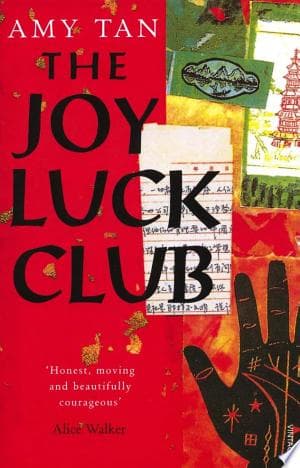
- The Joy Luck Club
Amy Tan
3.9 (598k) average on GoodreadsHistorical FictionFeatures intergenerational family dynamics and cultural identity, with a focus on Chinese American experiences.
- Pachinko
Min Jin Lee
4.3 (208k) average on GoodreadsLiterary FictionA multi-generational saga about Korean immigrants in Japan facing prejudice and hardship.
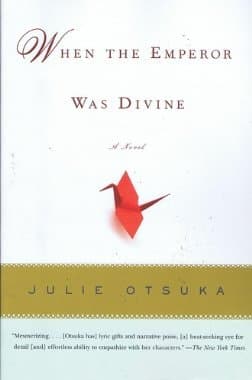
- When the Emperor Was Divine
Julie Otsuka
3.8 (18k) average on GoodreadsHistorical FictionOtsuka's work provides a stark, minimalist, and deeply internal portrayal of the internment experience, focusing on the sensory and emotional impact on a single family with a precision and detachment that highlights the dehumanizing aspects more directly than Ford's romanticized approach.
- To Kill a Mockingbird
Harper Lee
4.3 (4.5M) average on GoodreadsHistorical FictionIn the 1930s Jim Crow South, Harper Lee writes about racial injustice, moral growth, and the quiet courage of a lawyer father, Atticus Finch, as seen through his young daughter's eyes.
- The Great Gatsby
F. Scott Fitzgerald
3.9 (3.8M) average on GoodreadsHistorical FictionIn the opulent Roaring Twenties, a mysterious millionaire's lavish parties hide his desperate, tragic pursuit of a lost love, exposing the emptiness within the American Dream.




Enjoyed the summary?
A summary gives you the shape of the book. The book itself has the detail, the examples and the voice.
Find Hotel on the Corner of Bitter and Sweet on AmazonAs an Amazon Associate, BookBrief earns from qualifying purchases. How we're funded