
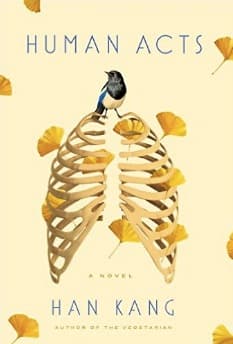
Synopsis
Covers the whole plot, including the ending.
- Difficulty
- Hard
- Pacing
- Moderate
- Mood
- Somber, Haunting, Reflective, Poignant, Dark
- Read it if
- You are interested in historical fiction exploring trauma, political violence, and the human spirit's resilience, presented with profound emotional depth.
- Skip it if
- You prefer lighthearted stories or are sensitive to graphic descriptions of violence and suffering.
Human Acts Plot Summary
Covers the whole plot, including the ending.
The Boy's Eyes
In May 1980, during the Gwangju Uprising, fifteen-year-old middle school student Dong-ho goes to the provincial office and then to the gymnasium, which has become a temporary morgue for those killed by soldiers. He helps organize the bodies, cleans them, and keeps watch. He finds his friend Jeong-dae's body and is deeply affected by the silent suffering of the dead and the wailing of the grieving. Dong-ho's innocence breaks as he sees the brutality against Gwangju citizens, including disfigured faces and mutilated bodies. He struggles to understand the horror compared to his previous view of the world, feeling a strong sense of responsibility toward the deceased.
The Boy's Friend
This chapter is told by the ghost of Jeong-dae, Dong-ho's friend, who died during the uprising. Jeong-dae describes his own brutal death, shot by soldiers, and his experience as a spirit watching the aftermath. He recounts being brought to the gymnasium where Dong-ho works, a poignant reunion in death. Jeong-dae’s story highlights the shared suffering and fate of the victims, their bodies becoming symbols of state violence. He thinks about the indignity of their deaths and the later efforts to identify and mourn them, showing the strong bond formed in shared trauma and the wish for their stories to be remembered.
The Editor
Years after the Gwangju Uprising, Eun-sook, a former editor, deals with lingering trauma and widespread censorship about the May 1980 events. She remembers trying to publish accurate accounts of the massacre, facing constant threats and suppression of truth by authorities. Her experience shows the systemic effort to erase Gwangju's memory and the personal cost of resisting such oppression. Eun-sook feels deep guilt and responsibility for not doing more, haunted by images and stories she had to suppress. She thinks about the psychological cost of living in a society that denies its own history, experiencing panic attacks and a strong sense of isolation.
The Prisoner
This section follows a former student activist, called the 'prisoner,' who was arrested, brutally tortured, and imprisoned for his part in the Gwangju Uprising. He recounts the physical and psychological torment he endured in detention, including waterboarding, beatings, and sleep deprivation, as well as the dehumanizing conditions of prison life. His story is fragmented, showing the broken nature of his memory and identity due to trauma. He struggles with survivor's guilt, the loss of his friends, and the deep changes to his personality. The prisoner’s story emphasizes the long-term impact of state violence on individuals, even decades later, and the difficulty of regaining a sense of self after such extreme experiences.
The Factory Girl
Seon-ju, a factory worker who was involved in the uprising and shared a cell with Eun-sook, struggles to live normally years later. She is haunted by memories of the atrocities she saw and the loss of her friends, especially Dong-ho. Seon-ju carries a huge burden of grief and survivor's guilt, feeling she should have done more or doesn't deserve to live. She experiences vivid flashbacks and nightmares, making it hard for her to form connections or find peace. Her story shows how trauma affects the lives of ordinary citizens, changing their futures and continuing their suffering long after the immediate violence stops.
The Boy's Mother
Dong-ho's mother describes her lasting grief and the deep emptiness left by her son's death. She recounts the agonizing search for his body, the eventual identification, and decades of living with an unfillable void. Her memories are vivid, focusing on small details of Dong-ho's life and her dreams for him. She expresses a deep sense of injustice and anger toward those who caused the massacre, who never faced true accountability. Her story highlights the personal, intimate devastation caused by political violence, showing how a mother's love turns into an enduring, heartbreaking sorrow that shapes every part of her life.
The Writer
This chapter is told by an unnamed writer, who struggles with the ethical and emotional challenges of documenting the Gwangju Uprising. The writer collects testimonies, interviews survivors, and immerses herself in the brutal history, but finds it very hard to turn the raw, unspeakable horror into words. She questions if language can truly capture such immense suffering or if it risks sanitizing or exploiting the victims' experiences. The writer's struggle reflects Han Kang's own process, showing the responsibility and burden of witnessing and giving voice to the silenced, while acknowledging the limits of representation.
The Soul
This section is told by a collective 'soul' or chorus of the dead from the Gwangju Uprising. They reflect on their lives, their deaths, and their later existence as forgotten or partly remembered beings. They speak of their bodies being disrespected and the pain of being erased from official history. The souls express a longing for remembrance and for the truth of their deaths to be acknowledged. They watch over the living, especially those who continue to suffer or fight for justice. This chapter shows the lasting presence of the past and the spiritual weight of unaddressed trauma, emphasizing the connection between the living and the dead.
The Truth
As the story goes on, the characters, both living and dead, highlight the ongoing fight for truth and accountability regarding the Gwangju Uprising. Decades later, the official story remains debated, and the perpetrators are largely unpunished. Survivors and their families continue to demand justice, facing indifference, denial, and continued attempts to downplay the atrocities. This section shows the political side of memory and history, illustrating how powerful forces actively work to suppress uncomfortable truths. The unwavering efforts of individuals like Eun-sook and the persistent grief of Dong-ho's mother show the human need for justice and recognition, even against strong opposition.
Aftermath and Echoes
The book ends by reflecting on the lasting aftermath of the Gwangju Uprising. The trauma inflicted on individuals and the city continues to affect generations, appearing as psychological scars, social divisions, and a collective wound in the nation's mind. The characters, even those who survived, find their lives forever changed, marked by the violence they experienced or saw. The story emphasizes that while the immediate conflict ended, the struggle for healing, remembrance, and justice continues. The book closes with a strong call to remember, to witness, and to acknowledge the human acts that both caused and resisted unspeakable cruelty, ensuring the victims are not forgotten.
Principal Figures
Dong-ho
Central Figure/Victim
A fifteen-year-old middle school student whose death is the catalyst for the narrative.
Dong-ho is an innocent and empathetic teenager who volunteers at the gymnasium-turned-morgue during the Gwangju Uprising. His initial naivety quickly gives way to a profound understanding of human suffering as he helps organize and care for the bodies of the dead. He is driven by a sense of duty and compassion, trying to bring dignity to the deceased. His death becomes a symbol of the innocent lives lost and the brutality of the state, serving as a focal point around which the other characters' stories revolve.
Relationships: Jeong-dae (Best friend); Dong-ho's Mother (Son); Seon-ju (Friend/acquaintance from the uprising)
Jeong-dae
Victim/Narrator (Ghost)
Dong-ho's best friend, killed during the uprising, who narrates a chapter from the perspective of a ghost.
Jeong-dae is Dong-ho's best friend, and his death is one of the first that Dong-ho witnesses in the gymnasium. He narrates his own death and the collective experience of the deceased, offering a haunting perspective on the physical and spiritual aftermath of the massacre. His voice embodies the silent suffering of the victims and their longing for recognition and peace. He represents the countless unnamed individuals whose lives were violently cut short and whose stories demand to be heard.
Relationships: Dong-ho (Best friend)
Eun-sook
Survivor/Activist
A former editor who struggles with censorship and the trauma of Gwangju years later.
Eun-sook is a resilient woman who, as an editor, attempted to document the truth of the Gwangju Uprising despite severe censorship and personal risk. Years later, she battles panic attacks and survivor's guilt, haunted by the images and stories she was forced to suppress. She embodies the intellectual and moral struggle against state-sanctioned historical revisionism, striving to keep the memory of Gwangju alive. Her experiences highlight the insidious nature of political oppression and its long-term psychological toll.
Relationships: Seon-ju (Shared a prison cell during the uprising); The Writer (Source of information and testimony)
The Prisoner (Kim Eun-woo)
Survivor/Victim of Torture
A former student activist brutally tortured and imprisoned for his role in the uprising.
The prisoner represents the profound physical and psychological damage inflicted by state violence. He was a student activist who endured horrific torture and imprisonment, leaving him with fragmented memories, survivor's guilt, and a deeply altered sense of self. His narrative is a raw account of the dehumanization inherent in political repression and the long, arduous process of trying to reclaim one's identity after such trauma. He struggles with the weight of the past and the inability to fully escape its grip.
Relationships: Dong-ho (Acquaintance from the provincial office during the uprising)
Seon-ju
Survivor/Witness
A factory worker involved in the uprising, carrying the burden of memory and grief.
Seon-ju is a working-class woman who witnessed the atrocities of Gwangju and subsequently endured imprisonment. She is deeply affected by the loss of Dong-ho and carries immense survivor's guilt, feeling that she does not deserve to live a normal life. Her story illustrates how trauma permeates the lives of ordinary citizens, manifesting as nightmares, emotional numbness, and difficulty forming relationships. She embodies the enduring suffering of those who survived but were forever changed by the violence.
Relationships: Dong-ho (Friend/acquaintance); Eun-sook (Shared a prison cell)
Dong-ho's Mother
Bereaved Parent
A mother living with the unbearable grief of losing her son, Dong-ho.
Dong-ho's mother represents the intimate, personal devastation caused by political violence. Her life is defined by the profound emptiness left by her son's death, and her narrative is a raw outpouring of grief, love, and unwavering sorrow. She struggles with the injustice of his death and the lack of accountability for the perpetrators. Her story highlights the enduring pain of loss and the mother's eternal bond with her child, even in death, making her a powerful symbol of universal suffering.
Relationships: Dong-ho (Son)
The Writer (Han Kang)
Narrator/Conscience
An unnamed author grappling with the ethical and emotional challenges of documenting the Gwangju Uprising.
This character, often seen as a stand-in for Han Kang herself, struggles with the immense responsibility of giving voice to the voiceless and translating unspeakable horror into words. The writer questions the adequacy of language and the potential for exploitation, highlighting the ethical dilemmas inherent in bearing witness to extreme suffering. This perspective provides a meta-commentary on the act of writing history and memory, emphasizing the profound burden and necessity of such an endeavor.
Relationships: Eun-sook (Interviewer/source); Seon-ju (Interviewer/source)
The Collective Soul
Collective Narrator/Voice of the Dead
The combined voices of the deceased victims of the Gwangju Uprising.
This is not a single character but a collective consciousness representing the spirits of those who died in Gwangju. They narrate their shared experience of death, desecration, and their subsequent longing for remembrance and justice. Their voice emphasizes the spiritual weight of unaddressed trauma and the enduring presence of the past. They serve as a powerful reminder that the dead are not truly gone as long as their stories remain untold and their suffering unacknowledged.
Relationships: Dong-ho (One of the souls); Jeong-dae (One of the souls)
Themes & Insights
The Brutality of State Violence and Its Aftermath
The novel clearly shows the extreme brutality of the military regime during the Gwangju Uprising, from graphic descriptions of torture and murder to the systematic suppression of truth. Characters like the 'prisoner' vividly recount their physical and psychological torment, while Dong-ho's experience in the gymnasium shows the horrific physical cost. The aftermath is shown through the lasting trauma of survivors like Eun-sook and Seon-ju, who suffer from panic attacks, nightmares, and survivor's guilt decades later, illustrating that violence goes far beyond the immediate event.
“What is it that allows a person to violate another person, to destroy another person? What is it that makes it possible for them to crush another person's body and soul?”
Memory, Trauma, and the Struggle for Truth
A main theme is the difficult process of remembering and how trauma affects memory. The characters' stories are fragmented, often returning to the horrific events of May 1980, showing how trauma twists and controls their lives. The book also highlights society's fight against censorship and historical revision, with characters like Eun-sook working to preserve the truth of Gwangju. The collective memory of the victims, symbolized by Jeong-dae's ghost and the 'collective soul,' demands recognition and remembrance in the face of deliberate erasure, emphasizing memory as an act of resistance.
“I often wonder if the act of remembering is a kind of violence, too. Or if it is a kind of love.”
Human Dignity and Dehumanization
The novel explores the constant tension between attempts to strip people of their humanity through violence and torture, and the strong, unyielding dignity of the human spirit. Dong-ho's careful attention to the dead bodies in the gymnasium is an act of restoring dignity to those who were brutally dehumanized. Conversely, the torture endured by the 'prisoner' aims to break his spirit and reduce him to an animal. The book suggests that even in extreme cruelty, mourning, remembering, and demanding justice are acts of reclaiming and asserting human dignity.
“It was not just the dead bodies that were being abandoned. The living were being abandoned too, one by one.”
The Interconnectedness of Suffering and Empathy
The story's structure, with its changing viewpoints and connected lives, shows that suffering is not isolated but shared. Dong-ho's empathy for the dead links him to Jeong-dae, while Eun-sook and Seon-ju's shared prison experience creates a strong bond. The 'collective soul' further emphasizes this, showing how individual experiences of the deceased contribute to a larger, unified story of pain and longing for justice. The book argues that true understanding and healing come from recognizing and empathizing with others' suffering, building a collective humanity.
“Your most precious possession, your life, is not yours. It is ours.”
The Power and Limits of Language
The novel examines the role of language in conveying unspeakable trauma. The 'writer' character openly struggles with words' inability to capture Gwangju's raw horror, questioning if language is ever truly enough or if it risks sanitizing or exploiting the experience. Conversely, writing, publishing, and sharing testimonies are presented as important forms of resistance against censorship and historical erasure. The book suggests that while language may be limited, the persistent effort to articulate and bear witness remains a vital human act in the pursuit of truth and remembrance.
“The human voice is a fragile thing. Sometimes it can barely hold itself together.”
Plot Devices & Literary Techniques
Shifting Perspectives/Polyphony
The story is told through multiple, distinct character voices.
The novel employs a polyphonic narrative structure, presenting the events of Gwangju and its aftermath through the eyes of various characters: Dong-ho, Jeong-dae's ghost, Eun-sook, the prisoner, Seon-ju, Dong-ho's mother, the writer, and a collective soul. This allows for a multifaceted exploration of trauma, memory, and the human cost of violence, ensuring that no single perspective dominates and highlighting the widespread impact of the uprising. Each voice adds a unique emotional and experiential layer to the central event, creating a mosaic of suffering and resilience.
Non-Linear Narrative
The story jumps back and forth in time, often revisiting the same events from different angles.
Instead of a chronological progression, the novel moves between the immediate aftermath of the Gwangju Uprising in 1980 and various points in the subsequent decades. This fragmented structure mirrors the fractured nature of traumatic memory and allows the author to explore the long-term psychological and societal repercussions of the massacre. By revisiting key moments from different perspectives and at different times, the novel emphasizes how the past continually intrudes upon and shapes the present, refusing to be forgotten.
Ghostly Narrators/Supernatural Elements
The inclusion of narrators from beyond the grave, specifically Jeong-dae and the 'collective soul'.
The use of Jeong-dae's ghost and the 'collective soul' as narrators introduces a subtle, yet powerful, supernatural element. This device serves to represent the enduring presence of the dead and their unacknowledged suffering. It underscores the idea that the victims' voices cannot be truly silenced and that their spirits continue to bear witness and demand justice. This also emphasizes the spiritual and emotional weight of unaddressed trauma, suggesting that the past literally haunts the living until it is properly confronted and remembered.
Second-Person Narration
Direct address to 'you' in certain chapters, often blurring the lines between specific characters and the reader.
Several chapters, particularly those by the 'prisoner' and the 'writer', utilize second-person narration, addressing 'you.' This technique draws the reader directly into the emotional and ethical dilemmas presented, making them complicit in the act of bearing witness and confronting the uncomfortable truths of Gwangju. It blurs the line between the character's experience and the reader's, fostering a deeper sense of empathy and responsibility, and challenging the reader to consider their own role in remembering and understanding historical atrocities.
Human Acts Quotes
“It was the human act of all human acts, the most basic, the one that made us human to begin with. The act of caring for one another.”
“What is it that makes us human? The ability to kill, or the ability to refuse to kill?”
“The past is not a story you can tell. It is a wound you can’t heal.”
“Even after the massacre, the sound of the birds, the smell of the flowers, the warmth of the sun, they were still there. And that was the most unbearable thing of all.”
“Is it possible for a person to be born and die without ever knowing the full extent of the cruelty and beauty the world contains?”
“When your body is broken, you find out what your soul is made of.”
“Every single one of us is a human act. Every breath, every heartbeat, every thought, every word, every deed. Every single one.”
“The dead don’t go away. They just change their address.”
“To forget is to betray. To remember is to suffer.”
“We are all connected by the same pain, the same fear, the same hope.”
“The world is not always a kind place, but it is always a place where there is light.”
“How can one live on, knowing what happened, knowing that the world continued as if nothing had changed?”
“The silence was not empty. It was full of screams.”
“Only when you acknowledge the darkness can you truly appreciate the light.”
Quiz
10 questions on the plot and the characters. Each answer comes with a short explanation.
Question 1
Which historical event forms the backdrop of the novel "Human Acts"?
- The Korean War
- The Gwangju Uprising (May 18th Democratization Movement)
- The April Revolution
- The Jeju Uprising
Show answer
B. The Gwangju Uprising (May 18th Democratization Movement) The novel centers around the events of the Gwangju Uprising in May 1980, where student protests for democracy were brutally suppressed.
Question 2
What is the name of the young boy whose death is a central tragic event in the novel?
- Jeong-ho
- Min-joon
- Dong-ho
- Sung-ho
Show answer
C. Dong-ho Dong-ho is the central figure whose death sets off a chain of interconnected narratives exploring the aftermath of the massacre.
Question 3
What role does Dong-ho initially take on at the provincial office after the violence begins?
- He joins the student protest leaders.
- He helps manage the bodies of the deceased.
- He works as a translator for foreign journalists.
- He provides medical aid to the injured.
Show answer
B. He helps manage the bodies of the deceased. Dong-ho, despite his young age, takes on the harrowing task of helping to sort and clean the bodies of the victims at the provincial office.
Question 4
Which character struggles with censorship and the suppression of truth regarding the uprising?
- The factory worker
- The editor
- Dong-ho's mother
- The student activist
Show answer
B. The editor One of the chapters is narrated by an editor who faces significant challenges in trying to publish the truth about the Gwangju massacre amidst government censorship.
Question 5
What is a recurring theme explored through the various characters' experiences in the novel?
- The pursuit of capitalist success.
- The resilience of the human spirit in the face of trauma and injustice.
- The importance of traditional family values.
- The beauty of nature as an escape from urban life.
Show answer
B. The resilience of the human spirit in the face of trauma and injustice. The novel consistently explores how individuals cope with immense trauma, loss, and the struggle for justice and memory in the aftermath of extreme violence.
Question 6
Which of the following is NOT one of the narrative perspectives explored in the novel?
- A student activist who was Dong-ho's best friend.
- A soldier who participated in the suppression.
- A former prisoner haunted by memories of torture.
- Dong-ho's grief-stricken mother.
Show answer
B. A soldier who participated in the suppression. The novel focuses on the victims and those affected by the violence, not on the perspective of a soldier involved in the suppression.
Question 7
In the chapter narrated by Dong-ho's best friend, Jeong-dae, what is his ultimate fate?
- He successfully escapes the country.
- He becomes a prominent political leader.
- He is also killed during the uprising.
- He lives a long life, but is perpetually haunted by survivor's guilt.
Show answer
C. He is also killed during the uprising. Jeong-dae, Dong-ho's best friend, meets a tragic end himself, dying during the violence and becoming one of the nameless bodies Dong-ho helps manage.
Question 8
The novel's structure is characterized by a 'sequence of interconnected chapters.' How does this structure contribute to the overall impact?
- It allows for a linear, chronological recounting of the historical event.
- It creates a fragmented, multi-faceted portrait of the trauma and its lasting effects.
- It builds suspense towards a single climactic revelation.
- It simplifies the complex political landscape for the reader.
Show answer
B. It creates a fragmented, multi-faceted portrait of the trauma and its lasting effects. The non-linear, interconnected chapters allow the reader to experience the event's ripple effects through various perspectives across time, highlighting the pervasive and long-lasting nature of the trauma.
Question 9
What is the significance of the recurring imagery of the human body and its decomposition in the novel?
- It serves as a metaphor for the natural cycle of life and death.
- It emphasizes the brutal reality of the violence and the dehumanization of the victims.
- It symbolizes the decay of political ideals.
- It is used to create a sense of gothic horror.
Show answer
B. It emphasizes the brutal reality of the violence and the dehumanization of the victims. The graphic descriptions of bodies, their wounds, and decomposition are central to conveying the extreme brutality of the massacre and the profound disrespect shown to the victims, underscoring the dehumanizing aspect of the violence.
Question 10
The final chapter, narrated by the author, reflects on the difficulty of writing about the Gwangju Uprising. What specific challenge does she highlight?
- The lack of available historical documents and eyewitness accounts.
- The ethical dilemma of representing immense suffering without exploiting it or falling into sentimentality.
- The challenge of translating the text into multiple languages.
- The difficulty in finding a publisher willing to take on such a controversial topic.
Show answer
B. The ethical dilemma of representing immense suffering without exploiting it or falling into sentimentality. In the author's note, Han Kang directly addresses the profound ethical and emotional challenges of writing about such immense human suffering, grappling with how to bear witness without causing further harm or reducing the experience.
Human Acts FAQ
What is the central historical event that underpins the narrative of 'Human Acts'?
The novel is centered around the Gwangju Uprising (also known as the Gwangju Massacre) in May 1980, where student-led demonstrations for democracy in Gwangju, South Korea, were brutally suppressed by government troops. This historical event serves as the backdrop and direct cause for the suffering experienced by the characters.
Who is Dong-ho, and what is his significance to the story?
Dong-ho is a young middle school student who volunteers at the protest headquarters in the provincial office, helping manage bodies and supplies. His shocking death early in the uprising serves as the catalyst and emotional core of the novel, with subsequent chapters exploring the lives and trauma of those connected to him.
How does the novel's structure contribute to its impact?
The novel is structured in six interconnected chapters, each told from the perspective of a different character linked to Dong-ho or the Gwangju Uprising, spanning from 1980 to 2013. This fragmented, multi-vocal approach allows Han Kang to explore the long-term, ripple effects of trauma and the varied forms of suffering endured by individuals over decades.
What are some of the key themes explored in 'Human Acts'?
Key themes include the brutalization of the human body, the psychological scars of trauma, the struggle for memory and truth against state censorship, the nature of humanity in the face of atrocity, and the enduring search for justice and dignity. The novel deeply interrogates how individuals cope with immense violence and loss.
Who is Jeong-dae, and what is his connection to Dong-ho?
Jeong-dae is Dong-ho's best friend, who also volunteers at the provincial office during the uprising. He is tragically killed alongside Dong-ho, and his spirit later narrates a chapter from the perspective of a tortured ghost, witnessing the desecration of his own body and the suffering of others.
How does the 'Chorus' chapter, narrated by the dead, function within the novel?
The 'Chorus' chapter is a deeply unsettling and unique narrative choice, told from the collective perspective of the dead, including Dong-ho and Jeong-dae, whose bodies were brutally handled and left unidentified. This chapter highlights the dehumanization of the victims and serves as a powerful testament to their silenced voices and forgotten dignity.
What is the significance of the character Eun-sook, the editor, and her struggle with censorship?
Eun-sook represents the struggle to preserve and disseminate the truth about Gwangju in the face of government repression and censorship. Her efforts to publish a book of testimonies and photographs, despite severe threats and personal risk, underscore the importance of historical memory and the fight against systemic denial.
How does the repeated imagery of the human body, particularly its mutilation and decomposition, contribute to the novel's message?
The graphic and repeated imagery of mutilated, decomposing, and unidentifiable bodies serves to emphasize the extreme violence inflicted during the Gwangju Uprising and the profound dehumanization of the victims. It forces the reader to confront the physical reality of state brutality and the lasting trauma it inflicts, both physically and psychologically.
What role does the character of the 'factory worker' play in exploring long-term trauma?
The factory worker, who participated in the uprising as a young woman, embodies the persistent, debilitating effects of PTSD and survivor's guilt decades after the event. Her recurring nightmares, panic attacks, and inability to escape the past demonstrate how trauma can permeate every aspect of an individual's life, even when outwardly 'surviving'.
How does Dong-ho's mother's grief evolve throughout the novel, and what does it reveal about loss?
Dong-ho's mother's grief is portrayed as an unending, visceral agony, transforming from immediate shock to a decades-long struggle with his absence and the inability to fully mourn due to the circumstances of his death. Her inability to let go of his memory and the physical pain she experiences highlight the profound, enduring impact of losing a child to political violence.
What is the psychological impact of witnessing and participating in violence, as depicted through the character of the former 'interrogator'?
The former interrogator's chapter reveals the psychological toll on perpetrators of violence, albeit from a position of power. His haunted memories, inability to escape the faces of his victims, and eventual struggle with his own conscience suggest that violence leaves scars on both the victimizer and the victim, albeit in vastly different ways, leading to a form of internal damnation.
How does the novel explore the concept of 'humanity' in the face of extreme inhumanity?
The novel constantly interrogates what it means to be human when stripped of dignity and subjected to unspeakable cruelty. It juxtaposes acts of compassion and solidarity among the Gwangju citizens (like Dong-ho's care for the dead) with the brutal inhumanity of the soldiers, forcing readers to consider where the line is drawn and how humanity can both persist and be destroyed.
Is the novel primarily a historical account, or does it transcend its specific historical context?
While deeply rooted in the historical Gwangju Uprising, 'Human Acts' transcends its specific context to explore universal themes of trauma, state violence, memory, and resilience. Han Kang uses the Gwangju incident as a lens to examine the enduring human struggle against oppression and the search for meaning and justice in the aftermath of atrocity, making it resonate beyond South Korea.
How does the novel challenge or reinforce traditional narratives of heroism and victimhood?
The novel subverts traditional narratives by focusing on the raw, often undignified suffering of the victims, rather than glorifying their resistance. It portrays 'heroes' like Dong-ho and Jeong-dae as vulnerable young men, and their 'victimhood' is depicted not as passive but as an active, agonizing struggle to retain dignity and memory, challenging simplistic portrayals.
What is the significance of the final chapter, 'The Writer', and its connection to the author's own experience?
The final chapter, narrated by the author herself (or a persona closely aligned with her), reflects on the burden of bearing witness to such suffering and the ethical complexities of writing about historical trauma. It serves as a meta-commentary on the act of storytelling, the responsibility of the writer, and the ongoing impact of Gwangju on contemporary Korean society, blurring the line between fiction and documentary.
How does the novel explore the concept of memory, both individual and collective, in the context of state suppression?
The novel illustrates how individual memories are haunted and fragmented by trauma, while collective memory is actively suppressed and distorted by the state. Characters like Eun-sook fight to preserve accurate historical memory through documentation, highlighting the constant battle to reclaim and affirm the truth against official narratives that seek to erase or diminish the Gwangju Uprising.
What is the role of the 'ghost' narrative in the chapter 'The Boy' (Jeong-dae)?
The 'ghost' narrative in Jeong-dae's chapter serves multiple purposes: it allows for a detached yet deeply emotional observation of the desecration of bodies and the suffering of the living, emphasizing the spiritual violation alongside the physical. It also gives voice to the silenced dead, asserting their presence and their enduring pain beyond the grave, demanding remembrance.
How does the novel convey the sensory experience of trauma, beyond just visual descriptions?
Han Kang employs vivid sensory details to convey trauma, including the stench of decomposing bodies, the sounds of gunfire and screams, the feeling of cold flesh, and the taste of blood. These descriptions immerse the reader in the horrific reality of the events, making the trauma palpable and heightening the emotional impact beyond mere visual horror.
About the author
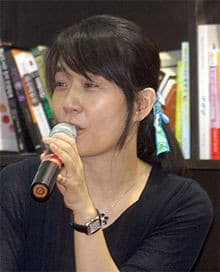
Han Kang is a South Korean writer. She won the Man Booker International Prize for fiction in 2016 for The Vegetarian, a novel about a woman's descent into mental illness and neglect from her family. The novel is also one of the first of her books to be translated into English.
Similar books
- The Vegetarian
Han Kang
3.6 (93k) average on GoodreadsLiterary FictionShares the same author's distinctive, often visceral, exploration of trauma and the human psyche.
- Austerlitz
W.G. Sebald
4.0 (14k) average on GoodreadsHistorical FictionExplores historical trauma and memory through fragmented narratives and a haunting, reflective tone.
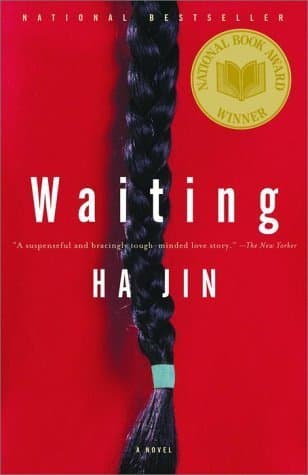
- Waiting
Ha Jin
3.9 (3k) average on GoodreadsYoung AdultWhile both address political events, Jin's 'Waiting' focuses on the slow erosion of personal freedom and quiet endurance over decades in China. Kang's 'Human Acts' directly confronts the visceral horror of a single, brutal event and its immediate, devastating consequences, with a more direct and intense portrayal of trauma.
- The Old Man and the Sea
Ernest Hemingway
3.8 (831k) average on GoodreadsLiterary FictionA Cuban fisherman's long struggle with a giant marlin becomes a story of endurance and dignity, now retold for young adults with illustrations, phonetic guides, and writing prompts in Traditional Chinese.
- One Hundred Years of Solitude
Gabriel García Márquez
4.1 (753k) average on GoodreadsLiterary FictionThrough the multi-generational story of the Buendía family, a mythical town deals with the repeating patterns of time, love, and solitude, as the extraordinary mixes with the ordinary.
- The Goldfinch
Donna Tartt
3.9 (720k) average on GoodreadsLiterary FictionHaunted by a tragic explosion and clutching a stolen Dutch masterpiece, a young orphan navigates the opulent drawing rooms of New York and the gritty underbelly of the art world, desperately seeking connection and redemption amidst a life spiraling into crime and obsession.





Enjoyed the summary?
A summary gives you the shape of the book. The book itself has the detail, the examples and the voice.
Find Human Acts on AmazonAs an Amazon Associate, BookBrief earns from qualifying purchases. How we're funded