
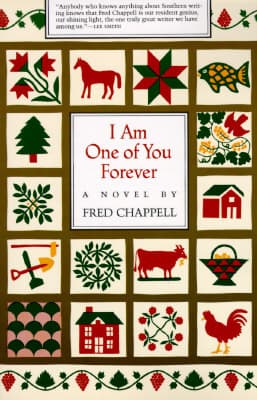
Synopsis
Covers the whole plot, including the ending.
- Difficulty
- Easy
- Pacing
- Slow
- Mood
- Nostalgic, Whimsical, Touching, Humorous
- Read it if
- You enjoy richly drawn characters, lyrical prose, and a nostalgic, humorous, yet touching portrayal of a boy's coming-of-age in a unique rural setting.
- Skip it if
- You prefer fast-paced plots with strong narrative tension and a linear story progression over character-driven vignettes.
I Am One of You Forever Plot Summary
Covers the whole plot, including the ending.
A New Arrival and the First Taste of Eccentricity
The story begins with ten-year-old Jess and his family in rural western North Carolina. His father, a lively and sometimes reckless man, brings home Johnson Gibbs, an orphaned teenager who will live with them. Johnson quickly becomes a close companion and older brother figure to Jess. Life on the farm involves hard work and the unique personalities of Jess's extended family. Uncle Luden, for example, returns from California with tales of the outside world, money, and an interest in women, which amuses the family. Jess watches these adult interactions, starting to understand the world beyond his home. He is interested in the freedom and mystery of his father and Johnson, and the unusual ways of his relatives.
Uncle Gurton's Mysterious Appearance and Vanishing Beard
Jess's world expands with visits from his Uncle Gurton, a man known for his silent entrances and exits. More interesting to Jess than his quiet manner is Uncle Gurton's long beard, which he keeps tucked inside his overalls. Jess and other family members often try to see the beard, which is said to reach his knees or the floor. This recurring mystery is a source of wonder and quiet humor for Jess, showing the unique and often unexplainable quirks of his family. Uncle Gurton's presence adds to the subtle magic in Jess's childhood, making ordinary things seem special.
The Storytelling of Uncle Zeno
Another frequent visitor is Uncle Zeno, a storyteller whose narratives begin with the phrase, "That puts me in mind of..." Uncle Zeno's stories are often long, wandering, and full of fantasy, local lore, and exaggeration. Jess, along with the other children and adults, is often captivated by these tales, which take them beyond their mountain farm. These storytelling sessions are not just for fun; they preserve history, share wisdom, and shape Jess's understanding of his heritage and the world. Uncle Zeno's tales blur the line between reality and imagination, enriching Jess's mind.
Uncle Runkin and His Custom Coffin
Uncle Runkin shows Jess a more serious, yet still unusual, side of life and death. When Uncle Runkin visits, he brings his carved, handmade coffin, which he uses as his bed. He spends his time adding new designs and looking for the right words for his tombstone. This focus on death is presented as normal within the family's unusual ways. For Jess, it is a lesson in mortality and self-determination. Uncle Runkin's dedication to his final resting place contrasts with the lively actions of other relatives, yet it is accepted as part of their unique family, showing Jess how people approach life's end.
Aunt Samantha Barefoot's Uncensored Wisdom
The arrival of Aunt Samantha Barefoot, a country singer and Jess's grandmother's cousin, brings a different kind of lesson. Aunt Samantha is known for her direct speech and honest feelings, offering Jess insights into relationships, love, and human nature. Her directness and earthy wisdom contrast with the more hidden lessons he gets from others. Jess listens closely to her stories and observations, getting a more adult view on life's joys and sorrows. Her presence shows the range of personalities and life experiences within his family, further broadening his understanding of the world and different life paths.
Adventures with Johnson Gibbs
Many of Jess's experiences involve Johnson Gibbs. Whether working on the farm, exploring the woods, or getting into mischief, Johnson is a constant companion and mentor. He teaches Jess practical skills, offers advice, and shares in his adventures. Their bond is central to Jess's childhood, giving him security, friendship, and a deeper understanding of loyalty. Johnson helps Jess through the challenges of growing up, showing him how to be resourceful, strong, and how to find joy in simple things, all while experiencing the freedom and responsibility of mountain life.
The Father's Influence and Lessons
Jess's father, a lively and sometimes unpredictable person, has a big influence. He gives Jess a love for life, a sense of humor, and a certain feistiness. While his mother provides a steady, serious presence, his father encourages adventure and a willingness to embrace the unexpected. Through his father's actions and words, Jess learns about hard work, the importance of family, and the occasional need for spontaneous joy. His father's lessons are often unusual, but they are deeply part of Jess's understanding of being a man and his place in the world, shaping his character with practicality and a wild spirit.
Coming of Age and the Inevitable Changes
As Jess grows, he sees the world with more understanding, noticing the sadness and change beneath his family's unusual ways. He moves from simple observation to a deeper grasp of the adult world's joys and sorrows, knowledge and mystery. The departure of some family members, the aging of others, and the changing dynamics around him mark the passage of time and the end of his innocent childhood. These experiences are bittersweet, as he realizes that the unique world of his youth is temporary, leading to his own journey into adulthood and its responsibilities.
Embracing the Legacy of His Family
By the end of the story, Jess has taken in the lessons, laughter, and peculiarities of his family. He understands that while he is an individual, he is also connected to his colorful relatives. The wisdom, stories, and experiences form his identity. He carries the spirit of his father, the friendship of Johnson Gibbs, the tales of Uncle Zeno, and the quiet mysteries of Uncle Gurton. Jess accepts that he is a product of this unique environment, recognizing that these early years have shaped him into the person he is becoming, forever one of them.
Principal Figures
Jess
Protagonist
A ten-year-old boy navigating the eccentricities of his family and the world around him.
Jess is the central consciousness through which the story unfolds. At ten years old, he is observant, curious, and deeply impressionable, absorbing the unique lessons and personalities of his family in rural North Carolina. He is a sensitive boy who grapples with the shift from childhood innocence to a burgeoning understanding of the adult world, marked by both joy and sorrow. His fascination with his father's antics, Johnson Gibbs's companionship, and the bizarre habits of his uncles shapes his worldview. He is a quiet learner, often listening and watching, internalizing the rich tapestry of his heritage.
Relationships: Father (Adoring but sometimes bewildered son); Mother (Affectionate and respectful son); Johnson Gibbs (Close foster brother and mentor); Grandmother (Loving grandson); Uncle Luden (Curious nephew, fascinated by his worldliness); Uncle Gurton (Mystified nephew, intrigued by his beard); Uncle Zeno (Captivated listener of his stories); Uncle Runkin (Perplexed but accepting nephew of his death preparations); Aunt Samantha Barefoot (Learning nephew, absorbing her frank wisdom)
Jess's Father
Supporting
A feisty, fun-loving, and sometimes reckless man who influences Jess's adventurous spirit.
Jess's father is a vibrant and unpredictable character, full of life and a love for mischief. He is a hard worker on the farm but also possesses a restless spirit, prone to spontaneous decisions and a certain disregard for conventional seriousness. He brings Johnson Gibbs into their home and often leads Jess into various adventures, teaching him lessons through direct experience rather than strict guidance. His humor and zest for life are infectious, shaping Jess's understanding of masculinity and the joys of living freely, despite the responsibilities of mountain life. He embodies a blend of practical strength and whimsical charm.
Relationships: Jess (Loving, influential father); Jess's Mother (Affectionate but sometimes exasperating husband); Johnson Gibbs (Adoptive father figure, employer)
Jess's Mother
Supporting
A straitlaced and serious woman who gracefully accepts the antics of the men in her family.
Jess's mother provides a grounding force in the family. She is practical, serious, and responsible, often serving as a counterpoint to her husband's more boisterous nature. Despite her straitlaced demeanor, she possesses a remarkable grace and good humor, which allows her to accept and even find amusement in the eccentricities of her husband and other male relatives. She is a loving and steady presence for Jess, offering a different kind of wisdom and stability. Her quiet strength and acceptance of her unique family are central to the domestic harmony of the household.
Relationships: Jess (Loving, steady mother); Jess's Father (Patient, accepting wife); Grandmother (Respectful daughter); Johnson Gibbs (Caring mother figure)
Johnson Gibbs
Supporting
An orphaned teenager who becomes Jess's foster brother, mentor, and closest companion.
Johnson Gibbs is an orphaned teenager taken in by Jess's family, quickly becoming an integral part of the household. He forms a deep bond with Jess, acting as an older brother and mentor. Johnson is resourceful, kind, and possesses a quiet strength. He shares in Jess's adventures, teaches him practical skills, and offers a stable, reliable presence. His integration into the family highlights their generosity and capacity for love. Johnson's character represents loyalty, companionship, and the formation of chosen family, profoundly impacting Jess's development and understanding of male friendship.
Relationships: Jess (Close foster brother and mentor); Jess's Father (Employee and foster son); Jess's Mother (Foster son)
Uncle Luden
Supporting
A worldly uncle who returns from California with tales of money and women.
Uncle Luden is one of Jess's more flamboyant and worldly relatives. Having left the mountains for California to earn "actual cash money," he returns periodically with stories that broaden Jess's understanding of the world beyond their rural community. He is a womanizer, and his tales of romantic escapades and financial success add a touch of glamour and scandal to the family gatherings. Uncle Luden represents the allure of the outside world and a different kind of freedom, one that is less about the land and more about personal indulgence and experience. His visits are always a source of entertainment and mild scandal.
Relationships: Jess (Entertaining, worldly uncle); Jess's Father (Brother-in-law/cousin)
Uncle Gurton
Supporting
A mysterious uncle known for his silent appearances and his extraordinarily long, hidden beard.
Uncle Gurton is an enigmatic figure, characterized by his almost supernatural ability to appear and disappear without being noticed, and, most famously, by his extraordinarily long beard that he keeps tucked inside his overalls. He is a man of few words, adding a layer of quiet mystery to the family gatherings. His beard becomes a focal point of fascination and wonder for Jess and the other children, representing the unspoken, the hidden, and the fantastical elements that exist within the seemingly ordinary. Uncle Gurton embodies the subtle magic and unexplainable quirks of the mountain folk.
Relationships: Jess (Mysterious uncle); Jess's Father (Brother-in-law/cousin)
Uncle Zeno
Supporting
A masterful storyteller whose endless tales captivate Jess and the family.
Uncle Zeno is the family's resident bard, a man whose life seems to be a continuous stream of anecdotes and fantastical narratives. His stories, often introduced with the phrase "That puts me in mind of...", are long, winding, and filled with local lore, exaggeration, and homespun wisdom. He is a crucial figure in preserving the family's oral history and entertaining generations. For Jess, Uncle Zeno's tales are a gateway to imagination and a deeper understanding of his heritage, blurring the lines between fact and legend and enriching his developing mind with the power of storytelling.
Relationships: Jess (Beloved storytelling uncle); Jess's Father (Brother-in-law/cousin)
Uncle Runkin
Supporting
An uncle who travels with his handmade coffin, meticulously preparing for his own death.
Uncle Runkin is a peculiar but poignant character who brings his intricately carved, handmade coffin with him on visits, using it as his bed. His time is largely spent adding designs to his coffin and searching for the perfect epitaph. This seemingly morbid preoccupation is presented with a matter-of-fact acceptance by the family, highlighting their unique relationship with life and death. For Jess, Uncle Runkin offers a strange but profound lesson in mortality, self-determination, and the artistic expression even in the face of death. He represents the acceptance of life's ultimate certainty within the family's eccentric framework.
Relationships: Jess (Peculiar but instructive uncle); Jess's Father (Brother-in-law/cousin)
Aunt Samantha Barefoot
Supporting
A country singer and cousin to Jess's grandmother, known for her uncensored speech and honest emotions.
Aunt Samantha Barefoot is a vibrant and outspoken character, bringing a different kind of energy to the family. As a country singer, she has a more worldly perspective than some of the other relatives. Her most defining trait is her uncensored speech and honest, direct emotional expression. She offers Jess frank insights into relationships, love, and the complexities of human nature, providing a raw and authentic education. Her presence emphasizes the diverse range of experiences and personalities within Jess's extended family, broadening his understanding of the world's emotional landscape.
Relationships: Jess (Frank, insightful aunt); Grandmother (Cousin)
Themes & Insights
Coming of Age and the Loss of Innocence
The novel explores Jess's journey from childhood to a more complex understanding of the adult world. Through watching his relatives and his experiences with Johnson Gibbs, Jess learns about love, loss, sex, death, and life's realities. This change is gradual, a collection of moments like listening to Aunt Samantha's direct comments, seeing Uncle Runkin prepare for death, or joining his father's adventures. He moves from just watching to understanding these experiences, marking his shift into maturity.
“That puts me in mind of...”
Family and Community
The book shows the strong, if unusual, bonds of family and community in rural North Carolina. Despite their individual quirks, Jess's relatives form a unit that supports and shapes him. The acceptance of Johnson Gibbs into the family, the constant visits from uncles and aunts, and the shared experiences of work and storytelling all show the importance of family ties. This theme says that family goes beyond immediate parents, including a network of people who contribute to one's identity and sense of belonging, creating a shared history and mutual care.
“I am one of you forever.”
Storytelling and Oral Tradition
Storytelling is an important part of the narrative, especially with Uncle Zeno. The tales, local legends, and personal stories shared by the family are not just for fun but also preserve history, share wisdom, and shape cultural identity. These stories often mix fact with fantasy, showing the imaginative spirit of the mountain community. Jess's growth is influenced by these narratives, which teach him about human nature, the past, and imagination, making him a recipient and future carrier of this oral tradition.
“A man's life is nothing but the stories he tells about it.”
The Nature of Eccentricity and Individuality
The novel celebrates the unique people in Jess's family, showing their quirks not as flaws but as parts of who they are. From Uncle Gurton's hidden beard to Uncle Runkin's coffin, each character is distinctive, and their quirks are accepted and valued. This theme suggests that individuality grows in an environment of acceptance and love, creating a rich and varied human experience. Jess learns to navigate and appreciate these individualities, understanding that they add to his world.
“They were all like that, a little bit touched in the head, but good people.”
Connection to Nature and Place
The setting of rural western North Carolina is important; it is tied to the lives and personalities of the family. The hills, hollows, and laurel-covered mountains shape their routines, their livelihoods, and their view of the world. Jess's adventures with Johnson Gibbs often happen in this natural environment, teaching him about resourcefulness and the rhythms of the land. The isolation of the mountain farm creates a unique culture and allows the family's quirks to thrive, showing how deeply people are shaped by their surroundings and the natural world.
“The mountain was a place that held its secrets close.”
Plot Devices & Literary Techniques
Episodic Structure
A series of interconnected vignettes and chapters that build a cumulative portrait of Jess's childhood.
The novel is structured as a collection of loosely connected chapters, each focusing on a specific event, character, or period in Jess's childhood. This episodic approach allows Chappell to highlight individual eccentricities and moments of revelation without a strict linear plot. Each chapter acts as a self-contained story while contributing to the overall development of Jess's character and his understanding of his family and the world. This structure mirrors the way childhood memories are often formed—a series of vivid, distinct impressions that coalesce into a broader narrative.
First-Person Retrospective Narration
The story is told from the perspective of an adult Jess looking back on his childhood.
The narrative is delivered through the eyes of an older, wiser Jess recounting his experiences as a ten-year-old boy. This retrospective viewpoint allows for a blend of innocent observation and mature reflection. The adult narrator can provide context, thematic insights, and a deeper understanding of the events and characters that the younger Jess could not fully grasp at the time. This device adds layers of meaning, infusing the childhood experiences with both nostalgia and the weight of adult understanding, while maintaining the charm and wonder of a child's perspective.
Character-Driven Narrative
The plot is primarily propelled by the distinct personalities and interactions of the eccentric characters.
Rather than a complex, event-driven plot, the story's progression is largely determined by the introduction, development, and interactions of its unique cast of characters. Each relative, with their specific quirks and stories (Uncle Gurton's beard, Uncle Runkin's coffin, Uncle Zeno's tales), contributes to Jess's education and shapes his worldview. The 'plot' is essentially Jess's coming of age as he observes and internalizes the lessons gleaned from these individuals. This device emphasizes the human element and the profound impact of personal relationships on formative years.
Symbolism of the Hidden Beard
Uncle Gurton's tucked-away beard symbolizes mystery, hidden depths, and the unrevealed aspects of life.
Uncle Gurton's famously long beard, which he keeps meticulously hidden inside his overalls, serves as a powerful symbol. For young Jess, it represents the fascinating, unspoken mysteries of the adult world and the unique, often inexplicable quirks of his family. It embodies the idea that there are depths and wonders to people and life that are not always on display. The beard is a constant source of wonder and speculation, highlighting the imaginative capacity of childhood and the subtle magic embedded within the ordinary, hinting at secrets and stories yet to be fully uncovered.
I Am One of You Forever Quotes
“It was the old story of the country, where the land was rich and the people were poor, and the only way to get ahead was to leave.”
“Memory is a kind of ghost, you know, always there, but you can't quite touch it.”
“The past is never dead. It's not even past.”
“Sometimes you got to make your own luck, even if it means bending a few rules.”
“The mountains had a way of holding onto their secrets, and their people had a way of holding onto theirs.”
“There's a kind of music in the way people talk, if you listen close enough.”
“Grief is a heavy cloak, and it never truly leaves you, just loosens its hold a little with time.”
“You can run from where you are, but you can't run from who you are.”
“The world keeps turning, no matter what sorrow you carry in your heart.”
“Every family has its ghosts, and ours were just a little louder than most.”
“Sometimes the greatest strength is knowing when to give in, when to let the river carry you.”
“The truth ain't always pretty, but it's always the truth.”
“There's a lot of living to do, even when you think you've seen it all.”
“The sound of rain on a tin roof, that's the sound of home for some folks.”
Quiz
10 questions on the plot and the characters. Each answer comes with a short explanation.
Question 1
Which relative is known for his flowing beard, which he keeps tucked inside his overalls?
- Uncle Luden
- Uncle Zeno
- Uncle Gurton
- Uncle Runkin
Show answer
C. Uncle Gurton Uncle Gurton is described as having a spooky way of appearing and disappearing, but his most distinctive feature is his untrimmed, flowing beard tucked into his overalls, which fascinates Jess.
Question 2
What is the primary setting for Jess's coming-of-age story?
- A bustling city in the Midwest
- The coastal plains of South Carolina
- The hills and hollows of western North Carolina
- A remote farm in the Great Plains
Show answer
C. The hills and hollows of western North Carolina The book is explicitly set in 'the hills and hollows of western North Carolina in the years around World War II,' providing the isolated, rural backdrop for Jess's development.
Question 3
Which character is an orphaned teenager who comes to live with Jess's family and significantly impacts Jess?
- Uncle Luden
- Johnson Gibbs
- Uncle Zeno
- Aunt Samantha Barefoot
Show answer
B. Johnson Gibbs Johnson Gibbs is identified as the 'orphaned teenager who comes to live with them on their mountain farm' and is crucial to Jess's 'rich and remarkable' life.
Question 4
What is Uncle Runkin's peculiar habit when visiting Jess's family?
- He always brings a new animal to the farm.
- He tells endless stories starting with 'That puts me in mind of...'
- He brings his handmade coffin to sleep in and carves designs into it.
- He tries to convince everyone to move to California.
Show answer
C. He brings his handmade coffin to sleep in and carves designs into it. Uncle Runkin is described as 'who always brings his handmade coffin to sleep in whenever he visits, spends his time carving intricate designs into the coffin and trying to find just the right epitaph for his tombstone.'
Question 5
How does Jess's mother generally react to the antics of the men in her family?
- She disapproves strongly and often scolds them.
- She ignores them completely.
- She accepts them with grace and good humor.
- She actively participates in their wild schemes.
Show answer
C. She accepts them with grace and good humor. Despite being 'straitlaced and serious,' Jess's mother 'accepts with grace and good humor the antics of the men of the family,' a trait she learned from her own mother.
Question 6
What is Uncle Zeno's signature phrase that signals he is about to tell a story?
- Let me tell you something...
- That puts me in mind of...
- Once upon a time...
- Did you ever hear about...
Show answer
B. That puts me in mind of... The text states, 'Uncle Zeno is a storyteller. With the words 'That puts me in mind of...' everyone around knows that he is about to launch into another of his endless tales.'
Question 7
What role does Aunt Samantha Barefoot play in the family, and what is a key characteristic of her personality?
- She is a schoolteacher who teaches Jess grammar and manners.
- She is a country singer and cousin to Jess's grandmother, known for her uncensored speech.
- She is a quiet seamstress who mends everyone's clothes.
- She is a traveling saleswoman who brings exotic goods from the city.
Show answer
B. She is a country singer and cousin to Jess's grandmother, known for her uncensored speech. Aunt Samantha Barefoot is described as 'A country singer and cousin to Jess's grandmother,' and 'a woman of uncensored speech (Jess learns a lot from her) and honest emotions.'
Question 8
What is a central theme explored through Jess's interactions with his father and Johnson Gibbs?
- The struggle for financial independence in a harsh economic climate.
- The importance of formal education for escaping rural life.
- The richness and remarkableness of life, even if isolated and difficult, through relationships.
- The conflict between modern progress and traditional values.
Show answer
C. The richness and remarkableness of life, even if isolated and difficult, through relationships. The text states, 'Life on the laurel-covered mountain is isolated and at times difficult, but for Jess it is made rich and remarkable through his relationship with his father and, especially, Johnson Gibbs,' highlighting the theme of relationships enriching life.
Question 9
The book's chapters range in style from 'fantasy and near farce to pathos.' What does this stylistic variety suggest about the overall narrative?
- It indicates an inconsistent and poorly structured plot.
- It reflects the unpredictable and diverse nature of life and human experience.
- It suggests the author struggled to maintain a consistent tone.
- It is a technique primarily used to confuse the reader.
Show answer
B. It reflects the unpredictable and diverse nature of life and human experience. The varied chapter styles, from 'fantasy and near farce to pathos,' contribute to the book's depth by reflecting the multifaceted nature of reality—full of humor, strangeness, and sadness—as Jess experiences it.
Question 10
What makes the dialogue and descriptions particularly notable, as mentioned in the book's description?
- Its use of highly formal and academic language.
- Its reliance on complex philosophical debates.
- Its lyrical descriptions of rural settings and finely honed vernacular dialogue.
- Its sparse and minimalist prose style.
Show answer
C. Its lyrical descriptions of rural settings and finely honed vernacular dialogue. The description highlights the book's quality, stating it is 'As notable for its lyrical descriptions of the rural settings as for its finely honed vernacular dialogue,' emphasizing the author's poetic skill.
I Am One of You Forever FAQ
What is "I Am One of You Forever" about?
"I Am One of You Forever" is a humorous yet touching coming-of-age story centered on ten-year-old Jess in rural western North Carolina around World War II. It details his upbringing by his family – including his spirited father, stoic mother, and an array of eccentric relatives like Uncle Gurton and Uncle Runkin – as he navigates the joys, sorrows, and mysteries of life on their mountain farm, particularly through his bond with his foster brother, Johnson Gibbs.
Why should I read "I Am One of You Forever"?
You should read this book for its unique blend of humor, deep emotional resonance, and lyrical prose. Fred Chappell crafts a vivid picture of rural Southern life with a cast of unforgettable, eccentric characters and a narrative that balances fantasy and farce with genuine pathos, offering both wit and wisdom about the human experience.
What is the background/setting of "I Am One of You Forever"?
The story is set in the isolated hills and hollows of western North Carolina during the years surrounding World War II. It vividly depicts life on a laurel-covered mountain farm, emphasizing the close-knit family dynamics and the unique culture of the region during that era.
What are the most memorable quotes?
While specific quotes aren't provided in the summary, the book is noted for its "finely honed vernacular dialogue" and Uncle Zeno's storytelling opener, "That puts me in mind of...", which signals the launch of his endless tales, highlighting the book's rich oral tradition.
What writing style does the author use?
Fred Chappell employs a lyrical and poetic writing style, as expected from a poet, with rich descriptions of rural settings and finely honed vernacular dialogue. The narrative ranges from fantasy and near farce to deep pathos, creating a unique blend of humor and emotional depth.
What minor details add significant meaning?
Uncle Gurton's seemingly untrimmed beard, always tucked into his overalls, and Uncle Runkin's habit of bringing his handmade coffin to sleep in and carving it, are minor details that highlight the peculiar charm and deep-seated traditions, as well as the characters' unique relationships with life and death, within Jess's family.
What are some subtle foreshadowing moments?
The summary doesn't explicitly detail foreshadowing, but the recurring motif of the eccentric relatives, like Uncle Runkin's coffin, subtly foreshadows the eventual acceptance of life's inevitable end and the unique ways the family copes with mortality and change, preparing Jess for the adult world's complexities.
What unexpected character connections exist?
The most significant unexpected connection is the bond between Jess and his foster brother, Johnson Gibbs, which enriches Jess's isolated mountain life. Additionally, the wide array of eccentric relatives, like Aunt Samantha Barefoot, a country singer and cousin to Jess's grandmother, reveals a broader, colorful family tree with diverse personalities.
What are unspoken character motivations?
Jess's father's "feisty, restless, and fun-loving" nature suggests an unspoken motivation to bring levity and adventure to their isolated mountain life. Similarly, Jess's mother's "straitlaced and serious" demeanor, coupled with her acceptance of the men's antics, implies a deep-seated motivation to maintain family harmony and stability.
What psychological complexities do characters exhibit?
Characters like Uncle Gurton, with his mysterious appearances and disappearing acts, and Uncle Runkin, who sleeps in and carves his own coffin, exhibit complex relationships with reality and mortality, suggesting a unique blend of eccentricity, stoicism, and acceptance of their own peculiar destinies.
What are the major emotional turning points?
While not explicitly stated, Jess's journey into the adult world, ushered in by the "joys and sorrows, knowledge and mystery" shared by his family, represents a continuous emotional turning point. The evolving relationship with his father and Johnson Gibbs, in particular, shapes his understanding of love, loss, and belonging.
How do relationship dynamics evolve?
Jess's relationship with his father and foster brother Johnson Gibbs deepens significantly over the course of the narrative, moving from childhood observation to a richer understanding of adult complexities. The dynamics with the broader family, particularly the eccentric relatives, evolve from simple encounters to formative experiences that shape Jess's worldview.
Which parts remain ambiguous or open-ended?
The summary mentions that the book explores "mystery," suggesting that certain aspects of life and the characters' eccentricities, particularly those of figures like Uncle Gurton who appears and disappears, might remain unexplained or open to interpretation, mirroring the inherent ambiguities of memory and perception in a coming-of-age narrative.
What are controversial scenes or decisions?
The summary does not highlight specific controversial scenes or decisions. However, the presence of Aunt Samantha Barefoot, a country singer with "uncensored speech," suggests that her interactions and perspectives might challenge traditional norms within the family or community, offering Jess unconventional lessons.
"I Am One of You Forever" ending explained: how it ends & what it means
The summary doesn't detail the specific ending, but it concludes with Jess being ushered into the "adult world." This implies a resolution where Jess has gained a deeper understanding of life's complexities – its joys, sorrows, knowledge, and mystery – through his family's unique guidance, signifying his full embrace of his identity and heritage.
About the author

Fred Chappell is an American author known for his contributions to fiction. His notable work, "I Am One of You Forever," explores themes of identity and community. Chappell's writing often reflects his Southern roots and has garnered attention for its lyrical prose and depth.
Similar books
- To Kill a Mockingbird
Harper Lee
4.3 (4.5M) average on GoodreadsHistorical FictionShares a similar coming-of-age theme through the eyes of a child observing eccentric small-town life.
- Stoner
John Williams
4.3 (103k) average on GoodreadsLiterary FictionKnown for its beautifully crafted prose and deep character studies, focusing on the internal life and observations of its protagonist.
- Wise Blood
Flannery O'Connor
3.9 (26k) average on GoodreadsLiterary FictionWhile both share Southern Gothic sensibilities and eccentric characters, Chappell's novel is less concerned with theological despair and more focused on a celebratory, albeit often absurd, portrayal of family and community life. Chappell's tone is generally more affectionate and less stark than O'Connor's.
- The Sound and the Fury
William Faulkner
3.9 (158k) average on GoodreadsLiterary FictionFaulkner's novel employs a denser, stream-of-consciousness narrative style, focusing on the decay of the Southern aristocracy. Chappell's prose is more accessible and lyrical, offering a portrait of the rural working class with a focus on enduring traditions and the journey of adolescence, rather than decline.
- The Old Man and the Sea
Ernest Hemingway
3.8 (831k) average on GoodreadsLiterary FictionA Cuban fisherman's long struggle with a giant marlin becomes a story of endurance and dignity, now retold for young adults with illustrations, phonetic guides, and writing prompts in Traditional Chinese.
- One Hundred Years of Solitude
Gabriel García Márquez
4.1 (753k) average on GoodreadsLiterary FictionThrough the multi-generational story of the Buendía family, a mythical town deals with the repeating patterns of time, love, and solitude, as the extraordinary mixes with the ordinary.



Enjoyed the summary?
A summary gives you the shape of the book. The book itself has the detail, the examples and the voice.
Find I Am One of You Forever on AmazonAs an Amazon Associate, BookBrief earns from qualifying purchases. How we're funded