
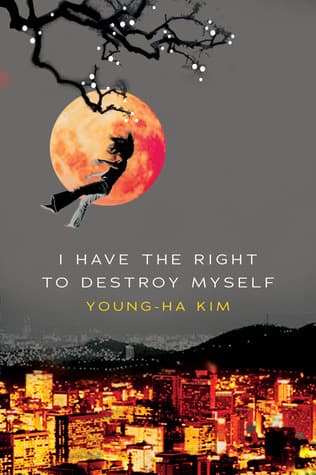
Synopsis
Covers the whole plot, including the ending.
- Difficulty
- Medium
- Pacing
- Moderate
- Mood
- Atmospheric, Melancholy, Philosophical, Dreamlike, Dark
- Read it if
- You enjoy philosophical explorations of life, death, and urban alienation, with a surreal and atmospheric tone.
- Skip it if
- You prefer clear-cut plots, optimistic themes, or find discussions of suicide too confronting.
I Have the Right to Destroy Myself Plot Summary
Covers the whole plot, including the ending.
The Narrator's Introduction
The novel begins with the voice of an unnamed narrator, a self-proclaimed 'designer of suicides.' This figure watches the busy, isolated lives in Seoul, especially those nearing despair. The narrator does not commit murder but subtly encourages people to act on their darkest thoughts, guiding them toward what they see as a beautiful, freeing end. They see themselves as a catalyst, helping people achieve their 'potential' for self-destruction. The narrator emphasizes a detached, almost artistic approach to these events, viewing each suicide as a unique performance. This introduction sets a dark, philosophical tone, questioning freedom and the appeal of oblivion in a modern, disconnected society.
Se-yeon and the Brothers
The story introduces Se-yeon, a captivating and somewhat mysterious performance artist who often uses her body in her art. She becomes involved with two brothers, C and K, who are both drawn to her. C is a struggling artist, perhaps a film director, who is thoughtful and prone to sadness. K is more outwardly successful and charming, often driving a yellow Hummer, a symbol of his wealth and possibly a superficial life. Their first meetings with Se-yeon are marked by fascination and an unspoken competition, hinting at the complex emotional web that will soon trap all three characters. The narrator occasionally comments, watching their interactions with a detached, knowing view.
C's Obsession with Se-yeon
C's relationship with Se-yeon grows, marked by a deep, almost obsessive attraction. He is captivated by her unique view on life and art, finding in her a muse and a source of both inspiration and pain. Their interactions are often intense and emotional, blurring the lines between love, art, and self-destruction. C, already struggling with existential worries and artistic stagnation, becomes increasingly consumed by his feelings for Se-yeon. He starts to see her as a mirror to his own anxieties and desires, leading him further into emotional entanglement and vulnerability. The narrator notes C's growing isolation and the intensity of his inner struggles.
K's Pursuit of Se-yeon
While C is deeply involved with Se-yeon, K also pursues her, though perhaps differently. K's pursuit seems more driven by a desire for possession or conquest, contrasting with C's more thoughtful and emotional connection. The narrator highlights K's materialism and somewhat superficial charm, suggesting his interest in Se-yeon might be part of a larger pattern of acquiring what he wants. This creates tension between the brothers, as their shared affection for Se-yeon becomes a battleground for their unspoken rivalries and individual insecurities. The love triangle intensifies, setting the stage for conflict.
The Narrator's Clientele: The Young Woman
The story periodically includes the narrator's direct involvement with other 'clients.' One example involves a young woman who feels overwhelmed by modern life's pressures and a sense of meaninglessness. The narrator does not directly tell her to die but subtly plants the idea, describing the appeal of oblivion and the freedom it offers from suffering. They provide her with a means, perhaps a specific instruction or a 'tool,' for her self-destruction. This episode shows the narrator's method: a detached, almost philosophical guidance toward suicide, portraying it as an act of ultimate self-expression or escape. The woman's story highlights the pervasive sense of anomie in Seoul.
Se-yeon's Ambiguity and Performances
Se-yeon remains a mysterious figure; her true feelings and intentions are often hidden. Her performance art is central to her character, often involving provocative and sometimes disturbing acts that challenge social norms and explore themes of the body, identity, and vulnerability. These performances are not just art but also a reflection of her own internal struggles and her way of navigating the world. Both C and K are drawn to this part of her, each interpreting it through their own perspectives. The narrator watches Se-yeon's art closely, seeing in her a similar spirit in her exploration of boundaries and the human condition, though through different means.
The Escalation of Sibling Rivalry
As Se-yeon moves between the two brothers, the rivalry between C and K grows. Their interactions become increasingly hostile, marked by passive aggression, veiled threats, and open confrontations. Their shared affection for Se-yeon, initially a source of unspoken competition, now turns into a destructive force, threatening their family bond. The narrator observes this escalating conflict with detached amusement, seeing it as another sign of human weakness and the struggle for connection in an isolated world. The brothers' fight for Se-yeon's attention becomes a metaphor for their individual searches for meaning and validation.
The Narrator's Clientele: The Old Man
Another of the narrator's 'clients' is an old man, tired of life and feeling forgotten in the modern world. His story shows that the desire for an end is not limited to the young or lovelorn but can come from a deep sense of isolation and life's natural decline. The narrator offers the old man a way out, again, not through direct force but by subtly confirming his desire for peace and release. This episode broadens the scope of the narrator's 'service,' suggesting their interventions cater to a wide range of human suffering and a universal longing for an end to pain, regardless of age or circumstance. The narrator's philosophy of 'assisted' self-destruction is further reinforced.
A Turning Point for Se-yeon
The story culminates in a major turning point concerning Se-yeon and her relationships with C and K. While the exact details of her decision are left somewhat unclear, it becomes obvious that her choices have deep and lasting effects on all three. She might choose one brother, reject both, or make a decision that goes beyond their rivalry. This moment acts as a catalyst, pushing the brothers further into despair or resolution. The narrator watches this moment with great interest, seeing it as the peak of the emotional drama they have been observing, and another potential entry point for their 'services.'
The Aftermath and the Narrator's Reflection
Following Se-yeon's decision and the climax of the brothers' rivalry, the consequences of their entangled lives become clear. One or both brothers may give in to their despair, possibly with the narrator's subtle influence. The specific fates are left somewhat ambiguous, letting the reader consider the ultimate outcomes of such intense emotional struggles. The novel ends with the narrator's final thoughts on human existence, the appeal of self-destruction, and the constant search for meaning in a world that often feels meaningless. The narrator repeats their role as a facilitator of morbid desires, suggesting their 'service' will continue as long as there are lost souls in Seoul.
I Have the Right to Destroy Myself Characters
The Narrator
Antagonist/Philosopher
A spectral, unnamed figure who subtly encourages suicide among the lost souls of Seoul.
The narrator is an enigmatic, nameless entity who observes and subtly manipulates the lives of others. They view themselves as an artist or a facilitator, helping individuals realize their 'right to destroy themselves.' Detached and analytical, the narrator doesn't directly commit violence but plants ideas, offers means, and provides philosophical justification for suicide, seeing it as an ultimate act of freedom or self-expression. They are fascinated by human despair and the allure of oblivion, often interjecting with observations on art, philosophy, and the human condition. Their motivations are not malicious in a conventional sense, but rather driven by a chillingly artistic and philosophical curiosity.
Relationships: C (Observer and potential facilitator of his despair); K (Observer and potential facilitator of his despair); Se-yeon (Observer, fascinated by her art and self-destructive tendencies); Various 'clients' (Facilitator of their suicides)
Se-yeon
Protagonist/Catalyst
An enigmatic performance artist who becomes the object of affection for two brothers, C and K.
Se-yeon is a beautiful, mysterious, and highly independent woman whose profession as a performance artist often involves provocative and boundary-pushing acts. She is intelligent, articulate, and possesses a unique perspective on life, art, and the body. Her elusive nature makes her deeply alluring to both C and K, but also contributes to the emotional turmoil surrounding her. Se-yeon seems to navigate the world with a certain detachment, perhaps as a coping mechanism, and her art often reflects themes of vulnerability, identity, and the search for meaning in a fragmented world. She is not a passive object but an active participant in the unfolding drama.
Relationships: C (Lover, muse, source of obsession); K (Lover, object of desire and rivalry)
C
Protagonist
An introspective and melancholic artist (possibly a filmmaker) deeply infatuated with Se-yeon.
C is the more introspective and sensitive of the two brothers. He is an artist, possibly a struggling film director, who grapples with existential angst, artistic stagnation, and a profound sense of melancholy. His love for Se-yeon is deep, obsessive, and intertwined with his artistic aspirations. C often feels overwhelmed by the pressures of modern life and struggles to find authentic connection. He is prone to introspection and self-doubt, making him vulnerable to the allure of despair. His internal struggles are a central focus of the narrative, representing the alienated individual in contemporary society.
Relationships: Se-yeon (Lover, muse, object of intense obsession); K (Brother, rival for Se-yeon's affection)
K
Protagonist/Antagonist
C's brother, outwardly more successful and charismatic, who also pursues Se-yeon.
K is C's brother, and in many ways, his foil. He is portrayed as more outwardly successful, charismatic, and materialistic, often driving a yellow Hummer as a symbol of his status. K's pursuit of Se-yeon seems driven by a mix of genuine attraction and a desire for possession, perhaps seeing her as another conquest. He is less introspective than C and prone to more direct, aggressive actions when it comes to getting what he wants. His rivalry with C over Se-yeon highlights the destructive nature of competition and the superficiality that can mask deeper insecurities. He represents a different facet of modern alienation.
Relationships: Se-yeon (Lover, object of desire and rivalry); C (Brother, rival for Se-yeon's affection)
The Young Woman
Mentioned
One of the narrator's 'clients,' a young woman contemplating suicide due to life's pressures.
This unnamed young woman is a brief but significant character, serving as an example of the narrator's 'clientele.' She represents the demographic of young, urban individuals who feel overwhelmed by societal pressures, a sense of meaninglessness, and a lack of connection. Her despair is a symptom of the broader alienation depicted in the novel. The narrator subtly guides her towards suicide, showcasing their method of offering a 'solution' to those who feel trapped and without hope. Her story underscores the pervasive sense of anomie in Seoul.
Relationships: The Narrator (Client and facilitator)
The Old Man
Mentioned
Another of the narrator's 'clients,' an elderly man seeking an end to his lonely existence.
Like the young woman, the old man is a 'client' of the narrator, representing a different demographic affected by profound despair. His weariness stems not from youthful angst but from the accumulated loneliness and sense of being forgotten that can come with old age in a rapidly modernizing society. His story illustrates the universality of the desire for an exit from suffering, regardless of age or circumstance. The narrator's interaction with him further demonstrates their role as a 'designer of suicides,' offering a release to those who feel life has become unbearable. He adds depth to the theme of pervasive alienation.
Relationships: The Narrator (Client and facilitator)
I Have the Right to Destroy Myself Themes
Existential Alienation and Anomie
The novel deeply explores alienation in modern, urban Seoul. Characters like C and the narrator's 'clients' (the young woman and the old man) feel profoundly disconnected from society, others, and a sense of purpose. The city itself, despite its vibrancy, is portrayed as a place where individuals are isolated, leading to feelings of meaninglessness and despair. The narrator takes advantage of this anomie, suggesting that suicide is a logical, even artistic, response to a life without true connection. This appears in C's constant inner struggles and the silent suffering of the narrator's 'clients' who feel unseen and unheard in the bustling city.
“They are waiting for someone like me. I have no interest in one person killing another. I only want to draw out morbid desires, imprisoned deep in the unconscious.”
The Allure of Self-Destruction
A central theme is the appeal of suicide, portrayed not as a tragedy but as a potential act of liberation or ultimate self-expression. The narrator frames self-destruction as a 'right' and an artistic endeavor, appealing to characters who feel trapped or powerless. For Se-yeon, her performance art often flirts with self-harm or vulnerability, blurring the lines between art and destruction. For C, his despair makes the idea of an 'end' strangely appealing. The novel challenges typical views on suicide, presenting it through a lens of philosophical inquiry and dark romanticism, making it a compelling, though disturbing, aspect of human desire.
“I Have the Right to Destroy Myself. This is the right of all living things.”
Art, Love, and Obsession
The intertwining of art, love, and obsession drives the central plot. Se-yeon, as a performance artist, uses her body and experiences as a medium; her very existence becomes a muse and an obsession for both C and K. For C, his love for Se-yeon is tied to his artistic struggles, as he tries to capture or understand her through his own creative lens. The brothers' rivalry for Se-yeon is not just about romantic love but also about possession, inspiration, and validation. Art becomes a way to express deep emotions, but also a potential trap, leading to intensified feelings of desire, jealousy, and despair.
“A woman's body is the best canvas. No matter how many times you paint on it, it's never the same.”
The Nature of Freedom and Choice
The novel constantly examines the definition of freedom, especially through the narrator's philosophy. Is true freedom the ability to choose one's own end, even if that end is self-destruction? The narrator argues that the 'right to destroy myself' is the ultimate expression of individual control. This raises deep questions about agency, responsibility, and the limits of human choice in a world where many feel their lives are predetermined or controlled by outside forces. The characters' struggles, especially C's, reflect a yearning for control over their own destinies, even if that control leads them down a dark path. The choices they make, or are subtly guided to make, define their perceived freedom.
“If you don't have the right to destroy yourself, you don't have the right to live.”
Modernity and Disconnection
The setting of a rapidly modernizing Seoul is important to the novel's themes. The city, with its bright lights and fast pace, symbolizes both opportunity and deep disconnection. Despite living close together, characters experience profound isolation, struggling to form meaningful relationships. Technology and urban anonymity contribute to this fragmentation, creating fertile ground for the narrator's 'services.' K's superficial success and the anomie felt by the narrator's 'clients' are direct results of this modern, disconnected existence. The novel implicitly critiques the emotional cost of rapid societal progress.
“In this city, everyone is alone. Even when they're together, they're alone.”
Plot Devices & Literary Techniques
Unnamed Narrator
A first-person, spectral narrator who directly addresses the reader and manipulates events.
The use of an unnamed, first-person narrator who is both an observer and a subtle participant is crucial. This narrator provides a philosophical framework for the story, offering a detached, almost academic perspective on human despair and the 'right to destroy oneself.' Their anonymity makes them seem omnipresent and timeless, blurring the line between a character and a symbolic representation of morbid desires. By directly addressing the reader and interjecting with philosophical musings, the narrator acts as a guide, subtly influencing the reader's perception of the events and the characters' choices, making them complicit in the dark philosophical inquiry.
Love Triangle
The central romantic entanglement between Se-yeon and the brothers, C and K.
The love triangle is the primary driver of the interpersonal conflict and emotional intensity in the novel. It serves as a microcosm for broader themes of desire, possession, rivalry, and the destructive nature of human connection. The dynamic between Se-yeon, C, and K highlights their individual insecurities and their struggle for meaning and validation. It's not just a romantic entanglement but a battleground for artistic aspirations, familial loyalty, and personal identity. The unresolved nature of the triangle further amplifies the sense of existential angst and potential for despair among the characters.
Performance Art
Se-yeon's provocative and often self-referential artistic practice.
Se-yeon's performance art is more than just a character detail; it's a significant plot device. It serves as a metaphor for the themes of identity, vulnerability, the body, and self-destruction. Her performances, which often involve her own body, challenge societal norms and reflect her internal struggles. For C, her art is a muse and a source of both inspiration and torment. For the reader, it provides insight into Se-yeon's enigmatic nature and the philosophical underpinnings of her character. It also blurs the lines between art and life, suggesting that existence itself can be a performance, and that self-expression can be a form of self-destruction.
Interspersed Vignettes of 'Clients'
Brief, episodic accounts of the narrator's interactions with other individuals seeking their 'services.'
The narrator's sporadic recounting of their interactions with other 'clients' (like the young woman and the old man) serves to broaden the scope of the novel's themes. These vignettes demonstrate the universality of despair and the narrator's consistent modus operandi across different demographics. They reinforce the idea that alienation and the desire for an end are not exclusive to the central love triangle but are pervasive in modern society. This device provides a wider context for the main plot, illustrating that C, K, and Se-yeon's struggles are part of a larger, societal phenomenon of anomie and the longing for release.
I Have the Right to Destroy Myself Quotes
“Living in Seoul is like being in a giant aquarium, with everyone watching everyone else.”
“To be truly free, one must first be free from the desire to be free.”
“We are all just stories we tell ourselves.”
“The most dangerous thing is not to live, but to live without knowing why.”
“Love is just a temporary cease-fire in the war against loneliness.”
“In a city like this, death is just another form of entertainment.”
“Every secret is a potential weapon.”
“The past is a foreign country; they do things differently there. But the future is an even stranger one.”
“To destroy something, you must first understand it completely.”
“Perhaps the greatest freedom is the freedom to disappear.”
“We create our own prisons, then spend our lives trying to escape them.”
“Memory is a tailor, always altering the past to fit the present.”
“The world doesn't need heroes; it needs survivors.”
“Silence is not empty; it's full of unspoken words.”
Quiz
10 questions on the plot and the characters. Each answer comes with a short explanation.
Question 1
Who is the primary antagonist in the traditional sense, driving much of the conflict among the main characters?
- The unnamed narrator
- C
- Se-yeon
- K
Show answer
C. Se-yeon Se-yeon is the woman both brothers, C and K, fall in love with, and her presence creates significant conflict and tearing between them.
Question 2
What is the primary 'service' offered by the nameless, spectral narrator?
- Financial advice
- Guidance towards self-destruction/suicide
- Life coaching
- Art criticism
Show answer
B. Guidance towards self-destruction/suicide The narrator 'suggests solace in suicide' and helps individuals embrace their 'morbid desires' for self-destruction.
Question 3
In which city does the story primarily take place?
- Busan
- Tokyo
- Seoul
- New York
Show answer
C. Seoul The synopsis explicitly states the narrator 'haunts the lost and wounded of big-city Seoul'.
Question 4
What is the nature of the relationship between C and K?
- They are estranged cousins.
- They are best friends.
- They are brothers.
- They are business partners.
Show answer
C. They are brothers. The synopsis clearly states, 'C and K are brothers who fall in love with the same woman - Se-yeon'.
Question 5
What does the narrator mean by 'morbid desires, imprisoned deep in the unconscious'?
- A repressed desire for material wealth.
- A hidden longing for artistic expression.
- An innate, often suppressed, inclination towards self-destruction or death.
- A secret wish for social isolation.
Show answer
C. An innate, often suppressed, inclination towards self-destruction or death. The narrator's role is to draw out this 'lust' for self-destruction, which, once freed, leads individuals to 'discover their potential' for suicide.
Question 6
Which descriptive word is used in the synopsis to characterize the overall style or atmosphere of the book?
- Gritty and realistic
- Humorous and lighthearted
- Dreamlike and cinematic
- Historical and factual
Show answer
C. Dreamlike and cinematic The synopsis describes the book as 'Dreamlike and cinematic', highlighting its unique aesthetic and narrative approach.
Question 7
What societal condition is suggested as a contributing factor to the characters' struggles and the narrator's influence?
- Political instability
- Economic recession
- Fast-paced, atomized urban existence
- Religious fundamentalism
Show answer
C. Fast-paced, atomized urban existence The synopsis mentions characters struggling to find connection in their 'fast-paced, atomized world', implying that modern urban alienation contributes to their vulnerability.
Question 8
How does the narrator view the individuals who come under their influence?
- As victims of circumstance.
- As unique individuals waiting for their true potential to be unleashed.
- As naive and easily manipulated.
- As subjects for psychological study.
Show answer
B. As unique individuals waiting for their true potential to be unleashed. The narrator states, 'Their imaginations run free, and they soon discover their potential... They are waiting for someone like me,' suggesting a belief in their inherent, albeit morbid, potential.
Question 9
What is the implicit philosophical stance of the narrator regarding human desire, particularly morbid ones?
- That such desires are inherently evil and should be suppressed.
- That these desires, once freed, lead to a form of self-discovery or fulfillment.
- That morbid desires are merely symptoms of mental illness.
- That they are harmless fantasies with no real-world impact.
Show answer
B. That these desires, once freed, lead to a form of self-discovery or fulfillment. The narrator explicitly states, 'This lust, once freed, starts growing. Their imaginations run free, and they soon discover their potential...', indicating a belief that these desires, when indulged, lead to a form of self-realization.
Question 10
The title 'I Have the Right to Destroy Myself' primarily reflects which major theme of the novel?
- The importance of individual freedom in artistic expression.
- The inherent right to self-determination, even if it leads to self-destruction.
- A critique of governmental overreach into personal lives.
- The struggle for civil rights in modern society.
Show answer
B. The inherent right to self-determination, even if it leads to self-destruction. The title, combined with the narrator's role in encouraging suicide, directly points to the theme of individual autonomy and the controversial 'right' to choose one's own end, regardless of societal norms.
I Have the Right to Destroy Myself FAQ
What is the central premise of 'I Have the Right to Destroy Myself'?
The novel explores the lives of various individuals in Seoul who are contemplating suicide, facilitated by a mysterious, nameless narrator who offers 'services' to those seeking to end their lives. It delves into their motivations and the bleak urban landscape that contributes to their despair.
Who are C and K, and what is their relationship to Se-yeon?
C and K are brothers living in Seoul. They both become entangled in a romantic relationship with the same woman, Se-yeon, creating a complex and destructive love triangle that fuels much of the narrative's tension and psychological conflict.
What role does the nameless narrator play in the story?
The nameless narrator acts as a spectral facilitator of suicide, providing a unique 'service' to lost and wounded individuals. This narrator doesn't directly commit violence but rather guides and enables others to fulfill their morbid desires, observing the unfolding tragedies with detached curiosity.
How does the setting of Seoul influence the characters' actions and themes?
Seoul, depicted as a fast-paced, high-urban, and atomized environment, profoundly influences the characters' feelings of isolation and disconnection. The city's bright lights and modern existence contrast sharply with the internal despair and anomie experienced by the protagonists, highlighting their struggle for genuine human connection.
What is the significance of the title, 'I Have the Right to Destroy Myself'?
The title reflects a core theme of individual autonomy and the ultimate control one has over their own life, even to the point of self-destruction. It provocatively challenges societal norms surrounding life and death, suggesting a dark freedom in choosing one's end.
Are there any clues to the narrator's identity or nature beyond being 'spectral'?
The narrator's identity remains largely ambiguous, emphasizing their role as an observer and facilitator rather than a fully developed character. Their spectral nature suggests they might be a metaphorical representation of the characters' own inner despair or the pervasive suicidal ideation within the urban environment.
How do the relationships between C, K, and Se-yeon mirror broader societal issues in the book?
Their tumultuous love triangle, marked by jealousy and a struggle for connection, reflects the broader theme of atomization in modern society. Despite their proximity, the characters struggle to form meaningful bonds, echoing the isolation experienced by many in the sprawling city of Seoul.
Are there recurring symbols or motifs that hint at deeper meanings?
The novel frequently employs cinematic and dreamlike imagery, suggesting a blurring of reality and illusion. The 'bright lights' of Seoul contrast with the internal darkness, and the repeated motif of 'lust' or 'morbid desires' growing within characters points to the unconscious forces at play.
What is the psychological state of Se-yeon throughout her relationships with C and K?
Se-yeon appears to be drawn to the complexities and perhaps even the destructive potential within the brothers' rivalry. Her psychological state is one of seeking connection amidst an underlying emptiness, leading her to become a catalyst for the brothers' unraveling as she navigates their intense, often unhealthy, affections.
How does the book explore the concept of 'morbid desires' and their origins?
The book suggests that morbid desires are 'imprisoned deep in the unconscious' and are awakened by the narrator's influence. It explores how these desires manifest in characters like C and K, hinting that urban alienation and a lack of genuine connection can cultivate a profound longing for destruction or escape.
What psychological impact does the narrator's presence have on the characters?
The narrator's presence acts as a psychological mirror, reflecting and amplifying the characters' existing suicidal ideations and despair. By offering a 'solution,' the narrator bypasses any potential for recovery, instead validating and encouraging their latent desires for self-destruction.
How do C and K cope with their rivalry and shared love for Se-yeon psychologically?
C and K cope with their rivalry through internal turmoil, jealousy, and a destructive competition for Se-yeon's affection. Their struggle to find connection in their atomized world leads them to tear at each other, revealing deep-seated insecurities and a fragile grasp on their own identities.
Is the narrator a literal entity or a metaphor for something else, such as depression or societal pressure?
The narrator's nature is open to interpretation. While presented as a distinct entity, they can also be seen as a metaphor for the pervasive cultural despair, the insidious nature of depression, or even the collective unconscious yearning for an escape from modern urban existence.
Does the book endorse suicide, or is it a critique of the conditions that lead to it?
The book does not endorse suicide but rather explores the morbid desires and conditions that lead individuals to contemplate it. It acts as a stark critique of the alienation and lack of connection in contemporary urban life, highlighting the psychological toll of an 'atomized world.'
What is the significance of the 'dreamlike and cinematic' style mentioned in the blurb?
The dreamlike and cinematic style enhances the novel's exploration of subjective reality and internal states. It allows for a fluid narrative that blurs the lines between perception and reality, mirroring the characters' disoriented and often fragmented experiences in a modern, hyper-stylized world.
How does the novel challenge traditional notions of morality and responsibility?
The novel challenges traditional morality by introducing a narrator who facilitates suicide without overt judgment, forcing readers to confront the concept of individual autonomy even in self-destruction. It questions who is responsible for one's choices in a world that offers little solace.
What message, if any, does Young-Ha Kim convey about human connection in the modern age?
Young-Ha Kim conveys a bleak message about the difficulty of achieving genuine human connection in the modern age. The characters' struggles and their ultimate isolation suggest that despite living in close proximity, individuals can remain profoundly disconnected and unable to bridge the emotional gaps between them.
About the author

Young-Ha Kim is a South Korean author known for his exploration of existential themes in contemporary society. His notable work, "I Have the Right to Destroy Myself," delves into the complexities of identity and self-destruction. Most of his writings are fiction, reflecting on the human condition and the intricacies of modern life.
Similar books
- The Stranger
Albert Camus
4.1 (3k) average on GoodreadsFantasyExplores existentialism and alienation through a detached protagonist.
- Norwegian Wood
Haruki Murakami
4.0 (347k) average on GoodreadsLiterary FictionFeatures melancholic themes, complex relationships, and a search for meaning amidst loss.
- The Vegetarian
Han Kang
3.6 (93k) average on GoodreadsLiterary FictionHan Kang's novel also explores a protagonist's radical detachment and self-negation, but it is far more visceral, grotesque, and deeply psychological, using body horror to convey profound trauma and rebellion. Kim's novel, while disturbing, operates on a more intellectual and aesthetic plane, making the act of 'destroying oneself' an almost artistic or philosophical undertaking rather than a raw, bodily experience.
- The Old Man and the Sea
Ernest Hemingway
3.8 (831k) average on GoodreadsLiterary FictionA Cuban fisherman's long struggle with a giant marlin becomes a story of endurance and dignity, now retold for young adults with illustrations, phonetic guides, and writing prompts in Traditional Chinese.
- One Hundred Years of Solitude
Gabriel García Márquez
4.1 (753k) average on GoodreadsLiterary FictionThrough the multi-generational story of the Buendía family, a mythical town deals with the repeating patterns of time, love, and solitude, as the extraordinary mixes with the ordinary.
- The Goldfinch
Donna Tartt
3.9 (720k) average on GoodreadsLiterary FictionHaunted by a tragic explosion and clutching a stolen Dutch masterpiece, a young orphan navigates the opulent drawing rooms of New York and the gritty underbelly of the art world, desperately seeking connection and redemption amidst a life spiraling into crime and obsession.





Enjoyed the summary?
A summary gives you the shape of the book. The book itself has the detail, the examples and the voice.
Find I Have the Right to Destroy Myself on AmazonAs an Amazon Associate, BookBrief earns from qualifying purchases. How we're funded