
Synopsis
Covers the whole plot, including the ending.
- Difficulty
- Easy
- Pacing
- Moderate
- Mood
- Inspirational, Reflective, Thought-provoking, Moral
- Read it if
- You are interested in the historical roots of Christian social ethics, enjoy parables about practical faith, or are curious about the origins of the 'What Would Jesus Do?' movement.
- Skip it if
- You prefer complex narratives, are looking for deep theological debates, or dislike overtly didactic or evangelistic storytelling.
In His Steps Plot Summary
Covers the whole plot, including the ending.
A Vagrant's Challenge to Raymond's Church
Reverend Henry Maxwell, pastor of the First Church of Raymond, prepares his Sunday sermon when a shabbily dressed, unemployed man appears at his study door. The man, a printer, explains he has been searching for work for months and is starving. Maxwell dismisses him, but the man reappears during the Sunday service, walking to the pulpit. He calmly asks the prosperous congregation what Jesus would do in their situation, noting their comfortable lives while he and others suffer. He then collapses and dies a few days later, affecting Maxwell and a few others. This incident leads Maxwell to propose a new idea to his congregation.
The Vow: What Would Jesus Do?
Reverend Maxwell, moved by the printer's death and his challenge, proposes an extraordinary vow to his congregation: for one year, no member of the church who takes the pledge will do anything without first asking, 'What would Jesus do?' He says this is not a legalistic rule but a sincere attempt to follow Christ's example in every decision. Initially, a few people accept the challenge, including Rachel Winslow, a talented singer; Alexander Powers, the railroad superintendent; Edward Norman, the editor of the Raymond Daily News; and Milton Wright, a wealthy businessman. This small group's commitment starts a series of changes within the community.
Edward Norman's Editorial Revolution
Edward Norman, the editor and owner of the Raymond Daily News, is one of the first to take Maxwell's pledge. His first 'What would Jesus do?' decision involves changing his newspaper. He removes all sensationalist articles, liquor advertisements, and morally questionable content, knowing it will affect circulation and advertising revenue. He begins to publish articles about social justice, community issues, and spiritual uplift, even though it means alienating profitable advertisers and subscribers. His staff is shocked, and many threaten to quit, but Norman remains firm, believing it is the only way to honor his vow.
Rachel Winslow's Artistic Sacrifice
Rachel Winslow, a young woman with a beautiful singing voice and opera aspirations, also takes the pledge. She is offered a lucrative contract to sing in the opera, a dream opportunity. However, after asking 'What would Jesus do?', she realizes that Jesus would use his gifts to serve others and spread a message of hope, not for personal fame or wealth. She rejects the opera offer, to the dismay of her friends and family, and instead begins to sing at local missions and for the poor, using her talent to uplift and inspire those in need. Her decision affects the struggling community of the Rectangle.
Alexander Powers's Railroad Reforms
Alexander Powers, the superintendent of the local railroad, is another figure who takes the vow. His commitment leads him to confront ethical compromises within his industry. He begins to investigate safety hazards, unfair labor practices, and corruption he previously overlooked for efficiency and profit. Asking 'What would Jesus do?' leads him to make difficult decisions, such as firing a dishonest employee, refusing to overlook safety violations, and advocating for better wages and working conditions for his employees, even when it puts him at odds with the railroad company's board of directors and risks his own position.
Milton Wright's Business Ethics
Milton Wright, a successful and wealthy businessman in Raymond, also joins the 'What would Jesus do?' movement. His first challenge involves looking at his extensive investments and business dealings. He finds that some of his investments are in companies with questionable labor practices or that produce harmful products. He faces the difficult decision of selling these profitable but unethical ventures, even if it means a significant personal financial loss. Wright also looks at his own business operations, ensuring fair wages, safe conditions, and ethical conduct, showing that Christian principles can be applied even in business.
The Rectangle and Social Outreach
As more members of the First Church of Raymond take the vow, their actions affect the community, particularly in the impoverished district known as the Rectangle. Led by Reverend Maxwell and the dedicated group, the church's mission changes from internal comfort to external service. Rachel Winslow's singing, Milton Wright's financial support, and other members' direct involvement bring aid, hope, and spiritual guidance to the residents of the Rectangle. This outreach involves opening a mission, providing food and shelter, and engaging with the social problems of poverty, alcoholism, and crime, changing the church's role in the community.
Reverend Maxwell's Broader Influence
Reverend Maxwell's commitment to the 'What would Jesus do?' principle extends beyond his local congregation. He is invited to speak at a national convention and, after prayer, decides to use the platform to challenge the broader Christian community. Instead of a typical theological address, he tells the experiences of his church members in Raymond and asks other Christians to apply the same question to their own lives and societal issues. His speech is controversial but impactful, starting a wider discussion about Christian responsibility in addressing social and economic injustices across the nation.
Consequences and Criticisms
The commitment to 'What would Jesus do?' has challenges. Edward Norman's newspaper faces financial ruin, Alexander Powers faces resistance from his superiors, and Rachel Winslow gives up a career. The First Church of Raymond sees a decline in its wealthy membership as some parishioners find the new emphasis on social justice and personal sacrifice too demanding. However, the church also sees an influx of new members from the Rectangle and other working-class areas, drawn by its compassion and impact. The movement faces criticism and ridicule from those who believe it is impractical or too radical, forcing the adherents to continually examine their motives and faith.
A Year of Transformation and Enduring Legacy
As the year of the vow ends, the town of Raymond is changed. While not every problem is solved, and personal sacrifices have been made, the lives of those who took the pledge have changed, and the community, especially the Rectangle, has seen improvement. The First Church of Raymond is no longer a complacent institution but a force for good, actively engaging with the world's problems. The novel ends by suggesting that the spirit of 'What would Jesus do?' continues to inspire. It shows that applying Christ's example to daily life can lead to personal and societal transformation, leaving a legacy of faith in action.
Principal Figures
Reverend Henry Maxwell
Protagonist
Pastor of the First Church of Raymond, who initiates the 'What Would Jesus Do?' movement.
Reverend Maxwell is initially a complacent, traditional pastor, comfortable in his routine and with his affluent congregation. The encounter with the unemployed printer profoundly shakes his spiritual complacency, forcing him to confront the disconnect between Christian teaching and practical living. He is the catalyst for the entire movement, challenging his church members to take the vow. Throughout the year, he grapples with the practical implications of the vow, providing spiritual guidance and leadership, and often facing his own doubts and criticisms. He grows from a conventional preacher to a passionate advocate for radical Christian living.
Relationships: The Unemployed Printer (catalyst for his spiritual awakening); First Church Congregation (their pastor and spiritual guide); Rachel Winslow (mentee and fellow pledge-taker)
Rachel Winslow
Supporting
A talented singer who sacrifices a lucrative career for Christian service.
Rachel is a young woman with a beautiful voice, poised for a successful career in opera. Upon taking the 'What would Jesus do?' vow, she faces a direct conflict between personal ambition and Christian service. She chooses to use her talent to uplift the poor and marginalized in the Rectangle, singing in missions and for those in need, rather than pursuing fame and fortune. Her decision highlights the theme of sacrifice and using one's gifts for the greater good, inspiring others with her commitment and the beauty of her voice.
Relationships: Reverend Henry Maxwell (her pastor and spiritual influence); Felicia Sterling (former friend and rival opera singer); The poor in the Rectangle (her audience and beneficiaries of her talent)
Edward Norman
Supporting
Editor of the Raymond Daily News, who transforms his paper based on Christian principles.
Edward Norman is a shrewd and successful newspaper editor who, after taking the vow, completely rehauls his publication. He grapples with the financial implications of removing sensationalism, liquor ads, and other profitable but morally questionable content. His commitment to publishing only what Jesus would approve of leads to significant financial losses and staff resignations, but he remains steadfast. Norman's story illustrates the challenges of applying Christian ethics in the business world and the importance of media integrity.
Relationships: Reverend Henry Maxwell (his pastor and the initiator of the vow); Raymond Daily News staff (his employees, some of whom resist his changes)
Alexander Powers
Supporting
Superintendent of the Raymond railroad, who prioritizes ethical conduct and employee welfare.
Alexander Powers is a pragmatic and efficient railroad superintendent. When he takes the vow, he is forced to confront the systemic ethical compromises within his industry, including safety shortcuts and unfair labor practices. His decision to act as Jesus would leads him to make unpopular but morally sound choices, such as firing a dishonest employee and advocating for better conditions for his workers, even if it risks his own career. Powers's narrative explores the application of Christian ethics in corporate management and the tension between profit and principle.
Relationships: Reverend Henry Maxwell (his pastor and spiritual guide); Railroad employees (his subordinates, whose welfare he champions)
Milton Wright
Supporting
A wealthy businessman who reevaluates his investments and business practices.
Milton Wright represents the challenge of applying Christian principles to wealth and finance. After taking the vow, he scrutinizes his extensive investments, divesting from companies involved in unethical practices, even at personal financial cost. He also ensures his own businesses operate with fairness and integrity. Wright's journey demonstrates that Christian stewardship extends to one's financial decisions and the responsible use of wealth, challenging the idea that business and faith are separate spheres.
Relationships: Reverend Henry Maxwell (his pastor and fellow pledge-taker); His business partners (those he must convince or part ways with due to his new ethics)
Jasper Chase
Supporting
A talented writer who struggles with the commercial demands of his craft versus Christian integrity.
Jasper Chase is a gifted author who is considering taking the 'What would Jesus do?' vow. He wrestles with the temptation to write commercially successful but morally compromised stories. His internal struggle highlights the conflict between artistic integrity, popular demand, and Christian ethics. Ultimately, he chooses to write a more morally uplifting novel, but the process is fraught with doubt and the potential loss of his career. He represents the artistic community's struggle with the vow.
Relationships: Rachel Winslow (friend and admirer); Reverend Henry Maxwell (spiritual guide)
Felicia Sterling
Supporting
A wealthy socialite who initially resists the vow but eventually finds spiritual purpose.
Felicia Sterling is a beautiful and wealthy young woman, part of Raymond's elite social circle. Initially, she is resistant to Maxwell's radical challenge, finding it too demanding and disruptive to her comfortable life. Her journey involves a gradual awakening to the needs of others, particularly through her interactions with Rachel Winslow and the work in the Rectangle. She eventually takes the vow, finding a new purpose in charitable work and service, illustrating that spiritual transformation can come even to the most privileged.
Relationships: Rachel Winslow (friend and inspiration); Reverend Henry Maxwell (her pastor)
The Unemployed Printer (Jack)
Mentioned
A suffering man whose challenge to the church sparks the entire 'What Would Jesus Do?' movement.
Though he appears only briefly and dies early in the narrative, the unnamed unemployed printer is the catalyst for the entire plot. His direct, poignant question to the prosperous First Church congregation—'What would Jesus do?'—shatters their complacency and forces Reverend Maxwell to initiate the vow. His death underscores the suffering of the marginalized and serves as a powerful reminder of the social responsibility of Christians. His brief appearance sets the moral tone for the entire novel.
Relationships: Reverend Henry Maxwell (the recipient of his challenge); First Church Congregation (the audience of his indictment)
Rollin Page
Supporting
A wealthy, dissipated young man who finds redemption through the church's outreach.
Rollin Page is a young man from a prominent family who has fallen into a life of dissipation and idleness. He represents the lost youth within the community. Through the outreach efforts of the First Church, particularly the influence of Rachel Winslow and the work in the Rectangle, Rollin experiences a spiritual awakening. He eventually takes the vow and commits to a life of service, demonstrating the redemptive power of the 'What would Jesus do?' movement and the church's commitment to reaching out to all members of society.
Relationships: Rachel Winslow (object of his admiration and spiritual influence); Reverend Henry Maxwell (his pastor)
Themes & Insights
Practical Christianity and Social Justice
The central theme is applying Christian faith to daily life and societal problems. The characters deal with how to live out Christ's teachings in their professions, personal decisions, and community engagement. The novel says that true faith demands action, especially in addressing poverty, inequality, and moral compromise. The church's shift from inward comfort to outward service in the Rectangle shows this theme, demonstrating a commitment to practical acts of love and justice rather than just following doctrine.
“What would Jesus do?”
Sacrifice and Selflessness
Many characters make personal and professional sacrifices to follow the 'What would Jesus do?' vow. Rachel Winslow gives up an opera career, Edward Norman risks his newspaper's financial stability, and Milton Wright sells profitable but unethical investments. These sacrifices show the cost of discipleship and that following Christ often requires giving up personal gain, comfort, or ambition for higher moral and spiritual principles. The novel argues that Christian living involves a willingness to suffer for others and for truth.
“It is not a question of what is popular or what is profitable, but what is right.”
The Influence of Individual Action
The novel shows how the actions of a few individuals can affect an entire community. Reverend Maxwell's challenge, taken up by a small group, creates a ripple effect that changes a church, a newspaper, a railroad, and a poor district. This theme shows the power of personal integrity and that moral courage in individuals can inspire collective change. It shows that even small decisions, when guided by a strong moral compass, can lead to widespread societal improvement.
“The kingdom of God is not coming by and by; it is here, and now, to be worked for and lived for.”
Integrity in Profession and Business
A part of the story explores how the 'What would Jesus do?' question applies to various professions: journalism (Edward Norman), railroad management (Alexander Powers), finance (Milton Wright), and art (Rachel Winslow, Jasper Chase). The characters deal with ethical dilemmas in their fields, such as prioritizing profit over truth, efficiency over safety, or ambition over moral content. The novel argues for Christian integrity in all aspects of life, challenging the separation of faith from professional conduct and advocating for business and career choices guided by ethical and spiritual principles.
“Is it possible for a railroad man to be a Christian?”
Plot Devices & Literary Techniques
The Vow/Pledge
The central commitment to act only after asking 'What would Jesus do?'
The 'What would Jesus do?' vow is the primary plot device that drives the entire narrative. It serves as a moral compass and a decision-making framework for the characters. By committing to this pledge, characters are forced to confront their existing values, habits, and societal norms. It creates internal conflict for individuals and external conflict within the community, as their Christ-like actions often go against conventional wisdom or established practices. The vow is not merely a statement but a directive for radical transformation, allowing the author to explore the practical implications of Christian discipleship in various social and professional contexts.
The Unemployed Printer
A catalyst character whose brief appearance sparks the entire movement.
The unnamed unemployed printer functions as a pivotal catalyst character. His dramatic appearance, direct challenge to the congregation's hypocrisy, and subsequent death are the inciting incident for Reverend Maxwell's spiritual awakening and the initiation of the 'What would Jesus do?' vow. Though his role is brief, his suffering and question resonate throughout the novel, serving as a constant reminder of the social injustices the church is called to address. He embodies the marginalized and forgotten, forcing the comfortable congregation to confront their responsibilities.
The Rectangle
A symbolic setting representing urban poverty and the target of the church's outreach.
The Rectangle is a specific, impoverished district within Raymond, characterized by poverty, alcoholism, and crime. It serves as a symbolic setting representing the neglected, suffering segment of society that the affluent First Church initially ignores. As the characters take the 'What would Jesus do?' vow, the Rectangle becomes the primary focus of their outreach and service. It provides a tangible arena for the practical application of Christian principles, allowing the characters to directly confront social problems and demonstrate the transformative power of their faith through concrete actions like establishing missions, providing aid, and offering spiritual guidance.
Character Archetypes Representing Professions
Each major character embodies a different societal role or profession, allowing for broad thematic exploration.
Sheldon deliberately introduces characters who represent distinct professions and social roles: a pastor (Maxwell), a singer (Rachel Winslow), a newspaper editor (Edward Norman), a railroad superintendent (Alexander Powers), and a wealthy businessman (Milton Wright). This allows the novel to explore the 'What would Jesus do?' question across various sectors of society. Each character's struggle to apply the vow within their specific context highlights the universal applicability of Christian ethics and the diverse challenges faced in different walks of life, making the moral lessons broadly relatable and impactful.
In His Steps Quotes
“What would Jesus do?”
“The world is full of suffering and sin, and it is the duty of every Christian to do what he can to lessen it.”
“I am not my own; I am bought with a price.”
“It is not enough to be good; we must be good for something.”
“The church is not a place to simply hear sermons, but a force to be used for the regeneration of the world.”
“We are here to represent the Master in every act of our lives.”
“Money is a trust from God, and we are accountable for how we use it.”
“The greatest need of the world is not more churches, but more Christians living like Christ.”
“If we are not willing to suffer for Christ, we are not worthy of Him.”
“Our business success should not come at the expense of our neighbors' welfare.”
“Prayer is not just asking for things; it is aligning our will with God's.”
“The test of our religion is how we treat the poor and the outcast.”
“We must be willing to lose our lives in order to save them.”
“Every talent we have is a gift from God to be used for His glory.”
Quiz
10 questions on the plot and the characters. Each answer comes with a short explanation.
Question 1
What event at the First Church of Raymond prompts Reverend Henry Maxwell to propose the 'What Would Jesus Do?' pledge?
- A wealthy donor threatens to withdraw funding
- A homeless man delivers a powerful testimony during a Sunday service
- The church building suffers fire damage
- A member is caught in a scandal
Show answer
B. A homeless man delivers a powerful testimony during a Sunday service The novel opens with a homeless man named Jack Manning interrupting a Sunday service at First Church of Raymond, asking what it means to follow Jesus' example. His heartfelt challenge and subsequent death deeply move Reverend Maxwell, leading him to propose the pledge to his congregation.
Question 2
Which character is a newspaper editor who applies the 'What Would Jesus Do?' principle to his reporting?
- Edward Norman
- Rachel Winslow
- Jasper Chase
- Milton Wright
Show answer
A. Edward Norman Edward Norman is the editor of the Raymond Daily News. After taking the pledge, he transforms his newspaper by refusing to print sensational or unethical content, focusing instead on stories that align with Christian values, even at financial cost.
Question 3
What major sacrifice does Rachel Winslow make after committing to the 'What Would Jesus Do?' pledge?
- She gives up her inheritance to fund a charity
- She declines a lucrative singing career to serve the poor
- She moves to a foreign mission field
- She sells her family home
Show answer
B. She declines a lucrative singing career to serve the poor Rachel Winslow is a talented singer offered a professional career with significant financial rewards. Guided by the pledge, she turns it down to use her voice in ministry, singing in churches and for charitable causes to uplift others spiritually.
Question 4
Why does Jasper Chase struggle with the 'What Would Jesus Do?' pledge in relation to his writing?
- He cannot find inspiration for Christian-themed stories
- He fears losing literary fame by writing honestly about faith
- He is illiterate and cannot write
- He plagiarizes another author's work
Show answer
B. He fears losing literary fame by writing honestly about faith Jasper Chase is a novelist who initially takes the pledge but later abandons it. He writes a successful book that compromises his Christian principles for popularity and profit, illustrating the theme of worldly temptation versus spiritual commitment.
Question 5
How does the 'What Would Jesus Do?' movement spread beyond Raymond in the novel?
- Through a series of revivals led by traveling preachers
- Via a newspaper article that inspires other towns
- By a government mandate promoting Christian ethics
- Through a miracle witnessed by many
Show answer
B. Via a newspaper article that inspires other towns Edward Norman's reformed newspaper publishes an article about the pledge's impact in Raymond. This story is picked up by other papers, sparking interest and imitation in cities like Chicago and New York, showing how media can amplify social and spiritual change.
Question 6
What practical challenge does Virginia Page face when applying the pledge to her wealth?
- Deciding whether to invest in stocks or bonds ethically
- Managing family pressure to marry for money
- Determining how to use her inheritance to genuinely help the poor
- Avoiding taxes on her charitable donations
Show answer
C. Determining how to use her inheritance to genuinely help the poor Virginia Page is a wealthy heiress who struggles to use her money in ways that truly follow Jesus' example. She moves beyond simple charity to fund sustainable projects, like a boarding house for homeless women, emphasizing the theme of practical, transformative stewardship.
Question 7
Which theme is highlighted by the contrast between characters like Rachel Winslow and Jasper Chase?
- The conflict between science and religion
- The tension between personal ambition and spiritual obedience
- The importance of church attendance for salvation
- The role of women in 19th-century society
Show answer
B. The tension between personal ambition and spiritual obedience Rachel sacrifices worldly success for faith, while Jasper prioritizes fame over his pledge. This contrast underscores the novel's exploration of whether individuals will uphold Christian principles when faced with personal cost, a central theme in Sheldon's work.
Question 8
What specific action does Reverend Henry Maxwell take that demonstrates his commitment to the pledge beyond preaching?
- He adopts the homeless man's children
- He intervenes in a labor strike to support workers' rights
- He sells all his possessions to live in poverty
- He writes a bestselling book about the movement
Show answer
B. He intervenes in a labor strike to support workers' rights Maxwell involves himself in a local labor dispute, advocating for fair wages and treatment of workers, mirroring Jesus' concern for justice. This shows how the pledge leads to active, social engagement rather than passive piety.
Question 9
In the novel, how does the application of 'What Would Jesus Do?' affect the political and business spheres in Raymond?
- It leads to the election of a Christian mayor who bans vice
- It results in ethical reforms, such as businesses closing on Sundays and politicians rejecting bribes
- It causes economic collapse due to reduced productivity
- It sparks a religious revival that replaces the local government
Show answer
B. It results in ethical reforms, such as businesses closing on Sundays and politicians rejecting bribes The pledge's influence extends to societal structures: businesses adopt fairer practices, and politicians act with integrity. This reflects Sheldon's vision of Christianity transforming not just individuals but entire communities through principled actions.
Question 10
What critique does the novel imply about conventional Christianity through the characters' journeys?
- That it is too focused on ritual and not enough on personal sacrifice
- That it should incorporate more elements from other religions
- That it is incompatible with modern science and progress
- That it requires strict adherence to Old Testament laws
Show answer
A. That it is too focused on ritual and not enough on personal sacrifice Through examples like the initial complacency of the church members, the novel challenges nominal Christianity that avoids hard choices. It advocates for a faith that involves daily, practical imitation of Jesus, even when it demands significant personal cost.
In His Steps FAQ
What is 'In His Steps' about?
The novel follows four prominent citizens of the fictional town of Raymond—Rev. Henry Maxwell, newspaper editor Edward Norman, wealthy heiress Rachel Winslow, and railroad superintendent Milton Wright—who pledge for one year to ask 'What would Jesus do?' before every decision. Their commitment leads them to make radical changes in their personal and professional lives, challenging social norms and sparking a spiritual revival in their community.
Why should I read 'In His Steps'?
This book offers a compelling exploration of practical Christianity and moral integrity that remains relevant over a century after its publication. Through its character-driven narrative, it challenges readers to examine their own ethical choices and consider how faith might transform everyday actions, making it both inspirational and thought-provoking.
What is the background/setting of 'In His Steps'?
Set in the late 19th century in the fictional Midwestern town of Raymond, the story unfolds against a backdrop of industrialization and social inequality. The setting reflects typical American small-town life of the era, with clear class divisions between wealthy citizens like Rachel Winslow and struggling workers like Jasper Chase, which becomes central to the characters' moral dilemmas.
What are the most memorable quotes?
The most famous line is the central question 'What would Jesus do?' that guides the characters' actions. Another significant quote comes from Rev. Maxwell's sermon: 'If our Christianity is going to be worth anything to the world, it must cost us something.' These phrases encapsulate the book's core message of sacrificial faith.
What writing style does the author use?
Charles Sheldon employs a straightforward, sermon-like narrative style with clear moral lessons and minimal literary embellishment. The prose is accessible and earnest, reflecting his background as a minister, with dialogue-heavy scenes that dramatize ethical dilemmas rather than focusing on complex character psychology.
What minor details add significant meaning?
Small actions like Rachel Winslow giving up her opera career to sing in rescue missions, or Edward Norman refusing profitable but unethical advertising in his newspaper, demonstrate how the 'What would Jesus do?' pledge transforms seemingly ordinary decisions. These details show Christianity as lived practice rather than abstract belief.
What are some subtle foreshadowing moments?
Early descriptions of the shabby neighborhood where the homeless man dies foreshadow the social justice themes that dominate the story. Jasper Chase's initial hesitation about the pledge subtly hints at his eventual failure to maintain it, contrasting with other characters' growing commitment.
What unexpected character connections exist?
The homeless man who dies in Rev. Maxwell's church connects all four main characters—his death prompts Maxwell's sermon, his story influences Norman's newspaper ethics, his plight moves Rachel's charitable work, and his circumstances challenge Wright's business practices. This creates a web of moral responsibility linking characters across social classes.
What are unspoken character motivations?
Beneath their spiritual commitment, characters harbor unspoken fears—Maxwell worries about losing his congregation's approval, Norman fears financial ruin for his newspaper, and Rachel struggles with sacrificing her artistic ambitions. These hidden tensions make their sacrifices more meaningful when they choose faith over personal security.
What psychological complexities do characters exhibit?
Jasper Chase represents the most complex psychology—a talented writer who initially joins the pledge but ultimately abandons it when it conflicts with his literary ambitions and romantic desires. His internal conflict between spiritual ideals and worldly success provides a counterpoint to other characters' steadfastness.
What are the major emotional turning points?
Key emotional moments include the homeless man's dramatic death in church, Rachel's decision to reject a lucrative singing contract, and the tense town meeting where business leaders oppose the characters' reforms. Each forces characters to choose between comfort and conviction, creating powerful narrative climaxes.
How do relationship dynamics evolve?
Relationships transform as characters' priorities shift—Rachel's romantic connection with Jasper Chase dissolves when their spiritual paths diverge, while new bonds form between characters united by their pledge. The community initially resists then gradually accepts their changes, showing how moral leadership can reshape social dynamics.
Which parts remain ambiguous or open-ended?
The novel leaves ambiguous whether the 'What would Jesus do?' movement will sustain beyond the initial year or spread permanently through society. Jasper Chase's ultimate fate after abandoning the pledge is unresolved, suggesting the ongoing struggle between spiritual commitment and worldly temptation.
What are controversial scenes or decisions?
Some readers find the characters' extreme sacrifices—like Rachel abandoning her career or Norman risking his newspaper's survival—impractical or unrealistic. The book's implicit criticism of capitalism and social inequality through characters like Milton Wright reforming his railroad business also sparked debate about Christianity's relationship to economics.
'In His Steps' ending explained: how it ends & what it means
The novel concludes with the four main characters continuing their pledge beyond the initial year, having transformed their community through their example. The ending suggests that authentic Christianity requires ongoing, daily commitment rather than temporary enthusiasm, and that personal sacrifice can inspire broader social change when grounded in Christ's example.
How does the book address social issues of its time?
Through characters like Milton Wright improving workers' conditions and Edward Norman exposing corruption, the book directly engages with late-19th century issues including labor rights, journalistic ethics, wealth inequality, and urban poverty. It presents Christianity as requiring active engagement with social justice rather than passive piety.
What makes this book historically significant?
As one of the best-selling books of all time and the origin of the 'What Would Jesus Do?' cultural phenomenon, its historical significance lies in popularizing practical Christianity and social gospel theology. It demonstrated how fiction could shape religious discourse and inspired countless readers to connect faith with everyday ethics.
About the author
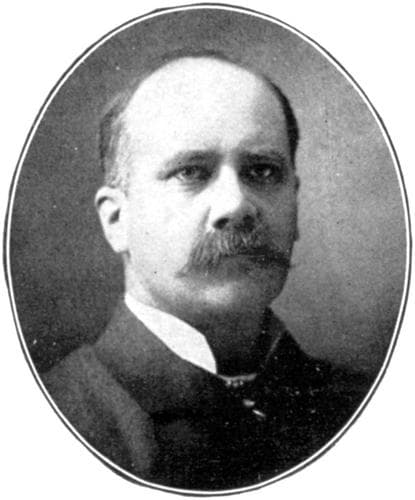
Charles M. Sheldon was a prominent American author best known for his 1896 novel "In His Steps." This influential work, which popularized the phrase "What would Jesus do?" (WWJD), sold millions of copies and had a significant impact on Christian culture and social reform movements. Sheldon's fiction often explored themes of faith, social justice, and the practical application of Christian principles in everyday life.
Similar books
- The Screwtape Letters
C.S. Lewis
4.2 (332k) average on GoodreadsFantasyExplores ethical and spiritual dilemmas through a unique narrative lens, though from a different perspective.
- Uncle Tom's Cabin
Harriet Beecher Stowe
3.9 (198k) average on GoodreadsHistorical FictionBoth novels use narrative to advocate for social change, but their focus differs. Stowe's novel is singularly focused on the abolition of slavery, using vivid characterization and pathos to expose the inherent immorality of the institution. Sheldon's In His Steps offers a broader, more generalized ethical framework applicable to a wider array of personal and social issues, providing a prescriptive guide for Christian living rather than a specific social critique. While both aim to inspire action, Stowe's work is more of a direct protest novel, whereas Sheldon's is a spiritual challenge.
- Eat, Pray, Love
Elizabeth Gilbert
3.6 (1.5M) average on GoodreadsLifestyleA heartbroken writer leaves her conventional life for a year-long global search for pleasure in Italy, spiritual devotion in India, and unexpected love and balance in Bali.
- Educated
Tara Westover
4.5 (796k) average on GoodreadsBiographyRaised in the Idaho mountains by fundamentalist survivalists, a young woman forges her own path to education, battling fierce family loyalty and personal demons to discover a world beyond her isolated upbringing.
- The Poisonwood Bible
Barbara Kingsolver
4.1 (659k) average on GoodreadsLiterary FictionA zealous missionary's rigid faith clashes with the Belgian Congo's wilderness and people, unraveling his family through the eyes of his five unforgettable women.
- Siddhartha
Hermann Hesse
4.0 (583k) average on GoodreadsHistorical FictionSiddhartha leaves a life of privilege and piety, embracing asceticism, wealth, and love to find enlightenment not in dogma, but in the whispers of a river and the unity of all existence.




Enjoyed the summary?
A summary gives you the shape of the book. The book itself has the detail, the examples and the voice.
Find In His Steps on AmazonAs an Amazon Associate, BookBrief earns from qualifying purchases. How we're funded