

Synopsis
Covers the whole plot, including the ending.
- Difficulty
- Medium
- Pacing
- Slow
- Mood
- Bleak, Meditative, Philosophical, Despairing, Atmospheric
- Read it if
- You appreciate atmospheric, philosophical dystopian novels with a focus on human endurance and the nature of memory and despair.
- Skip it if
- You prefer fast-paced action, clear plot resolutions, or optimistic portrayals of the future.
In the Country of Last Things Plot Summary
Covers the whole plot, including the ending.
Arrival in the City
Anna Blume, a young woman from an unspecified 'East,' arrives in a sprawling, unnamed city that has fallen into decay and chaos. Her main goal is to find her older brother, William, a journalist who disappeared after entering the city years earlier to report on its decline. Anna quickly discovers that the city is a lawless wasteland where survival is a daily struggle. Basic needs like food and shelter are scarce, and the population mainly consists of scavengers, 'finders' who search for discarded objects, and 'runners' who commit suicide for money. Anna's first experiences are disorienting and dangerous, as she navigates a place where the rules of civilization no longer apply, and human life has little value. She immediately faces the harsh realities of this new world, realizing the immense challenge of finding William.
Meeting Isabel and Learning to Survive
Soon after arriving, Anna meets Isabel, a tough and practical woman who becomes her first guide and protector in the desolate city. Isabel has learned to navigate the dangers and unwritten rules of this post-apocalyptic society. She teaches Anna essential survival skills, such as how to find food, avoid danger, and identify the various social groups and their uncertain lives. Isabel explains the different 'professions'—the 'scavengers' who sift through trash, the 'finders' who search for valuable discarded items, and the 'death-runners' who commit public suicide for money. Through Isabel, Anna begins to understand the deep desolation and moral decay of the city, slowly letting go of her naive expectations and adapting to the brutal demands of her new environment. Their bond is important for Anna's initial survival.
The Search for William and Ferdinand
Anna's search for her brother William eventually leads her to Ferdinand, a man who says he knew William and worked with him as a journalist. Ferdinand offers appealing, yet often vague, details about William's last known whereabouts and his investigations into the city's collapse. He suggests that William was deeply involved in uncovering the true nature of the city's decline, possibly even its origins. Ferdinand's information, however, is unreliable and often contradictory, leaving Anna uncertain. Despite the ambiguity, Ferdinand represents Anna's most promising lead, and she holds onto his words, hoping they will guide her to William. This period is marked by growing frustration and a deepening sense of despair as the truth about her brother remains hidden.
Life as a Scavenger and 'Finder'
To survive, Anna must take on roles common to the city's inhabitants. She first becomes a 'scavenger,' sifting through mountains of trash and human waste for anything useful or edible. This period is physically and emotionally draining, exposing her to extreme poverty and degradation. Later, she becomes a 'finder,' a slightly more specialized role where she searches for specific, discarded objects that can be resold or traded. This work, though still dangerous, offers a small improvement in her living conditions and exposes her to different parts of the city's underground economy. Her experiences as both a scavenger and a finder give Anna a close understanding of the city's economic and social structures, showing the cleverness and desperation needed for daily life.
Meeting Robert and the Library
During her desperate search for food and information, Anna meets Robert, a quiet, mysterious man who works as a librarian in one of the city's last remaining, though rundown, libraries. This meeting is a significant turning point for Anna, as Robert introduces her to a hidden world of books and knowledge—a strong contrast to the city's widespread illiteracy and disregard for culture. Robert is a guardian of the past, carefully preserving what remains of written history. He offers Anna not just a refuge from the city's brutality but also a connection to intellectual life, providing her with books to read and a sense of purpose beyond mere survival. Their growing relationship gives Anna emotional comfort and renewed hope amidst the pervasive despair, as she finds solace in literature.
The Death-Runners and Public Suicides
Anna becomes acutely aware of the 'death-runners,' individuals who, driven by extreme poverty or despair, choose to commit public suicide for a fee. These spectacles are morbidly popular, drawing crowds who pay to watch the final moments of these individuals, with their bodies often sold for fuel or other uses. Anna observes several such events, which deeply disturb her and highlight the city's deep moral collapse and the devaluation of human life. The death-runners represent the ultimate act of desperation and a chilling example of how even death has become a commodity in this society. These experiences force Anna to confront the darkest aspects of the human condition and the lengths people will go to survive or escape their suffering, profoundly changing her view of the world.
The 'Nurses' and Their Mission
Amidst the city's widespread death and decay, Anna discovers the 'Nurses,' a secret group of women who care for the sick and dying, often at great personal risk. Unlike the official authorities who mainly collect corpses for fuel, the Nurses represent a counter-force of compassion and humanity. They operate in secret, providing comfort, medical attention, and dignity to those abandoned by society. Anna is deeply moved by their selfless work, which stands in strong contrast to the city's prevailing indifference. The Nurses offer a glimmer of hope and show that even in the most desolate circumstances, altruism and the will to preserve life can endure. Their existence challenges Anna's growing cynicism about human nature.
William's Fate Revealed
Through fragmented clues, Ferdinand's reluctant confessions, and her own persistent investigations, Anna eventually puts together the tragic truth about her brother, William. It is revealed that William, in his eager pursuit of journalistic truth, delved too deeply into the city's secrets, uncovering uncomfortable truths about the ruling powers or the origins of the city's collapse. His investigations led to his death, either through direct confrontation with authorities or by succumbing to the city's dangers and deprivations. Anna learns that William died alone, a victim of the very chaos he sought to document. This revelation brings a painful end to her search, confirming her deepest fears and leaving her to deal with the profound grief of her loss and the pointlessness of her long journey.
Anna's Transformation and Acceptance
With the mystery of William's fate resolved, Anna changes deeply. The initial hope and naive optimism that drove her into the city are replaced by a hardened practicality and a deep understanding of its brutal realities. However, instead of giving in to despair, Anna finds a new sense of purpose and belonging. She fully integrates into the city's life, no longer an outsider searching for a lost past, but a survivor building a future. Her relationships with Isabel, Robert, and her awareness of the Nurses solidify her connection to this new world. Anna accepts her place within the city's unique ecosystem, embracing its contradictions and finding meaning in the small acts of kindness and endurance that persist amidst the decay. She becomes a chronicler of her experiences, writing her letter to a childhood friend.
The Epistolary Format and the Letter's End
The entire narrative is a long, continuous letter written by Anna to an unnamed childhood friend in a world that is presumably still intact. This letter format highlights Anna's isolation and her attempt to bridge the vast gap between her past and present. As the letter progresses, it becomes clear that Anna is writing from within the city, carefully detailing her experiences, observations, and reflections. The letter serves as both a confession and a record of a world on the brink of oblivion. The novel ends with Anna still in the city, the letter itself an ongoing act of survival and communication. She does not escape; instead, she becomes a permanent resident, her story ending not with a definitive resolution but with the continuation of her struggle and her role as a witness to the 'country of last things.'
Principal Figures
Anna Blume
Protagonist
A young woman who ventures into the decaying city to find her missing brother.
Anna Blume is a resilient and observant young woman from an unspecified 'East,' who journeys into the unnamed, collapsing city in search of her brother, William. Initially naive and unprepared for the city's brutality, she quickly adapts, learning to scavenge, find, and navigate its dangerous social landscape. Her primary drive is loyalty and hope, but as her search progresses, she develops a profound understanding of human nature in extremis. Anna is a keen observer, meticulously documenting her experiences in her letter, demonstrating an intellectual curiosity despite the prevailing illiteracy.
Relationships: William Blume (Missing brother, her initial reason for entering the city.); Isabel (Mentor and friend, teaches Anna survival skills.); Robert (Lover and intellectual companion, a librarian who offers solace and knowledge.); Ferdinand (Ambiguous acquaintance of William, provides unreliable information.)
William Blume
Mentioned/Catalyst
Anna's missing brother, a journalist whose disappearance prompts her journey.
William Blume is Anna's older brother, a journalist who ventured into the unnamed city to report on its collapse and subsequently disappeared. Though never appearing directly in the narrative, his absence is the central catalyst for Anna's journey and her experiences. He is depicted through others' memories and Anna's fading recollections as an idealistic and driven individual, committed to uncovering truth. His fate remains a mystery for much of the novel, symbolizing the city's capacity to consume and erase individuals, particularly those who seek to understand or expose its true nature.
Relationships: Anna Blume (Sister, who undertakes a perilous search for him.); Ferdinand (Former colleague, though his account is suspect.)
Isabel
Supporting
A pragmatic and experienced survivor who mentors Anna in the city.
Isabel is one of Anna's first and most crucial allies in the city. A seasoned survivor, she possesses an intimate knowledge of the city's brutal customs, its dangers, and its various 'professions.' Isabel is tough, resourceful, and unsentimental, but she also exhibits a deep loyalty and a surprising capacity for kindness towards Anna. She teaches Anna the practical skills necessary for survival, from finding food to avoiding harm, acting as a streetwise guide. Her wisdom is born of harsh experience, and she represents the resilient spirit of those who have adapted to the city's impossible conditions.
Relationships: Anna Blume (Mentor and friend, teaches Anna how to survive.)
Robert
Supporting
A librarian who preserves knowledge and offers Anna intellectual and emotional solace.
Robert is a quiet, intellectual man who works as a librarian, meticulously preserving the last remnants of books and knowledge in a city that has largely abandoned literacy. He represents a beacon of culture and intellect amidst the pervasive decay. Robert provides Anna with both emotional comfort and intellectual stimulation, becoming her lover and a source of hope. His dedication to books symbolizes a resistance to the city's erasure of history and meaning. He offers Anna a glimpse into a world beyond mere physical survival, reminding her of the value of thought and memory.
Relationships: Anna Blume (Lover and intellectual companion, shares a love for books and quiet solace.)
Ferdinand
Supporting
A former colleague of William who provides Anna with ambiguous information.
Ferdinand is a shadowy and often unreliable character who claims to have known William and worked with him as a journalist. He offers Anna fragmented and often contradictory information about her brother's last movements and investigations. Ferdinand's motives are unclear, and his stories often seem designed to protect himself or obscure the truth. He represents the pervasive ambiguity and distrust that characterize relationships in the city, where information is a commodity and truth is elusive. Anna's interactions with him are marked by frustration and suspicion, as she tries to discern the truth from his evasions.
Relationships: Anna Blume (Source of information, though often misleading, regarding William.); William Blume (Former colleague, though the nature of their relationship is unclear.)
The Nurses
Supporting/Collective
A clandestine group of women dedicated to caring for the sick and dying.
The 'Nurses' are a collective of women who operate in secret, providing care, comfort, and dignity to the city's sick and dying, often at great personal risk. They stand in stark contrast to the city's official government, which views human bodies primarily as fuel. The Nurses embody compassion, selflessness, and the enduring human spirit of care in the face of overwhelming despair. Their existence offers Anna a glimpse of altruism and a moral anchor in a society where such values are largely absent, providing a counter-narrative to the pervasive brutality.
Relationships: Anna Blume (Anna observes and is inspired by their work.)
The Death-Runners
Supporting/Collective
Individuals who commit public suicide for money, symbolizing the city's moral collapse.
The 'Death-Runners' are individuals who, driven by extreme poverty or despair, publicly commit suicide in exchange for money, often to provide for their families or to pay off debts. Their public deaths are spectacles, drawing crowds and highlighting the city's profound moral degradation and the commodification of human life. They represent the ultimate act of desperation and the horrific extent to which human dignity has been eroded. Anna witnesses several 'death-runs,' which deeply disturb her and force her to confront the city's darkest realities, showcasing the profound suffering within its population.
Relationships: Anna Blume (Anna is a horrified observer of their acts.)
Themes & Insights
The Collapse of Civilization and Social Order
The novel shows a city where all signs of civilization have collapsed. Law, government, economy, and morality have dissolved into chaos. People scavenge to survive, bodies are fuel, and public suicide is a profession. This theme is clear from Anna's arrival, where she immediately sees the lack of infrastructure, the widespread violence, and the desperate 'professions' like 'scavengers' and 'death-runners.' The city's authorities only collect waste and corpses, showing the complete breakdown of any social contract and the reduction of human life to its most basic, useful function. The absence of a functioning government or ethical framework highlights humanity's vulnerability without societal structures.
“In this country, it is impossible to die. You can only be killed.”
The Search for Meaning and Identity
Anna's initial search for her brother, William, quickly becomes a deeper search for meaning and a sense of self in a world stripped of conventional values. As she adapts to the city, she sheds her old identity and deals with basic questions about existence, purpose, and human connection. Her relationship with Robert and her discovery of the library show her struggle to maintain intellectual and emotional identity amidst the widespread illiteracy and despair. Even after discovering William's fate, Anna chooses to stay, finding a new identity as a chronicler and a survivor, making her own meaning in the 'country of last things.'
“I was no longer looking for William. I was looking for myself.”
Memory, History, and the Power of Narrative
The novel, a letter, emphasizes the importance of memory and storytelling in preserving history in a world that actively forgets. Anna's letter itself is an act of memory, a desperate attempt to record and send the city's reality to an outside world. Robert's role as a librarian, carefully preserving books, further highlights this theme, as he guards against the complete erasure of knowledge and culture. The city's indifference to its past and its constant change make individual and collective memory fragile, yet Anna's persistent storytelling shows the lasting human need to document and understand, even when the future looks bleak.
“The past is a foreign country. They do things differently there.”
Human Resilience and Despair
The city is a stark place for both the depths of human despair and the incredible capacity for endurance. Characters like Isabel, who has mastered survival, and the 'Nurses,' who provide care amidst overwhelming death, embody endurance. However, this endurance often comes from deep desperation, as seen in the 'death-runners' who choose suicide for profit. Anna herself shows this duality, moving from initial shock and despair to a hardened determination to survive and even find purpose. The novel explores the fine line between giving up and finding the will to continue, showing the complex range of human responses to extreme hardship.
“In this place, hope is a kind of illness.”
The Value of Objects and the Material World
In a world where everything is scarce, the value of objects is both absolute and changing. Scavengers and 'finders' dedicate their lives to unearthing discarded items, which can be traded for survival. From a broken umbrella to a usable shoe, every object gains immense importance. This theme highlights the material reality of existence in the absence of abstract values. The city's economy is based entirely on repurposing trash, showing how human ingenuity, driven by necessity, can turn junk into life-sustaining resources. This focus on the material world emphasizes the sheer practicality needed for survival and the loss of any luxury or aesthetic appreciation.
“Nothing is worthless. Everything has a use.”
Plot Devices & Literary Techniques
Epistolary Format
The entire novel is presented as a letter from Anna Blume to a childhood friend.
The epistolary format is central to 'In the Country of Last Things.' It creates an intimate, first-person perspective, allowing the reader direct access to Anna's thoughts, observations, and emotional state. This device emphasizes Anna's isolation and her desperate need to communicate her experiences to an outside world that may no longer exist or understand. The act of writing becomes an act of survival, a way for Anna to maintain her sanity and preserve a record of the city's horrors. It also adds a layer of unreliability, as the reader only has Anna's subjective account, filtered through her memory and emotional state.
Unnamed City and Ambiguous Timeframe
The setting is an unnamed, decaying city at an unspecified point in time.
The decision to leave the city unnamed and the timeframe ambiguous creates a universal, allegorical quality for the narrative. By not grounding the story in a specific place or time, Auster suggests that the collapse depicted could happen anywhere, at any time, making the themes of societal breakdown and human survival more potent and broadly applicable. This ambiguity forces the reader to focus on the human condition and the systemic issues at play, rather than specific political or historical contexts. It enhances the sense of isolation and the feeling that this 'country of last things' exists outside conventional reality.
'Professions' as Social Commentary
The city's inhabitants are defined by their unique, often morbid, survival 'professions'.
The various 'professions' like 'scavengers,' 'finders,' 'death-runners,' and 'collectors' (of human waste and corpses) serve as a powerful plot device for social commentary. They vividly illustrate the city's extreme economic and moral collapse, where traditional jobs have been replaced by roles directly tied to refuse, death, or desperate ingenuity. These 'professions' highlight the dehumanization of individuals, reducing them to their functional utility within a broken system. They also reveal the ingenuity and adaptability of humans in the face of unimaginable adversity, while simultaneously underscoring the profound loss of dignity and purpose in this dystopian society.
The Missing Brother as a MacGuffin
William Blume, Anna's missing brother, serves as a primary catalyst for her journey.
William Blume, Anna's missing brother, functions as a MacGuffin in the narrative. While his disappearance is the initial driving force behind Anna's perilous journey into the city, his actual presence or fate becomes less important than the experiences and transformations Anna undergoes during her search. The search for William propels the plot forward, forcing Anna to confront the city's realities and develop as a character. By the time his fate is revealed, the reader's focus has shifted from William to Anna's own survival and her evolving understanding of the 'country of last things,' making his initial purpose primarily a narrative catalyst.
In the Country of Last Things Quotes
“The city is a place where you are born and die, but you never really live.”
“Each day is a new beginning, a new chance to fail.”
“Things do not vanish. They are merely transformed.”
“We were all searching for something, but no one knew what it was.”
“Memory is a kind of wound, and the past is a foreign country.”
“To live is to be marked, to be scarred.”
“Hope is a dangerous thing, but it's the only thing we have.”
“The world was a book, and we were trapped inside its pages.”
“We learned to live without, because there was nothing else.”
“The dead were more numerous than the living, and they were everywhere.”
“Words are not things, but they can make things happen.”
“Every object has a history, a story that it carries within itself.”
“To be forgotten is to die a second death.”
“The future was a word we no longer understood.”
Quiz
10 questions on the plot and the characters. Each answer comes with a short explanation.
Question 1
What is the primary form of communication used by Anna Blume to recount her experiences in the unnamed city?
- A diary
- A series of telegrams
- A letter to a childhood friend
- Oral testimony to a government official
Show answer
C. A letter to a childhood friend The novel is an epistolary novel, taking the form of a long letter written by Anna Blume to a childhood friend, detailing her experiences in the dystopian city.
Question 2
What is Anna Blume's primary reason for entering the dangerous unnamed city?
- To escape political persecution from her home country.
- To find her missing brother, William, a journalist.
- To report on the city's conditions for an international newspaper.
- To seek a better economic opportunity than her home country offered.
Show answer
B. To find her missing brother, William, a journalist. Anna explicitly states that she has come to the city to search for her brother, William, who is a journalist and has disappeared there.
Question 3
What is the main function of the city governments in 'In the Country of Last Things'?
- To maintain law and order and provide social services.
- To collect human waste and corpses for use as fuel.
- To oversee the distribution of scavenged goods.
- To organize search parties for missing persons.
Show answer
B. To collect human waste and corpses for use as fuel. The city governments are described as unstable and primarily concerned with the gruesome task of collecting human waste and corpses, which are then used as fuel in the collapsed society.
Question 4
Which of the following best describes the economic activity of most of the population in the unnamed city?
- Manufacturing and trade of essential goods.
- Agriculture and farming to sustain the populace.
- Collecting garbage or scavenging for objects to resell.
- Providing services like education and healthcare.
Show answer
C. Collecting garbage or scavenging for objects to resell. The novel explicitly states that 'no industry takes place and most of the population collects garbage or scavenges for objects to resell,' highlighting the city's economic collapse.
Question 5
What is implied about Anna Blume's home country, 'the world to the East'?
- It is also in a state of advanced collapse, similar to the city.
- It is a prosperous nation that actively sends aid to the city.
- It has not collapsed and represents a more stable, functional society.
- It is a totalitarian regime that exiled Anna and William.
Show answer
C. It has not collapsed and represents a more stable, functional society. It is 'suggested that the Blumes come from a world to the East which has not collapsed,' implying a contrast with the chaotic city and a place of relative stability.
Question 6
What is a 'Walker' in the context of the city, and what is their typical fate?
- Someone who walks long distances to trade goods; they are often successful merchants.
- Individuals who walk until they die of exhaustion or starvation; their bodies are collected by the city.
- A type of scavenger who specializes in finding specific items; they are respected for their skills.
- People employed by the government to patrol the streets; they enforce order.
Show answer
B. Individuals who walk until they die of exhaustion or starvation; their bodies are collected by the city. Walkers are people who have given up hope and simply walk until they collapse and die, becoming part of the city's grim cycle of death and collection.
Question 7
Beyond the physical search for her brother, what deeper quest does Anna's narrative embody in the face of the city's decay?
- A quest for political power and leadership within the city's factions.
- A struggle to maintain her humanity, memory, and the meaning of existence.
- An attempt to organize a rebellion against the oppressive city government.
- A mission to document the city's collapse for future generations.
Show answer
B. A struggle to maintain her humanity, memory, and the meaning of existence. Anna's letter, her detailed observations, and her internal monologue reveal a profound struggle to hold onto her identity, memories, and sense of purpose in a world that constantly seeks to erase them. This is a central theme of the novel.
Question 8
What specific item does Anna initially try to sell to survive in the city, highlighting her naivety about the city's economy?
- Jewelry she brought from home.
- A book of poetry.
- A map of the city.
- A photograph of her family.
Show answer
B. A book of poetry. Early in her time in the city, Anna attempts to sell a book of poetry, which is utterly worthless in the city's brutal economy, underscoring her initial disconnect from the harsh realities.
Question 9
The concept of 'last things' in the novel refers to a progressive disappearance of what elements of society and human experience?
- The last remaining natural resources and wildlife.
- The gradual erosion of language, memory, objects, and ultimately, life itself.
- The final battles between warring factions for control of the city.
- The last attempts by the government to restore order and industry.
Show answer
B. The gradual erosion of language, memory, objects, and ultimately, life itself. The title 'In the Country of Last Things' reflects the central theme of progressive decay, where not just physical objects, but also abstract concepts like meaning, memory, language, and hope, are gradually vanishing.
Question 10
Which of the following is NOT a type of 'death' described or implied as common in the city?
- Suicide clubs where people choose their manner of death.
- Deaths from natural disasters like floods or earthquakes.
- Deaths from starvation, disease, or violence.
- Walkers who die from exhaustion or despair.
Show answer
B. Deaths from natural disasters like floods or earthquakes. While the city is plagued by various forms of death (suicide clubs, starvation, violence, Walkers), there is no mention or implication of widespread deaths from natural disasters such as floods or earthquakes.
In the Country of Last Things FAQ
What is the primary purpose of Anna Blume's journey into the unnamed city?
Anna Blume ventures into the decaying, unnamed city primarily to search for her brother, William, a journalist who disappeared there. Her mission is driven by familial concern and a desire to understand his fate in a place where life is cheap and disappearances are common.
Describe the economic and social conditions within the city Anna describes.
The city is characterized by extreme scarcity and a complete lack of productive industry. Most inhabitants are scavengers, 'rubbish-pickers,' or 'object-hunters,' constantly searching for items to sell or trade, often for meager scraps of food. The economy is entirely based on recycling waste and the desperate exchange of found objects, with no new goods being produced.
Who are the 'runners' and what is their role in the city's grim reality?
The 'runners' are individuals who, in their final stages of life, commit suicide by running full-speed until they collapse and die from exhaustion, often in public spaces. Their bodies are then collected by 'death-wagons' for fuel, highlighting the city's macabre efficiency in utilizing every resource, even human remains.
What is the significance of the 'last things' in the novel's title?
The 'last things' refer to the city's state of perpetual decline, where objects, ideas, and even human lives are constantly being consumed, discarded, or forgotten. It signifies a world at the end of its tether, where every possession, every memory, and every hope is on the verge of vanishing forever.
How does Anna support herself once she arrives in the city?
Initially, Anna struggles immensely, nearly starving. She eventually takes on various desperate jobs, including 'rubbish-picking' and working as a 'death-collector's assistant,' which involves cataloging the possessions of the deceased. These jobs barely provide her with enough to survive.
What is the nature of the 'death-wagons' and their crew?
The 'death-wagons' are official city vehicles responsible for collecting corpses from the streets. Their crews are often brutal and indifferent, viewing the dead as mere commodities to be processed. This system underscores the city's institutionalized dehumanization and its reliance on human bodies for fuel.
Does Anna ever find her brother William, or any definitive information about him?
No, Anna never definitively finds William. She encounters rumors and fleeting suggestions, but his fate remains ambiguous throughout the narrative. His continued absence reinforces the city's capacity to swallow individuals without a trace, leaving loved ones in perpetual uncertainty.
What is the 'Book of Last Things' and its purpose?
The 'Book of Last Things' is a project undertaken by various characters to document objects and concepts that are disappearing from the city. It's an attempt to preserve memory and meaning in a world where everything is ephemeral, serving as a desperate act of resistance against total oblivion.
How does the epistolary format (letter to a friend) impact the reader's experience?
The epistolary format immerses the reader directly into Anna's subjective experience, creating a sense of intimacy and immediacy. It allows for a deeply personal and often fragmented narrative, reflecting Anna's psychological state and the chaotic nature of her environment. The lack of a direct response from her friend emphasizes her isolation.
What psychological toll does living in the city take on Anna?
Anna experiences profound psychological trauma, including constant fear, starvation-induced hallucinations, and emotional numbness. She develops a hardened pragmatism necessary for survival, but also grapples with despair and the erosion of her former self, constantly battling to maintain her humanity.
How does Anna's perspective on death evolve throughout her time in the city?
Initially horrified by the omnipresence of death, Anna gradually becomes desensitized, viewing it as an inevitable and even mundane part of daily life. Her work as a 'death-collector's assistant' further normalizes it, transforming it from a terrifying event into a bureaucratic task, albeit one still tinged with sadness.
What role does hope play in the lives of the city's inhabitants, particularly Anna?
Hope is a rare and fragile commodity in the city, often fleeting or quickly extinguished. For Anna, residual hope for finding William or escaping the city provides a fragile impetus to continue, but it is constantly challenged by the overwhelming despair. For many others, hope is replaced by a stoic resignation or a desperate pursuit of immediate survival.
Is the unnamed city a literal place, or could it be interpreted metaphorically?
While presented as a literal, physical location, the unnamed city can also be interpreted metaphorically as a representation of societal collapse, the fragility of civilization, or even an internal state of despair. Its lack of a specific name universalizes its condition, allowing it to symbolize any place or mind overwhelmed by entropy.
What is the significance of the 'East' from which Anna and William originate?
The 'East' represents a world that has not yet succumbed to the city's collapse, implying a past or alternative reality of order and stability. It serves as a stark contrast to the city's chaos and reinforces the idea that the city's condition is not universal, making Anna's journey a descent from a known world into an incomprehensible one.
Does the novel offer any solutions or pathways out of the dystopian conditions?
The novel offers no clear solutions or pathways out of the dystopian conditions. It primarily focuses on the experience of living within such a collapse, emphasizing survival and endurance rather than revolution or escape. The ending remains ambiguous, suggesting the cycle of decay is ongoing.
How does Auster's use of a female protagonist like Anna Blume contribute to the novel's themes?
Auster's choice of Anna Blume as protagonist allows for an exploration of vulnerability and resilience often associated with female experiences in extreme conditions. Her perspective emphasizes the emotional and psychological toll, contrasting with typical male-centric survival narratives and highlighting the struggle for dignity in a dehumanizing environment.
What is the thematic role of memory and forgetting in the novel?
Memory is a crucial theme, as characters desperately try to hold onto fragments of the past through the 'Book of Last Things' or personal recollections. Forgetting, conversely, is a constant threat, as the city actively erases history and meaning. The struggle to remember is an act of resistance against total annihilation and a way to preserve identity.
Could the entire narrative be interpreted as a hallucination or a descent into madness?
Given Anna's extreme deprivation, psychological trauma, and the surreal nature of the city, it is plausible to interpret elements of the narrative as hallucinations or a descent into madness. The letter format itself, addressed to an unknown recipient, could be seen as a desperate attempt to maintain sanity by constructing a coherent narrative in an incoherent world.
About the author
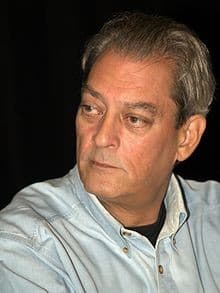
Paul Benjamin Auster is an American writer and film director. His notable works include The New York Trilogy (1987), Moon Palace (1989), The Music of Chance (1990), The Book of Illusions (2002), The Brooklyn Follies (2005), Invisible (2009), Sunset Park (2010), Winter Journal (2012), and 4 3 2 1 (2017). His books have been translated into more than forty languages.
Similar books
- The Road
Cormac McCarthy
4.0 (716k) average on GoodreadsScience FictionShares a similarly bleak, post-apocalyptic setting and a focus on survival and human relationships amidst collapse.
- 1984
George Orwell
4.2 (3.1M) average on GoodreadsPoliticsA classic dystopian novel exploring control, memory, and the individual's struggle against an overwhelming system, though Auster's dystopia is one of collapse rather than totalitarian control.
- The Hunger Games
Suzanne Collins
4.3 (6.4M) average on GoodreadsFantasyIn a future where children fight to the death on live television, Katniss Everdeen volunteers for the arena, turning a death sentence into a fight for survival and a spark of rebellion.
- Divergent
Veronica Roth
4.2 (2.9M) average on GoodreadsFantasyIn a society divided by virtues, a sixteen-year-old's difference from the norm starts a rebellion that threatens her world.
- Animal Farm
George Orwell
4.0 (2.7M) average on GoodreadsPoliticsA farm animals' rebellion against humans turns into a pig-led dictatorship, showing how power corrupts and revolutionary ideals are betrayed.
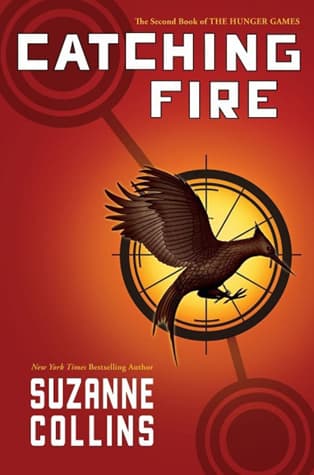
- Catching Fire
Suzanne Collins
4.3 (2.5M) average on GoodreadsFantasyAfter defying the Capitol and starting a rebellion, Katniss and Peeta are forced on a dangerous Victory Tour, navigating political schemes, a fake romance, and the constant threat of a government eager to crush the uprising they began.





Enjoyed the summary?
A summary gives you the shape of the book. The book itself has the detail, the examples and the voice.
Find In the Country of Last Things on AmazonAs an Amazon Associate, BookBrief earns from qualifying purchases. How we're funded