
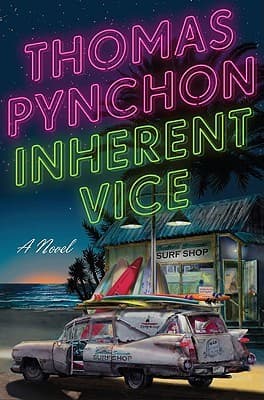
Synopsis
Covers the whole plot, including the ending.
- Difficulty
- Hard
- Pacing
- Moderate
- Mood
- Psychedelic, surreal, humorous, melancholic, paranoid, nostalgic, chaotic
Inherent Vice Plot Summary
Covers the whole plot, including the ending.
The Return of Shasta Fay
In 1970 Gordita Beach, Los Angeles, private investigator Larry 'Doc' Sportello, often high on marijuana, gets a visit from his ex-girlfriend, Shasta Fay Hepworth. Shasta tells Doc a complicated story about her rich land developer boyfriend, Mickey Wolfmann. She thinks Mickey's wife, Sloane, and Sloane's lover, Riggs Warbling, plan to commit Mickey to a mental institution and steal his money. Shasta asks Doc to investigate, stirring up old feelings and pulling him into a world of paranoia and uncertainty, typical of the era. Doc, despite his hazy state, agrees.
The Missing Billionaire and the Golden Fang
Doc starts by visiting Mickey Wolfmann's office, finding it empty. Mickey has vanished. Doc meets Tyrone Slothrop, a former colleague, who mentions the "Golden Fang," a group involved in drug trafficking and real estate scams. The Golden Fang becomes a recurring, mysterious element in Doc's search, appearing to be a large, undefined organization. Doc also meets Coy Harlingen, a musician thought to be dead, who is alive and working undercover for the LAPD. Reality and delusion begin to blur for Doc.
Meeting the LAPD and the Saxophonist
Doc's investigation often brings him into contact with Lieutenant Detective Christian F. 'Bigfoot' Bjornsen, a strict LAPD officer who sometimes acts. Bigfoot, who has a strange love-hate relationship with Doc, tells him Wolfmann is suspected of murder and is hiding. Meanwhile, Coy's wife, Hope Harlingen, hires Doc to find her husband. Doc discovers Coy, a tenor saxophonist, is alive but working for the police, seemingly involved in the Golden Fang. This further complicates the disappearances and conspiracies, making Doc question everyone's motives.
The Search for Coy and the Death of Adrian Prussia
Doc's search for Coy Harlingen leads him to various unsavory people and places. He finds Coy, who confirms his undercover role and gives some vague clues about the Golden Fang. Doc also investigates the death of Adrian Prussia, a former Aryan Brotherhood member and loan shark, found with a swastika carved into his forehead. This murder seems connected to the Golden Fang and its illegal activities. Doc's inquiries suggest Prussia was involved in a complex money-laundering scheme, linking him to the organization and the larger conspiracy around Wolfmann's disappearance.
The Dentist and the Golden Fang's Reach
Doc's investigation into the Golden Fang takes an unexpected turn when he learns the organization might have started as dentists involved in drug dealing and money laundering. He visits Dr. Rudy Blatnoyd, a dentist who is a key figure in the Golden Fang. Blatnoyd's practice is a front for illegal activities, including heroin distribution. Doc realizes the Golden Fang is not a single entity, but a sprawling network of individuals and businesses connected by illicit enterprises. This makes understanding or dismantling the Golden Fang seem almost impossible.
Shasta's Return and the Wolfmann Connection
Shasta Fay Hepworth reappears after a long absence, adding more confusion to Doc's investigation. She gives more information about Mickey Wolfmann, suggesting he might have faked his disappearance to escape his life and responsibilities. Shasta's account of Wolfmann's motives sheds some light on his whereabouts but also raises new questions about her involvement. Her reappearance rekindles Doc's feelings, making it harder for him to stay professional. The story becomes increasingly complex, blurring the lines between real leads and deliberate misdirection, as Doc tries to find the truth.
The Chryskylodon Institute and Mind Control
Doc's investigation leads him to the Chryskylodon Institute, a psychiatric facility connected to the Golden Fang and mind-control experiments. He suspects Mickey Wolfmann might have been held there, or that the institute plays a role in the conspiracy. The institute's involvement suggests a more sinister side to the Golden Fang, beyond simple crime to manipulation and psychological control. Doc's visit is filled with unsettling encounters and cryptic clues, reinforcing the idea that the Golden Fang's reach is widespread and its methods deceptive, exploiting both vulnerable and wealthy people.
The Golden Fang's Heroin Trade
Doc discovers the Golden Fang is deeply involved in a massive heroin trafficking operation, using fronts and legitimate businesses to distribute the drug. This drug trade seems to be the core of the organization's financial power. Realizing the Golden Fang's drug network clarifies many seemingly separate parts of Doc's investigation, connecting the dentists, missing persons, and shadowy figures he has met. The scale of the operation reveals the full extent of the Golden Fang's reach and its corrupting influence across Southern California.
Bigfoot's Betrayal and the Final Confrontation
In a confrontation, Doc realizes Bigfoot Bjornsen, his supposed opponent, has been involved in some of the Golden Fang's activities, or has been manipulating Doc for his own reasons. Bigfoot's motives are complex, stemming from a desire for control and a cynical view of changing times. Doc confronts Bigfoot about his role in the disappearances and cover-ups, leading to a tense standoff. This revelation shows the pervasive corruption and moral ambiguity in the novel's world, where even those sworn to uphold the law are caught in criminal networks.
Resolution and Lingering Doubts
Doc uncovers significant parts of the Golden Fang's operations and the fate of some missing persons, but a complete resolution remains out of reach. Mickey Wolfmann is found, having faked his death and undergone a spiritual change. Coy Harlingen is freed from his undercover assignment. However, the Golden Fang, as a vague entity, is never fully dismantled, its reach too vast and its nature too undefined. Doc achieves some success, but the ending is tinged with the sad understanding that corruption and paranoia, embodied by the Golden Fang, will continue, reflecting the anxieties of the post-60s era.
Inherent Vice Characters
Larry 'Doc' Sportello
Protagonist
A perpetually stoned private investigator navigating the twilight of the 60s.
Doc is a shaggy, laid-back private detective operating out of Gordita Beach, perpetually enveloped in a cloud of marijuana smoke. He's a product of the counterculture, deeply entrenched in its values and lifestyle, yet he possesses a keen, if often obscured, intellect. Despite his hazy demeanor, Doc is driven by a strong sense of loyalty to his friends and a desire to uncover the truth, even if that truth is inconvenient or disturbing. He often finds himself in absurd situations, a reflection of the chaotic world he inhabits. His methods are unorthodox, relying on intuition, street smarts, and a network of equally eccentric contacts.
Relationships: Shasta Fay Hepworth (Ex-girlfriend, client, object of lingering affection); Christian F. 'Bigfoot' Bjornsen (Antagonistic yet symbiotic relationship); Denis (Assistant/secretary); Sauncho Smilax (Lawyer, friend)
Shasta Fay Hepworth
Supporting
Doc's enigmatic ex-girlfriend who sets the plot in motion.
Shasta is a free-spirited, beautiful woman with a mysterious past and an unpredictable nature. She drifts in and out of Doc's life, always bringing with her a fresh wave of intrigue and emotional entanglement. Her motivations are often unclear, making her an unreliable narrator and a constant source of fascination for Doc. She embodies the allure and elusiveness of the counterculture, a figure who seems to exist just beyond full comprehension. Her reappearance is the catalyst for Doc's investigation, and her presence continues to shape his emotional journey throughout the narrative.
Relationships: Larry 'Doc' Sportello (Ex-girlfriend, complex romantic connection); Mickey Wolfmann (Lover)
Christian F. 'Bigfoot' Bjornsen
Antagonist/Supporting
A straight-laced, morally ambiguous LAPD detective.
Bigfoot is a square-jawed, flat-topped LAPD detective, a caricature of law enforcement authority. He represents the establishment and its increasingly paranoid grip on society as the 60s fade. Despite his rigid exterior, he has a peculiar soft spot for Doc, often helping him in unexpected ways, even while actively obstructing his investigations. He embodies the hypocrisy and moral compromises of the era, occasionally moonlighting as an actor in television commercials. His relationship with Doc is a complex blend of animosity, grudging respect, and a strange, unspoken camaraderie, making him an unpredictable force.
Relationships: Larry 'Doc' Sportello (Antagonistic yet mutually dependent); Coy Harlingen (Handler/employer)
Mickey Wolfmann
Supporting
A billionaire land developer whose disappearance sparks the mystery.
Mickey Wolfmann is a wealthy, Jewish land developer who vanishes at the beginning of the story, triggering Doc's investigation. He is a symbol of capitalist excess and the establishment's power, yet he also harbors a hidden desire for spiritual awakening and escape from his material life. His disappearance is not a simple kidnapping but a complex act of self-reinvention, reflecting the era's search for meaning beyond conventional success. His character embodies the idea that even the most powerful individuals can be ensnared by the chaotic forces at play.
Relationships: Shasta Fay Hepworth (Lover); Sloane Wolfmann (Wife)
Coy Harlingen
Supporting
A supposedly deceased tenor saxophonist working undercover.
Coy Harlingen is a talented tenor saxophonist who is initially believed to be dead but is later revealed to be alive and working undercover for the LAPD. He is caught between his artistic aspirations, his family life, and his dangerous role as an informant. Coy represents the individuals caught in the crossfire of the era's paranoia and the Golden Fang's pervasive influence. His predicament highlights the personal sacrifices made by those entangled in the shadowy world of crime and law enforcement, and his desire to return to his family provides a human anchor in the swirling chaos.
Relationships: Hope Harlingen (Wife); Christian F. 'Bigfoot' Bjornsen (Handler); Larry 'Doc' Sportello (Acquaintance/person being sought)
Sauncho Smilax
Supporting
Doc's perpetually stoned lawyer and friend.
Sauncho Smilax is Doc's lawyer and a fellow traveler in the counterculture. Like Doc, he operates in a haze of marijuana, but he is surprisingly effective in navigating the legal labyrinth. Sauncho provides legal counsel, comic relief, and a sense of grounding for Doc amidst the absurdity of his cases. He represents the more stable, albeit still unconventional, aspect of Doc's support system, offering a semblance of order in a disordered world. His presence reinforces the novel's blend of noir mystery with a distinctly Californian, laid-back sensibility.
Relationships: Larry 'Doc' Sportello (Lawyer and friend)
Denis
Supporting
Doc's long-suffering and often bewildered secretary.
Denis is Doc's loyal, albeit frequently exasperated, secretary. She provides a touch of normalcy and organization to Doc's chaotic office, often having to decipher his drug-addled instructions and deal with his eccentric clients. Denis serves as a foil to Doc's spacey demeanor, representing a more grounded perspective on the bizarre events unfolding around them. Her presence highlights Doc's inability to function entirely without assistance, and her reactions often mirror the reader's own bewilderment at the unfolding plot.
Relationships: Larry 'Doc' Sportello (Employer-employee)
Dr. Rudy Blatnoyd
Supporting
A dentist connected to the Golden Fang's illicit activities.
Dr. Rudy Blatnoyd is a dentist who serves as a key figure in the Golden Fang's operations, acting as a front for their drug trafficking and money laundering. He embodies the insidious way the Golden Fang infiltrates seemingly legitimate professions. Blatnoyd's character illustrates the mundane face of evil, showing how ordinary individuals can become deeply entangled in vast criminal enterprises, blurring the lines between professional respectability and outright criminality. His role is crucial in revealing the true, decentralized nature of the Golden Fang.
Relationships: The Golden Fang (Member/operative); Larry 'Doc' Sportello (Investigative subject)
Inherent Vice Themes
The End of the Sixties Dream and Lingering Paranoia
The novel is set in the melancholic transition from the 1960s to the more cynical 1970s. The idealism of the counterculture gives way to paranoia, corporate greed, and disillusionment. Doc Sportello, a remnant of the hippie era, struggles with a world where trust is scarce and conspiracies are common. This theme explores the cultural hangover of a generation, where the promise of utopia has soured into a pervasive unease and unanswered questions, reflecting the real anxieties of the post-Manson era.
“Beneath the groovy veneer, the paranoia was starting to creep in, like the L.A. fog.”
The Elusiveness of Truth and Reality
Doc's investigation is constantly hampered by unreliable narrators, drug-induced visions, and a world where nothing is as it seems. The Golden Fang itself is an undefined entity, a 'tax dodge' that becomes a massive criminal enterprise, blurring the lines between a real organization and a collective delusion. This theme highlights the subjective nature of perception and the difficulty of finding objective truth in a chaotic, information-filled environment. Pynchon asks the reader to question what is real and what is a product of a drug-addled mind or societal delusion.
“It was what they called a 'bad trip' in those days, and the truth was getting harder to recognize.”
Corruption and Systemic Decay
The novel shows widespread corruption at various levels of society, from law enforcement (Bigfoot Bjornsen's involvement) to legitimate businesses (the Golden Fang dentists) and the counterculture itself. The Golden Fang symbolizes this decay, an entity that infiltrates and exploits everything it touches. This theme suggests that corruption is not just isolated acts but a systemic problem, embedded in society, making it difficult to identify or dismantle. It reflects a cynical view of power structures and the moral compromises individuals make.
“The Golden Fang wasn't just a thing, it was a way of looking at the world, a kind of infection.”
Nostalgia and Loss
A deep sense of nostalgia for a past era fills the narrative. Doc and many other characters hold onto the remnants of the 1960s, even as the world changes rapidly. There is a clear feeling of loss for the idealism that defined the decade, replaced by a more cynical and dangerous reality. This theme explores the bittersweet nature of memory and the human tendency to romanticize the past, even as the present becomes increasingly unsettling. The novel is a lament for a lost generation and its unfulfilled promises.
“Maybe it was the acid or maybe it was just the end of the party, but the colors were fading, and the music was slowing down.”
Plot Devices & Literary Techniques
Unreliable Narrator
Doc Sportello's drug-addled perspective distorts reality.
Doc Sportello, the protagonist, is almost perpetually high on marijuana, which significantly affects his perception of events and his memory. This makes him an inherently unreliable narrator, blurring the lines between what is actually happening, what is a hallucination, and what he merely believes to be true. The reader is forced to piece together the narrative through Doc's hazy, subjective lens, often left to question the veracity of his observations and recollections. This device enhances the novel's themes of paranoia and the elusiveness of truth, making the mystery even more perplexing.
MacGuffin (The Golden Fang)
A mysterious, constantly shifting object of pursuit.
The Golden Fang serves as a classic MacGuffin, a plot device that drives the narrative forward but whose true nature and significance remain elusive and constantly change. Initially presented as a potential tax dodge, it evolves into a vast criminal enterprise involved in drugs, real estate, and even mind control. Its amorphous quality means that the characters, and the reader, are always chasing a shifting target, making it impossible to fully grasp. This device perfectly encapsulates the novel's themes of paranoia and the elusiveness of truth, as the 'enemy' is never clearly defined or fully defeated.
Red Herring
Numerous false leads and misleading clues abound.
Throughout Doc's investigation, he encounters a multitude of false leads, misleading clues, and characters who deliberately or inadvertently obscure the truth. These red herrings are often presented with the same gravity as genuine clues, forcing Doc (and the reader) to constantly re-evaluate theories and suspect everyone. This device contributes to the novel's sense of overwhelming complexity and paranoia, reflecting the chaotic nature of the era and the difficulty of finding clear answers. It keeps the reader engaged in the detective work, even as the path becomes increasingly convoluted.
Noir Tropes Subverted
Classic detective fiction elements are twisted with psychedelic humor.
Pynchon employs many classic film noir tropes—the down-on-his-luck private eye, the femme fatale, the labyrinthine conspiracy, the corrupt city—but subverts them with a heavy dose of psychedelic humor, absurdism, and counterculture sensibilities. Doc Sportello is a stoned, bewildered detective rather than a cynical, hard-boiled one; Shasta Fay is an enigmatic ex-girlfriend rather than a purely manipulative femme fatale. This subversion creates a unique blend of genres, commenting on the detective genre itself while using its framework to explore the disorienting nature of the late 1960s and early 70s.
Quiz
10 questions on the plot and the characters. Each answer comes with a short explanation.
Question 1
What is the primary genre of "Inherent Vice"?
- Science Fiction
- Romance
- Literary Fiction, Mystery
- Historical Drama
Show answer
C. Literary Fiction, Mystery The book is described as Literary Fiction and Mystery, with elements of noir.
Question 2
Who is the main protagonist of the novel?
- Shasta Fay
- Doc Sportello
- The billionaire land developer
- The Golden Fang
Show answer
B. Doc Sportello Doc Sportello is the private investigator who is the central character.
Question 3
What event or period does the novel's setting represent?
- The Roaring Twenties
- The Cold War era
- The tail end of the psychedelic sixties
- The dawn of the digital age
Show answer
C. The tail end of the psychedelic sixties The text explicitly states the setting is 'the tail end of the psychedelic sixties in L.A.'
Question 4
What is Shasta Fay's initial reason for seeking out Doc Sportello?
- To rekindle their romance
- To warn him about a drug deal
- To tell him about a plot to kidnap her current lover
- To ask for help with a financial problem
Show answer
C. To tell him about a plot to kidnap her current lover Shasta Fay appears with a story about a plot to kidnap a billionaire land developer she is in love with.
Question 5
Which of the following is NOT mentioned as a type of character or entity in the novel?
- Surfers and hustlers
- A murderous loan shark
- A space alien
- A tenor sax player working undercover
Show answer
C. A space alien The description lists surfers, hustlers, dopers, rockers, a loan shark, a tenor sax player, an ex-con, and the Golden Fang. A space alien is not mentioned.
Question 6
What is the "Golden Fang" possibly described as?
- A secret society of musicians
- A type of psychedelic drug
- A tax dodge set up by dentists
- A mythical creature from folklore
Show answer
C. A tax dodge set up by dentists The text suggests the Golden Fang "may only be a tax dodge set up by some dodgy dentists."
Question 7
The novel is characterized as a "part noir, part psychedelic romp." What does "noir" typically imply in literature?
- A focus on optimistic futures and technological advancement
- Themes of crime, cynicism, and moral ambiguity
- Lighthearted comedy and slapstick humor
- Epic fantasy battles and magical quests
Show answer
B. Themes of crime, cynicism, and moral ambiguity Noir is a genre characterized by its dark, gritty themes, often involving crime, morally ambiguous characters, and a cynical worldview.
Question 8
The quote "if you can remember the sixties, you weren't there" is presented in the context of the novel. What does this suggest about the experience of the sixties as depicted in the book?
- The sixties were a very mundane and forgettable decade.
- The experiences of the sixties were so intense or disorienting that memory becomes unreliable.
- Only people who weren't present can accurately recall the events of the sixties.
- The sixties are primarily remembered through official historical records, not personal experience.
Show answer
B. The experiences of the sixties were so intense or disorienting that memory becomes unreliable. This quote plays on the idea that the psychedelic and potentially disorienting nature of the sixties made direct experience difficult to recall accurately, suggesting a blurring of reality and memory.
Question 9
The description mentions that Doc Sportello "comes, occasionally, out of a marijuana haze." What does this detail contribute to the novel's atmosphere?
- It establishes Doc as a highly rational and clear-headed detective.
- It immediately signals the novel's commitment to strict realism and historical accuracy.
- It hints at a pervasive sense of altered perception, paranoia, and a detachment from conventional reality.
- It suggests that the plot will be a straightforward procedural investigation.
Show answer
C. It hints at a pervasive sense of altered perception, paranoia, and a detachment from conventional reality. Doc's marijuana haze is a key element that shapes the reader's perception of the narrative, suggesting themes of altered states, unreliability, and a dreamlike or paranoid atmosphere typical of psychedelic fiction.
Question 10
Considering the description, how might the novel use the theme of "love"?
- As a simple, uncomplicated emotion that drives the plot forward benevolently.
- As a concept that is fluid, potentially deceptive, and often entangled with trouble and shifting societal values.
- As a purely political statement about the era's social movements.
- As a distraction from the main mystery plot.
Show answer
B. As a concept that is fluid, potentially deceptive, and often entangled with trouble and shifting societal values. The text specifically notes that Doc knows 'love' is a word 'going around at the moment,' like 'trip' or 'groovy,' and that it 'usually leads to trouble.' This indicates love is presented as a complex, potentially unreliable, and problematic concept within the novel's context.
Inherent Vice FAQ
What is "Inherent Vice" about?
"Inherent Vice" is a neo-noir mystery novel by Thomas Pynchon set in 1970 Los Angeles. It follows private investigator Doc Sportello as he investigates a convoluted plot involving his ex-girlfriend, a wealthy land developer, and a host of eccentric characters from the psychedelic counterculture.
Who is Doc Sportello?
Doc Sportello is the protagonist of "Inherent Vice." He's a private investigator operating in the late 1960s/early 1970s, often depicted in a marijuana haze. He gets drawn into a complex mystery when his ex-girlfriend, Shasta Fay, asks for his help.
What is the plot of "Inherent Vice"?
The plot kicks off when Doc's ex-girlfriend Shasta Fay reappears with a story about a plot to kidnap her new lover, a billionaire land developer. Doc's investigation quickly unravels into a complex web of deceit, paranoia, and bizarre characters, including surfers, musicians, a loan shark, and a mysterious organization called the Golden Fang.
What are the main themes in "Inherent Vice"?
Key themes include the end of the psychedelic era, the loss of innocence, paranoia, the nature of reality and perception, and the search for meaning in a chaotic world. It also explores the clash between the counterculture and mainstream society.
Is "Inherent Vice" a typical mystery novel?
While it has a central mystery, "Inherent Vice" deviates from traditional noir. It's characterized by Pynchon's signature complex prose, surreal humor, and a sprawling cast of eccentric characters, making it more of a psychedelic romp than a straightforward detective story.
What is the significance of the title "Inherent Vice"?
The title likely refers to the inherent flaws, vices, and corruptions that exist within individuals and society, particularly as the idealism of the 1960s begins to crumble and darker, more self-serving motivations emerge.
What is the role of drugs and the counterculture in the novel?
Drugs, particularly marijuana, are central to Doc's perception and the overall atmosphere of the novel. The counterculture, with its ideals of free love and rebellion, is shown to be in transition, giving way to cynicism and paranoia.
How does Pynchon's writing style manifest in "Inherent Vice"?
Pynchon's style is marked by intricate plots, dense prose, wordplay, allusions, and a large cast of quirky characters. "Inherent Vice" showcases this with its fast-paced, often confusing narrative that mirrors the disoriented state of its protagonist.
Is the book difficult to read?
Thomas Pynchon's novels, including "Inherent Vice," can be challenging due to their complex plots, extensive vocabulary, and numerous characters. However, the novel's humor and accessible noir-parody elements can make it more approachable for some readers.
What historical period does "Inherent Vice" represent?
The novel is set in the twilight of the 1960s and the dawn of the 1970s, specifically capturing the transition from the optimistic, free-wheeling spirit of the psychedelic era to a more paranoid and cynical period.
About the author
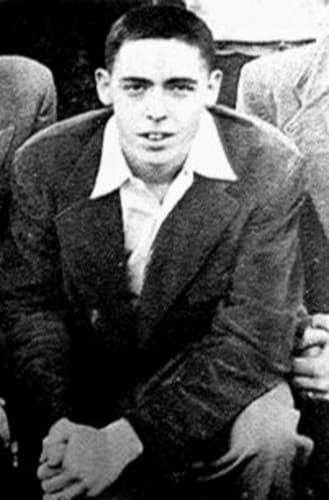
Thomas Ruggles Pynchon Jr. is an American novelist noted for his dense and complex novels. His fiction and non-fiction writings encompass a vast array of subject matter, genres and themes, including history, music, science, and mathematics. For Gravity's Rainbow, Pynchon won the 1973 U.S. National Book Award for Fiction.
Similar books
- The Big Sleep
Raymond Chandler
4.0 (126k) average on GoodreadsThrillerWhile both Inherent Vice and The Big Sleep feature a private investigator navigating a complex mystery in Los Angeles, Pynchon subverts many of the genre's conventions that Chandler helped establish. Chandler's Philip Marlowe, though cynical, operates within a relatively coherent world where justice, however flawed, is a tangible concept. Pynchon's Doc Sportello, by contrast, is a bewildered participant in a world where truth is subjective, and the 'mystery' is often less about solving a crime and more about the chaotic experience of trying to understand an incomprehensible system. The Big Sleep offers a tighter, more traditional narrative arc, whereas Inherent Vice revels in its sprawl and postmodern fragmentation.
- Fear and Loathing in Las Vegas
Hunter S. Thompson
4.1 (299k) average on GoodreadsLifestyleBoth Inherent Vice and Fear and Loathing in Las Vegas immerse the reader in a drug-fueled counter-culture landscape, capturing a specific moment of American disillusionment. Thompson's work, a cornerstone of Gonzo journalism, is explicitly autobiographical and journalistic, directly documenting the 'death of the American Dream' through the eyes of Raoul Duke. Pynchon, while evoking a similar sense of societal decay and drug-induced paranoia, does so through fictional narrative and a more detached, albeit equally satirical, lens. Fear and Loathing is more immediate and visceral in its presentation of drug use and its effects, whereas Inherent Vice integrates it as an intrinsic part of its characters' perception and the era's overall atmosphere, contributing to the novel's dreamlike and often absurd quality.
- The Old Man and the Sea
Ernest Hemingway
3.8 (831k) average on GoodreadsLiterary FictionA Cuban fisherman's long struggle with a giant marlin becomes a story of endurance and dignity, now retold for young adults with illustrations, phonetic guides, and writing prompts in Traditional Chinese.
- One Hundred Years of Solitude
Gabriel García Márquez
4.1 (753k) average on GoodreadsLiterary FictionThrough the multi-generational story of the Buendía family, a mythical town deals with the repeating patterns of time, love, and solitude, as the extraordinary mixes with the ordinary.
- The Goldfinch
Donna Tartt
3.9 (720k) average on GoodreadsLiterary FictionHaunted by a tragic explosion and clutching a stolen Dutch masterpiece, a young orphan navigates the opulent drawing rooms of New York and the gritty underbelly of the art world, desperately seeking connection and redemption amidst a life spiraling into crime and obsession.
- Little Fires Everywhere
Celeste Ng
4.1 (713k) average on GoodreadsLiterary FictionIn Shaker Heights, an artist and her daughter move in, and their free-spirited lives clash with a rule-bound matriarch, revealing hidden conflicts beneath a perfect surface.





Enjoyed the summary?
A summary gives you the shape of the book. The book itself has the detail, the examples and the voice.
Find Inherent Vice on AmazonAs an Amazon Associate, BookBrief earns from qualifying purchases. How we're funded